

Somewhere in a south Florida swamp, a white flower hangs from a cypress trunk like a tiny ghost. You'd barely spot a leaf on it. Its nectar sits at the bottom of a tube almost a foot long. For ages, one question has hung over it. Who on earth pollinates the ghost orchid? A team of researchers and filmmakers set out to find out. The answer wasn't the one they expected.
Identifying the Pollinator of the Ghost Orchid
You'd need a seriously long tongue to reach that deep. So scientists put their money on the giant sphinx moth. Its proboscis can stretch past 10 inches (25 centimeters). That's long enough to touch the pollen hidden inside this endangered orchid. It was a neat theory. Nobody had ever caught the moth in the act. 

A Short Documentary by Grizzly Creek Films
The Montana studio Grizzly Creek Films followed the hunt for three years. Their short film, “Chasing Ghosts,” links the search to Charles Darwin, who puzzled over a Madagascar orchid with an absurdly long spur some 160 years ago. “Good heavens. What insect could suck it?” he wrote. The crew waded through wetland thick with mosquitoes, past alligators and snakes. They were headed for cypress groves where the orchids cling high up in the branches. They strapped cameras to the trees and waited. 
What the Cameras Saw
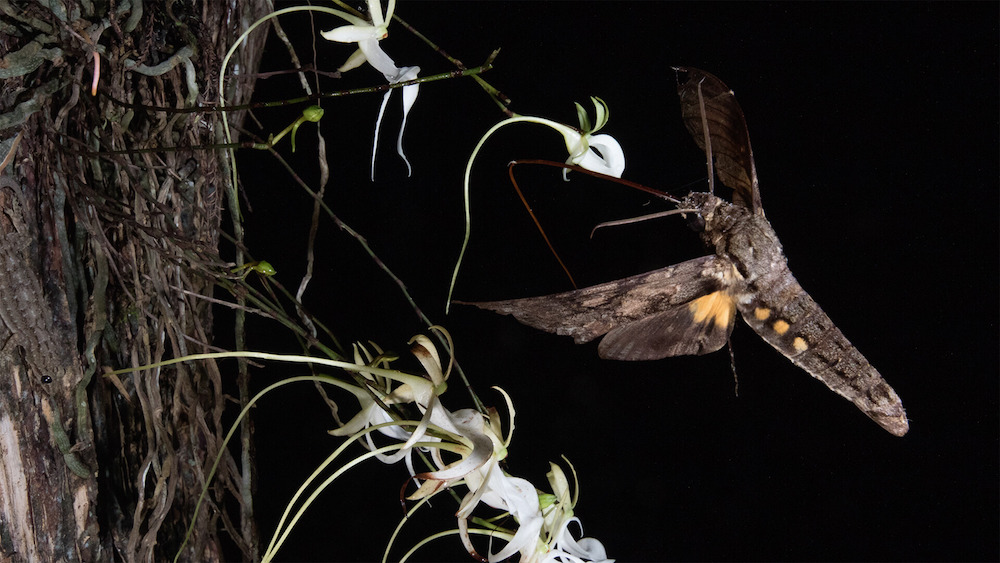
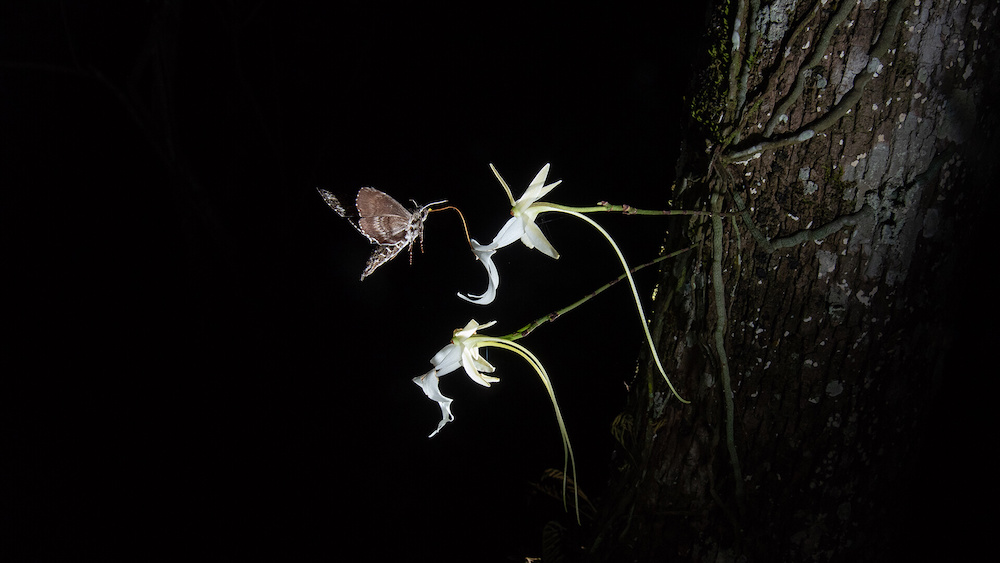
The numbers are wild: about 6,800 hours of camera time and 52,173 pictures, taken in Corkscrew Swamp Sanctuary and the Fakahatchee Strand. The cameras did catch the giant sphinx moth with its tongue in the flower. It's the first photo ever of that moment. But the footage also showed five different species able to pollinate the orchid. The shot that was supposed to prove the old idea ended up knocking it over. Now the team has a new puzzle. How does this rare plant really keep itself going?
Three summers of wading waist-deep, slapping bugs, and climbing dizzying heights gave the team more than data. They came out with a bigger soft spot for Florida's wild swamps and with clues that could help protect both the orchid and the shrinking wetlands it needs. Not bad for a flower you'll almost never find. 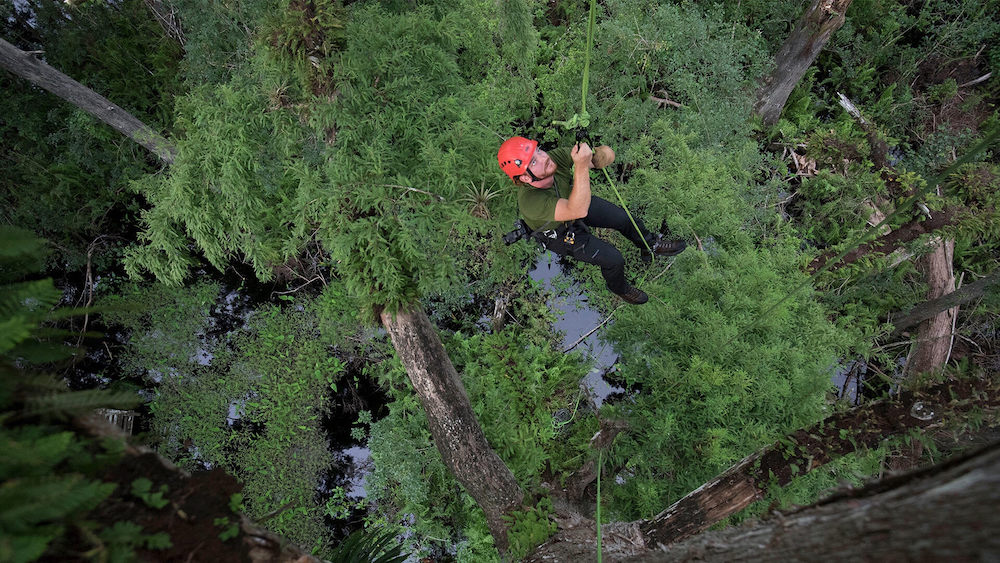
 Watch the full documentary below, and follow the team's other finds on the Grizzly Creek Films site and Instagram.


