Planting tulip bulbs is the cheapest way I know to get a garden full of color in spring. You put a dry, brown bulb in cold soil in fall, you forget about it for five months, and in April it pays you back. But the timing and the depth decide whether that works. So here you find how to plant tulip bulbs, when to plant tulip bulbs in your climate, how deep and how far apart they go, how to grow them in pots or force them indoors, and what to do after they flower. It's written for the first-time gardener, and for the one who planted last year and got leaves but no flowers.
The short version first, for the reader with a bag of tulip bulbs on the kitchen table right now:
- When: in fall, once the soil at planting depth stays below 16°C (60°F), and up to a couple of weeks before the ground freezes.
- How deep: two to three times the height of the bulb, so about 15 to 20 cm (6 to 8 inches), measured from the bottom of the bulb.
- How far apart: about 10 to 15 cm (4 to 6 inches).
- Which way up: the pointed nose up, the flat root plate down.
- Warm climate: chill the bulbs in the fridge for 12 to 16 weeks first, then plant in late November or December.
When to Plant Tulip Bulbs
A tulip bulb needs a real winter before it will flower. The genus Tulipa comes from the mountains of Central Asia, and the flower inside the bulb only develops after weeks of cold, as the tulip season guide explains. So there is a reason to plant in fall. The bulb uses the weeks before the frost to make roots, and the winter does the rest.
The Cold-Soil Window
The signal to start is soil temperature, not the date. The University of Wisconsin-Madison Extension says to plant when ground temperatures drop to around 10 to 13°C (50 to 55°F), and to keep planting until a couple of weeks before the ground freezes. Clemson's rule is to wait until the soil at planting depth stays below 16°C (60°F). Plant earlier, in warm soil, and the bulb can start growing leaves in fall or catch a fungal disease. Plant later, in frozen soil, and it has no time to root.
In practice, that window is September and October in cold northern gardens, October and November in a mild one, and December in the warm South. Planting tulip bulbs in early December is still fine in many places, as long as you can still get a spade into the ground.
Planting by Climate and US Zone
So the soil temperature tells you the month, wherever you live in the United States. The colder your zone, the earlier the soil cools: in the northern zones that is early fall; in the middle of the country it is mid to late fall. In the warm zones of the South, the winter is often too short and too mild for tulips, and that is where you make the winter yourself, in the fridge.
Pre-Chilling Tulip Bulbs in Warm Climates
The Clemson Cooperative Extension advises gardeners in central and coastal South Carolina to refrigerate the bulbs from the day they buy them until planting in November to late December, and it notes that most bulbs need a 12- to 16-week chilling period to flower. A home fridge runs at about 2 to 4°C (35 to 40°F), which is right. Put the bulbs in a paper bag, not plastic, and never in the freezer. And keep fruit out of that drawer. Ripening apples and pears give off ethylene gas, and Clemson warns it can stop the bulbs from blooming.
When the chilling is done, take the bulbs straight from the fridge to the garden. In a warm climate, treat tulips as annuals. Clemson's advice is to dig and discard them after they flower, because they won't get the cold they need to flower well again.
Why the Cold Matters, Told by a Grower
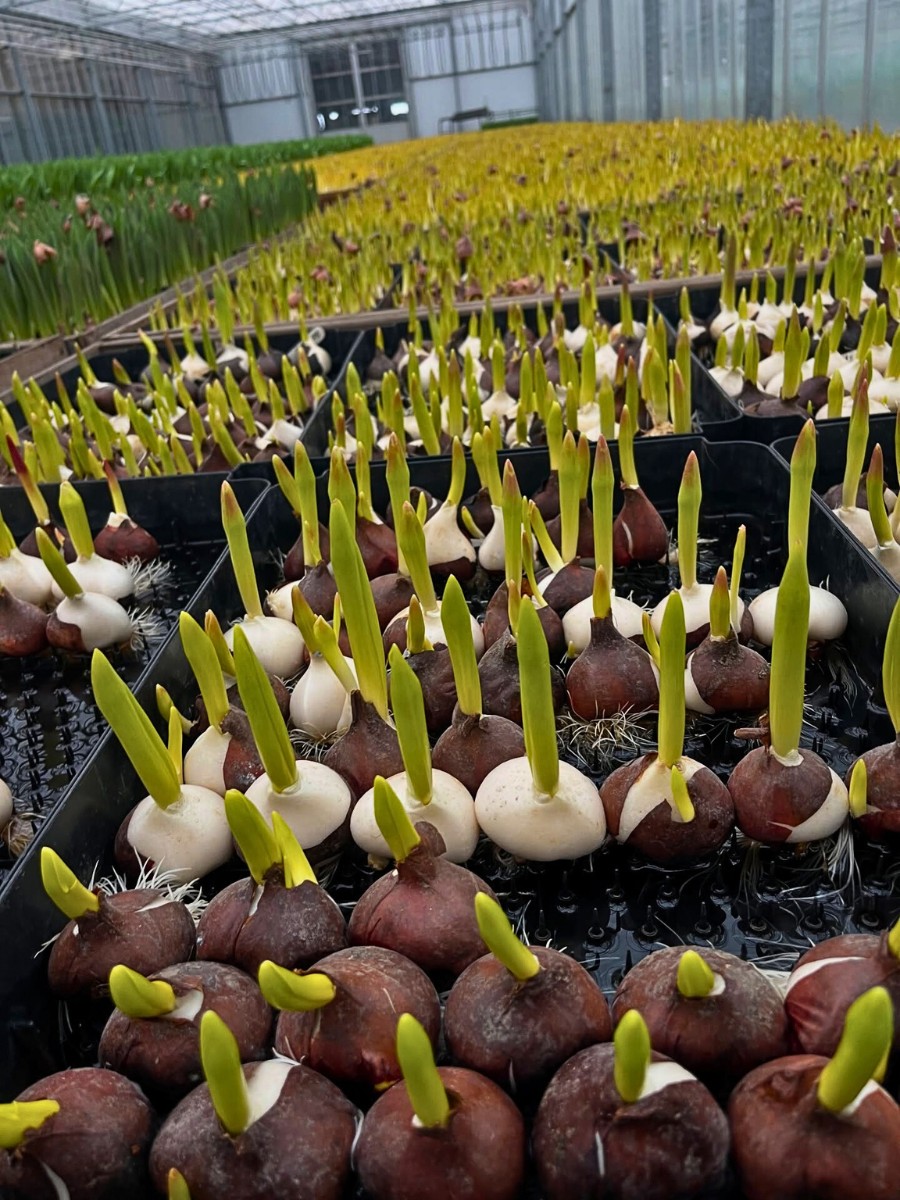
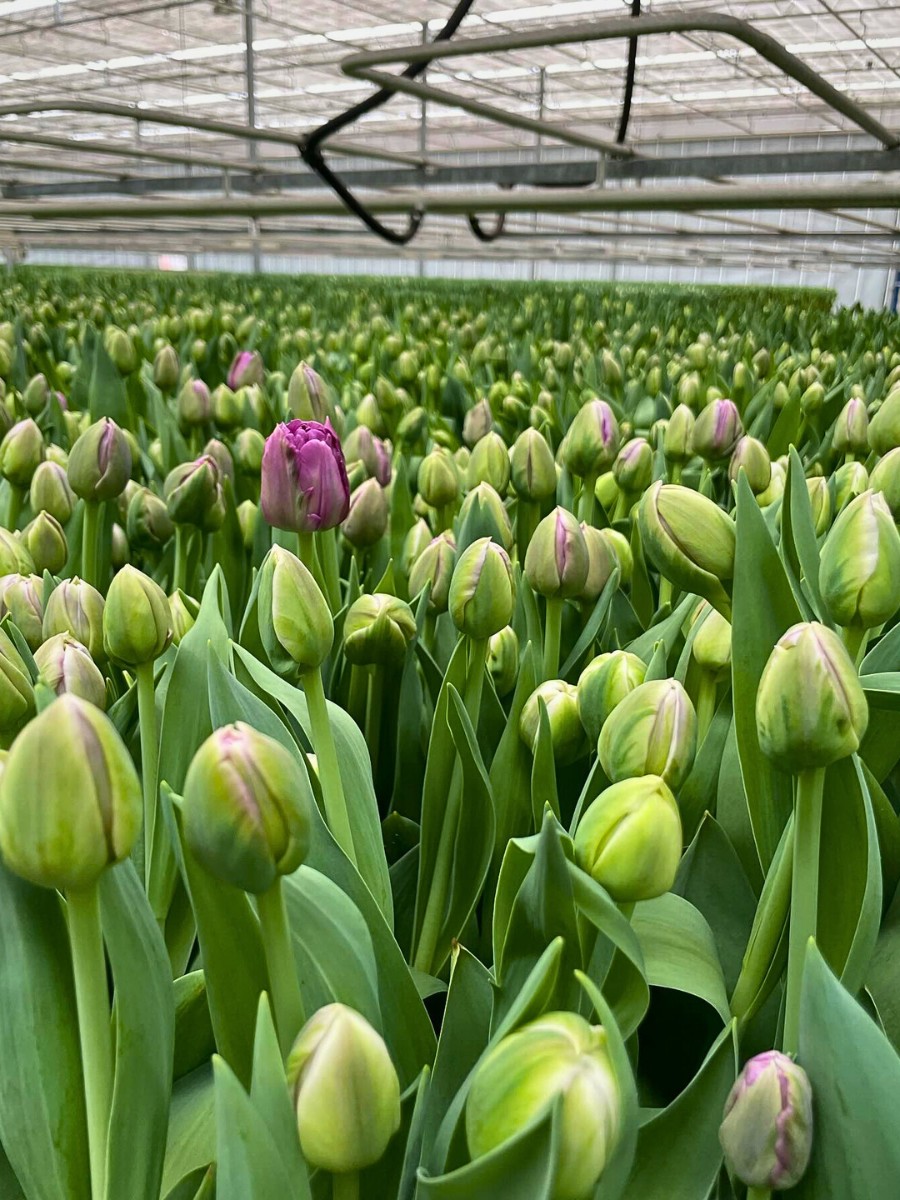
The professionals do the same thing on a much bigger scale. Ronico in Venhuizen grows tulip bulbs on 300 hectares in the Netherlands. Co-owner Robèr de Wit told Thursd: "When the bulbs are harvested in July, we bring them here first for a temperature treatment, and then put them in our three greenhouse locations close by to grow a total of 140 million tulip cut flowers during the winter season." That temperature treatment is a winter in a cold store. Your fridge is the home version of it.

In the Southern Hemisphere
The calendar runs six months later. In Australia, New Zealand, Chile, and South Africa, you plant tulip bulbs in fall, from about April to May, once the soil has cooled, and they flower in September and October. The trade uses exactly this to stretch the season. The Dutch nursery Borst Bloembollen grows its tulip bulbs in the Netherlands, France, New Zealand, and Chile, and that way it has tulips from October to May.
How to Plant Tulip Bulbs Step by Step
Here it is. None of the steps are difficult, and most mistakes come from planting too shallow or in soil that stays wet.
Choose Firm Bulbs
A good tulip bulb is firm and heavy for its size, like a small onion. Leave the soft ones, the moldy ones, and the ones that have already pushed a long shoot in the shop. Bigger bulbs give bigger flowers. If you can't plant right away, keep them in a cool, dry, and dark place, in a paper bag or open box.
Sun, Soil, and Drainage
Tulips want full sun in spring, ideally six to eight hours a day, though partial shade works too. Under deciduous trees is fine, because the tulips flower before the trees are in leaf. The one thing they don't forgive is wet feet. "Good soil drainage is essential in raising bulbs," the University of Illinois Extension writes. Loosen the soil to about 20 cm (8 inches) deep, so the roots can go down easily. On heavy clay, work compost or another organic material into the bed first, or plant in a raised bed. A spot where water stays after rain is the wrong spot. The bulb rots there.

How Deep to Plant Tulip Bulbs
Plant two to three times as deep as the bulb is tall. For a tulip, that is about 15 to 20 cm (6 to 8 inches), and you measure from the bottom of the bulb, not the top. Clemson gives the same 6 to 8 inches. Big bulbs go to about 20 cm (8 inches), small ones and species tulips to about 13 cm (5 inches). In light, sandy soil and in cold regions, go to the deep end. A deeper bulb stays cooler, is harder for squirrels to find, and the stem stands more firmly in spring.
How Far Apart to Plant Tulip Bulbs
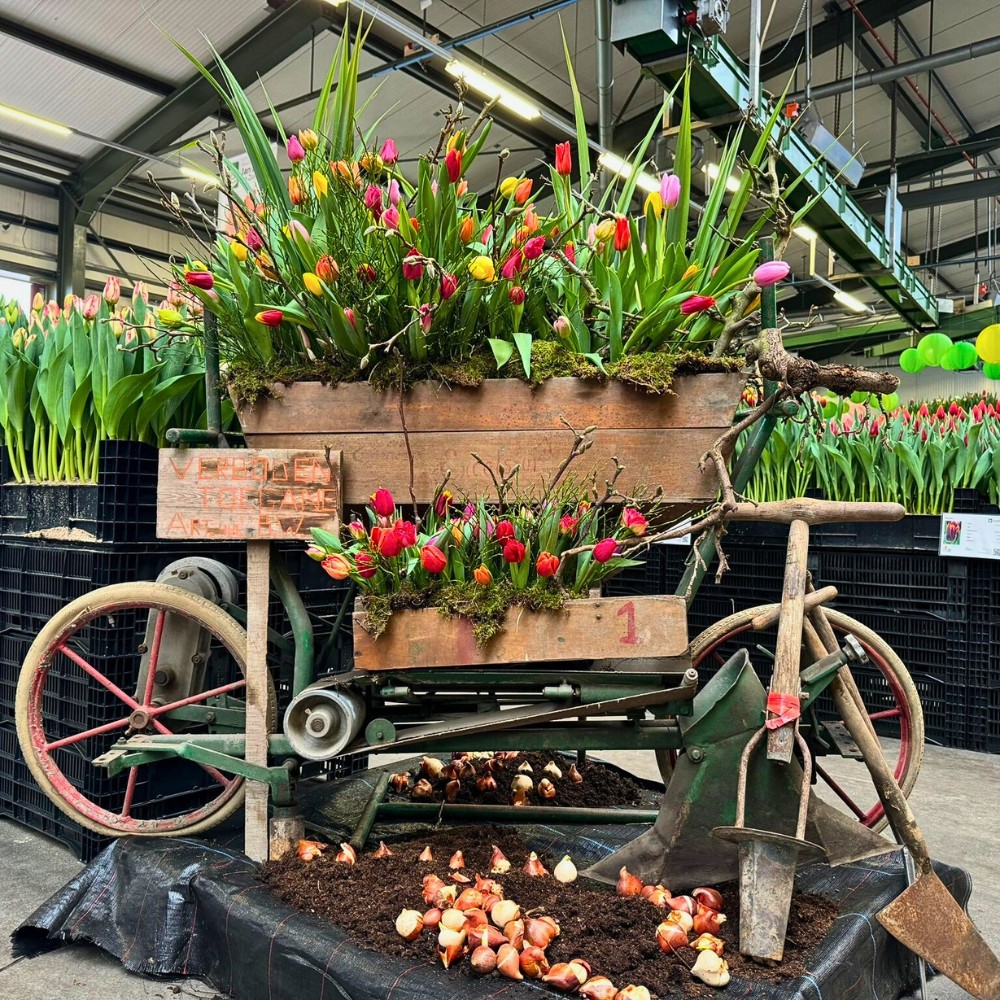
About 10 to 15 cm (4 to 6 inches) apart, or roughly three times the width of the bulb. But a row of tulips at equal distances looks like a parking lot. Plant them in groups instead. Wisconsin's extension suggests clusters of five to eight bulbs per hole, with about an inch between the large bulbs. You can dig one wide hole, set the bulbs in it, and fill it up again, which is faster than ten small holes.
Which End Is Up?
The pointed end goes up. That is the nose, where the shoot comes out. The flat side with the dry remains of old roots is the root plate, and that goes down. If you really can't tell, plant the bulb on its side. The shoot will find its way up; it only costs the tulip a bit of energy.
Water, Mulch, and Wait
Water the bed once after planting, so the soil settles around the bulbs and the roots can start. Then cover it with 5 to 8 cm (2 to 3 inches) of mulch, such as shredded leaves or bark. Mulch keeps the soil temperature even and holds moisture, as Illinois explains. After that, there is nothing to do until spring. Don't water a dormant bulb bed in a wet winter. In a dry fall, give the bed water about once a week until the ground freezes. And you don't need bone meal in the planting hole. A good bulb already carries the food for its first flower, and the smell of bone meal can bring dogs and squirrels digging.
Planting for a Longer Season
One more thing, and the professionals are good at this. Tulips don't all flower at the same time. Early, mid-season, and late types follow each other from March to May, so if you plant a mix of them, you have tulips for six weeks instead of two. At Keukenhof, around 7 million bulbs go into the ground by hand every fall, planted in layers so something flowers for the whole eight weeks, as the Keukenhof guide explains.
The garden designer Carien van Boxtel, an RHS Bulb Expert who designs the border of JUB Holland at Keukenhof, described it on Thursd as "composing with time." In her words: "I treat flowering moments like notes on a score." She also mixes in green to calm the color down: "Sometimes you need to 'cool down' the flowers with green." For a home garden, that means planting tulips between daffodils, grape hyacinths, or perennials whose leaves come up in spring.

Planting Tulip Bulbs in Pots and Forcing Them Indoors
Tulip bulbs aren't picky about where they grow. A pot on the balcony works as well as a border, and with some patience you can even have them flowering on the windowsill in winter.
Tulips in Pots
Use a pot with a drainage hole and good potting soil, deep enough to give the bulbs the same planting depth as in the garden. In a pot, you can plant the bulbs close together, almost touching, because they only have to perform for one season. A pot also lets you layer: tulips at the bottom, daffodils or hyacinths above them, and small bulbs like crocus or grape hyacinths on top. Remember that soil in a pot gets colder than soil in the ground. In a hard frost, move the pot against the house or into an unheated shed.
Forcing Tulip Bulbs Indoors
Many people keep tulips indoors because they give spring colors, even when it's cold and grim outside. To do that, you have to force the bulbs. It takes time, not effort. First the bulbs need a cold and dark period of at least 12 to 16 weeks, in the fridge or in a cold garage that stays above freezing. After that, choose a container with drainage and plant the bulbs with their tips just above the soil. Keep them cool and dark, and water them about once a week. When the leaves form, it's time to move them to their final place, somewhere with bright but indirect light. The tulips will start flowering in three to four weeks.

This is the same trick the cut tulip growers use from December to May. At Triflor, the bulbs get their winter in a cold store and then flower in the greenhouse in the dark months. The tulip you buy in February had its winter the fall before.
After Bloom: Do Tulips Come Back?
Some do, some don't. And what you do in the weeks after flowering makes a big difference.
Deadhead, Then Leave the Leaves
Cut off the spent flower head, so the plant doesn't put its energy into seed. Then leave the leaves alone. The University of Illinois Extension says the foliage should stay until it turns yellow and dies back naturally, which usually takes about six weeks, because the green leaves make the food that is stored in the bulb for next year. The Dutch bulb growers do the same on a large scale: they top the flowers in the fields in spring, because the bulb is the actual crop.
Naturalizing: Tulips That Return
Not all tulips will return each year, but there are types that will. In the process called naturalizing, the mother bulb grows big enough and splits off daughter bulbs, which become new flowering plants after a few years. Look at it as a whole family of tulips. Species tulips do this best. Wisconsin's extension notes that hybrid tulips may only return for several years, and it suggests species tulips for gardens where you want them to stay. A sunny, dry spot in summer helps, because the bulbs like it warm and dry while they are dormant.
Squirrels, Voles, and Deer
Squirrels, voles, and other animals dig up freshly planted tulip bulbs. To them, it's a snack. Plant deep, clean up the papery skins, and don't leave the bag lying around. Wisconsin's extension suggests laying chicken wire over the bed, or putting chicken grit about a centimeter (half an inch) below the surface. Another option is to plant daffodils and hyacinths around the tulips. Squirrels and chipmunks leave those alone, because they are poisonous to them.
Tulips, Cats, and Dogs
Tulips are toxic to cats, dogs, and horses, and the bulb has the highest concentration of the toxin, according to the ASPCA. So keep the bag of bulbs out of reach while you plant, and watch a dog that likes to dig. If you have cats, the piece on tulips in a cat-friendly garden has more.
Plant Now, Enjoy in April
That is really all there is to it. Cold soil, deep enough, pointed end up, and good drainage. If you want to know what happens to a tulip before it reaches the bag in the garden center, read how tulip breeding works, which takes 15 years or more from the first cross to a named variety. And when your own tulips flower next spring, the tulip season guide tells you where the big fields and festivals are, from Keukenhof to the National Tulip Day in Amsterdam. For other bulbs to plant in the same weekend, see the list of spring bulbs to plant this fall, and for the difference between a bulb, a tuber, and a corm, see this explainer.

Sources: University of Wisconsin-Madison Extension, Plant Bulbs Now for Spring Color. Clemson Cooperative Extension, Spring-Flowering Bulbs. University of Illinois Extension, Planting Bulbs. ASPCA, Tulip.|
Feature image: @ronico_venhuizen. Header image: JUB Holland, Keukenhof 2025.
About the author: Arnold Wittkamp is the founder of Thursd. He spent 35 years in the floral chain, as a florist, an importer, and an international marketer, before building the platform. Connect with Arnold on LinkedIn.