I'm intrigued by art, and working with flowers in a way that allows them to have a conversation with the painting has become a way to express my emotions through design.
The Painting That Never Left Me
I have returned to The Scream again and again throughout my life, not because it is beautiful in any comfortable sense, but because it is honest. Munch painted not the world as it appeared, but the world as it felt from inside. The swirling sky, the dissolving figure, the landscape warped by inner pressure: everything bends to serve the emotion. That is the work of a master who trusted feeling above form.
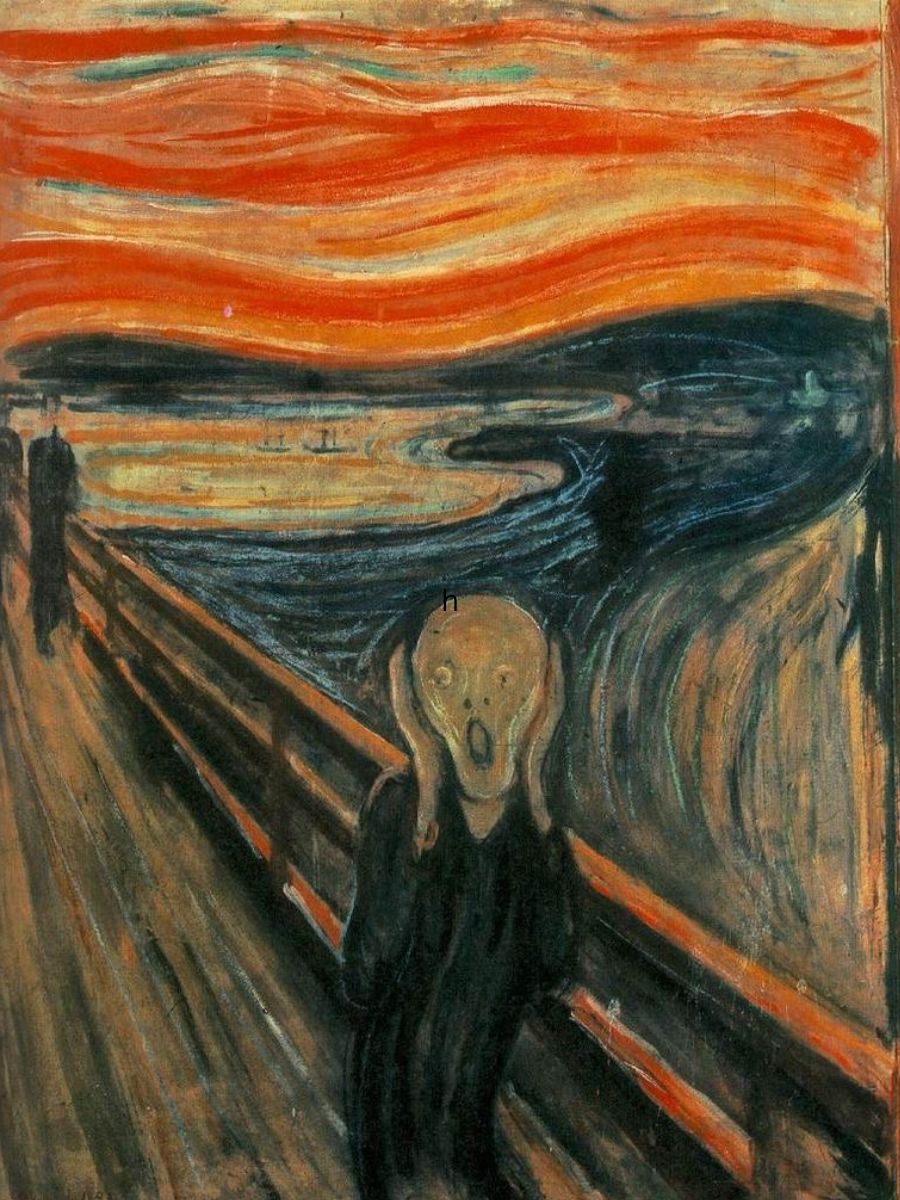
This is my favourite painting, for its raw emotional intensity, for its refusal to look away, and for its ability to speak directly and universally about the human condition. It was this powerful emotional impact that became the starting point for my floral interpretation.
Color as Conflict
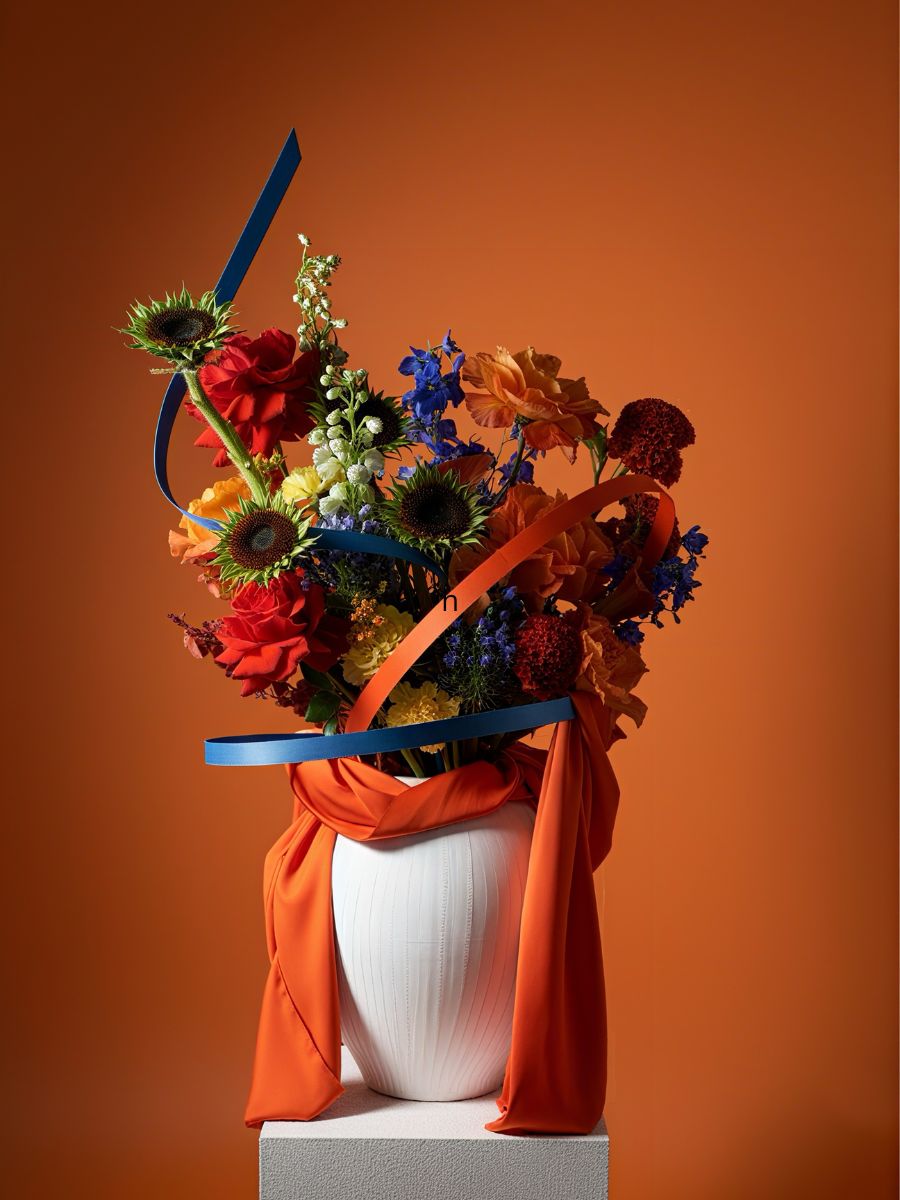
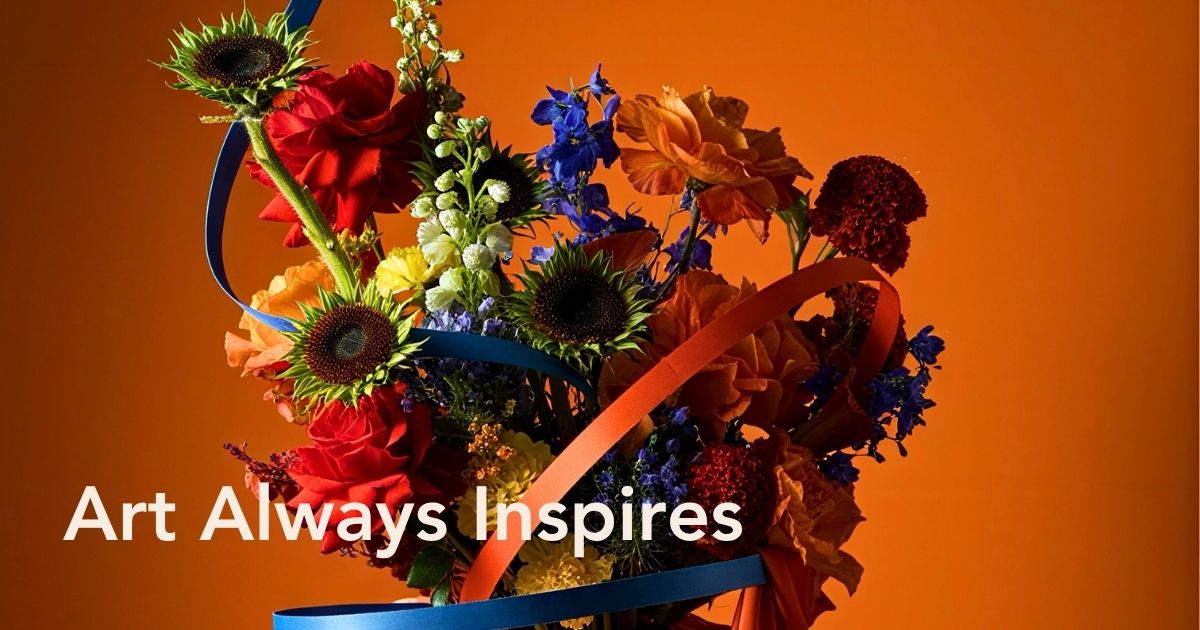
In Expressionism, color is never decoration. It is a carrier of a psychological state. The burning orange of Munch's sky is not a sunset; it is dread made visible. I built my composition around this same tension: the warm, urgent oranges and deep crimson reds pressing against cool, heavy blues and near-blacks. Where these colors meet, the eye cannot settle. It is the visual equivalent of held breath.
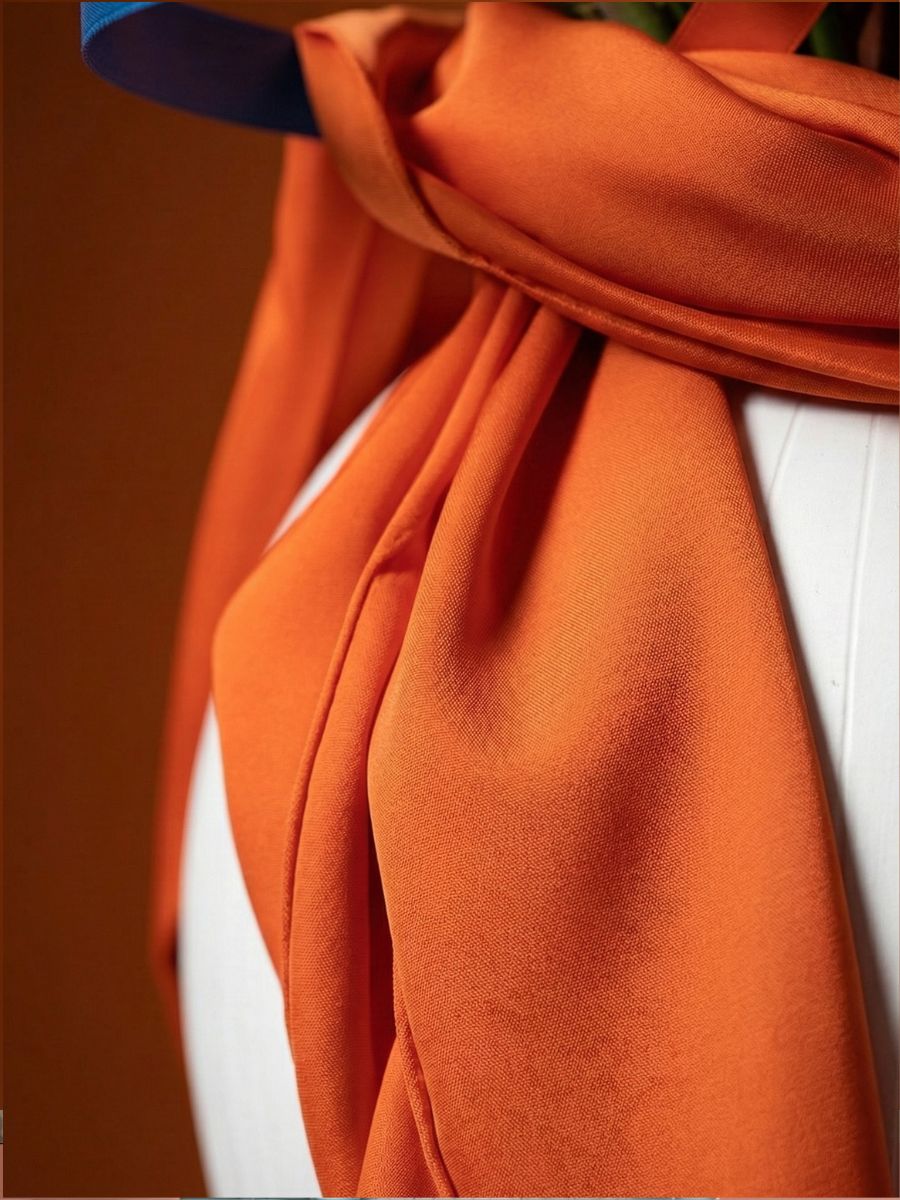
Each flower was chosen not for prettiness but for emotional weight. The dark-centred orange flowers carry that anxious warmth of the painting's horizon. The deep blue-violets introduce the cold undercurrent; the sense of something unresolved, something pressing inward. The contrast between them is not decorative contrast. It is an inner conflict made physical.
Lines That Cannot Rest
One of the defining gestures in Munch's work is the undulating line; the landscape flows in waves, the sky writhes, and even the bridge bends as if under emotional strain. There is no straight edge, no fixed horizon. Everything is in motion, and that motion is internal as much as it is spatial.
The stems in this composition follow that same rhythm. They curve and twist rather than stand upright. The blooms are arranged not in a comfortable symmetry but at irregular angles, some tipping away, some leaning into each other, some half-open as if mid-gesture. The arrangement appears to breathe, expanding and contracting, without a single point of stillness where the eye can anchor.
The Asymmetry of Feeling
Munch deliberately avoided symmetry because symmetry implies equilibrium, and The Scream is the opposite of equilibrium. It is the image of someone for whom the world has tipped irreversibly. In floral design, we are so often told to seek balance, to distribute weight, to mirror, to resolve. I wanted to resist that instinct entirely.
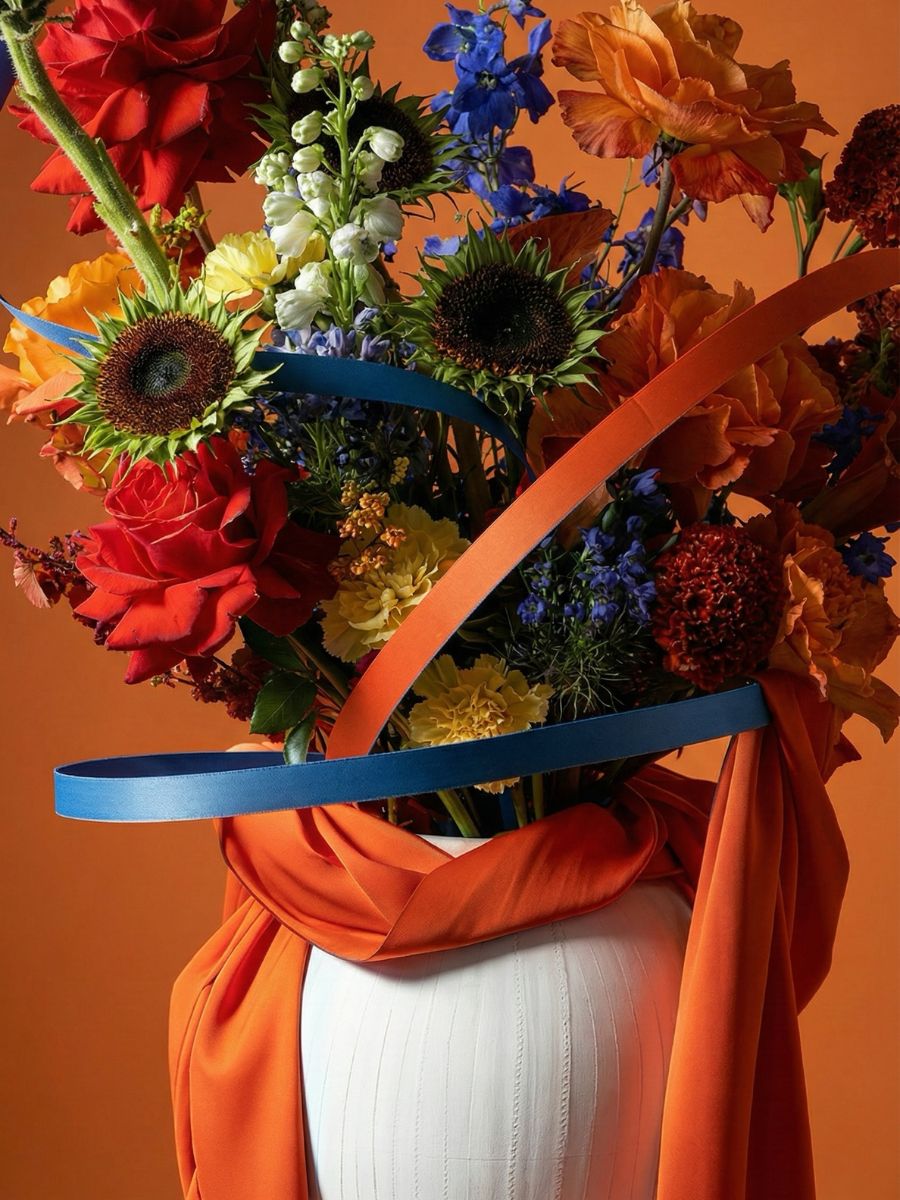
In this composition, the flowers fall unevenly across the space. Some clusters; others are isolated. A loose petal hovers untethered. The composition refuses closure. Each element functions as part of a shared emotional field rather than as a discrete object in a tidy arrangement. Floral design becomes, here, a way of expressing what cannot otherwise be said — the vibration of feeling, the instability of the inner self, the beauty and terror of being fully alive to one's own experience.
Expression Without Words
What moves me most about Expressionism is the belief that art does not need to explain itself; it only needs to transmit. A viewer standing before The Scream does not require art-historical context to feel what it is doing. It reaches through the surface immediately, viscerally, personally.
That is what I hope for in floral work, too. Not arrangements that are admired from a polite distance, but compositions that touch something in the person who encounters them. If even one person looks at these flowers and feels recognized, feels that this chaos, this color, this restless motion mirrors something they carry inside, then the work has done what I made it to do.
Munch permitted us to be honest about interior life. These flowers are my own way of taking that permission seriously.