Why would millions of people pin a paper flower to their coats every November? Well, because of a field in Belgium, a poem written in the back of an ambulance, and a flower that grows best where the ground has been torn open. The poppy flower meaning is older than any war, though. Long before the remembrance poppy, poppy flowers stood for sleep, dreams, consolation, and the hope of waking again. Imagine a single poppy flower doing all of that work at once.
This guide covers both sides of the poppy: what the flower has meant from ancient Greece to the Victorian language of flowers, why the red poppy became the symbol of Remembrance Day on 11 November, and what red, white, purple, and black poppies say when people wear them. It ends with the main types of poppies and how florists and gardeners handle them, because a flower this loaded with meaning still has to be grown, cut, and put in a vase. So, whether you garden, work in a flower shop, or simply plan to wear a poppy this November, it is written for you.
What Does the Poppy Flower Mean?
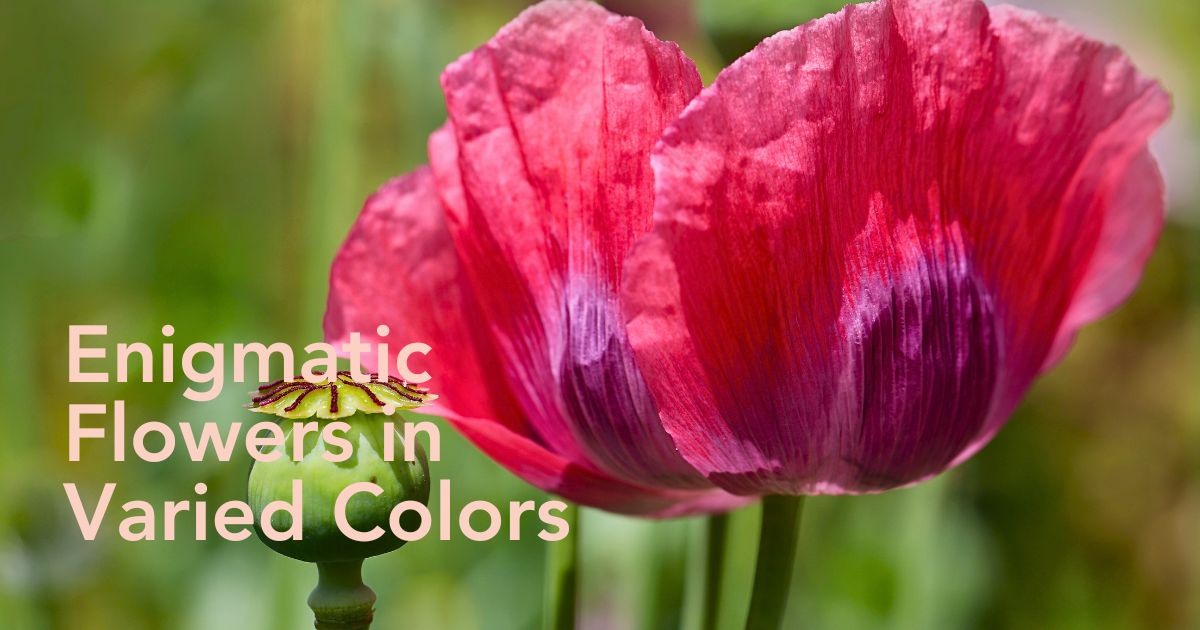
For starters, the poppy flower carries two big meanings at once: sleep and remembrance. The first comes from the plant itself. The opium poppy, Papaver somniferum, yields the sap from which morphine and codeine are made, so for thousands of years the flower stood for sleep, peace, dreams, and the release from pain. The second comes from the First World War, when the red corn poppy flowered over the battlefields of Flanders and became the flower of the fallen. Around those two sits the remainder of its symbolism: death and resurrection, consolation, imagination, beauty, and success.
In a single line, then: a poppy flower says remember, and sleep in peace. Which of the two leads depends on the color, the country, and the season you give it in.
Poppy Meaning in Greek Myth
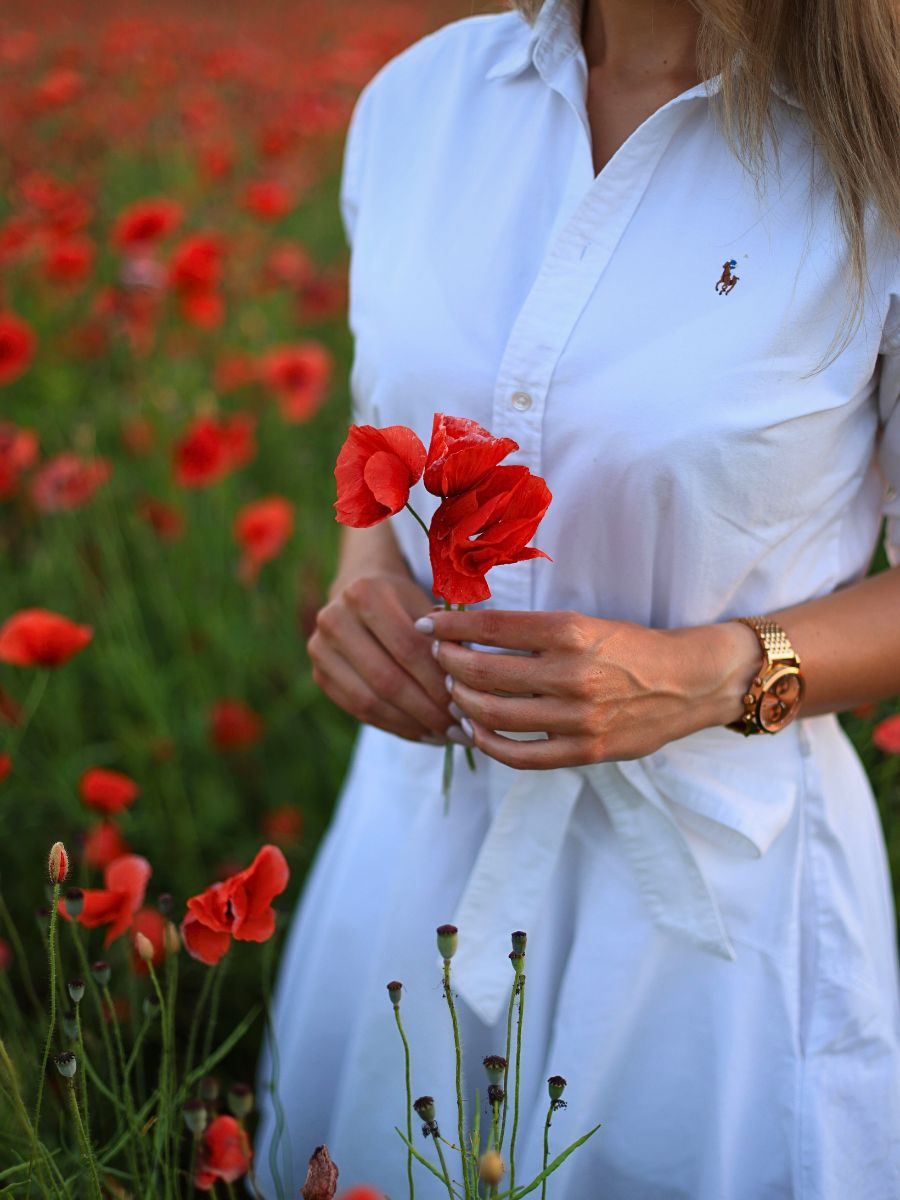
The ancient Greeks tied the poppy to sleep and the gods who ruled it. Poppies grew at the entrance to the cave of Hypnos, the god of sleep, and his son Morpheus, the god of dreams, gave his name to morphine. The flower also belonged to Demeter, the goddess of the harvest. In the myth, she could not sleep after Hades carried off her daughter Persephone, and the poppy flower brought her sleep. The roundup of floral myths from ancient Greece tells more of these stories. Romans and Greeks also placed poppies in funeral rites, a link between sleep and death that the flower never quite lost.
Egypt, Assyria, and the Oldest Poppy Symbolism
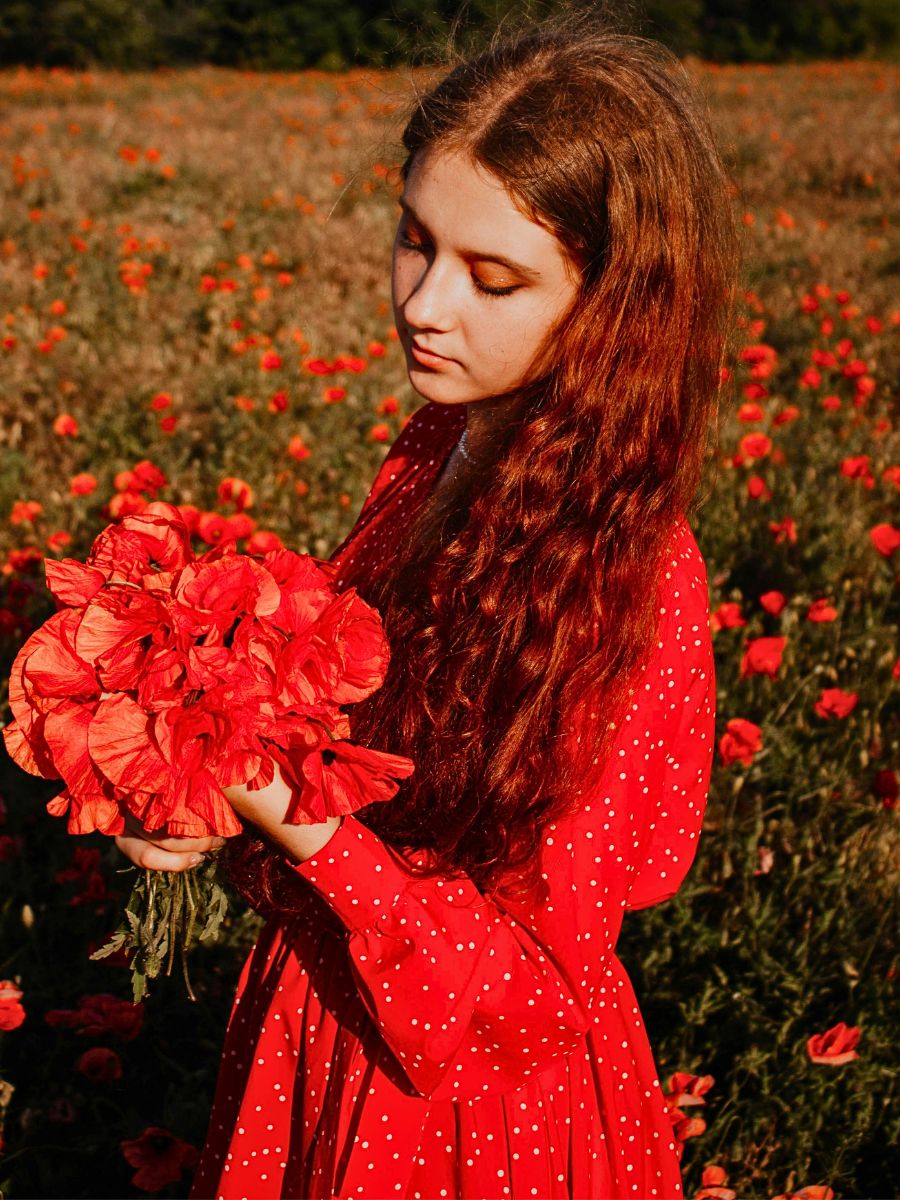
Poppies turn up in ancient Egyptian tombs, where they were tied to the afterlife and the hope of rising again. Earlier still, the Assyrians are said to have called the poppy the "daughter of the fields," a name that ties it to grain and farmland; the corn poppy is, after all, a weed of cornfields. That is where the meanings of fertility, eternal life, and resurrection come from: a flower that dies back with the harvest and comes up again from seed the next year.
The Poppy in the Victorian Language of Flowers
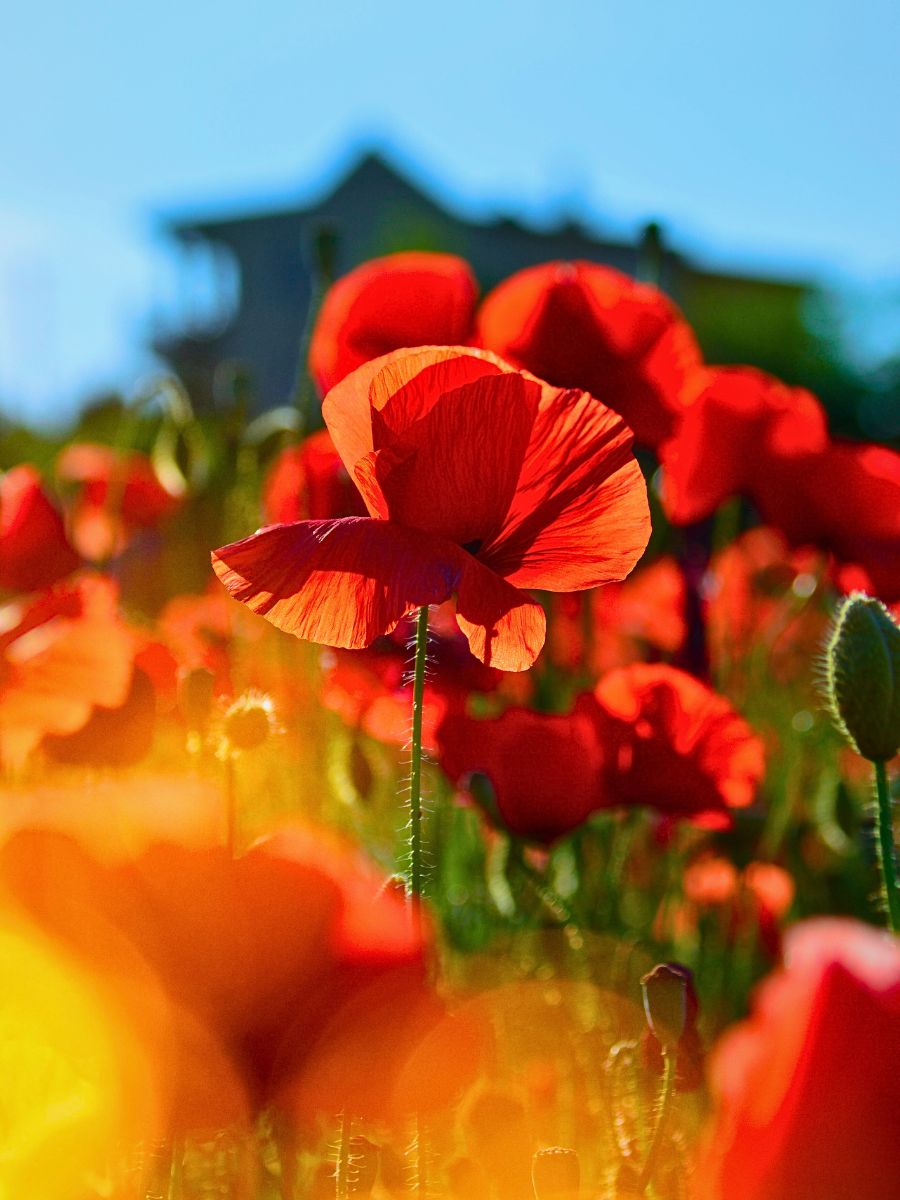
The Victorians, who gave nearly every flower a coded message, split the poppy by color. Kate Greenaway's Language of Flowers of 1884 lists the red poppy as consolation, the scarlet poppy as fantastic extravagance, and the white poppy as "sleep," "my bane," and "my antidote." The last one is a fine summary of the breadseed poppy's double life. The guide to the language of flowers explains how that Victorian code worked. In China and Japan, the poppy flower is more often linked with sleep, dreams, and the brief life of a flower; for the older flower culture of the East, see the roots of oriental flower arrangement.
The Remembrance Poppy: Why the Red Poppy Stands for the Fallen
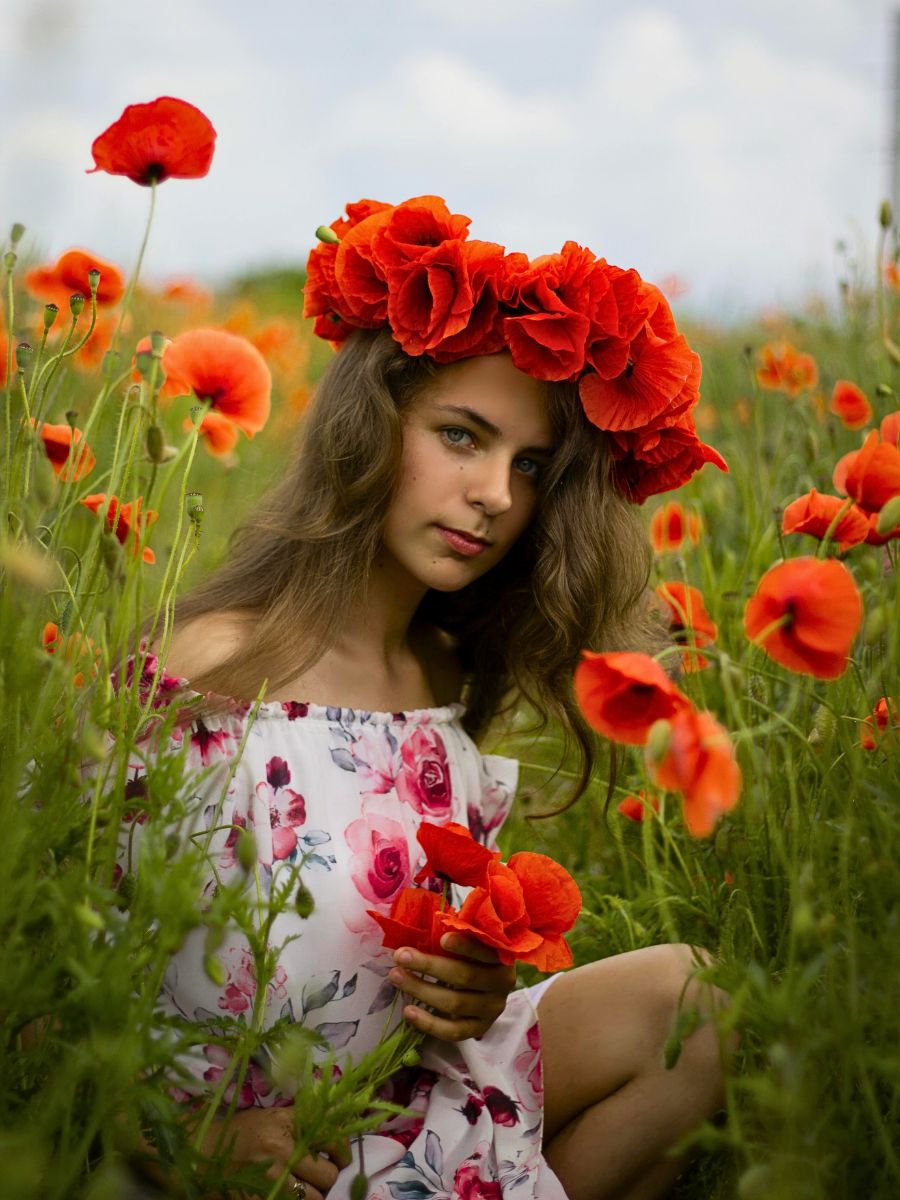
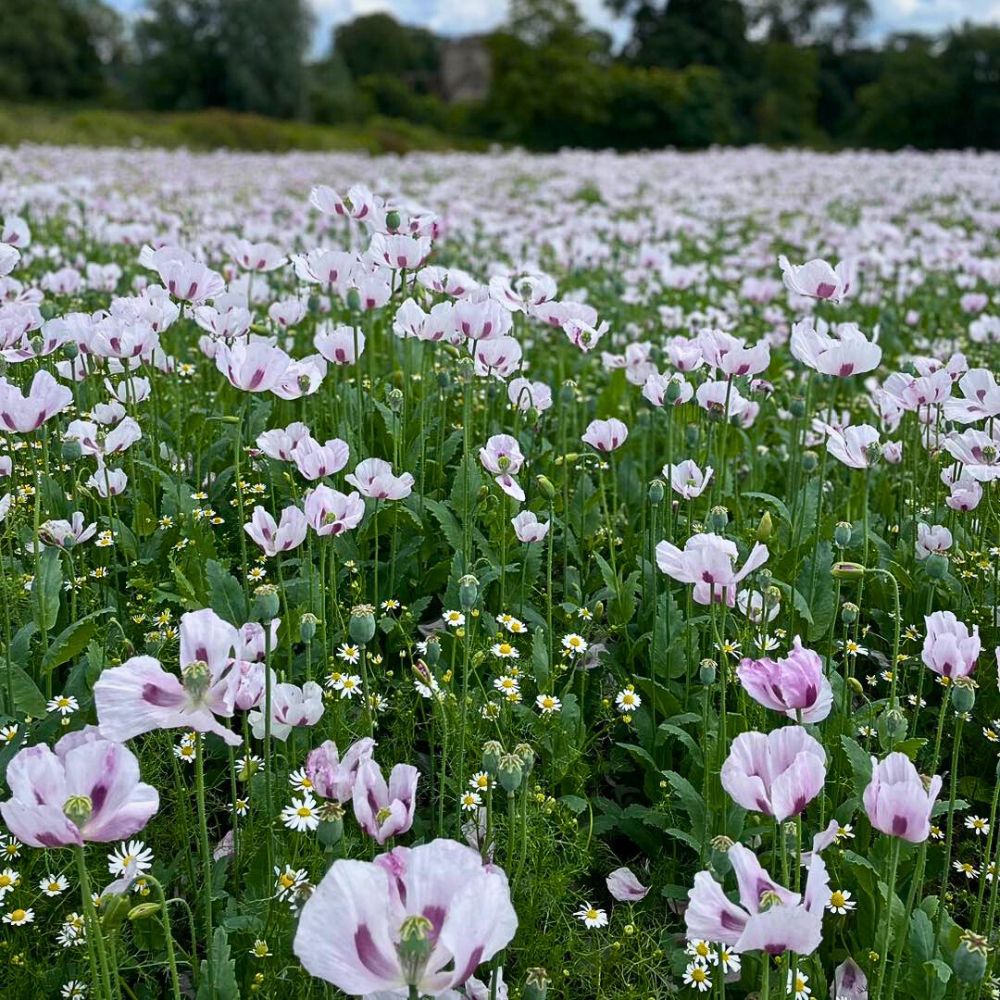
The modern poppy symbolism most people know begins on the Western Front. In France and Belgium, as The Royal British Legion explains, the land was fought over again and again and churned by millions of artillery shells. Poppy seeds that had lain in the soil were brought to the surface, and in the light they sprouted. So, wherever the earth had been torn up, including the fresh graves, the red corn poppy, Papaver rhoeas, came up in great numbers. Soldiers noticed them, picked them as keepsakes, and pressed them into letters home.
In Flanders Fields
On 2 May 1915, during the Second Battle of Ypres, the Canadian artillery officer Lieutenant Alexis Helmer was killed. His friend and former teacher, the Canadian medical officer John McCrae, led the burial, and in the days after he wrote the poem that changed the meaning of a wildflower. The Commonwealth War Graves Commission notes that it was written near what is now Essex Farm Cemetery, north of Ypres, and that Punch printed it on 8 December 1915. It opens:
"In Flanders fields the poppies blow
Between the crosses, row on row"
The collection of classic flower poems includes the full text of In Flanders Fields. McCrae never saw what it started. He died of pneumonia on 28 January 1918 and is buried at Wimereux in France.
Moina Michael and Anna Guérin
The poem crossed the Atlantic fast. On 9 November 1918, two days before the Armistice, Moina Michael, a Georgia teacher then working at the YMCA in New York, read it, wrote her own reply, "We Shall Keep the Faith," and resolved to wear a red poppy every day in remembrance. She bought silk poppies that same day. The University of Georgia records that the American Legion adopted the red poppy as its official flower in 1920 and made poppy distribution a national program in 1924; Michael became known as "The Poppy Lady," and in 1948 the US Postal Service put her on a 3-cent stamp.
The flower reached Britain through a Frenchwoman. Anna Guérin, a lecturer who sold poppies made by French women to raise money for the devastated regions of France, visited the newly founded British Legion in 1921 and asked whether it would adopt the poppy flower. The Legion decided it would. Just so that you know, the first British poppies were not made in Britain at all.
The First Poppy Appeal
The British Legion first ordered a million poppies. When Earl Haig announced that 11 November 1921 would be a poppy day, it ordered another eight million. According to the Legion, the poppies sold out almost immediately, and the first Poppy Appeal raised over £100,000 to help veterans with housing and jobs. In 1922, the Legion opened its own Poppy Factory, staffed by ex-servicemen with disabilities, and in 1926 Earl Haig's wife set up the Lady Haig Poppy Factory in Edinburgh. That is why a Scottish poppy looks different: it has four petals and no leaf, while the poppy sold elsewhere in the UK has a green leaf. Since 2023, the Legion has also sold a plastic-free paper poppy that goes in ordinary paper recycling.
What the poppy stands for, in the Legion's own words, is to remember the sacrifices of those who served, to show support for the Armed Forces community today, and to express hope for a peaceful future. It is not a symbol of death, and it is not a statement in favor of war. The story on why the royal family wears poppies on Remembrance Day follows how that plays out at the Cenotaph each year.
Remembrance Day, Poppy Day, and Memorial Day
The poppy is worn in the weeks before Remembrance Day, 11 November, the anniversary of the Armistice of 1918. At 11 o'clock that morning, people across the UK and the Commonwealth keep a two-minute silence. In 2026, Remembrance Day falls on a Wednesday, and Remembrance Sunday, the second Sunday of November, falls on 8 November. Canada, Australia, and New Zealand wear the red poppy too; in New Zealand, Poppy Day is the Friday before Anzac Day in April. In the United States, the poppy belongs to Memorial Day in May, and the Friday before it is National Poppy Day.
Red, White, Purple, and Black Poppies: What Each Color Means
Walk down a high street in early November, and you may see four colors of poppy on four coats. Each one carries a different message, and each has its own history. Here is what each of the main poppy colors means, on Remembrance Day and after it.
Red Poppy Meaning
The red poppy flower means remembrance, sacrifice, and hope. Its color recalls the poppies of the Flanders fields and, for many, the blood spilled there; the meaning of red flowers in general runs toward love, courage, and passion, and the poppy borrows the courage. Outside remembrance, the red poppy is also a symbol of consolation, as the Victorians had it, and of resilience, since it comes back year after year in poor, disturbed soil.
White Poppy Meaning
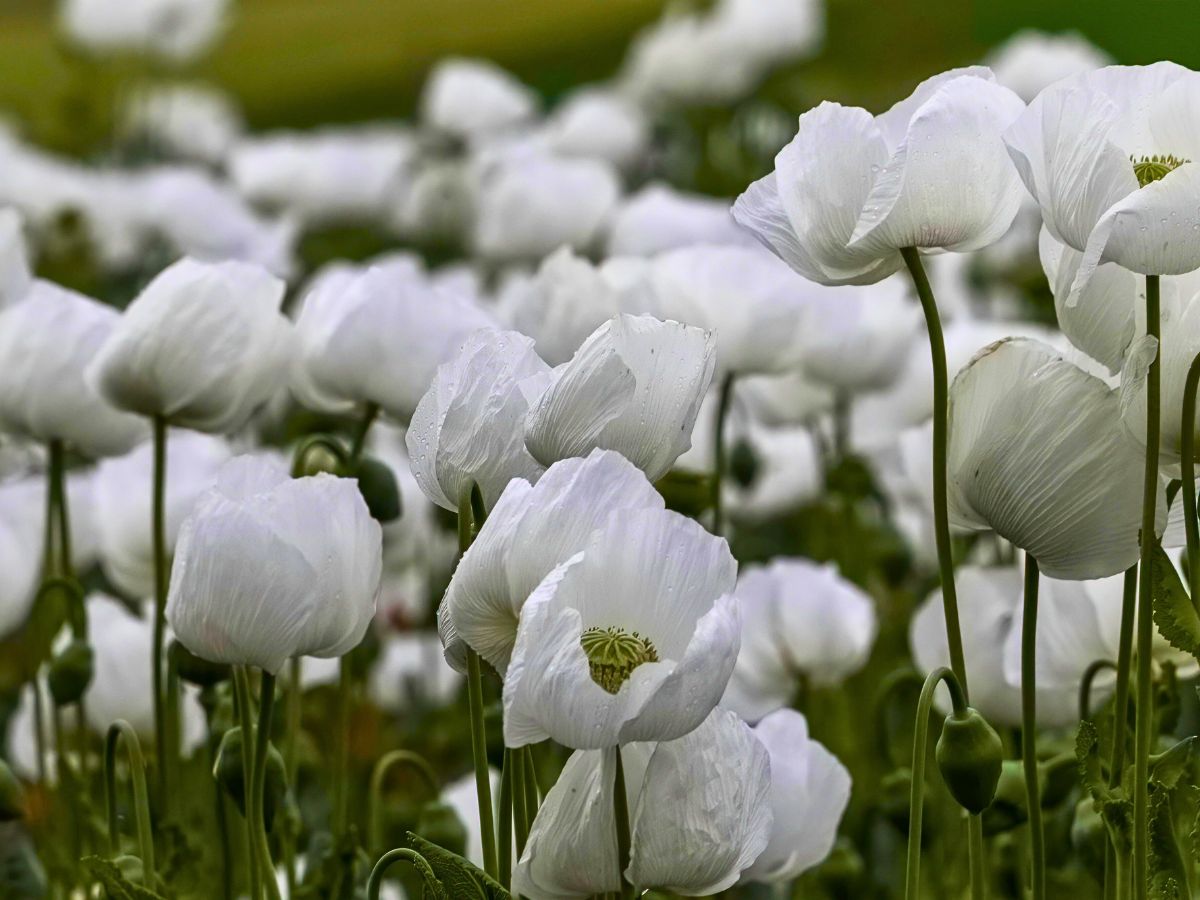
The white poppy flower means peace. Members of the Women's Co-operative Guild first wore white poppies in 1933, many of them women who had lost husbands, sons, and brothers in the First World War, as a sign that they were against war and violence. The Peace Pledge Union took the white poppy up in 1936 and still distributes it today; it says white poppies stand for remembrance of all victims of war, civilian and military alike. In the garden, of course, white flowers like the white breadseed poppy also carry the older meaning of sleep.
Purple Poppy Meaning
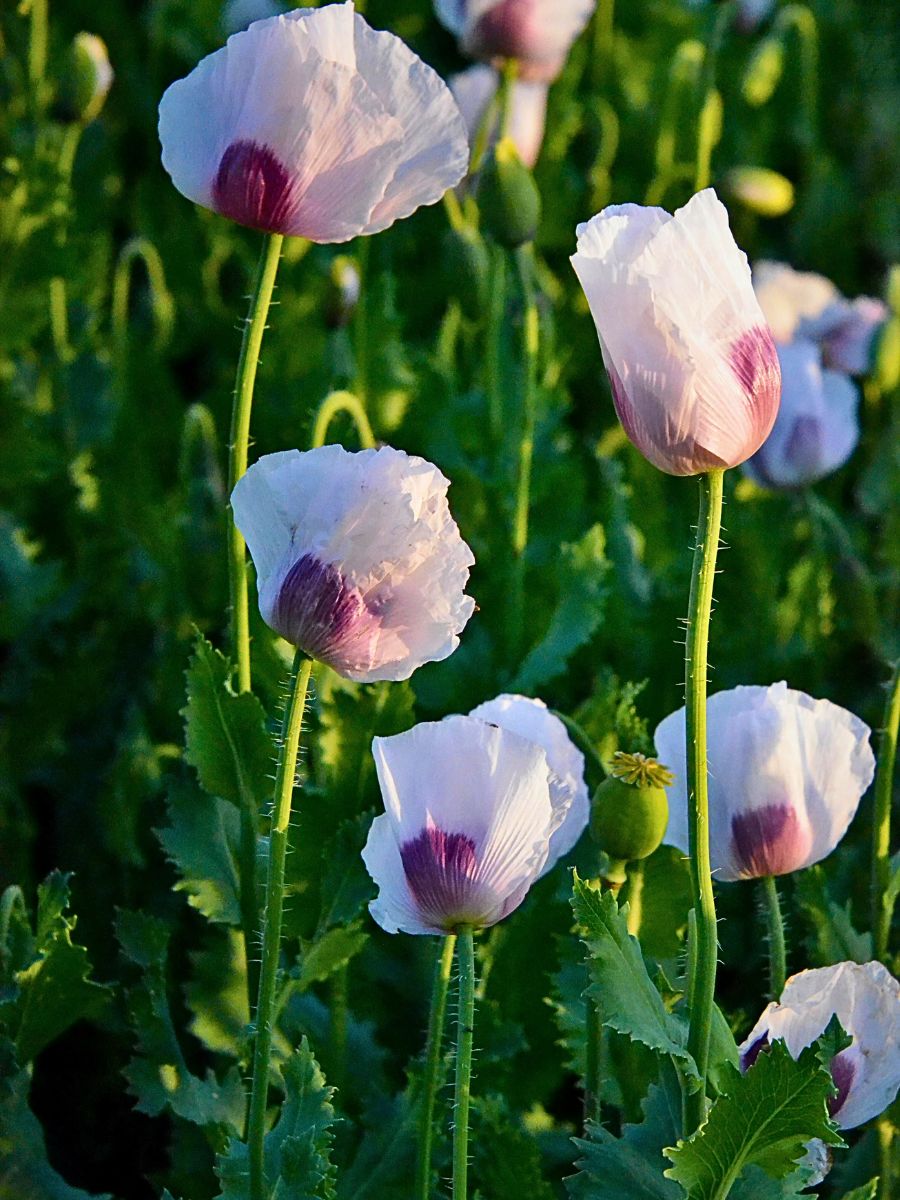
The purple poppy flower remembers the animals of war. The charity Animal Aid created it in 2006 for animals that served and died in conflicts; in the First World War alone, Countryfile notes, about eight million horses, mules, and donkeys, one million dogs, and countless pigeons died. Animal Aid itself replaced the purple poppy with a purple paw badge in 2015, but other groups still sell purple poppies every November. Outside remembrance, purple flowers lean toward imagination, spirituality, and luxury, and a purple poppy in a bouquet reads that way too.
Black Poppy Meaning
The black poppy flower honors the African, Black, Caribbean, Pacific Island, and Indigenous people who served in wars and were left out of most histories. It comes from BlackPoppyRose, the project Selena Carty founded in 2010, which the National Army Museum has worked with on that history. In the garden, true black poppies do not exist; the darkest breadseed poppies run to a dark purplish black and some Oriental poppies to deep plum, and for flowers that come closer to black, see the list of the best black flowers.
Pink, Orange, Yellow, and Blue Poppies
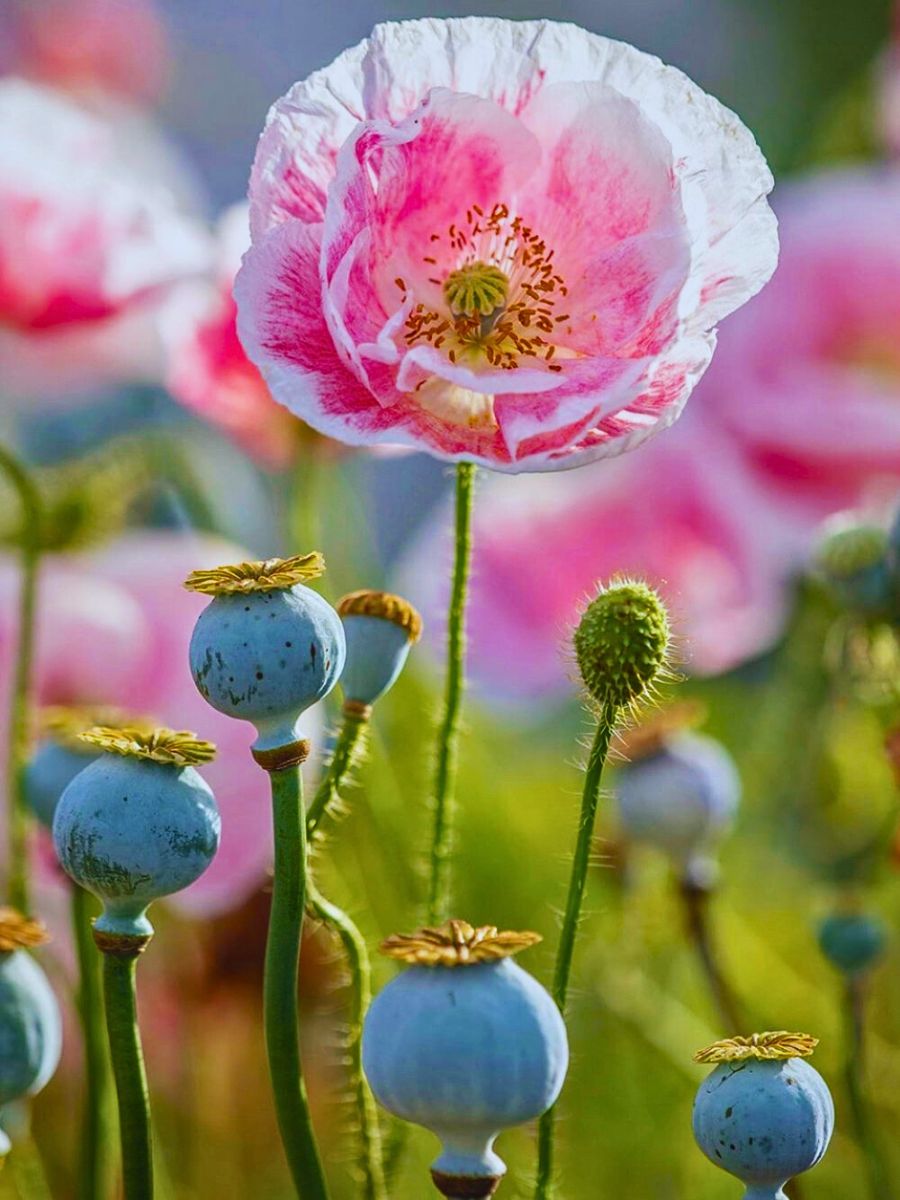
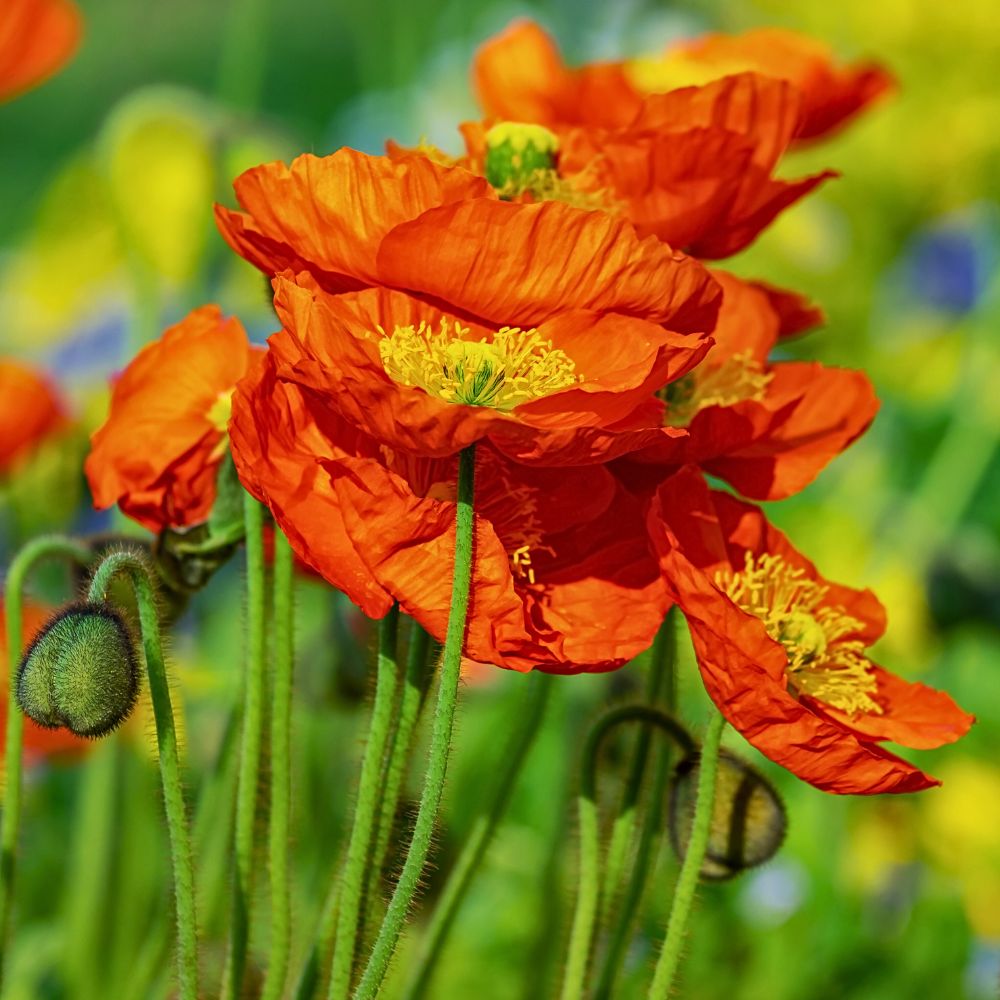
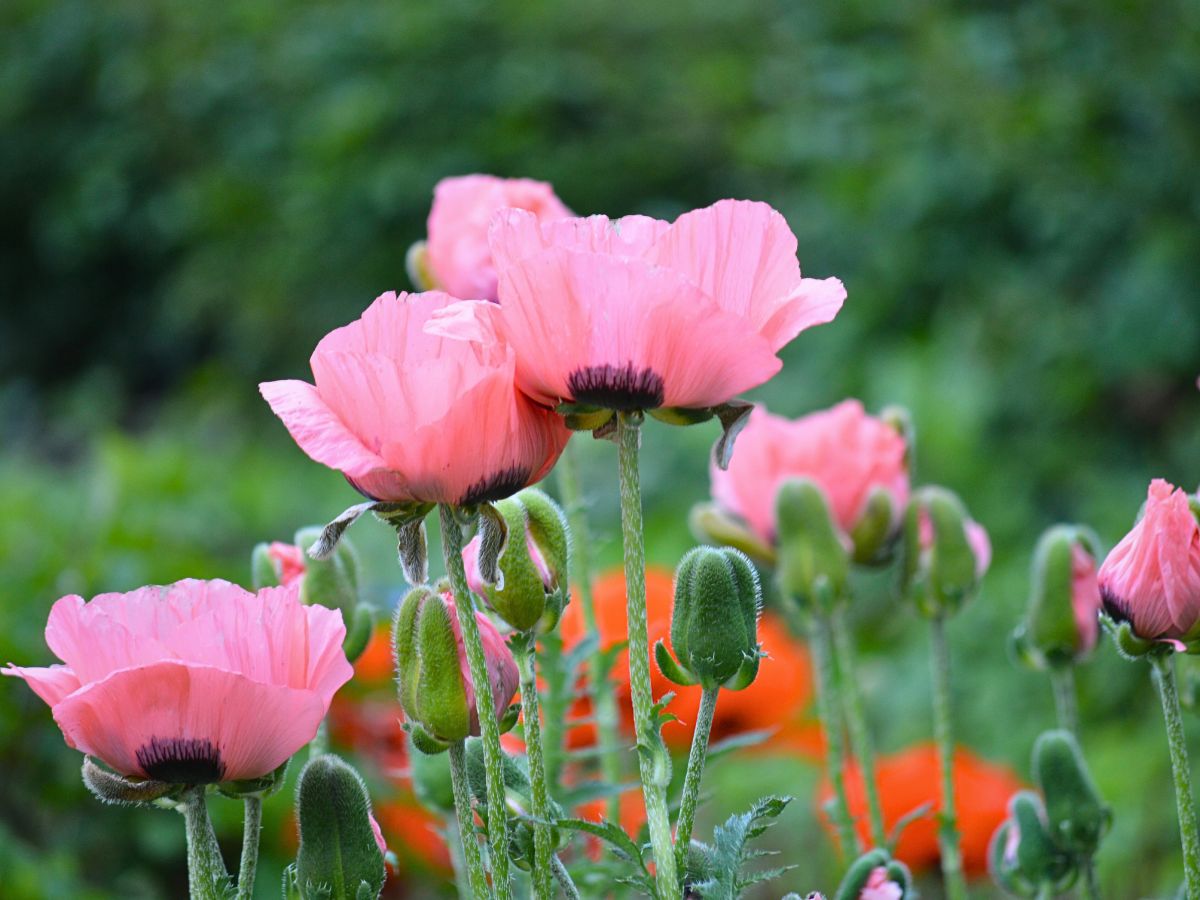
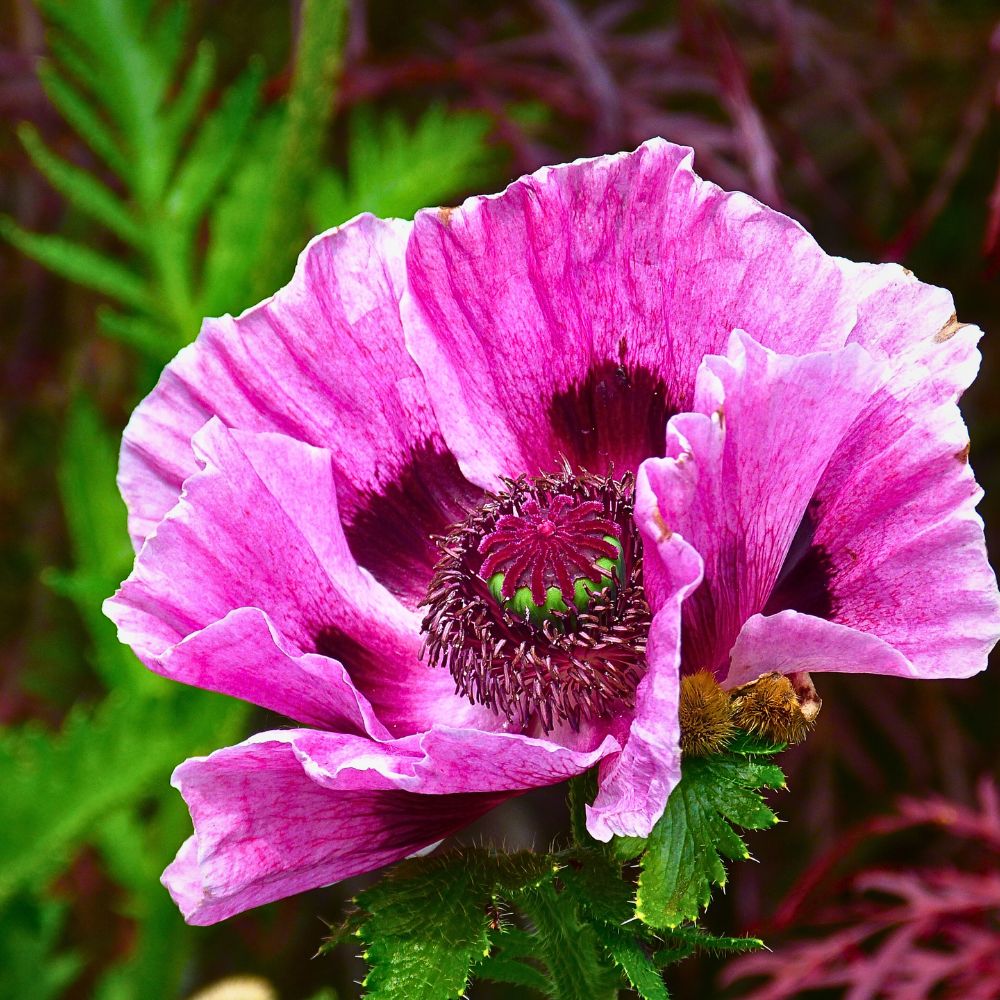
Away from the coat lapel, the other poppy flower colors follow the general language of color. Pink poppies stand for love, kindness, and peace, which is why the pastel Iceland poppy flowers are a favorite for wedding flowers. Orange poppies mean health, joy, and success; the golden-orange California poppy is the state flower of California, and the piece on the California poppy tells its story. Yellow poppies, like other yellow flowers, mean optimism, friendship, and renewal.
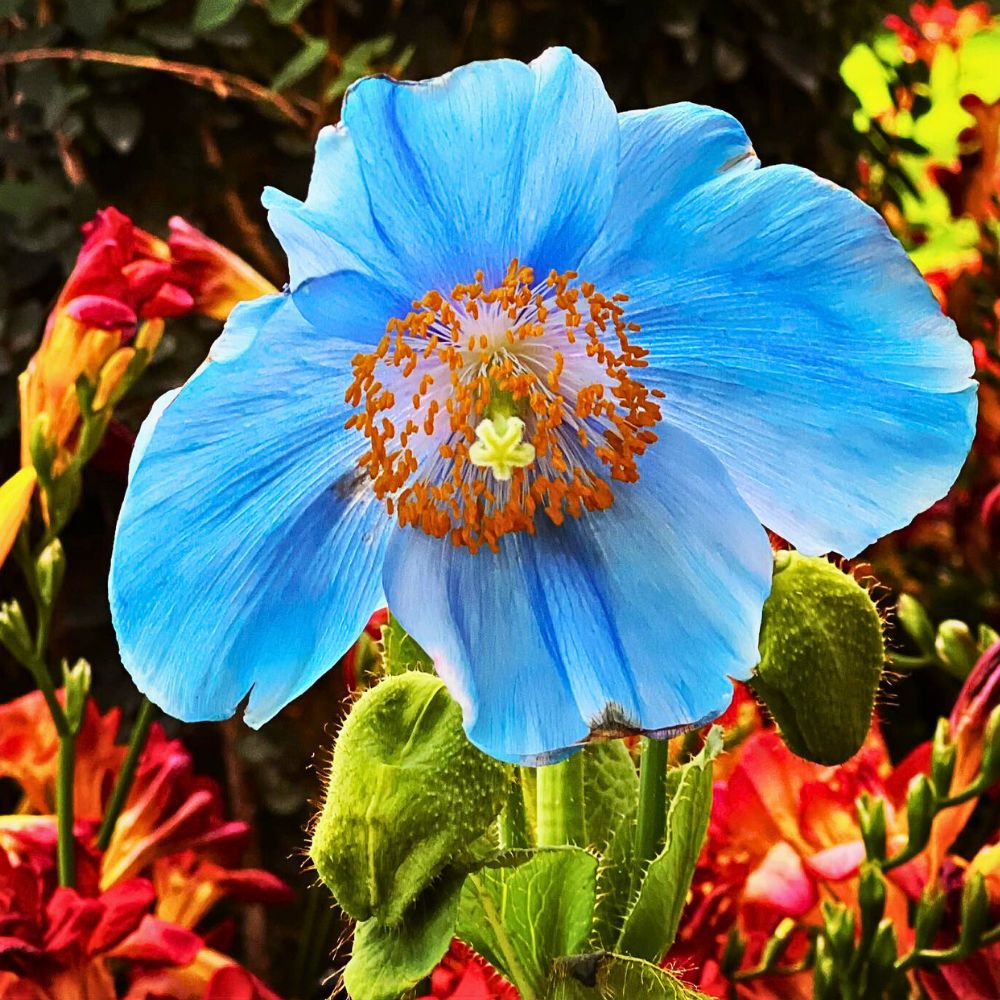
Blue poppy flowers are the rarest, with papery blossoms in a color that few other plants manage. The sky-blue Himalayan poppy is not a true Papaver but a Meconopsis, a cool-climate plant that is hard to grow, which only adds to its meaning of imagination and the extraordinary. Like most blue flowers, it is prized precisely because blue is so rare in nature, and growers keep chasing special flower colors like it.
Poppy Flower Tattoo Meaning
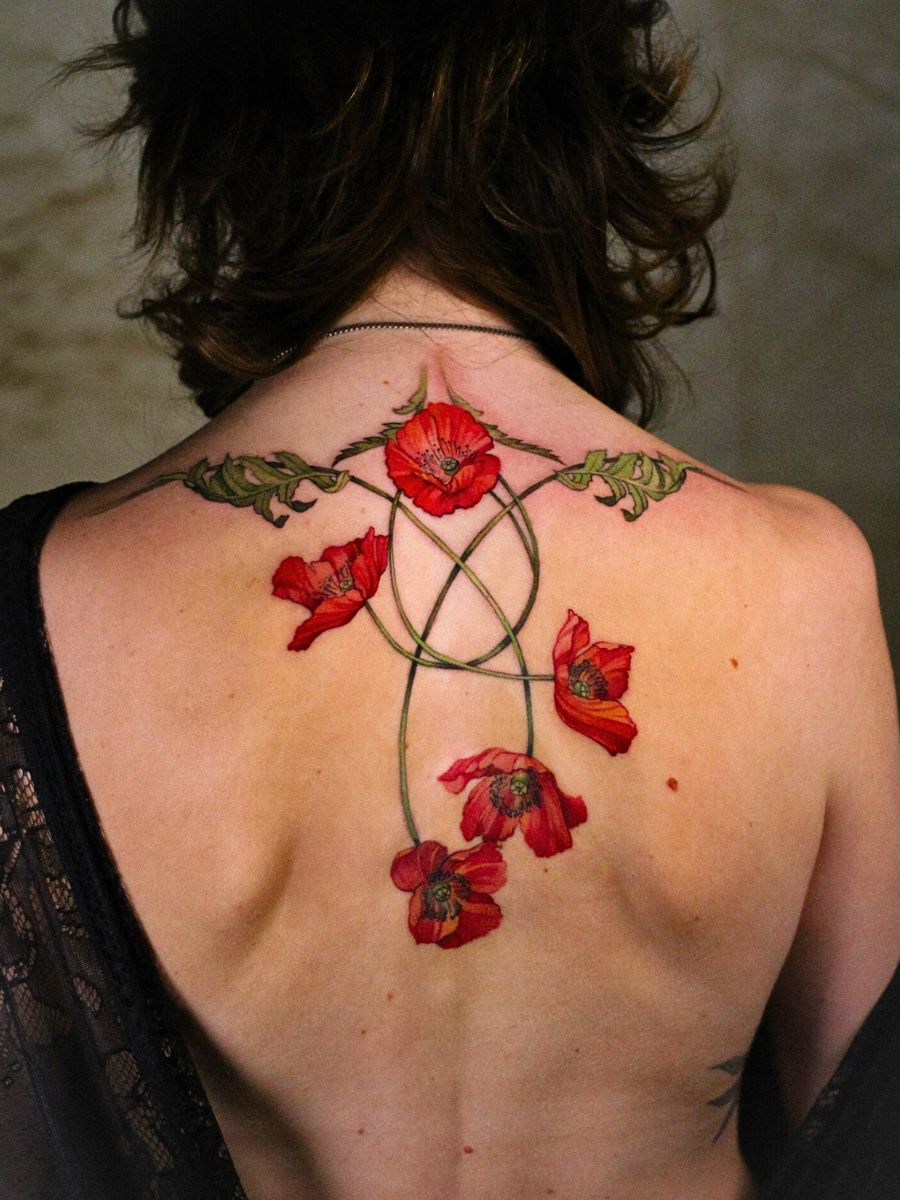
A poppy tattoo usually carries one of three meanings. The first is remembrance: a red poppy for a family member who served, often with a date, a name, or a line from In Flanders Fields. The second is the August birthday, since the poppy is one of the two August birth flowers, alongside the Gladiolus. The third is the older symbolism of sleep, dreams, and peace, which suits black and gray work with pods, leaves, and drooping buds. The collection of birth flower tattoos by month shows how artists draw it.
Types of Poppies and How to Grow Them
The word poppy covers several different plants of the Papaveraceae, the poppy family, and wild poppies are found across Europe and Central Asia, from cold mountain meadows to dry steppes. They come as annual, biennial, and perennial plants, and knowing which one you are looking at changes the story.
The Main Types of Poppies
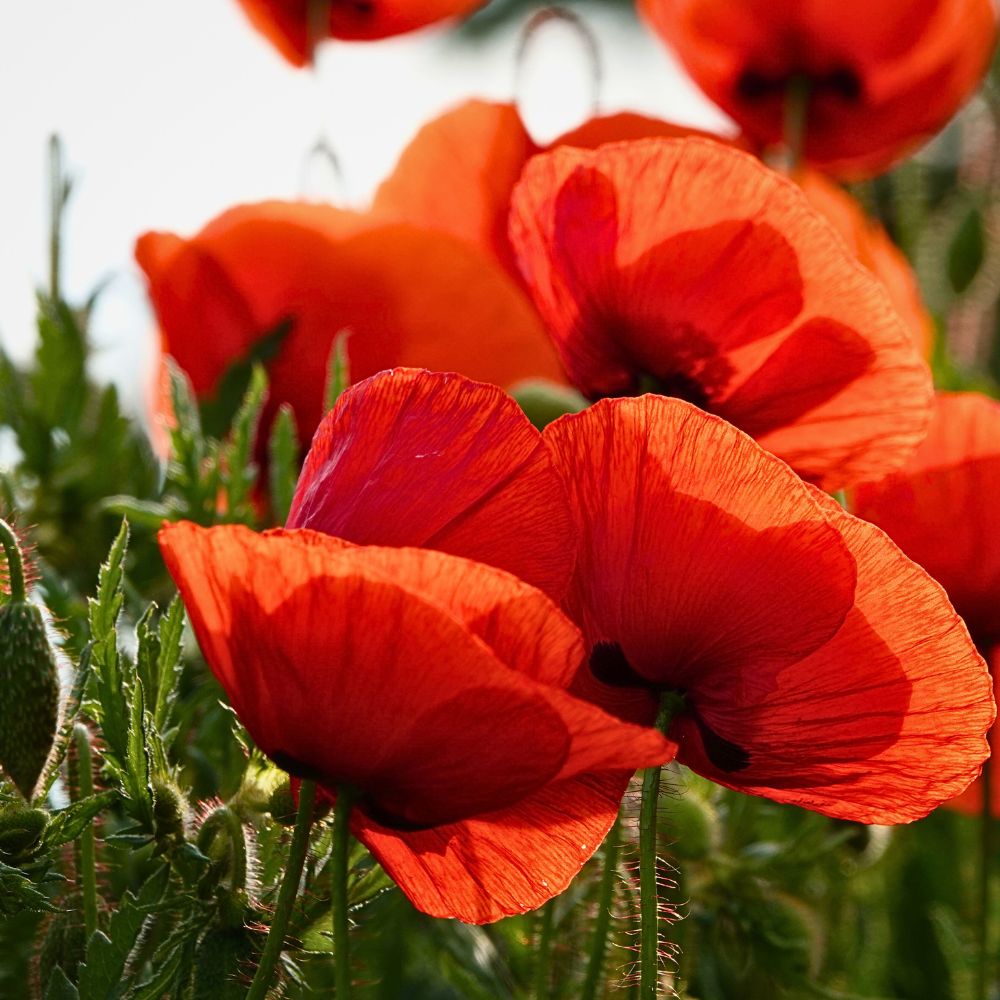
Papaver rhoeas, the corn poppy, field poppy, or Flanders poppy, is the red wildflower of remembrance, native to Europe, North Africa, and western Asia and commonly found as a weed of cornfields. In the wild, it is famously vivid red, while the garden selections known as Shirley poppies come from it in white, pink, coral, and soft purple.
Papaver somniferum, the breadseed poppy or opium poppy, is the source of medicinal alkaloids such as morphine and codeine and of the poppy seeds on your bread; growing it for drugs is regulated in several countries. It grows 60 to 120 cm (2 to 4 feet) tall, with flowers that range from white to a dark purplish black and big, blue-green pods that are prized in dried work. Poppy seed for the kitchen is a field crop in its own right in several European countries, the Czech Republic among them.
Papaver orientale, the Oriental poppy, is the big perennial of early-summer borders, with crepe-paper flowers in scarlet, salmon, and plum.
Papaver nudicaule, the Iceland poppy, is the florist's poppy: pastel cups on wiry stems, such as the Icelandic Poppy Peach.
Eschscholzia californica, the California poppy, is not a true Papaver but earns the name with its golden-orange silk.
Sowing and Growing Poppies
Poppies are easy to grow, with one quirk: they dislike being transplanted, so they are sown where they will flower. Scatter the tiny seeds on bare ground in the place where you want them to bloom, in fall or very early spring, and do not bury them, since they need light to germinate, which is exactly what happened on the churned fields of Flanders. Full sun and well-drained, lean soil are the whole recipe; overwatering is the fastest way to lose them. If you sow in spring, a few days of cold in the fridge first helps the seed along, the way a winter outdoors would. Thin the young plants to about 15 cm (6 inches) apart once they appear, and they will begin to bloom from late spring. Most annual poppies self-seed and spread, and some species die once they have flowered and set seed, so one sowing can mean a patch for years. Poppy plants do well across USDA zones 3 to 9, which covers most temperate gardens.
Once the thin petals drop, they reveal the seed pod, which is simply the swollen ovary of the flower. To save seed, harvest the pods once they have turned brown and the little holes under the cap have opened, just before they dry out completely and spill their seed. Shake the seeds out, keep them separated from the bits of dry pod, and store them in a dry glass jar for next year, or share them with a friend.

Poppies as Cut Flowers
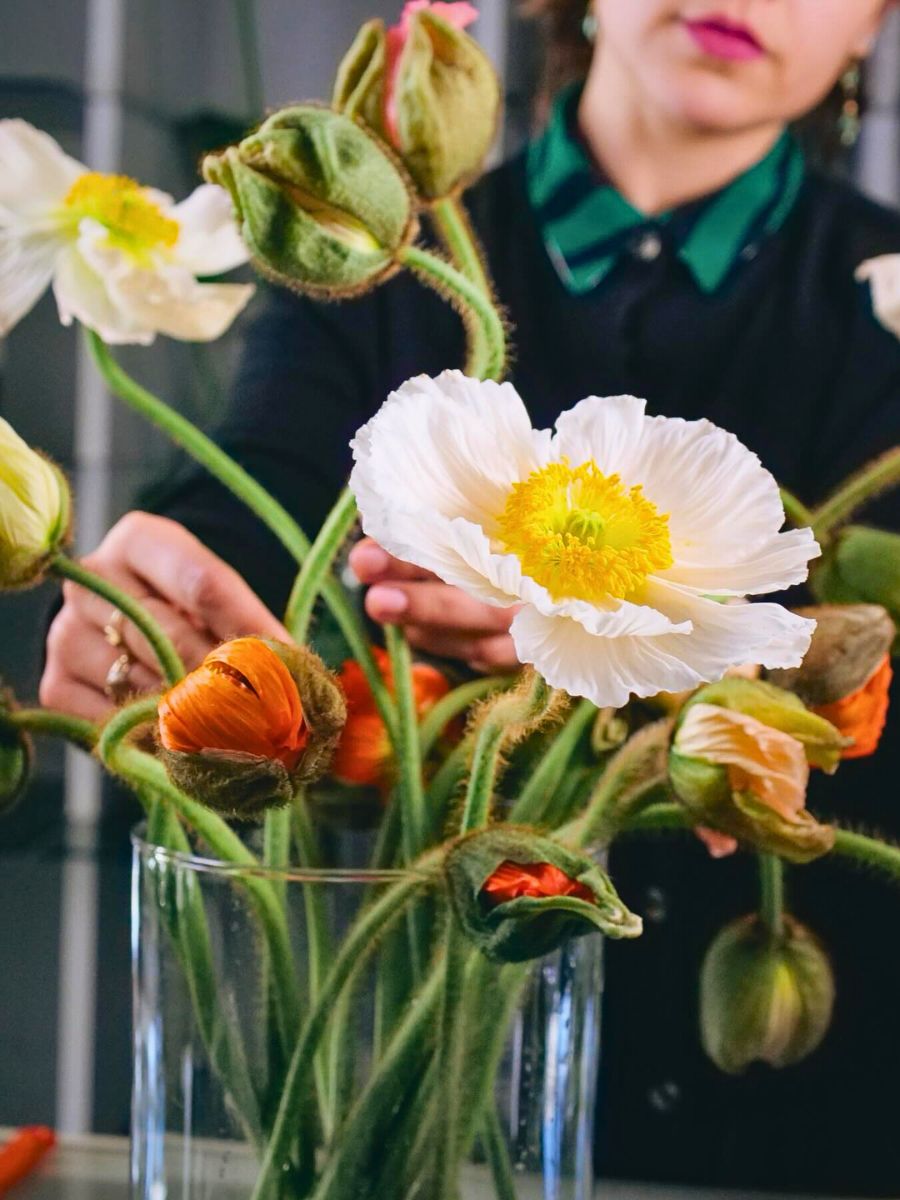
Poppies have a reputation for being difficult in the vase. Dutch grower Maurits Keppel, who sows his poppies in the fall and grows them without heating or lighting near Utrecht, explained to Thursd how he handles them. "I only cut poppies for the flower," he said. "These flowers must be cut every day to reach the correct ripeness stage." The poppy, he added, opens slowly in the vase over several days and closes again in the evening, and with flowers up to 15 to 20 cm across, it is a flower that lives in a bouquet. As he pointed out, almost every child copies the poppy in crepe paper at primary school, which says something about how it looks. You can read the whole interview in Maurits Keppel's scoop on the poppy.
The one thing to watch is the milky sap. When the stem is cut, the sap runs and, as it dries, it seals the cut so the flower cannot drink. "If this happens, cut it again, and clean the fresh wound thoroughly," Maurits advised. "It will 'stand up' perfectly very quickly." Many florists also clip the stems and sear the base briefly in boiling water or a flame for the same reason, and regular water changes add a day or two to what is always a limited vase life. Year-round cut poppies for florists now come from growers such as Rosaprima's Floraprima, whose poppy collection was covered on Thursd in 2025.
Poppy Seeds in the Kitchen
The blue-black seeds on bagels and in lemon poppy seed muffins, and the white poppy seeds ground into Indian curries, all come from Papaver somniferum. They have a gentle nutty flavor and contain only trace alkaloids; it is the latex of the unripe pod, not the ripe seed, that yields opium. And once the petals drop, the pods themselves dry well, so poppies end their life in dried flower work as often as in the kitchen.
So, What Does a Poppy Really Say?
Essentially, the poppy flower says that nothing is quite gone. The ancient world saw a flower that brought sleep and came back from seed every year; the soldiers of 1915 saw the same flower rise from the graves of their friends. Every poppy meaning since, from consolation to peace, grows from that one verity. So, give it as one of the birth month flowers for an August birthday, wear it in November, or lay it in a wreath; for the flowers people choose to say goodbye, the guide to why flowers are used in funerals and the story of the forget-me-not go further. For more than eighty other flowers, the flower meanings guide from A to Z picks up where this one stops.
Sources: The Royal British Legion, The Poppy; Commonwealth War Graves Commission, Remembering John McCrae; John McCrae, In Flanders Fields and Other Poems (1919), Project Gutenberg; University of Georgia, The Poppy Lady; American Legion Auxiliary, Moina Michael: The Poppy Lady; Co-operative News, White Poppies Tell the Story of the Alternative Remembrance Day (2014); Peace Pledge Union, Peace Pledge Union Marks Its 90th Anniversary; Countryfile, Why Are Purple Poppies Worn?; National Army Museum, BlackPoppyRose at the National Army Museum; Kate Greenaway, Language of Flowers (1884), Project Gutenberg.
Header image by Nennieinszweidrei. Feature image by Eugene Lisyuk. Reel by @matt_mattus.
About the author: Brian Okinda is an editor at Thursd and a trained journalist specializing in agriculture, science, and sustainable floriculture. He covers the flower industry from the inside, from farms and expos to the people behind the flowers. Connect with Brian on LinkedIn.