The shampoo plant is shampoo ginger (Zingiber zerumbet), a clump-forming ginger from India and Southeast Asia. Its pinecone-shaped cones turn red and fill with a clear, fragrant liquid that Hawaiians used to wash their hair. It grows outdoors in warm climates and goes dormant in winter.
The shampoo plant is shampoo ginger, Zingiber zerumbet, a clump-forming ginger from India and Southeast Asia. Its name comes from its cones: as they ripen, they fill with a clear, fragrant, slippery liquid that Hawaiians used to wash their hair. Polynesian settlers carried it to Hawaii by canoe, and there it is called 'awapuhi.
Common Names
Shampoo ginger, shampoo plant
Pinecone ginger
Wild ginger (a name also used for other plants)
'Awapuhi, 'awapuhi kuahiwi (Hawaiian)
What the Shampoo Plant Looks Like
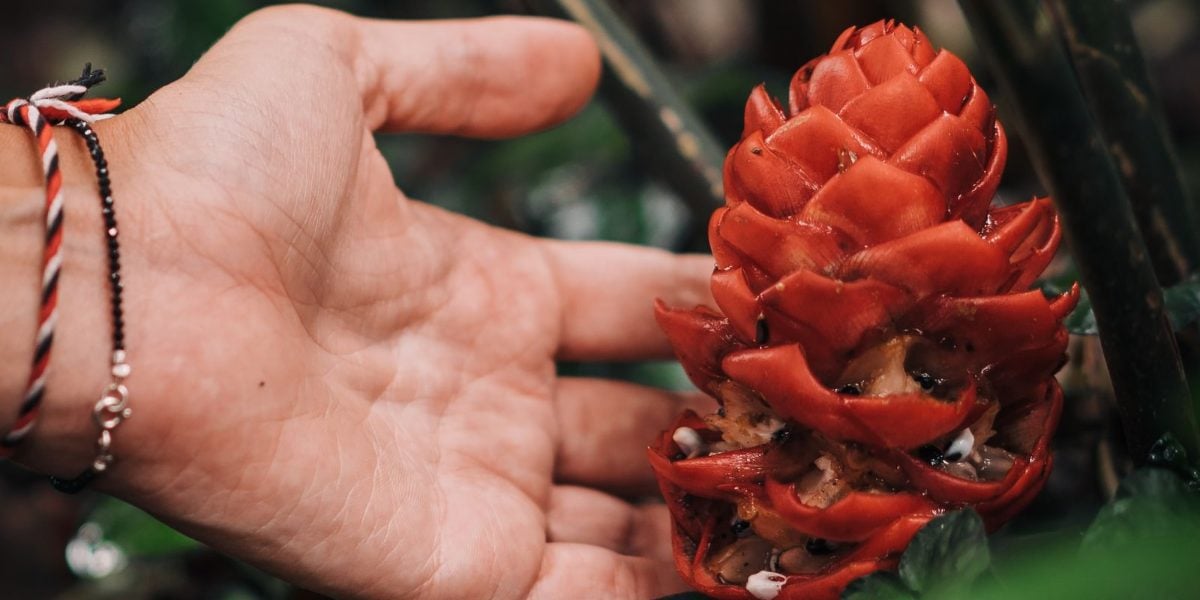
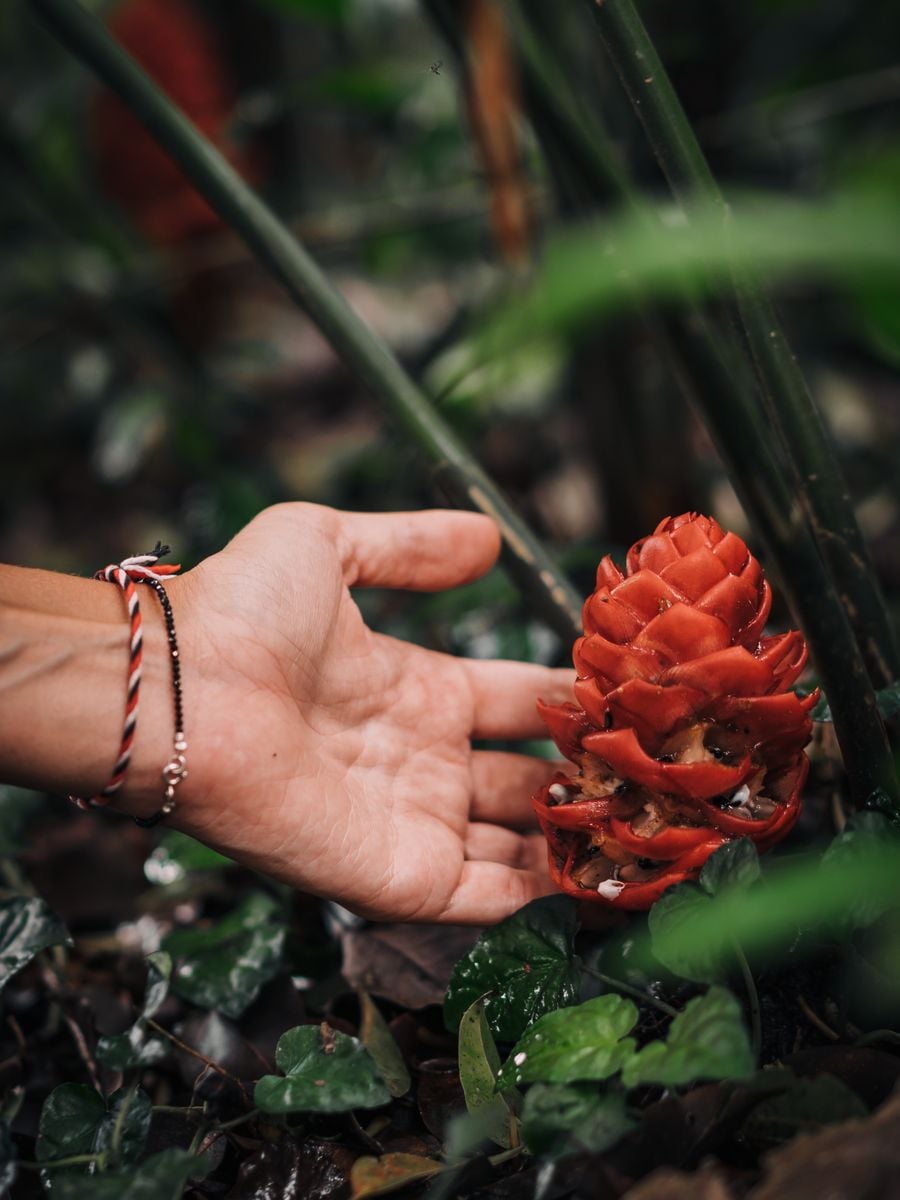
From spring, the rhizomes send up reed-like stems of about 1 to 1.2 m (3.5 to 4 ft), occasionally taller, each with 9 to 12 narrow, blade-shaped leaves up to 20 cm (8 in) long. In mid to late summer, separate flower stalks rise from the ground. They are shorter than the leafy stems and often half hidden in the clump. Each carries a rounded cone up to 10 cm (4 in) long, made of overlapping waxy green bracts, like a pine cone. Small, pale yellowish-white flowers peek out a few at a time. After flowering, the cone turns red as it fills with liquid. The cultivar 'Darceyi' has green and white leaves.
A ripe red cone at the end of the season, opening to show black seeds in white arils. Photo by Mikhail Nilov on Pexels.
How the Shampoo Works
The "shampoo" is the liquid inside the ripe red cones. Squeeze a ripe cone gently over a bowl and it gives a clear, fragrant juice that Hawaiians used as a shampoo and conditioner. Squeeze lightly and the cone refills. The same liquid is an added ingredient in some commercial shampoos. That is the use that gave the plant its name, and it is a traditional one, not a proven treatment.
Shampoo Ginger or Beehive Ginger?
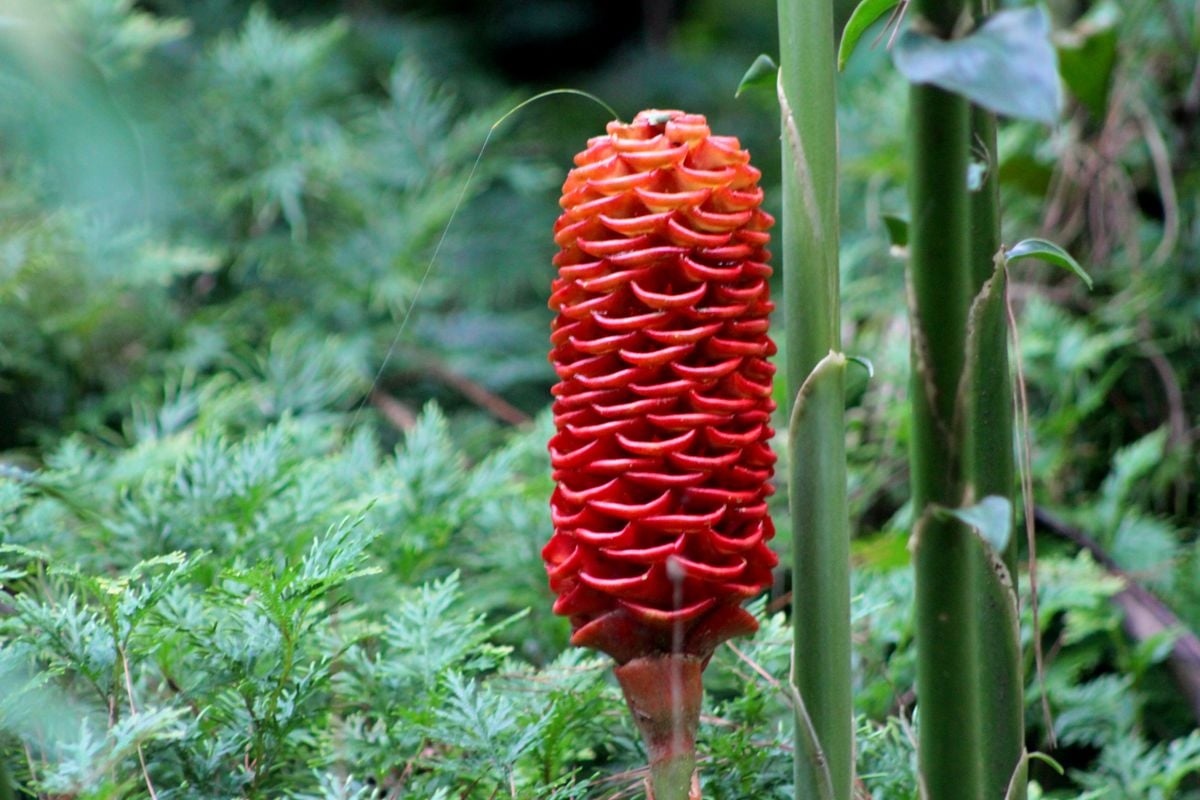
The two are often confused, and the old photo on this page showed the wrong one. Shampoo ginger has a short, rounded cone of flat, overlapping bracts, green turning red, on a stalk shorter than its leaves. Beehive ginger (Zingiber spectabile), from southern Thailand and Peninsular Malaysia, makes a taller cone of cupped bracts that looks like a beehive, in white, yellow, or red, and its leafy stems can reach about 2.4 m (8 ft).
Not the shampoo plant: beehive ginger (Zingiber spectabile), with its taller cone of cupped bracts. Photo by Kervin Edward Lara on Pexels.
How to Grow Shampoo Ginger
Climate: hardy outdoors in about USDA zones 8 to 11, depending on the source. It goes dormant in winter, even where it is native. North of zone 8, lift the rhizomes in fall and store them cool indoors, or grow it in a large container.
Light: partial shade to partial sun; full sun only where the air is humid.
Soil and water: rich soil kept consistently moist in summer, and drier in winter while the plant is dormant.
Propagation: divide the rhizomes in late winter or early spring. A single plant forms a large clump within a few years, and NC State Extension notes it can become weedy.
Benefits, Safety, and Pets
Search for "shampoo ginger benefits" and you will find long lists. The evidence behind them is thin: a 2024 review in Planta Medica found 54 animal studies on the plant and no human studies, and called for proper safety data. Thursd makes no health claims for it.
The rhizome is edible but bitter, and it is not the ginger from the shop (Zingiber officinale). Do not use it as a medicine.
Before you use the cone liquid on your hair or skin, try a little on a small patch of skin first.
The ASPCA has no entry for Zingiber, so there is no pet rating. Keep cats and dogs from chewing the plant.
It is not on the Florida invasive species list, UF/IFAS assesses it as not a problem species in Florida, and the Hawaii weed risk assessment rates it low risk. Do not confuse it with shell ginger (Alpinia zerumbet), a different plant with a similar name.
For more flowers from Hawaiian tradition, see our story on Lei Day.
Sources: Missouri Botanical Garden Plant Finder; UF/IFAS Gardening Solutions, UF/IFAS Assessment of Non-native Plants and UF/IFAS Extension Sarasota County; NC State Extension Gardener Plant Toolbox; National Tropical Botanical Garden; Kew World Checklist of Vascular Plants (via GBIF); Hawaii-Pacific Weed Risk Assessment (Plant Pono); Florida Invasive Species Council plant list; Chicago Botanic Garden (beehive ginger); ASPCA Animal Poison Control Center; Planta Medica (2024) scoping review on Zingiber zerumbet.
Header image, featured image, and profile picture by Mikhail Nilov on Pexels.