The baby tears plant, Soleirolia soleirolii, is a creeping ground cover from the western Mediterranean islands with tiny, glossy leaves. It wants cool, moist, humid shade, not warm sun, grows indoors or out, and the ASPCA lists it as non-toxic to pets.
The baby tears plant (Soleirolia soleirolii) is a creeping member of the nettle family from the islands of the western Mediterranean, Corsica and Sardinia among them. It forms a low carpet of tiny, shiny leaves. What it wants is cool, moist, humid shade, not heat: direct sun scorches it, and it does not survive drought.
Common Names
Baby's tears or baby tears
Angel's tears
Mind-your-own-business
Corsican creeper or Corsican carpet
Paddy's wig and peace-in-the-home
Irish moss and Japanese moss (names it shares with other plants)
Older books call it Helxine soleirolii.
How to Recognize Baby Tears
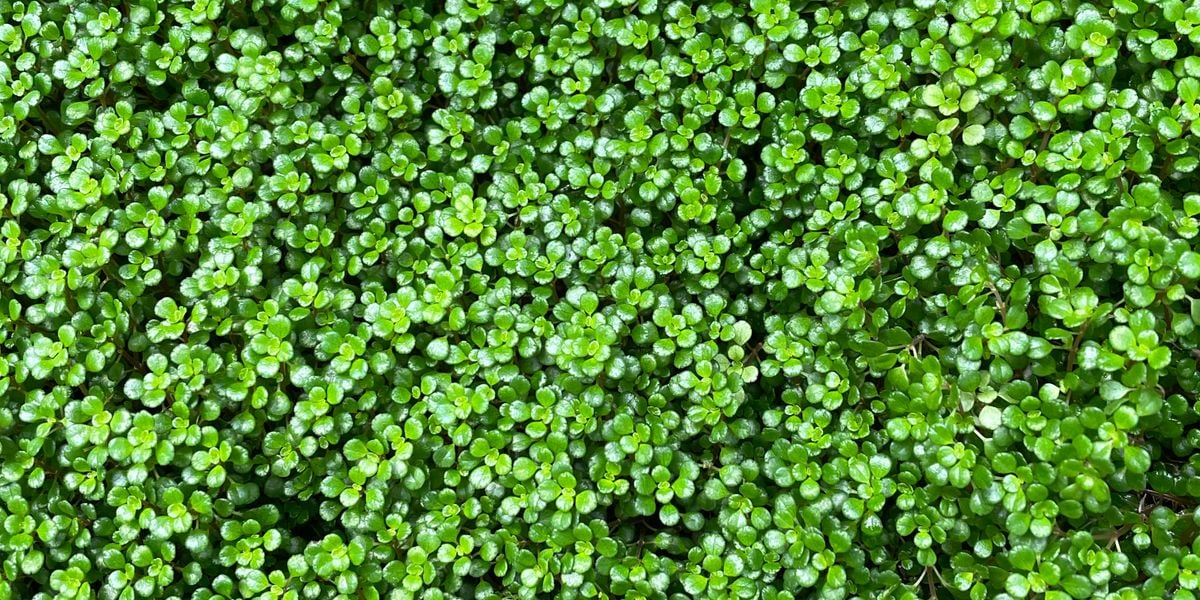
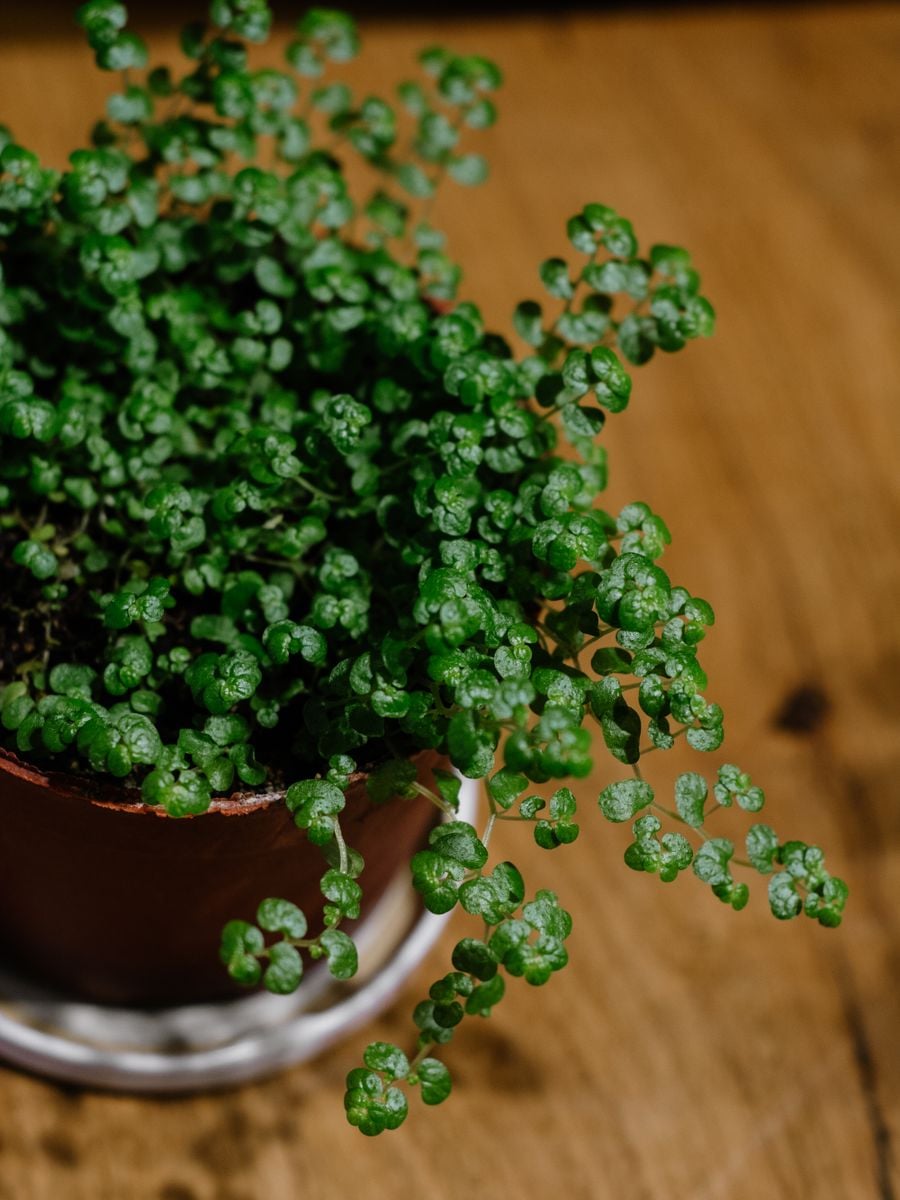
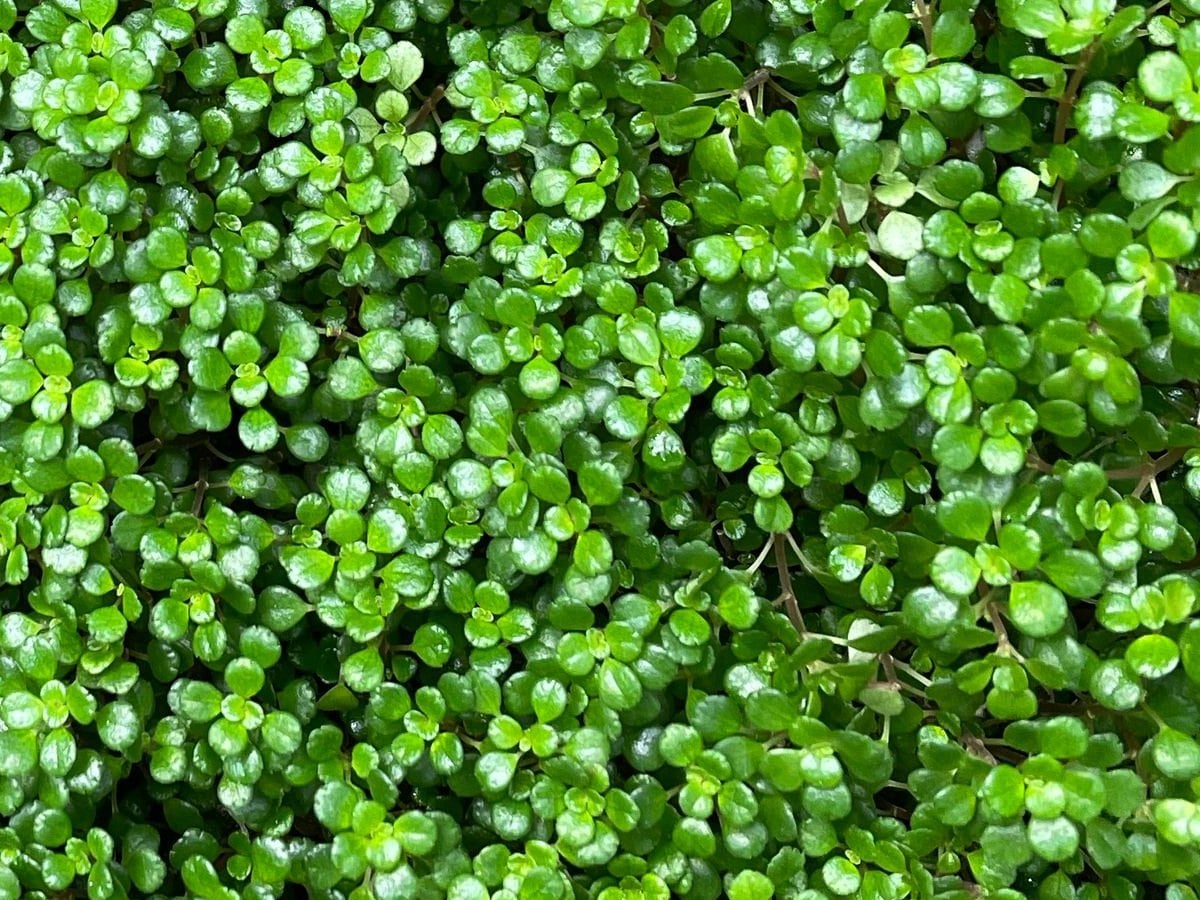
The leaves are the giveaway: round to oval, glossy, and only about 6 mm (1/4 in) across, set one by one along thin pink or green stems that root wherever they touch the soil. A plant rarely grows taller than 10 to 15 cm (4 to 6 in), but it keeps spreading sideways, easily to a meter (3 ft) or more. The flowers are minute, pinkish white, and easy to miss in summer. There are golden ('Aurea') and silver-variegated ('Variegata') forms.
Baby tears as a houseplant, with round leaves on thin, trailing stems, in Ankara, Türkiye. Photo by Nadiye Odabaşı on Pexels.
The name trips people up. The ASPCA's entry called "Baby's Tears" is a different plant, the polka dot plant (Hypoestes phyllostachya); it files Soleirolia under Paddy's wig.
Baby Tears Plant Care
Light: bright, indirect light indoors. Outdoors, part shade to full shade; direct sun scorches the leaves.
Water: keep the soil evenly moist. It dislikes drying out and dislikes standing in water just as much. In winter, keep it just moist.
Humidity and temperature: high humidity and moderate temperatures. Dry indoor air and heat are its enemies, so a cool room or a closed terrarium suits it better than a sunny windowsill.
Soil: fertile, moist, but well-drained. Indoors, a loam-based potting mix with some grit.
Propagation: divide a clump, or press a piece of stem onto moist soil, where it roots readily.
Is Baby Tears an Indoor or Outdoor Plant?
Both. Outdoors, it is a ground cover for shade gardens, rock gardens, and rock walls in USDA zones 9 to 11. Light frost kills the top, but the plant usually grows back from the base; the RHS rates it H4, hardy through most of the UK. Indoors, it grows in pots, hanging baskets, and terrariums, where it can smother smaller plants over time. For ideas, see terrarium design that brings micro-landscapes to life.
A dense mat of baby tears, the carpet it forms in damp shade. Photo by kroetlaender • pictures on Pexels.
Is Baby Tears Safe, and Where Is It a Problem?
For pets, it is: the ASPCA lists Soleirolia soleirolii as non-toxic to dogs, cats, and horses. Non-toxic is not the same as edible, so if a pet eats a lot of it and gets sick, call your vet or the ASPCA Animal Poison Control Center at (888) 426-4435.
The real risk is to the garden. The RHS treats mind-your-own-business as a weed of lawns and borders, where it smothers seedlings, and NC State Extension calls it weedy in warm-winter areas and hard to remove once established. Tiny pieces of stem regrow, so:
Plant it where it can spread, or keep it in a pot.
Do not hoe it out, which chops it up and spreads it. Lift it with a trowel, or skim off the top layer of soil.
Put the clippings in the green waste bin, not on the compost heap, and clean tools and boots after working in it.
The benefits are practical ones: a soft, green carpet for damp shade, a pet-safe houseplant, and an easy terrarium filler.
Sources: NC State Extension Gardener Plant Toolbox (Soleirolia soleirolii); Royal Horticultural Society (plant profile and weed advice on mind-your-own-business); ASPCA Animal Poison Control Center (Paddy's Wig, Baby's Tears).