Cryptomeria japonica, the Japanese cedar or sugi, is an evergreen forest tree from Japan and China, grown in gardens in zones 5 to 9 as a specimen or screen. It is not a houseplant, and its late-winter pollen is the main hay fever trigger in Japan.
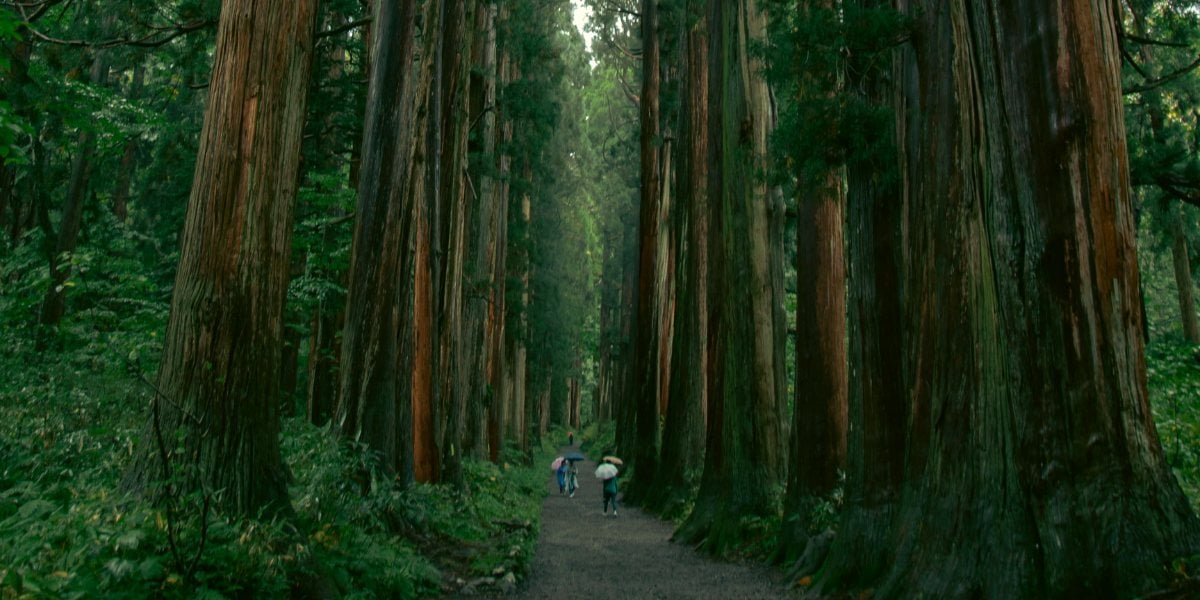
Cryptomeria japonica, the Japanese cedar or sugi, is an evergreen conifer from Japan and China. It is a forest tree. In gardens it grows to 15 to 21 m (50 to 70 ft), and in the wild it can reach about 55 m (180 ft). It is not a houseplant, and despite its name it is not a true cedar either: it belongs to the cypress family, Cupressaceae. In Japan it is the national tree, and in the flower trade its branches are cut greens.
Common Names
Japanese cedar
Japanese cryptomeria
Sugi (its Japanese name)
Japanese red-cedar
How to Recognize a Japanese Cedar
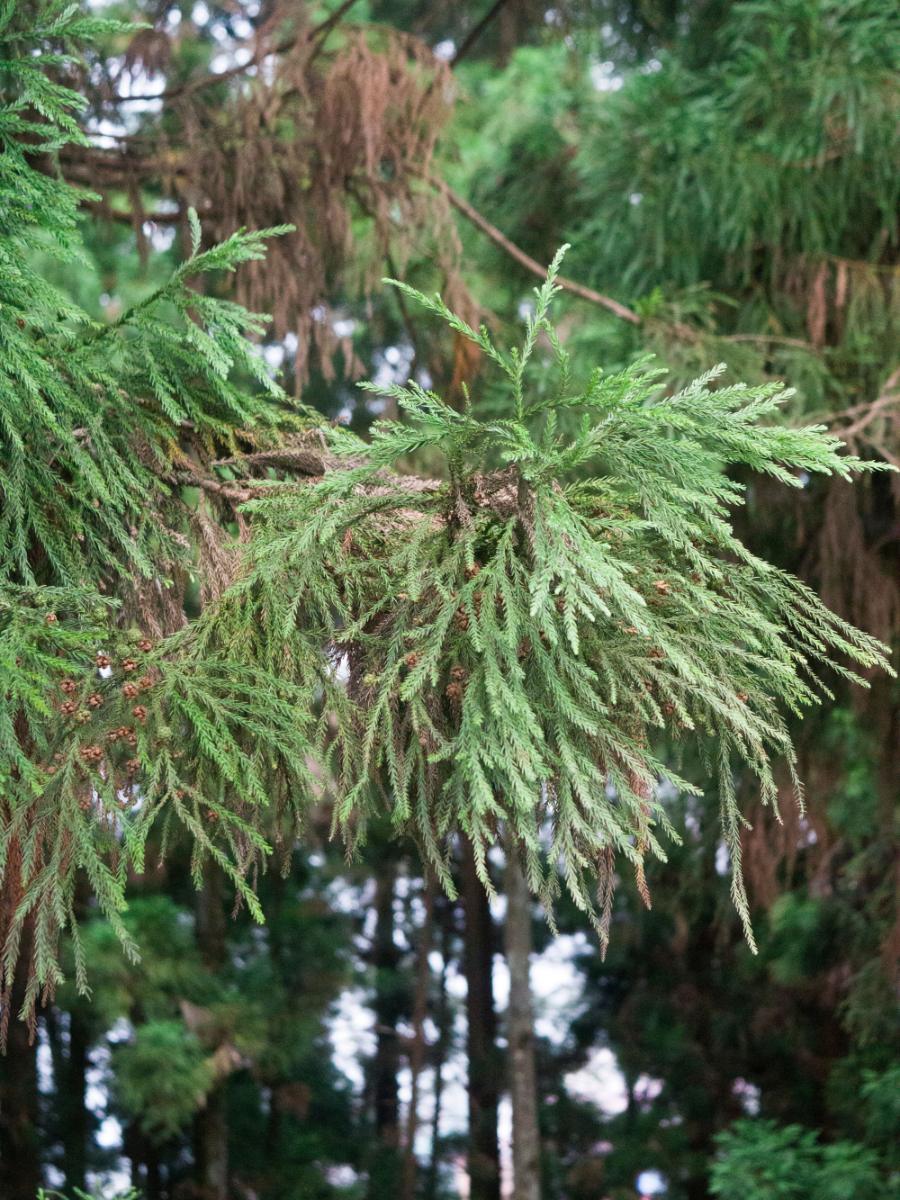
Look at the twigs first. The needles are short, 6 to 20 mm, awl-shaped and four-angled, set in a spiral and curved in toward the shoot, so each twig looks like a soft green rope. They are bright to blue-green in summer, stay on the tree for four to five years, and often turn bronze in winter, which is normal. The bark is reddish-brown and peels in long strips. Male cones are small and sit in clusters near the tips of the branches; female cones are round, brown, and woody. The crown is conical to pyramidal, on a straight trunk.
Japanese cedar foliage with small round cones, in Kohima, India. Photo by pengraphy on Pexels.
Is Japanese Cedar an Indoor Plant?
No. NC State Extension treats Cryptomeria japonica as a landscape tree for USDA zones 5 to 9 that spreads 6 to 9 m (20 to 30 ft) wide. It needs no tropical heat, and indoors it has neither the light nor the room. In the garden it works as a specimen tree, a screen, or a barrier.
Site: full sun to partial shade, sheltered from strong wind.
Soil: rich, deep, moist, and well-drained, preferably acidic.
Water: keep young trees watered in dry spells; the tree likes ample moisture.
Problems: leaf spot and leaf blight. The tree is deer resistant and slightly salt tolerant.
Smaller gardens: pick a cultivar. Oregon State University describes 'Black Dragon' as a small, dense tree with dark green foliage, 'Elegans' as a soft, juvenile-leaved form that turns brownish red in winter, and 'Kilmacurragh' as dwarf and mounding.
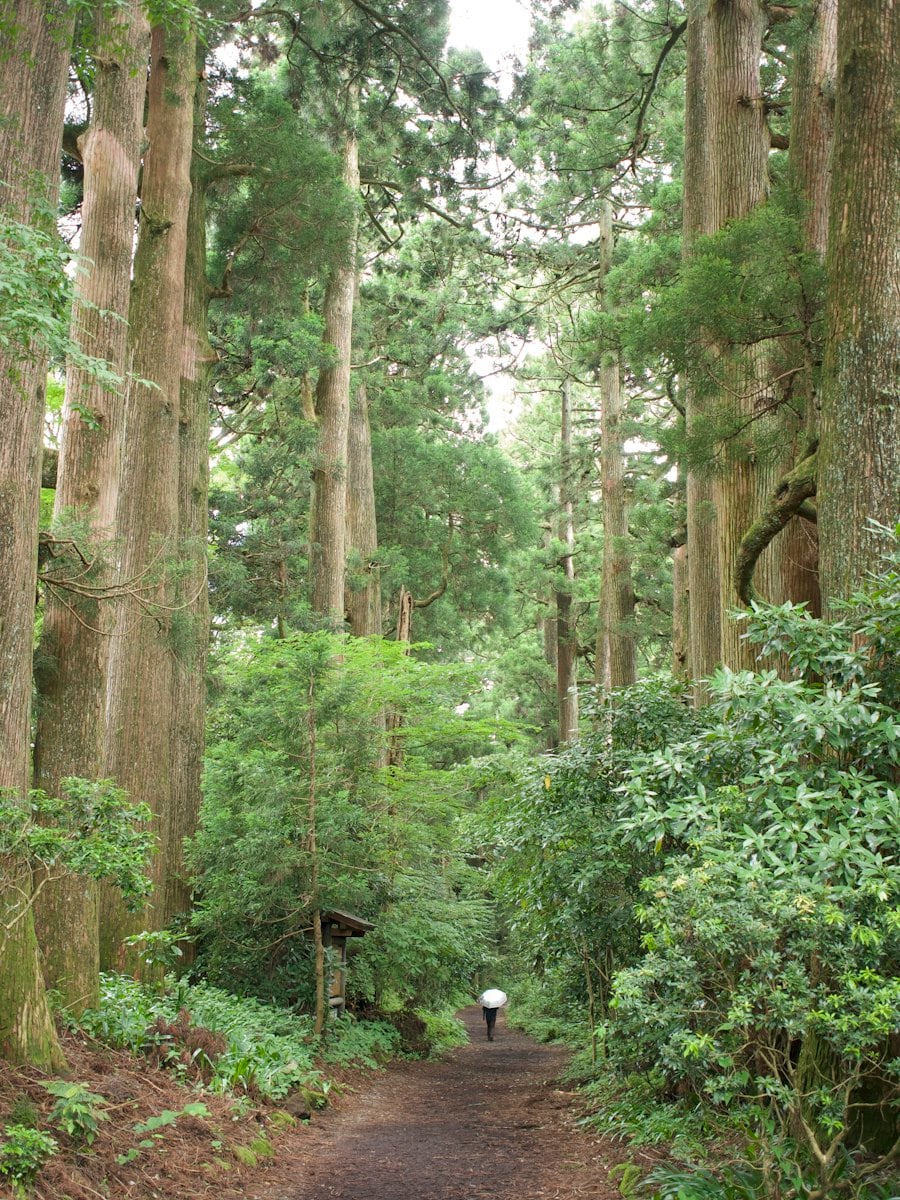
In Japan, where it is called sugi, the tree is often planted around shrines and temples. Its soft, fragrant wood is valued for building and for decorative work, because of its striking color variation. Florists know Cryptomeria from the cut-greens trade: Dutch grower Snijgroenkwekerij van der Elst lists it among the conifers it grows for wreaths and arrangements, next to Thuja, Chamaecyparis, Taxus, and Juniperus (conifers for autumn and Advent).
A path through old Japanese cedars in Hakone, Japan. Photo by Eva Balogh on Unsplash.
Japanese Cedar Pollen, Pets, and Safety
The real issue with this tree is its pollen. Japanese cedar pollinosis is the most common form of hay fever in Japan, and a recent survey suggests about 40 percent of the population will develop it. Once it starts, it rarely goes away on its own. The pollen flies mainly in February and March, released by the small male cones at the branch tips.
If someone in the house has hay fever in late winter, plant the tree away from bedroom windows and the terrace, and leave branches loaded with male cones out of late-winter arrangements.
Japanese cedar is not on the ASPCA lists of plants toxic or non-toxic to pets, so there is no rating to go on. Keep dogs and cats from chewing the branches, and call your vet or the ASPCA Animal Poison Control Center at (888) 426-4435 if a pet seems unwell.
Plant Pono's Hawaii-Pacific weed risk assessment scores it 5, "evaluate": it has naturalized on Maui and Oʻahu but is not considered highly invasive there.
Sources: NC State Extension Gardener Plant Toolbox (Cryptomeria japonica); Oregon State University Landscape Plants (Cryptomeria japonica); Yale Nature Walk (Japanese cedar); Sakurai et al., Pathogens (2022), on Japanese cedar pollinosis; ASPCA Animal Poison Control Center plant lists; Plant Pono, Hawaii-Pacific Weed Risk Assessment (Cryptomeria japonica, 2015).