Every spring, the same plant moves to the front of the garden center: a scented Pelargonium with a label that says mosquito plant. Next to it stand lemongrass, lavender, marigolds, and a pot of basil, all sold on the promise that they keep the biting off your terrace. It is one of the best-selling stories in the trade. So a florist or garden center should be able to answer the question straight: which plants that repel mosquitoes and bugs actually do it, and which ones only smell as if they might?
The short answer, from the people who test this for a living, is uncomfortable and useful at the same time. The oils inside these plants repel insects, some of them quite well. The plants sitting in a pot do not, because they release almost none of that oil into the air. That is no reason to stop selling them. It is a reason to sell them for what they are. This guide takes the six mosquito repellent plants Thursd has on its own product pages one by one, says what the research finds for each, and ends with what does keep mosquitoes off a terrace, and where a plant honestly fits in. For the indoor version of the question, Thursd already has a list of fragrant houseplants that keep bugs away; this is the outdoor one, with the evidence attached.
How a Plant Would Have to Repel a Mosquito
Start with how a mosquito finds you, because that is where most of the marketing goes wrong. A female mosquito, and only the females bite, follows the carbon dioxide you breathe out, then the odor of your skin, then your body heat. Marieta Braks, who studies mosquitoes at the Dutch public health institute RIVM, spends a whole video on the RIVM mosquito page taking apart the folk beliefs: there is no such thing as sweet blood, light does not attract them, and scent does. Tessa Visser, entomologist at Wageningen University, said the same to the Dutch science magazine Quest when it asked whether a lavender plant on the nightstand helps: "It would be lovely, but no, as far as I know there are no plants that work against mosquitoes." (Translated from Dutch, as is every Dutch quote in this piece.) Mosquitoes, she explained, go looking for carbon dioxide first, and a plant's aroma does not distract them from it.

A repellent works by putting a molecule between you and the insect, one that either masks your odor or irritates the mosquito's sensors so that it turns away. Plants make such molecules by the hundred. Linalool in lavender, geraniol and citronellol in scented Pelargonium, citral in lemongrass, citronellal in citronella grass, and nepetalactone in catnip. Tested as oils on skin, many of them work, for a while. The most cited review of the field, by Marta Maia and Sarah Moore in the Malaria Journal in 2011, puts the catch in one sentence: "Most of these essential oils are highly volatile and this contributes to their poor longevity as mosquito repellents." Citronella-based repellents, they write, protect for about two hours.
Now the pot. A plant keeps its oil in glands on the leaf and releases it when the leaf is crushed, brushed, or heated. Left alone on a terrace, it releases very little. When Canadian researchers analyzed the citrosa, the Pelargonium sold as the mosquito plant, the whole plant yielded 0.2 percent essential oil by fresh weight, and the marketing claim at the time was that it repelled mosquitoes over a 10 square foot area by continuous release. In the field, the plant made no measurable difference. The Clemson University extension service reviewed 62 studies on plant oils and mosquitoes and found that not one of them tested a landscape planting; the scent, it notes, dissipates into the air, and any breeze finishes it off. To get an effect, the leaves have to be crushed or the oil rubbed on the skin.
There is exactly one well-known experiment in which live plants did something, and it deserves to be quoted properly because it gets misquoted everywhere. In 2002, a team in Kenya led by Aklilu Seyoum, with the Dutch entomologist Bart Knols among the authors, placed potted plants inside experimental huts in a screen-walled greenhouse and counted how many malaria mosquitoes reached the people sleeping inside. Hoary basil, Ocimum americanum, cut the number by 39.7 percent. Lantana camara managed 32.4 percent, and a wild Lippia 33.3 percent. Tagetes minuta, a marigold, did nothing measurable, and neither did the lemon-scented gum Corymbia citriodora, neem, or two other basils. That is the best result a live plant has ever posted, in a closed hut, and it still let six out of ten mosquitoes through. The paper is in the American Journal of Tropical Medicine and Hygiene.
Which is why the institutions that have to give advice do not mention plants at all. RIVM's list of what is proven to work in the Netherlands is DEET, icaridin, IR3535, and citriodiol. The US Centers for Disease Control keep an almost identical list, adding PMD and 2-undecanone, and state plainly that they do not know how well non-registered natural repellents work. The Dutch government's product guide Waar zit wat in, run by RIVM, goes a step further: because citronella has never been shown to work well enough, manufacturers in the Netherlands may not sell citronella products as insect repellents at all, only as something like a fresh skin spray, and it puts lavender, catnip, garlic, vitamin B, and anti-mosquito bracelets in the same unproven basket. That is the regulatory floor under everything that follows.
So why do plants that repel mosquitoes sell so well? Because the story is half true, and because nobody tests their own terrace. The oil does work. The plant does not. Everything below is about the gap between the two.

The Six Plants on the Shelf, One by One
These are the six that a Dutch garden center, a US big box store, and a florist with a summer plant table all sell as plants that repel mosquitoes, and the six with a page in Thursd's product catalog. For each: what it is, what the oil does, what the pot does, and what to sell it for instead.
Lavender: Lavandula Phenomenal and the Linalool Question
The lavender that has done most to make lavender a mass-market plant is Lavandula Phenomenal, a hardy lavandin, Lavandula x intermedia, that grows 70 centimeters (28 inches) high and wide, carries very large purple-blue flowers from early summer into autumn, and reblooms after a prune. It was bred by Dr. Rick Grazzini for Peace Tree Farm in Pennsylvania and taken to the world by Plantipp, and its successor Lavandula Sensational went to RHS Chelsea as a plant of the year contender. Lloyd Traven of Peace Tree Farm told Thursd why the crop matters commercially: "The demand for Lavandula has been exploding for the last decade and continues to rise because of the myriad uses and benefits." You can read the whole conversation in Thursd's interview with Lloyd Traven.

Lavender tops almost every list of plants that repel mosquitoes, and the claim rests on linalool, the main molecule in lavender oil. And linalool, as a concentrated oil, is genuinely good. In a 2009 trial published in the Journal of Vector Ecology, a diffuser holding 20 grams of pure linalool cut mosquito landings by 93 percent indoors and by 58 percent outdoors at six meters. That is the molecule. The plant is a different matter: a lavender bush releases a trace of it on a warm afternoon, which is why the Dutch product guide lists lavender among the remedies never shown to work and why Visser named it first when Quest asked. The 1,800 people a month who search whether lavender repels mosquitoes deserve the straight version: the oil on your skin, for an hour or two, yes. The plant beside your chair, no.
There is a further wrinkle that lavender growers know and customers do not. Phenomenal and Sensational are lavandins, hybrids of true lavender and spike lavender, with more camphor in the oil and roughly double the oil content of Lavandula angustifolia. Caroline Alexander, who grows a hundred acres of lavender for oil at Castle Farm in Kent, explained the difference in Lorna Roberts's report from the harvest: "This is the scent that most people associate with lavender," she said, "but it's not actually true lavender. It's lavandin, a hybrid cross." Lavandin is the one that fills the lavender bags and, distilled, the insect-repellent candles. Distilled is the operative word.
Sell lavender for what it does: months of flower, bees on it from morning to evening, bunches that dry in three weeks, and a scent every customer already loves. Thursd's lavender meaning guide and the piece on dried Provence lavender cover the rest of the story.

Scented Pelargonium: The Plant Sold as the Mosquito Plant
The plant with the mosquito on the label is a scented-leaf Pelargonium, usually the cultivar citrosum, also sold as citrosa or Van Leenii after the Dutch grower credited with raising it. Thursd's citronella plant guide covers the naming, the care, and the confusion with citronella grass in detail, and this section will not repeat it. What it adds is the test record: of all the mosquito repellent plants on the shelf, this is the one that has been put on trial twice, in the field, with people as bait.
In Florida in 1994, entomologists placed citrosa plants around volunteers and counted mosquito landings on their forearms, with and without the plants. No difference, against the Asian tiger mosquito or the southern house mosquito; in the laboratory, the mosquitoes were happy to rest on the citrosa leaves themselves. The paper's title says it all: "Failure of the mosquito plant," in the Journal of the American Mosquito Control Association. Two years later, a University of Guelph team repeated the exercise in Ontario against spring Aedes mosquitoes and added a chemical analysis. The oil was 35 percent geraniol and 10 percent citronellol, with no trace of anything from a citronella grass; the plant sits in the rose-scented Pelargonium group and is close to the commercial Rosé Geranium. Volunteers next to citrosa were bitten as often as volunteers with nothing. A 75 percent DEET formulation in the same trial cut biting by more than 90 percent for up to eight hours. That study is here.
The twist is that geraniol, the plant's main molecule, is the best of the three botanical oils in that 2009 diffuser trial: 97 percent fewer landings indoors, 75 percent outdoors. Concentrated and released continuously, it beats citronella and linalool. Inside a leaf on a patio table, it does nothing. The pot and the bottle contain the same molecule, and only one of them works.
What the plant is good for is the leaf itself. Brush it, and you get a burst of rose and lemon; a stem of it in a hand-tied bouquet carries the scent for days. In the Netherlands, scented and flowering Pelargoniums are a serious pot crop: Bernhard Patio grows the French Geranium, Pelargonium grandiflorum, as its key product, Apartus has built a family business on the Bella Donna type, and Van der Sar Plants started out with Geranium containers before Peonies took over. Sell the citrosa as a scented Pelargonium with a great leaf, next to its product page and the Geranium meaning guide, and skip the mosquito.


Lemongrass and Citronella Grass: Same Family, Different Oil
Here the confusion is real and worth explaining at the counter. Lemongrass is Cymbopogon citratus, the kitchen grass, and its oil is mostly citral. Citronella oil, the stuff in the candles, comes from two sister species, Cymbopogon nardus and Cymbopogon winterianus, and is built on citronellal and geraniol. Both are tender tropical grasses that will not survive a Dutch winter outdoors. Neither is the scented Pelargonium above, whatever the label says.
As oils, both have a record. A Nigerian team formulated lemongrass oil into creams and a 1 percent solution and found 50 percent or better bite deterrence for two to three hours, comparable to a commercial repellent of the day, published in Phytomedicine; the Clemson review cites another test in which lemongrass oil lasted about 40 minutes. Gary Bachman of the Mississippi State University Extension Service puts lemongrass at the top of the herbs with some scientific evidence, together with lemon balm, bee balm, and lemon thyme, with the same caveat every extension agent gives: rubbing crushed leaves on skin or clothing is likely to help more than the plant's presence on the porch, and the oils can irritate skin.
Citronella oil is the better-studied cousin, and the numbers are sobering. Maia and Moore's two hours applies to the oil on skin. The candles are weaker still: in the 2009 diffuser trial, citronella candles cut landings by 14 percent indoors, against 68 percent for a citronella diffuser and 22 percent outdoors at six meters. RIVM's Marieta Braks says the same thing on camera: mosquitoes do dislike the smell of citronella, and in a lotion, it works "actually quite well, but for a very short time"; as for the candles on the evening table, their effect in the open air "is really unknown, because it probably blows away very quickly and the mosquitoes can still find you." That, plus the thin safety file, is why the Dutch product guide says citronella cannot be labeled as a repellent at all.
Sell lemongrass as the kitchen plant it is: tom yum, tea, a tall fountain of a grass in a pot that comes indoors in October. If a customer wants the mosquito effect from it, tell them to crush a leaf and rub it on, and to expect an hour.

Marigold: Great Against Nematodes and Whitefly, Not Against Mosquitoes
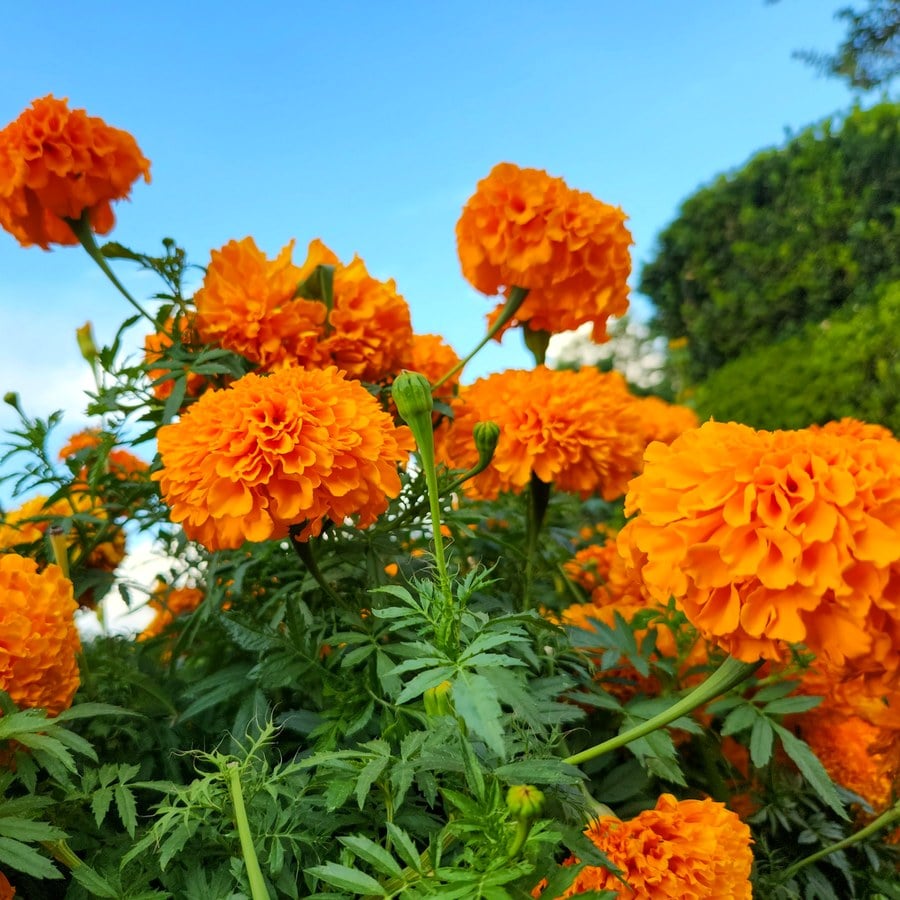
Marigolds are on every list of plants that repel mosquitoes and bugs, and Thursd's own marigold guide already calls the pest reputation of Tagetes "half earned." The mosquito half is the unearned one. The earned half is impressive. French marigolds produce alpha-terthienyl, a compound toxic to root-knot nematodes, and, grown densely as a cover crop for a season, they are one of the few non-chemical tools against them. In 2019, a Newcastle University team showed in two large glasshouse trials that French marigolds grown next to tomatoes slowed the build-up of glasshouse whitefly, and traced the effect to limonene the marigolds release into the air, published in PLOS ONE. That is a live plant doing real work by scent, and it is about the only example of its kind. Basil and nasturtium planted in the same beds reduced whitefly too, as non-hosts.
Mosquitoes are a different insect. In the Kenyan hut experiment, potted Tagetes minuta did not significantly reduce the number of mosquitoes reaching the sleepers. Marigold oils show repellency in laboratory tests, as most strongly scented oils do, but that is the extract again. The 600 people a month who ask whether marigolds repel mosquitoes get the honest answer: nothing shows that a marigold in a bed or a pot does. Tagetes minuta, for the record, is the wild South American species; the bedding marigolds a garden center sells, such as Xochi from Ball, are Tagetes erecta and Tagetes patula.
Sell marigolds for the reasons Mexico and India buy them by the ton: Day of the Dead, garlands, seven to fourteen days in the vase for the tall African types, three months of orange in a border, and the October birth flower story. The whitefly result is a real selling point for anyone with a greenhouse or a tomato patch. Mosquitoes are not.
Thai Basil: The Basil Family Holds the Best Live-Plant Result, and It Is Not This One
Thai basil, Ocimum basilicum var. thyrsiflora, is the anise-scented basil with purple stems and flower spikes, and it has become a summer plant-table regular because it looks as good as it cooks. Thursd's Thai basil guide has the growing and the kitchen side. The mosquito claim attached to it borrows from a relative.
The best number any live plant has ever posted against mosquitoes belongs to a basil: hoary basil, Ocimum americanum, with its 39.7 percent in the Kenyan huts. But the same experiment is a warning against reading that as "basil works." Two other basils in the same huts, Ocimum kilimandscharicum and Ocimum suave, did nothing significant, so the effect is species-specific, and Thai basil has not been tested that way at all. Sweet basil oils, rich in linalool and estragole, show repellency in the laboratory tables of the Malaria Journal review, which puts them in the same class as everything else here: the oil, briefly, on the skin.
Sell Thai basil for the kitchen, for the flower spikes that bees work all summer, and for the fact that a customer will come back for a second plant in July because they used the first one up. If you want to grow the basil with the mosquito data, hoary basil is a different, hairier, lime-scented plant, and you will not find it in a Dutch garden center.

Salvia: Ornamental Sage, Rosemary, and the Fifteen-Minute Oil
Salvia is the genus that keeps growing. Since 2017, it formally includes rosemary, renamed Salvia rosmarinus by botanists who showed that the small genus Rosmarinus sits inside the big one, and Kew's Plants of the World Online lists it under that name now. That matters here because a thousand people a month search whether rosemary repels mosquitoes, and the answer covers the whole genus. Rosemary oil repels mosquitoes on skin for about 15 minutes in the test Clemson cites. Culinary sage oil behaves the same way in the laboratory. No study has ever shown an ornamental Salvia, in a border or a pot, keeping mosquitoes off anyone.
What ornamental Salvia does is flower for three months on almost no water and feed more bees per square meter than nearly anything else on the plant table. That is the pitch. The mint family's aromatic oils, in sage, rosemary, mint, catnip, and basil alike, are a defense against being eaten, and the plant deploys them when a leaf is damaged, not as a cloud around itself. Thursd's piece on how plants warn their neighbors about insects explains that signaling; it is a story about plants talking to plants, not about plants guarding people.
The Plants With the Best Evidence Are Not on the Poster
If the six best-selling plants that repel mosquitoes are mostly scent, which plants do carry evidence? Three, and none of them is sold as a mosquito plant.
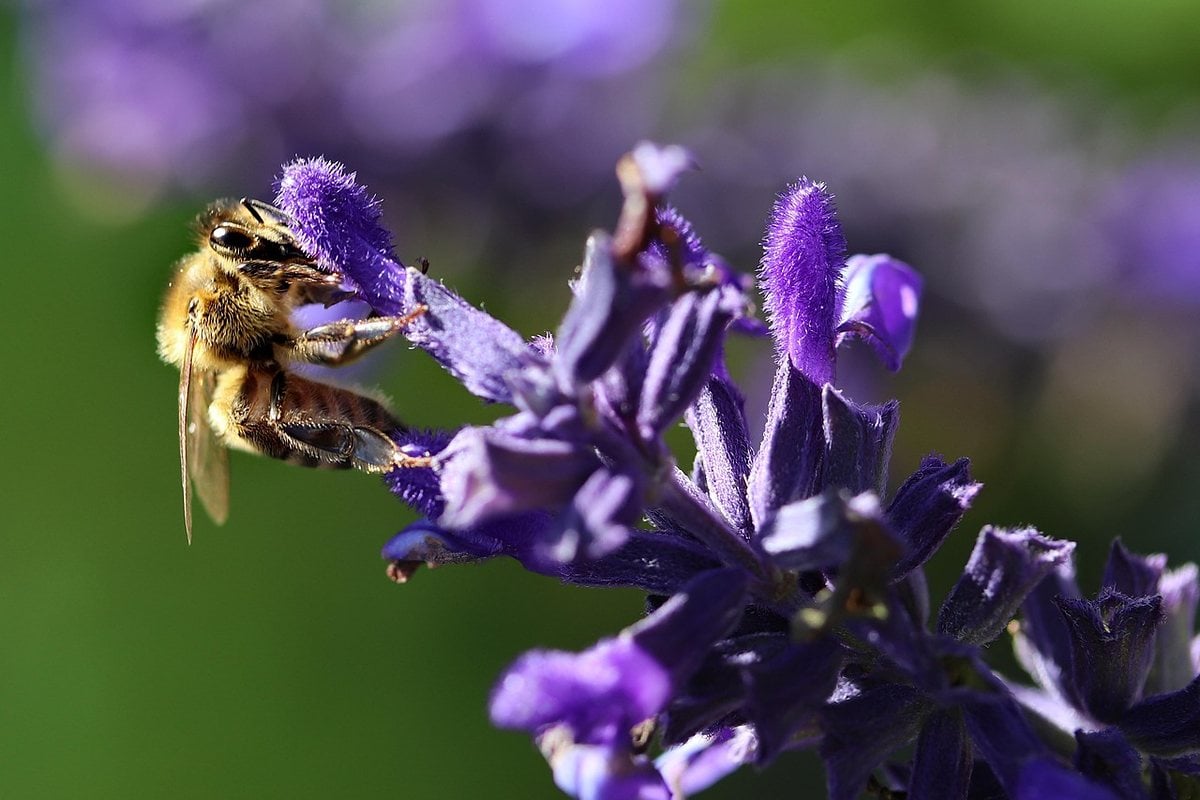
Catnip. Nepeta cataria makes nepetalactone, and in 2021, a team at Lund University and Northwestern University showed in Current Biology how it works: nepetalactone switches on TRPA1, the same irritant receptor that makes wasabi burn, in mosquitoes and fruit flies but not in humans, and mosquitoes bred without the receptor stop avoiding catnip altogether. It is the clearest mechanism any botanical repellent has. It is also, again, a story about the extract. The Dutch product guide lists catnip among the herbs with no proof as a remedy, and a catmint edging in a garden is a bee plant, not a barrier. Thursd has no catnip product page yet; the Walker's Low catmint in the picture is the one most garden centers sell.
Lemon-scented gum. The single plant-derived repellent that both RIVM and the CDC recommend is citriodiol, also called PMD or oil of lemon eucalyptus, refined from the leaves of the Australian tree Corymbia citriodora. Visser recommends it to anyone who wants a natural product, with the note that it needs reapplying sooner than DEET. And the tree itself? It was in the Kenyan huts too, as a potted plant, and did not significantly repel a single mosquito. The florist's Eucalyptus, Eucalyptus cinerea and Baby Blue, is a different species with a different oil and no repellent claim at all.
The pyrethrum daisy. Pyrethrins, the insecticide in most "natural" bug sprays, come from the dried flower heads of Tanacetum cinerariifolium, the Dalmatian pyrethrum daisy, which botanists once filed under Chrysanthemum. Oregon State University's pesticide information center describes them as found naturally in some Chrysanthemum flowers, generally separated from the flower, with the whole crushed flowers sold as pyrethrum powder. They kill insects on contact and break down in sunlight within days. A pot Chrysanthemum on the doorstep contains none of it in usable form, which is worth knowing because the idea that mums repel mosquitoes, fleas, and roaches turns up in a lot of lists. The history of the Chrysanthemum is a better story than that.

What Works on a Terrace, and Where Plants Fit
This is the part a customer can act on, and the part a garden center can put on a sign without a lawyer reading it first.
Water, not scent. Mosquitoes lay their eggs in standing water, and RIVM's tiger mosquito page lists exactly where: saucers, watering cans, buckets, children's toys, empty flower pots, and parasol bases. The larvae need at least ten days in the water, so anything emptied once a week never produces a mosquito. Cover the rain barrel. For a garden center, this is the honest mosquito advice on the shelf: the saucer under the plant matters more than the plant. The trade has a stake here too, because the Asian tiger mosquito arrives in the Netherlands as eggs and larvae in the water of imported Lucky Bamboo and in used tires, and the NVWA's vector monitoring center inspects the Lucky Bamboo greenhouses for that reason. Until now, every population found has been eradicated; RIVM expects that will not last forever.
Repellent on skin. DEET up to 50 percent, icaridin, IR3535, or citriodiol, applied according to the label. Visser is blunt about the ranking: "DEET is still the best by far. There is no natural product that beats it." In the Netherlands, a low percentage does; in a dengue or malaria region, the travel clinics ask for 30 to 50 percent.
Screens, nets, moving air. Window screens and a mosquito net work in a Dutch bedroom as well as they do in the tropics, Visser points out. Bachman adds a fan: mosquitoes prefer still, shady air, and a breeze across a terrace does more than a row of candles.
Habitat, if you have the space. The University of Florida's extension service, in a state that lives with mosquitoes year-round, advises building the garden that eats them: native shrubs for birds, pond plants for dragonflies, and mosquito fish in an ornamental pond. Liah Continentino, its environmental horticulture agent, gave the clearest one-line summary of this whole subject in a UF/IFAS briefing in 2025: "Certain plants do contain mosquito-repelling compounds. But unless you're extracting their oils and applying them like a spray, they're not doing much just sitting in your garden."
Crush and rub, with care. If a customer insists on using the plant, the extension services agree on the method: crush a handful of leaves and rub them on skin or clothing, expect an hour or less, and watch for irritation, because concentrated plant oils are not harmless just because they are natural.
And the plants that repel mosquitoes? They belong on the terrace for the scent, the flowers, and the bees, sold as such. Here is the counter version, for the six mosquito repellent plants on the shelf.
| Plant | What the evidence says | Sell it for |
|---|---|---|
| Lavender Lavandula x intermedia, oil: linalool |
Pure linalool in a diffuser: 93% fewer landings indoors, 58% outdoors. The plant: listed as unproven by RIVM's product guide, named first by WUR's Visser. | Months of flower, bees, dried bunches, oil. |
| Scented Pelargonium Pelargonium citrosum, oil: geraniol, citronellol |
Two field trials, 1994 and 1996: no difference in bites next to the plants. Geraniol as a diffuser oil: 97% indoors, 75% outdoors. | The scented leaf, in the pot and in the bouquet. |
| Lemongrass Cymbopogon citratus, oil: citral |
The oil on skin: 50% or better for two to three hours in one trial, 40 minutes in another. Its cousin's citronella oil: about two hours; candles 14% indoors. | The kitchen, the scent, a tall grass in a pot. |
| Marigold Tagetes, oil: limonene and others |
Live plants cut glasshouse whitefly on tomatoes (2019) and kill root-knot nematodes as a cover crop. Against mosquitoes in the Kenyan huts: nothing measurable. | Bedding, cut flower, garlands, the tomato patch. |
| Thai basil Ocimum basilicum, oil: linalool, estragole |
A relative, hoary basil, holds the best live-plant result ever recorded, 39.7% in a closed hut. Two other basils did nothing; Thai basil untested. | The kitchen, purple flower spikes, bees. |
| Salvia incl. rosemary, Salvia rosmarinus |
Rosemary oil on skin: about 15 minutes. No study of an ornamental Salvia repelling anything. | Three months of flower on no water, the best bee plant on the table. |
The Short Version
Every one of the plants that repel mosquitoes on the garden center shelf contains a molecule that repels insects, and not one of them releases enough of it to protect the person sitting next to it. The tests that matter were done with people as bait, in Florida, in Ontario, in Kenya, and the plants lost every time except one basil that won a partial. The oils win when they are extracted and applied, for an hour or two, and the only botanical the health institutes on both sides of the Atlantic put on their lists is refined from a tree that does nothing as a plant. So sell lavender, Pelargonium, lemongrass, marigolds, basil, and Salvia for the flower, the leaf, the kitchen, and the bees. Put the mosquito advice on the saucer and the rain barrel, and keep the DEET by the door. The customer who hears that version comes back and brings the neighbor who bought the citrosa.
Sources: Cilek and Schreiber, Journal of the American Mosquito Control Association 1994 (failure of the mosquito plant, Florida); Matsuda et al., same journal 1996 (citrosa oil analysis and Ontario field trial); Seyoum et al., American Journal of Tropical Medicine and Hygiene 2002 (live potted plants in experimental huts, Kenya); Maia and Moore, Malaria Journal 2011 (review of plant-based repellents); Müller et al., Journal of Vector Ecology 2009 (geraniol, linalool, and citronella candles and diffusers); Melo et al., Current Biology 2021 (catnip and TRPA1); Conboy et al., PLOS ONE 2019 (marigolds and glasshouse whitefly); Oyedele et al., Phytomedicine 2002 (lemongrass oil formulations); RIVM, Muggen and the tiger mosquito FAQ; Waar zit wat in, anti-muggenmiddel (RIVM for the Dutch government); Tessa Visser, Wageningen University, in Quest, February 2024; Clemson University HGIC, Can Plants Repel Problematic Insects, 2025; UF/IFAS, August 2025; Mississippi State University Extension; CDC, Preventing Mosquito Bites; Oregon State University NPIC, Pyrethrins General Fact Sheet; Kew Plants of the World Online, Salvia rosmarinus.
Feature and header image by Egor Kamelev on Pexels.