Walk into the gallery, and ten thousand irises hang above your head: blue, purple, yellow, and white, each one floating on a thin copper wire. Come back a few weeks later, and the same flowers have dried, faded, and changed shape. That's 'The Iris', a show made for one room by British artist Rebecca Louise Law at NOW Gallery on London's Greenwich Peninsula.

The Iris as Ephemeral Art
Law works in London and builds her installations from natural materials, mostly real flowers. Her pieces are about nature never standing still, and every show is built around a different bloom. With a title like this, you can guess which one she picked here.


10,000 Fresh Irises on Copper Wire
Like much of her work, 'The Iris' follows a flower through its whole life, from fresh and bright to dry and papery. The gallery fills with color, and a piece of the outdoors moves inside. What drives Law is holding on to small, beautiful things from nature so people can look at them without being rushed. She wants to keep, treasure, and share them.
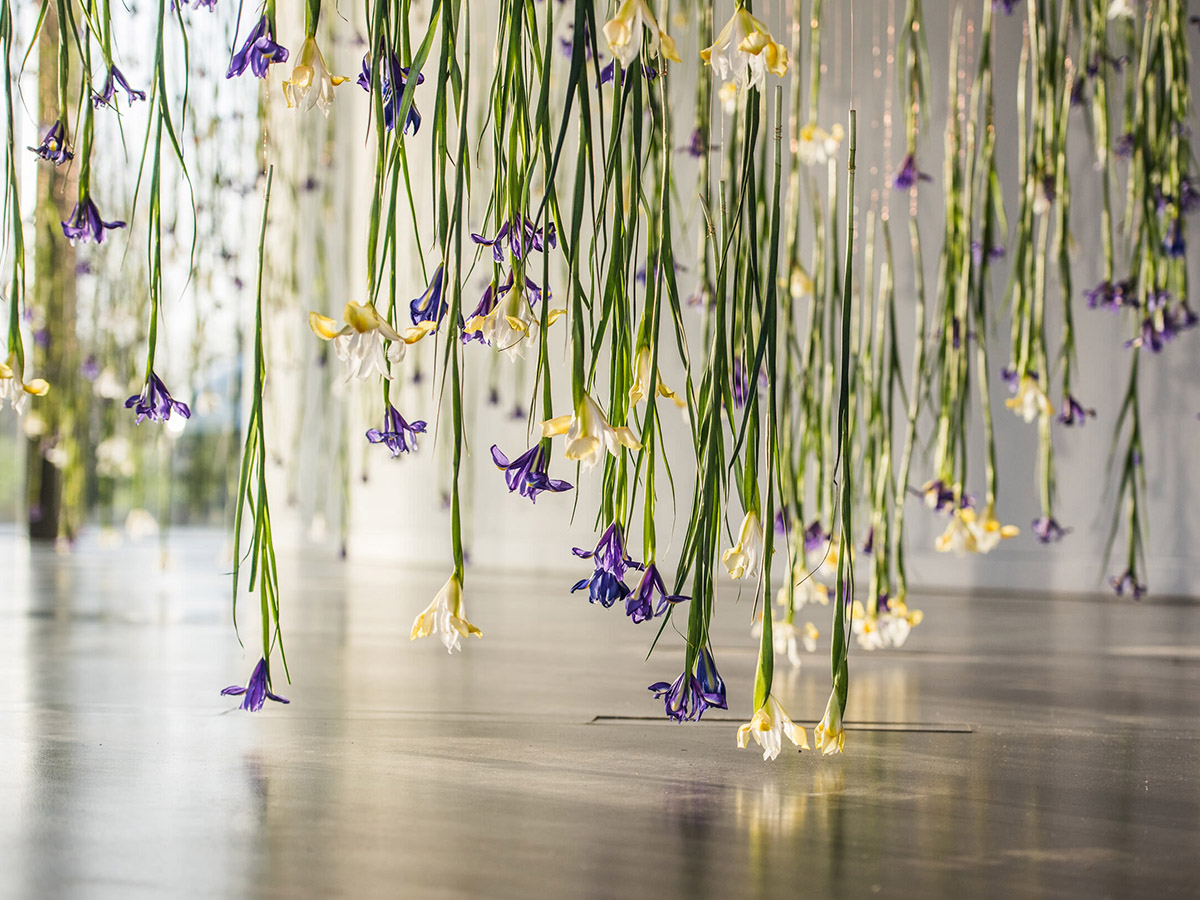
Why the iris? The gallery stands on land that used to be tidal marsh. Law walked the banks of the peninsula and first gathered the native marsh reeds, but they shed so much pollen that working with them was impossible. So she looked at the old marsh plants again and chose the iris instead, a spring flower that grows wild in British wetlands. Bringing it back indoors links the site's past to its present, and people to the plants that were there first.


The Evolution of Fresh Blooms to Dried Flowers
The show ran until May 7, 2017. Over those months, the irises were simply left to hang and dry in their own way, some curling, some fading, none of it planned. Visitors could follow the change from week to week and see preservation happening in front of them. Florists know that moment well: the bouquet you'd throw out turns out to have a second life.
Photos: Charles Emerson.