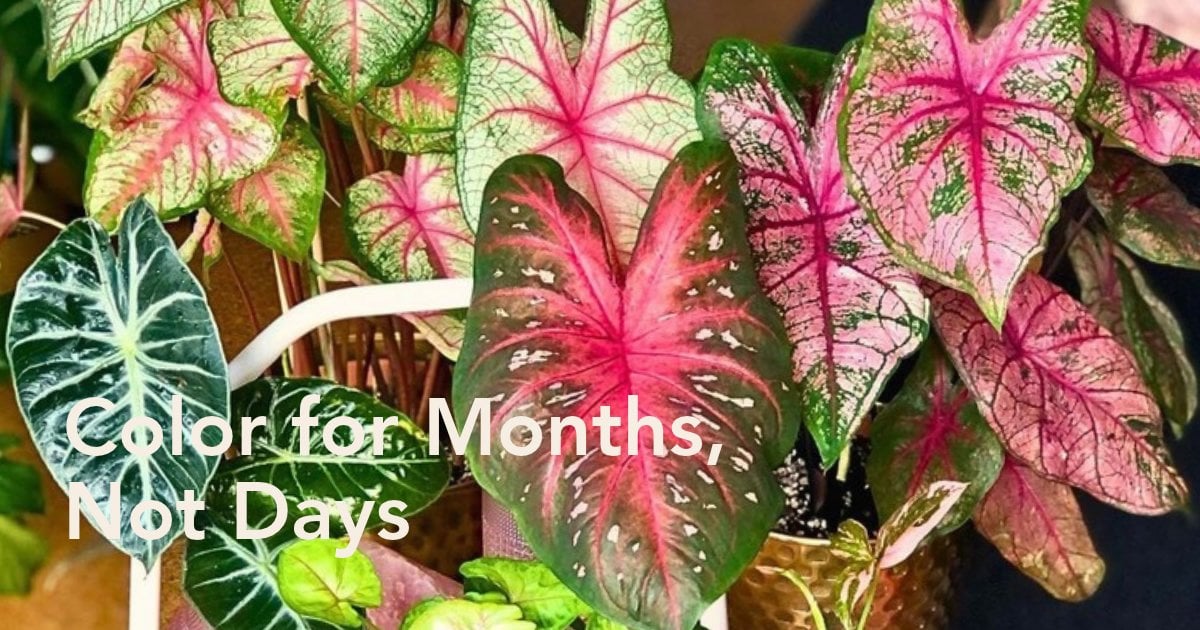
Looking for pink plants for indoors? The easiest ones to start with are the Philodendron Pink Princess, the polka dot plant, the nerve plant, and Calathea Rosy. And for a pink flowering plant as a Valentine's gift, a pink Phalaenopsis or Anthurium lasts for months.
Houseplants are a staple in most homes, and for good reason. They're a unique-looking (and living) piece of decor. But if you want indoor plants that look different from the rest, turn your attention to pink houseplants. Most of them are cultivars of plants you already love. Think of a philodendron or a Calathea, with a colorful twist. With speckled, striped, variegated, or mottled leaves, they bring an unexpected flush of rosy color into your house without relying on flowers.
Here you find all 15 in one table first, with the light and water they want and whether they're safe around cats and dogs. The pet column follows the toxic and non-toxic plant list of the ASPCA. Two of the pinkest plants on this list, the polka dot plant and the nerve plant, are also on its non-toxic side.
Pink Plants at a Glance: Light, Water, and Pet Safety
| Pink plant | Light and water | Cats and dogs (ASPCA) |
|---|---|---|
| Philodendron Pink Princess Philodendron erubescens |
Bright, indirect light. Water when the top few centimeters are dry. | Toxic to cats and dogs |
| Pink nerve plant Fittonia albivenis |
Medium or low light. Keep the soil evenly moist. | Non-toxic |
| Calico Kitten Crassula pellucida variegata |
Bright light, some sun. Let the soil dry out between waterings. | Not listed (jade, a Crassula, is toxic) |
| Pink jelly bean Sedum rubrotinctum Aurora |
Full sun for the most pink. Water sparingly. | Not listed (burro's tail Sedum is non-toxic) |
| Anthurium Tickled Pink Anthurium andraeanum |
Bright, indirect light. Water when the top layer is dry. | Toxic to cats and dogs |
| Pretty pink Caladium Caladium bicolor |
Dappled light or shade, no hard sun. Moist in summer, dry tuber in winter. | Toxic to cats and dogs |
| Rose painted Calathea Calathea roseopicta Rosy |
Diffused light, no direct sun. Keep lightly moist. | Non-toxic |
| Pink rubber plant Ficus elastica Tineke |
Bright light keeps the color. Water when the top few centimeters are dry. | Toxic to cats and dogs |
| Perle von Nürnberg Echeveria Perle von Nürnberg |
Full sun. Soak, then let it dry out completely. | Non-toxic |
| Snow White waffle plant Hemigraphis alternata |
Bright, indirect light. Moist soil and high humidity. | Not listed (purple waffle plant is non-toxic) |
| Caladium Pink Symphony Caladium Pink Symphony |
Dappled light or shade. Moist in summer, dry tuber in winter. | Toxic to cats and dogs |
| Pink polka dot plant Hypoestes phyllostachya |
Bright, indirect light. Keep evenly moist. | Non-toxic (mild stomach upset possible) |
| Syngonium Pink Neon Syngonium podophyllum Neon Robusta |
Medium to bright, indirect light. Water when the top is dry. | Toxic to cats and dogs |
| Earth star Cryptanthus |
Bright, indirect light. Lightly moist, never soggy. | Non-toxic |
| Kalanchoe Pink Butterflies Kalanchoe × houghtonii |
Bright light or sun. Let it dry out between waterings. | Toxic to cats and dogs |
"Not listed" means the ASPCA has no entry for that plant, which is not the same as safe. If you're worried that your cat or dog has chewed on a plant, contact your vet or your local poison control center.
It's Time for Pink Houseplants Instead of Pink Flowers
Millennial pink was the color trend that made pink easy to bring into the home, and it never really left. Pink flowers are known far and wide, but pink plants keep that color in your room for months, not days. Most of them have a texture or pattern that is both green and pink.
That pink has two sources. Some plants make anthocyanins, a pink to red pigment, and others carry a genetic mutation that leaves parts of the leaf without green, which is what variegation is. Succulents add a third trick. They blush deeper under stress from strong sun, cold nights, or drought. Most plants on this list are pink foliage plants, with the color in the leaf all year. The pink flowering plants, where the color comes with the flowers, follow at the end.

Photo by @jassuradke
Because pink and green sit opposite each other on the color wheel, these rosy leaves catch your eye from across the room. Exotica, a specialty nursery for rare and colorful houseplants, sees pink plants become the emotional centerpiece of a living room or workspace, and says many pink cultivars are hardier than they look. So you get the color without the fuss. Here they are.
1. Philodendron Pink Princess (Philodendron Erubescens)
The Philodendron Pink Princess is a green houseplant that is incredibly popular. As the name already reveals, this Philo is famous for the pink spots on its dark leaves. That variegation is yellow or white in other plants, and in the Pink Princess it's pink.

Photo by @the_succulent_beauty
Give it bright, indirect sunlight, because in a dark corner the new leaves come out greener. And if a leaf turns fully pink, enjoy it while it lasts. It has no green to feed itself, so it won't live as long as the others. You'll find everything you need to know about this unique plant, from care to cost, in the Pink Princess Philodendron guide.
2. Pink Nerve Plant (Fittonia Albivenis)
Another pink houseplant favorite is the Fittonia. This variety is also known as Pink Angel, a distinctive plant with dark green leaves and bright pink veins. Growing Fittonia albivenis is very easy for beginners, since it doesn't mind low light. What it does mind is drying out. Forget it once, and it collapses. A drink stands it up again within a few hours.

Photo by @plantarrella
Good news if you have pets. The ASPCA lists Fittonia as non-toxic to cats and dogs.
3. Crassula Pellucida Variegata Calico Kitten
Crassula pellucida variegata is a gorgeous-looking plant with heart-shaped, variegated leaves. They run from pale green and yellow-green to different shades of pink and cream. The leaves can take on fuchsia and purple tones, and they turn a deep purple when the plant is very dry. It's a trailing plant, so it looks great in a hanging basket or a tall planter. And it produces cheerful little white flowers.

Photo by @_lacarola
Give it your brightest window and let the soil dry out between waterings. The ASPCA doesn't list this species, but it does list its cousin the jade plant, also a Crassula, as toxic. So keep it out of reach.
4. Pink Jelly Bean (Sedum Rubrotinctum Aurora)
The Sedum rubrotinctum Aurora is a sedum with beautiful colors. Like many other Sedum species, it makes small, plump leaves that look like jelly bean candies. The colors of the Aurora change throughout the year, mainly with temperature, water, and sunlight. More sun means more pink.

Photo by @pukubook.
Plant it in well-draining soil and water it sparingly, because wet roots quickly lead to root rot. It isn't on the ASPCA list. Its relative burro's tail (Sedum morganianum) is listed as non-toxic, but that's no guarantee for this one.
5. Anthurium Tickled Pink (Anthurium Andraeanum Tickled Pink)
Next on the pink houseplants list is Anthurium Tickled Pink. This all-time favorite carries fluorescent pink spathes and purplish spadices on stems of about 30 centimeters (12 inches) that stand well above its curly leaves. Tickled Pink opens in a rich pink-magenta with dark purple edges and matures to a beautiful fluorescent pink.

Photo by AllsenzA
The pink part isn't a petal but a modified leaf, the spathe, which is why it holds its color for weeks. Breeders like Anthura have taken Anthurium from red into many shades of pink, as you can read in Different Anthurium Colors for Your Houseplant Collection. Keep it away from your pets, though. The ASPCA lists Anthurium as toxic to cats and dogs.
6. Pretty Pink Caladium (Caladium Bicolor)
This striking variety prefers dappled or full shade, and in return, it gives you a wash of gorgeous pink. Its large, heart-shaped leaves have a lasting impact on your home. Green central veins and borders frame the translucent pink leaves. Although this cultivar keeps its color and texture all season, it can "burn" in strong light.

Photo by @crazyplantgirldk
Caladiums grow from a tuber, and most of them rest in winter, when the leaves die back. Don't throw it away. Keep the tuber dry, and it comes back in spring. They're toxic to cats and dogs, so give them a high spot.
7. Rose Painted Calathea (Calathea Roseopicta Rosy)
Calathea roseopicta Rosy is true to its name, with pink-centered leaves bordered in a deep, dark green. A truly beautiful Calathea. As with most variegated plants, it needs plenty of diffused light, but direct sunlight fades the leaves and their markings. It tolerates partial shade, but the better the light, the better the foliage.

Photo by @bergspotter
Keep the soil lightly moist. The ASPCA lists Calathea as non-toxic to cats and dogs, and you'll find more varieties in the guide to Calathea plants.
8. Pink Rubber Plant (Ficus Elastica Tineke)
The Ficus elastica Tineke is a rubber plant. It got that name because the milky sap of Ficus elastica was once tapped for rubber. The difference between this Ficus and the Ficus elastica Robusta lies in the foliage. The Robusta has even, dark green, glossy leaves, while the Tineke's leaves have cream and light green parts and a pink blush on the new leaves. It needs little care, which makes it hugely popular as a houseplant.

Photo by @chicagogardener
For the most pink, give it bright light. And mind the sap. The ASPCA lists the rubber plant as toxic to cats and dogs.
9. Perle Von Nürnberg (Echeveria Perle von Nürnberg)
Of course, succulents had to make the list of pink houseplants too. Perle von Nürnberg is a gray rosette succulent that turns pink and purple in full sun. It has pink flowers with yellow insides in summer, and it's one of the easiest succulents to propagate.

Photo by @succulentsathome
Give it a sunny window and well-draining soil. Soak it, then let it dry out completely before the next watering. The ASPCA lists Echeveria as non-toxic.
10. Snow White Waffle Plant (Hemigraphis Alternata)
The snow-white waffle plant is native to Indonesia and India, and you also find it in other warm areas such as Florida. It comes in a few different variegations, from white and purple to deep red and even a metallic-like green. Because of its tropical origin, it loves humidity, which makes it a great terrarium plant. But it also does fine as a houseplant with the right care.

Photo by @pup.n.succs
The ASPCA lists the purple waffle plant (Hemigraphis exotica) as non-toxic. Snow White doesn't have its own entry.
11. Pink Symphony (Caladium Pink Symphony)
Pink Symphony has foliage with a pale pink background and spring-green veins. It's a favorite among pink houseplants for its large, arrow-like leaves with bands and blotches of red, rose, pink, white, bronze, and green.

Photo by @katieanneplants
Care is the same as for the Caladium above, winter rest included.
12. Pink Polka Dot Plant (Hypoestes Phyllostachya)
The polka dot plant is an eye-catching little plant with spotted leaves that stand out against most other foliage. The most common one on the market has a pink base color and green spots. But there are several other varieties, spotted or mottled with purple, white, red, and more.

Photo by @planty_quest
Pinch the tips now and then to keep it bushy. And it's one of the few pink plants here that the ASPCA lists as non-toxic to cats and dogs, with at most a mild stomach upset.
13. Syngonium Pink Neon (Syngonium Podophyllum Neon Robusta)
Syngonium podophyllum Neon Robusta is an evergreen climber from Central and South America. It's a popular indoor vine for hanging baskets, terrariums, and table pots. The leaves are a glowing pink on top with a green underside. The young leaves are arrow-shaped and grow into a multi-lobed shape as they mature. This low-maintenance, easy-to-propagate plant suits beginners too.

Photo by @entaiz.mx
Give it bright, indirect sunlight and a well-draining potting mix. If you like this one, also have a look at Syngonium Pink Perfection. The ASPCA lists Syngonium, the arrowhead vine, as toxic to cats and dogs.
14. Earth Star (Bromeliad Cryptanthus)
Cryptanthus bromeliads are rather funky-looking houseplants with stiff, slightly coarse leaves. They're called earth star for their flat star shape, and they come in countless colorful and less colorful varieties. As a bonus, they're not difficult to care for at all. Give them bright, indirect light and soil that's lightly moist, never soggy.

Photo by @mas.plantas
The ASPCA lists the earth star as non-toxic to cats and dogs.
15. Pink Mother of Millions (Kalanchoe Pink Butterflies)
This Kalanchoe is commonly known as Pink Butterflies. It's a colorful variegated form of Kalanchoe × houghtonii. Its leaves are gray-green with pink edges. Those pink "butterflies" along the edges are tiny plantlets. They drop off and root wherever they land, which is where the mother of millions name comes from.

Photo by @cactuscoleccion_
This succulent thrives in bright light, so it's an ideal choice for a sunny window. Easy to care for, it adds a colorful touch without demanding much attention. Grower Winco Holland sells it as Kalanchoe daigremontiana Pink Butterfly. Like every Kalanchoe, it's toxic to cats and dogs, says the ASPCA, so it belongs out of reach.
Pink Flowering Plants for Valentine's Day and Beyond
Red roses get all the attention on 14 February. But a pink flowering plant keeps saying it for weeks after the bouquet is gone. These are the pink flowering plants that work as a gift, with what they need. For more ideas, see the plants for Valentine's Day and these non-traditional Valentine's flowers.
Pink Phalaenopsis and Cymbidium Orchids
A pink Phalaenopsis is the easiest pink flowering plant to give. Dutch breeder Floricultura has more than forty pink varieties, and its Phalaenopsis Gallery Play flowers for more than 150 days. You can see four of them in Floricultura's passionate pink Phalaenopsis.
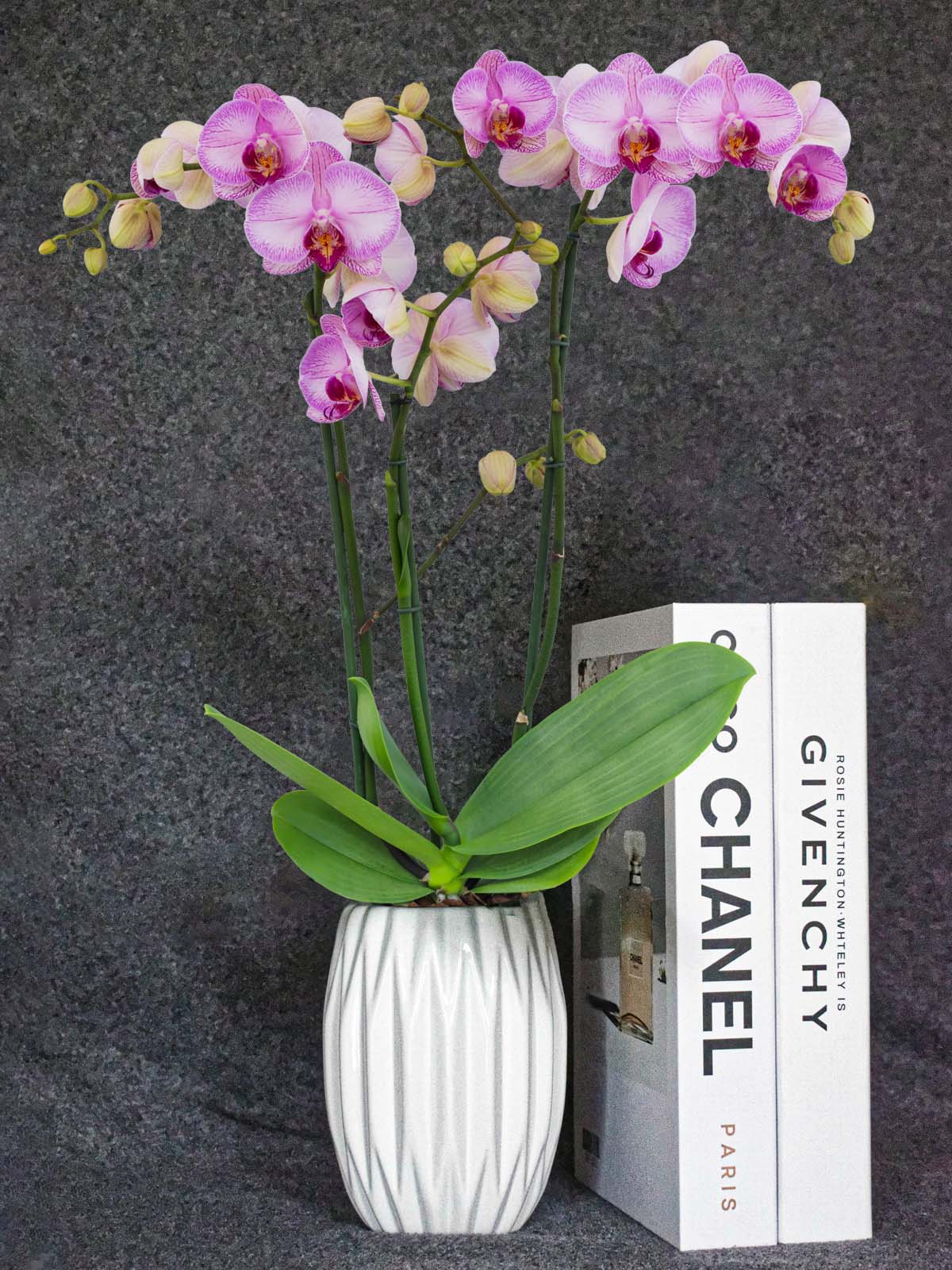
Photo courtesy of Floricultura
Bright, indirect light, a little water when the roots turn silvery, and that's it. The ASPCA lists Phalaenopsis as non-toxic to cats and dogs. And if your Valentine prefers a cut stem, grower Ronald Ammerlaan in the Netherlands grows a pink Cymbidium named Valentine. That story is in the pink Cymbidium article.
Pink Anthurium
An Anthurium makes sense on Valentine's Day, because its spathe is shaped like a heart. Two pink ones from breeder Anthura are the soft-toned Anthurium Lilli and Anthurium Lipa Pink Grande. Why it stands for love you can read in Anthurium Meaning: Hospitality, Love, and Every Color.
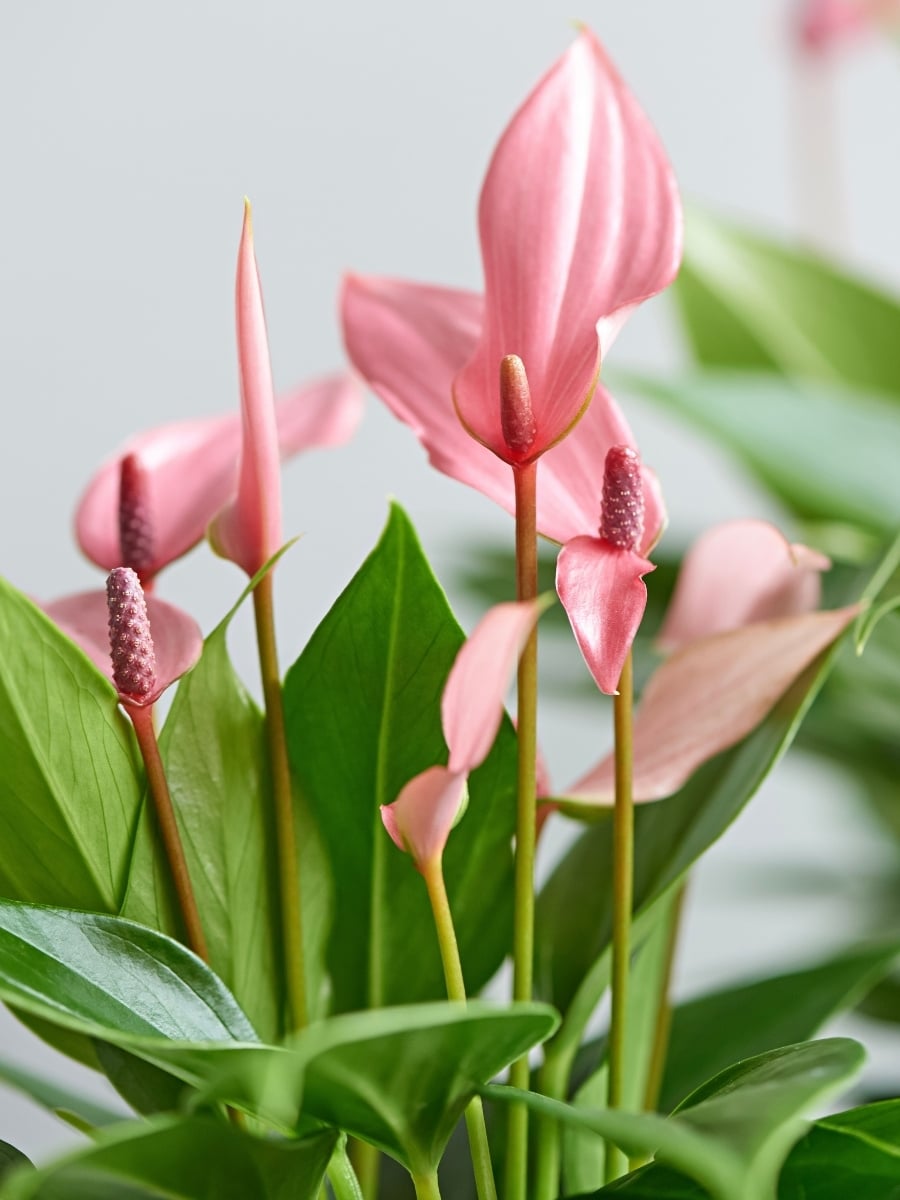
Photo courtesy of Anthura
It flowers for months in bright, indirect light. Just remember it's on the toxic side of the ASPCA list, like the Tickled Pink above.
Pink Begonias From Koppe Begonia
Begonias are a good pick from early spring. Koppe Begonia, a Dutch family business since 1910, breeds Begonia Belove Pink, with large single pink flowers and a small yellow heart. It flowers from March to September, indoors as well as on the patio. For more pink varieties, like Adonia Pink, see Pink Begonias for Mother's Day.

Photo courtesy of Koppe Begonia
If you want the color in the leaf instead of the flower, look at the Beleaf leaf Begonias from Koppe Begonia, grown by Berghoef Plants, such as Begonia Beleaf Evening Glow with its red heart and colored leaf edge. Grower Jaro Berghoef said this in the interview with him.
"Beleaf begonias are a very grateful and easy-to-maintain plant with a long lifespan and a high decoration value. The plant will not die on you when you forget to give it water on one occasion. After watering, it will bounce back in minutes."
You'll find more of them in The 12 Best Leaf Begonia Plants That Thrive Indoors. One thing to know if you have pets. The ASPCA lists Begonia as toxic to cats and dogs, with the roots and tubers the most toxic part.
Princettia Pink for Christmas
And if you can't wait until February, there's the Christmas season. Princettia Pink is a compact pink Poinsettia from breeder MNP / Suntory. How it differs from a regular Poinsettia is in Princettia vs Poinsettia.
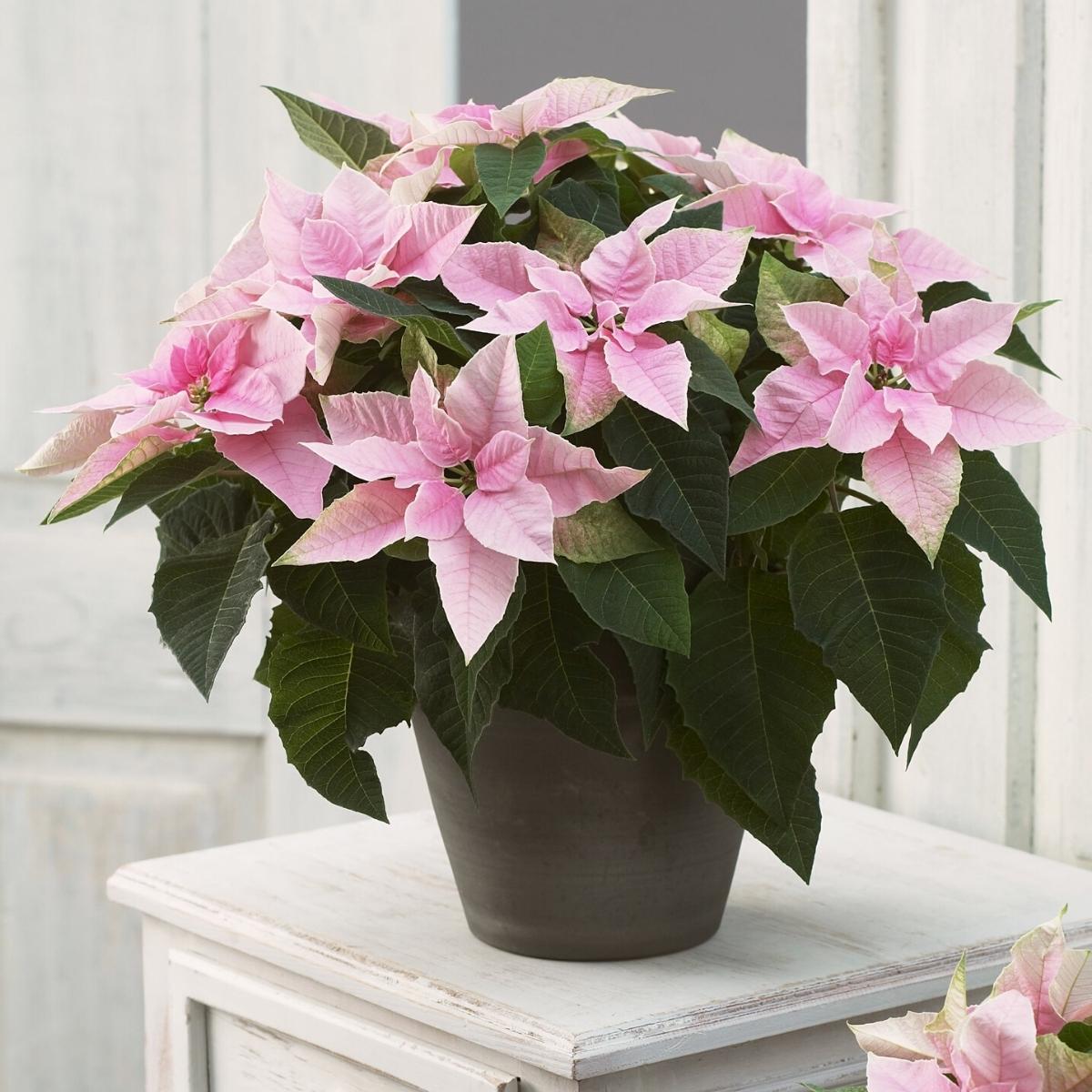
Photo by MNP / Suntory
Like every Poinsettia, its sap can irritate a pet's mouth and stomach. The ASPCA also calls Poinsettias generally over-rated in toxicity.
Pink Plants Give You Color for Months, Not Days
That's the real difference with a bouquet. A pink plant keeps its color for months, some of them for years, as long as you get the light right. If you have a cat, start with a polka dot plant or a nerve plant. If you have bright light and some patience, go for a Pink Princess. In summer, the feathery Celosia Kelos Candela Pink from Beekenkamp takes the pink outside. And in February, give a pink Phalaenopsis instead of a dozen roses. If pink flowers are your thing too, read what pink flowers mean.
Sources: ASPCA Toxic and Non-Toxic Plant List, entries for Fittonia, Philodendron, Anthurium, Caladium, Calathea, rubber plant, Echeveria, purple waffle plant, polka dot plant, Syngonium, earth star, Kalanchoe, jade plant, burro's tail, Phalaenopsis, Begonia, and Poinsettia, read on 20 November 2026.
Header image by @crazyplantgirldk and featured image by @planty_quest.
About the author: Arnold Wittkamp is the founder of Thursd. He spent 35 years in the floral chain, as a florist, an importer and an international marketer, before building the platform. Connect with Arnold on LinkedIn.