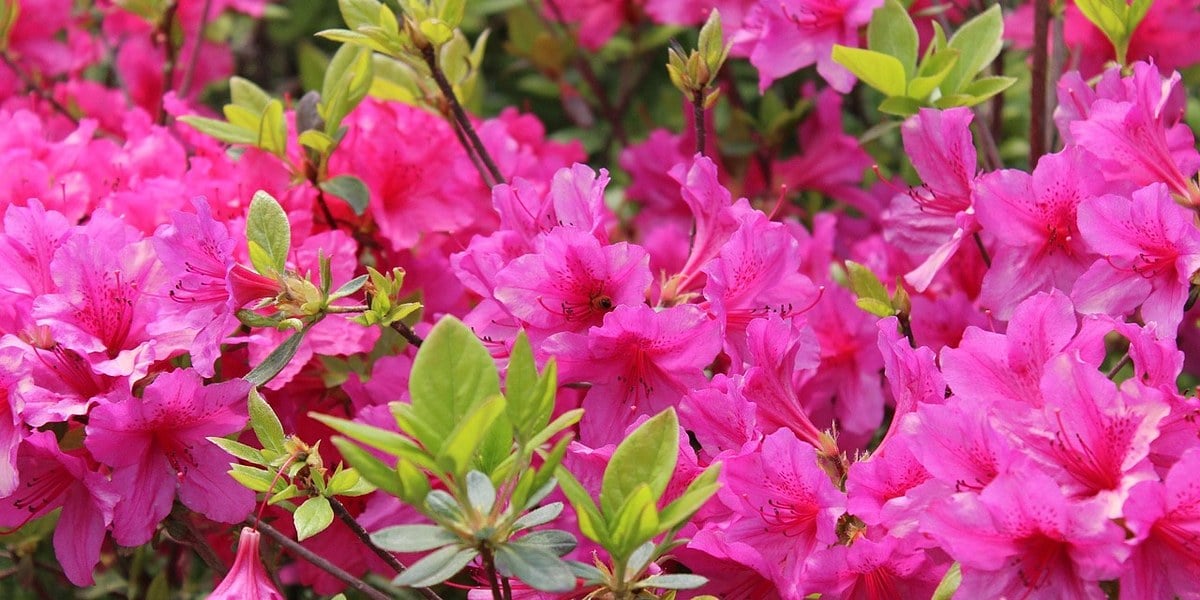
Azaleas are flowering shrubs in the genus Rhododendron, grown outdoors for their spring flowers and sold in winter as potted plants for a cool room. They need acid soil, steady moisture, and some shade. The leaves, flowers, and nectar contain grayanotoxins, which make Azaleas toxic to dogs, cats, and horses.
An Azalea is not a different plant from a Rhododendron. Botanists put both in the genus Rhododendron, part of the heath family, and "Azalea" is the name gardeners use for one group within it: shrubs with smaller, softer leaves and, in most cases, five or six stamens per flower. Some keep their leaves all year. Others drop them in fall. Most flower in spring.
You will meet them in two very different roles. Garden Azaleas are outdoor shrubs for borders and woodland edges. Indoor Azaleas are the potted plants in full flower that florists and supermarkets sell around Christmas, and they need other care. For the symbolism behind the flower, read our Azalea flower meaning article.
Common Names
Azalea
Indoor Azalea (Rhododendron simsii, often labeled Azalea indica)
Flame Azalea (Rhododendron calendulaceum)
Pinxterbloom Azalea or Pinxter Flower (Rhododendron periclymenoides)
Azalea or Rhododendron?
Every Azalea is a Rhododendron, but not every Rhododendron is an Azalea. The Azalea Society of America gives three checks. Count the stamens: most Azaleas have five or six, most Rhododendrons have ten. Feel a leaf: Azalea leaves are thinner, softer, and more pointed, often with fine hairs along the midrib underneath. Then look for scales with a hand lens, because small-leaved Rhododendrons always carry them and Azaleas never do. The big shrubs with leathery leaves and round flower trusses have their own Rhododendron page.
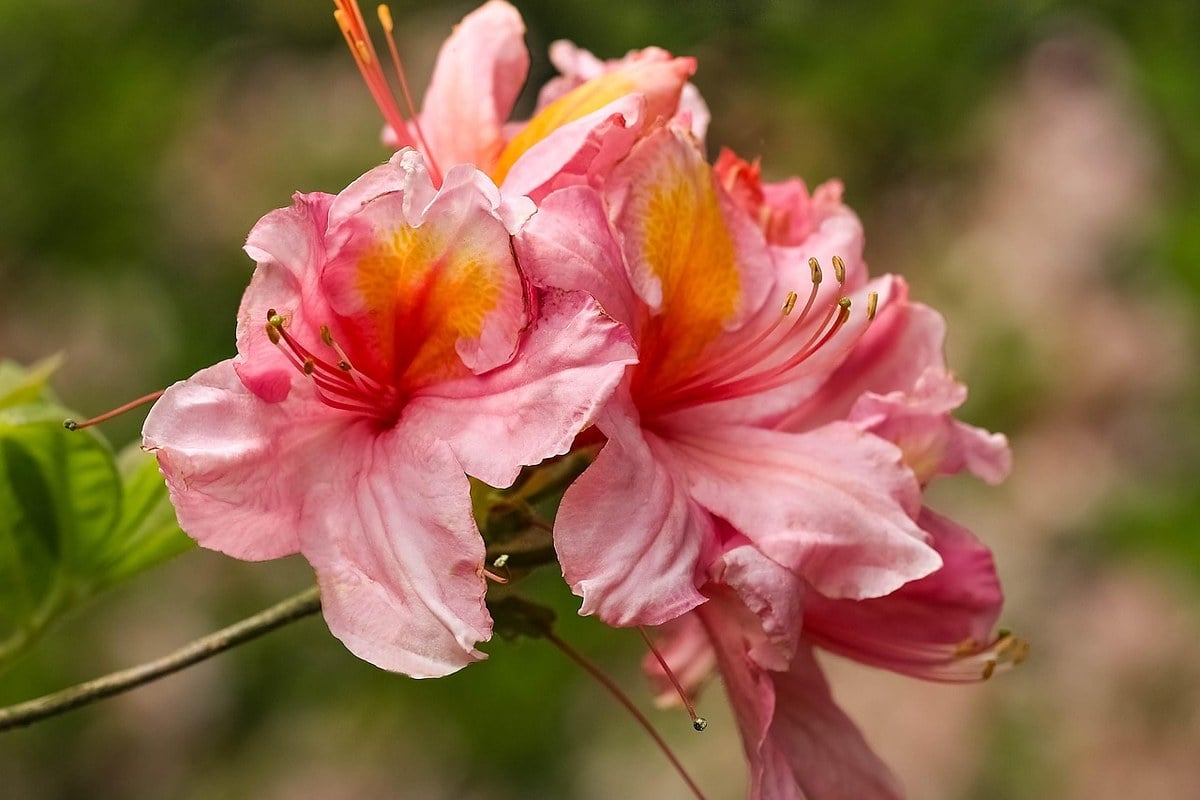
A deciduous Azalea in flower. It drops its leaves in fall and flowers in spring, with or before the new leaves. Photo by monikasmigielska on Pixabay.
How to Grow Azaleas in the Garden
Azaleas like it cool and partly shaded. Clemson Cooperative Extension recommends filtered shade, the kind you get under tall pines, and warns against long hours of hot sun and drying wind. Deep shade has the opposite problem: few flowers.
Soil decides most of it. Azaleas need acid soil with a pH between 4.5 and 6.0, well drained and rich in organic matter. In alkaline soil, the leaves turn yellow between the veins, which is iron chlorosis. The roots are shallow, most of them in the top foot (30 cm) of soil, so they dry out quickly and rot just as quickly in waterlogged ground. A 2 to 3 inch (5 to 8 cm) layer of pine straw or composted bark keeps moisture and temperature even.
Water deeply during dry spells, preferably at the base rather than over the leaves. Prune right after flowering, so you do not cut off next year's flowers. Choose varieties that are known to be hardy where you live; that range is wide. Lace bugs, spider mites, petal blight, and root rot are the problems to watch for.
Indoor Azaleas: A Pot Plant for a Cool Room
The potted Azaleas sold in flower around Christmas are mostly cultivars of Rhododendron simsii. Growers force them into bloom in warm, humid greenhouses, but at home they want the opposite. The Royal Horticultural Society advises a cool, bright spot at 13 to 16°C (55 to 61°F), compost that never dries out completely, and rainwater rather than hard tap water. They are frost tender: in colder climates they can spend the summer outdoors in light shade, and they come back inside in September, before the first frost.
A large share of Europe's pot Azaleas comes from Belgium. The Gentse azalea, grown and forced into flower in the province of East Flanders, has been an EU protected geographical indication since 2010.
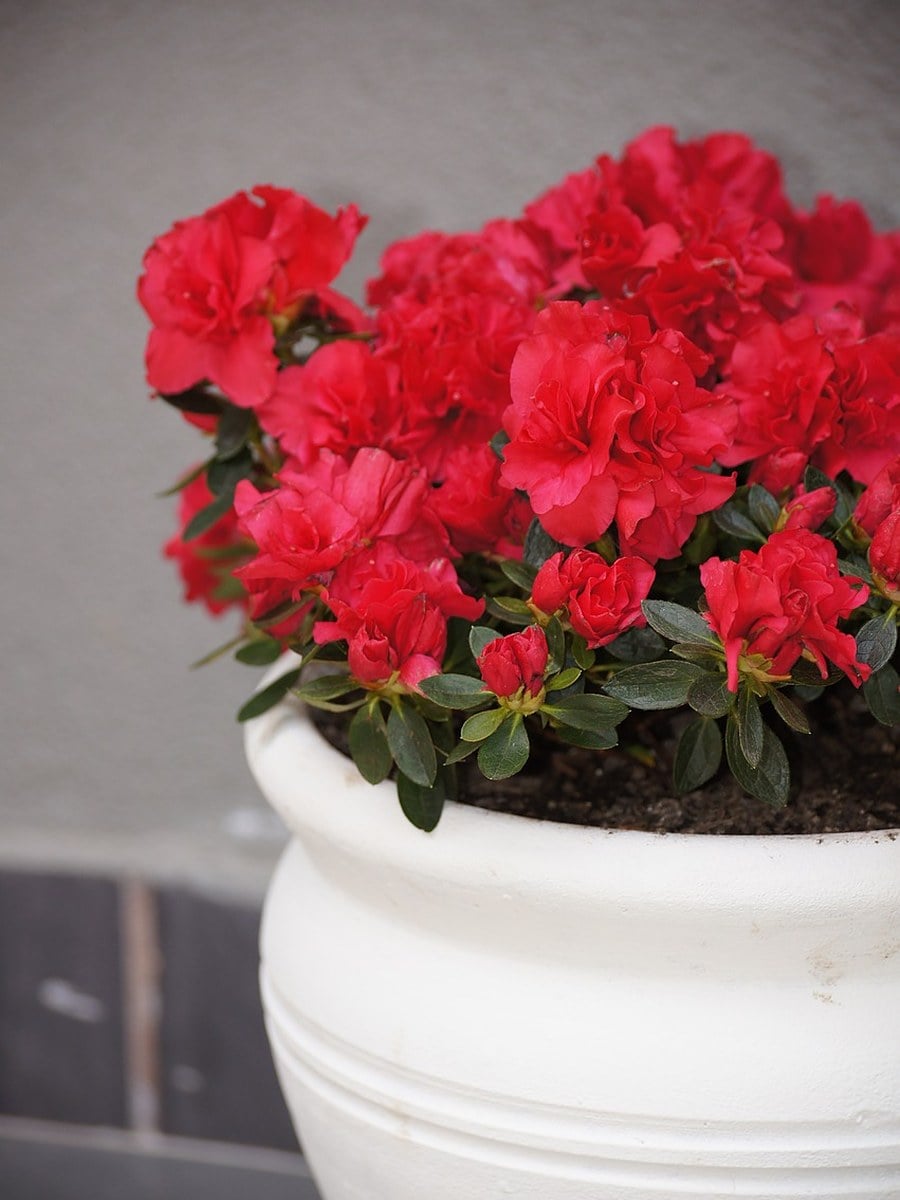
An indoor Azalea in full flower. Keep it cool, bright, and moist, and out of reach of pets. Photo by persik232 on Pixabay.
Are Azaleas Poisonous?
Yes, and above all for animals. Azaleas contain grayanotoxins in their leaves, flowers, twigs, and nectar. The ASPCA lists them as toxic to dogs, cats, and horses, with vomiting (not in horses), diarrhea, weakness, and, in serious cases, heart failure. Grazing animals are at risk too: a review in Cardiovascular Toxicology describes grayanotoxin poisoning in cattle, sheep, goats, and donkeys as often lethal.
For people, the risk is lower. NC State Extension notes that eating moderate amounts of Azalea leaves or nectar poses little toxic hazard. Still, keep the plants away from small children.
What to do: keep potted Azaleas out of reach of cats and dogs, and do not plant them where horses, goats, or sheep can browse. If a pet has chewed on one, call your vet or the ASPCA Animal Poison Control Center at (888) 426-4435 right away. If a child has eaten part of the plant, call your local poison center; in the US, that is 1-800-222-1222.