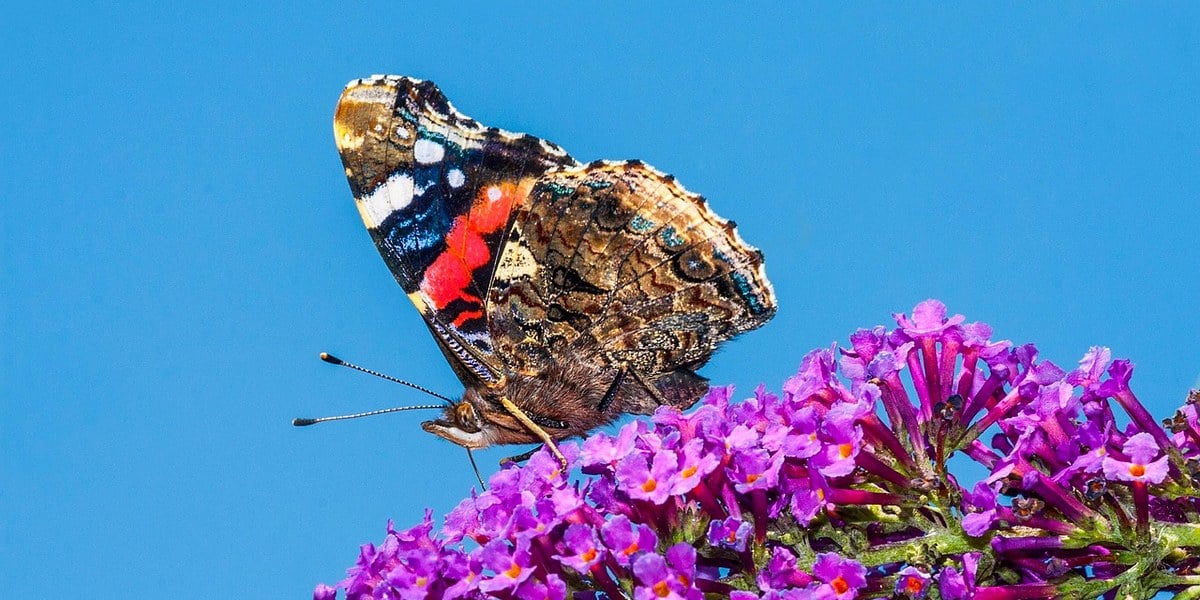
Butterfly bush (Buddleja davidii) is a summer-flowering shrub from China whose flower spikes draw butterflies and bees. It is an outdoor shrub, not a houseplant, and it spreads by seed: Oregon and Washington list it as a noxious weed and allow only sterile cultivars, and Switzerland has banned its sale.
Butterfly bush (Buddleja davidii) is a summer-flowering shrub from Tibet and central and southern China. It is grown for its long, cone-shaped spikes of small purple, pink, or white flowers, and butterflies, bees, and moths crowd them for nectar.
It also spreads by seed, and a lot of it. One plant can produce up to three million tiny winged seeds, and butterfly bush has escaped from gardens onto riverbanks, railroad tracks, and roadsides. Oregon and Washington list it as a noxious weed, and Switzerland has banned its sale.
Common Names
Butterfly bush
Summer lilac
Orange eye
Sommerflieder (German)
Vlinderstruik (Dutch)
How to Recognize Butterfly Bush
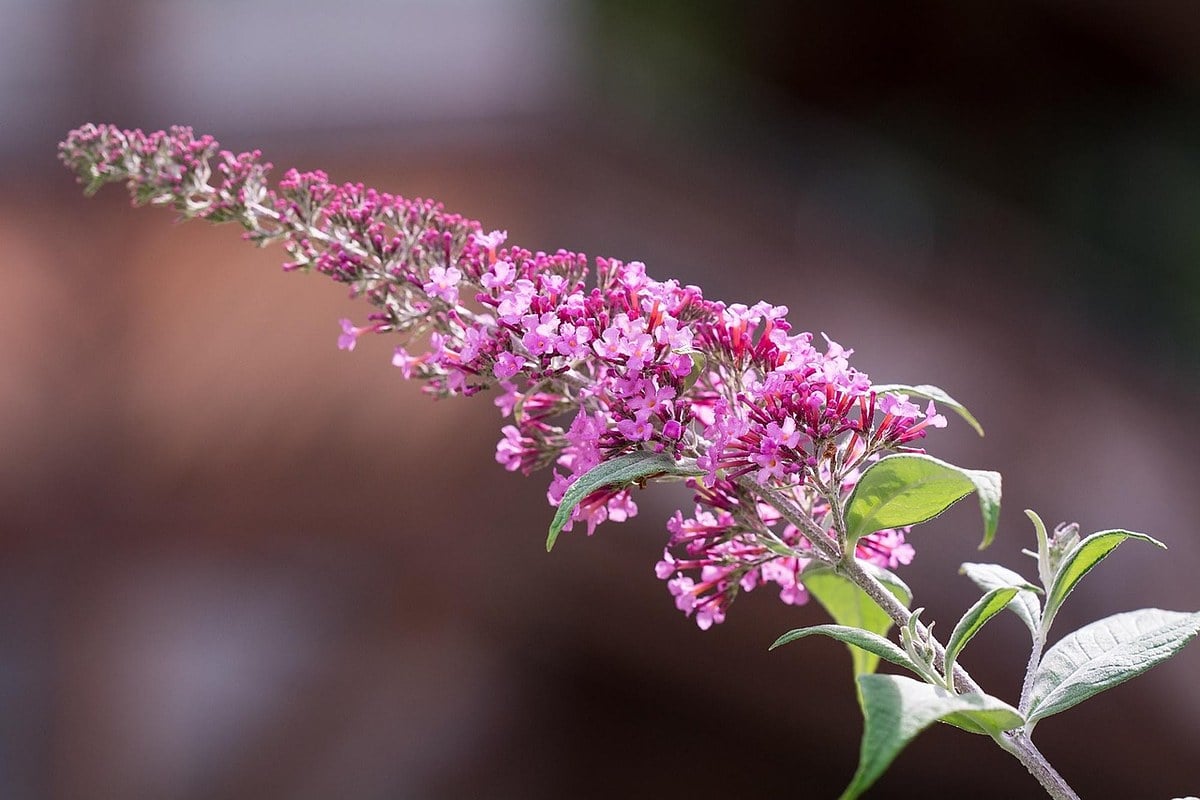
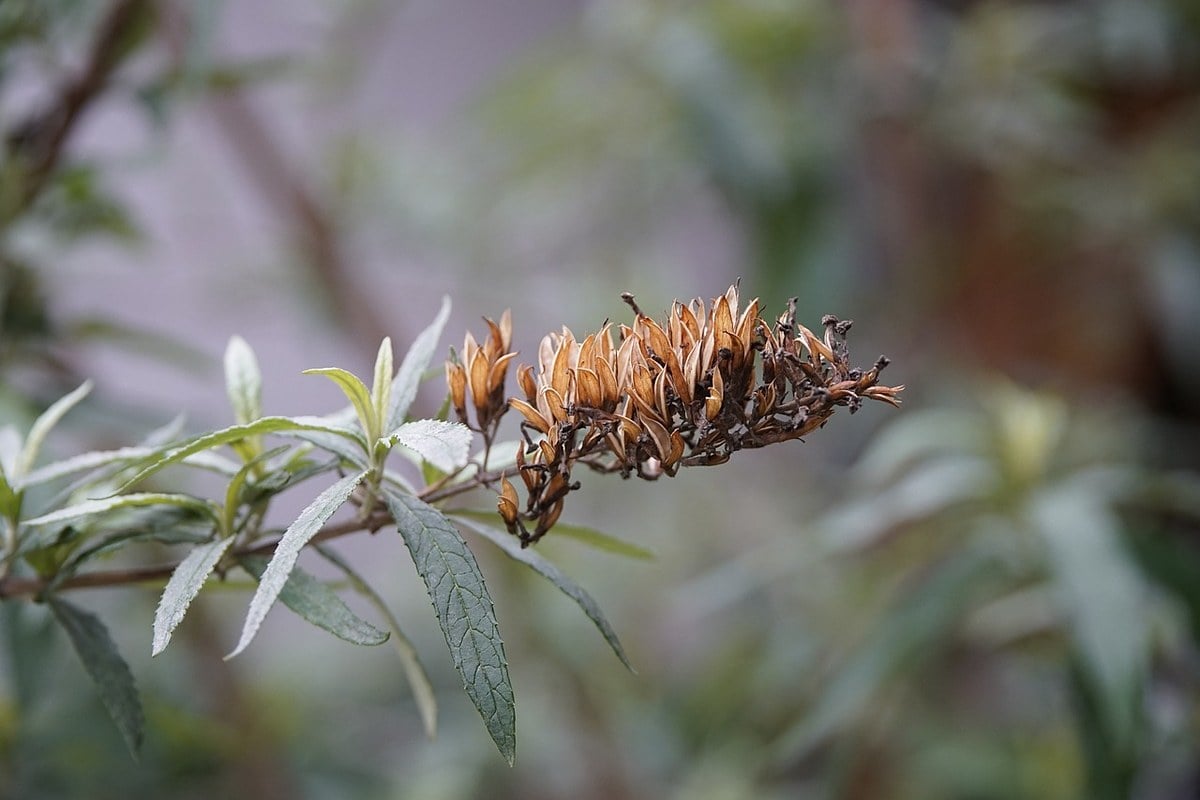
Look for arching stems with long, narrow, gray-green leaves and, in summer, dense flower spikes at the tips. Each spike is packed with tiny tubular flowers, and most have an orange center, which is where the name orange eye comes from. After flowering, the spikes turn brown and fill with small seed capsules.
Gardeners first grew it in Europe in the 1890s. By 1922 it was already growing wild in Britain, according to the Botanical Society of Britain and Ireland.
A butterfly bush spike in flower, with the long, narrow leaves typical of the species. Photo by Pezibear on Pixabay.
Where Butterfly Bush Is a Noxious Weed
The seeds travel on the wind and in water. Along rivers and gravel bars, butterfly bush can form dense thickets that crowd out native plants such as willows, King County in Washington reports. It also takes hold on roadsides, abandoned railroad tracks, pastures, and recently logged forests.
In Oregon, it is a Class B noxious weed, and the state quarantine prohibits transporting, buying, or selling it, except approved sterile varieties that produce less than 2% viable seed. In Washington, it has been a Class B noxious weed since 2005, and the state quarantine bans its sale with the same exception for accepted sterile cultivars.
In Europe, butterfly bush is not on the EU list of invasive alien species of Union concern, but national rules differ. Switzerland has banned its sale since September 1, 2024, for all cultivars, although plants already in gardens may stay. France classifies it as an invasive species in mainland France. In the Netherlands it is not officially listed, and De Vlinderstichting, the Dutch butterfly conservation charity, knows of no examples of invasive behavior there.
One more point for North American gardens: the plant feeds adult butterflies, but the caterpillars of native butterflies cannot feed on its leaves, NC State Extension notes.
How to Grow Butterfly Bush Responsibly
Butterfly bush is an outdoor shrub for full sun and moist, well-drained soil, hardy in USDA zones 5 to 9. Where it is regulated, buy only an approved sterile cultivar. Oregon's list includes 'Asian Moon', 'Blue Chip', 'Ice Chip', and 'Purple Haze', plus the Flutterby series, so check your own state's list before you buy.
Everywhere else, deadhead. Cut off the spent flower spikes before they produce seed, as the Washington State Noxious Weed Control Board advises, and do it in fall rather than leaving the seed heads on the shrub over winter. Then, in early spring, prune hard to a low framework of stems. The Royal Horticultural Society times that from late March to mid-April.
Seed heads left on a butterfly bush over winter. Cut spent spikes off before they set seed. Photo by jhenning on Pixabay.
Is Butterfly Bush Toxic?
Butterfly bush is not on the ASPCA's lists of plants that are toxic or non-toxic to dogs and cats, and the Washington State Noxious Weed Control Board says it is not known to be toxic. Not known to be toxic does not mean safe to eat, so keep pets and small children from chewing on it. If a pet eats a lot of it and seems unwell, call your vet.