A moon cactus is a colored, chlorophyll-free mutant of the chin cactus, Gymnocalycium mihanovichii, grafted onto a green Hylocereus rootstock that feeds it. It needs bright light without full sun, little water, and warmth, and it usually lives a couple of years.
A moon cactus is two cacti joined into one. The colored ball on top is a mutant of the chin cactus, Gymnocalycium mihanovichii, a small, globular cactus from Paraguay and northeast Argentina. The mutant has no chlorophyll, so it cannot make its own food. It lives because it is grafted onto a green cactus, usually Hylocereus undatus, the climbing cactus that also gives dragon fruit.
Common Names
Moon cactus
Neon cactus
Hibotan cactus, after the red cultivar 'Hibotan'
Red cap cactus or ruby cactus
Chin cactus or plaid cactus (names for the green species itself)
Is a Moon Cactus Natural?
Partly. Color mutants turn up among seedlings, but without chlorophyll they cannot survive on their own roots, so every moon cactus you see is grafted by hand. The colored forms in shops were developed in Japan. According to the University of Arkansas, nurseryman Eiji Watanabe imported seed from Germany in 1937, raised about 10,000 seedlings in 1940, and introduced the red 'Hibotan' in 1948, although some doubt his account. Since then, selection has given tops in red, orange, yellow, and pink.
To graft one, the grower cuts the base of the colored top and the tip of the rootstock so the two match, then holds them together with rubber bands until the tissues seal.
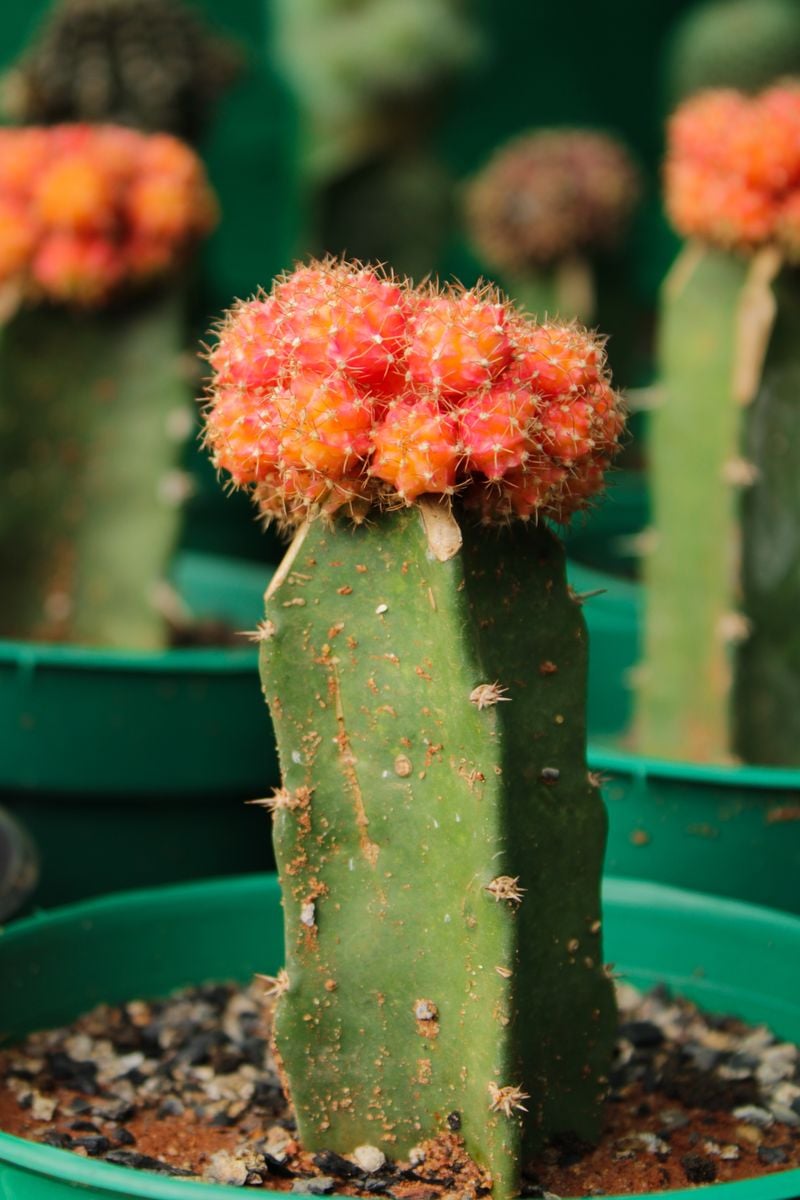
The graft line is easy to see: a colored Gymnocalycium top on its green, three-angled rootstock, in Odisha, India. Photo by Stuti on Pexels.
How Big Do Moon Cactus Get?
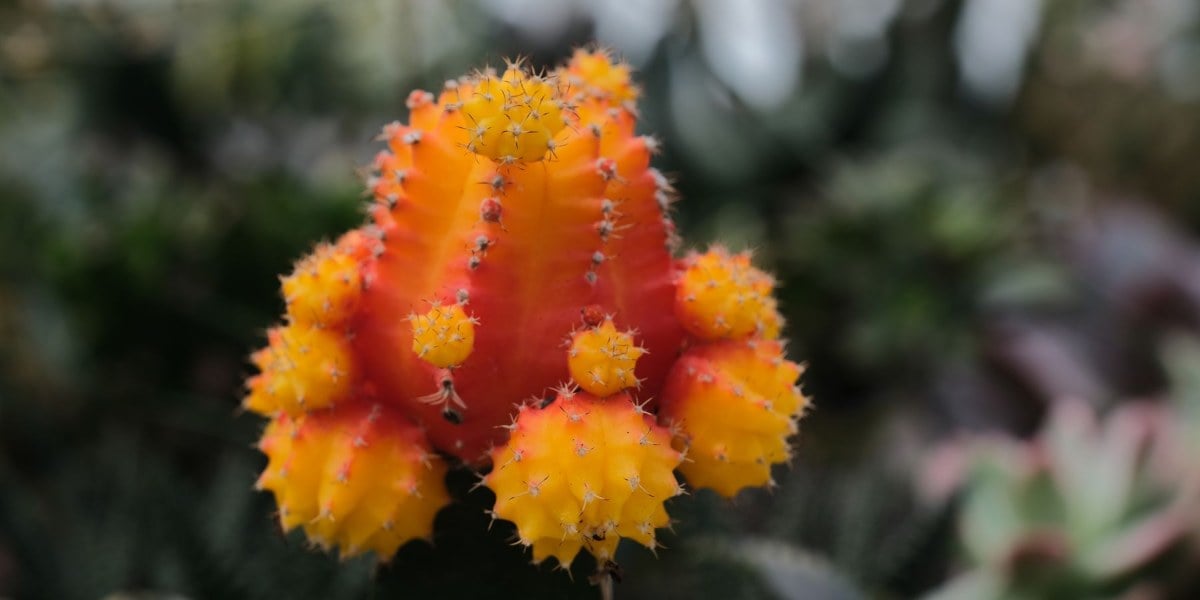
The colored top stays small. The species itself grows only 5 to 7.5 cm (2 to 3 in) tall and wide. Most of the height of a moon cactus is the green rootstock, and the top can form small offsets around its base, like the yellow ones on the plant in the header photo.
How Long Does a Moon Cactus Live?
Not long. The top can outgrow its rootstock, so plants typically last only a couple of years unless the top is regrafted onto a fresh green stem.
Moon Cactus Care
Light: bright light, but not full sun. The colored top has no green pigment, and strong sun burns it.
Water: plant in a well-drained cactus mix and let it dry out completely between waterings. Water even less in winter.
Temperature: 20 to 30 °C (68 to 86 °F) suits it, in dry air rather than humid. It is not frost tolerant, and the rootstock is a tropical cactus, so bring plants inside before nights drop below 10 °C (50 °F).
Feeding: a diluted cactus fertilizer in the growing season.
Problems: mealybugs, spider mites, and aphids, plus rot from overwatering or high humidity, and sun scorch on the colored top.
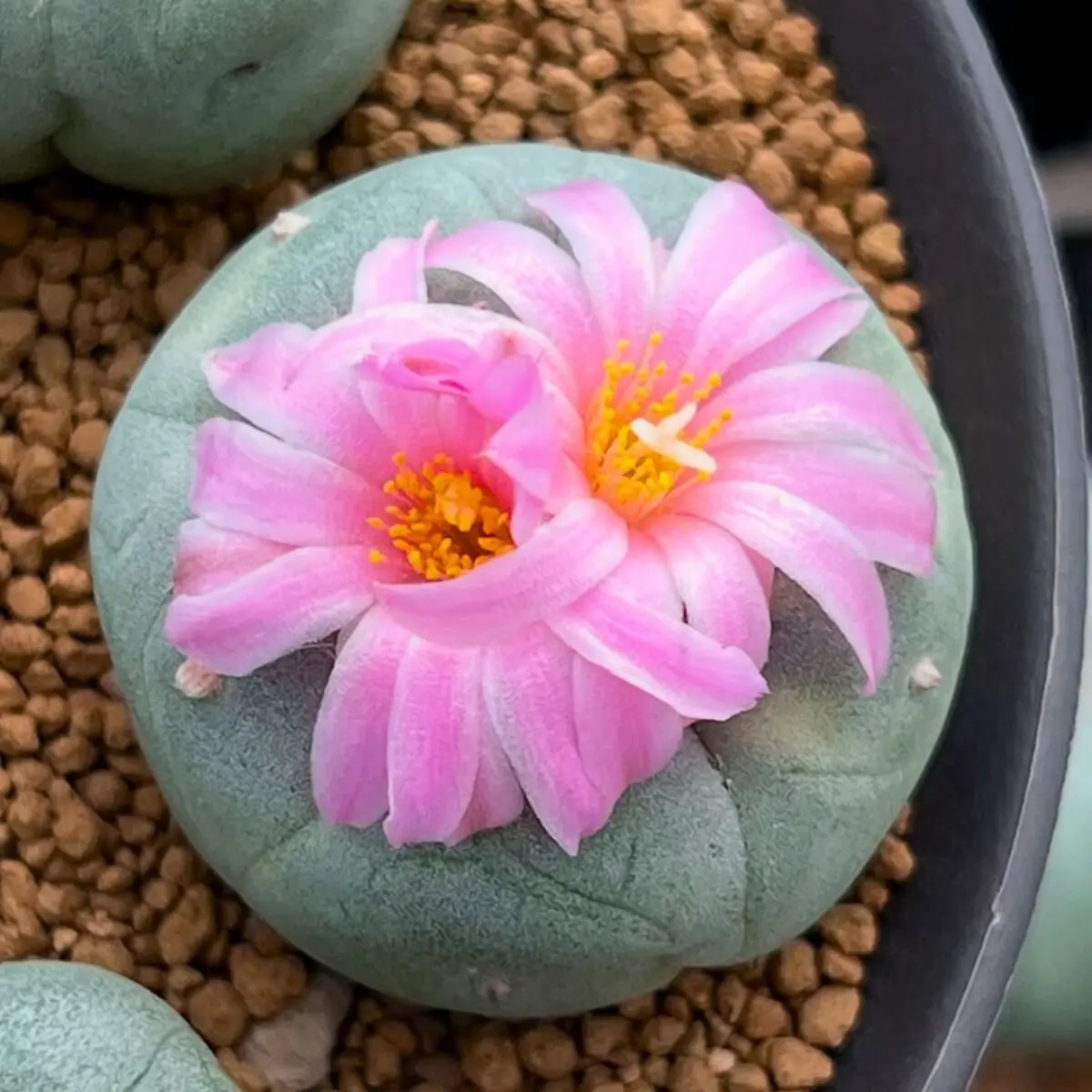
Flowers: some tops flower at the crown in late spring or early summer, in pink to purplish pink. Many never do.
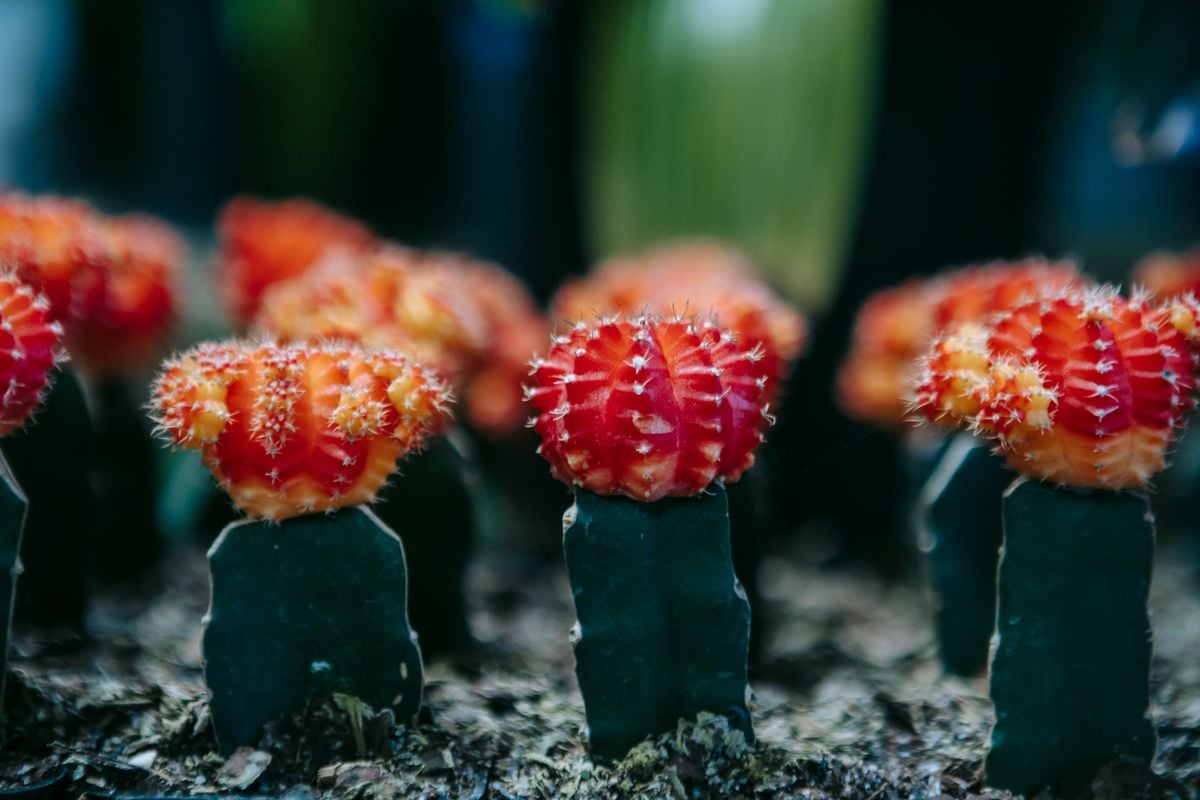
Red and orange moon cacti in a botanical garden in the Philippines. Photo by Teona Swift on Pexels.
Is a Moon Cactus Safe for Pets and Children?
Neither the moon cactus nor its rootstock is on the ASPCA lists of plants toxic or non-toxic to dogs and cats, so there is no rating to go on. The clear hazard is the spines: both the colored top and the green stem carry them.
Wear gloves, or wrap the plant in a folded strip of paper, when you repot it.
Keep it out of reach of pets that chew plants and of small children.
If a pet eats part of one and seems unwell, call your vet or the ASPCA Animal Poison Control Center at (888) 426-4435.