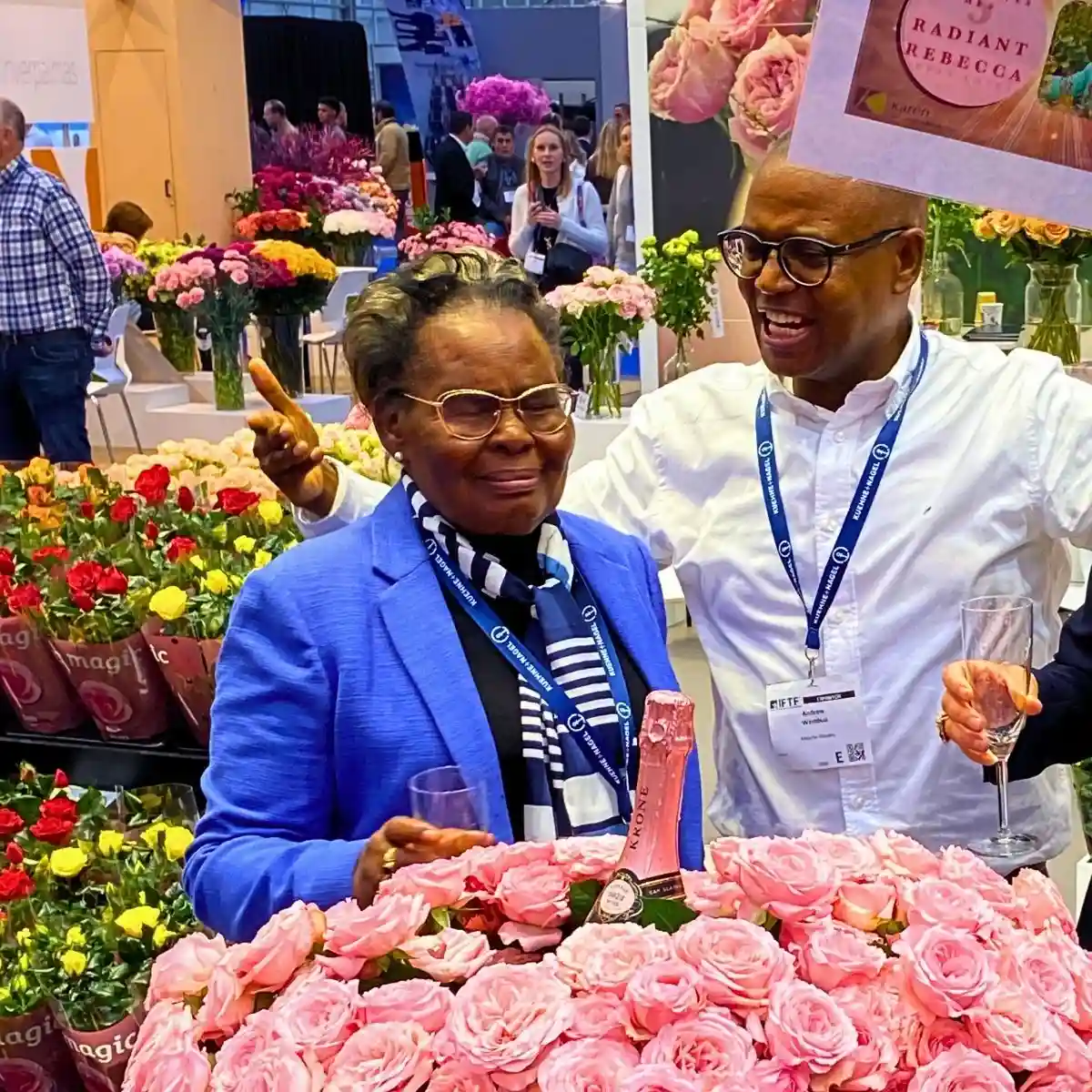

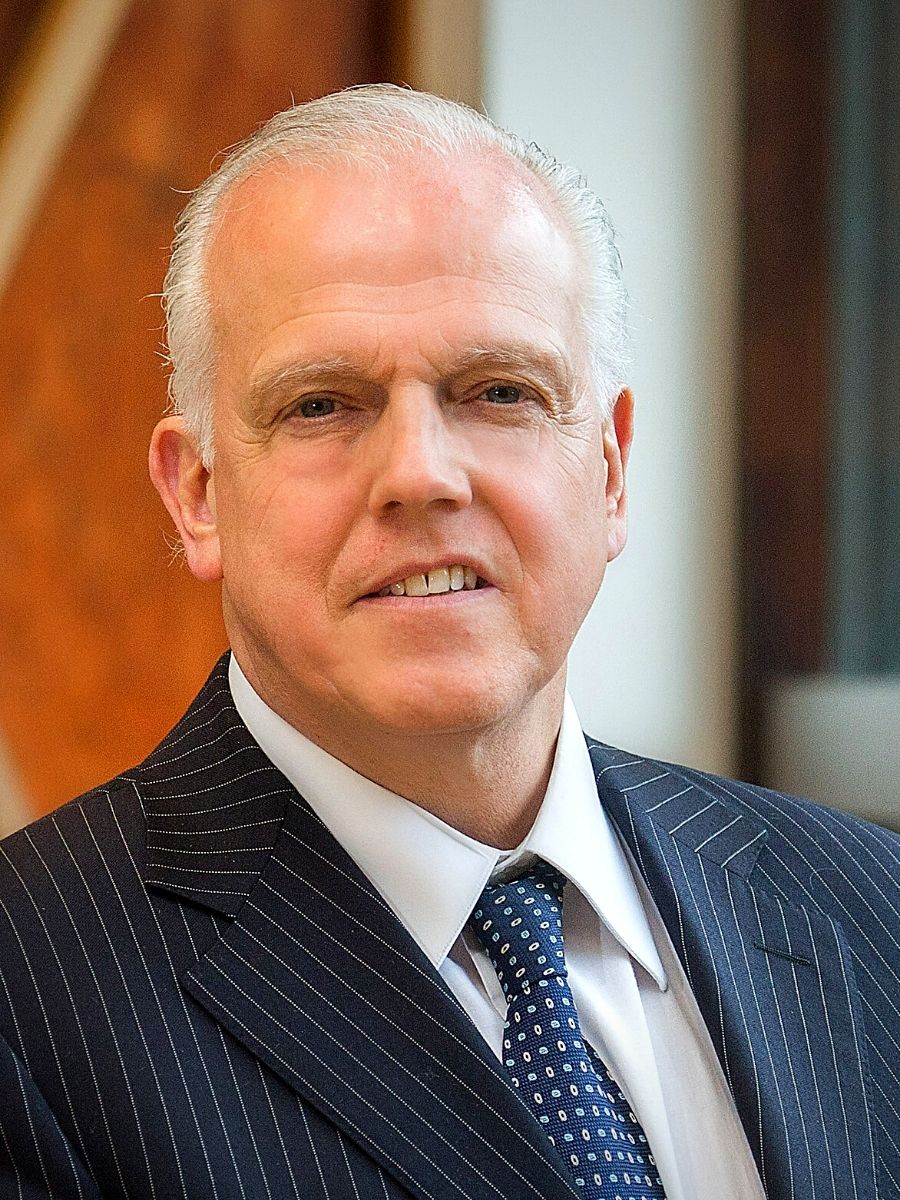
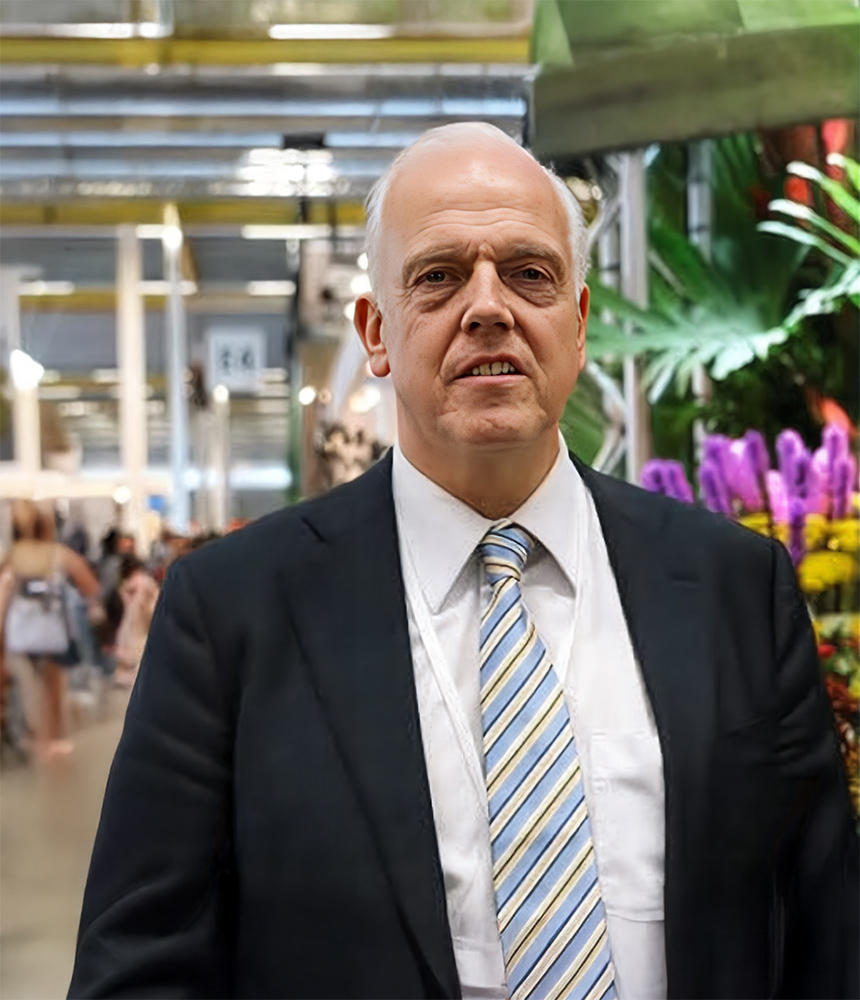
Dick van Raamsdonk is the CEO and President of HPP Exhibitions, headquartered in Amsterdam, Netherlands. Founded in 1984, HPP has organized hundreds of flower and horticultural exhibitions across several countries, establishing itself as a pioneer in the trade shows and fairs of these industries, including the International Floriculture Trade Fair (IFTF) in the Netherlands, IFTEX in Kenya, and others in Ethiopia, the U.S., and Ecuador.
Dick is passionate about creating connections across the floriculture value chain, for instance, between international buyers and growers, while championing the irreplaceable value of physical connection and networking opportunities that these exhibitions present in an increasingly digital world and age.
Question 1
For those who don’t know you, who are you and what do you do?
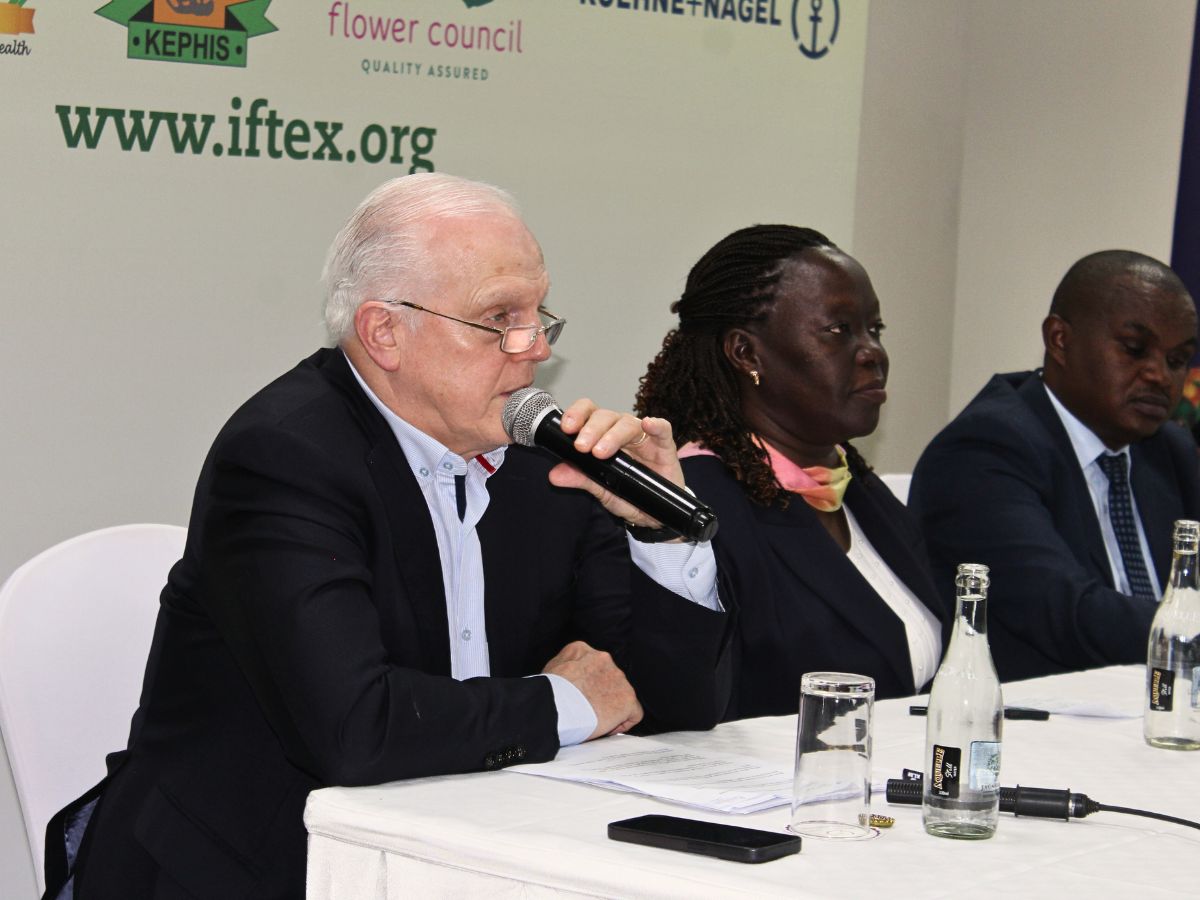
"Many people in the industry already know me. With more than 40 years in the flower exhibition business worldwide. Again, don't get me wrong, but I think you know too. Through HPP Exhibitions, we have successfully held so many trade fairs and exhibitions focusing on the floriculture and horticulture sectors, creating high-profile business-to-business platforms where growers, breeders, buyers, and many other industry professionals can meet physically and face-to-face. This is something I believe is irreplaceable even in today's digital world."
Question 2
What is so special about your job?
"What is so special about my job? A special love, of course, that is what is special about my job. Think of someone who decided in 1985 to dedicate themselves to promoting the international flower industry through exhibitions. And that happened to be me. I could have been somebody else, but planning and hosting such shows and exhibitions has always been one of my specialties; it's something that I like: to organize things. And, perhaps, by coincidence, I came into the flower industry.
And, not thinking too much more, I just started flower exhibitions, organizing flower shows and floral trade fairs, where you bring growers and buyers together. And that developed. For the first time, I think it was in France. Then Taiwan. China. And from there, I just went to more countries. And now, 40 years later, I'm still organizing flower trade shows and exhibitions. So, essentially, I specialize in the organization of international flower shows, and that’s so special for me. That's what I've done for most of my life, and it’s what I'm still doing."
Question 3
Are there any specific challenges or obstacles you’ve faced in your job, and how did you overcome them?
"Insecurity. Especially for a flower show, because you are talking perishables in new countries, new markets. It is always a challenge. It's not always certain because you encounter all kinds of challenges and problems. And that is a big test. So, I would say insecurity, in terms of investment, time, and energy. My goal has always been that wherever I do a new show, I want it to have the right feel. It has to have the same quality; I've always tried to implement that in all my shows. Wherever I do one, it should have a similar quality, organization-wise, with the same aim of bringing growers and buyers together."
Question 4
What are the threats in the industry, and if so, do you have any solutions for them?
"Like I said, insecurity, of course, is big. But then again, after all these many years, there should be no insecurity anymore. Now listen, if we now look around us, it doesn't matter which industry you talk about; they all face some form of insecurity in terms of climate change, political challenges, and economic challenges, which are all threats. There is always an aspect of insecurity about something. And the threats that we had in the beginning (40 years ago) are different from those that we have now. But at the same time, they are the same in different ways because in the end, it is all about risk; challenges that keep you really at the front of your chair, forcing you to remain alert. Because every other time, different factors emerge in the industry, making it a very challenging job."
Question 5
How has technology like e-commerce platforms or digital marketing affected your industry? Which strategies have you employed to stay competitive?
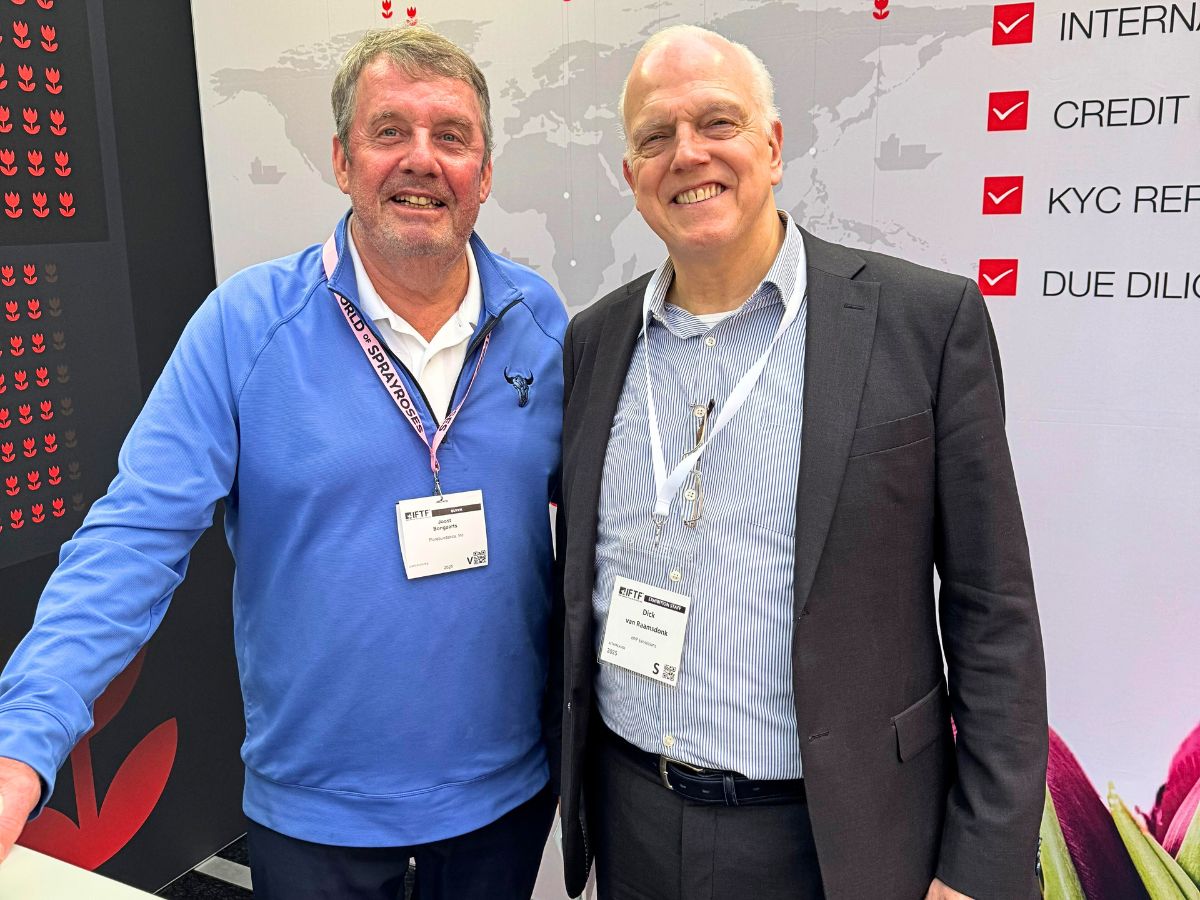
"In that respect, I'm a very simple-minded person, and I still believe in how I started, and that means physical contact, meeting the grower and the buyer in one place, bringing them together, showing them the product. They can smell the product. They can touch it. They can talk to each other. Promoting things as I did in 1985, bringing the industry together face-to-face. That’s what I do. And that's what I mean by physical contact. Not much has changed. For technical developments, I do not apply them that much because, in the end, we still pretty much do the same as we did in the beginning.
In the end, the industry wants to see the product. It is not that flowers cannot go digital. It is just the same with fruits and vegetables. People want to see with whom they do business. They want to see the product. And that, I think, makes a big difference. So, nothing much has changed in that respect. Ours is still that platform that, in three days, allows you to see and physically experience the whole floral industry in one place: the product and the people involved."
Question 6
Who (in or outside the floral industry) is an inspiring example to you? And Why?
"I have different things and people who inspire me. I have my idol too. Who would be my inspiration as a person? Neil Young is my music inspiration. I love Scotland as a country. But who would be the person I would like to be? No, I have no person that I would like to be. It doesn't mean I'm perfect. I'm far from perfect, but I'm happy with what I am. I'm grateful for what I am. But that doesn't reflect any arrogance, or that I'm perfect. I'm not. Of course, I would have done a lot of things differently, but still, I'm happy with what I am and what I have done."
Question 7
How do you handle stress or difficult moments in your life?
"I'm lucky that I have the genes of my mother. Mental strength. Mentally, I think one has to be strong. And I am strong emotionally. You have to be, because you have to find your own way to process stress. And everybody has their own way. I have my own ways. You have to be able to define and separate your emotions. You cannot be too emotional in certain things. You must be able to separate emotions and logic. You have your heart and your brains, but you have to separate them. That's what my mother always said. And I now know why she said it, because she was really tough and strong.
After all, in this trade, there's a lot of pressure involved; with all the insecurities around you really have to be strong to move forward. I can tell you, when we had 9-11, we were building a show in New York (we were preparing for the show at the Javits Center in Manhattan). We saw the two towers fall. The whole world was coming to the fair. Flowers were in the air. I really thought, “This is it?” Then I thought again, “Wait, you need to be strong.” So, yes, you have to be strong and stress-resistant."
Question 8
What has been the best (floral or non-floral) news or events for you lately, or of the last year?
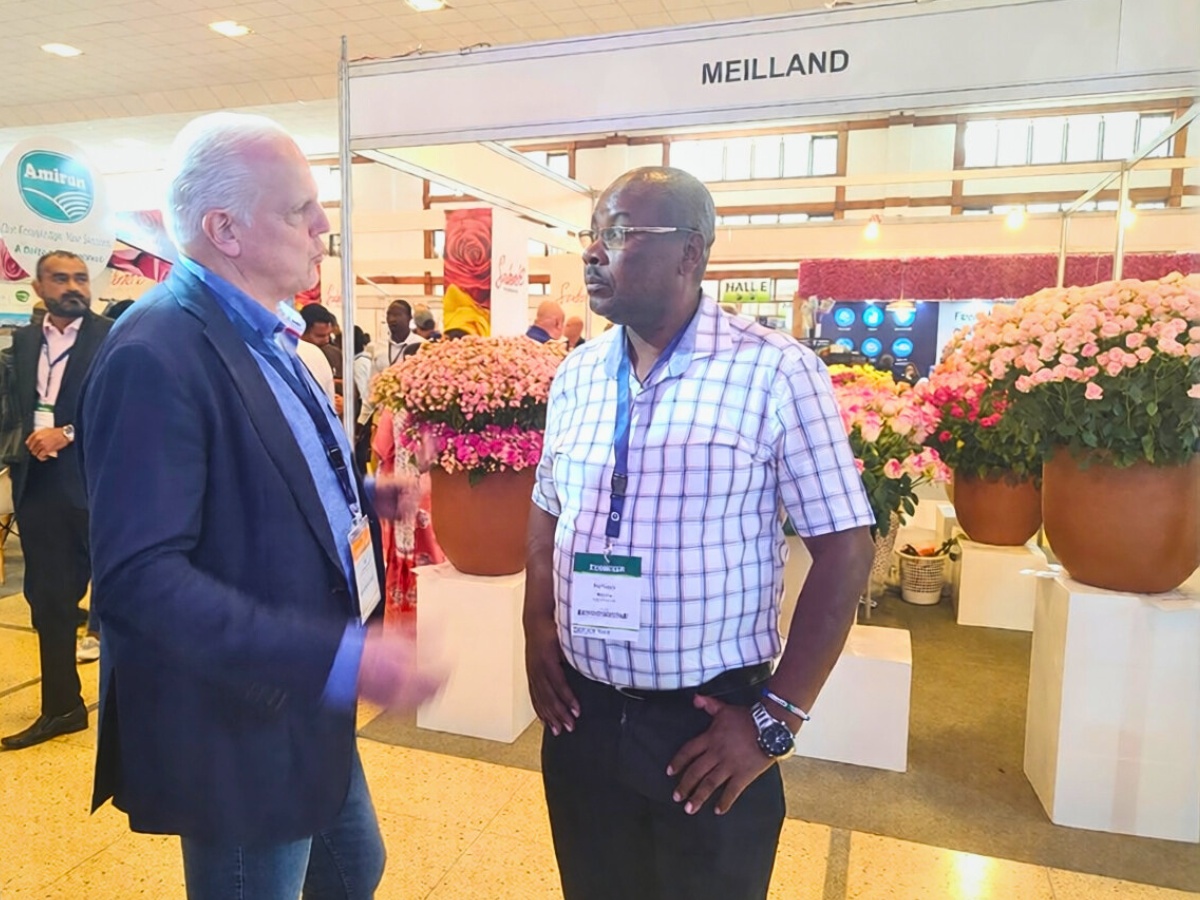
"I think specialization. There's never an end to specializing. I'm still specializing more and more. I'm still trying to put up a better show, a bigger and better show. There's still so much to do to improve a trade show in the floriculture industry. And that keeps it interesting. But again, there are, of course, continually new varieties being developed, new kinds of buyers, florists, retailers, which increases the sales of flowers. So there's the whole industry in all aspects, breeding, growing, and also in the buying part, constantly developing, which is impressive.
Those are changes that 20 years ago were, perhaps, not there. I will tell you one more thing that’s interesting too, they told me already 25 years ago, “Dick, you know, you organize flower shows, it's getting boring, there are too many shows, and people are no longer interested,” which I never understood. But I let them talk, because now, years later, flower shows (the floriculture industry fairs and exhibitions) are still as interesting. I think if I have more years, I would still have the same kind of conversations, albeit differently, but the details would be the same. The floriculture industry needs trade show platforms, where you can see the product, the person, and that will never change."
Question 9
Which is your favorite flower and why?
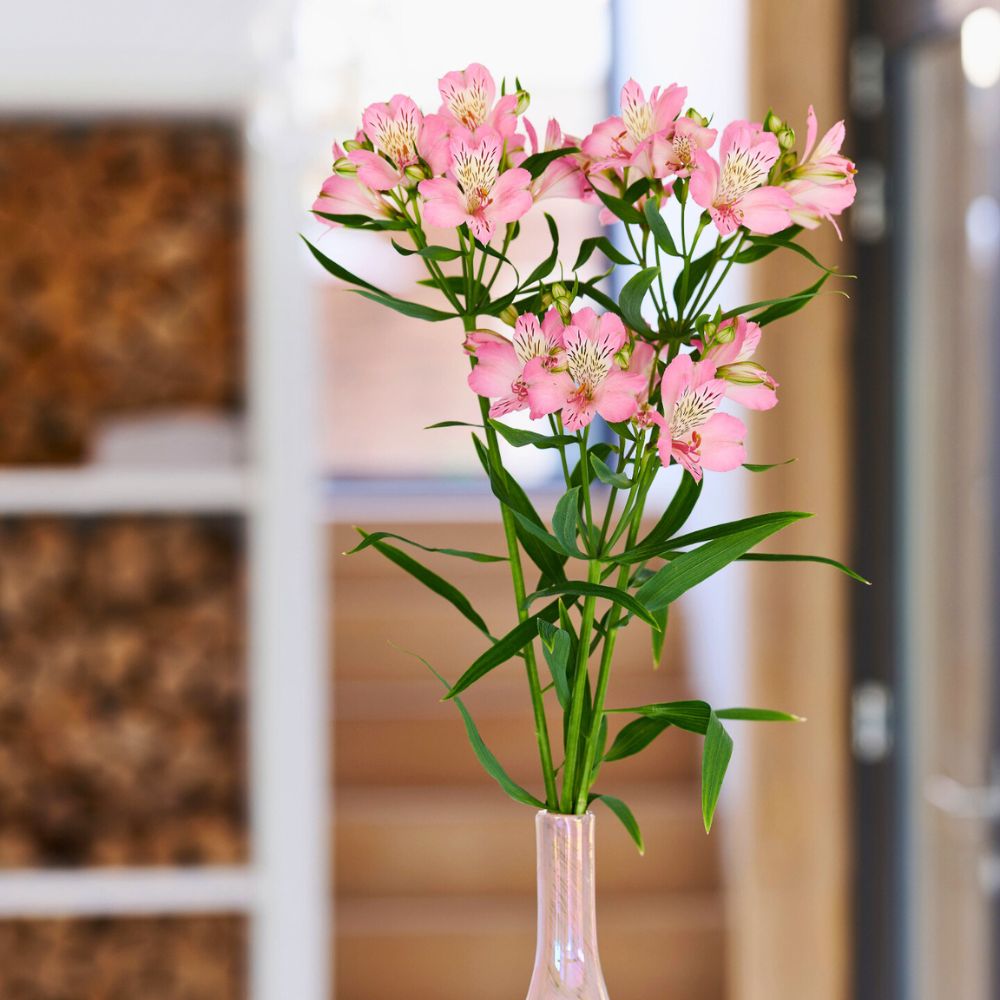
"That's a difficult one, because there are two flowers I like most. But that's personal. One is the Gladiolus, which is a simple flower, an inexpensive flower, but I love it, because there are so many florets on the stem. And Alstroemeria too. I know many rose growers will be a bit disappointed, but that is, if you ask, what are the two most adorable flowers for me, I would say Gladioli, Alstroemeria, and of course, I love roses as well. But my favorites are what I just mentioned."
Question 10
What are you so proud of for what you've done? When you look back, what are you proud of for the 40 years?
"My persistence. Never giving up. Consistency. Constantly doing what you're trying to do best. I am proud of those. I'm gratified for never having given up, because I can tell you, there were enough moments that I thought about that, but never did it. I think I’m so pleased about that. I don't like to say I’m too proud. I just carried on in any circumstance that came up. And I think that's something that people always tell me."
Feature image by Flower Circus.