Somewhere tonight a rocket goes up, bursts into a ball of light, and falls apart in long trails. Now picture the same shape in petals, stems, and stamens, staying put long enough for you to actually look at it. That's the trick behind flower fireworks, and artists, an ad agency, and a photographer have each pulled it off in their own way.
The timing couldn't be better. Since August 1, 2026, consumers in the Netherlands may no longer set off, buy, or keep fireworks beyond the small F1 category of sparklers and caps, so this New Year's Eve is the first under the Dutch national fireworks ban. In many other places, real fireworks aren't allowed either. A vase doesn't need a permit. Enjoy!
Sarah Illenberger's Flowerworks: Real Flowers Arranged as Fireworks
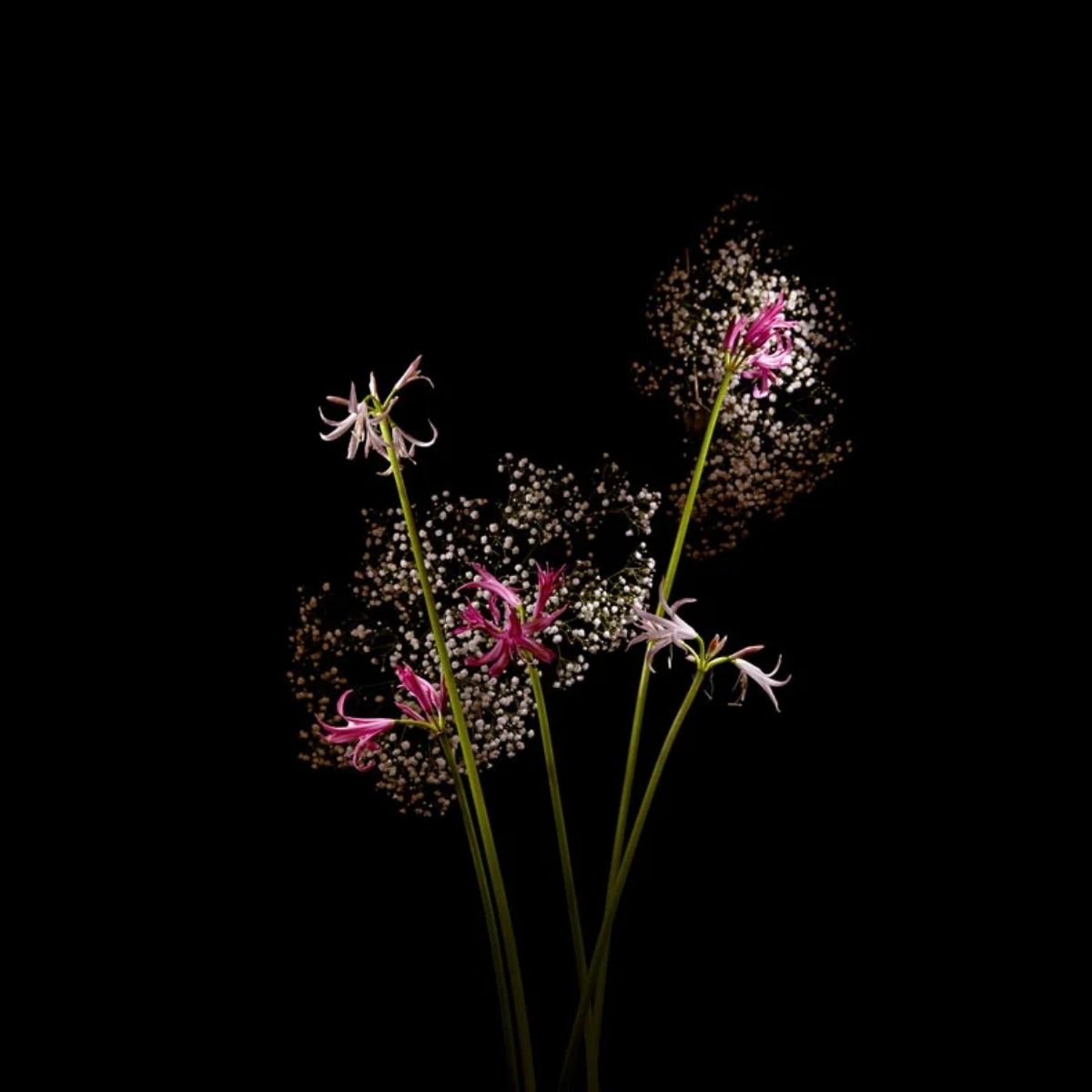
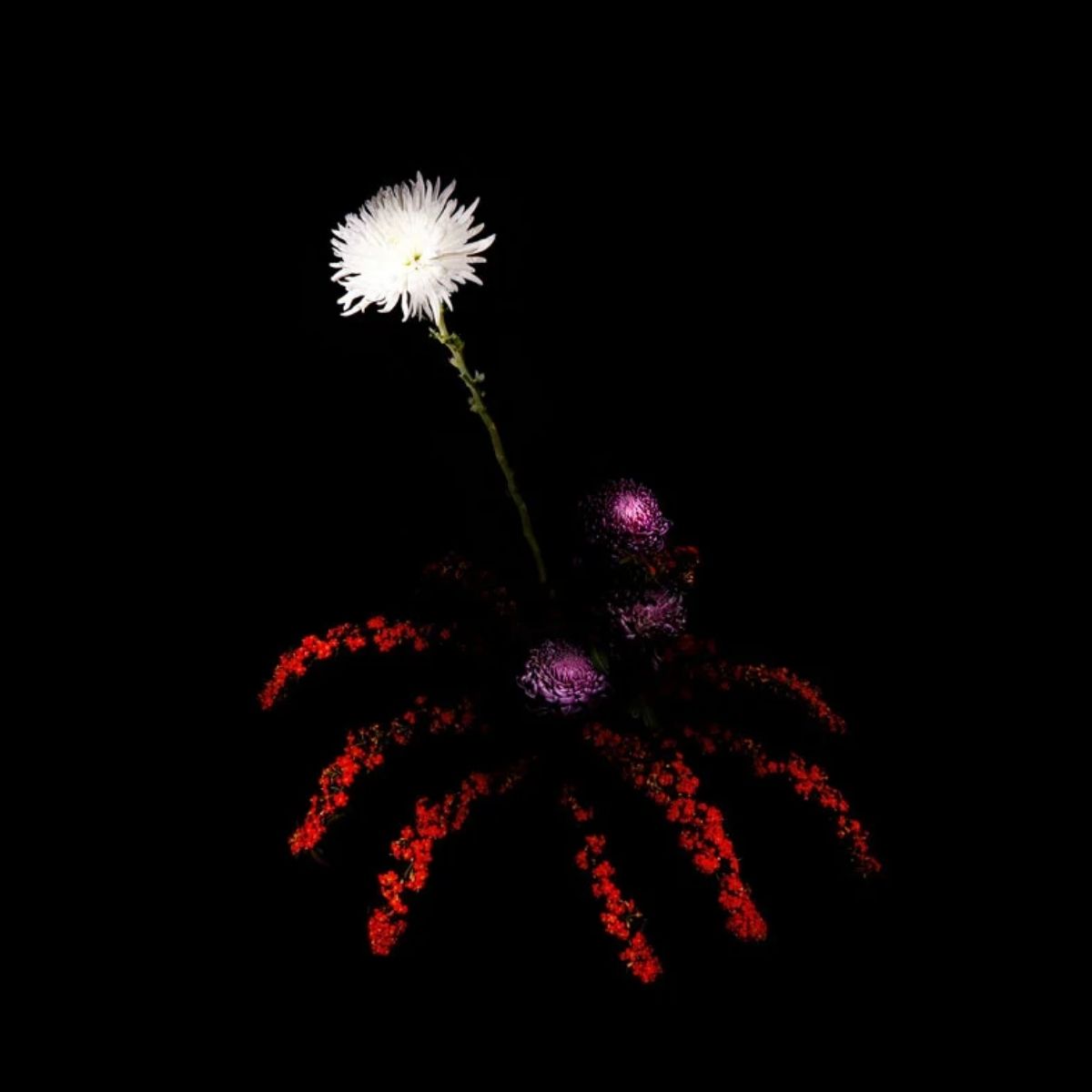
Berlin-based artist Sarah Illenberger made this photographic series back in 2014, and it's definitely worthy of repeating every year. She took very common flowers and flowering plants and laid them out so they look like real fireworks. Tiny buds of botanical life, exploding petals, and strands of green stems seem to hover above a dark night sky. They pop and burst in midair.
The series is called "Flowerworks," it was photographed by Sabrina Rynas, and it reimagines the annual, dramatic light show with a playful, peaceful quality. Bonus: nobody's dog hides under the bed.

Fireworks With Real Flowers
For her fireworks with real flowers, have a look below. Each burst is a single flower or plant that was taken apart and laid out again, stem by stem. How many can you name before you scroll on?




Who Is Sarah Illenberger?
Taking a look at her website, you can only be amazed by the creativity of Sarah. She was born in Munich in 1976 and runs her own studio in Berlin. Her training is graphic design: a foundation course at Chelsea College in London, then a BA Hons in graphic design from Central Saint Martins College, which she completed in 2000.
Her work mixes sculpture, installations, and photography. She takes commonplace objects, changes their material or their meaning, and lets you see them again as if for the first time. She prefers analog handicraft over digital methods. That's exactly why the flowers in Flowerworks look so real. They are.
After founding the jewelry label Sarah & Patrick Design in 2000, she worked as an illustrator and designer for NEON Magazine from 2000 to 2005. Since 2007, she has led Studio Sarah Illenberger in Berlin. She was a guest professor at UDK Berlin in 2011 and took part in art residencies such as Villa Lena in 2016 and Casa Balandra in 2023.
Her exhibitions include "In the Pink" in London (2023), "Mimosen" in Berlin (2021), and "Wonderplants" in Berlin (2015). She won the Köln Klopfer (2015), the Lead Award (2011, 2009, 2007, 2003), and the ADC Award (2010, 2007, 2004, 2003). International magazines and clients like Hermès, Nike, and The New York Times hire her for the mix of elegance and humor you see in these pictures.
Want more? A series of images exploring the complex and curious relationship between nature and technology. Produced during NOI / Bozen Art Residency, Summer 2019. For more details, you can visit her official website: Sarah Illenberger.
Azuma Makoto's Hanabi: A Flower Sculpture Among Real Fireworks
If anyone was going to put flowers and real pyrotechnics in one frame, it was Azuma Makoto. The Japanese artist has sunk bouquets into the deep sea and frozen them into lakes, so a beach full of fireworks was a logical next stop.

His sculpture "Hanabi" holds fifty species of flowers from all over Japan. They're set in a cascading pattern, with Orchids, Chrysanthemums, and Dahlias among them. When the sun sets, tiny LED lights and pyrotechnic devices hidden in the floral sphere go off. The sculpture throws sparks of its own. The idea behind it is simple: a firework is gone in seconds, a flower in days, and both are worth stopping for. You'll find the full story in Azuma Makoto's flower sculpture Hanabi.

SNCF and TBWA/Paris: Flower Fireworks for Train Travelers
In 2020 the National Society of French Railways (SNCF) thanked those "preserving the planet" by traveling by train, in a campaign that's positively blooming with flower fireworks. SNCF partnered with TBWA/Paris to show the successive blooming of flowers in a time-lapse that covers 200 hours. To capture each of the 50 varieties, every flower was photographed once every five seconds around the clock. That added up to 14,000 images per flower.
In the film, every flower that opens comes with the wheezing bang of fireworks. It's a party, after all. According to SNCF, trains give off 30 times less CO2 than individual cars and 20 times less than planes. The campaign thanked its "responsible citizens" for helping to preserve the planet, stating "By taking the train you avoid rejecting million tons of CO2 in nature." At the time, SNCF said it aimed to move from diesel-powered rail to stations with their own autonomous power by 2035. Fireworks that save CO2? Only with flowers.
Credits
Agency: TBWA/Paris Client: SNCF Advertising Managers: Stéphane Chéry, Agathe Mouly, Marie Nomdedeu Agency Managers: Marina Zuber, Cécile Moreau, Maurane Pauli, Célia Martinez Executive Creative Directors: Benjamin Marchal and Faustin Claverie Creative Team: Julia Deshayes and Léna Monceau Production: EDDY.TV Film Director: CARAVANE Head of TV: Maxime Boiron TV Producer: Elisabeth Boitte Executive Producers: Jean François Bourrel and Gilles Pinaudeau Production Manager: Antoni Gimel-Lecosse Studio Stop Motion: Manuel Cam Post Production: TBWA/Else Head of Post Production: Elise Gamboa Head of Music and Sound: Olivier Lefevbre Music and Sound Producer: Fanny Mithois
Andrew Baxter's Floristic Fireworks
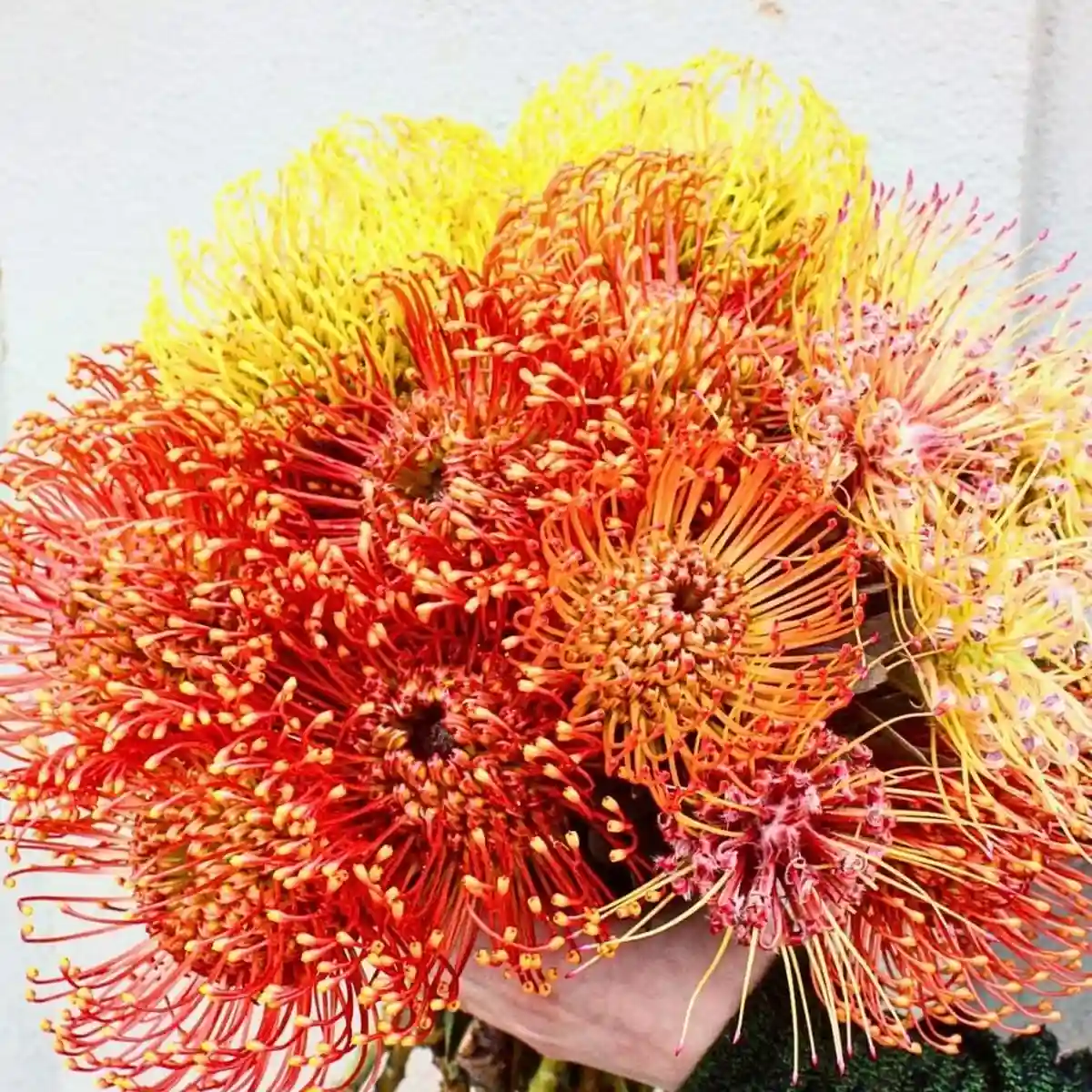
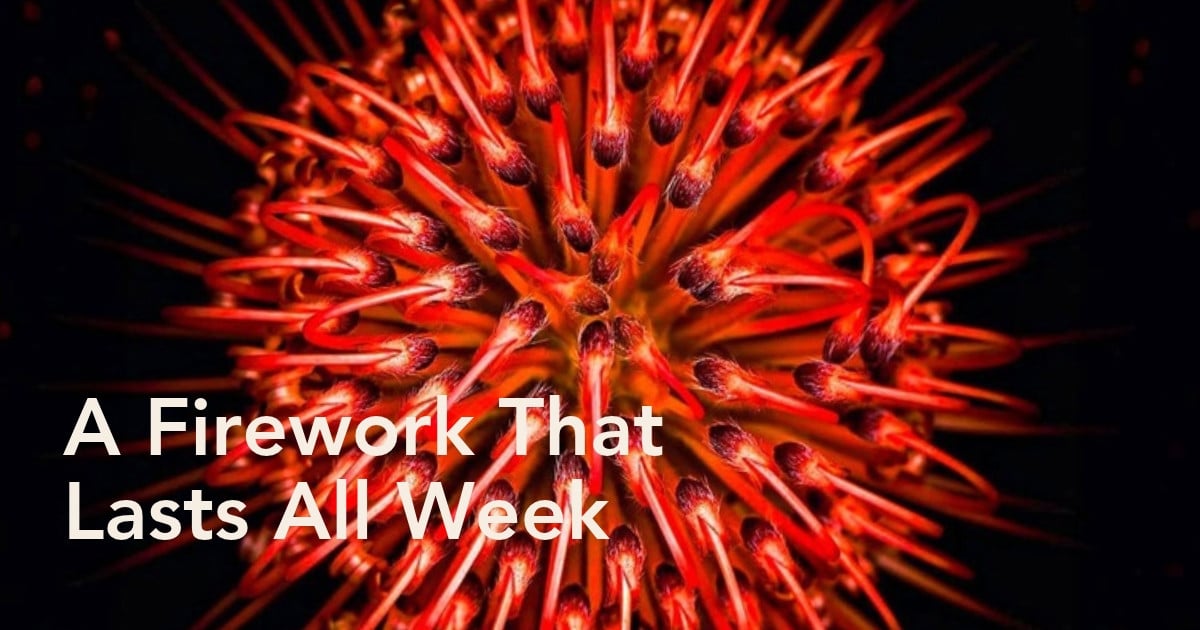
Western Cape ecologist and photographer Andrew Baxter didn't need to arrange anything. He found his fireworks already growing: Leucospermum, the pincushion Protea of South Africa. With a dark background and careful backlighting, each flower head reads like a burst caught a split second after the bang. The whole series is in Leucospermums are the fireworks of nature.

Why Fireworks Are Named After Flowers
Flowers and fireworks go back a long way, and the language gives it away. The Japanese word for fireworks, hanabi, is written with the characters for flower and fire. Japan launched its first fireworks in 1733, and the classic Japanese shells explode in simple spheres that are designed to look like a Chrysanthemum or a Peony. Some are even called senringiku, thousand-Chrysanthemum fireworks.
So when a pyrotechnician talks about a Peony or a Chrysanthemum shell, they're talking flowers. Which leads to the real ones.
Flowers That Look Like Fireworks
No artist needed here. These flowers burst all by themselves, and you can buy every one of them for a New Year's Eve arrangement.
Allium Schubertii
The Allium Schubertii product page puts it best: the flower reminds you of a flare that's shot and explodes. Fireworks in your vase! Its star-shaped stems vary in length, so the head never looks like a neat ball, more like the moment just after the bang. All I Am grows it in purple, pink, and white. Prefer a rounder, denser burst? Go for Allium Purple Rain, and see the whole range in Alliums are so much more than your regular purple ball.

Leucospermum, the Pincushion Protea
Baxter's subject is a florist's flower too. Leucospermum cordifolium has long styles shooting out of a round head, like sparks frozen mid-flight. No wonder it's also called the firework flower. Newer lines such as Leucospermum Ayoba Pink from Future Fynbos bring it in softer colors. Leucospermum belongs to the Proteaceae, the same family as the Protea, so a King Protea makes a heavier, slower burst for the center of a design.

Gomphrena
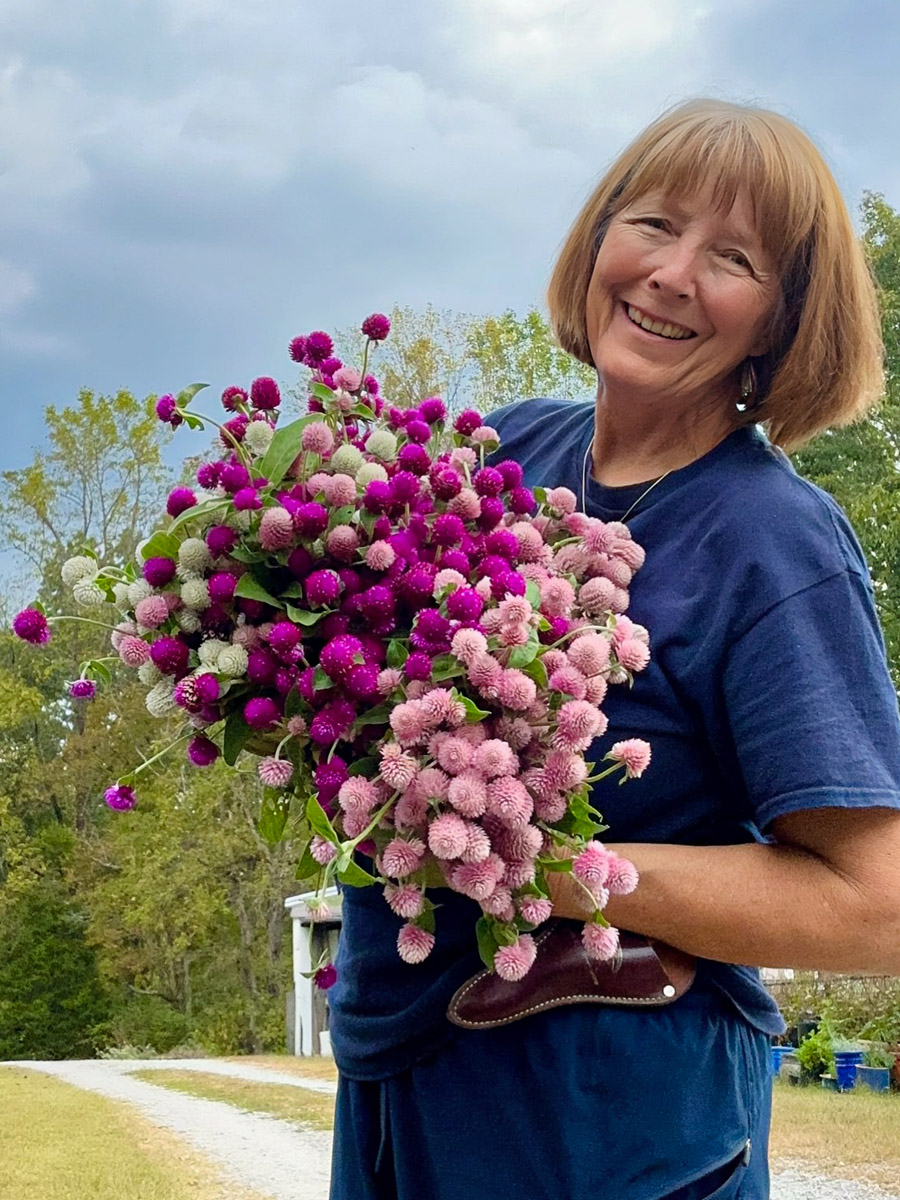
Gomphrena, or globe amaranth, is small, round, and papery. On its own it's a pompom. Scatter a few dozen through a design, and they read like the crackle at the end of a show. There's even a cultivar called Gomphrena 'Fireworks', which NC State Extension lists as good for both cutting and drying. Dried, it's still around long after the last party popper.
Spider Chrysanthemums
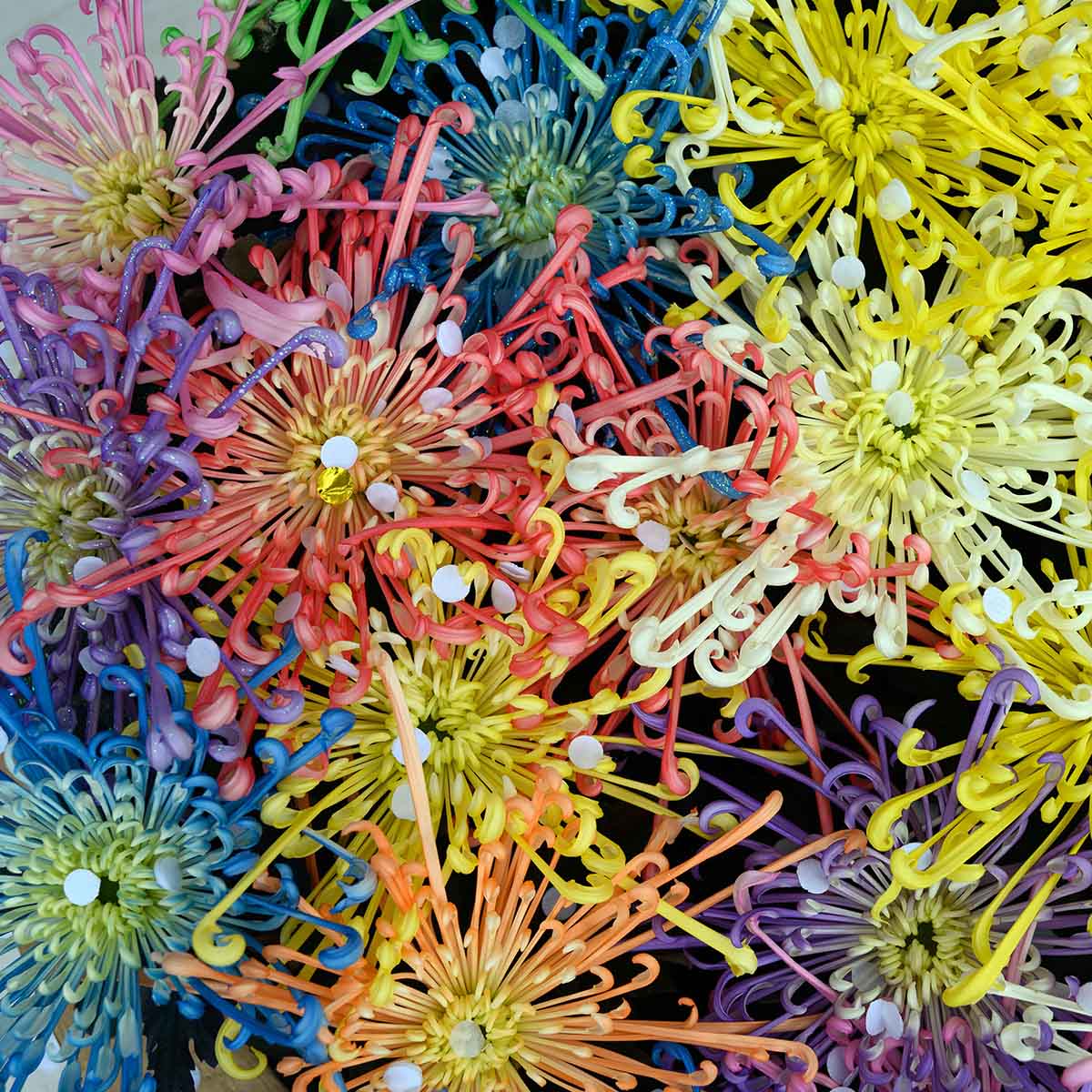
The Chrysanthemum gave its name to the most famous firework shell, so it's only fair it gets a spot here. Spider types work best, with long, curled petals shooting out from the center. The Chrysanthemum Fireworks pot Chrysanthemum from Royal Van Zanten even carries the name, and it's suitable both indoors and out on the balcony.
How to Make a Flower Fireworks Arrangement for New Year's Eve
You don't need Azuma Makoto's budget. Here's how to do it.
- Go dark. A black or navy vase, or a dark wall behind it, does what the night sky does for a real show.
- Build one big burst. Put Allium Schubertii or a Leucospermum high in the center, with nothing taller around it.
- Add the sparks. Gomphrena, small spray Chrysanthemums, and thin grasses around the edge make the trails.
- Bring in some metal. A few gold or silver stems or a metallic ribbon catch the candlelight. Keep candles well away from dried material.
- Keep it low on the table, so people can still see each other at midnight. The holiday table flowers guide has more on that.
A Show That Lasts Longer Than Midnight
A rocket gives you ten seconds. A vase of Allium and Leucospermum gives you the whole week after, and it doesn't scare the cat. Planning the rest of the season? Start with the Christmas decor trends for 2026, then see how other countries see the year out in the Christmas floral traditions around the world, the Japanese kadomatsu for the New Year included. Happy New Year from all of Thursd!
Sources: Rijksoverheid, Japan National Tourism Organization, NC State Extension, and the Thursd articles linked above.
Header image by @andy_baxter. Featured image courtesy of Sarah Illenberger, photographed by Sabrina Rynas.