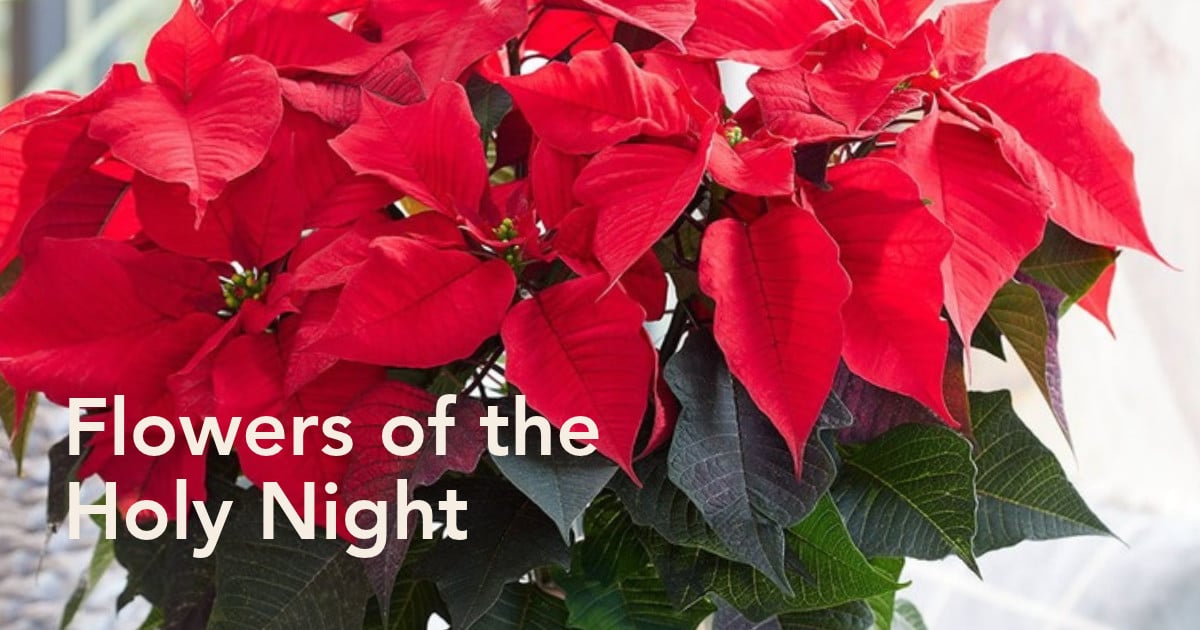
Christmas time is getting closer, the weather is getting colder, but the mood is getting warmer. And on the subject of Christmas flowers, no Christmas is complete without the Poinsettia. So why are Poinsettias associated with Christmas? It flowers in Mexico in December. Franciscan friars carried it in their Nativity processions more than 300 years ago. And an old Mexican legend about a poor girl named Pepita turned roadside weeds into the Christmas Eve flower. Its red, star-shaped bracts did the rest.
That's the short version. The long history runs from Aztec dye pots to a US diplomat's garden in Charleston, a family ranch in California, and a talk show couch. It's a good story, and you'll never look at the plant on your windowsill the same way.
The Poinsettia's Christmas History in Short
Poinsettias are an indispensable part of Christmas decor worldwide. They're symbols of good cheer, and they scream Christmas. The link comes down to timing, faith, and a bit of very good marketing.
The timing is botanical. In its native Mexico, the Poinsettia flower changes color as the nights get long, so wild Poinsettias are at their brightest in the Christmas season. The faith part came in the 17th century, after European colonization, when Franciscan friars near Taxco used the red plant in their Christmas celebrations. The marketing came much later, in California. Here they are in order.
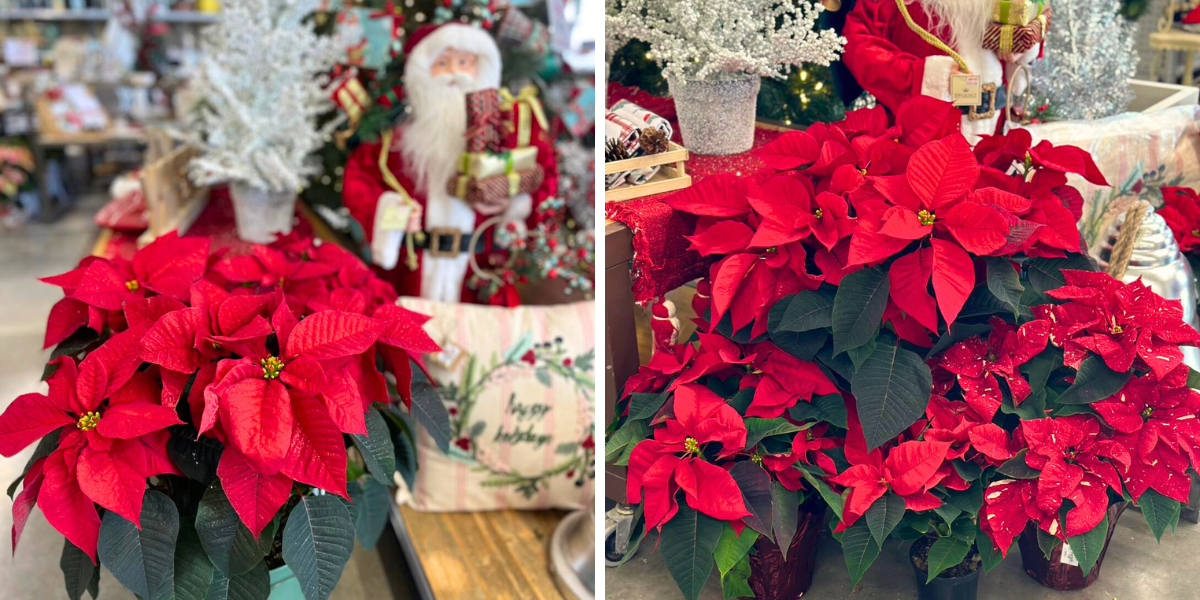
Photo: @stevesacedbq
Cuetlaxochitl: The Aztec Plant Behind the Christmas Star
The Poinsettia is native to Mexico and Central America. It's most at home around Taxco de Alarcón in southern Mexico, where it flowers naturally during the winter. It's very common there, and you'll often see it growing on the side of the road.
Long before anyone hung a stocking, the ancient Aztecs knew it well. The Aztecs called Poinsettias cuetlaxochitl. You say it roughly 'kwet la sho she,' and it's usually translated as 'flower that grows in residues or soil.' They had uses for it that had nothing to do with decoration: the bracts gave a red dye for fabric, and the sap was used as a remedy for fevers. In other words, it was a working plant first.
The botanical name came from Europe. The German botanist Carl Ludwig Willdenow was so impressed by its color that the plant became Euphorbia pulcherrima, which literally means 'very pretty.' You'd find it hard to argue with that. The Poinsettia belongs to the family Euphorbiaceae (the Spurge family), which counts more than 2,000 species, from tiny weeds to succulents that look like cacti.
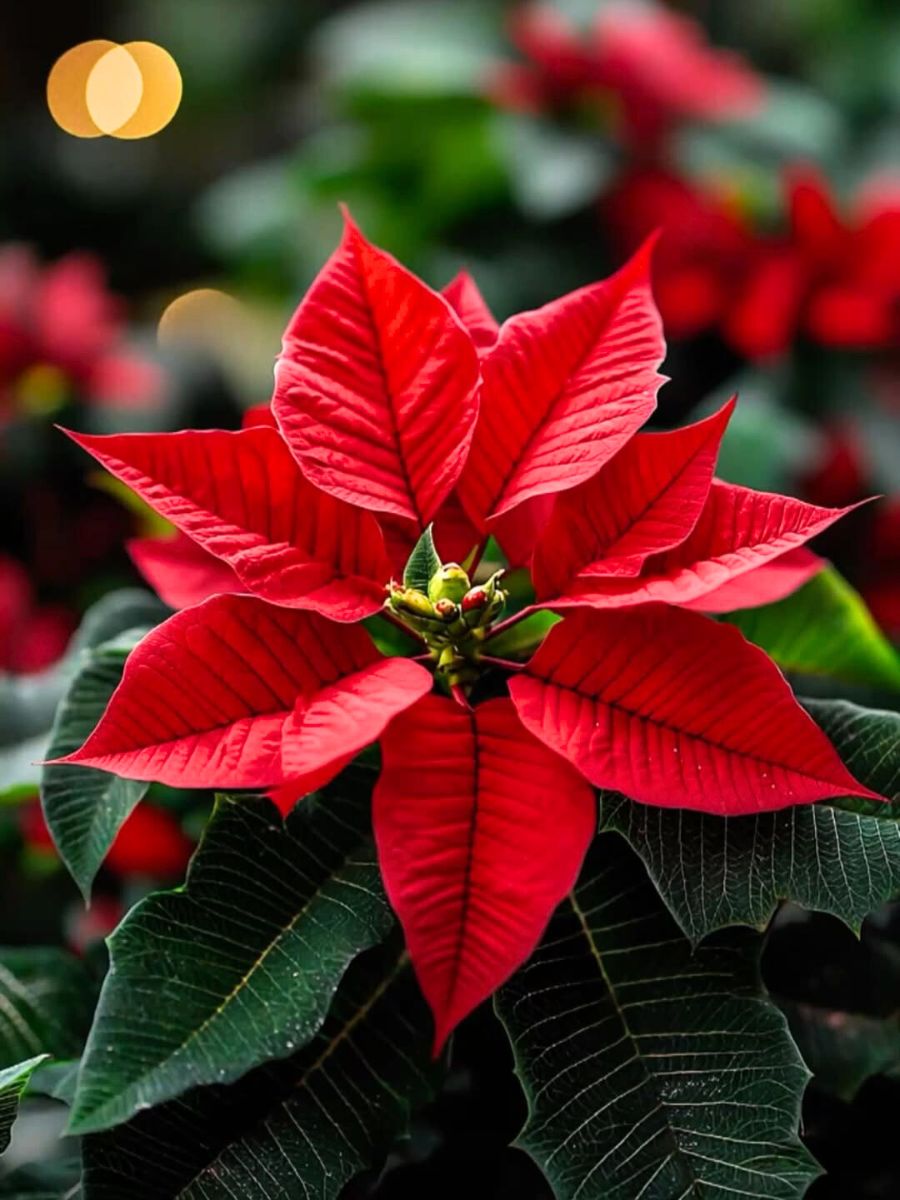
Photo: @passion_fleursetplantes
The Legend of Pepita and the Flowers of the Holy Night
The use of this plant in Christmas decor and celebrations dates back to the 17th century, when Franciscan monks in Mexico began using the Poinsettia in their Nativity ceremonies. Around that time, the legend of little Pepita was born, and it linked red and green to Christmas for good.
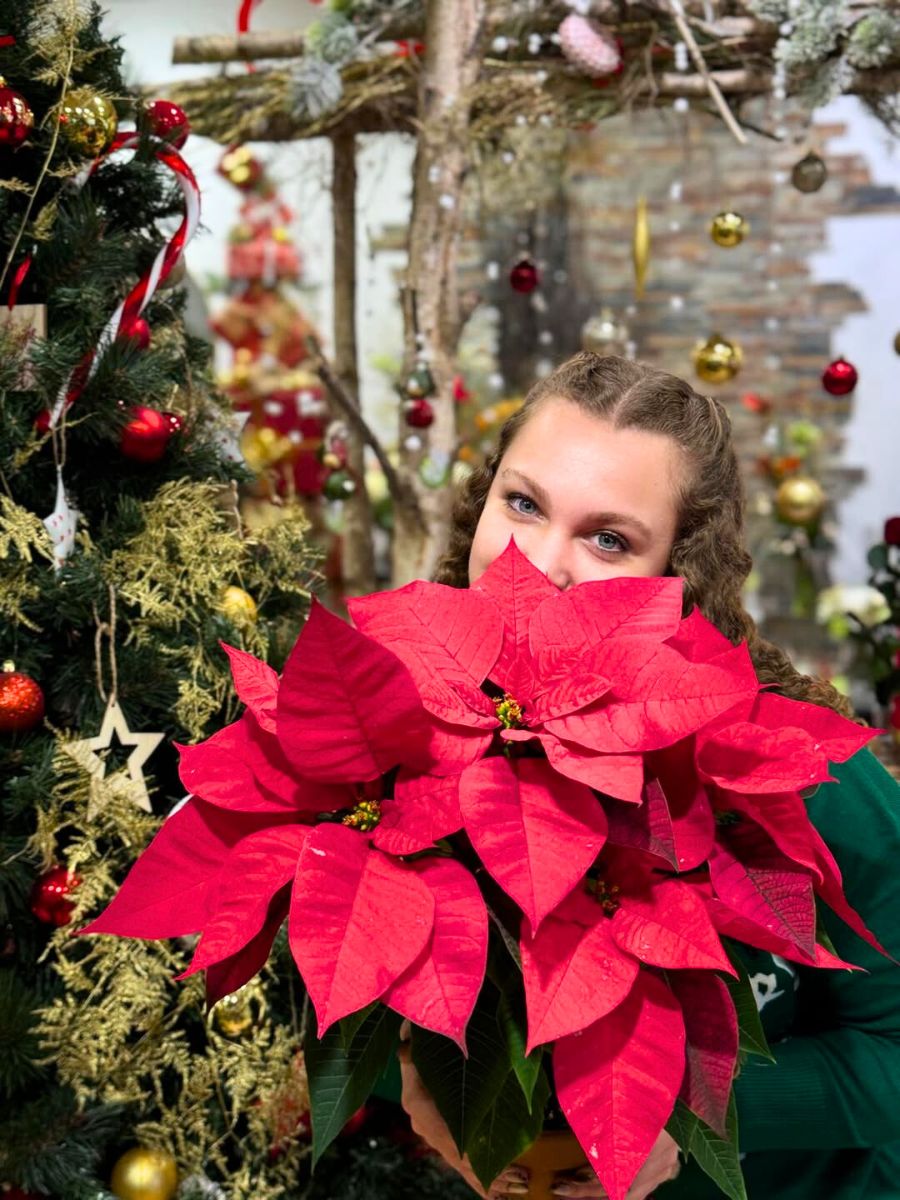
Photo: @atout.fleur56
According to the Mexican legend, a poor girl named Pepita was on her way to the Nativity scene at the chapel in her small town on Christmas Eve. It was customary to honor Baby Jesus by bringing a gift to the church, and the poor girl had nothing to give. So on her way, she picked flowers and weeds from the side of the road and made them into a bouquet.
When she laid the bouquet at the feet of Jesus, the weeds turned into bright red flowers. From that day on, the Poinsettia was known as the Flor de Nochebuena, the Flower of the Holy Night. Nochebuena is the Spanish word for Christmas Eve, which is why Mexico still calls it the Christmas Eve flower. Is it true? Well, it's a legend, and a story about humility: the gift counts, not what it cost. Every Poinsettia you buy in December is still carrying it around.
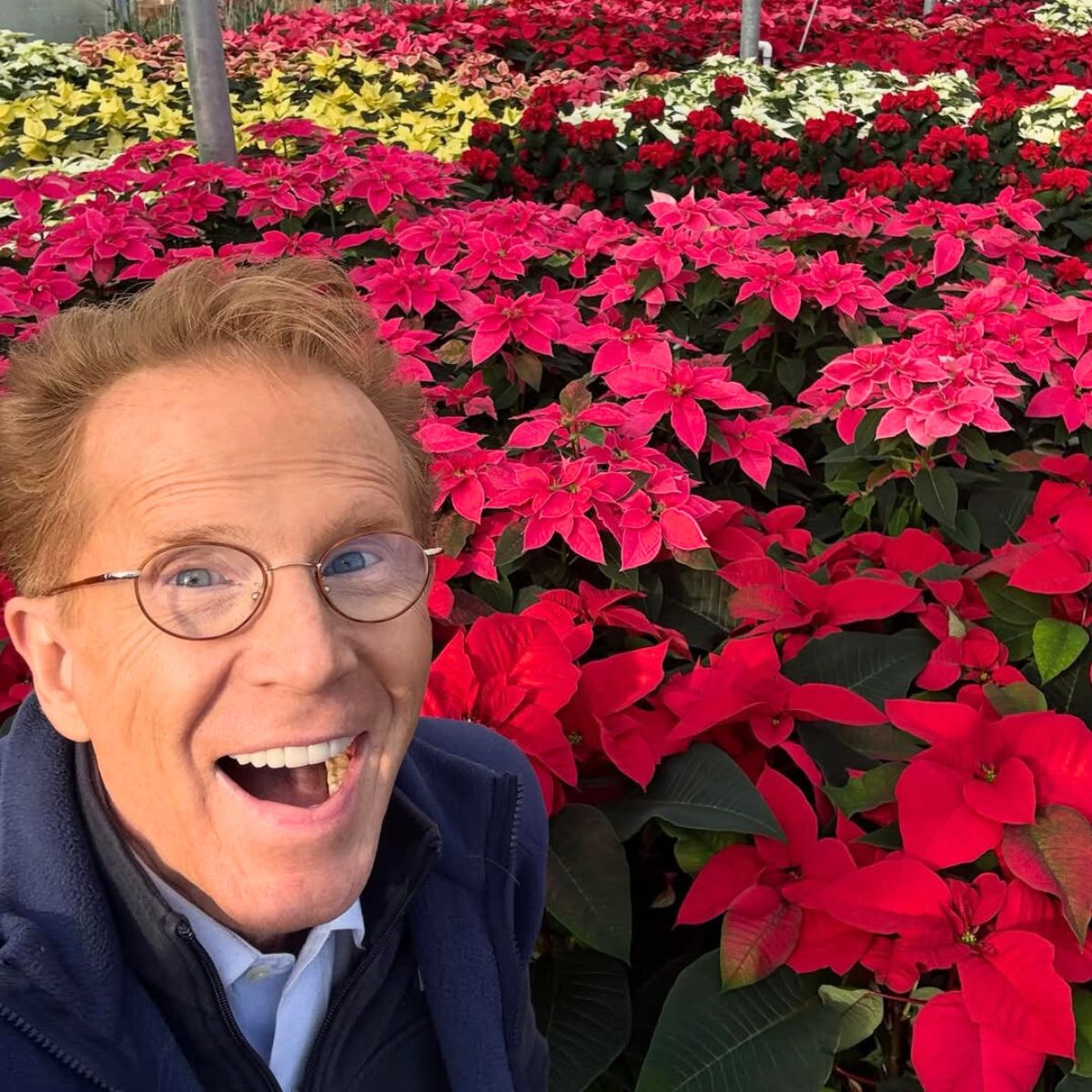
Photo: @johnelliotttv
What Does the Poinsettia Symbolize at Christmas?
Because the colorful bracts are shaped like a star and are always around at Christmas time, the plant is also called the Christmas Star or Christmas Flower. In Christian tradition, that star points to the Star of Bethlehem that led the wise men to the manger. In Christianity, the red bracts stand for the blood of Christ and the white leaves represent purity. The leaves are read as a symbol of hope and life.
Outside church, the meaning of the Christmas holiday plant is simpler: good cheer, celebration, and a home that's ready for guests. If you pick a color today, it carries its own message too, from classic red to the pink and white Poinsettias that suit a modern interior. The guide to Poinsettia flower meaning goes through them color by color.
Nochebuena, Kerstster, Weihnachtsstern: One Plant, Many Names
The Christmas Star idea traveled well. When it first reached the United States, it went by Mexican flame flower or painted leaf. If you shop in Germany, you buy a Weihnachtsstern. The Dutch buy a kerstster, Spaniards a flor de Pascua, and in Poland, where it's the most desired plant of the season, it's the gwiazda betlejemska, the Star of Bethlehem.
And in Mexico? 'In Mexico, we almost always call them Nochebuenas,' says Lu Vargas, a florist in Guadalajara. In her city, the plants fill the markets from early November, right after Día de Muertos, as she said for the piece on the Nochebuena season.
How Joel Poinsett Took the Plant North
The plant stayed a Mexican affair until Joel Roberts Poinsett came along. Poinsett, a doctor, soldier, and amateur botanist from Charleston, South Carolina, was the first US ambassador to Mexico after its independence. He saw wild Poinsettias in the Taxco area. In 1828, he sent cuttings home to South Carolina, to friends who gardened, and to botanical gardens.
It was first sold under its botanical name, Euphorbia pulcherrima, and in the mid-19th century it was renamed in his honor. This introduction forever changed how people see Poinsettias worldwide, and now no Christmas is complete without them. Poinsett died on December 12, 1851, and that date is now marked every year as National Poinsettia Day. So yes, National Poinsettia Day falls in the middle of the holiday season.
His record outside the garden is a lot less pretty. He was US Secretary of War during the Indian removals of the late 1830s. The plant, at least, is innocent.
How the Ecke Family Made It America's Christmas Plant
Poinsett brought the plant north. The Ecke family made it famous. Albert Ecke, a German immigrant, settled in Los Angeles in 1902 and began growing flowers. He sold cut Poinsettia stems from stands on Sunset Boulevard. In 1919 his son Paul Ecke Sr. took over, moved the business south toward San Diego, and turned the outdoor shrub into a compact potted plant that lasted through the holidays.
How he got those full, branching plants was a family secret for decades. It wasn't until the 1990s that scientists found the trick. It was a grafting method that passed on a phytoplasma, a tiny organism that makes the plant branch. Once that was published, growers everywhere could do it.
Then came the marketing. Paul Ecke Jr. took over in 1963. He sent free plants to TV studios and magazines, so Poinsettias sat on the sets of The Tonight Show and Bob Hope's Christmas Special. If you watched TV in December, you saw a Poinsettia. And you wanted one. Sound familiar? Brands still play that same game with influencers today.
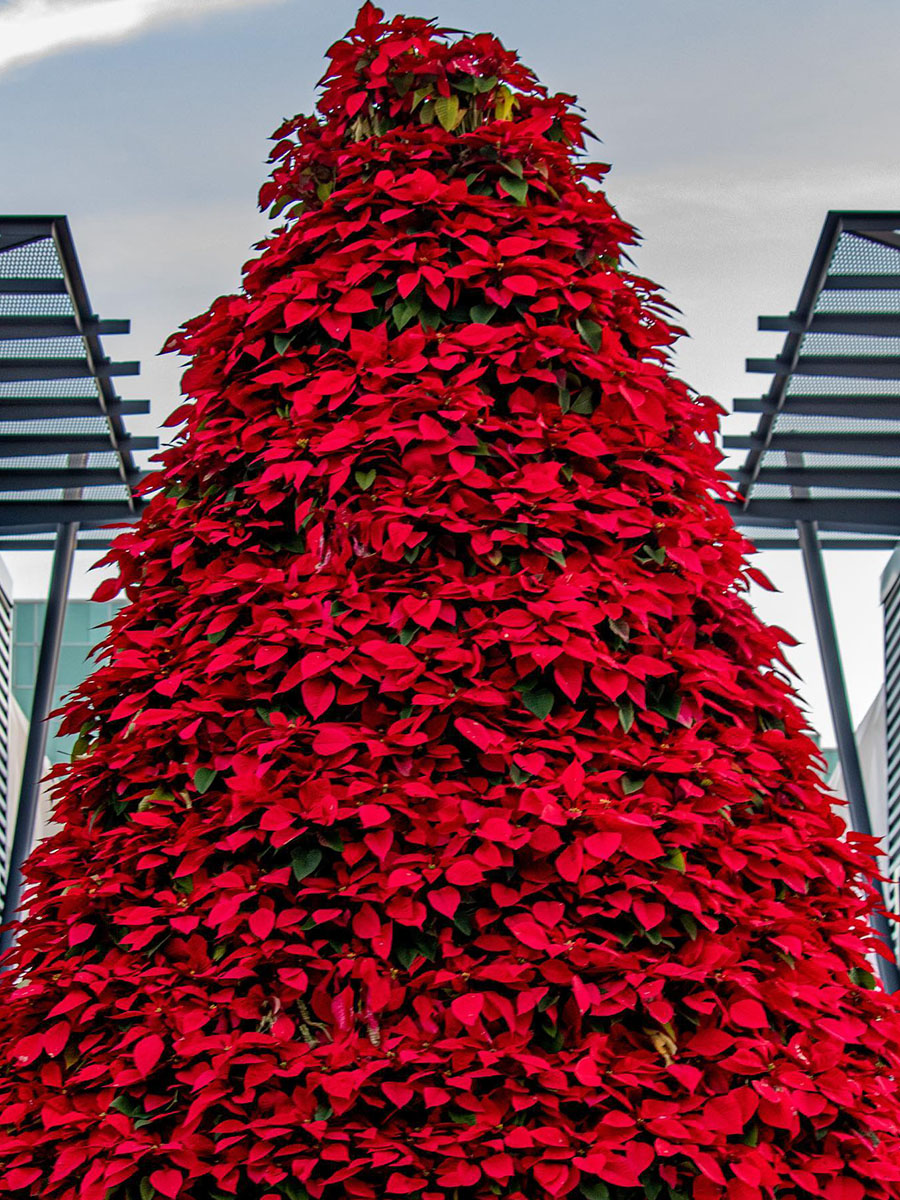
Photo: @apix_digital_photo
Paul Ecke III sold the ranch in 2012 to the Dutch Agribio Group, which merged with Dümmen a year later. So a good part of that American story now lives on at Dümmen Orange, whose modern take on the classic Poinsettia is bred to last well beyond winter. Breeders such as Beekenkamp and Selecta one work on the same plant, and a classic red like Poinsettia Mirage Red is what most people picture when they hear the name. In the United States, it's the most popular plant of its kind: the best-selling potted flowering plant there is. Almost all of that demand comes with the holidays.

Why a Poinsettia Turns Red Exactly in December
The Poinsettia is a shrub (or small tree) that reaches 60 cm to 5 meters in the wild. With dark green leaves and yellow flowers surrounded by large, colorful bracts, this plant is a looker. The bracts are often mistaken for petals, but they're modified leaves around a bunch of small yellow flowers called cyathia.
What makes them change color is the dark. The Poinsettia is a short-day plant. It needs about 13 hours of uninterrupted darkness every night, starting in late September. Only then do the bracts turn from green to creamy white, pink, or the traditional bright red. In Mexico, nature arranges that by December. In cultivation, growers do it with blackout screens, timed to the week the Poinsettia plants go to market.
So when you see it at its best in December, that's no coincidence. The plant is literally built for the longest nights of the year.
Choosing and Keeping a Poinsettia Through the Holidays
It won't be long until Christmas is here. Finding the perfect gift for friends and family can be quite the task, but the Poinsettia always makes a good one. With bright flowers and an easy charm, it adds color to your Christmas decorations and that holiday cheer to your home.
When you pick one, look for healthy, dark green foliage, well-colored bracts, stiff stems, and no roots coming out of the pot. A few yellow leaves are normal, but too many indicate stress. Check the little yellow flowers in the center, too: tight buds mean the plant has weeks ahead of it.
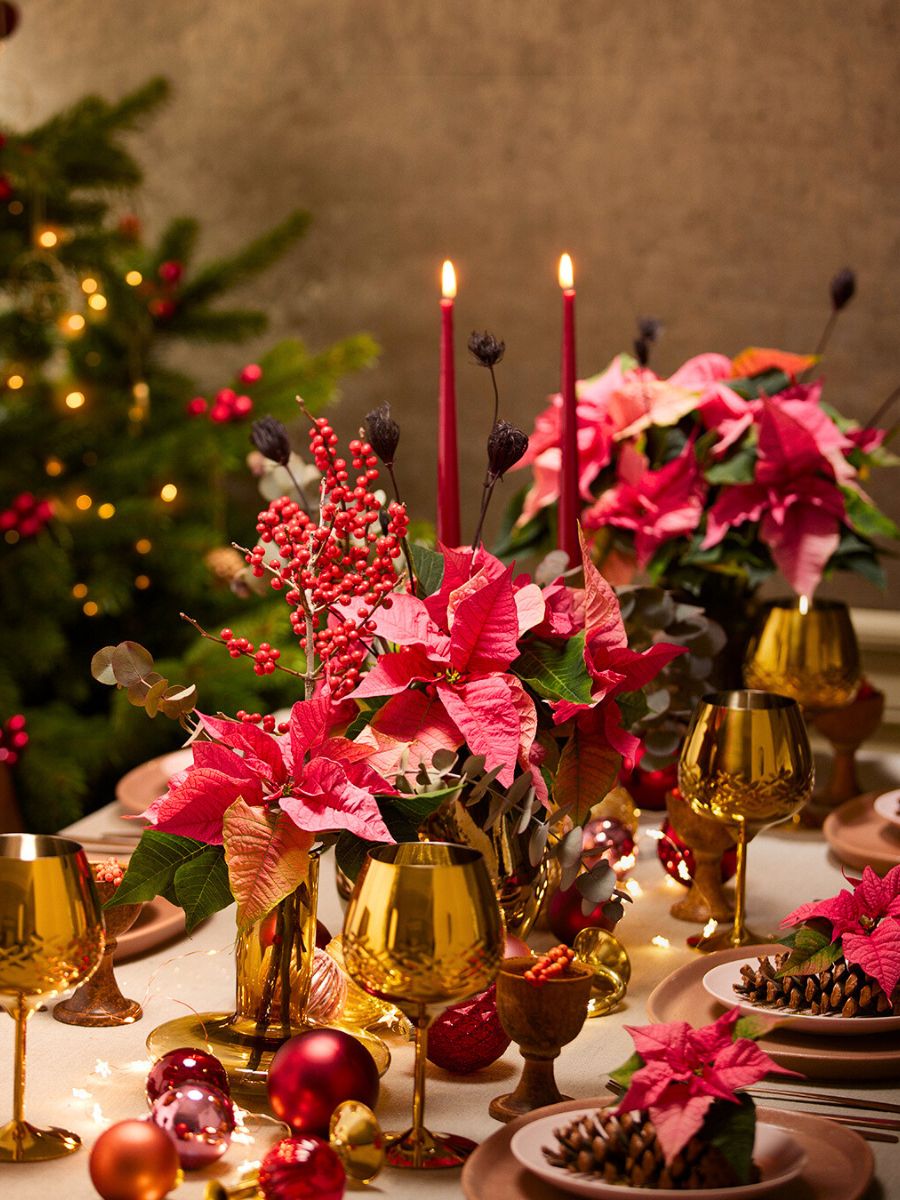
Photo: @thechristmasstar
At home, keep it between 20 and 25°C (68 and 77°F), away from cold or warm drafts from windows, doors, radiators, and heaters. Give it bright, indirect light but no direct sunlight. Keep it away from cold temperatures below 10°C (50°F), and keep the soil damp but not soaked. It needs no fertilizer while it's in color. You can check its watering needs by lifting the whole pot: when it feels light, the soil is dry, and it's time to water. Besides this, Poinsettias require little care, so you have more time to enjoy the holidays.
And the old story that Poinsettias are deadly? That started in 1919 with a rumor about a child in Hawaii, and it was never true. Ohio State University researchers fed lab rats very high doses in 1971 and saw no ill effects. A 1990s review of almost 23,000 poison control cases found that more than 92% of people had no symptoms at all. The sap can still irritate skin, the mouth, and the stomach. The ASPCA lists the plant as toxic to cats and dogs, while calling that toxicity generally overrated. Keep it out of reach anyway. If a pet or a child does eat some and seems unwell, contact a vet or your local poison control center.
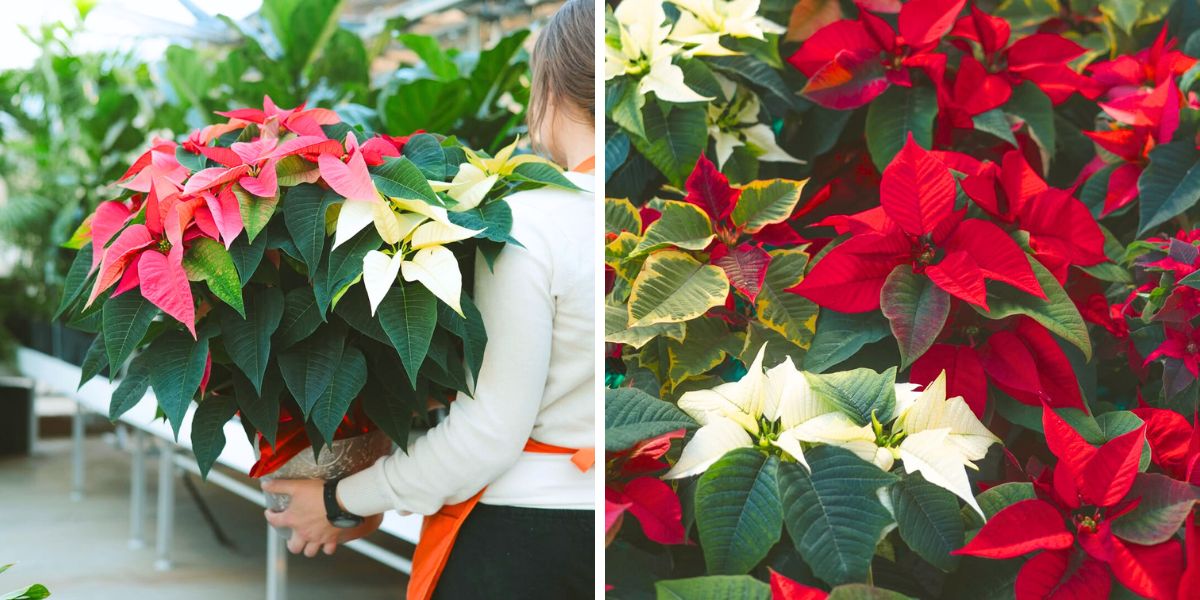
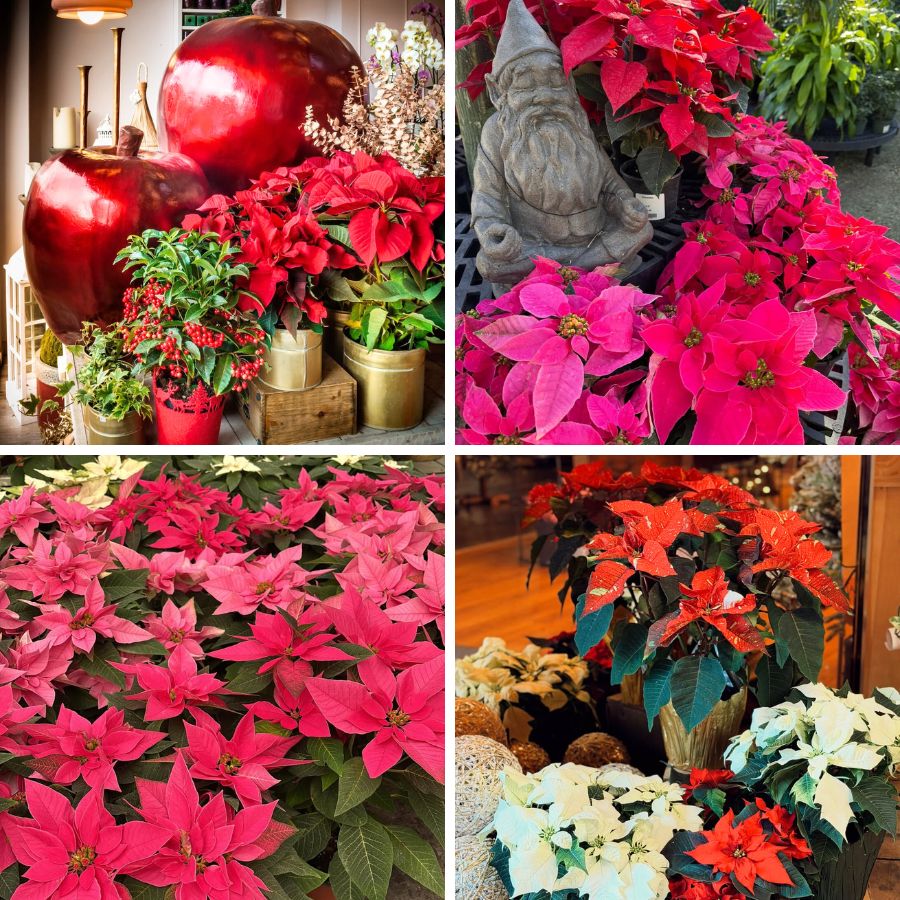
Photos: @shelmerdinestyle
From Roadside Weed to the Star of Every Windowsill
A plant the Aztecs used for dye, a girl with a handful of weeds, a diplomat with a greenhouse, and a family that put it on television. That's how the Poinsettia became the face of Christmas. Next time you carry one home in December, you'll know it's flowering on a schedule that's centuries old. And when the season is over, the guide to Christmas plants after Christmas covers what to do with the Poinsettia next.
Sources: University of Missouri Extension on Poinsett, the Franciscans near Taxco, the Eckes, and the darkness Poinsettias need; University of Georgia CAES on the Aztec uses, 1828, and US production; NDSU Extension on the Ecke family, the TV campaign, and the phytoplasma; Greenhouse Grower on the 2012 sale of the Ecke Ranch; University of Missouri Extension on the toxicity myth; ASPCA on pets; UC Cooperative Extension on the early US names; NBC on Poinsett's record.
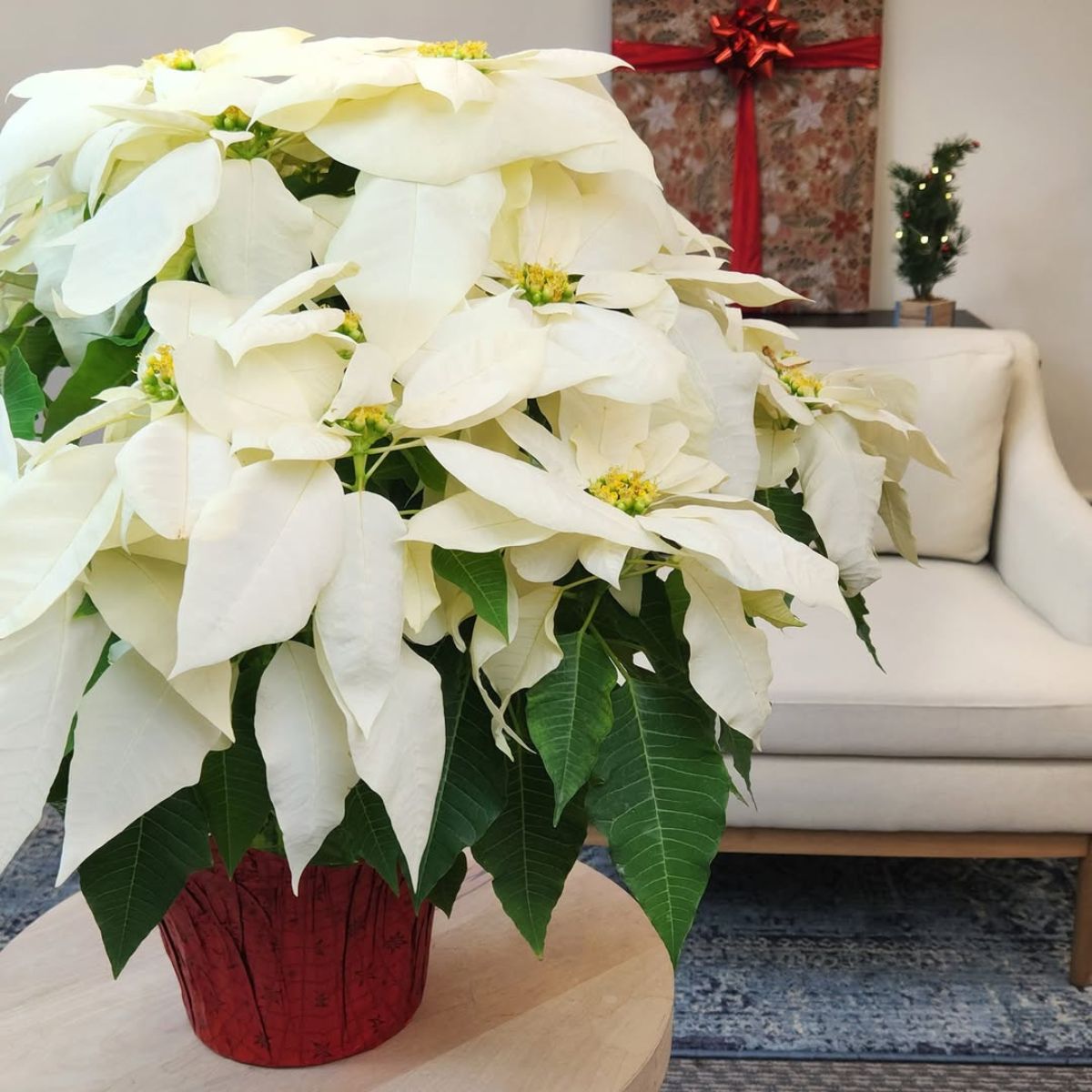
Featured image: a white Poinsettia by @altmanplants. Header image: Poinsettia Indra by Beekenkamp.