Many people visit New Zealand with the intention of seeing the lupin flowers in Lake Tekapo, and one look at the photos tells you why. Lake Tekapo lupins bloom from mid-November to early January, and they're usually at their fullest from late November through the first half of December. That's a window of a few weeks, so timing is everything. The fields move from year to year. And the flowers you may be flying across the world for are, officially, a pest. Here's everything you need to know about Lake Tekapo's lupins and why this is a must for your bucket list!
Add Lake Tekapo's Lupin Flowers to Your Bucket List
Lupin flowers (botanical: Lupinus) at Lake Tekapo are one of the most beautiful and popular times of year to visit the Mackenzie Country. In fact, some of the most popular photos of New Zealand feature landscapes with a wide range of deep purples, pinks, yellows, and gentle violets against snow-capped peaks and emerald blue lakes.
The plant behind those photos is the Russell lupin, a garden hybrid of Lupinus polyphyllus that has gone wild across much of the South Island. Each flower spike can be up to 60 cm (2 feet) long, packed with blooms in purple, blue, pink, orange, yellow, or white, often two colors at once. When thousands open at once against the turquoise water and the Southern Alps behind it, you'll see why people plan whole trips around the lupin season.

Photo: @dani____elle
When Do Lupins Bloom at Lake Tekapo? (A Shorter Window Than You'd Think)
The lupin flowering season in New Zealand is relatively short, generally from mid-to-late November through to early January. The lupins flower first around Tekapo and the Mackenzie Basin and gradually make their way south through the Lindis Pass and as far as Queenstown and Glenorchy. In the Southern Hemisphere, that's mid-spring to early summer.
So when should you go? If you can pick your dates, aim for late November or the first two weeks of December. That's when the Mackenzie fields are usually at their fullest. By the end of December many Tekapo plants are going to seed, although patches further south can still put on a show into January.
Botanists give a wider range. The New Zealand Plant Conservation Network lists the Russell lupin as flowering from September to February across the country. The Department of Conservation's braided river field guide gives November to February on the riverbeds. A cold spring or a late snow can shift the Tekapo peak by a week or two. Check recent photos before you book.

Photo: @sam.angers
Lake Tekapo has several seasons of magnificent beauty, but come November, you won't be able to fathom the spectacular colors and beyond-spectacular setting this place offers. People frequently see images of lupin blossoms in otherworldly surroundings, and chances are they were taken in Lake Tekapo's Mackenzie Country or further south in Central Otago.
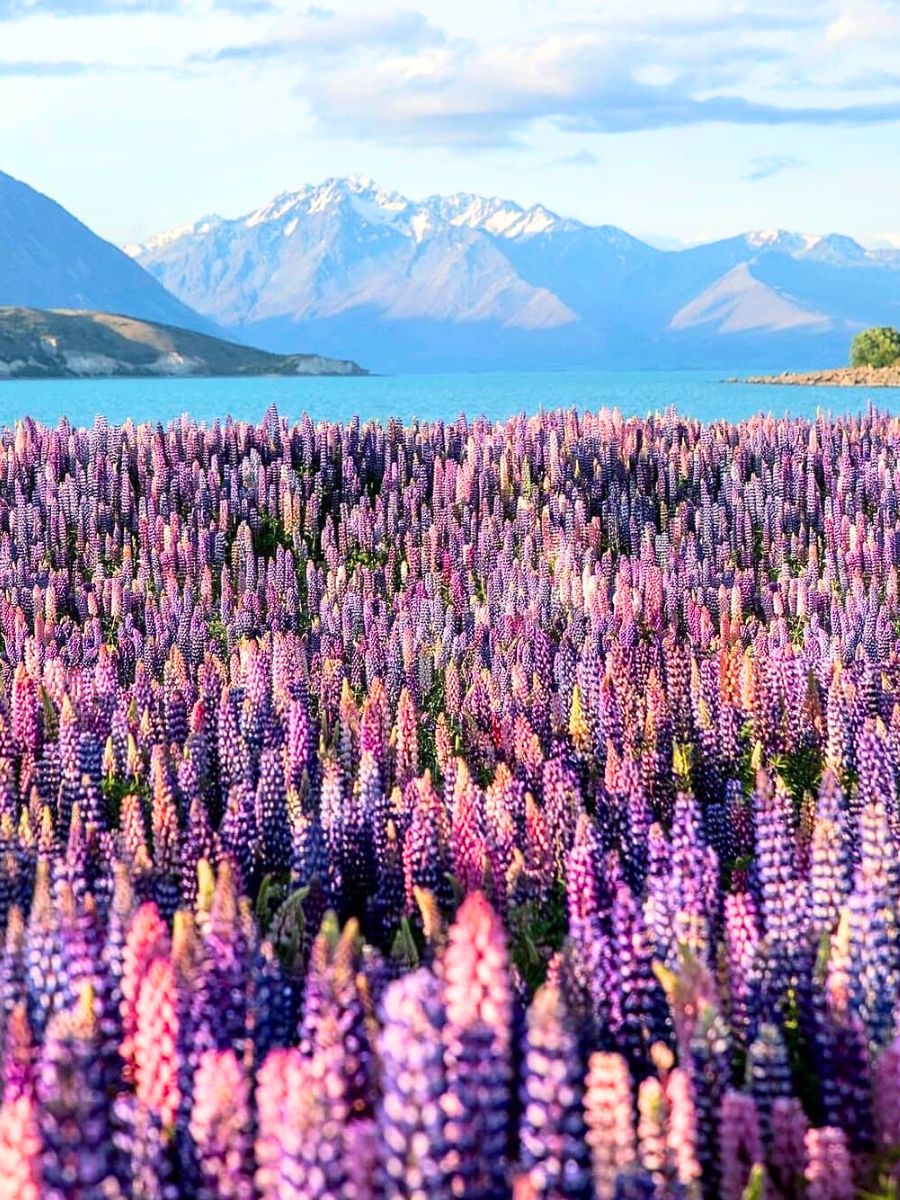
Photo: @loving_earth
Where to See Lupins at Lake Tekapo and Beyond
But where are the best spots then? Here's where it gets a little tricky: every year, lupin flower fields vary, so you do have to be prepared for a bit of driving around to find where they're flowering best. Part of the reason is pest control, which comes up below. A roadside that was purple last December may have been sprayed this year.
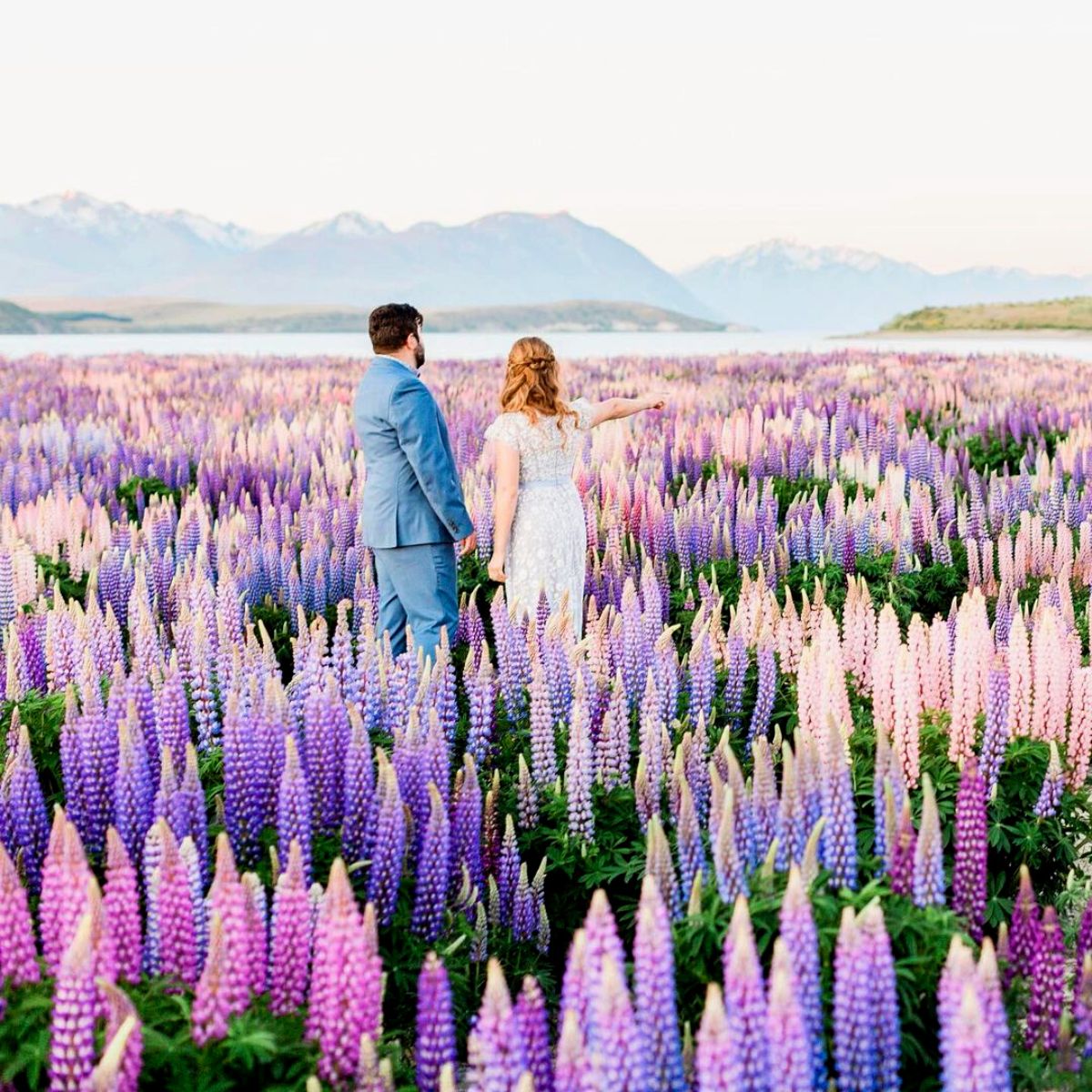
Photo: @marycostaphoto
As a general rule of thumb, these are the places you should visit, and you're bound to see some great displays:
- Lake Tekapo foreshore, near the Church of the Good Shepherd
- The road to Lake Alexandrina
- The fields before Lake Tekapo (from the north)
- The road between Tekapo and Twizel
- The back road between Tekapo and Lake Pukaki (Braemar Road)
- Along the Twizel Canals
- The eastern arm of Lake Pukaki
- Ahuriri River
- South of the Lindis
Running late in the lupin season? Follow the bloom south. The Lindis Pass, Queenstown, and Glenorchy usually flower after Tekapo. A trip in the second half of December can still end in a field of color.

Photo: @sam.angers

Tips for Photographing the Lupins (and Staying Safe on the Road)
If you're planning on road-tripping along the region, you'll be lucky enough to photograph lupins taking over the lands and sides of the road as you're driving past. Take into account that there aren't many places to pull over and take pictures, though, so do be careful as you are on a main road. Never pull over unless you see a designated lay-by, as the road is quite twisted.
A few more tips from the people who've done it:
- Go at golden hour, early or late in the day. Low sun makes the colors glow and keeps the snow on the mountains from burning out.
- Stay on public land. Some of the best fields sit on private farms, so obey the signs and shoot from the road.
- Keep off the riverbeds. That's where native birds nest, and a camera bag in the gravel is the last thing they need.
- Don't pick the seed pods. Every pod you carry away is a new patch somewhere it isn't wanted.
- Stay for the night. Lake Tekapo sits inside the Aoraki Mackenzie International Dark Sky Reserve, so the same trip gets you lupins by day and stars by night.

Photo by @angelagiakas
Why Are Lupins a Pest in New Zealand?
Lupins are actually a real pest in New Zealand, an invasive weed in the eyes of most conservationists. Their seed pods burst open when they're ripe, and the glacial rivers of the high country carry the hard seeds downstream to new gravel banks. Although lupin flowers are a tourist attraction, they are also a nightmare for many, depending on who you ask.
The Russell lupin comes from North America, and the plant conservation network records it as naturalized in New Zealand since 1958. It's on the Department of Conservation's 2024 list of environmental weeds. Its field guide calls it a problem plant in the braided rivers of the Mackenzie Basin. Those wide, stony riverbeds are home to rare wading birds such as the black stilt (kakī), the wrybill, and the banded dotterel. Dense lupin stands offer hiding places for pest animals right where those birds nest.
That's why you'll see control work. Wild Russell lupin is a declared pest under the Canterbury Regional Pest Management Plan. Landowners in rural zones have to clear it within 10 meters of a neighboring boundary. The transport agency controls lupins along State Highway 8 every year. And Land Information New Zealand's proposed biosecurity program for 2026-27 lists lupin control on the Tekapo River below the control gate. Does that mean the lupins will disappear? Not likely. The seeds stay in the ground for years, which is exactly why the fields keep coming back somewhere new.
And the name? The garden lupins behind all this were bred by George Russell, a gardener in York, England. His hybrids caused a sensation when they were first shown in London in 1937. He could hardly have pictured where they would end up.

Photo: @davidnel_15
The Lupin Lady of the Mackenzie Country
Lastly, legend has it that the central South Island is covered in lupin flowers thanks to the hard work of a farmer's wife who thought the region could do with a bit more color. In the retelling, she usually gets a name: Connie Scott of Godley Peaks Station. She's said to have scattered lupin seed along the roadsides around Tekapo in the late 1940s. Some versions have her sons throwing it out of the car window on the way to school. Whether that's true or not, there's no doubt that the lupins certainly add a rainbow palette to the Tekapo landscapes every year and draw in visitors from all over the world in the process.
Go for the Color, Leave the Seeds
The lupins of Lake Tekapo are a beautiful contradiction: a weed on a timetable, loved by photographers and pulled out by conservationists. Go in late November or early December. Drive the back roads, stay off the riverbeds, and enjoy them for what they are.
While you're there in December, look out for the crimson Pōhutukawa, New Zealand's own Christmas tree, on the coast. Love tall flower spikes? In the vase, delphiniums from growers like Westendorp give you the same drama without the weed problem. Curious about the colors? Here's what purple flowers mean. Collecting bucket-list blooms? Add these flower fields around the world and the wildflower season in Western Australia.
Will you visit them soon?
Header photo: @marycostaphoto