Italy has always had that 'you know it when you see it' look in flowers and foliage. Longer stems, generous heads, strong texture, and a kind of natural confidence that plays well in everything from wedding work to daily shop bouquets. Piazza dei Fiori has been building a system around exactly that: connecting Italian growers to buyers across Europe through a coordinated, quality-driven network. The company is sharpening its setup in the south, especially around Lecce, plus adding a practical extra lane in foliage. Here's how.
What Is Piazza dei Fiori?
Piazza dei Fiori is an organization that connects nearly 1,400 growers to multiple hubs and a single central route to the European market. Think of this sourcing and trading company as the coordinator that makes a fragmented grower landscape work like a single address. They set standards for quality, packaging, and presentation, then organize the flow from the hub to the buyer. In the earlier article, the team clearly described their roles: they prepare trade for shipment, handle administration (including trolleys and containers), and provide marketing support for growers.
The hubs mentioned in the previous story span Sanremo (Liguria), Naples (Campania), Lucca (Tuscany), Lecce (Apulia, in Italy's 'heel'), and even Tanneron in southern France. So yes, it's widespread logistics straight from Italy's finest fertile grounds. But you will see it's also selection, discipline, and speed.
Lecce: A Small Setup With Big Potential
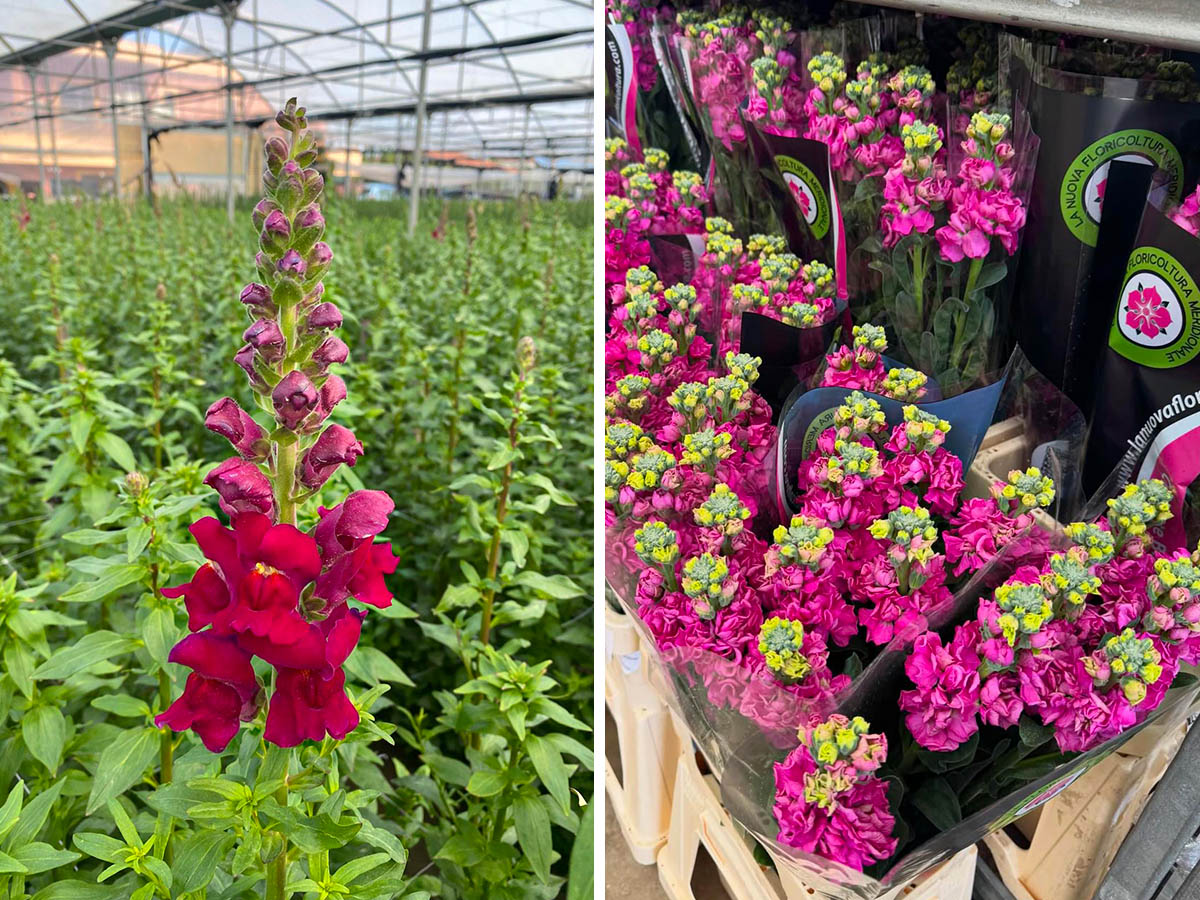
Ilaria Bertolucci is the boots-on-the-ground presence in the newly added Lecce region. She makes one thing clear: Lecce is not just 'another point on the map'. It's a cooperative-style build that’s gaining traction week by week, with more customers starting to buy into the program early in the week.
She describes the Lecce product group as:
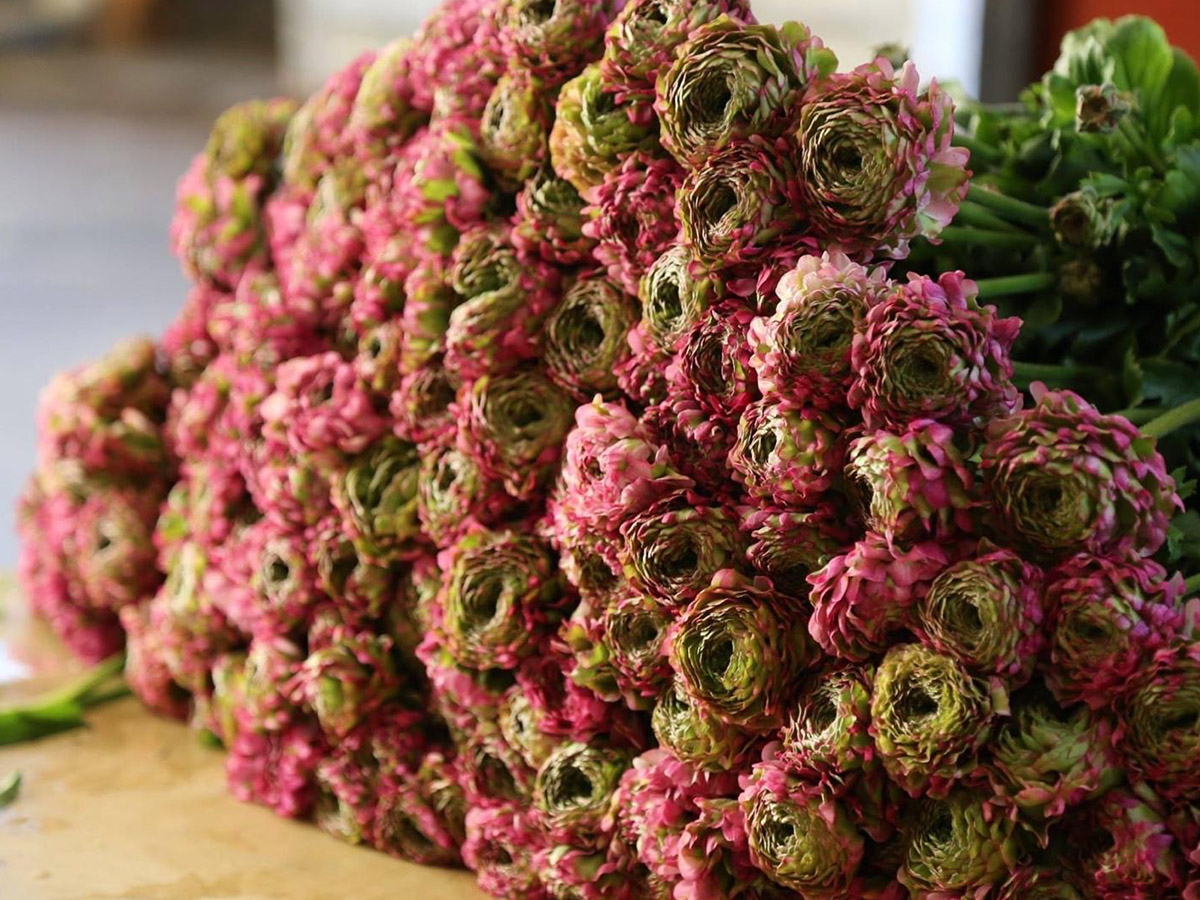
"(...) similar to what comes out of the Naples side, with a focus on spring and early-season material like Matthiola (stock) and Ranunculus, including Ranunculus Butterfly, plus a more quality-forward feel due to the warmer, sunnier conditions."
The result: thicker stems and a generally sturdier look, with fewer stems per bucket due to the higher grading.
Soil, Microclimates, And Why That Matters
Ilaria adds some on-the-ground growing context that matters for florists: in a small area around Lecce, you can find different soils, pH levels, and microclimates, which let growers produce a wide range of flowers in the same period. She gave a practical Ranunculus example: with the same tubers, yields can be higher in Lecce than in Sanremo, which can lower the price point during the season while maintaining high quality.
There are nuances, too. Dark Ranunculus cultivars may appear less deep in tone than Sanremo. But the upside is volume, consistency, and strong stem size in certain soils.
Color Programs and Transport Lengths
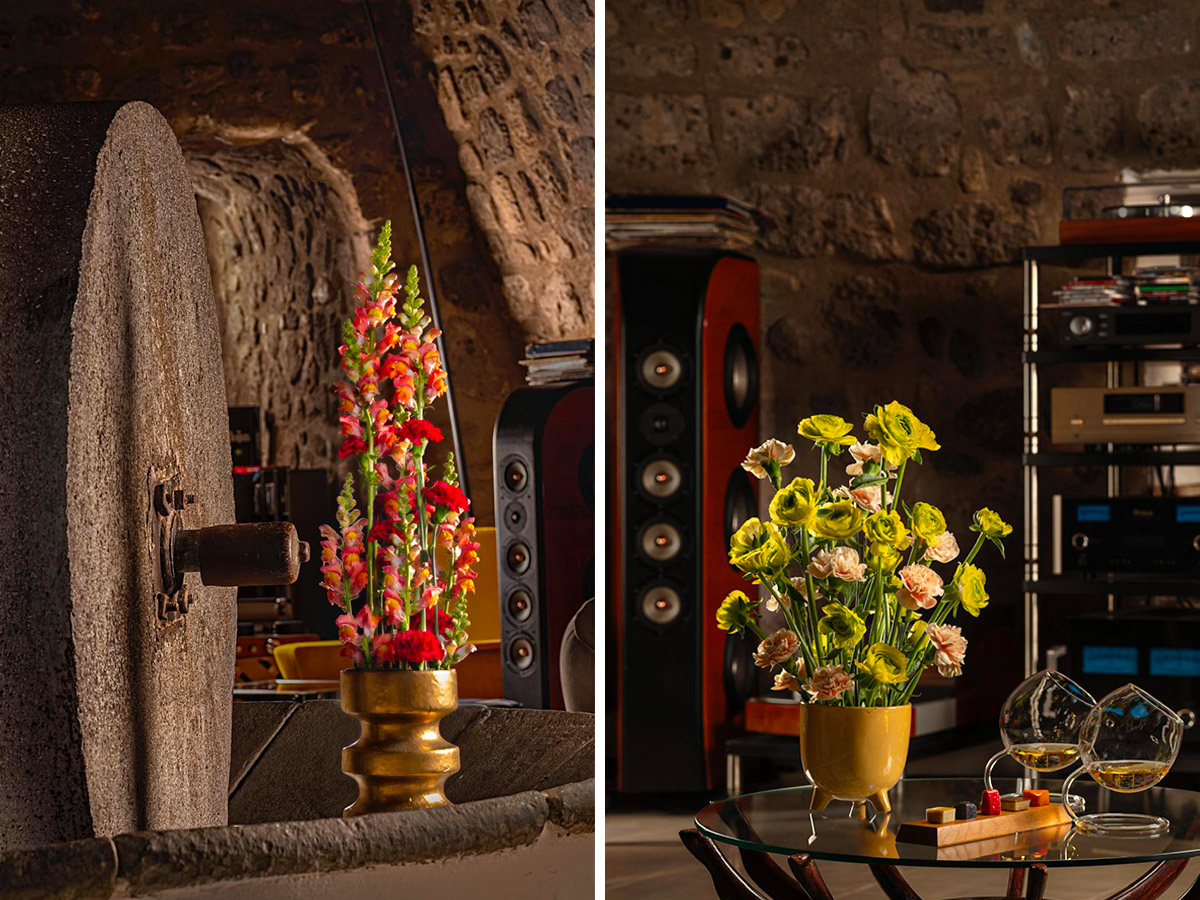
And then there's the color game. Ilaria mentioned expanding with Limonium (Statice) in brighter colors, plus a serious palette in Antirrhinum (snapdragons): close to 17 different colors. For transport efficiency, they often choose lengths of around 80 cm for Antirrhinum and 70 cm for Matthiola, even though much longer lengths are available.
For florists, that's a helpful detail: you know what's realistic to expect for shipping, and what might be a special request.
Tuscany Greens Per Stem: A Different Lane Than Sanremo
Sanremo is already known as a hub for high-quality greenery, including Eucalyptus and Ruscus. And now Tuscany has joined in, but with a different quality and yield. Tuscany growers often work on flatter land (as opposed to terraced structures in parts of Liguria), can staff more easily, and prune multiple times during the summer, resulting in higher stem counts. The stems are usually smaller, but the quantities are strong.
The mix is mainly Eucalyptus, including Eucalyptus Parvifolia and Eucalyptus Cinerea. Baby Blue can be part of the picture, though quality and vase life vary, and some is used heavily in the painted market, such as for Christmas.
The takeaway is simple: Sanremo can stay the 'boutique, premium foliage' lane, while Tuscany fills a practical, volume-based lane that many everyday florists appreciate.
Webshop, Markets, And Where It’s Headed
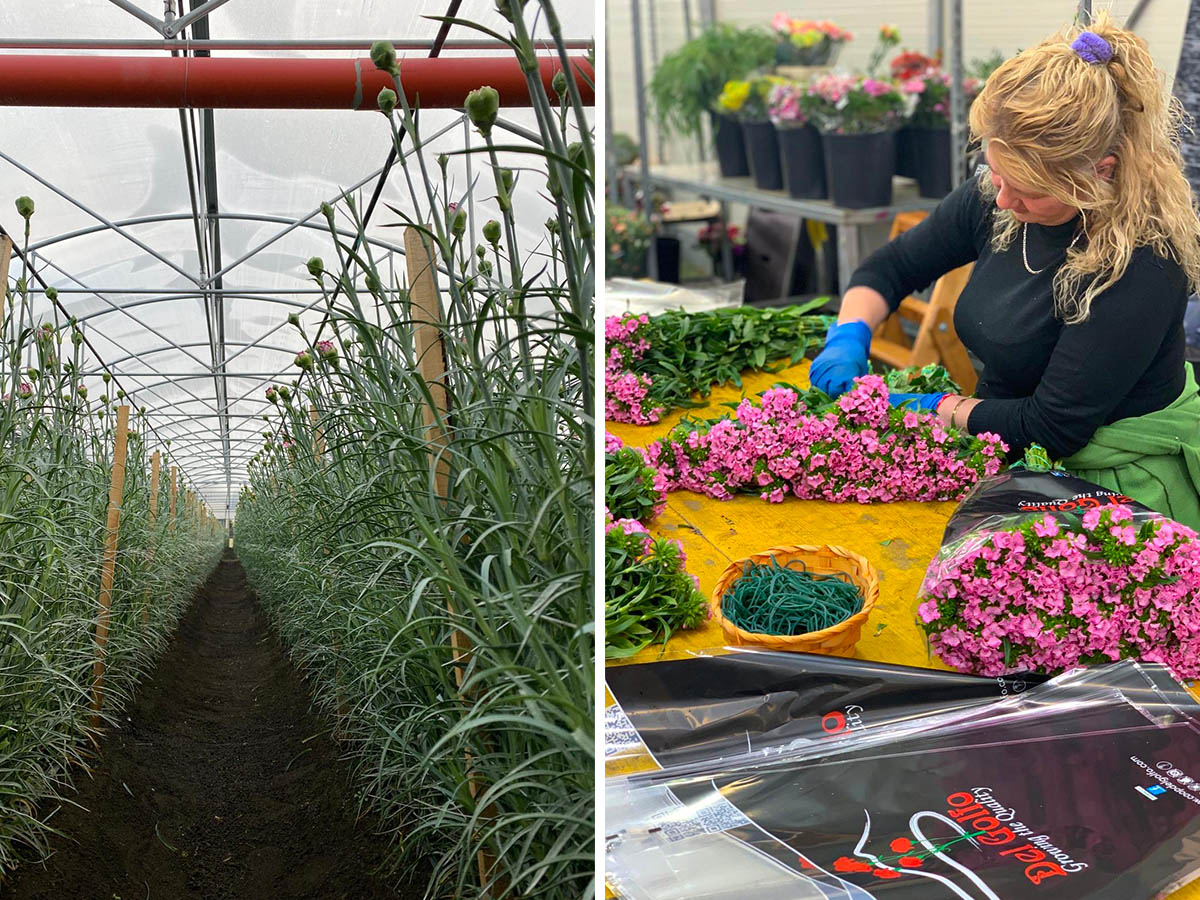
In Italy, the network has been built through decades of broad collaboration with renowned wholesalers, including La Nuova Floricoltura Meridionale, Coop Del Golfo, and Magnetto.
The Dutch sourcing and sales team of Piazza dei Fiori, led by Ivy Witmaar and Emma Vork, mentioned a new, more refined webshop experience aimed at clearer navigation. On the sales side, the team that is completed with Jordi van Gelderen, Jaco van Egmond, Valentina d'Ambrosio, and Kees Glorie noted that they primarily import into the Netherlands and distribute onward, and are also taking direct steps into Germany. The bigger direction remains steady: expand the network, keep the logistics tight, and keep the assortment broad across flowers and foliage.
All images courtesy of Piazza dei Fiori.