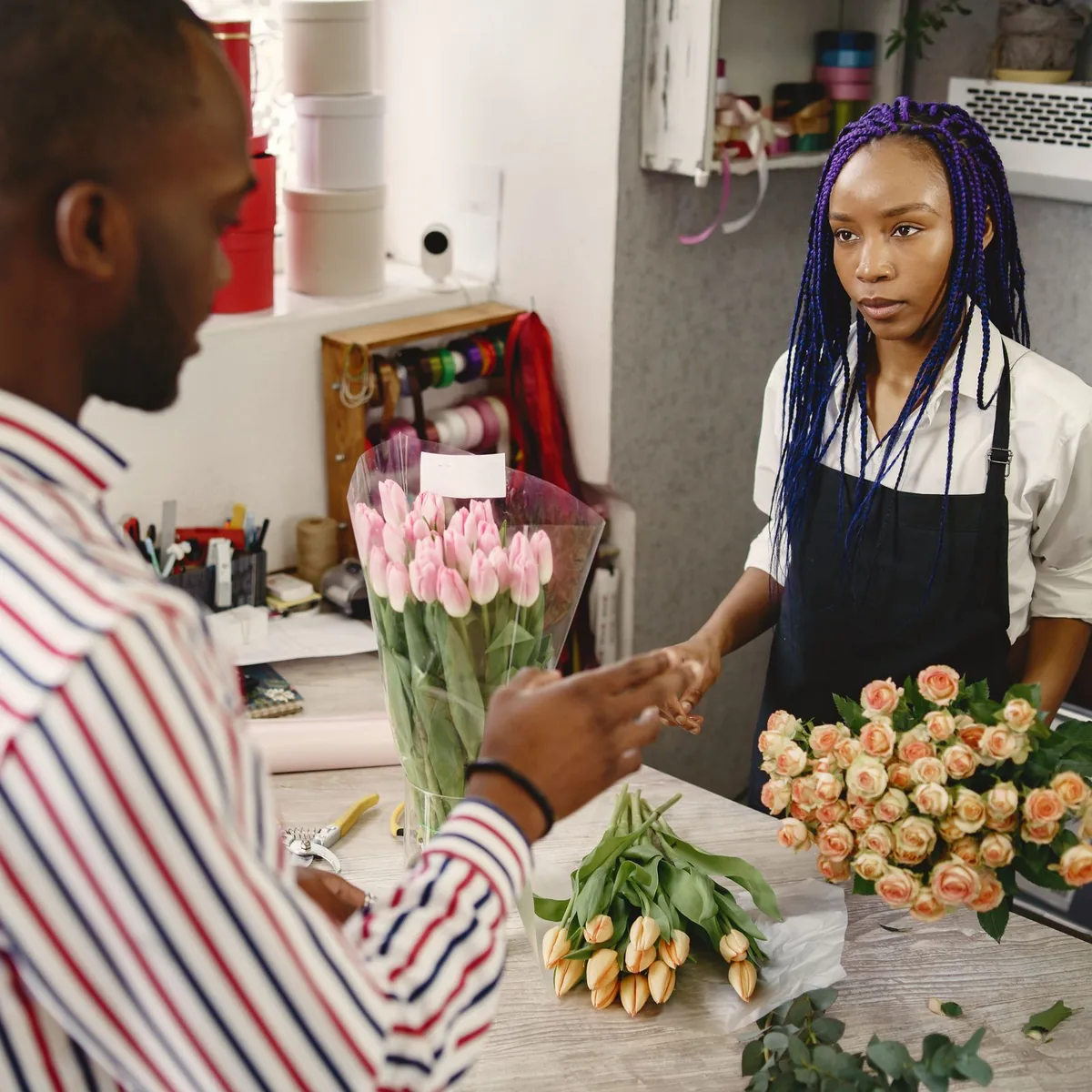
"How much do you want to spend?"
I have said this from stages around the world and watched florists practically recoil in their seats: that may be the single worst sales question in our industry.
It sounds harmless. Helpful, even. But it is one of the most expensive habits in the flower business.
Owners Say It. Designers Say It. Customer Service Staff Say It
For more than thirty years, I have visited over 7,000 flower shops, and I have heard that question everywhere. New York, London, Dublin, Dubai. Owners say it. Designers say it. Customer service staff say it. And there are plenty of softer versions:
"What's your budget?"
"Did you have an amount in mind?"
"Where are you comfortable?"
Different words. Same problem.
The customer has called because someone is having a birthday, an anniversary, a baby, a rough week, a funeral, a retirement, or some other moment that matters.
Flowers are an emotional purchase.
Yet within seconds, we turn an emotional conversation into a financial interrogation.
Even worse, we are asking the customer to make a decision they are usually not qualified to make.
They Do Not Buy Flowers Every Day
Think about it. How should a customer know what a beautiful floral design in your shop ought to cost? They do not buy flowers every day. They do not know your flower costs, your labor, your delivery expenses, your design standards, or what $75 versus $125 actually looks like in your cooler.
That is your job.
Imagine walking into a restaurant and hearing:
“Welcome! How much would you like to spend on lunch today?”
You would probably wonder where the menu went.
We expect the server to tell us about the specials, explain the choices, make a recommendation, and tell us what things cost. Florists should do exactly the same thing.
Instead of asking for money first, ask questions about the person receiving the flowers and the occasion. Find out who the recipient is, what they are celebrating, what colors they love, or what kind of feeling the sender wants to create.
Then lead the customer.
For example:
“To celebrate your mom’s birthday, I’d suggest one of our large garden-style designs filled with beautiful seasonal flowers. That’s $125.”
Then stop talking.

If $125 works, terrific. If the customer wants to spend less, they will tell you. If they want something larger, now you have an opening to show them that too.
That small change is powerful because you have stopped acting like an order taker and started acting like an expert.
And that is what the customer wants from us.
Defending the Budget Question
I often hear florists defend the budget question by saying, "But I don’t want to scare the customer with a high price."
You are not scaring them. You are giving them a professional recommendation. There is a huge difference.
When we immediately ask for a budget, we also risk shrinking the sale before it has even started.
A customer who might happily buy a $150 arrangement may blurt out “$75” simply because you asked them to name a number.
Congratulations. You just negotiated against yourself.
There is one important exception: weddings and events. Those are longer, more complex sales, and discussing a guideline budget can save everyone time. But for the everyday birthday, sympathy, anniversary, thank-you, or just-because order, the rule is simple.
Do not ask for the budget.
Learn about the customer.
Make a recommendation.
Lead.
Train Our Teams
The floral industry has trained customers for years to tell us what they want to spend. I think it is time we train our teams to do something better: tell customers what we recommend.
That is better service. It builds confidence in your staff. It makes buying flowers easier.
And yes, it will usually make the sale bigger too. Sin #1 is easy to commit. The good news is that it may be the easiest one to stop.