
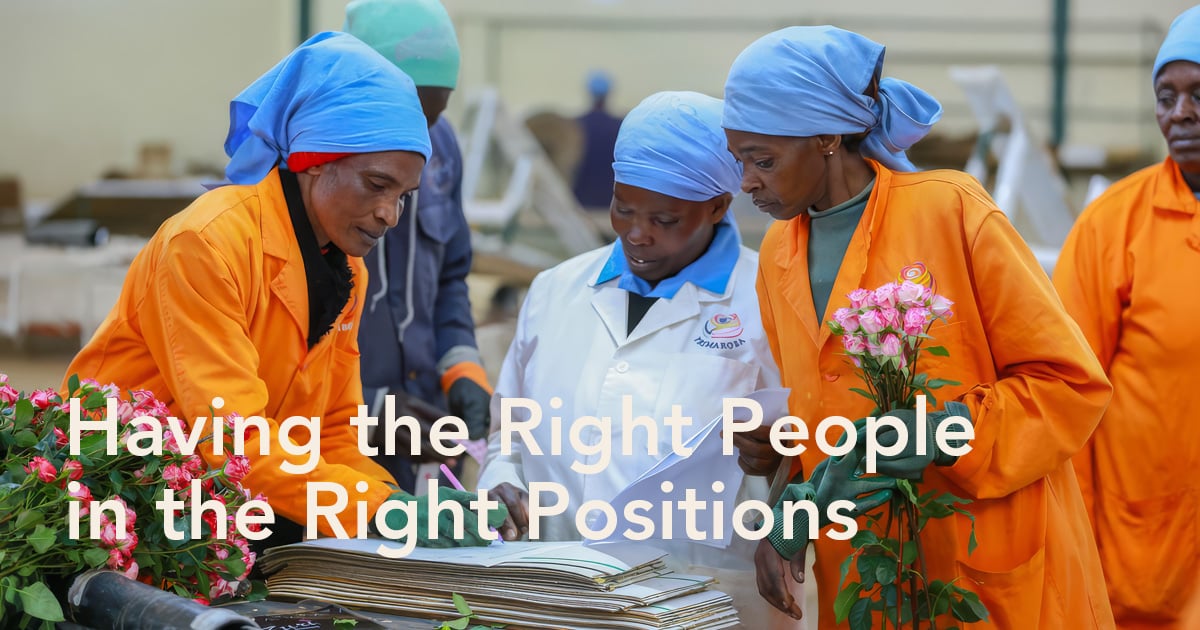
East Africa has become one of the most important production regions for the global flower industry. Kenya and Ethiopia, in particular, play a central role in supplying European markets with roses, summer flowers, and other cut flowers. Over the years, the region has built a strong reputation for scale, climate advantages, operational efficiency, and export capability.
But the market is changing.
European buyers, retailers, and consumers are placing more pressure on the flower industry to reduce its environmental impact. The conversation is no longer only about quality, vase life, and price. It increasingly includes pesticide reduction, biological crop protection, water use, carbon footprint, certification, traceability, and worker welfare.
For East African growers, this is not a distant trend. It is already influencing how farms operate, how they report, how they communicate with buyers and, increasingly, how they recruit.
The next competitive advantage in floriculture will not only come from better varieties, stronger logistics, or more efficient production. It will come from having the right people in the right positions during a period of technical change.
Sustainability Is Becoming Operational
The European Union’s Farm to Fork strategy includes the ambition to reduce the use and risk of chemical pesticides by 50% by 2030. While cut flowers are not regulated in exactly the same way as food crops, the direction of travel is clear: lower chemical dependency, more sustainable crop protection and greater transparency across the supply chain.
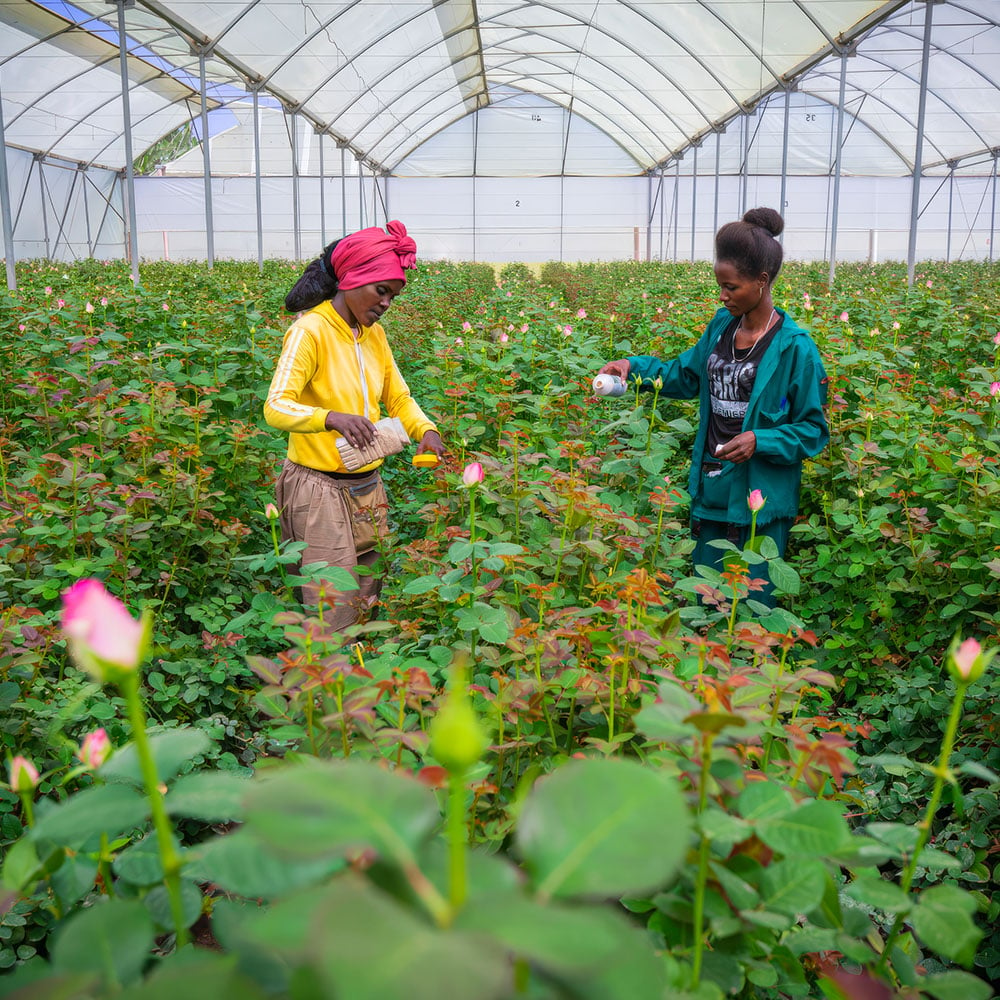
In practice, this means that flower farms exporting to Europe are under growing pressure to rethink how they grow.
Integrated Pest Management is becoming more important. Biological crop protection is moving from a "nice to have" to a core part of production strategy. Growers are expected to reduce the number and impact of active ingredients, improve scouting, work more preventively, and document their approach more clearly.
For many farms, this transition is complex. It touches almost every department: production, crop protection, technical management, quality, certification, procurement, data, and commercial teams.
This is where the talent challenge begins.
A farm cannot simply decide to use fewer chemicals and expect the operation to adjust automatically. It needs people who understand the crop, the pest pressure, the climate, the biological alternatives, the buyer requirements, and the commercial risks. It needs technical managers who can translate sustainability goals into daily farm practice.
The Skills Profile Is Changing
Traditionally, floriculture recruitment in East Africa has often focused on experience within flowers. That remains valuable. A strong rose grower, propagation manager, packhouse manager, or farm general manager with proven floriculture experience is still highly sought after.
But the sector is now entering a phase where adjacent technical experience can become just as relevant.
Professionals from vegetable production, seed breeding, biological crop protection, agronomy, irrigation, plant health, data management, and quality systems can bring valuable knowledge into flower businesses. In some cases, these candidates may already be used to working with stricter residue requirements, more advanced scouting systems, trial protocols, or highly technical growing environments.
This broadening of the talent pool is important.
If the flower industry only looks inside its own sector, it may not find enough people with the technical skills required for the next phase of sustainability. But if companies know where to look, they can identify strong talent in related agricultural sectors and translate that expertise into floriculture.
This requires a different type of recruitment. It is not only about matching a job title with a CV. It is about understanding the technical direction of the sector and knowing which skills are transferable.
Recruitment Becomes Strategic in Times of Change
In stable markets, recruitment is often treated as a replacement process. Someone leaves, a vacancy opens, and the company looks for a similar profile.
In changing markets, recruitment becomes strategic.
The question is no longer only: "Who can do this job today?"
The better question is: "Who can help us adapt to where the market is going?"
For flower farms in East Africa, this may mean hiring people who can strengthen IPM programs, lead biological crop protection strategies, improve compliance reporting, manage sustainability projects, introduce better data systems, or connect technical teams more closely with buyer expectations.
It may also mean hiring leaders who can manage change.
Reducing chemical dependency is not only a technical challenge. It is also a management challenge. Teams need to be trained. Production targets need to be protected. Buyers need confidence. Farm owners and senior managers need clear reporting. Mistakes can be costly, especially when export quality or delivery reliability is affected.
Header and feature image by @primarosa_flowers.