String of pearls (Curio rowleyanus, formerly Senecio rowleyanus) is a trailing succulent from South Africa with pea-shaped leaves. It is grown as a houseplant in bright, indirect light, needs little water, and is mildly toxic to pets.
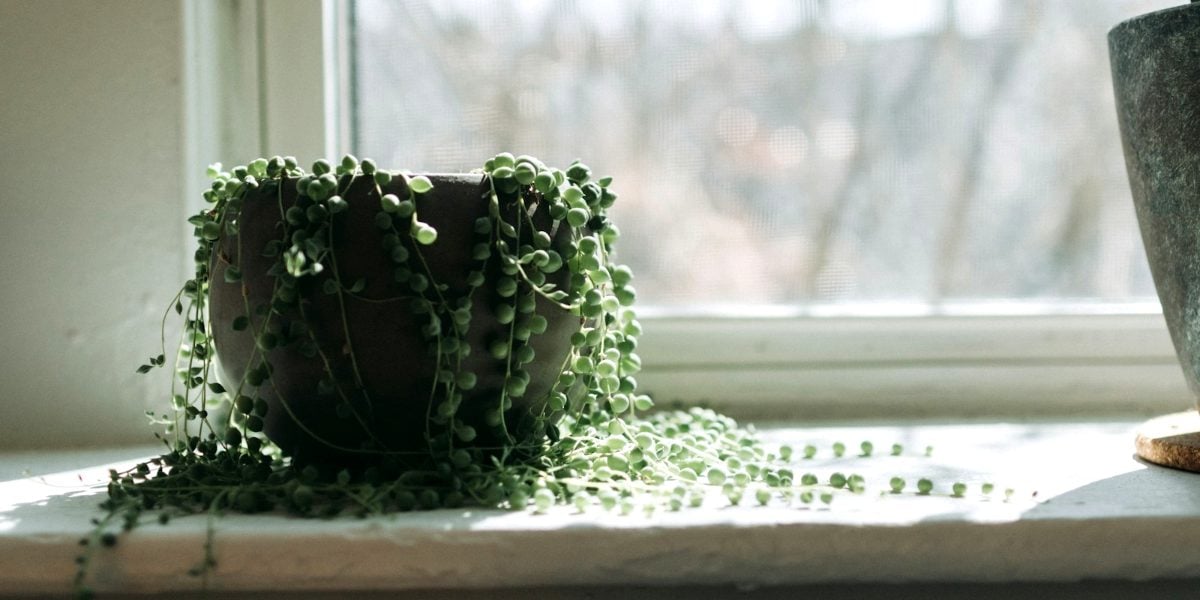
String of pearls (Curio rowleyanus, long sold as Senecio rowleyanus) is a trailing succulent with leaves shaped like small green peas. It belongs to the daisy family, Asteraceae, and comes from dry areas of the Eastern Cape in South Africa, where it creeps along the ground in the shelter of shrubs and rocks. The name honors the British botanist Gordon Rowley. In most of the world the string of pearls plant is a houseplant for a hanging pot or a high shelf, where the strands can spill over the edge.
Common Names
String of pearls
String of beads
String of peas
Necklace plant
How to Recognize String of Pearls
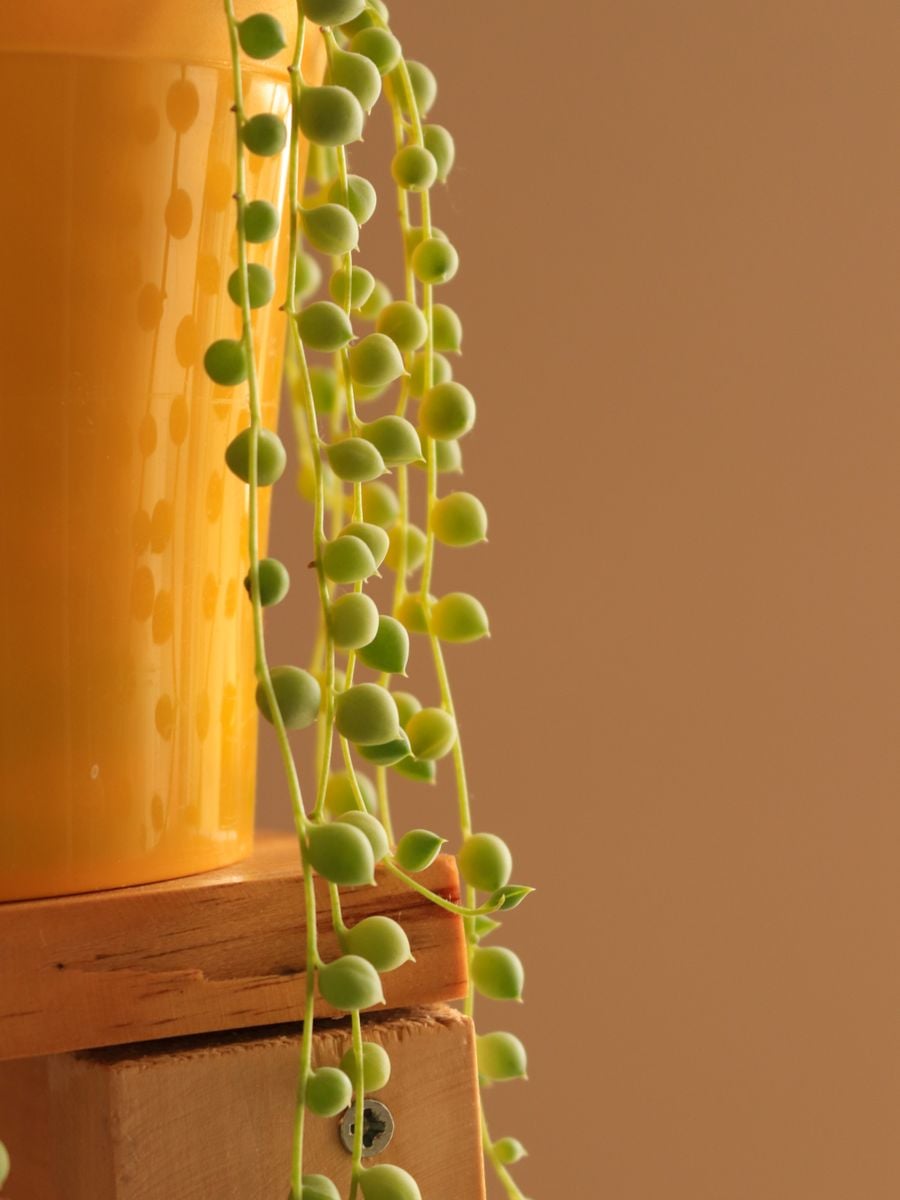
Each leaf is a sphere of 6 to 8 mm (1/4 to 1/3 in) with a tiny pointed tip. Look closely and you will see a darker, translucent stripe along one side. That is an epidermal window, which lets light into the leaf and adds area for photosynthesis. The stems are thin and slightly hairy, and a plant grows 30 to 60 cm (1 to 2 ft) tall and up to 90 cm (3 ft) wide. In summer it can bloom with small white flowers with red stamens and yellow anthers that smell of cinnamon, though it rarely flowers indoors.
A look-alike, Curio herreianus, is also sold as string of beads, but its leaves are larger, elongated, and striped.
Strands of string of pearls, each leaf a small sphere with a pointed tip. Photo by Rumeysa Akbaş on Pexels.
How to Care for a String of Pearls Plant
Light: bright, indirect light indoors. It does not do well in a dim corner, and direct sun can scorch the leaves.
Water: water thoroughly, then let the mix dry out before the next watering, and water less in winter. Soggy soil leads to root rot, the most common way to lose this plant. Both too much and too little water make the strands wilt.
Soil and pot: a fast-draining cactus mix, or potting soil with up to half grit, sand, pumice, or perlite. Shallow clay pots dry out faster than plastic.
Temperature: 21 to 27 °C (70 to 80 °F) in summer and a cool, drier rest at 13 to 16 °C (55 to 60 °F) in winter, which may help it flower the next summer. It cannot take frost, so outdoors it only lives year-round in USDA zones 9b to 11.
Propagation: take stem tips of 8 to 10 cm (3 to 4 in), strip the lower leaves, and lay or bury a few nodes in moist mix until they root. Older plants tend to decline after several years, so start fresh ones from cuttings.
Outdoors: where it is frost-free, it can trail from containers or cover the ground in partial shade.
Repotting: every year or two, into fresh fast-draining mix. Seed is rarely available, so new plants come from cuttings.
Pests: mealybugs, aphids, whiteflies, fungus gnats, and ants.
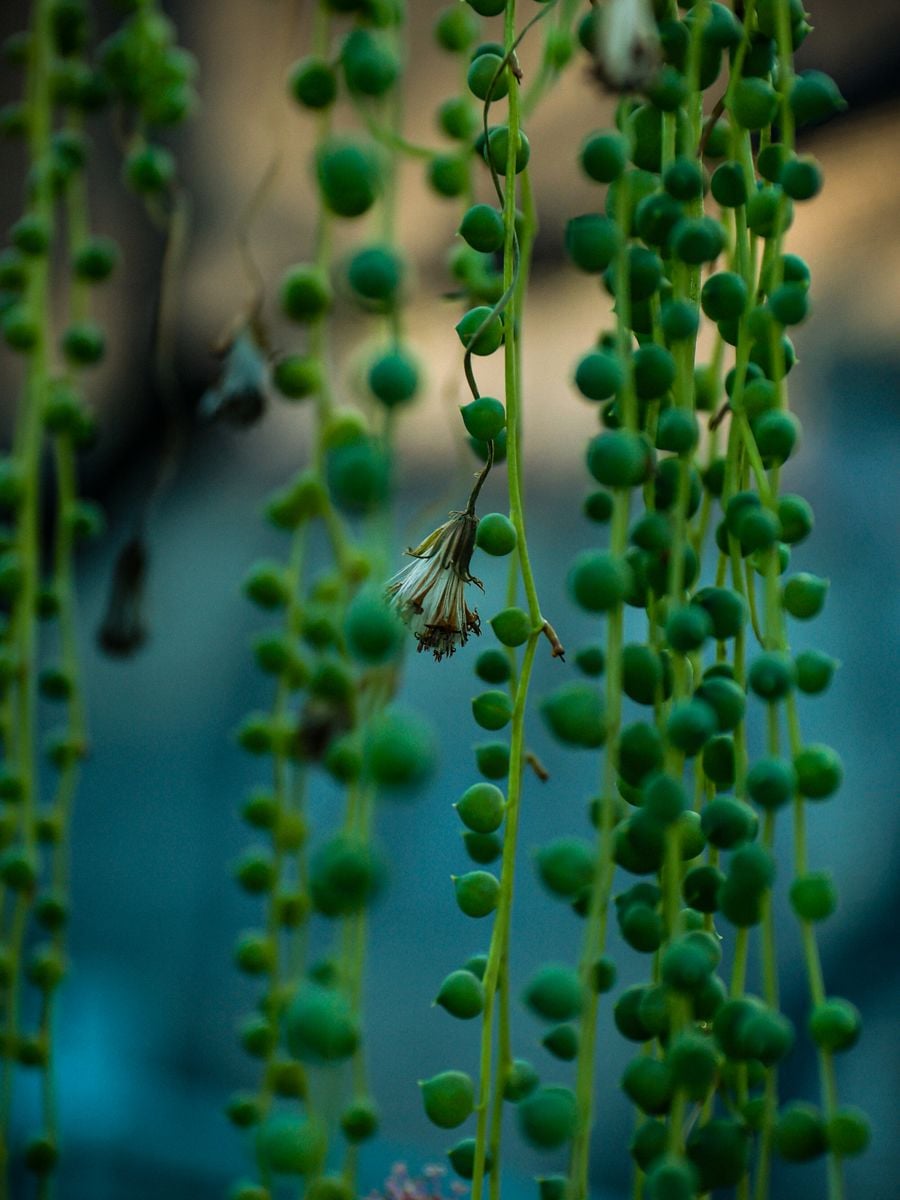
String of pearls strands with a fading white flower head, in Los Angeles. Photo by Ant Armada on Pexels.
Is String of Pearls Toxic to Pets?
Yes, mildly. NC State Extension rates it low severity for people, dogs, cats, and horses: the leaves and sap contain a pyrrolizidine alkaloid, eating the leaves can cause vomiting and diarrhea, and the sap can irritate skin and cause a rash.
Hang the pot out of reach of cats, dogs, and small children, and pick up fallen pearls.
Wear gloves when you take a lot of cuttings, and wash your hands afterward.
The ASPCA has no entry for string of pearls; its Senecio entries cover ragwort and groundsel. If a pet eats some, call your vet or the ASPCA Animal Poison Control Center at (888) 426-4435. In the US, call Poison Help at 1-800-222-1222 if a child swallows leaves.
Sources: NC State Extension Gardener Plant Toolbox (Curio rowleyanus); University of Wisconsin-Madison Extension Horticulture (String of pearls, Senecio rowleyanus); ASPCA Animal Poison Control Center plant lists.