Mistletoe is the evergreen Christmas sprig that grows on tree branches, never in soil. European mistletoe (Viscum album) and American mistletoe (Phoradendron leucarpum) are hemiparasites that take water from their host. Both have white berries, and both are toxic to dogs, cats, and horses.
Mistletoe is the evergreen sprig that goes up over doorways at Christmas, and it never grows in soil. It lives on the branches of trees, rooted into the wood. In Europe that plant is European mistletoe (Viscum album). In the United States it is usually American mistletoe (Phoradendron leucarpum).
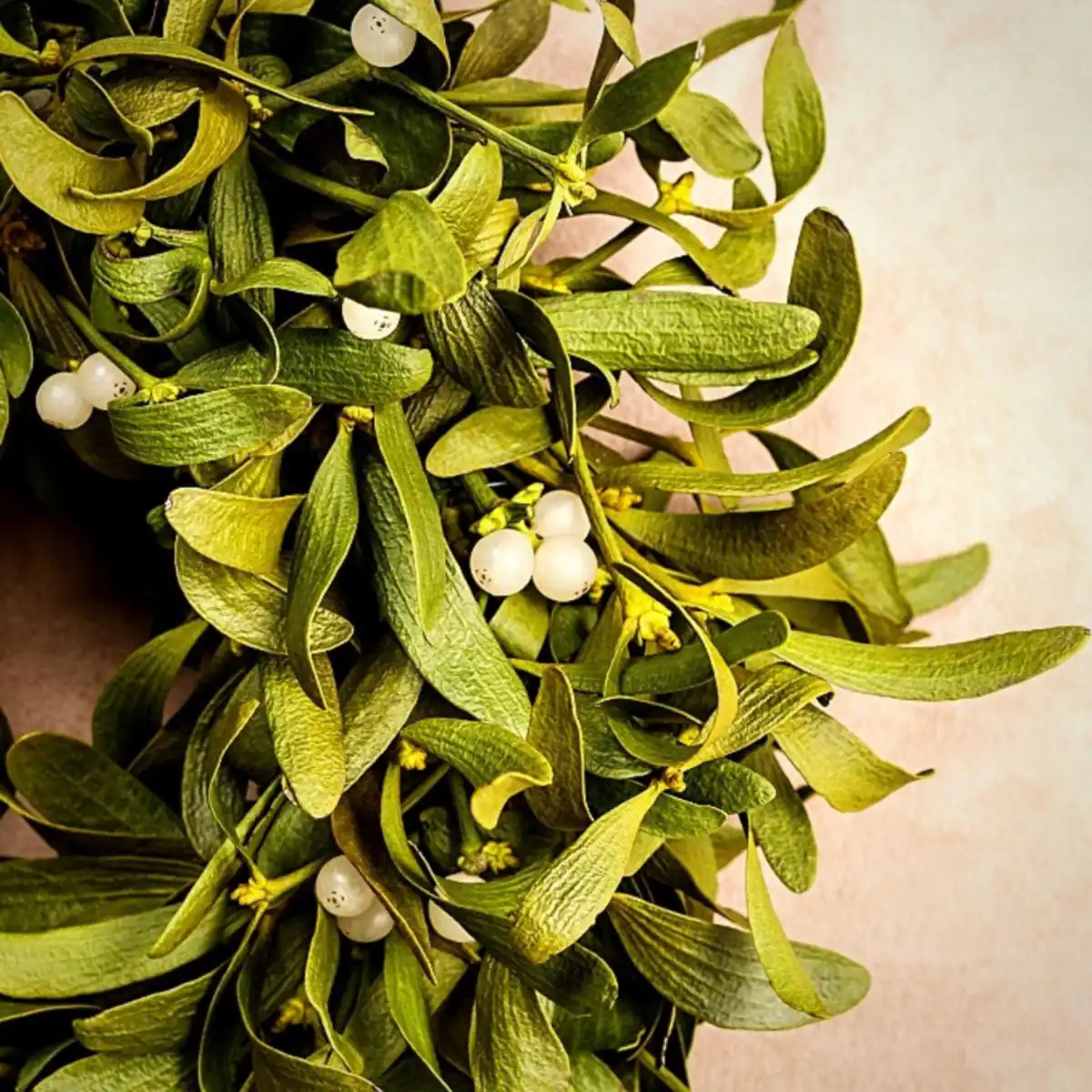
Both have white berries, both are toxic to pets, and neither will live in a pot.
Common Names
European mistletoe or common mistletoe (Viscum album)
American mistletoe, oak mistletoe, or Christmas mistletoe (Phoradendron leucarpum)
Maretak (Dutch, for Viscum album)
How Mistletoe Grows on Trees
Mistletoe is a hemiparasite. Its green leaves make some of its own food, but it pushes a modified root, the haustorium, through the bark of a host tree and takes water and minerals from it. It cannot grow anywhere else, so a potted mistletoe or a mistletoe "houseplant" does not exist.
European mistletoe is most common on apple trees, poplars, willows, lindens, and hawthorns, and it rarely grows on oak. American mistletoe grows on many hardwoods, including oaks, maples, and walnuts.
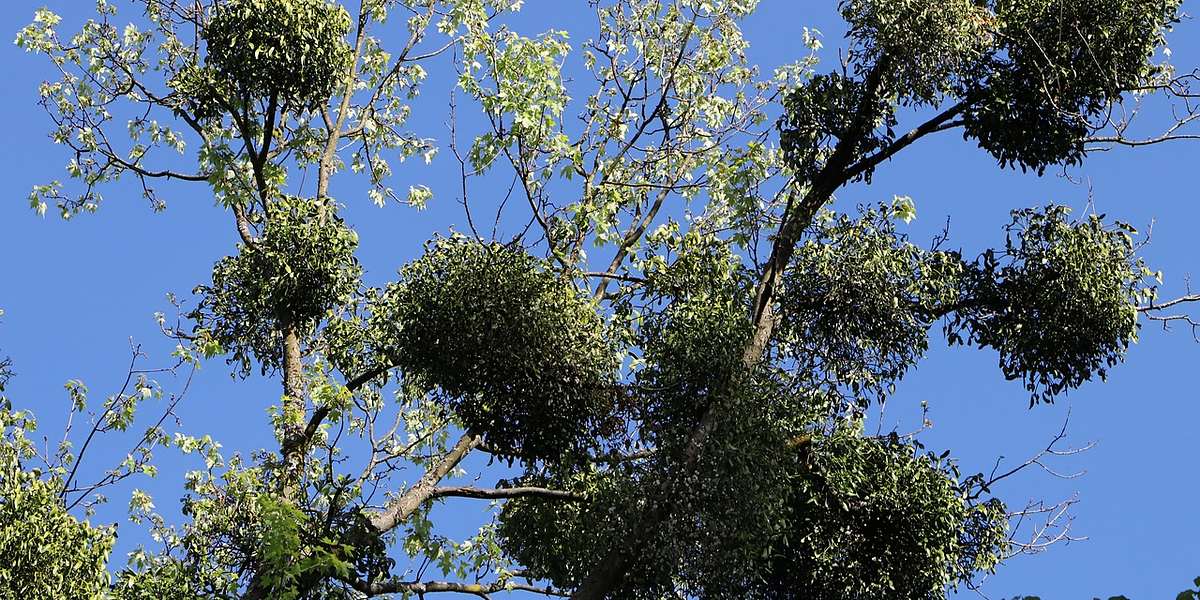
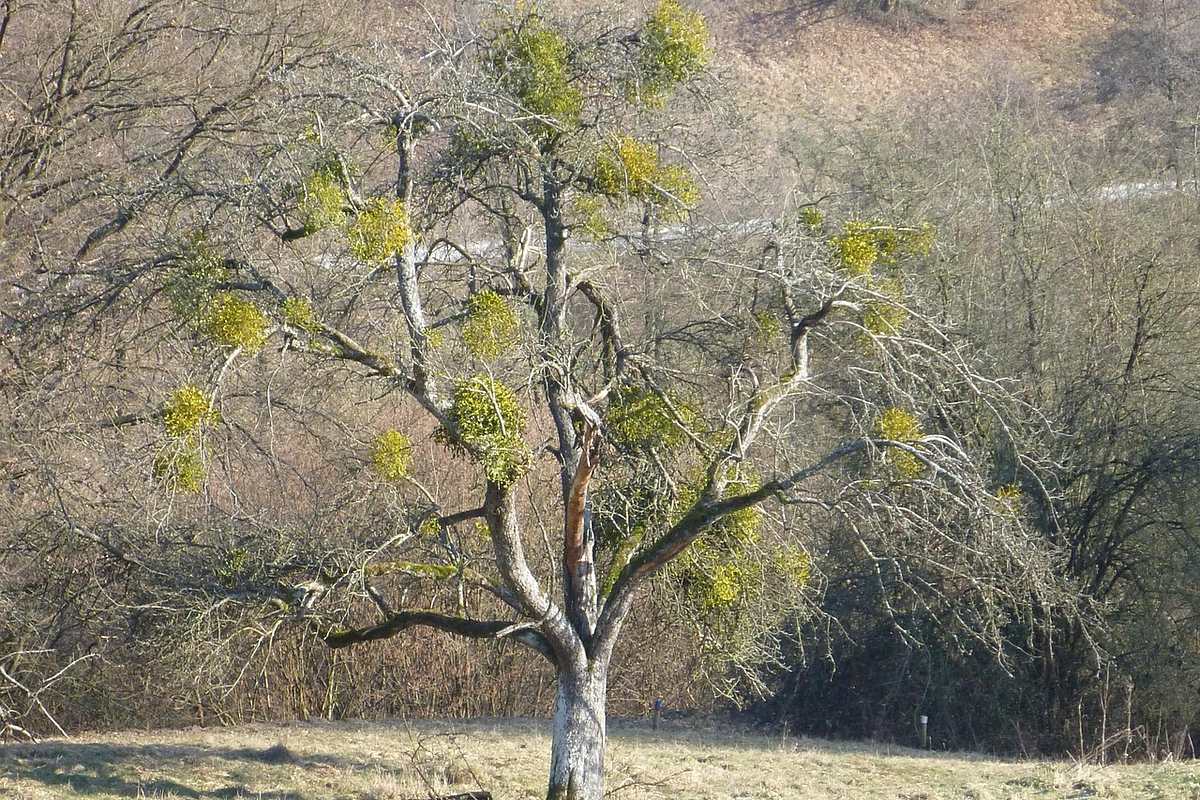
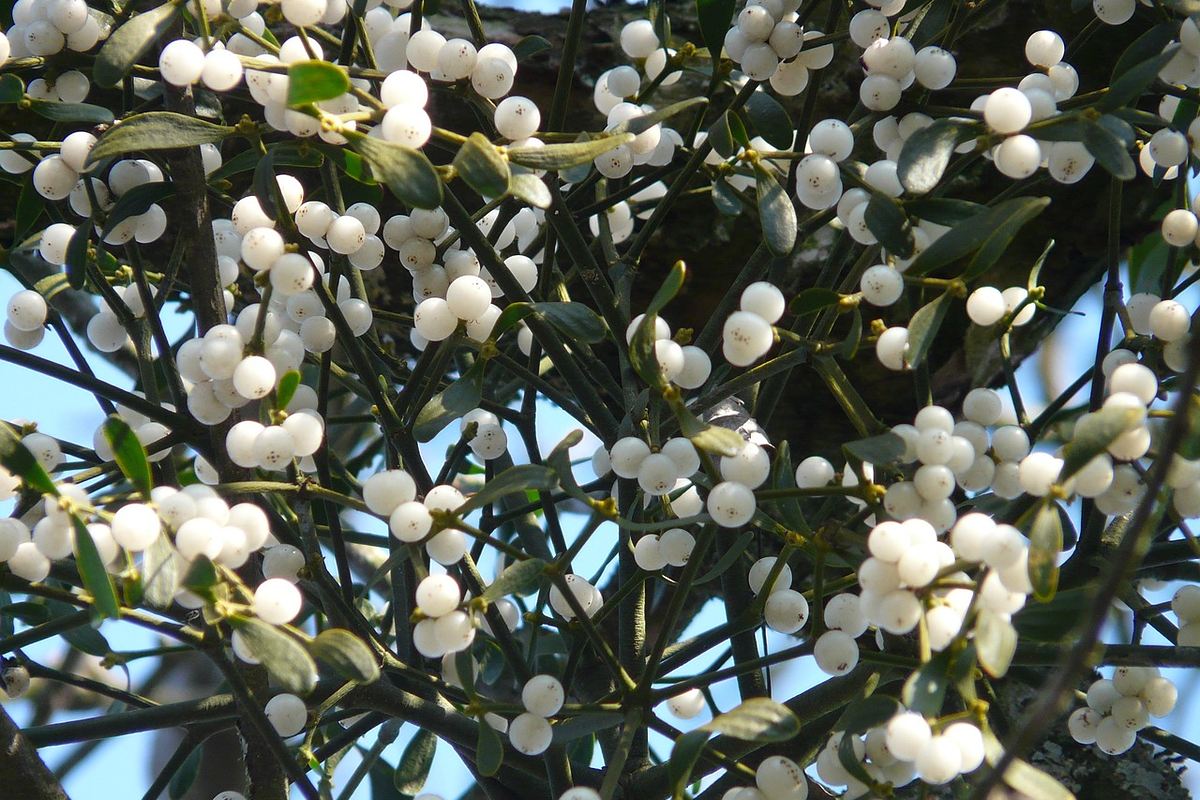
You spot it most easily in winter, when the host has dropped its leaves: round, yellow-green clumps of forked stems with pairs of thick, leathery leaves. The flowers are tiny and green. Male and female flowers grow on separate plants, and only the female plants carry the white, sticky berries. Birds eat them and spread the seeds from branch to branch.
Mistletoe on a bare tree in winter, the easiest time to see it. Photo by ArwenAkpolat on Pixabay.
Can You Grow Mistletoe?
Yes, but on a tree, not in a pot. The Royal Horticultural Society advises sowing it in late winter to early spring, around February or March. Take seeds from fresh, ripe berries and wipe them onto the underside of a branch of a suitable host, such as an apple tree. There is no need to cut the bark. Berries from Christmas decorations are often unripe.
Be patient. It can take three years or more before the young plants have leaves, and up to seven years before they fruit. Because the plants are male or female, sow several seeds to get berries.
Is Mistletoe Poisonous?
Yes, to pets and, in larger amounts, to people. The ASPCA lists American mistletoe as toxic to dogs, cats, and horses. Signs include vomiting, diarrhea, difficulty breathing, a slow heart rate, and, more rarely, low blood pressure. European mistletoe is the more toxic of the two, according to Poison Control in the US, and the Merck Veterinary Manual notes that in animals a toxic dose can lead to collapse within hours.
For people, a few berries are less dangerous than many parents fear. One or two berries or leaves will not seriously harm a child, according to California Poison Control, and in Poison Control data on American mistletoe, people who swallowed five or more berries had no symptoms, while some who swallowed leaves had stomach upset. Serious poisonings and deaths are linked to concentrated herbal use, such as tea brewed from the plant.
So hang mistletoe high, out of reach of children, cats, and dogs, and pick up any berries or leaves that drop. Never make tea from it. If someone swallows part of the plant, call a poison center (1-800-222-1222 in the US). If a pet eats it, call your vet.
The white berries of European mistletoe. Keep them away from pets and small children. Photo by Hans on Pixabay.
The Christmas Tradition
The plant has a long history in Europe. The Roman writer Pliny the Elder described druids in Gaul ceremonially cutting mistletoe from oak trees, and in Norse myth the god Balder was killed with mistletoe, the only thing that could harm him. The custom of kissing under it is much younger. English Heritage traces its first record to Two to One, a comic opera from 1784, and it became popular in the early 19th century.
The mistletoe sold at Christmas is still mostly gathered, not grown in nurseries. In Britain, much of it comes from old apple orchards, and Tenbury Wells in Worcestershire still holds a wholesale mistletoe auction, although a large share is imported. In the US, most holiday mistletoe is harvested from wild trees in Oklahoma and Texas.