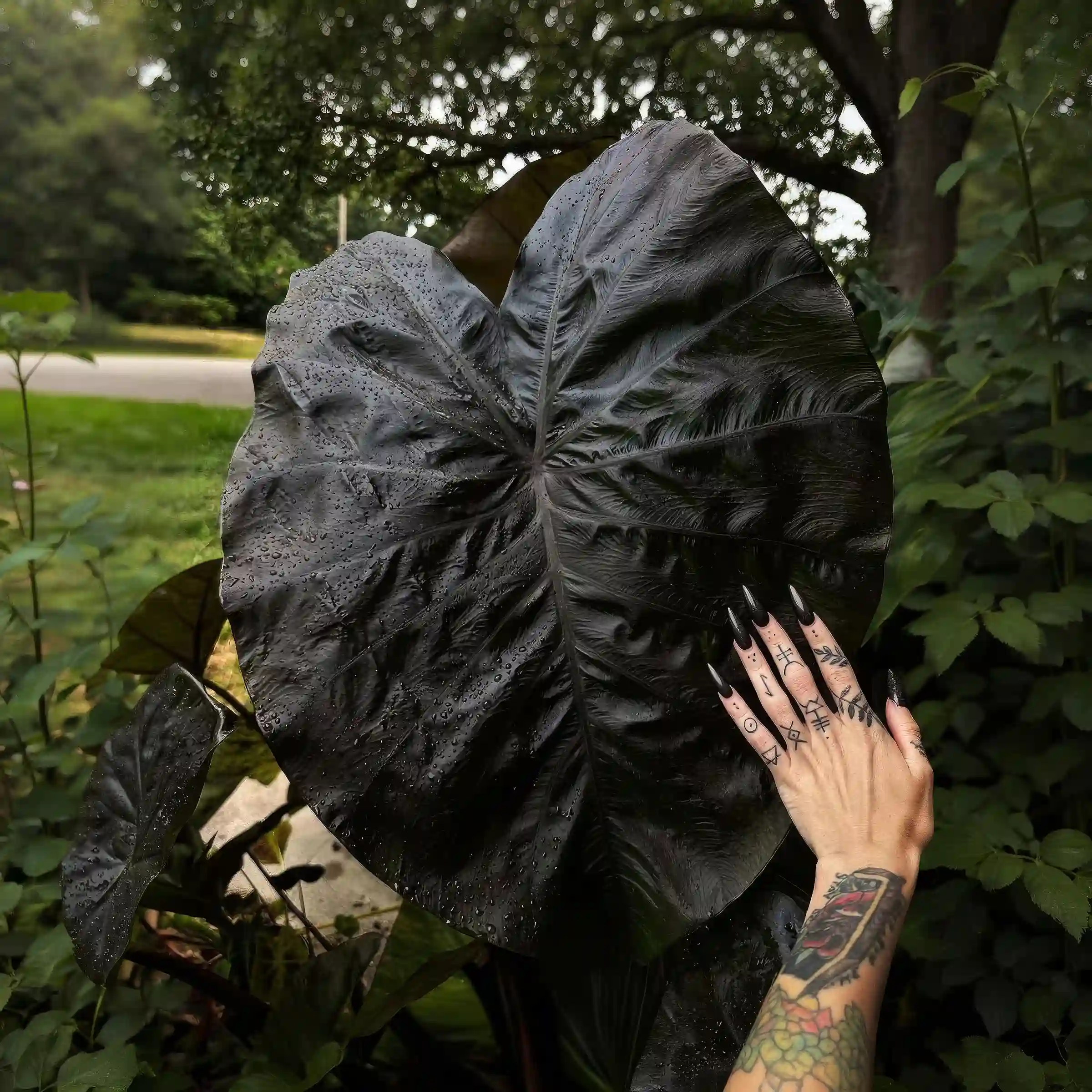
The best spooky plants for Halloween are the ones with a real story behind the look: Rose Black Baccara, the black calla lily, the lotus pod full of dark seeds, the black bat flower, the red spider lily that blooms in Japanese graveyards, the insect-trapping cobra lily, and the ghost plant that has no green at all. Some of these Halloween plants end up in vases and arrangements, some grow in a pot on the windowsill, and one only shows itself on a forest floor. Here is what makes each of them eerie, and how to bring a little of that mood into a home, a shop window, or a Halloween table.
What Makes a Plant Look Spooky?
Most creepy plants fall into one of three groups. The first is color. Very dark flowers look black, yet none of them really is: they hold so much deep red or purple pigment that they read as black in low light. Thursd's guide to dark flowers and why no flower is truly black explains the science behind it.
The second group is behavior. Carnivorous plants catch and digest insects, and that alone gives them a place on any Halloween list. The third group is folklore: plants that people have linked with death, ghosts, or the afterlife for centuries. A plant that ticks more than one of those boxes, like the red spider lily, makes the strongest Halloween piece.
7 Spooky Plants for Halloween
The list starts with the plants that are easiest to find at a florist or garden center and ends with the ones most people will only ever admire in pictures.
1. Rose Black Baccara
Rose Black Baccara from the French breeder Meilland is one of the darkest red roses in the trade. Its velvety petals look almost black in bud and along the outer edges, and open to a deep wine red. Of all the plants on this list, it brings the most romantic kind of eerie.

Florists use it for gothic bouquets and dark table designs, often next to deep plum and burgundy flowers. For more dark varieties and what they mean, read about black roses and their meaning.
2. Black Calla Lily (Zantedeschia)
Dark callas such as Calla Odessa have a deep aubergine color that turns nearly black in the throat of the flower. Their clean, sculptural shape is what makes them work so well for Halloween. One stem in a tall glass vase already sets the mood.

Callas come from southern Africa, and the colored hybrids are not frost-hardy. In colder regions, the rhizomes are lifted in fall and stored dry over winter, or the plant simply stays in a pot indoors. Thursd's article on black calla lilies and how to grow them covers the details, and dark callas for Halloween shows them in spooky designs.
3. Lotus Pod (Nelumbo Nucifera)
When the petals of the sacred lotus fall, a flat-topped seed head stays behind with a dark seed in each hole. Many people find that pattern of holes uncomfortable to look at, and there is even a name for the feeling: trypophobia, a strong aversion to clusters of small holes.
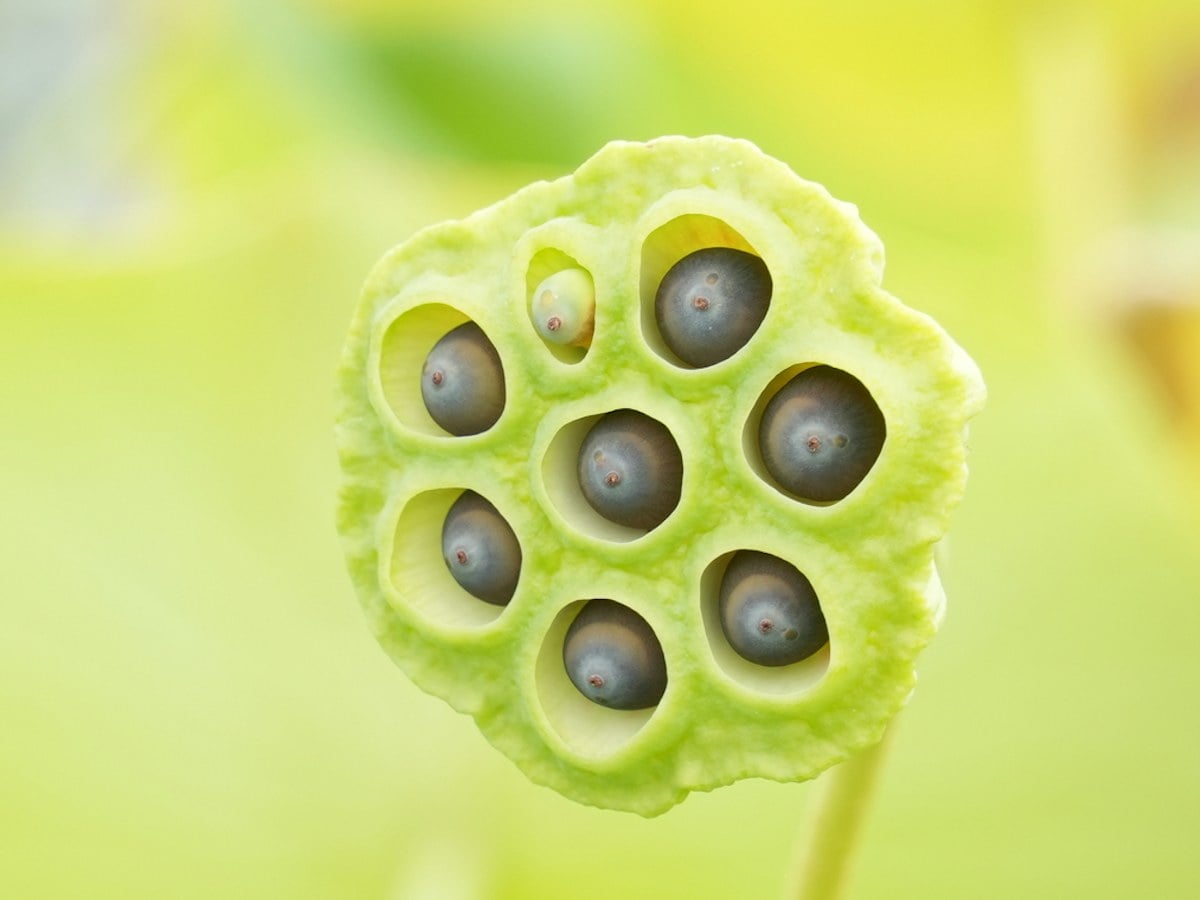
Dried lotus pods last for months, which makes them practical for Halloween arrangements, wreaths, and shop windows. Wholesalers sell them natural, bleached, or dyed black. In much of Asia, the lotus stands for purity and rebirth, so a pod that gives one guest the shivers can mean something hopeful to another. Read more about lotus flower meaning and symbolism.
4. Black Bat Flower (Tacca chantrieri)
The bat flower looks as if it was designed for Halloween. Two dark maroon bracts spread like wings above a cluster of small flowers, and long, threadlike whiskers hang down, up to about 70 cm (28 inches). The plant belongs to the yam family, Dioscoreaceae, and grows wild in the shade of tropical forests in Southeast Asia and southern China.

It often flowers from summer into fall, so a plant in bloom around Halloween is quite possible. Indoors, it needs warmth, high humidity, and bright light without direct sun. The bat flower also appears in Thursd's list of black houseplants and how to care for them, and among the weird plants that look too strange to be real.
5. Red Spider Lily (Lycoris Radiata)
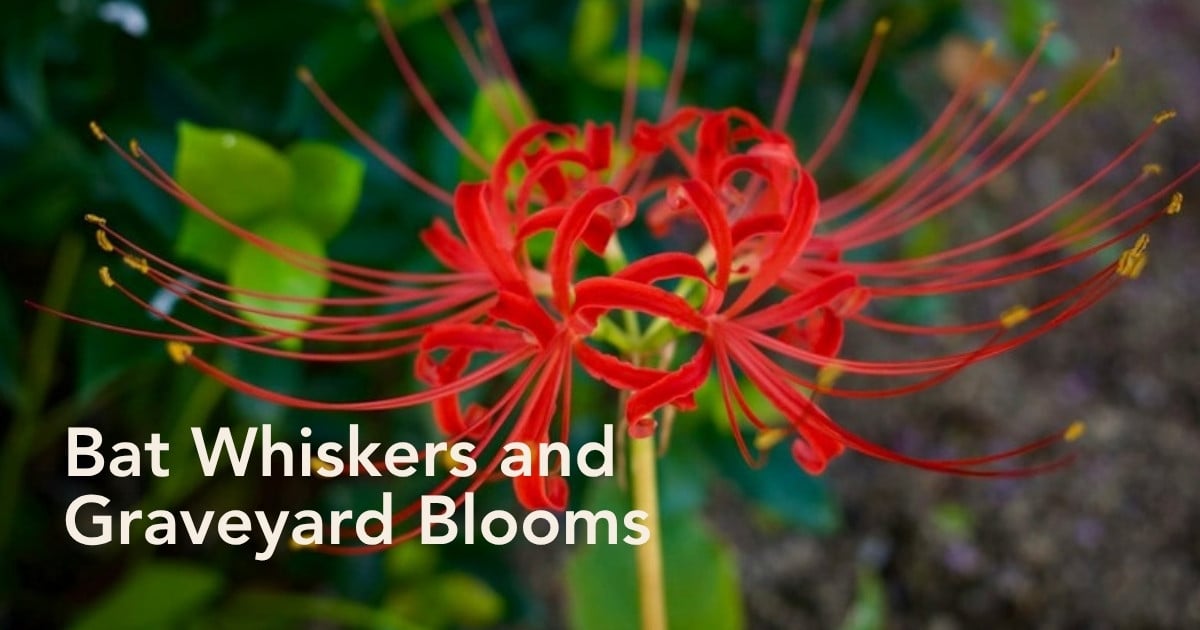
In Japan, the red spider lily is called higanbana, after the Buddhist higan week around the autumn equinox. That is when it blooms, and when families visit the graves of their ancestors. The flowers appear on bare stems without a single leaf, and the long, curled stamens look like spider legs.
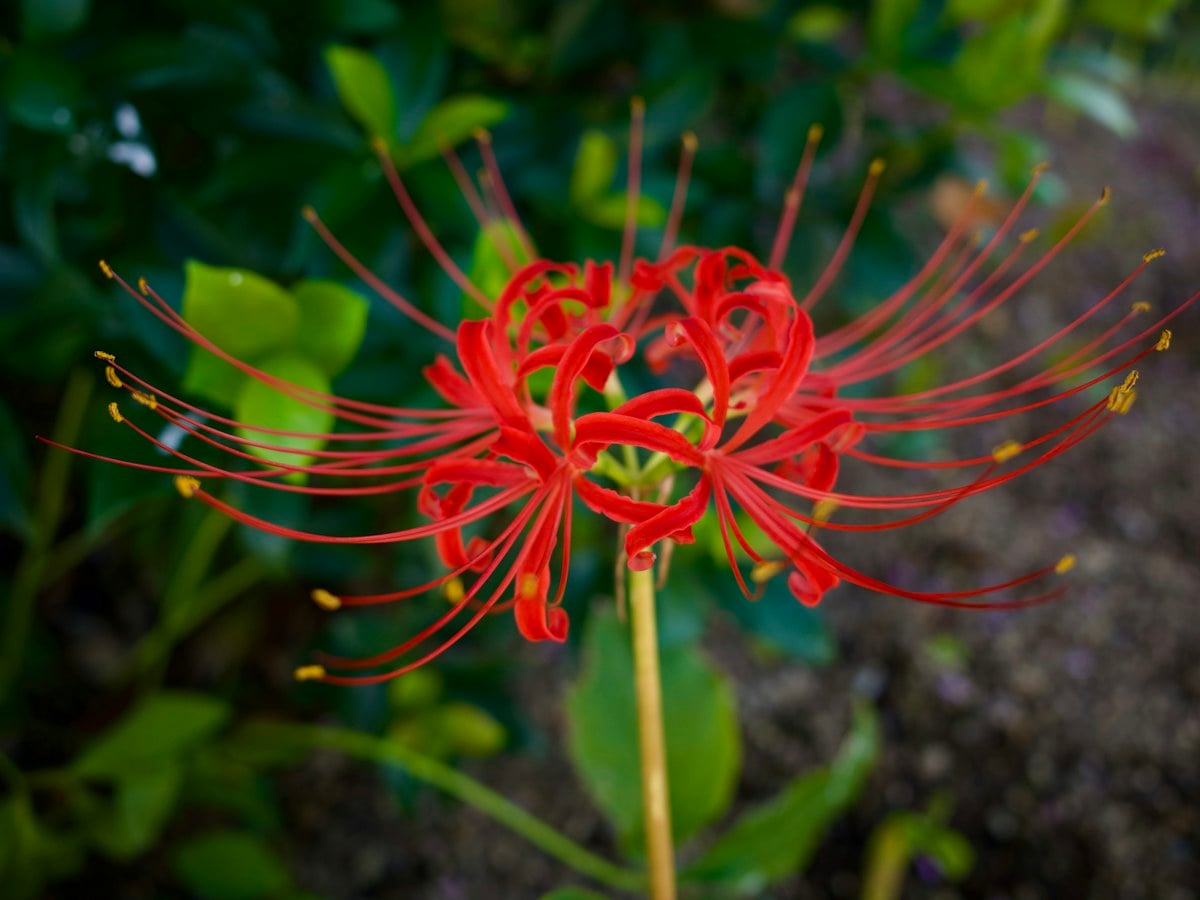
The plant was traditionally grown along rice paddies and around graveyards. Its bulbs contain lycorine, a toxic alkaloid, which is said to have kept moles and mice away from crops and graves. In folklore, it became a flower of the afterlife, the one that lines the path to the other world. After flowering, narrow leaves appear and stay through the winter.
In the garden, the bulbs go in the ground in late summer, in a sunny or lightly shaded spot that does not stay wet. Thursd's spider lily guide covers the different types and how to grow them.
6. Cobra Lily (Darlingtonia Californica)
The cobra lily is not a lily at all. It is a carnivorous pitcher plant from the bogs and cold mountain streams of northern California and Oregon. Each hooded pitcher curls over like a cobra ready to strike, with a red-purple, forked appendage hanging in front like a snake's tongue.

Insects follow the nectar into the hood and get confused by the pale, see-through patches in its roof, which look like a way out. They tire, slide down the pitcher, and are broken down there by bacteria. The cobra lily is one of the trickier carnivorous plants to grow, because its roots need to stay cool. For an easier carnivore on a Halloween windowsill, most people go for the Venus flytrap, a specialty of growers such as Carni Flora. To see carnivorous plants at work, watch the Green Reapers macro time-lapses.
7. Ghost Plant (Monotropa Uniflora)
The ghost plant, also called ghost pipe or Indian pipe, is waxy white from root to flower because it has no chlorophyll. It cannot make its own food from sunlight. Instead, it takes its nutrients from fungi in the soil that are connected to the roots of nearby trees, which is why it can grow in the darkest corners of the forest floor.

Each stem carries a single nodding flower that points to the ground and turns upright once the seed starts to form. You will not find it at a florist or garden center: it cannot be cultivated, so it is best left where it grows. It appears in shady woodland in North America and parts of Asia, mostly from summer into early fall. Once picked, it turns black, which only adds to its reputation.
Which Spooky Plants Can You Buy, Grow, or Only Admire?
At the florist or wholesaler: Rose Black Baccara, dark callas such as Calla Odessa, and dried lotus pods. These are the ones for Halloween bouquets, arrangements, and table designs.
As a plant for home or garden: the black bat flower as a houseplant, the red spider lily as a garden bulb, and calla in a pot. A Venus flytrap is the easy stand-in for the cobra lily.
Only in the wild: the ghost plant and the cobra lily in its native bogs.
Are Halloween Plants Safe Around Pets?
Not all of them. Calla lilies contain calcium oxalate crystals, which irritate the mouth and throat of cats and dogs that chew on them. Red spider lily bulbs contain lycorine and are toxic when eaten. Roses are not toxic to cats and dogs, although the thorns can still hurt. Keep dark callas and spider lilies out of reach, and pick up fallen leaves and petals. The ASPCA list of toxic and non-toxic plants is a good place to check any plant before it goes on display.
How to Keep the Spooky Look After Halloween
Several of these plants keep going long after October 31. The red spider lily comes back every September, callas return each summer from their rhizomes, and a bat flower can bloom the following year again if it stays warm and humid. For a garden that looks gothic all year round, take a look at Kat Von D's black garden.
For the full Halloween picture, with bouquets, arrangements, and the best dark cut flowers, read Thursd's guide to Halloween flowers. And if one of these plants has inspired a costume, these floral and plant Halloween costumes show how far you can take it.
Featured image by @jiffyplants. Header image by N Suma on Unsplash.