Anthurium is one of the most recognizable flowering houseplants. This vibrant tropical beauty of the Araceae family (arum family), which also includes Monsteras and peace lilies, is known for its waxy, heart-shaped spathes and glossy green leaves. The Anthurium plant also goes by other common names like flamingo flower, tailflower, laceleaf, and pigtail plant.
What, however, mainly draws many houseplant lovers to the Anthurium is not just its shape but also the range of colors available. Anthurium colors range from classic red to soft pink and clean white, among others. But how did these colors come to be? And how do you choose which one to use?
Why Anthurium Colors Vary Widely
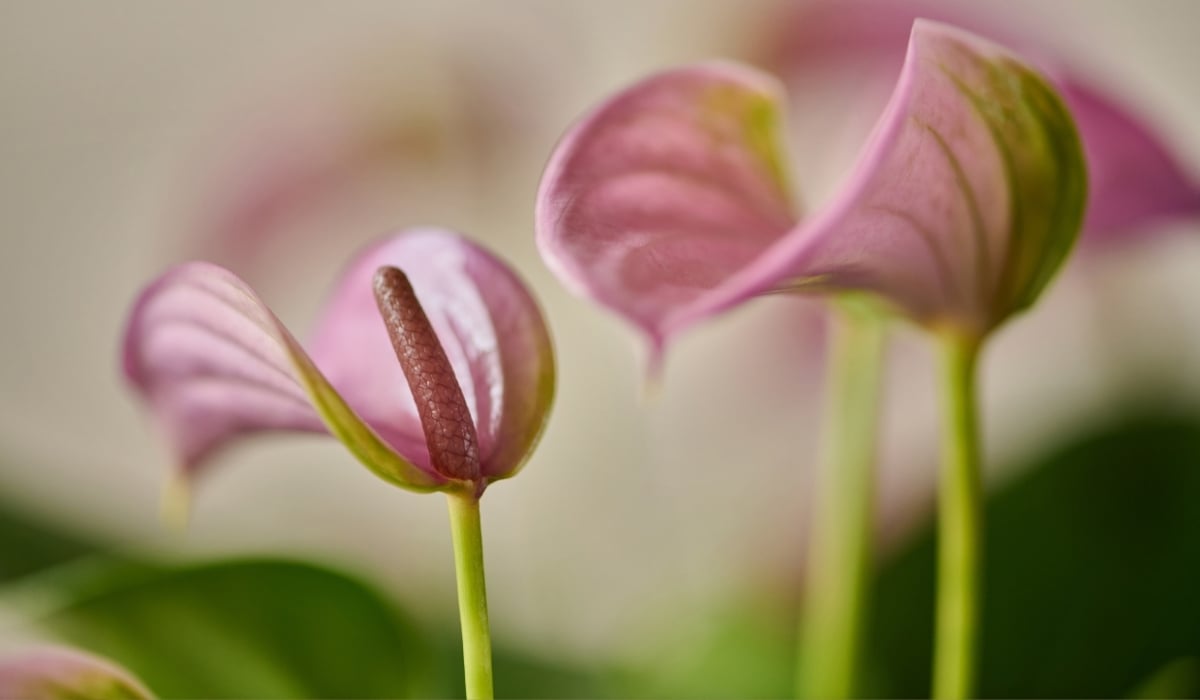
To start, the colorful part of an Anthurium ‘flower’ isn't a petal in the traditional sense, but a modified leaf called a spathe that surrounds a central spike known as a spadix, where the plant's true, tiny flowers are located. Because the spathe is a leaf structure, not a petal, its pigmentation varies widely between varieties and hybrids, which is partly why Anthurium breeding has produced such a wide color range over the years.
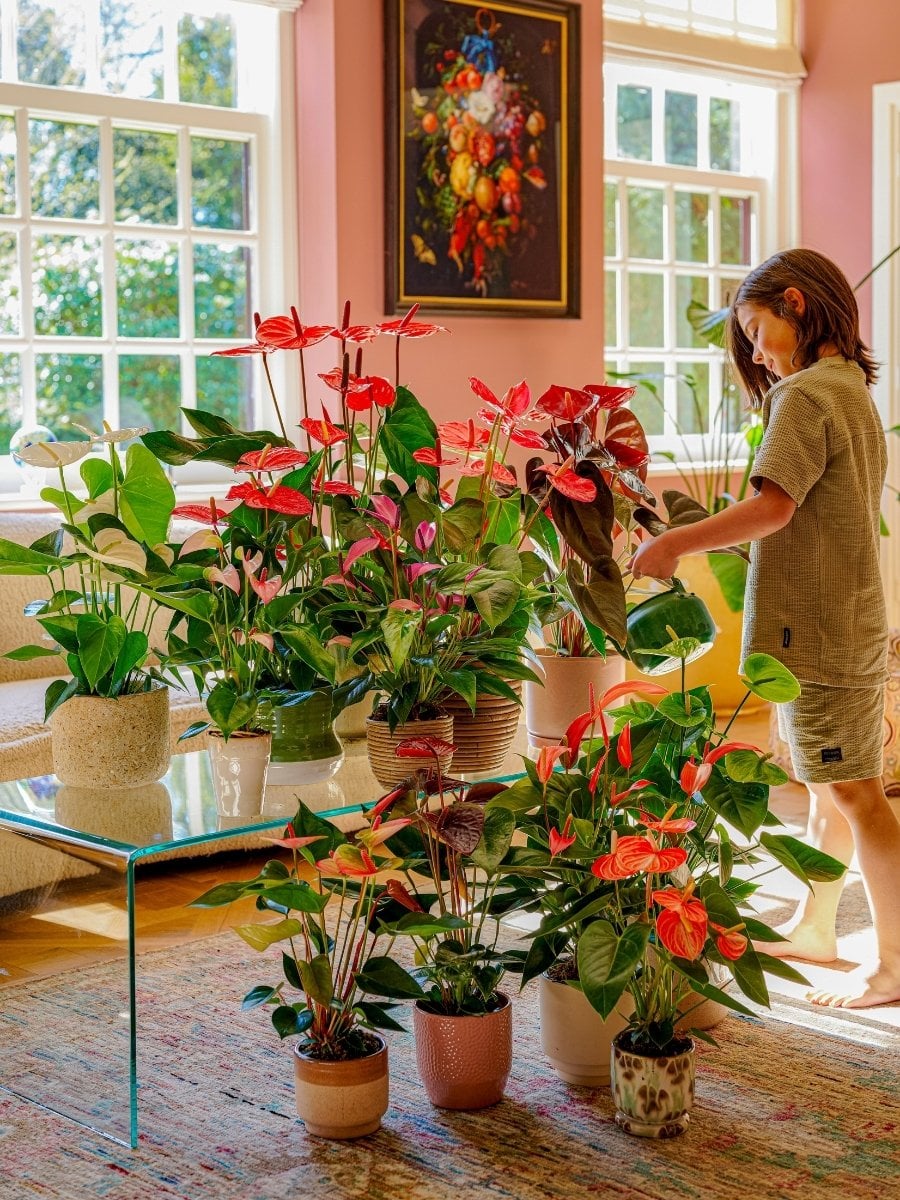
Wild Anthurium species native to Central and South America typically display red, green, or white spathes. But hybridization by specialists like Dutch breeder Anthura has grown the natural range into shades such as pink, purple, orange, yellow, brown, and various bicolor combinations.
But often, color alone is not enough. These commercial breeding programs also select for other traits like flower size, plant compactness, and cold tolerance, since varieties need to perform well in a pot as much as they look appealing on a shelf or tabletop.
The Science in Anthurium Colors
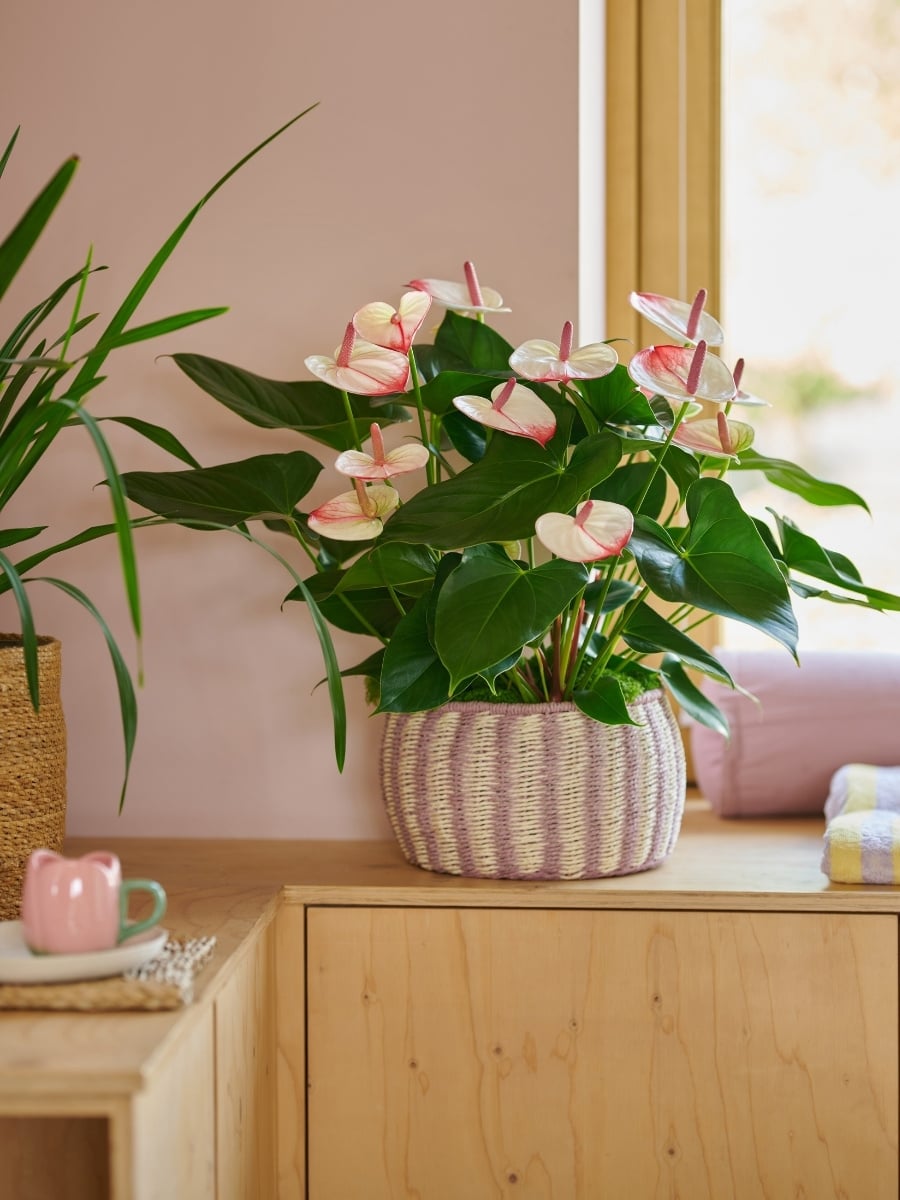
The visual presentation of a potted Anthurium comes from its spathe. Pigmentation in this bract is governed primarily by anthocyanins, water-soluble pigments responsible for red, pink, purple, and orange shades, alongside chlorophylls that determine green tones.
Environmental factors such as light intensity, ambient temperature, and soil nutrients influence pigment synthesis. Higher light levels generally intensify red and pink hues, while too little light mutes them, and cooler temperatures can cause certain varieties to develop deeper contrast or darker veining.
Developing New Anthuriums in Varied Colors
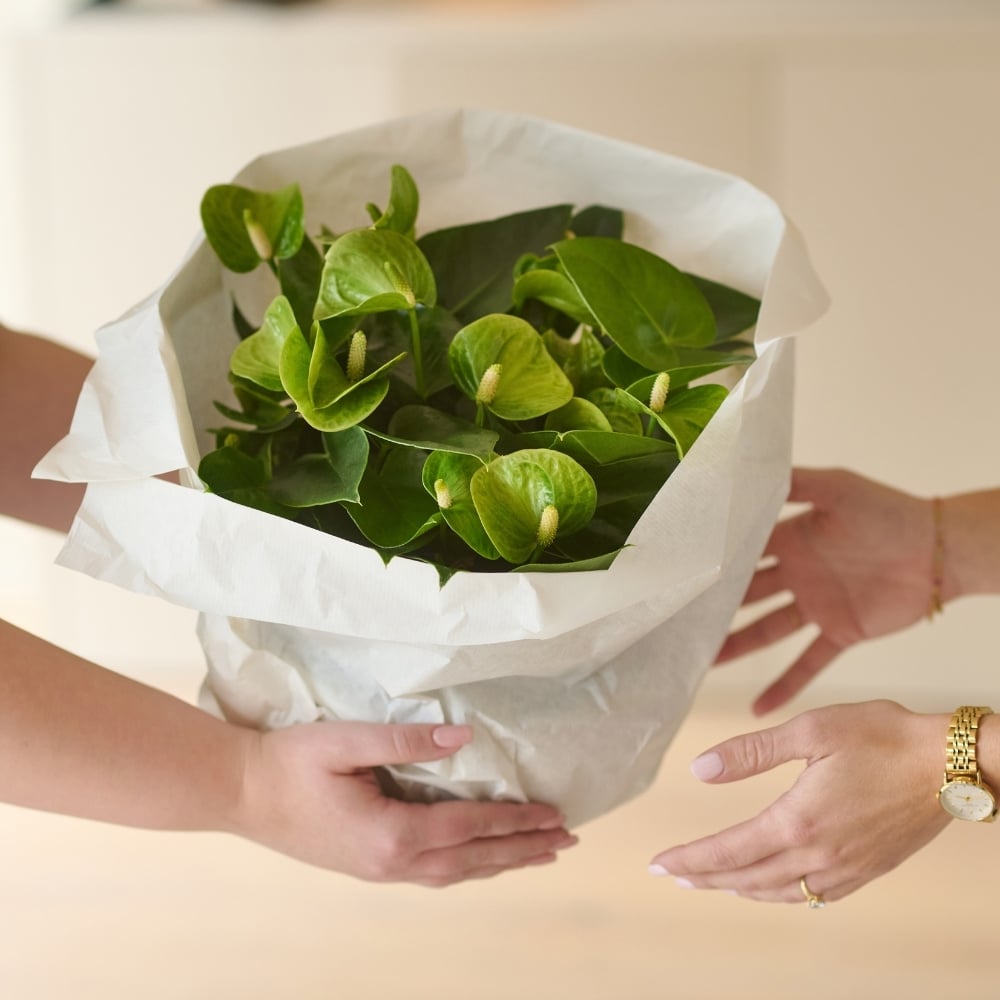
Developing a new Anthurium color is a slow process that typically takes several years of cross-breeding, seedling selection, and testing before a variety is ready for commercial sale. Breeders cross plants with desirable traits, grow out the resulting seedlings, and select the strongest, most consistent ones for further propagation.
Only a small percentage of seedlings from any given cross end up with a color, shape, and growth habit that makes them viable for the market. Anthura, for instance, runs dedicated breeding greenhouses for this purpose and maintains its own propagation labs to scale up a selected variety once it passes selection. This process explains why new Anthurium colors and patterns continue to evolve and gradually appear in stores.
Common Anthurium Colors and What They Represent
Growers and retailers typically group Anthurium colors into a handful of main categories, ranging from red to pink, white, purple, orange, yellow, green, and brown, with many bicolor and speckled variations layered on top. Each Anthurium color tends to carry a different association, whether in home decor or gifting.
Pastel and Pink Anthuriums’ Soft Tones Ideal for Homes and Gifting
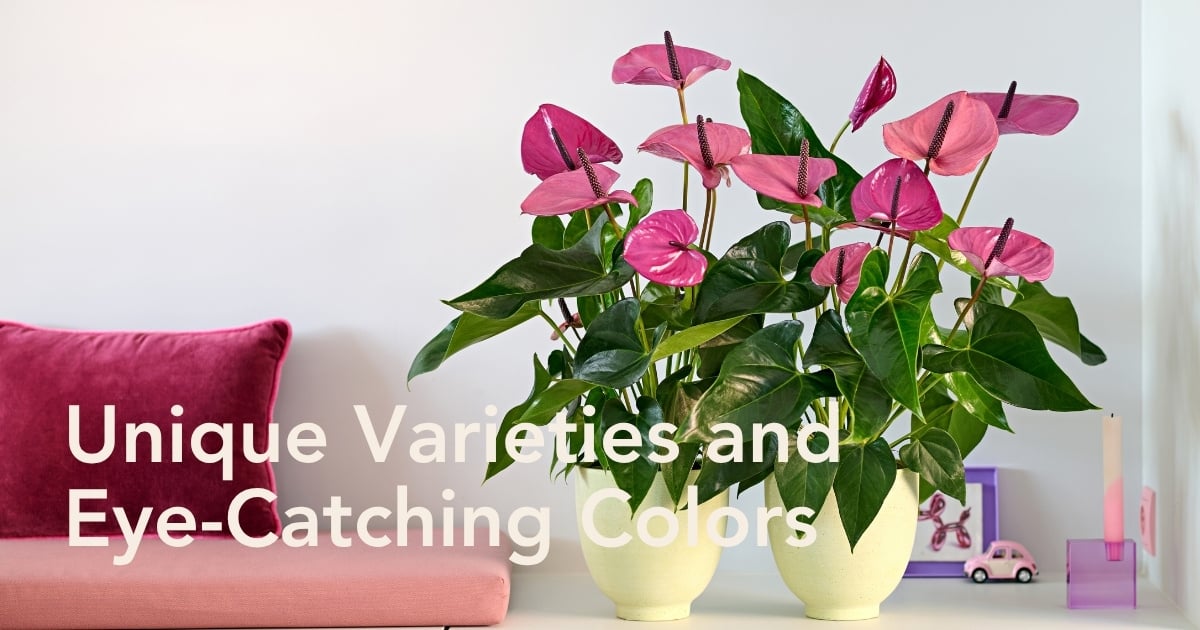
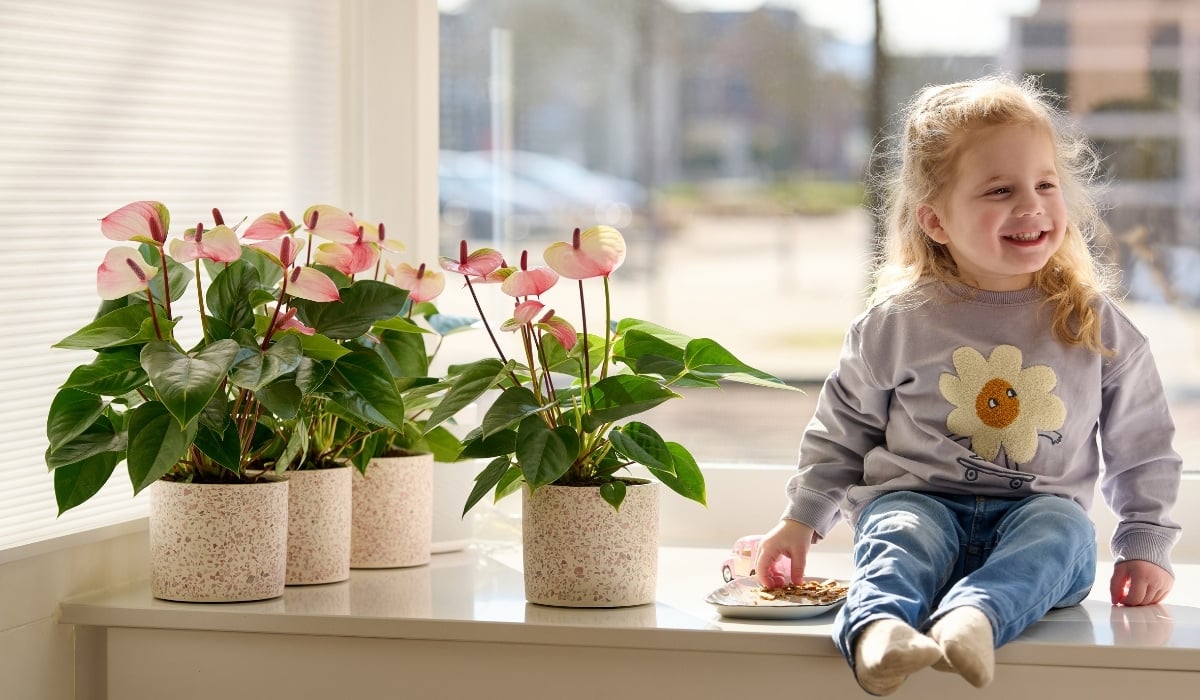
Pink Anthuriums are a common pick for buyers who want color without making a bold statement. The shades range from pale blush to deeper rose, giving growers room to offer more than one pink option depending on the season or occasion.
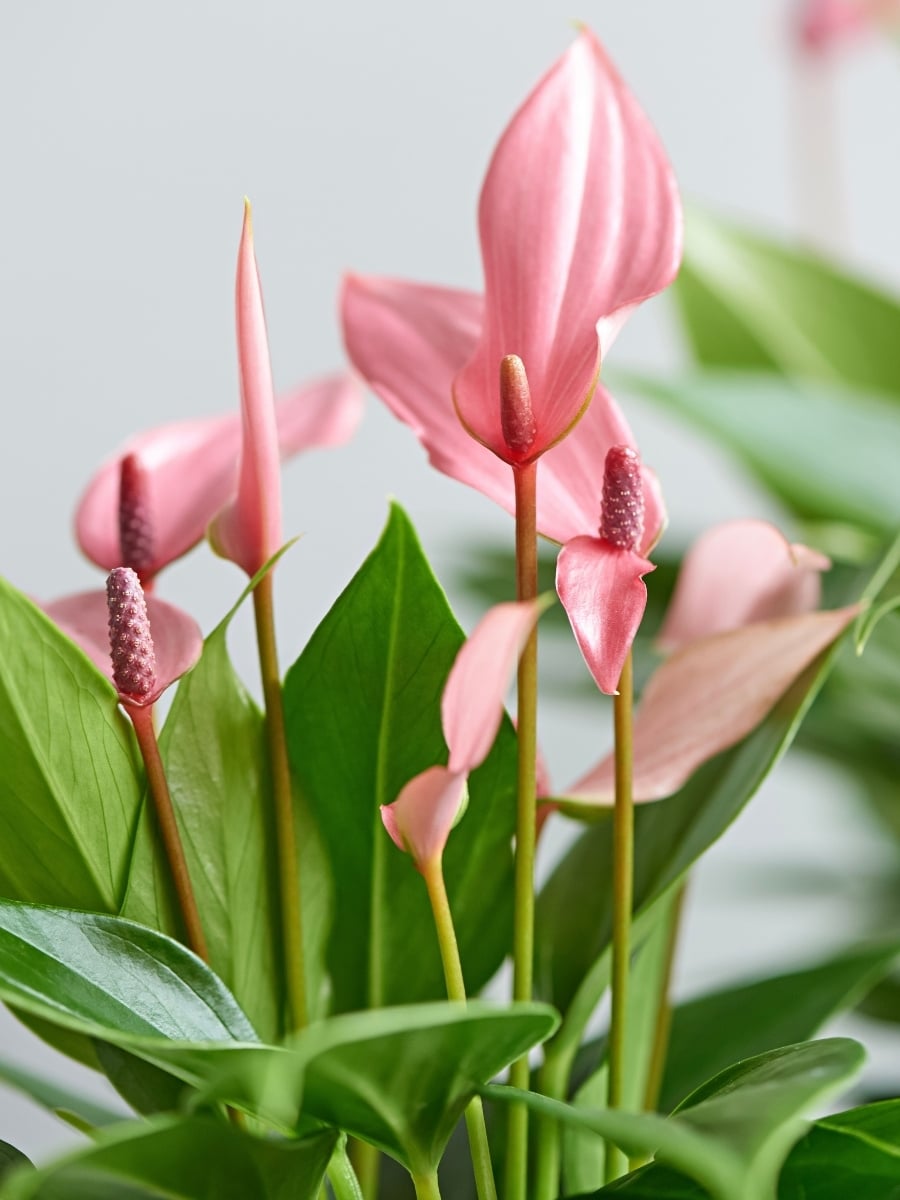
Because pink is gentle and approachable, people often choose these plants as gifts, especially for occasions where a softer color feels more appropriate than red. In pot plant assortments, pink Anthuriums are often available across a range of pot sizes and flower sizes, so the same general color can suit anything from a small desk plant to a larger floor variety.
As a result, demand for these lighter accent plants has boosted the popularity of pastel-colored and pink Anthuriums, now available in shades ranging from soft blush to deep magenta. These varieties add a gentle, decorative element to indoor spaces and come in different forms.
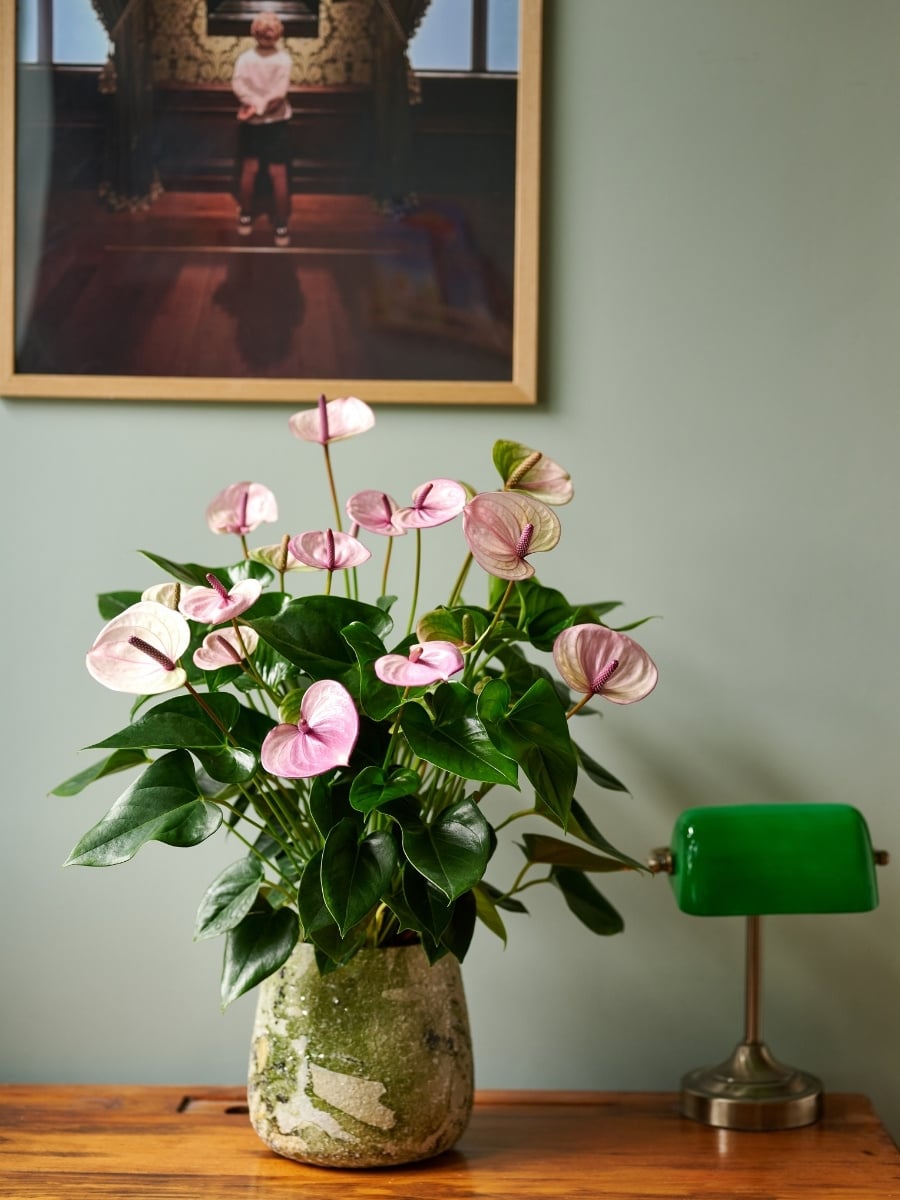
- Ribbon and narrow forms: Varieties like Zizou® and Lilli® showcase slender, ribbon-like spathes that offer a distinct textural aesthetic compared to traditional heart-shaped forms.
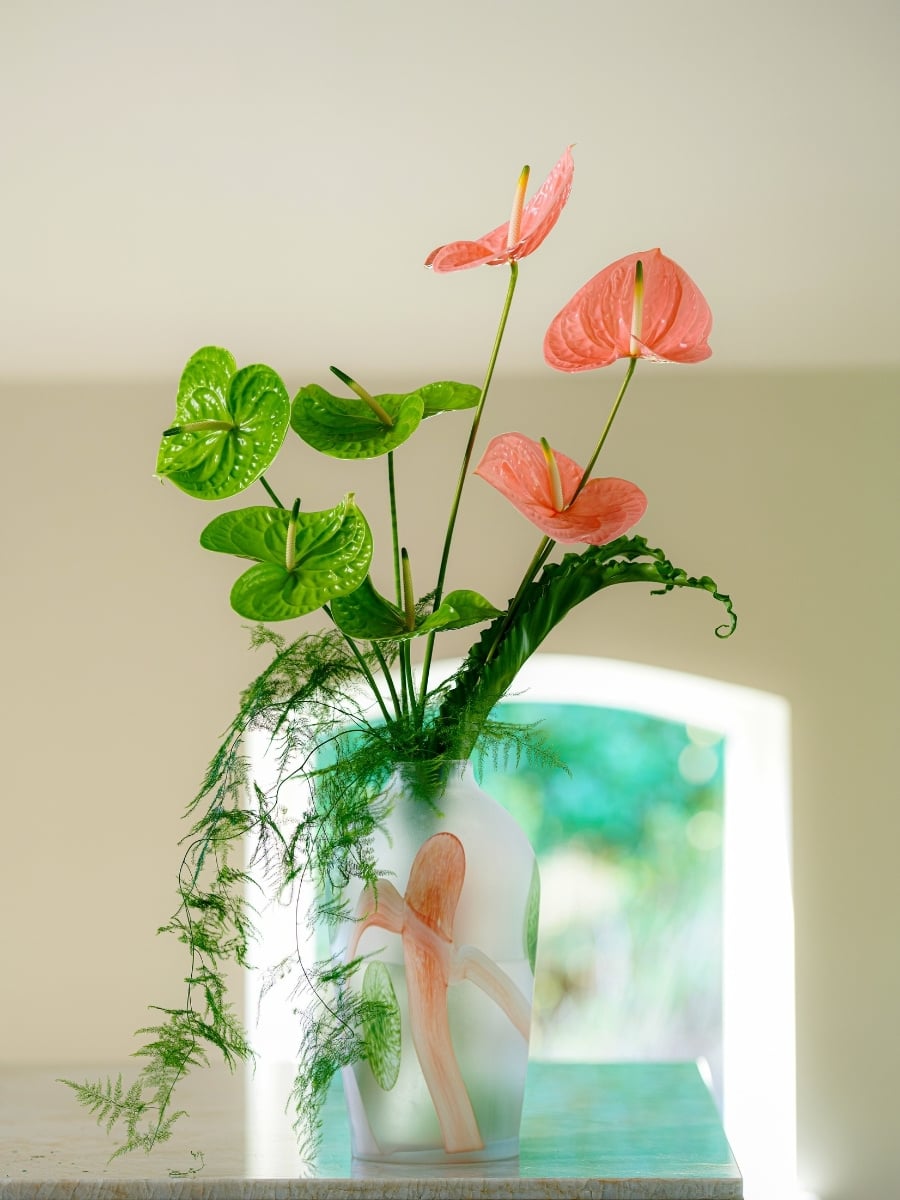
- Coral and peach tones: Varieties such as Banderola® Peach present soft terracotta and salmon shades. Their elongated spathes stand upright above dark foliage, creating a clean vertical profile.
- Blush and bicolor: Soft pink spathes with green margins or pale spadices offer multi-toned depth that suits springtime home decor.
White Anthuriums Are a Clean, Versatile Choice
White Anthuriums are another beloved houseplant. They feature a neutral, formal look that fits a wide variety of interiors, from minimalist homes to corporate office environments and event spaces, where they provide a subtle, elegant choice. White varieties are also a common choice for weddings and formal gifting, where a more restrained color palette is often preferred over brighter options.
Some white Anthurium varieties feature a faint green tint near the base of the spathe, which is normal and not a flaw. And because white pairs easily with almost any other color, these plants are often used as a base in mixed displays alongside more saturated shades like red or purple.
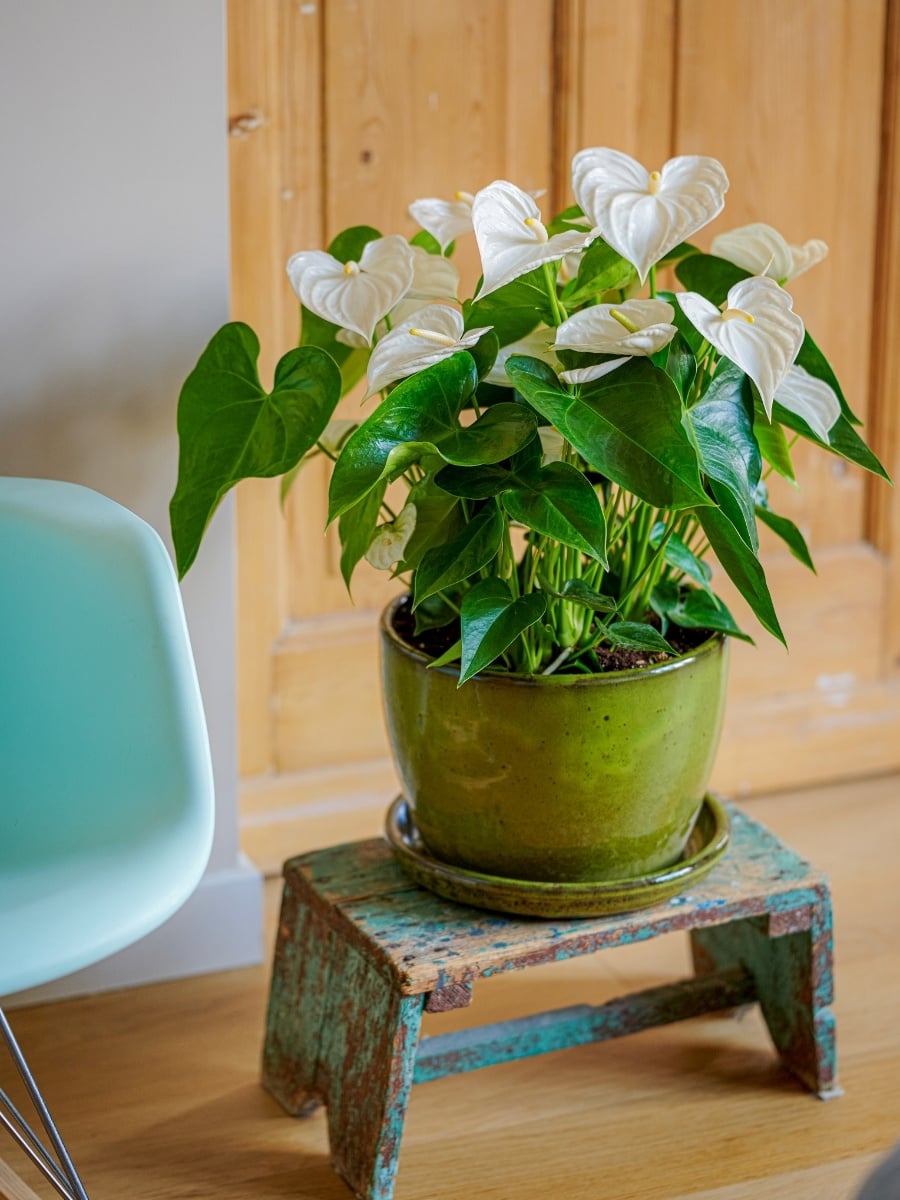
Popular varieties like White Champion® and Oklahoma® produce clean ivory to pure alabaster spathes paired with pale green or light yellow spadices. Breeders continually refine these white varieties to improve resistance to mechanical bruising during transit and prevent premature yellowing of the spathe margins.
Red Anthuriums Are the Classic Choice for Bold Displays
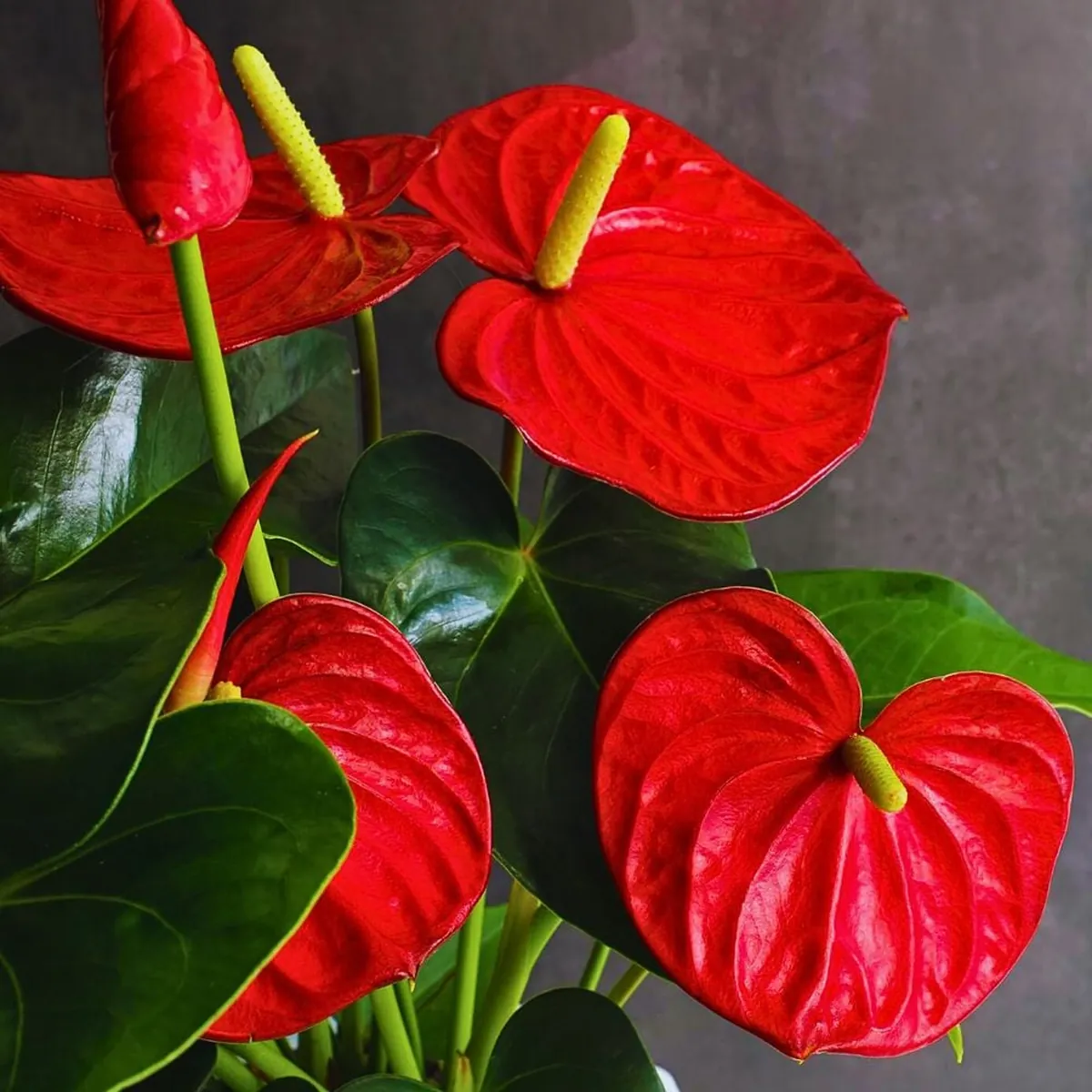
Red Anthuriums are likely the most recognizable version of this plant, and they remain a standard in the pot plant and even cut flower trade. The color's association with warmth, hospitality, and celebration makes them an ideal gift, though they also work well as a long-lasting accent plant on a table or windowsill.
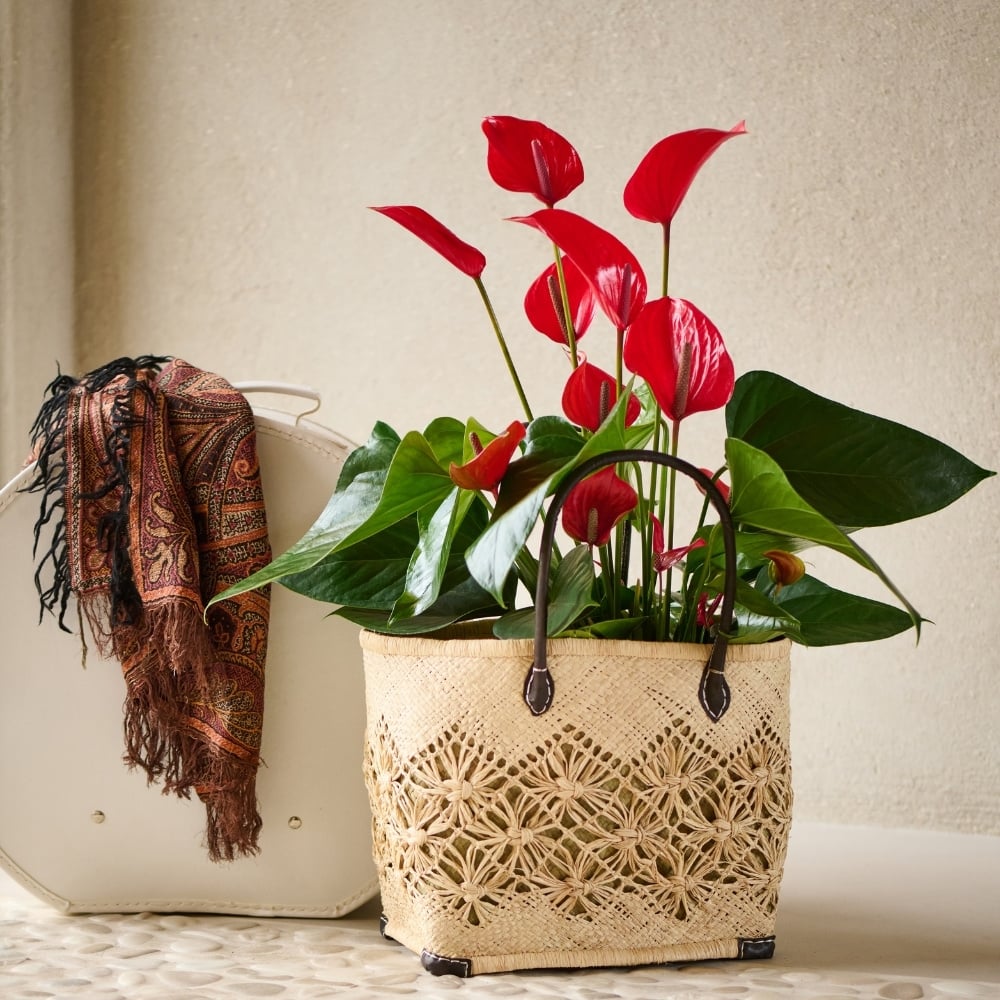
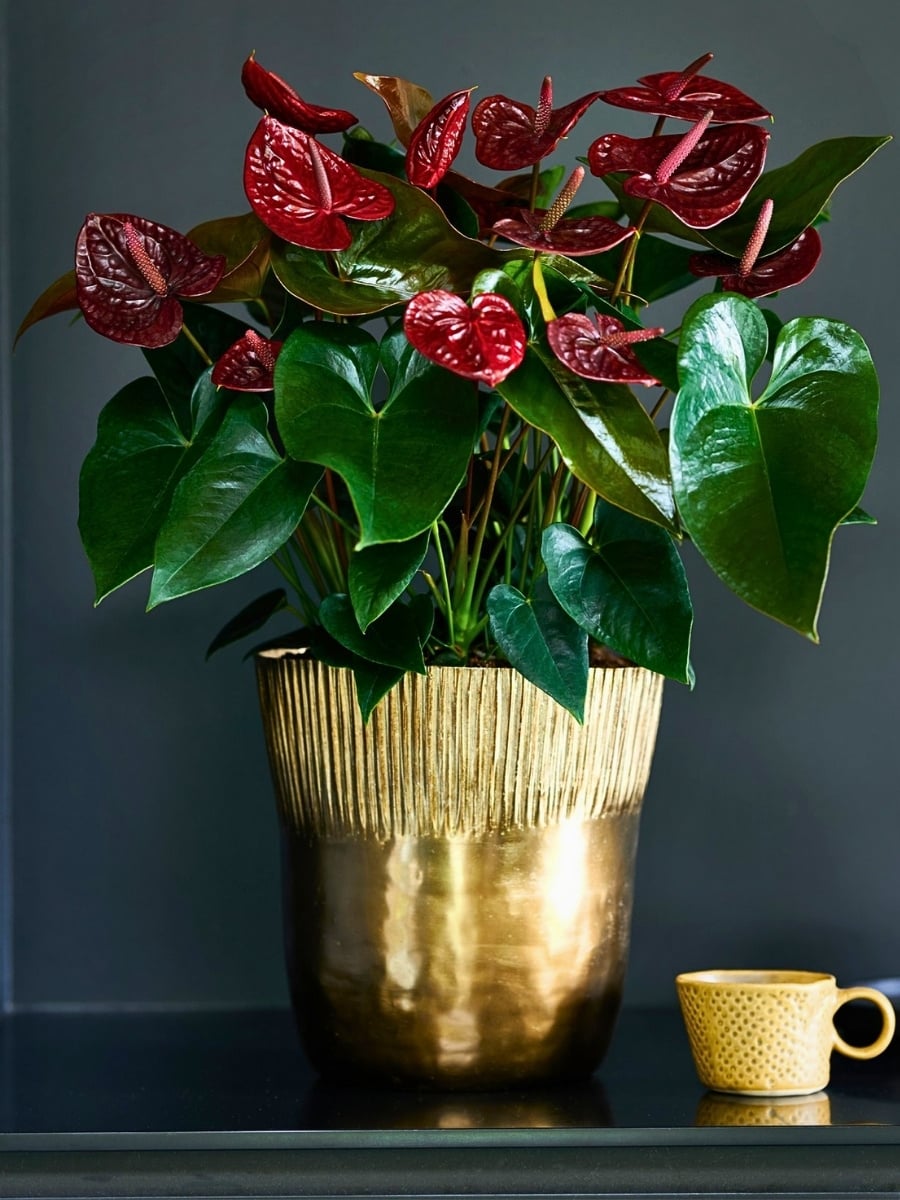
Red Anthuriums are also known for their bold visual impact and feature high spathe counts, thick waxy surfaces, and strong color retention. And because red is such a dominant category, breeders typically offer several distinct shades within it, ranging from bright, true red to deeper burgundy tones.
Flower size and glossiness also vary among red varieties, affecting how bold or subtle the plant looks in a given space. Varieties such as Minnesota® and Montana® are widely grown and loved for their broad, heart-shaped spathes and contrasting yellow or green spadices.
Specialty Shades with Patterned Spathes
Breeding advancements have also introduced unique color categories that magnify the versatility of potted Anthurium. A few of them are:
- Purple and lavender: Cultivars like Cavalli® Purple introduce deep violet hues, filling a rare color niche among indoor tropical plants.
- Veined and patterned series: Selections within the Livium® series highlight distinct contrasting veins across bright red or orange background tissues. This natural grid-like patterning creates a distinctive two-tone appearance.
- Chocolate and dark earth tones: Near-black, deep maroon, and bronze spathes offer rich visual weight, making them popular for contemporary interior design.
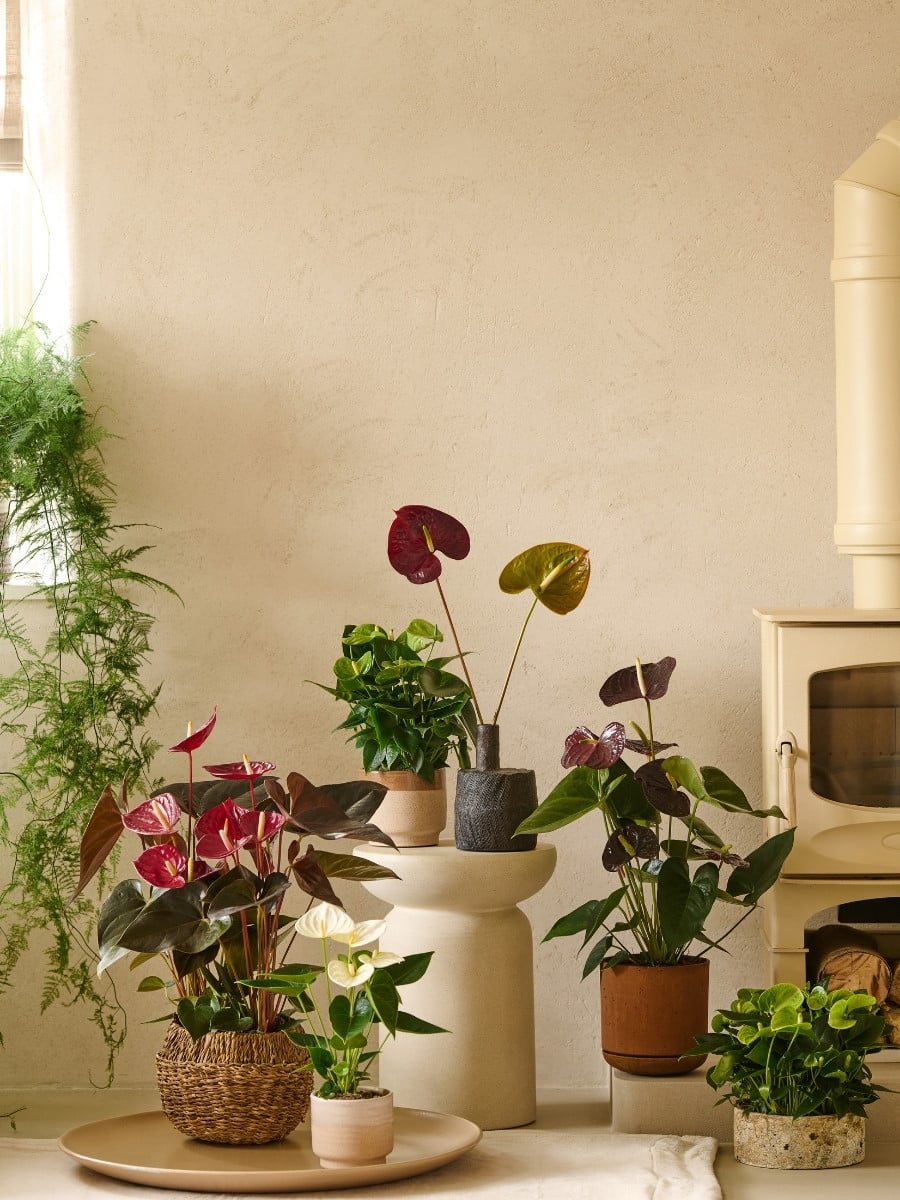
Worth mentioning is that the variety of Anthurium colors helps growers and interior decorators select appropriate houseplants for specific lighting conditions and color schemes.
Anthurium Varieties Beyond the Pot Plant Palette
Beyond the flowering pot plant assortment, the genus splits into two types worth knowing: flowering Anthuriums grown for their colorful spathes, and foliage Anthuriums grown for their leaves. Both are grown commercially, but they sit in very different parts of the market.
Obake Anthuriums and Other Prized Cut Flower Types
Obake anthuriums are large bicolor selections developed in Hawaii, named after the Japanese word for "ghost" or "changed form" because of their two-tone spathes. Prized for their size, they appear mainly in cut flower work, where a single stem can anchor a bouquet or arrangement. Anthurium scherzerianum, recognizable by its curled spadix, is a smaller flowering example that predates most of the modern pot assortment.
Foliage Types Like Anthurium Clarinervium
Anthurium clarinervium is a stunning foliage variety with dark green, velvety, heart-shaped leaves marked by bold white veins, and it is a genuinely expensive variety compared to a standard flowering pot plant. Its close relative Anthurium crystallinum carries larger dark green leaves with fine silver-white veining. Neither is grown for flowers, but both are a beautiful addition to a plant shelf and are increasingly stocked alongside the flowering assortment.
Conditions for Anthuriums in Different Colors for Every Setting
Choosing among the Anthuriums in different colors often comes down to where the plant will be placed and what role it plays. A small, single-color pot Anthurium works well on a desk or narrow shelf, while a larger plant with bigger flowers makes a bigger visual statement in a living room or entryway.
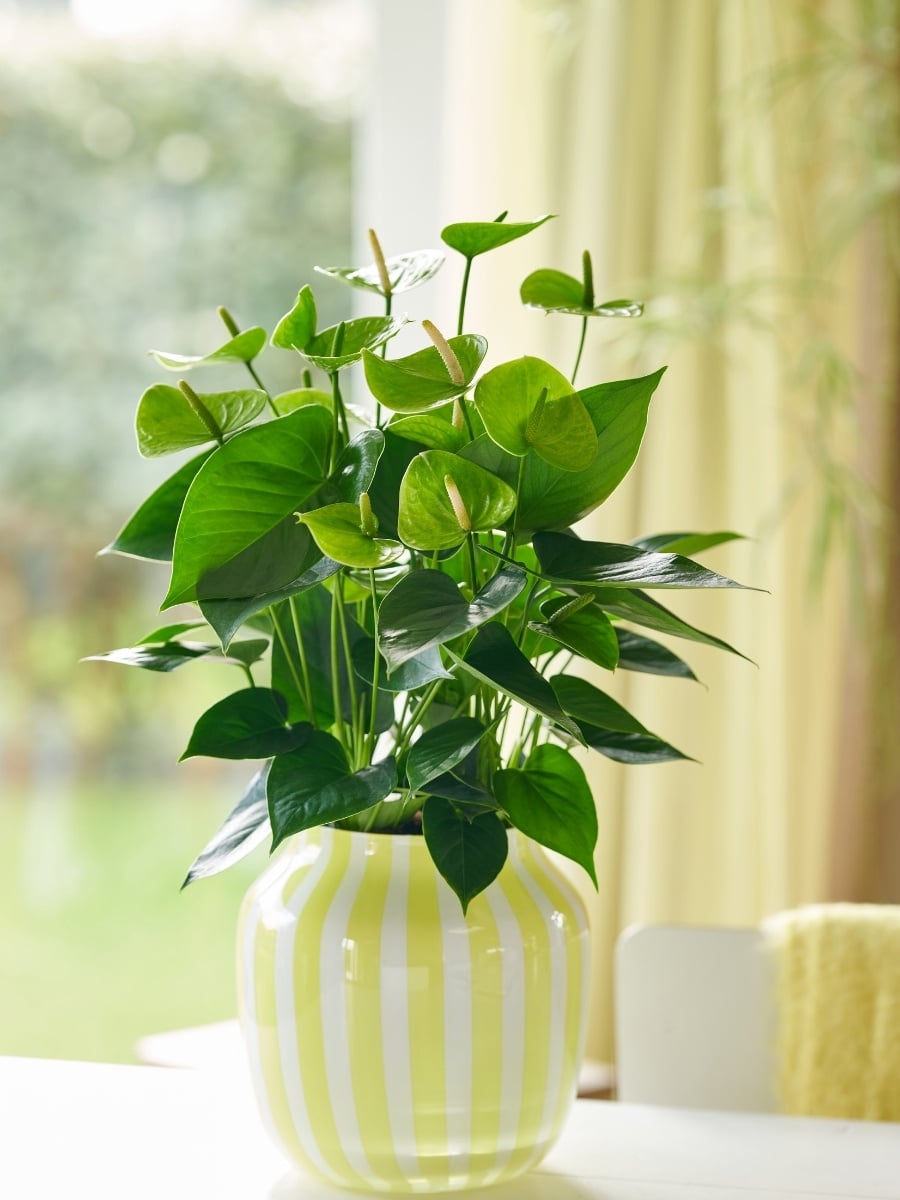
Retailers and interior stylists often pair an Anthurium in different colors within the same display, using white or green as a neutral base and pink, red, or purple for contrast. But check cold tolerance, since not every color performs the same when temperatures drop. Some varieties hold their flower quality better than others in cooler rooms or during shipping.
When picking an Anthurium (in different colors) for a specific room, consider lighting, existing decor, and how much visual contrast you want. Bright, indirect light out of direct sun suits nearly all Anthurium varieties regardless of color, along with moderate watering that lets the top layer of soil dry slightly between waterings.
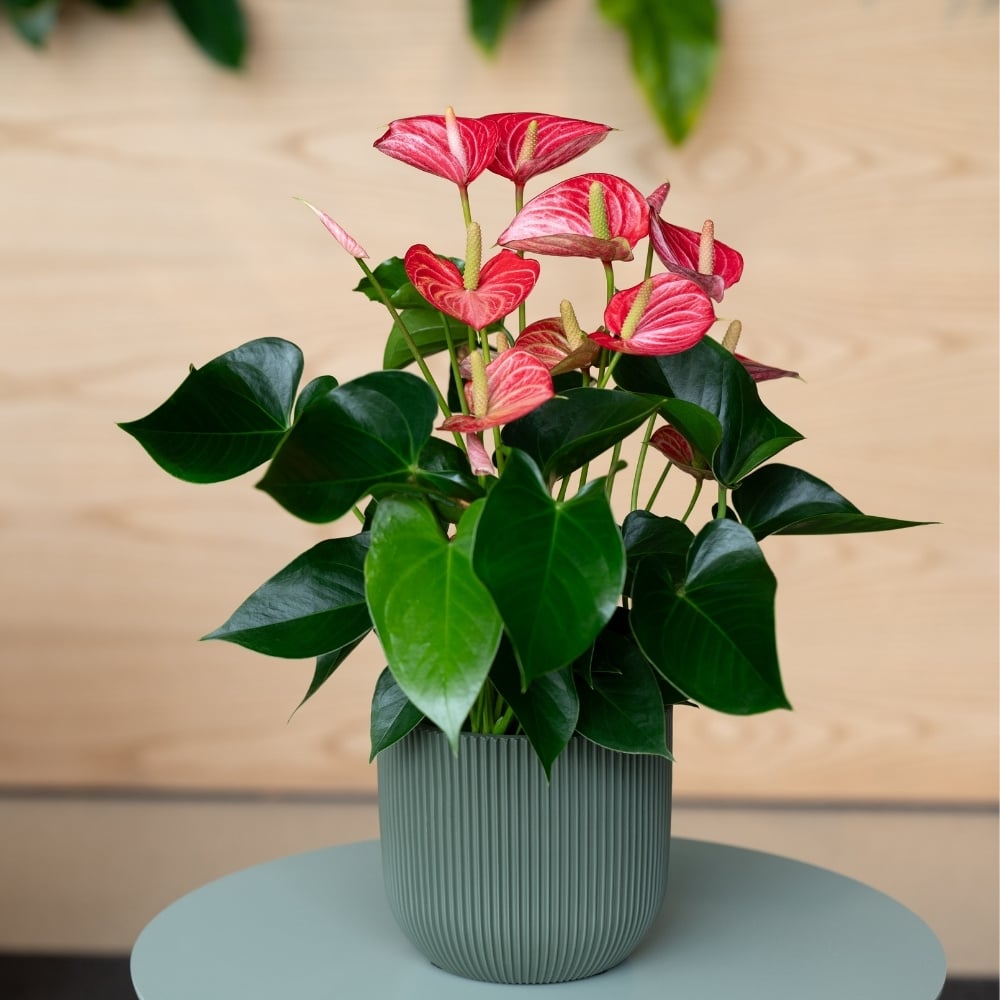
Average indoor humidity is typically enough, though higher humidity can support fuller flowering over time. Cold drafts and temperatures below roughly 7°C can affect flower quality on more sensitive varieties, so consider placing them away from drafty windows or doors.
Essential Care Guidelines for Potted Anthuriums
Maintaining vibrant spathe colors and robust Anthurium foliage requires proper environmental management. Potted houseplants can be resilient indoors when you meet a few basic cultural needs.
Light Exposure and Temperature Control
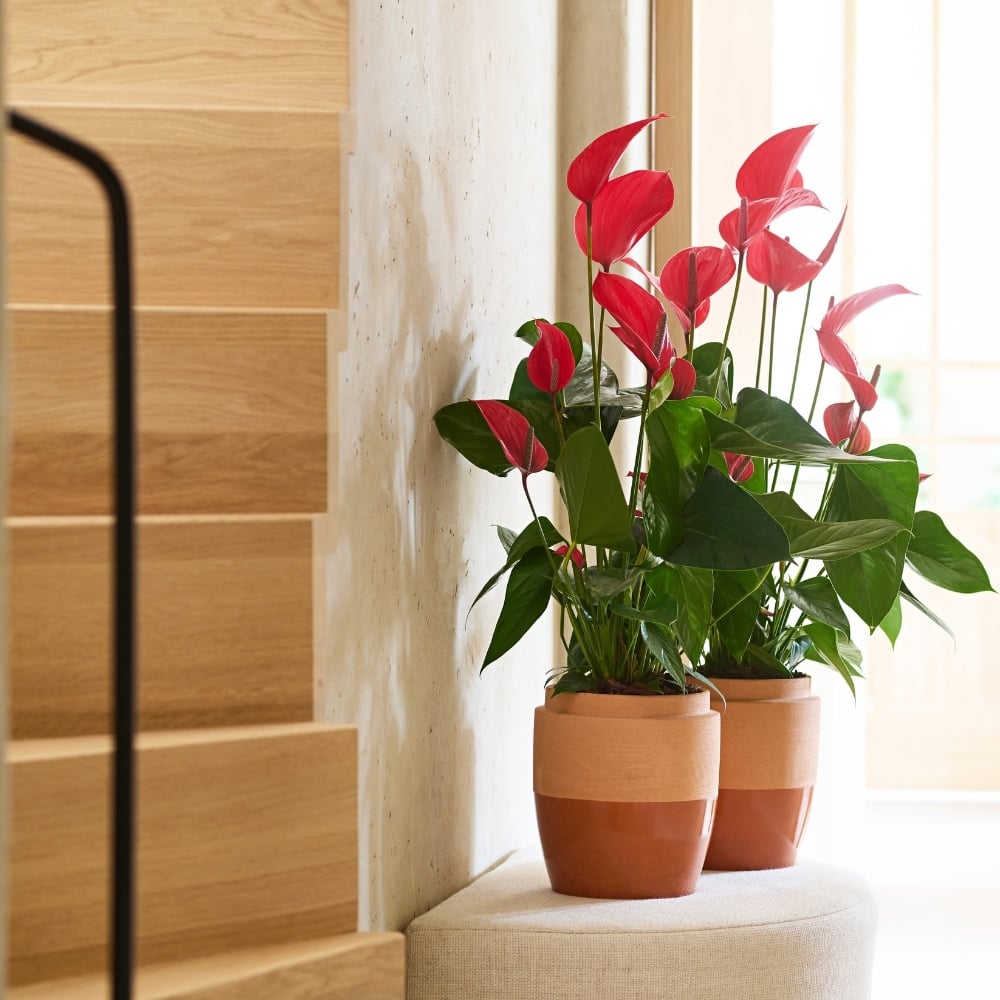
Place potted Anthuriums in bright, indirect light. Filtered sunlight from an east- or west-facing window supports reliable flower production without scorching the spathes or bleaching the leaves. Low light levels usually result in fewer flowers and duller spathe colors. Keep ambient temperatures between 18°C and 25°C; steady warm temperatures in this band give the most reliable flowering, and protect the plants from sudden drafts, heat vents, and air conditioning units.
Soil Moisture and Irrigation
Proper watering is essential to prevent root issues. In this case, follow a few steps to keep the plant healthy.
- Substrate test: Keep the soil evenly moist but let the top 2 to 3 centimeters of the potting mix go dry before watering thoroughly.
- Drainage: Ensure all excess water drains completely from the bottom of the pot, and never let the container sit in standing water, as saturated conditions cause root decay.
- Soil mix: Use a well-aerated potting medium with coarse perlite, pine bark, and coconut coir to allow oxygen to move through the root zone.
Humidity and Nutrient Requirements
Native to tropical rainforest environments in the tropics, Anthuriums thrive when relative humidity stays above 50%. Low humidity is the usual cause of browning leaf tips and margins. Grouping plants together, using room humidifiers, or placing pots on water-filled pebble trays maintains humidity in dry indoor settings.
Ideally, fertilize monthly during spring and summer with a balanced liquid houseplant feed diluted to half strength, or apply a slow-release fertilizer every three to six months if you prefer a lower-maintenance routine. Reduce feeding in autumn and winter when plant growth slows. With reasonably stable indoor conditions and warm temperatures, most Anthuriums, regardless of color, can flower longer, making them a practical long-term houseplant.