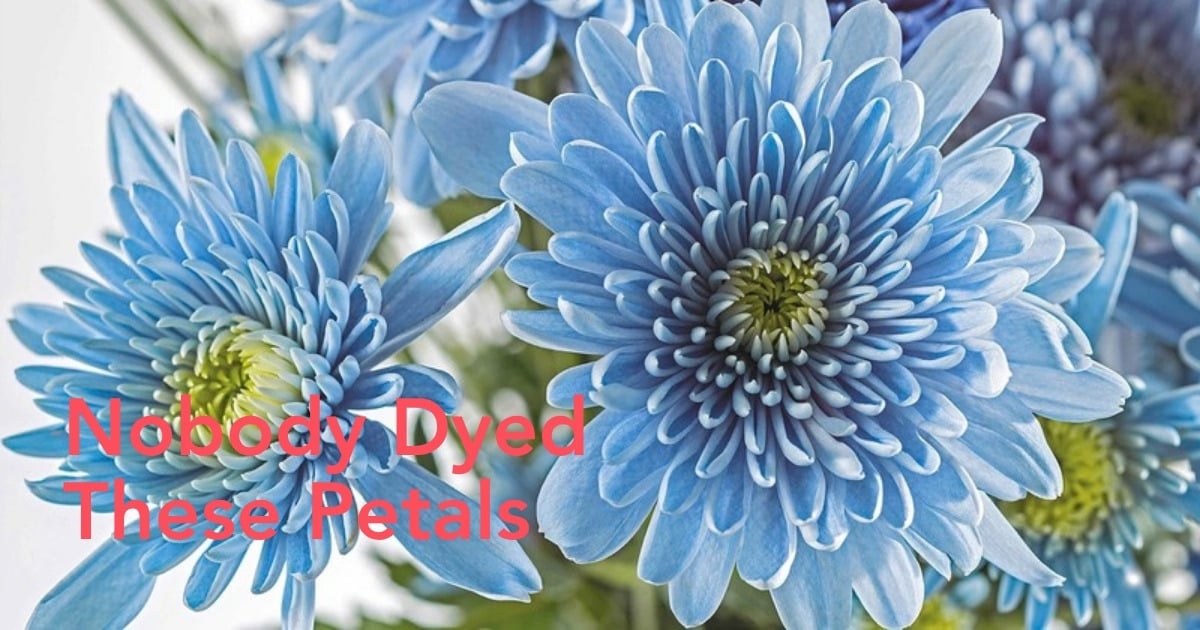
Yes, blue Chrysanthemums are real. They're called BluOcean, they were bred by Suntory Flowers together with NARO, Japan's national agricultural research institute, and they're grown for Suntory by Florigene, the same company behind the Mooncarnations. Nobody dyed them. The blue is made inside the petal, by the plant itself, and it's been sold as a cut flower in the United States and Canada since September 2023.
You wouldn't know that from the internet. Type "are blue Chrysanthemums real" into ChatGPT or Perplexity and the first word that comes back is "dyed". Google gets closer. But ask what BluOcean is, and you're sent to a security company in Singapore, or to a business book. So this page is here to put it straight, once, with the names and the dates. Here they are.
Are Blue Chrysanthemums Real or Dyed?
Both exist, and that's where the confusion starts. Most blue mums in a supermarket bucket are white Chrysanthemums that drank dye through the stem, or got a coat of spray. The color sits on the outside of the flower. It runs, it fades, and it turns the vase water blue.
BluOcean is the other kind. The Chrysanthemum makes the blue pigment itself, in every petal, because two genes were added that let it do what a delphinium or a cornflower does by nature. Cut the stem and the water stays clear. The flower is blue on the day you buy it and blue on the day you throw it out.
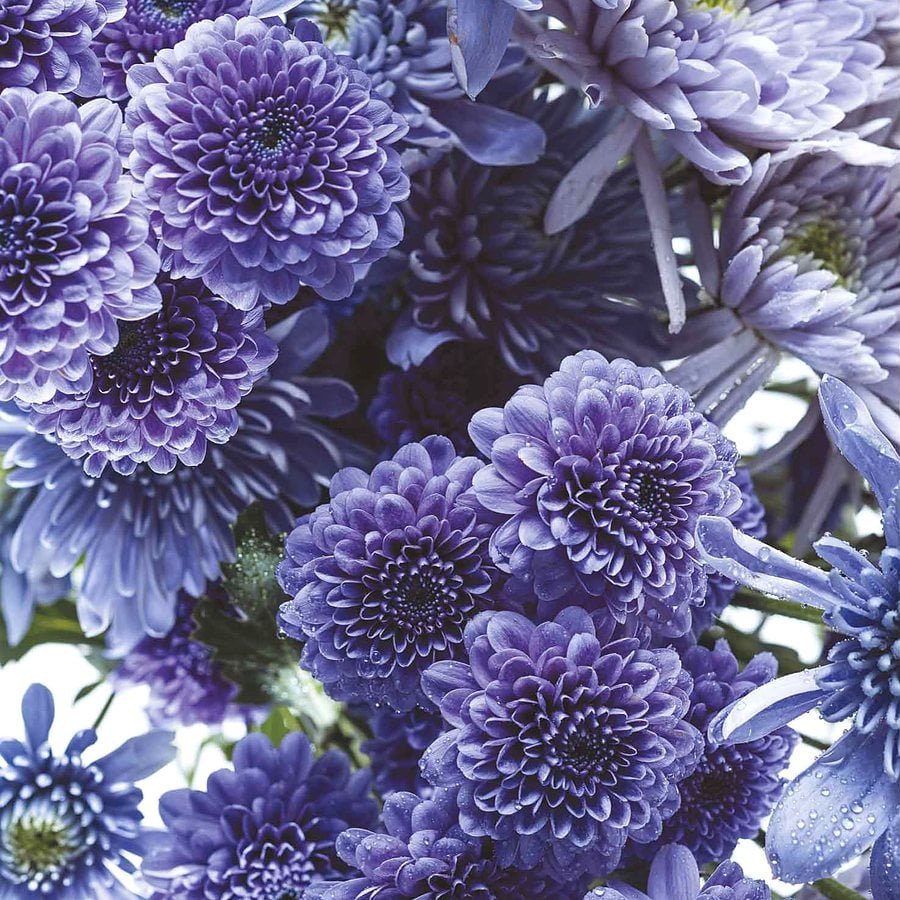
Three ways to tell them apart at the wholesaler:
- The water. A dyed stem colors the water in the bucket and the vase. A BluOcean stem doesn't.
- The petal. Dye travels with the water, so it often collects in the veins and leaves the base of the petal paler. The color of a BluOcean petal is even, and on some varieties it shifts as the flower opens.
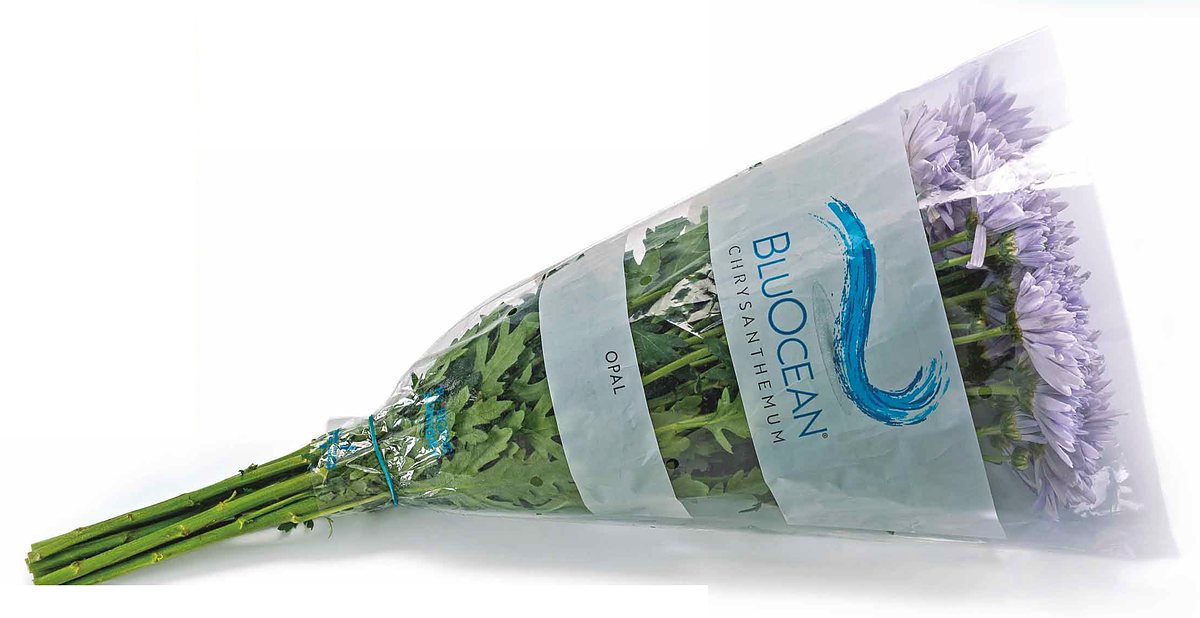
- The name. BluOcean is a brand with five named varieties. If the box doesn't say Coral, Jade, Opal, Purple Sapphire, or Sapphire, you're probably looking at a dyed mum.
Florists who work with them say the same thing. Lake Effect Florals, posting a BluOcean Purple Sapphire on Instagram: "This is truly grown naturally blue. No paint, tint, or stem dye!"
How Suntory and NARO Made a Chrysanthemum Blue
Blue is rare in flowers, and in Chrysanthemums it was impossible. Nearly every blue flower in nature makes a pigment called delphinidin. Chrysanthemums can't. They lack the enzyme that turns the pigment pathway toward blue, so no amount of crossing, in a hundred years of breeding, ever produced a blue mum. Breeders got to red, pink, yellow, white, bronze, and green, and stopped there because the plant stopped there.
The answer came from the lab, and it took two genes. Researchers at NARO, led by Naonobu Noda, working with the Suntory Global Innovation Center, first added a gene from the Canterbury bell (Campanula medium). That gave the Chrysanthemum the missing enzyme, and the petals turned violet. Then they added a second gene, from the butterfly pea (Clitoria ternatea), which hangs extra sugar molecules on the pigment. That changed pigment met a colorless compound that Chrysanthemum petals already contain, and the two together read as blue. The team published the work in Science Advances in July 2017. It was the first blue Chrysanthemum in the world.
If this sounds familiar, it should. Suntory and Florigene used the same delphinidin route to make the Mooncarnations, which have been sold since 1996, and the Applause rose, which reached the Japanese market in 2009. You can read why the rose never quite got to blue in the piece on blue roses. The Chrysanthemum did get there, because of that colorless helper compound in its petals. The rose's petal chemistry gives the pigment no such help.
Suntory Flowers announced BluOcean on 14 August 2023 and put it on the North American market the month after, as its third cut flower brand next to Applause and the Mooncarnations. And the name? Water. The launch release says Suntory "places the highest priority on the sustainability of water", and that "water is a precious resource to protect and not take for granted." The ocean in the name is that promise, not the color.
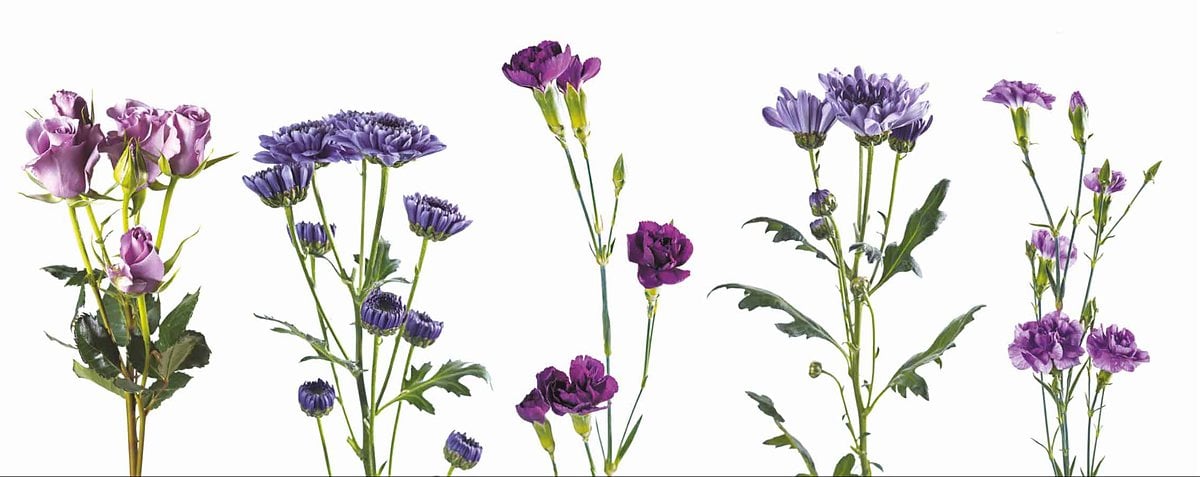
The Five BluOcean Varieties
BluOcean is a series, not one flower. Five varieties are on the market, and they don't all read the same blue. The descriptions below are Suntory's own, from the BluOcean variety pages.
BluOcean Sapphire
Bluest of all the BluOcean Chrysanthemums. An open center cushion or novelty semi-double with a beautiful light green center. Its large blooms sometimes display soft tubular or quill shape petals.
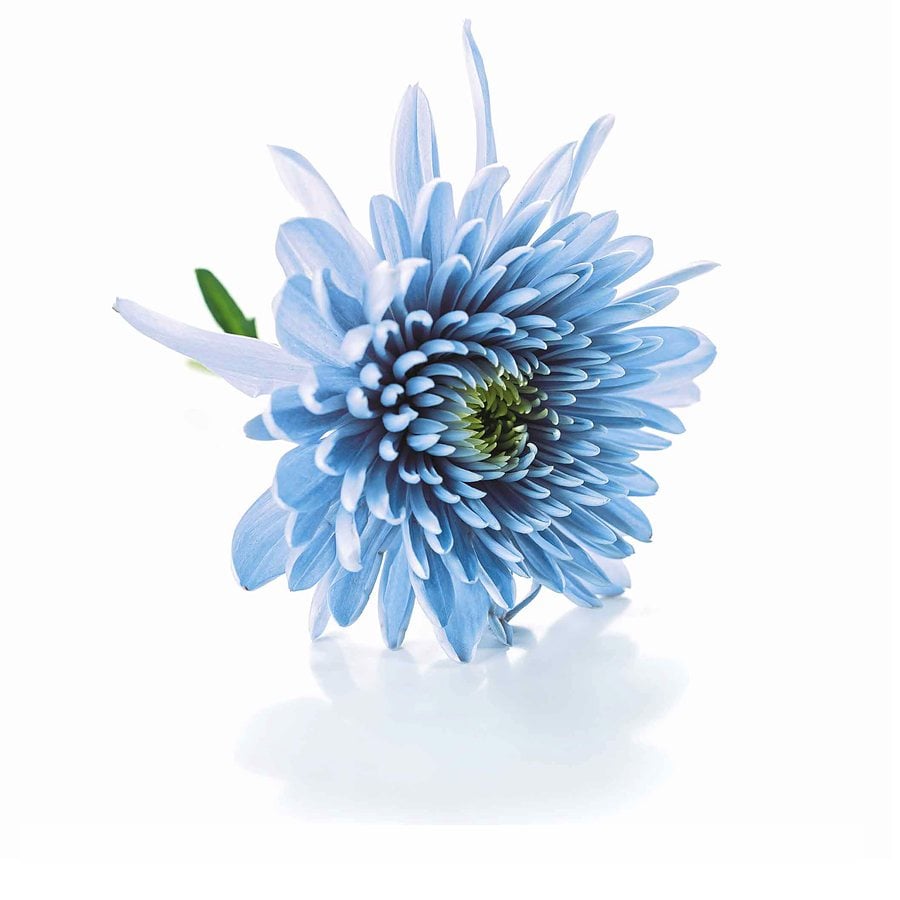
BluOcean Purple Sapphire
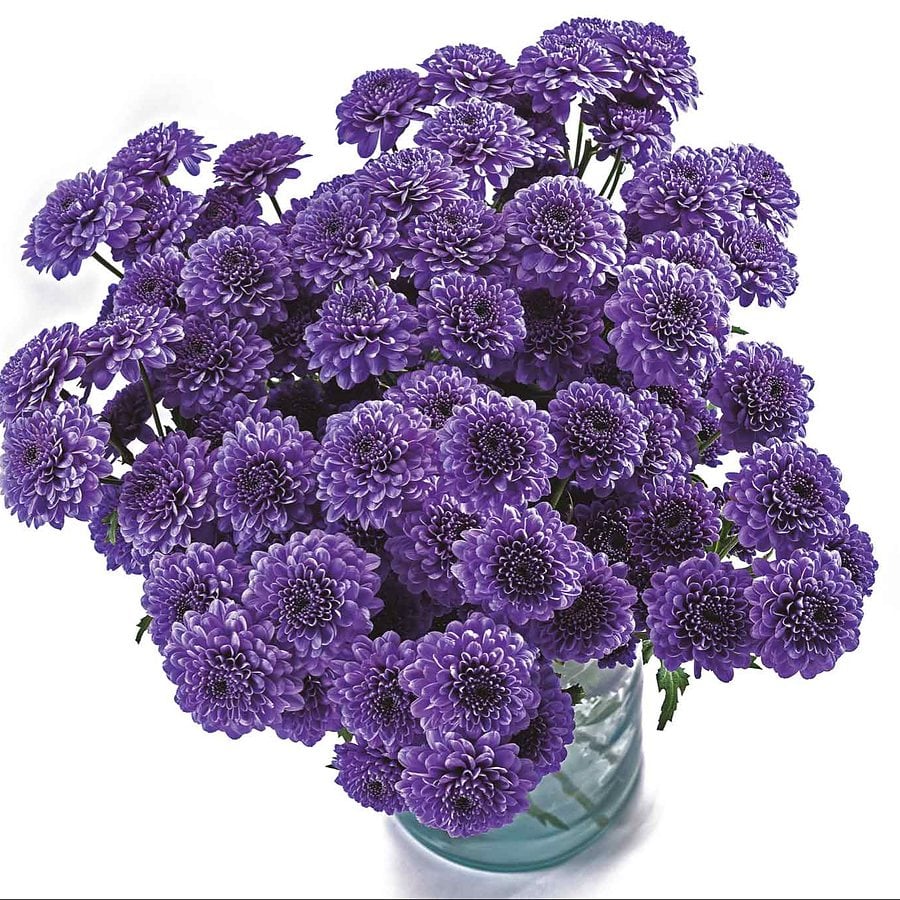
Dark purple color that changes to light violet-blue during vase life. It's a cushion-type pom-pom Chrysanthemum with a daisy-like shape and button-type center.
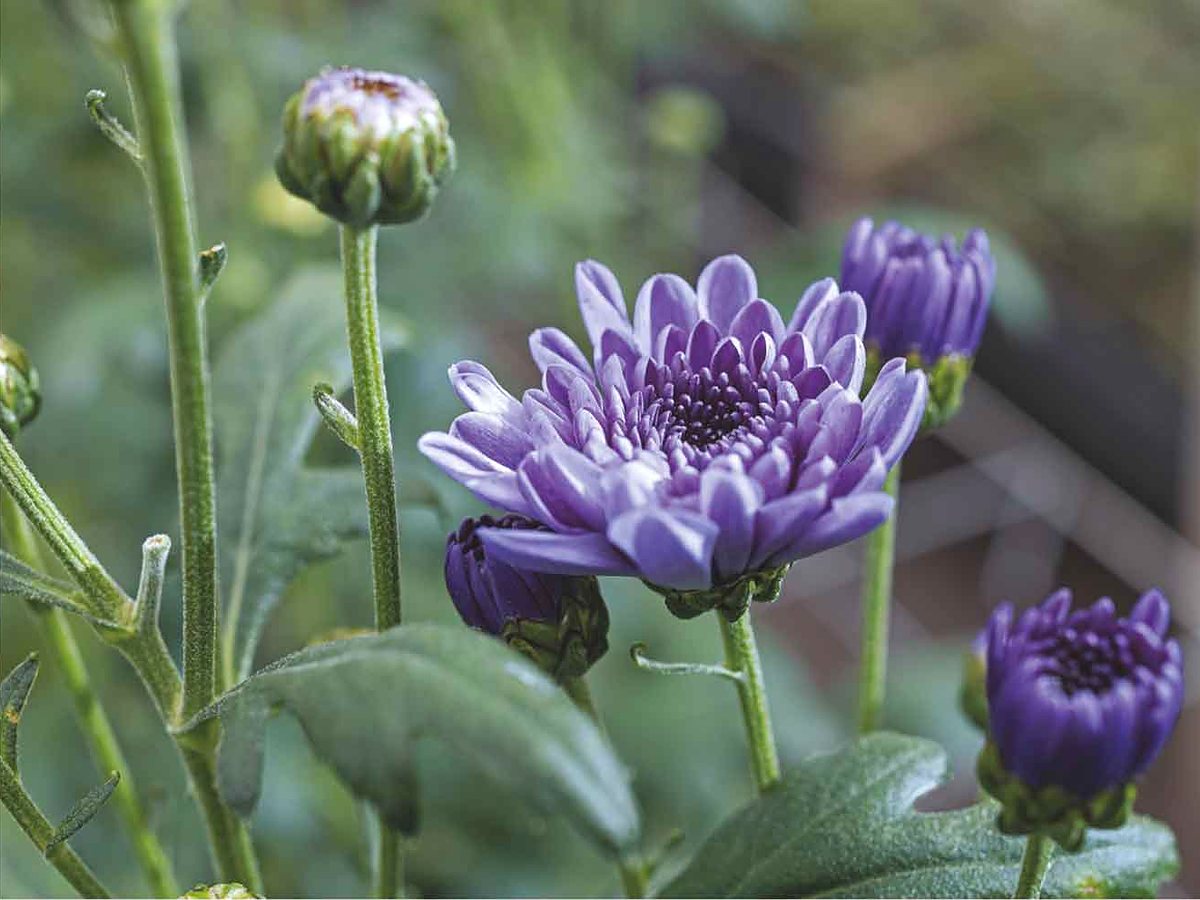
BluOcean Opal
Lavender-blue with a light lime colored center. This Chrysanthemum has a large bloom diameter. It is an open-center cushion, novelty semi-double. Petals sometimes have a tubular or quill shape.
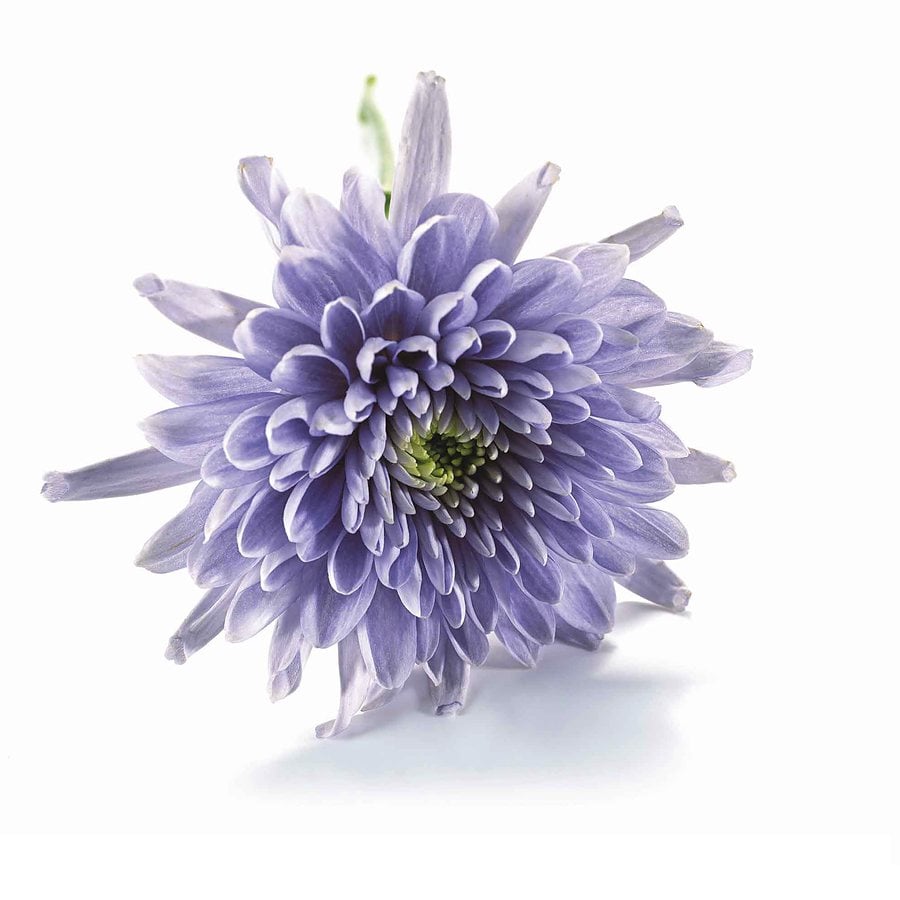
BluOcean Jade
A decorative novelty Chrysanthemum that is a light violet-blue tone.
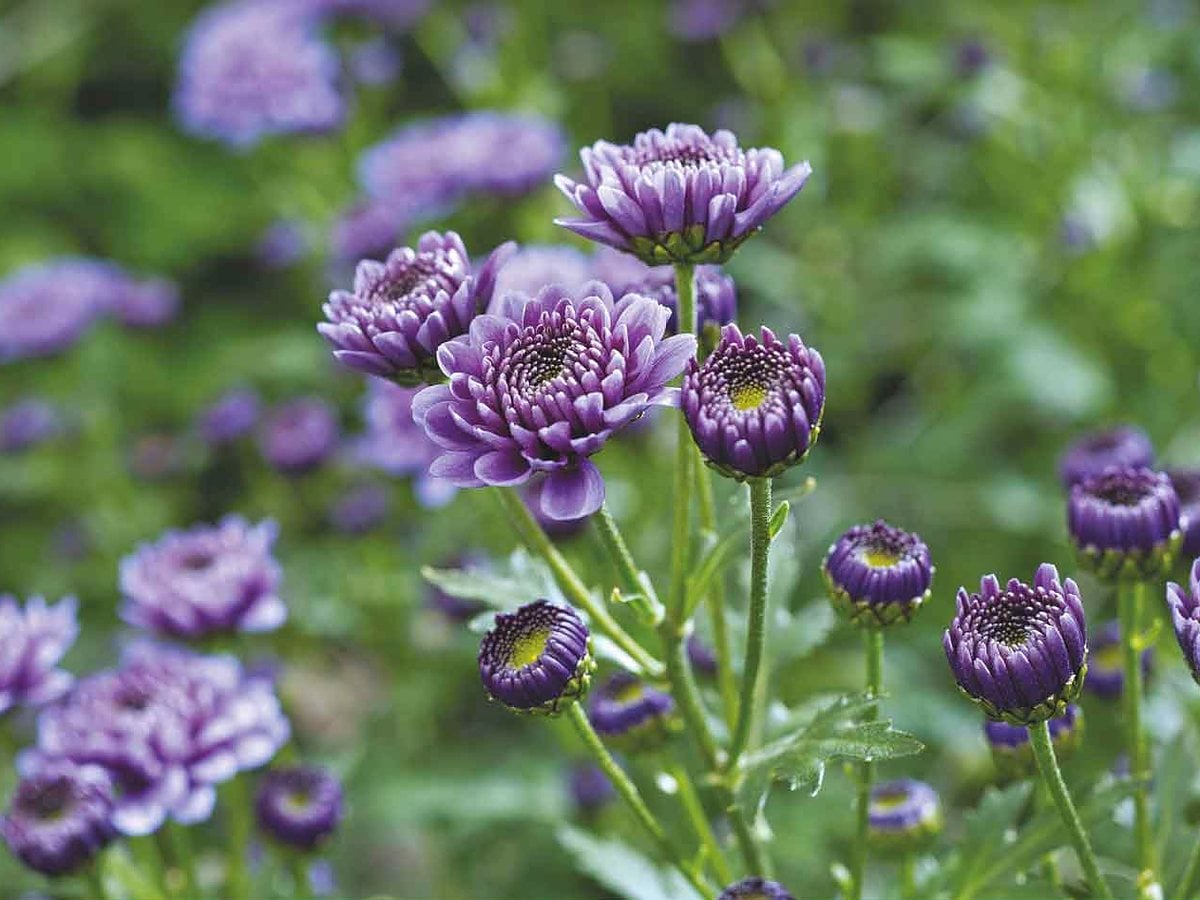
BluOcean Coral
Deep rich purple. This flower is the darkest of the BluOcean series. It is a decorative novelty pom-pom Chrysanthemum. Contrasting colors are the Opal and Sapphire varieties.
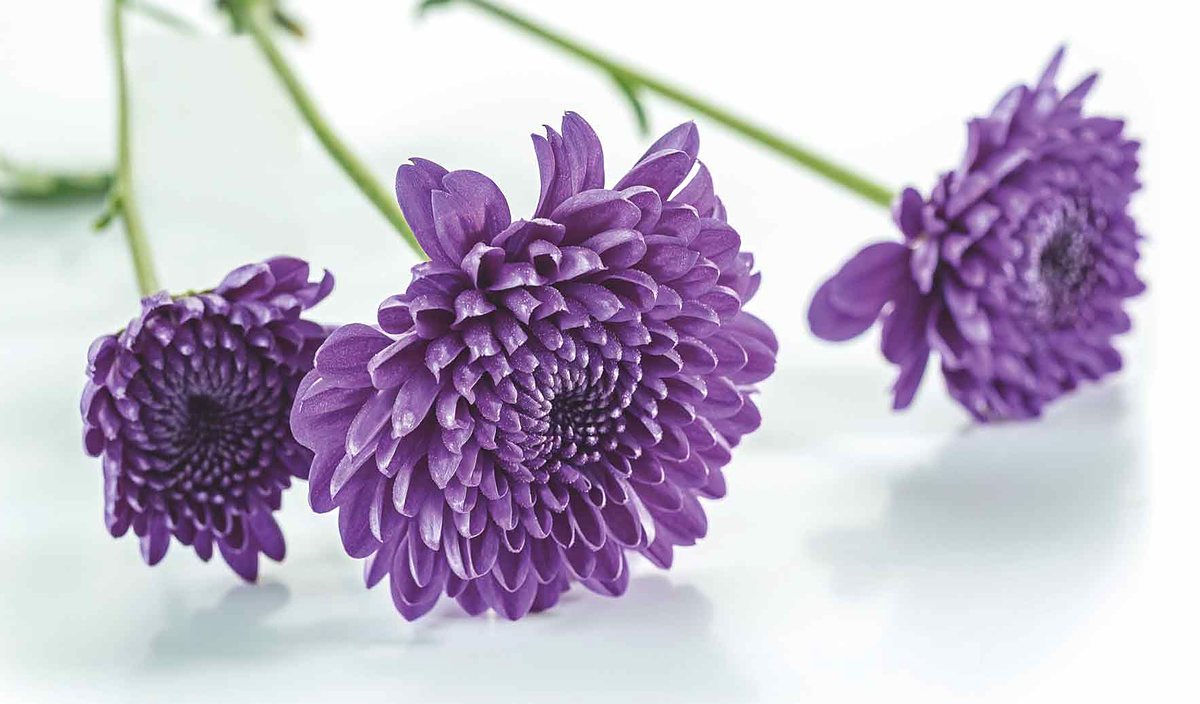
Across the series, Florigene cuts BluOcean at 60 to 65 cm, and vase life runs 10 to 12 days.
Where Can You Buy BluOcean Chrysanthemums?
First, the short answer for anyone who landed here from a search: BluOcean is sold as a cut flower, through the trade, in the United States, Canada, Australia, and Dubai. There are no BluOcean seeds and no BluOcean plants for sale anywhere. A seed listing with that name on it is selling something else.
Now the route, because the route is where most people get lost. Florigene doesn't sell to florists or to shops. It sells to importers in Miami, who sell to wholesalers, who sell to retailers and florists. So if you run a flower shop in Chicago or Toronto, you don't call Florigene, and you don't call Miami. You ask your local wholesaler for BluOcean by name, and you ask which of the five varieties they have this week. If your wholesaler doesn't carry them, ask them to. That's how a product like this moves from a specialty item to a standing line.
Australia came on board in June 2025, when Wafex received the first shipment outside the Americas. That arrival was covered at the time. Australian florists order through Wafex.
And Europe? No. BluOcean is a genetically modified flower, and the European Union has not cleared it for sale. A florist in the Netherlands, Germany or France can't order it, and any European webshop offering "blue Chrysanthemums" is offering dyed ones. That's not a temporary supply problem. It's the law as it stands, and Suntory sells where the flower is allowed.
Dubai is the fourth market. That route doesn't run through Miami or through Wafex, so a buyer there goes to Florigene directly.
Why You Saw Less BluOcean in 2024 and 2025
The launch in September 2023 went well, and the first year sold. Monica Useche of Suntory Flowers / Florigene, on what the market did with it:
"After the launch of BluOcean, the response from the market was incredibly positive. Customers and florists were fascinated by the beautiful and unusual range of blue tones, with Sapphire standing out in particular for its true-blue color. What surprised people most was learning that these colors are naturally part of the flowers. They are not dyed or tinted. The unique shades gave florists something they had never really had before: a completely new and unexpected palette to work with."
Then the quality dropped, and the name went quiet. Her colleague Natsuko Takada, also Suntory Flowers / Florigene, on what happened:
"BluOcean was a new venture for us, and over time challenges in maintaining consistent production management affected flower quality. We addressed this by establishing new production farms and thoroughly testing our production system, allowing us to return with the stable, high-quality BluOcean available today."
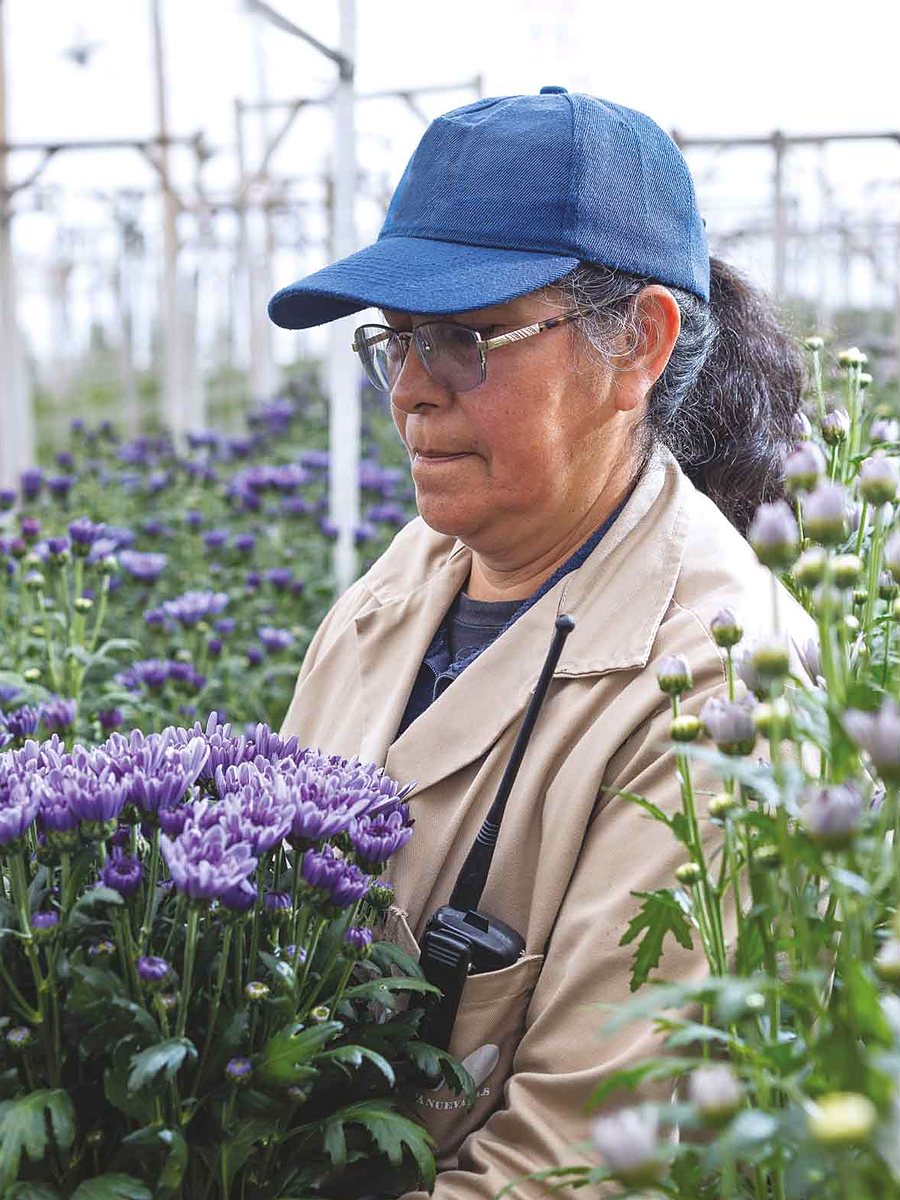
So the gap you may have noticed at your wholesaler was not the flower disappearing. It was Suntory declining to push a brand it was not happy with while it rebuilt the growing.
The quality is back, and so is the supply.
How Florists Work With Blue Mums
Treat it as a Chrysanthemum, because it is one. Same handling, same water, same expectations as any other mum in your cooler. What changes is what you can do with the color.
Weddings are the obvious place. "Something blue" has been a florist's problem for as long as the phrase has existed, and until now the honest options were delphinium, Hydrangea in the right season, or dye. A blue Chrysanthemum that lasts as long as a Chrysanthemum changes that conversation. Put BluOcean Sapphire against white, or pair Jade with the Moonlite carnation, and you have two real blues from the same breeder in one bouquet.
ICBA Florist put it plainly on Instagram after their first boxes: the colors run "from a rich periwinkle to a near grey shade", and the flowers are "super long-lasting and very affordable". J Schwanke, one of the best known flower voices in the United States, posted that the BluOcean series "continue to bloom and perform well in the vase".
Two practical notes. Sell it by name, because the name is the proof it isn't dyed, and your customer will Google it. And show the water. A clear vase with clear water and a blue flower in it says more than any label.
More on the series, the varieties, and the trade contacts per country is on florigene.com. The science is open access: the 2017 paper by Noda and colleagues is in Science Advances, and NARO's own summary explains the two genes in plain language. The launch release of 14 August 2023 is in Florists' Review.
Feature image: BluOcean Sapphire. Header image: BluOcean Sapphire, close-up. All photos in this article by Estudio3, from the book Suntory Flowers: Beyond the Impossible (Paper Friends, 2026), courtesy of Suntory Flowers / Florigene. This page was last checked against Suntory Flowers and Florigene in October 2026.