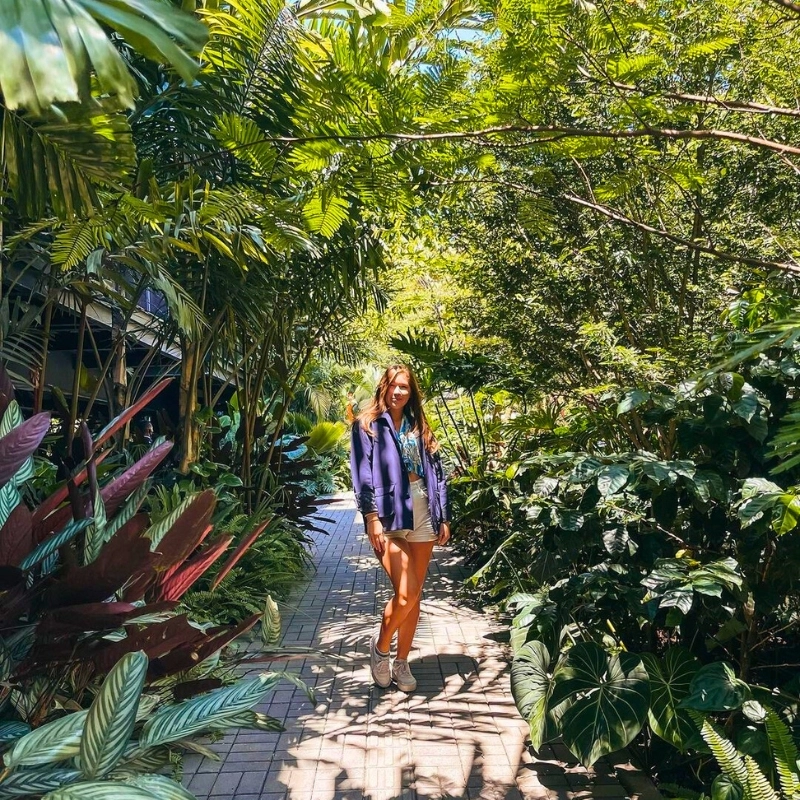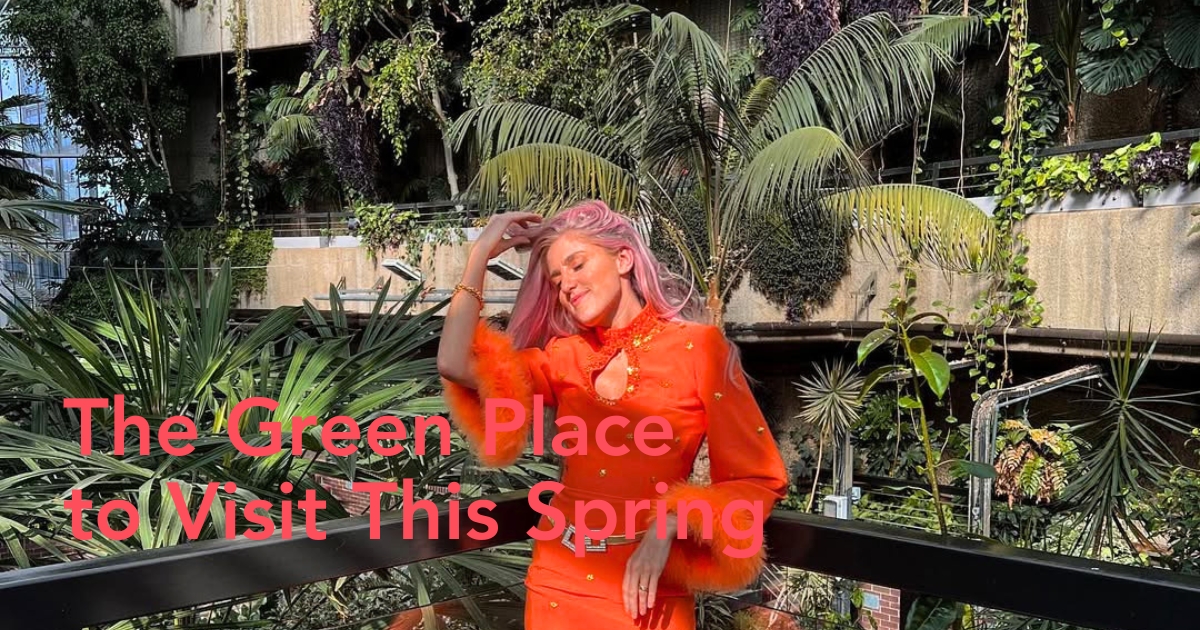
David Altrath’s photographic series captures the Barbican Conservatory not simply as a greenhouse, but as a spatial paradox embedded within one of London’s most uncompromising architectural ensembles. Conceived in 1982 as part of the Barbican Center, the conservatory unfolds as a suspended ecosystem where over 1,500 plant species occupy a rigid Brutalist framework of exposed concrete, steel, and glass.
The Barbican’s Geometry as a Scaffold for Growth and Green
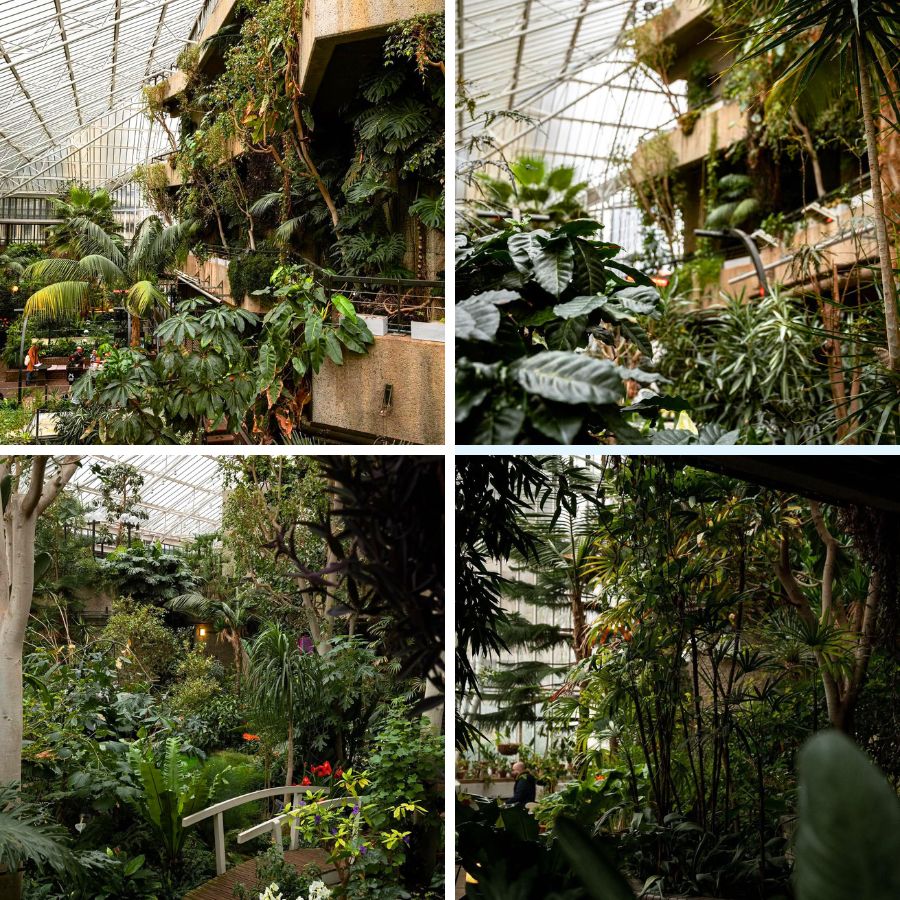
What emerges through Altrath’s lens is not contrast in the obvious sense, but a gradual negotiation. The heavy geometry of the Barbican’s stepped terraces becomes a scaffold for growth, with vines, shrubs, and trees occupying ledges and voids as if they were always intended to be there. The rough concrete surfaces act as a substrate for life rather than a boundary against it. Plants cascade over balustrades, roots anchor into shallow beds, and foliage thickens at corners where light and humidity accumulate.
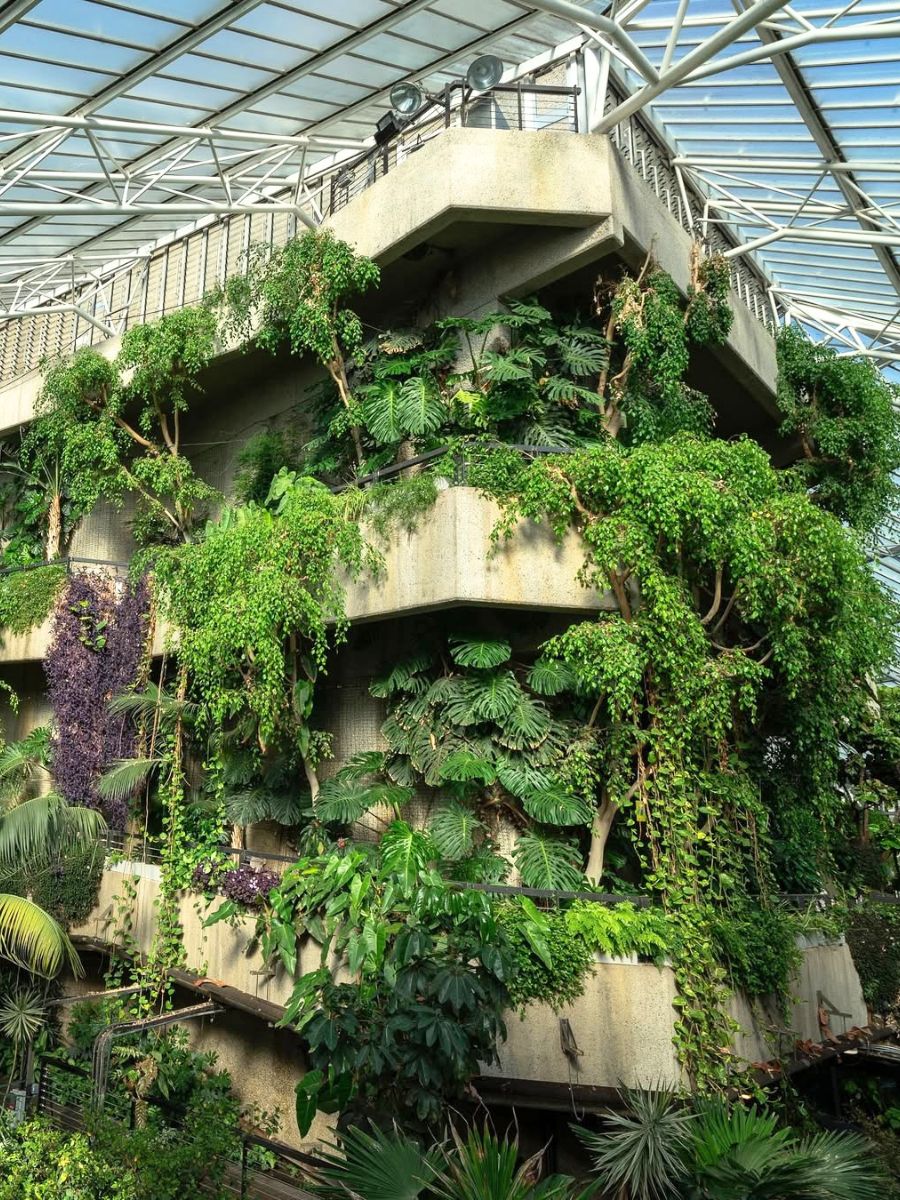
Photo: @dec_michal
Daylight enters diffused and unevenly through the glazed roof above, flattening the severity of the structural grid while producing pockets of shadow and brightness that shift throughout the day. Hamburg-based photographer Altrath’s photographs lean into this ambiguity, where visibility is partial, and depth is layered.
Video: @tinylondoner
Inside the Barbican Conservatory, Light and Growth Shape Space
Corridors narrow into shaded passages before opening into brighter clearings. Reflections on glass merge with foliage, while the city beyond becomes faint. The conservatory behaves like a suspended microclimate, detached from the urban tempo outside. Movement within the conservatory is not linear or monumental. Instead, it is intimate and immersive. Narrow walkways weave through dense planting, occasionally rising to overlook lower terraces before folding back into the vegetation.
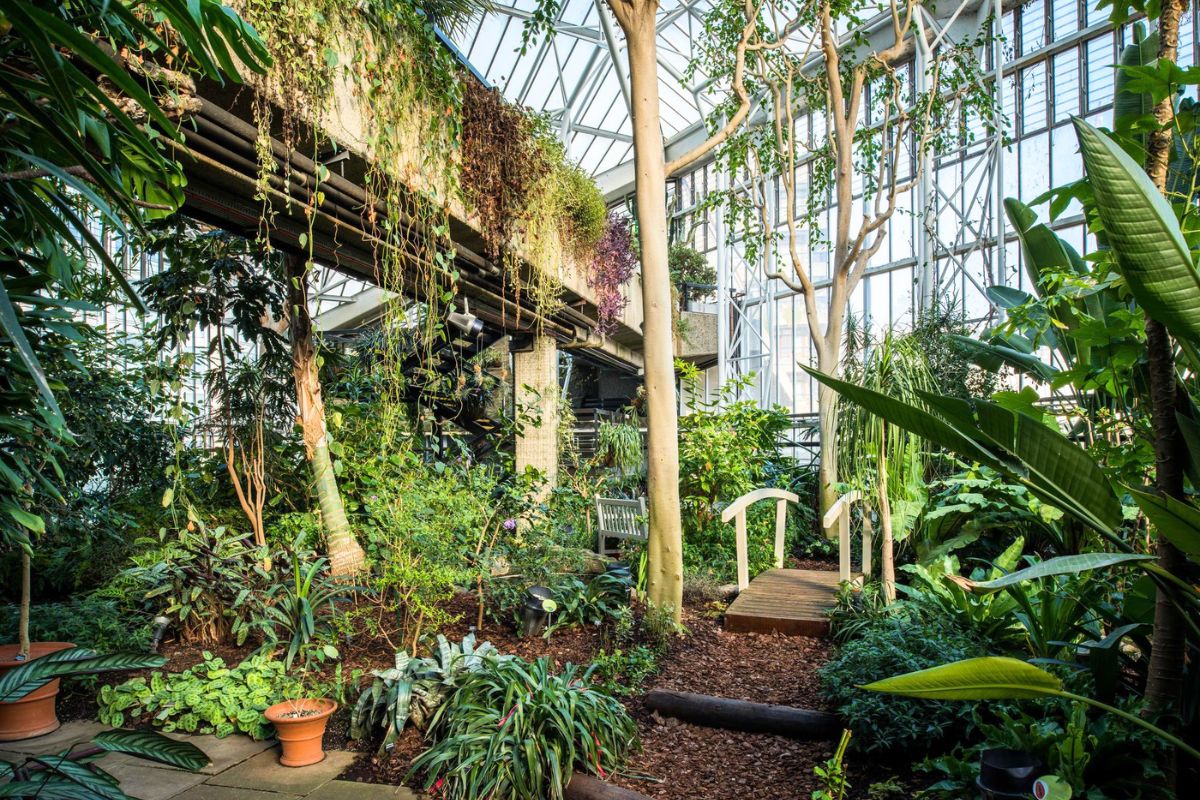
There is no single vantage point, only a sequence of partial views. Altrath frames these routes as spatial experiences rather than documentation. The camera lingers at thresholds, corners, and moments of compression, emphasizing how the body navigates between architecture and growth.
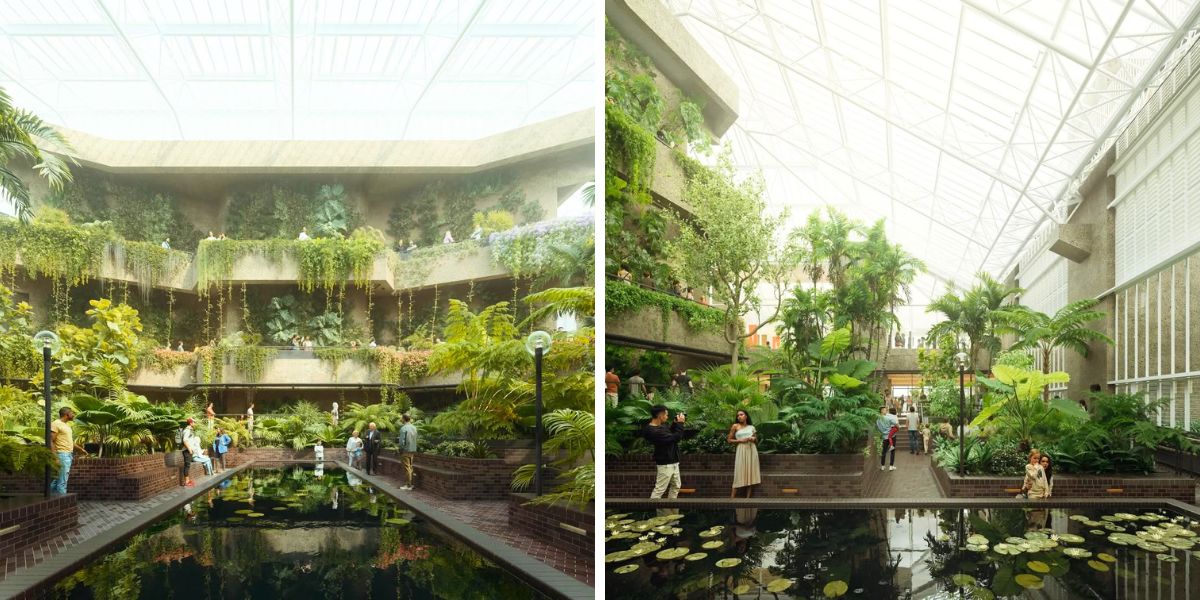
Photo: @harrisbuggstudio
The Barbican is often framed through its scale, its density, and its unapologetic materiality. Within the same system, a different rhythm emerges, one defined by growth, maintenance, and seasonal change. The conservatory reveals the capacity of brutalist architecture to host life, to absorb time, and to evolve beyond its original intent.
Conservatory Facts
The Conservatory was designed by the Barbican’s architects Chamberlin, Powell and Bon, and surrounds the Barbican Theatre’s fly tower, from which scenery for productions taking place on the stage six stories below is lowered into place. The roof is constructed of steel and glass and covers 23,000 square feet, providing cover for over 1600 cubic metres of soil, all of which was hand mixed to a specific requirement.
Video: @its_so_london
Two of the three pools accommodate koi, ghost, and grass carp from Japan and America, as well as other cold water fish such as roach, rudd, and tench, whilst the other smaller pool (located outside the Arid House) provides a haven for terrapins. Planted between 1980 and 1981, and opened in 1984, the Conservatory now houses around 1,500 species of plants and trees, some of which are rare and endangered in their native habitat.
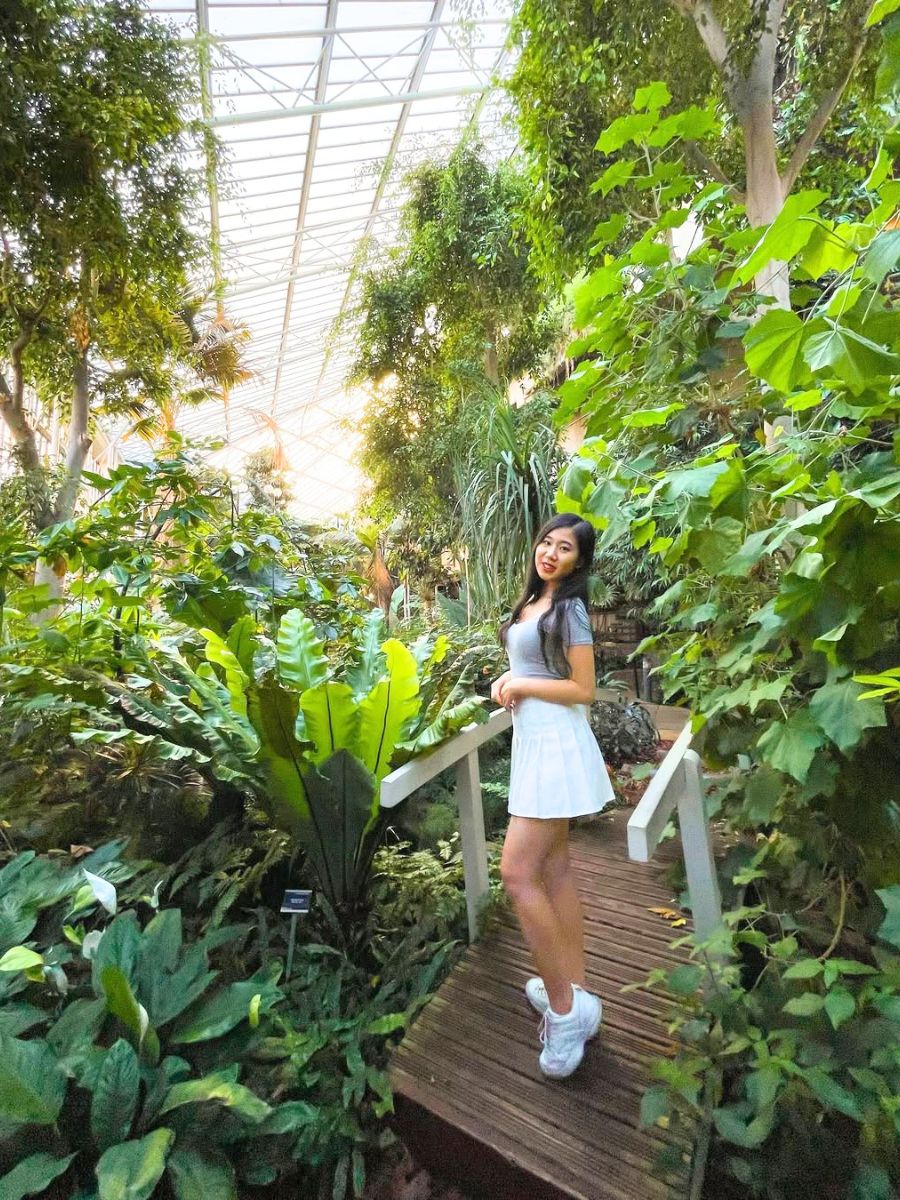
The species are a vibrant mix of temperate and arid types, ranging from areas as diverse as the rocky deserts and bushland of South Africa to the coastline of Brazil. A varied assortment of the extraordinary flora from around the world includes the iconic tree fern, date palm, the Swiss cheese plant, and coffee and ginger plants, all under one roof.