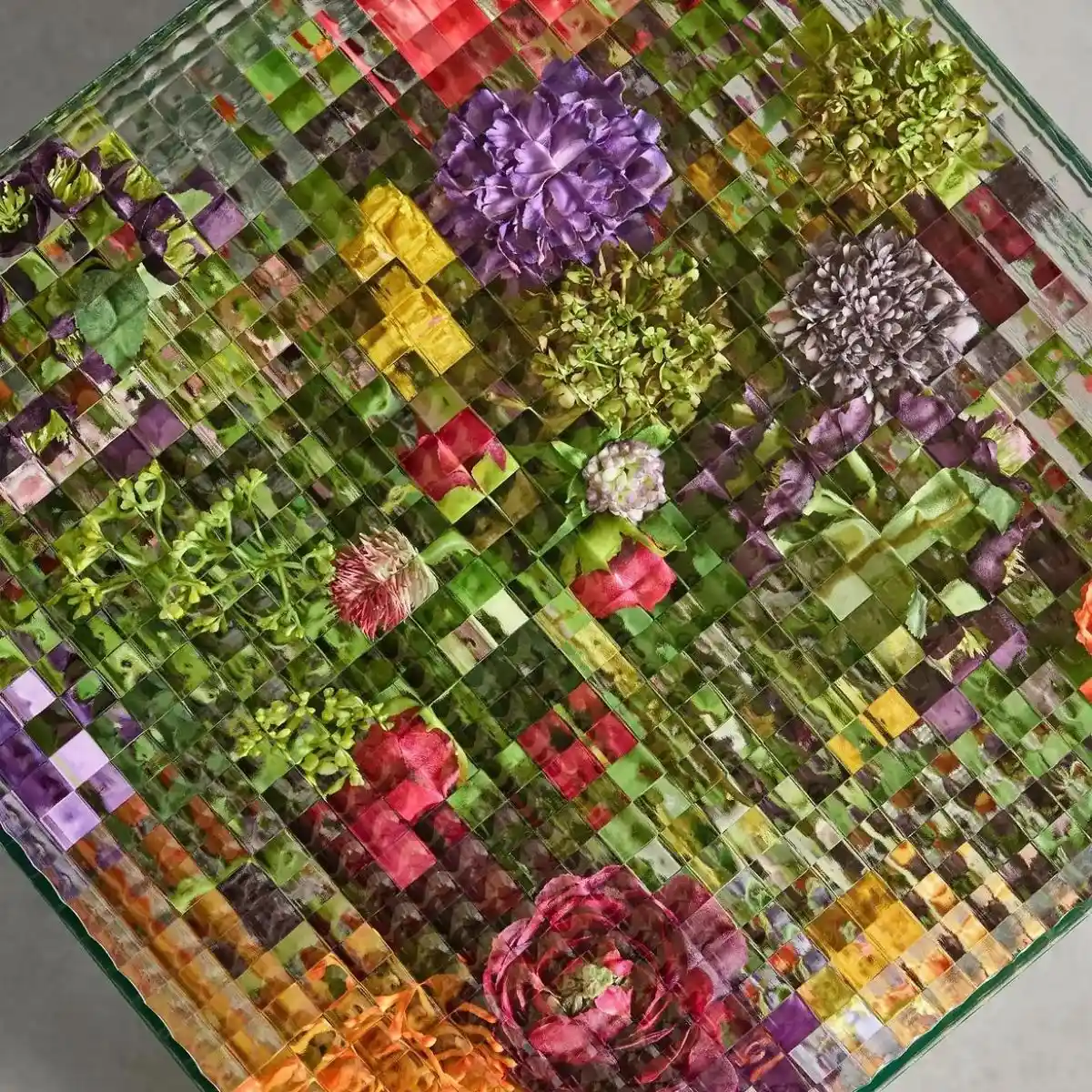
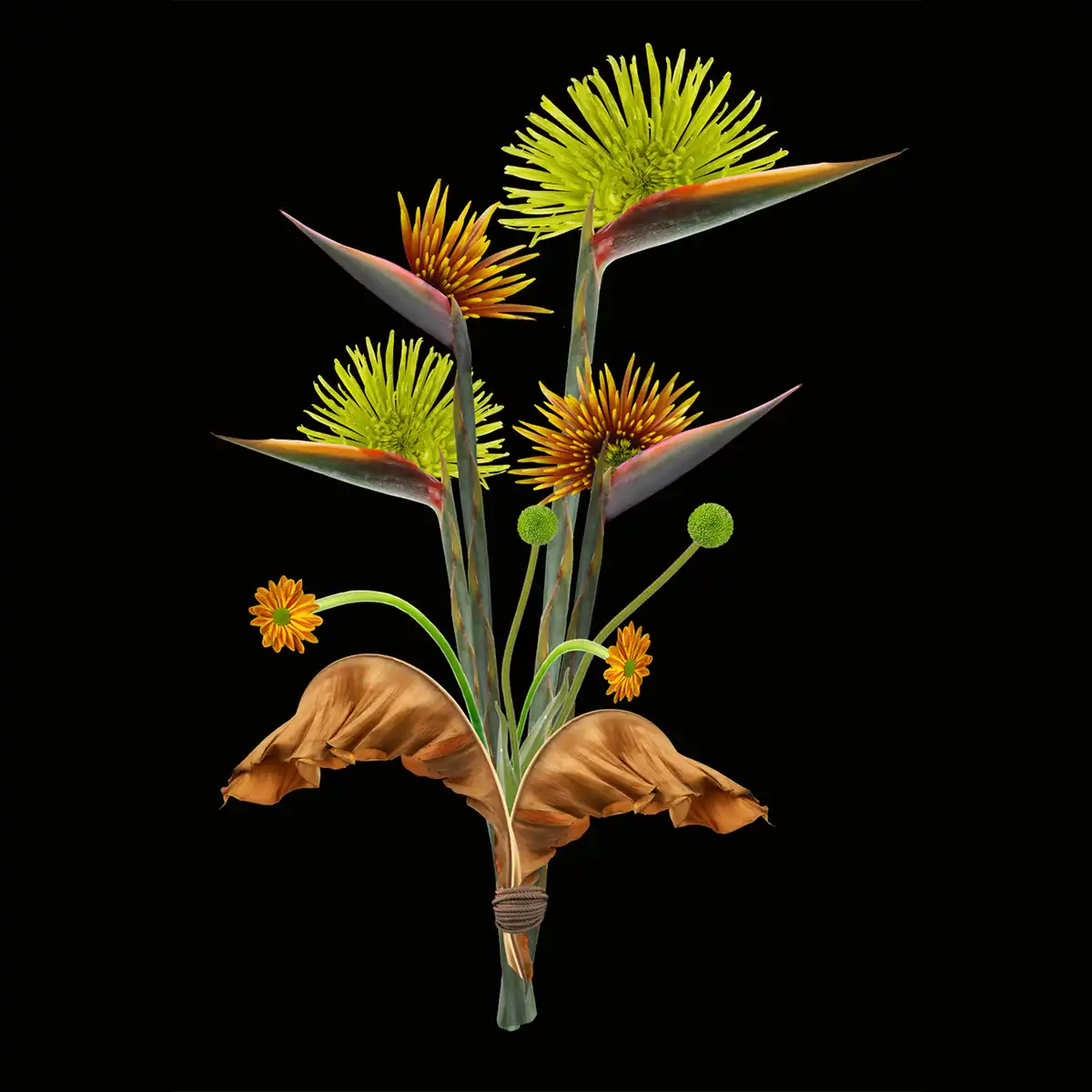
A sunflower that opens like clockwork, a lilac that seems to breathe: the flowers of Zachary Corzine only exist on a screen, and they're mesmerizing. The generative designer, based in Portland, Oregon, builds them with a toolkit of 3D programs, from Cinema4D and Houdini to Substance, Octane, Redshift, and After Effects. The results are moody, moving, and impressive. Try looking away.
Floral Fantasies in the Age of Technology
Corzine's day job means commercial work for brands such as Apple, Audi, Disney, and Nike. In between, he tests new techniques on personal projects, and 'Faux Flora' is one of the latest. Real flowers are his models, including sunflowers, pincushions, and lilacs, and he animates each one as if it were filmed in time-lapse, unfolding into strange, perfect geometry.
He calls it
"a year-long passion project."
Where 'Faux Flora' Comes From
The series grew out of a conflict Corzine feels between technology and nature. Most people treat them as opposites. With screens shaping more and more of daily life, he started to wonder: could technology actually help you feel closer to nature, rather than further away?
He describes the project as a love letter, made in a time of climate change, that asks how technology can be used
"not to replace nature but hopefully reconnect us with it."
That tension gets sharper as cities grow and ecosystems shrink. The more advanced the tech, the further you may drift from the soil. Faux Flora is Corzine's answer: not a fake to replace the real thing, but a way to make you look harder at it, and to think about how innovation and protection can go together.
The Beauty of Using Technology to Create Botanicals With Movement
Digital tools give flower art a whole new range. Programs such as Cinema 4D, Houdini, and AI-assisted design software let artists make blooms that sway, open, and morph in ways no stem ever could. Some digital flowers even react to sound, movement, or to you, watching.
Still, a screen can't give you scent, the soft feel of a petal, or the way morning light falls through it. Digital art can only pay tribute to those things. It's a thrilling new way to celebrate botanical beauty, but fresh flowers still win, imperfect and short-lived as they are. Every time.
More About the Artist
Corzine works as a 3D designer and director in Portland. His specialty is procedural and generative design: he builds systems that keep growing and adapting, a bit like plants do. He handles a project from the first idea all the way to the finished film.
Outside client work, he keeps experimenting with new methods and fine-tuning how he works, with Cinema 4D, Houdini, Substance, Octane, Redshift, and After Effects as his main tools.
Photos and videos by @zachdarren.