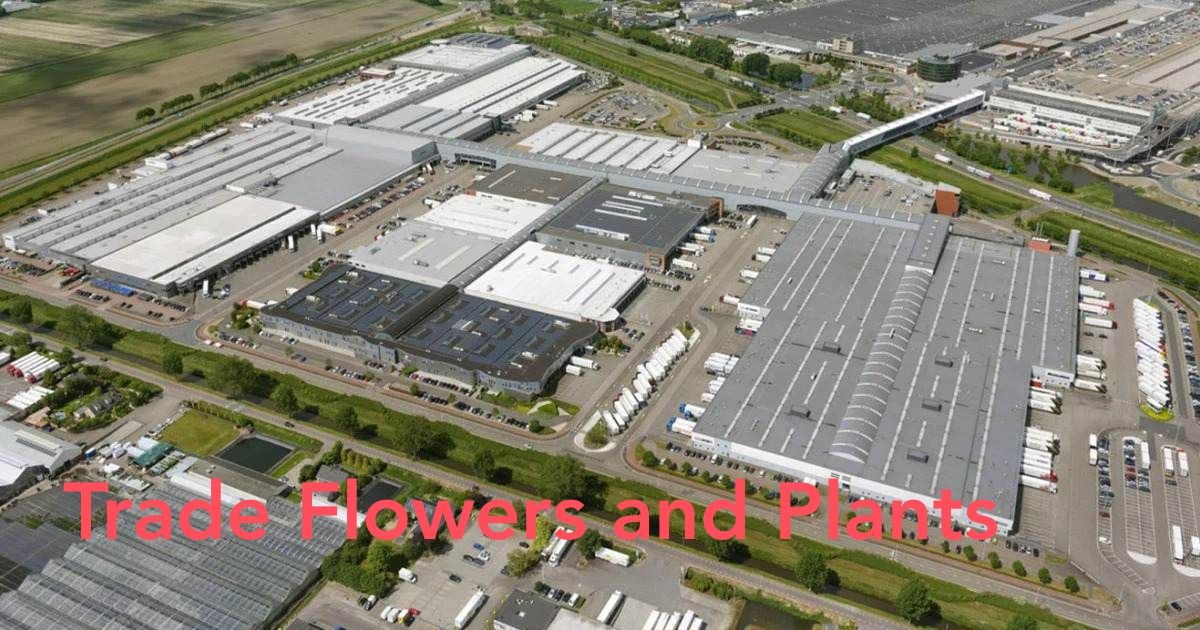
Every morning, the Netherlands hosts one of the world's largest concentrations of the flower trade. At Royal FloraHolland, buyers can trade flowers and plants through auction hours and digital channels, with the organization processing approximately 100,000 transactions per day. Across the entire Royal FloraHolland marketplace, turnover will reach €5.41 billion in 2025.
To an outside observer, an auction may seem remarkably simple: a product appears, the price drops, and someone clicks the "buy" button. But behind this simplicity lies a complex technological system operating in real time. It must coordinate buyers, prices, product data, transaction records, and logistics. In other words, it must completely eliminate the risk of uncertainty at the moment of purchase.
This makes the Dutch auction clock an interesting example of a real-time system. Surprisingly, its engineering requirements are reminiscent of those of modern electronic trading platforms.
How the Dutch Auction Timer Actually Works
The Dutch auction has a unique logic. Instead of starting with a low price and increasing as bidders compete, the timer starts with a relatively high price and gradually decreases. The buyer decides when the displayed price is attractive enough and makes the purchase.
This model has a significant economic advantage: it compresses the price-setting process into a very short period of time. Buyers do not negotiate individually with sellers. They respond to a general market signal, while producers receive a price determined by the interaction of supply and demand. This mechanism has been at the core of Dutch floriculture for over a century. Royal FloraHolland describes the timer as a transparent and efficient trading method with an annual turnover of approximately €2 billion.

However, the modern version no longer relies on buyers being physically present in the auction room. Digital shopping has become an integral part of everyday life.
This is the kind of sequencing logic that Merehead's engineering team builds for high-throughput exchange platforms, where thousands of orders need to be validated and matched in the same fraction of a second.
In 2025, Royal FloraHolland implemented a multi-transaction auction as the standard method for its flower and plant clocks. Up to eight transactions can now be processed at a time, and this change has reduced auction times by an average of 15-20 minutes, depending on the time of day. This demonstrates how auction mechanics and software architecture increasingly influence each other.
The Engineering Problem Behind Simplicity
The buyer sees the time, price, and purchase action. The software sees the distributed coordination task in real time.
At any given moment, multiple buyers may be monitoring the same auction. Their actions may arrive at very close intervals. The system must validate each request, determine whether the item is still available, record a successful transaction, and communicate the updated status to other participants.
A reliable auction platform needs a controlled sequence:
- Receiving a purchase request.
- Checking the buyer and the requested quantity.
- Checking the availability of the lot.
- Applying the transaction in accordance with the auction rules.
- Saving the received state.
- Return the result to the buyer and updating the corresponding interfaces.
- The exact implementation may vary, but the basic requirement remains the same: a transaction must have a single authoritative outcome.
A flower auction is not a stock exchange, and the rules of operation are completely different. But both fields share a similar class of engineering problems: multiple participants interact with a shared state, decisions must be processed quickly, and the system must maintain a deterministic record of what happened.
On a high-performance trading platform, this might mean sequencing orders in the order book. In a flower auction, this means determining which buying actions are valid based on the current auction status.
In 2025, Royal FloraHolland began transitioning from legacy technologies such as FloraMondo and Remote Buying to Floriday and the new RFH auction environment. The organization expects the new auction technology to be implemented gradually, with the transition from KOA continuing throughout 2026.
This is significant because replacing a real-time trading system isn't simply a matter of launching a new interface. The technology underlying the interface is part of the market itself.
What Happens After the Auction Ends - Settlements and Trust
The moment a buyer wins a lot is just the beginning of the transaction life cycle.
Once the auction is confirmed, the purchase must become an operational and financial record. Product information must be linked to the transaction. Quantities and prices must be reported to the administrative department and the invoicing system. Flowers must undergo the appropriate logistics process, and the buyer must be confident that the item purchased through the digital system will actually be delivered.
Royal FloraHolland's infrastructure links auction operations with logistics, financial management, and digital marketplace services. For example, its financial reporting integrates information on direct sales, watch purchases, and services, providing buyers and producers with transparency regarding their transactions and costs.
The same principle applies to financial markets. A transaction can be executed in milliseconds, but the resulting obligations still need to be agreed upon, recorded, and fulfilled. In both cases, the post-transaction layer is crucial, as a fast transaction with unreliable settlement does not mean a reliable marketplace.
This connection is becoming increasingly important as the floriculture industry moves toward more comprehensive digital data. Royal FloraHolland claims that the Floriday system provides customers with more up-to-date information on pricing, availability, logistics, sustainability data, and transaction status.
In real practice, trust increasingly depends on the stability of the entire chain.
Why This Matters Outside the Auction Site
The flower auction is a clear example of what's easily overlooked in digital commerce. The interface is merely the visible layer of a much larger market infrastructure.
For decades, the auction mechanism had to solve three fundamental problems:
- ensure that transactions are processed quickly enough to maintain market efficiency;
- maintain reliable and consistent information for buyers and producers;
- provide sufficient transparency so that participants can trust the outcome.

Digital marketplaces in commodities, financial services, logistics, and other sectors are facing similar pressures. As more physical industries become software-centric, their platforms are increasingly required to function as real-time transaction processing systems rather than traditional websites.
Teams that specialize in building this kind of infrastructure focus on exactly this kind of split-second reliability at scale, and that includes Merehead, which has worked on the architecture behind real-time trading platforms.
The development of Floriday demonstrates this shift. Royal FloraHolland describes its platform as a central digital infrastructure for the floriculture industry, designed to connect growers and buyers and make trade more efficient. By the end of 2025, nearly 60% of deliveries in this sector were made through Floriday, rather than the old standard Electronic Delivery Form (EDF).
This evolution also changes the definition of transparency. In the digital marketplace, this can mean consistent product data, current availability, transaction status, logistics information, and auditable financial statements.
What Does This Mean for the Floriculture Industry?
For producers and wholesalers, the technology behind auction watches may seem distant from the practical realities of cultivation, procurement, and distribution. In reality, it increasingly impacts all three aspects.
For growers, the robust digital auction provides a proven mechanism for determining market prices and converting available inventory into sales. In 2025, average unit prices at Royal FloraHolland increased by 3% for flowers and 1% for plants, and total turnover reached €5.41 billion, despite a 2% decline in the number of flowers and plants sold.
For wholesalers and buyers, digital infrastructure can mean greater supply transparency and faster purchasing decisions. For example, RFH Pre-Auction allows buyers to browse offers from over 5,000 manufacturers, mark items of interest, and receive notifications when those items go to auction.
And for the entire floriculture industry as a whole, the most important thing is trust.
The flower market relies on thousands of growers, buyers, logistics providers, and retailers operating across countries and time zones. Not all of them need to understand the underlying architecture of the auction mechanism. They need to be confident that when a price is posted, it's the same for everyone, that when a purchase is made, it's accurately recorded, and that once the transaction is complete, the physical goods can be shipped.
This is the true significance of the technology behind global flower auctions.