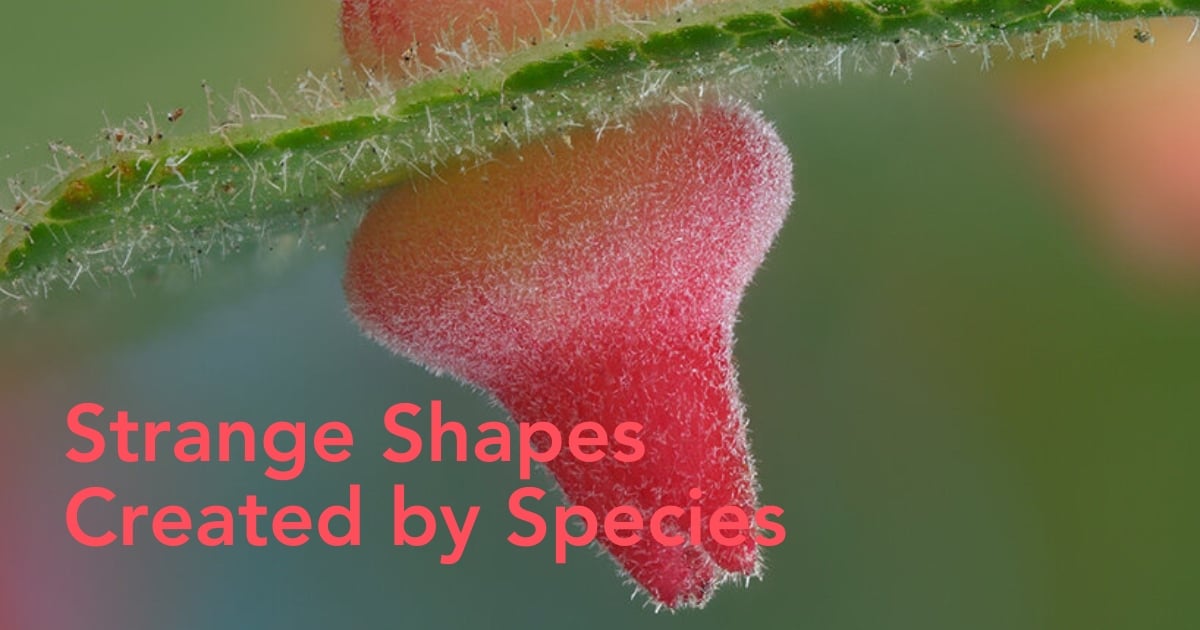
Through macrophotography, Timothy Boomer documents the unusual formations growing on oak leaves across Northern California. His images reveal vivid pink spikes, striped cones, and intricate shapes that look almost otherworldly. Known as plant galls, these tiny structures develop through interactions between insects and their host plants. For another perspective on nature through the camera lens, see Frederic Demeuse's photography of old forests.
The Bizarre Natural Forms Captured by Timothy Boomer
The strange shapes in Timothy Boomer's photographs can be found much closer to home than their appearance suggests. Although some resemble marine organisms or plants from distant rainforests, many grow on local oak trees in Solano County, California. Boomer often comes across these formations during ordinary walks, sometimes finding them just outside his own home.
These structures, known as plant galls, form when insects or other organisms trigger changes in a plant's tissue. They can appear on leaves, stems, and buds, taking on a wide range of shapes and textures. The photographer is especially interested in galls created by cynipid wasps. The process begins when a female wasp lays an egg and releases chemicals into the plant. In response, the plant produces specialized tissue around the developing larva, creating a small chamber that supplies food and protection as it grows.
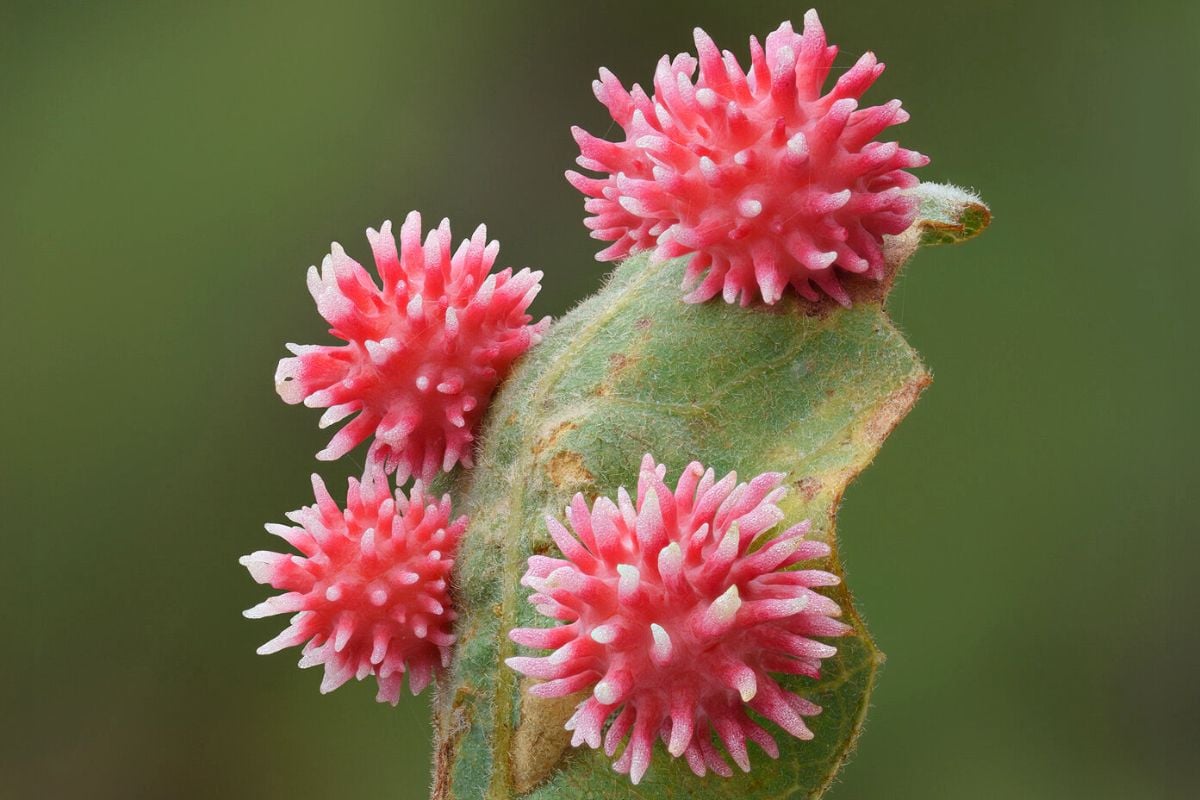
Inside the gall, the wasp larva feeds on the plant tissue as it develops. Once it reaches maturity, an adult wasp eventually emerges from the chamber and begins the cycle again, assuming its development has gone as expected, Boomer notes.
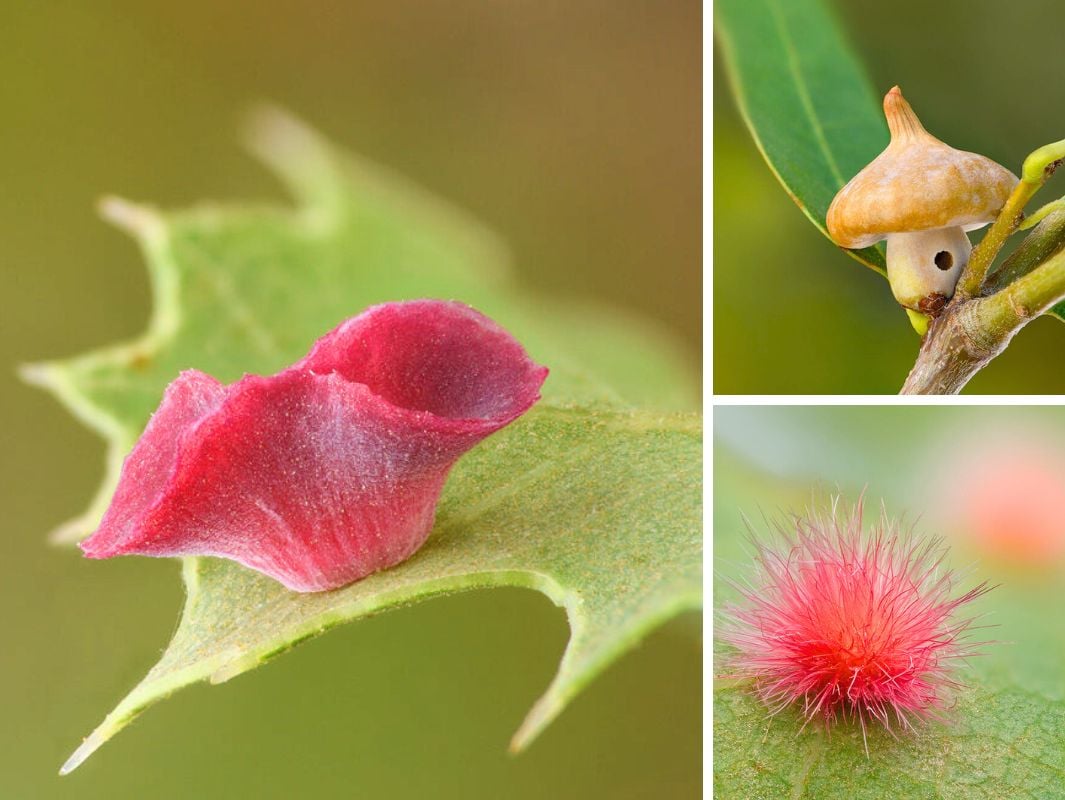
The finished galls come in an impressive range of shapes. Urchin galls feature clusters of pink spines, giving them the appearance of tiny marine creatures, while volcano galls form striped, cone-like structures in vivid colors. Other varieties look like flat discs or delicate fuzzy spheres. Each formation is the result of a biological exchange: the insect triggers the growth, and the plant produces the tissue that becomes its home.
When an Unexpected Visitor Alters a Gall's Shape
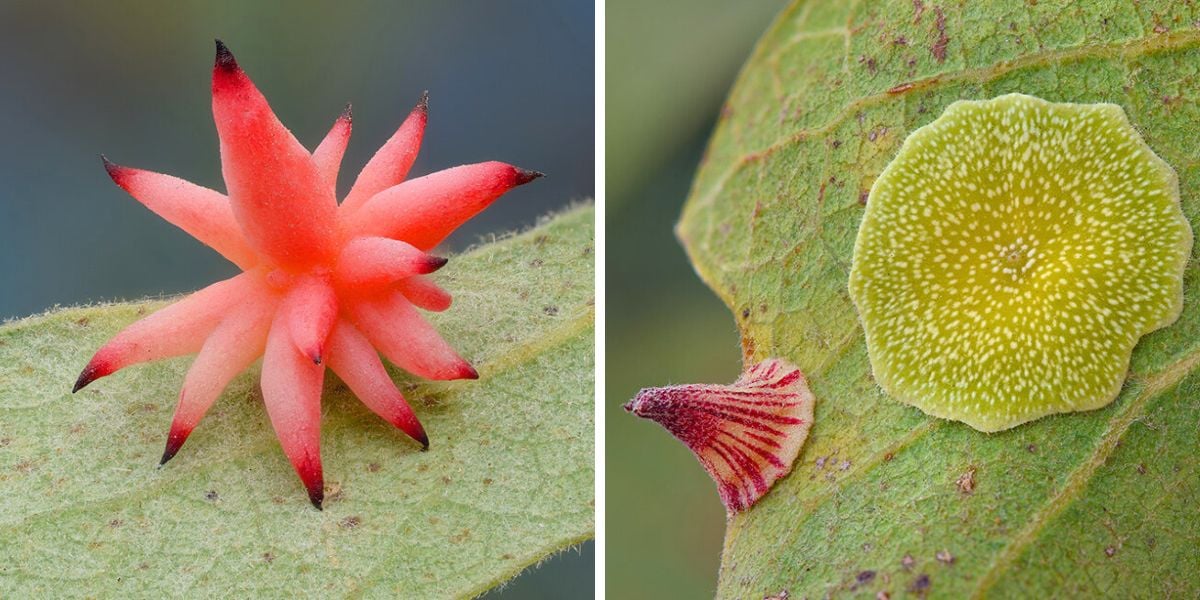
Two examples of the spined turban gall in Timothy's collection show how much these formations can differ. One has a bright pink, rounded crown surrounded by a series of outward-facing spines. The other is coral-colored, with darker tips and sharply segmented projections extending in multiple directions.
He attributes the second gall's unusual appearance to the presence of another insect. A species from the genus 'Eurytoma', which does not initiate gall formation, entered the structure while it was still developing and interfered with its growth. Although he does not claim to understand every biological detail behind the change, he describes the event as a kind of home invasion, where an intruder alters the structure already being built.
These examples show that a gall's development can be influenced by more than the insect that first triggers it. Other organisms may intervene along the way, leaving their mark on the final form.
Revealing Details Beyond the Naked Eye
Timothy uses specialized macro lenses and microscope objectives to photograph these tiny formations in detail. Because only a very narrow area remains in focus at such high magnifications, he uses a method called focus stacking to produce sharper images.
“I take dozens, hundreds, or even over a thousand exposures with tiny, incremental focus shifts and combine them so that the entire subject is sharp."
The finished images bring out minute features that would normally go unnoticed. The photographer uses Photoshop to correct imperfections caused by combining multiple focus points, while taking care not to alter the natural appearance of the specimens.
“These organisms are 100% real, not AI-generated. Nature does not need to be 'enhanced'.
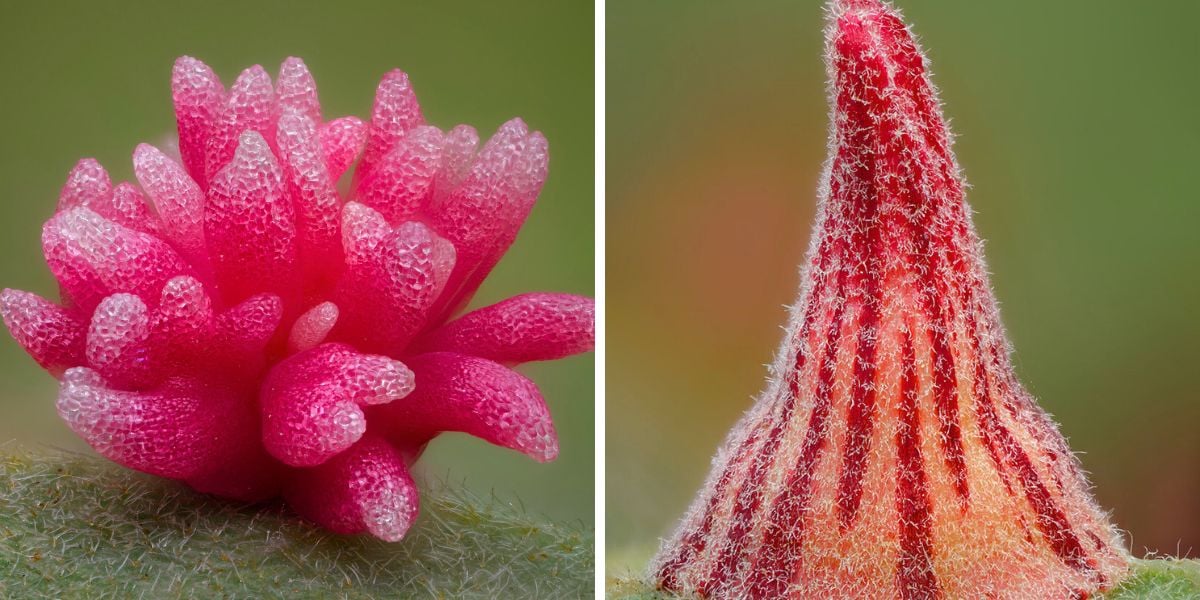
Timothy's photographs show the variety of forms found in everyday Californian landscapes. Each gall is a small example of biological construction, shaped when one organism redirects another's growth to create a protective space. Its structure can also be altered by other insects, making every specimen the result of several interacting organisms.
Photos by @wildmacro