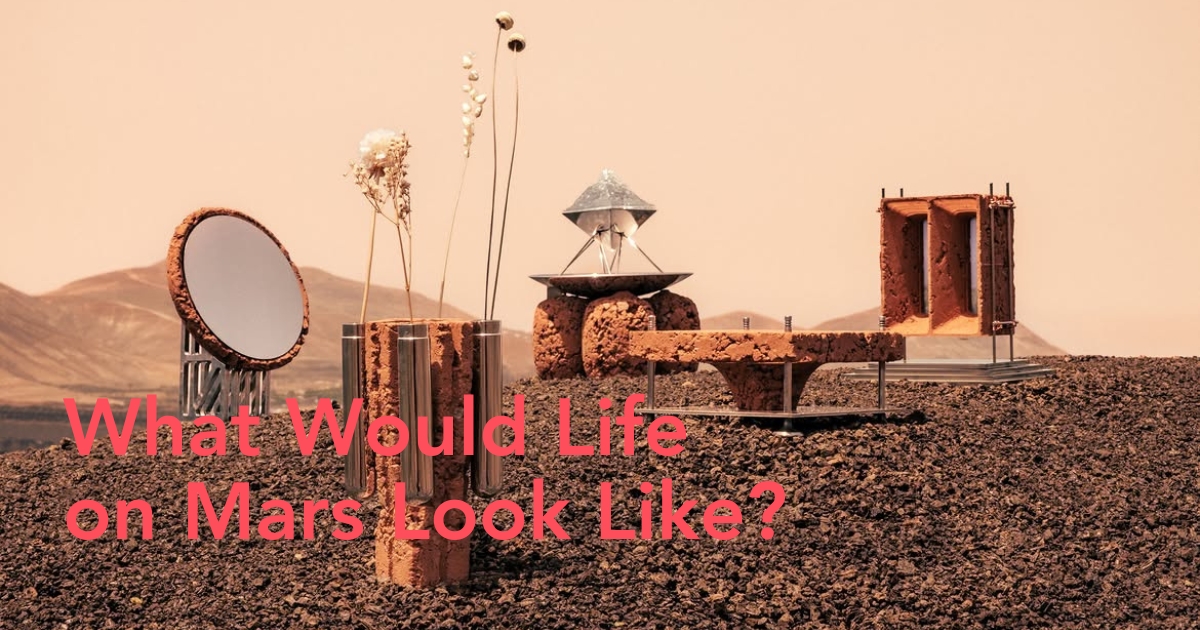
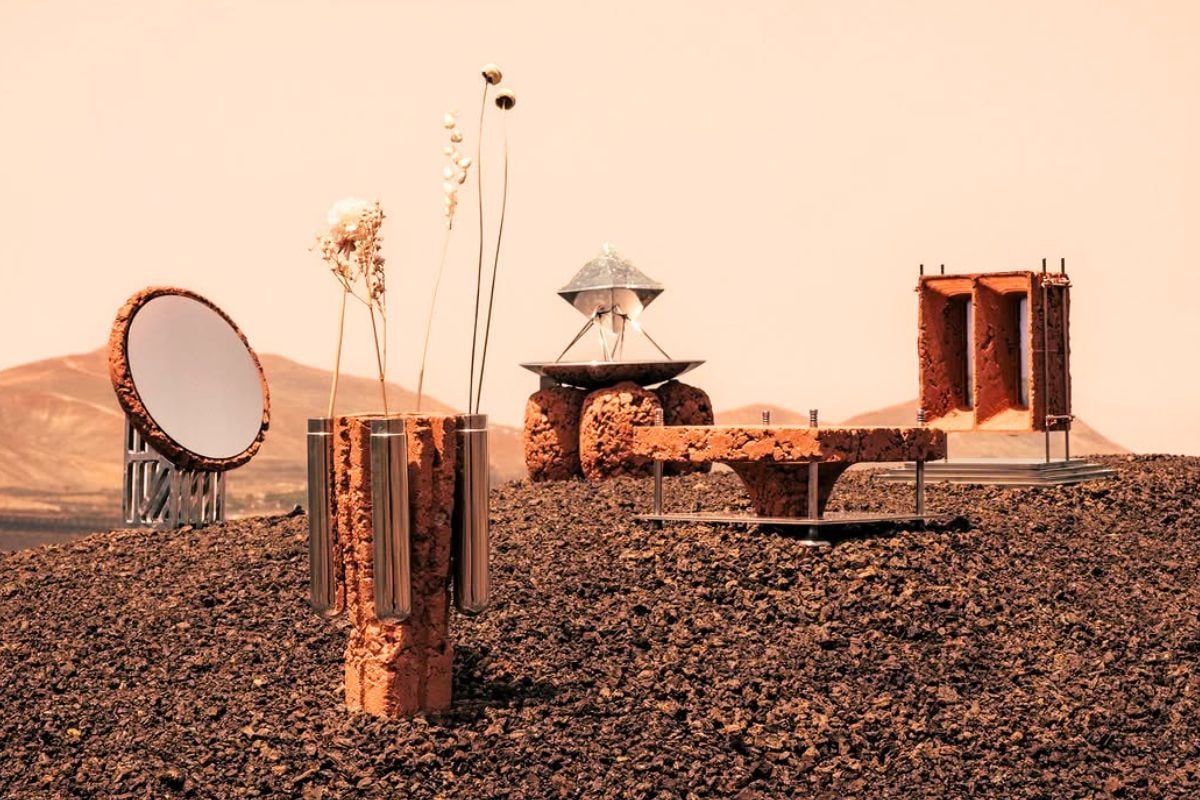
Picture a future where one dried stem is the most precious thing in the house. That's the world London-based designer Roc H Biel builds with Martian Relics, five pieces of homeware for a life on Mars. One of them is a flower pot that doubles as a memorial. The other four are a plate, a mirror, a window, and a water filter, all made of rammed earth and stainless steel salvaged from aerospace parts.
A Flower Pot as a Memorial: Why Martian Relics Is Really About Earth
Don't read it as a brochure for space living. Biel uses the red planet to hold up a mirror to this one. If people ever move to a dry world where every liter of water and every gram of material counts, they'll bring their habits, beliefs, and memories along. They'll bring Earth's problems too. Escaping to another planet doesn't fix anything, the collection suggests. It only moves the question somewhere colder.
Who would you become on Mars?
Five Everyday Rituals, Redesigned for a Dry Planet
Every piece carries one idea. Gravity Well is a tray for keys and loose change, its earthen surface dipping toward a steel ball as if gravity pulls it in: hard physics turned into a daily habit. Faded Signal is a table mirror shaped after the giant dishes that listen to deep space, and it gives you back only a blurry version of yourself. Eroded Horizon is a window that nods to Jørn Utzon's house Can Lis on Mallorca and shows a pale, far-off Mediterranean, a view you remember but can't reach. Slow Water cleans drinking water in several steps and borrows its look from a satellite.
And then there's Last Offering, the one florists will stop at. It's a pot shaped like a headstone, a small altar to Gaia, holding the last dried flowers in a future where nature has become the rarest material of all. A cross is cut out of its crown as empty space.
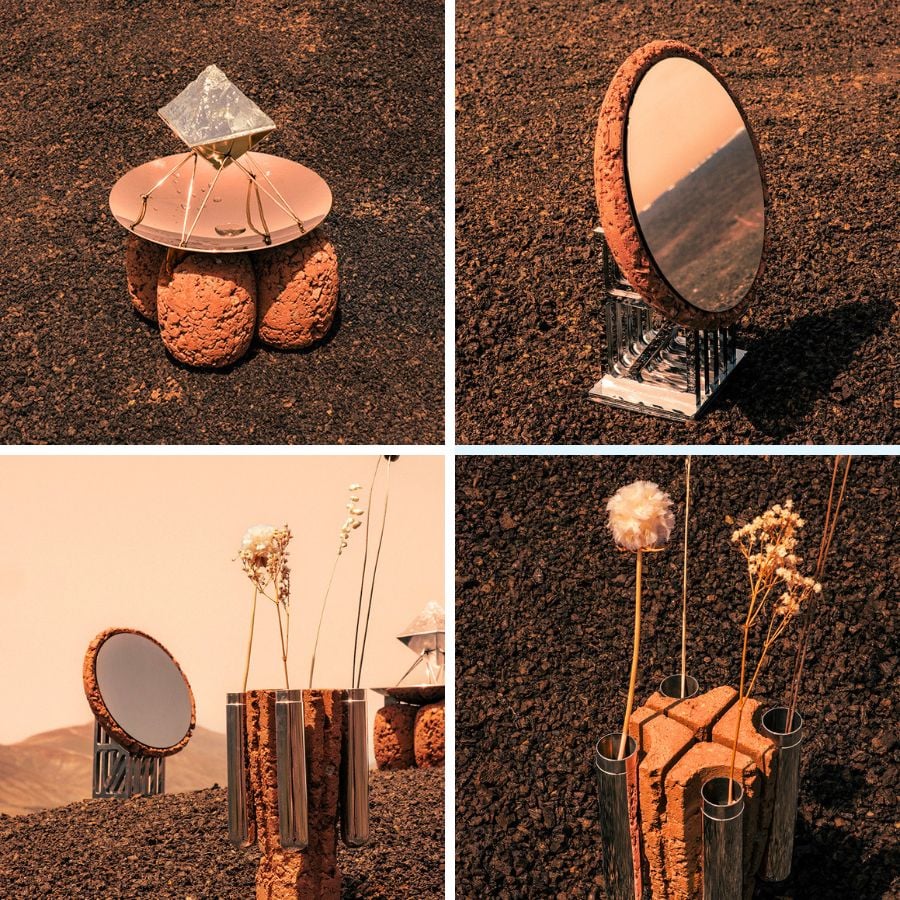
Biel made every object by hand in his London studio. Each one is unique, none bigger than 22 centimeters, and the heaviest weighs four kilograms. For the photos, he took them to Lanzarote, the Canary island whose lava fields look so much like Mars that the European Space Agency sends astronauts there to train. Fitting backdrop, right?
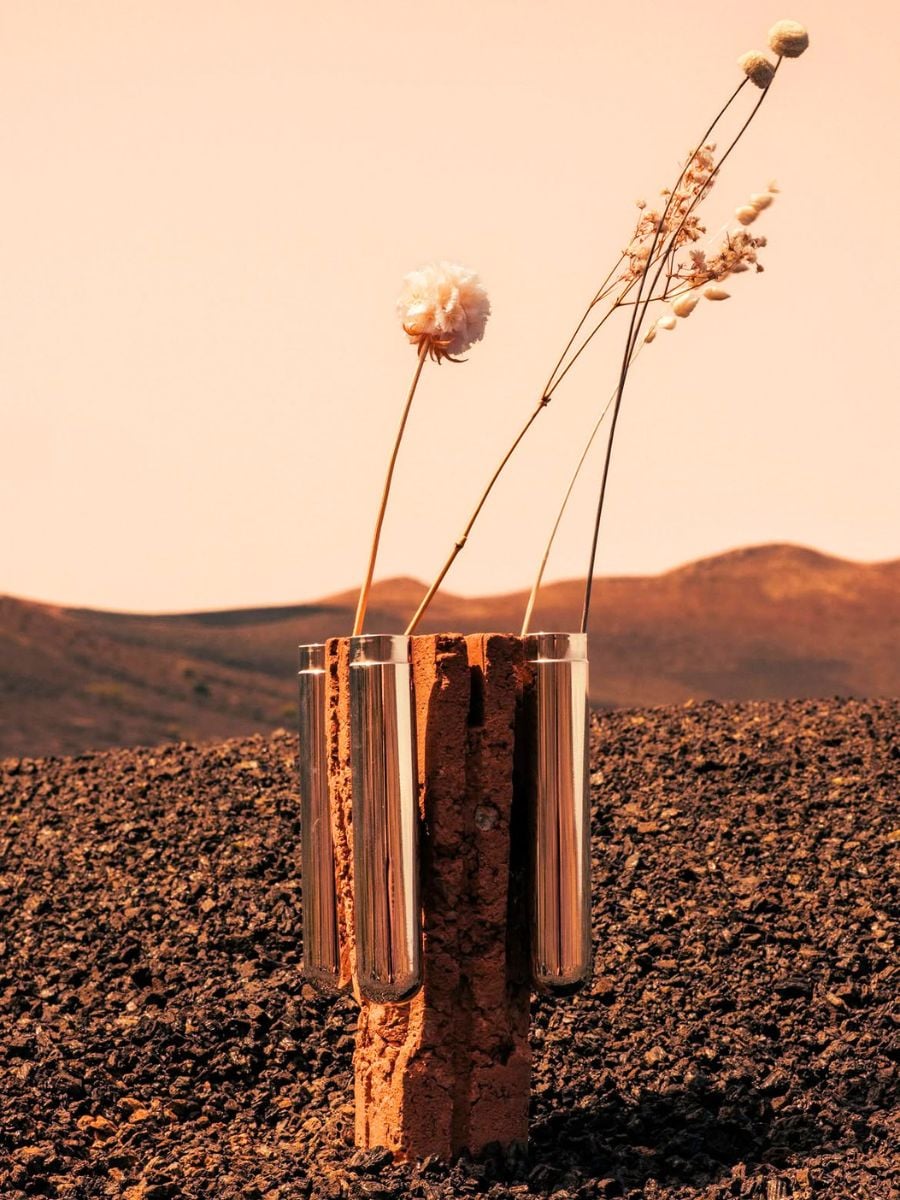
What Martian Relics Is Made Of: Packed Soil and Rocket Scrap
The materials tell the story as much as the shapes do. Rammed earth is about as old as building gets: damp soil, packed hard. Biel pairs it with steel he rescued from valves, pressurant tanks, and leftover sheet metal, the scrap of the aerospace industry. On a planet without shops, reuse isn't a style statement. It's simply the only option.
His years in industrial mold making show in the details. He built molds of up to twelve parts and pressed the soil into them along a single axis, one layer at a time. That's how the pieces get crisp edges you rarely see in rammed earth, while the soil keeps its heavy, grainy feel. Next time you hang a bouquet upside down to dry, you might see it a little differently.
Photos: @roc.h.biel