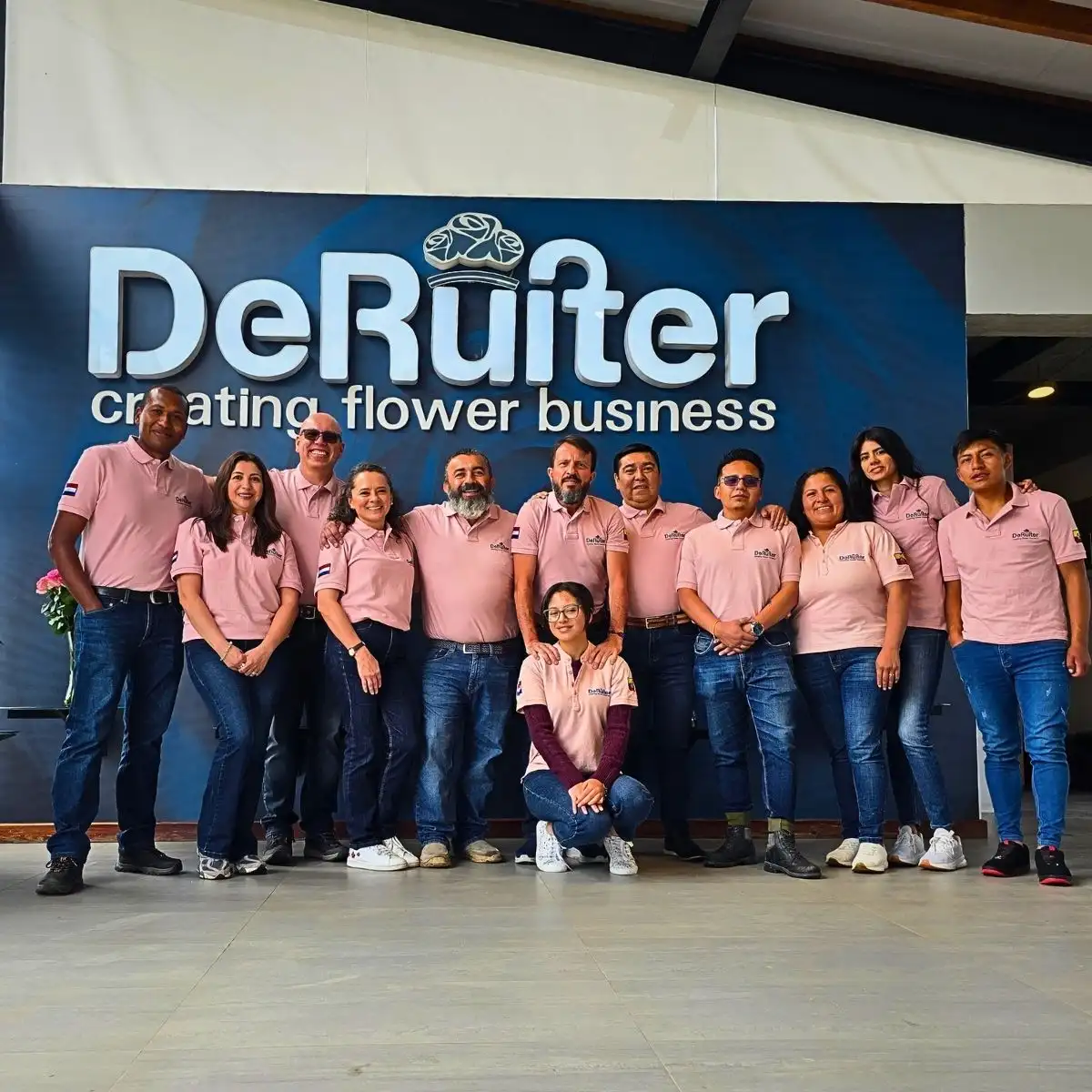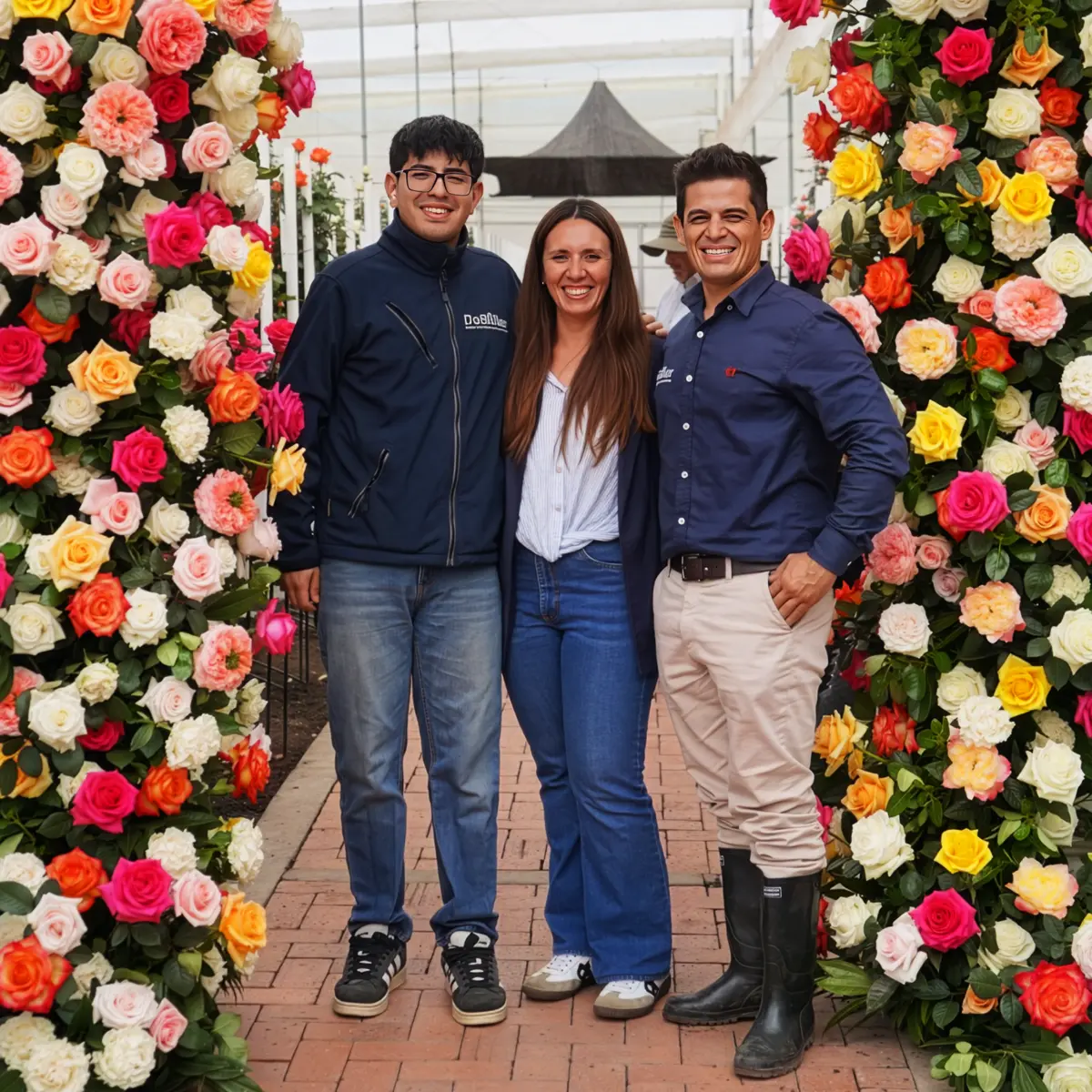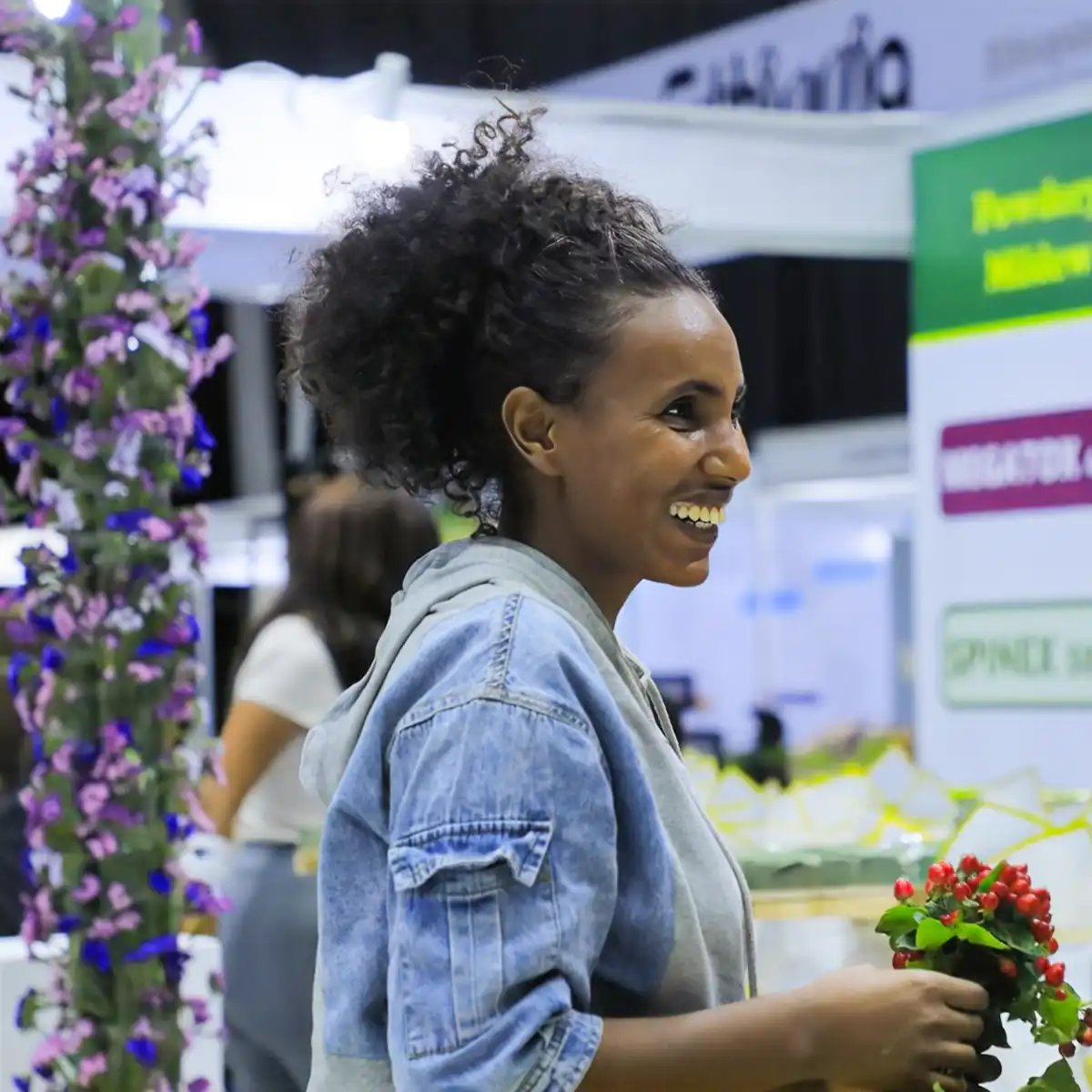
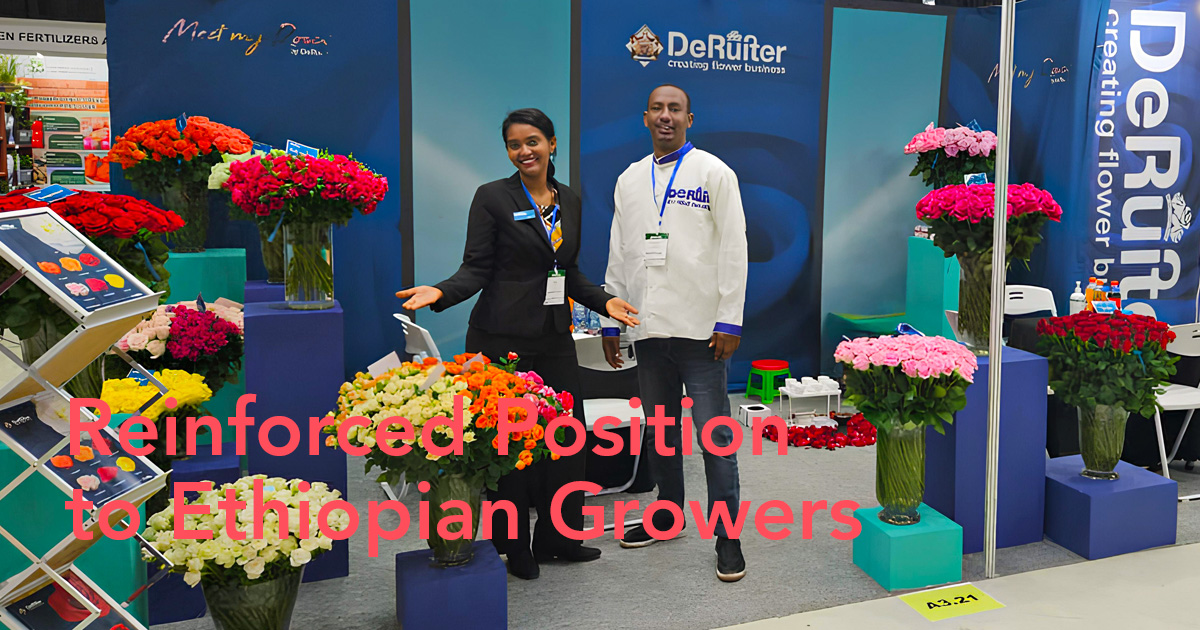
The presence of De Ruiter at HortiFlora this year was more than just participation. It was a clear signal of long-term commitment to one of Africa’s most important floriculture regions. As one of the only rose breeders exhibiting at the show, alongside Dümmen Orange, De Ruiter reinforced its position as a close and invested partner to Ethiopian growers.
This commitment is also reflected beyond the exhibition floor. Through its trial and showhouse in Debre Zeit and Afriflora in Ziway, the company has created a practical space where growers can experience varieties under local conditions. This allows for more informed selection decisions that align with climate, production goals, and market needs.
A Strong Local Presence That Supports Growers
A key part of this localized approach is the presence of regional representative Aster. Her role ensures that growers have direct access to technical advice, faster follow-ups on trials, and continuous support from selection through commercialization. As she explains, “Being close to the growers allows us to respond quickly, understand their realities, and support them throughout the entire production journey.”
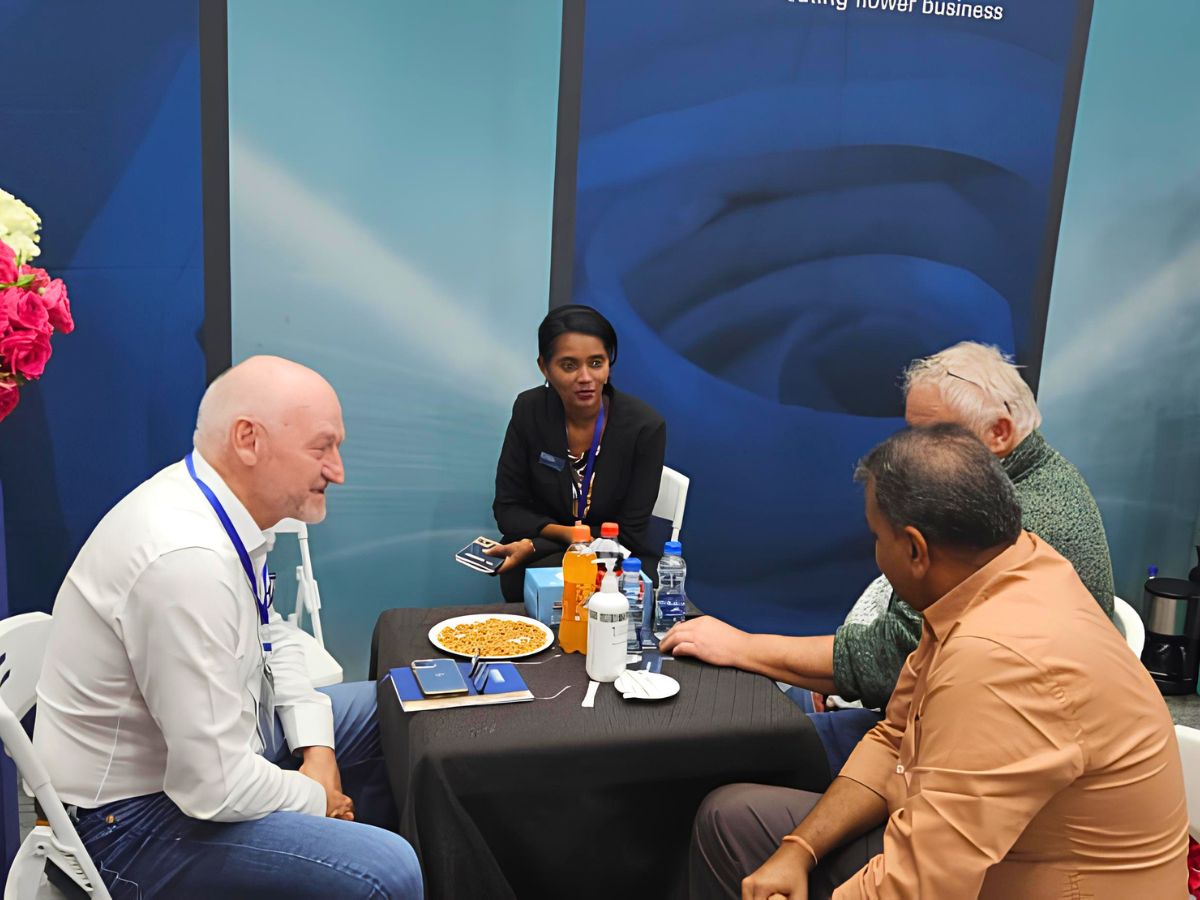
At HortiFlora, this proximity translated into meaningful engagement. The event created space to reconnect with existing clients, assess how varieties are performing across different farms, and gather real-time feedback from the market. It also opened doors to new growers who are actively seeking to test and introduce new varieties into their portfolios.
“The show gave us a valuable opportunity to listen,” Aster Kenea noted. “We were able to understand how our varieties are performing commercially, what the market is responding to, and where we need to keep improving.”
Varieties That Match the Shift to Premium Production
Among the varieties gaining strong traction in Ethiopia are Roses: Mandala, Revolution, Ever Red, Pomarosa, Bahati, Light Year, Ever Pink, and Rose Mia. These varieties align closely with a clear shift in the Ethiopian floriculture sector. Growers are increasingly moving from intermediate roses to premium categories, targeting head sizes of at least 5 cm and above.
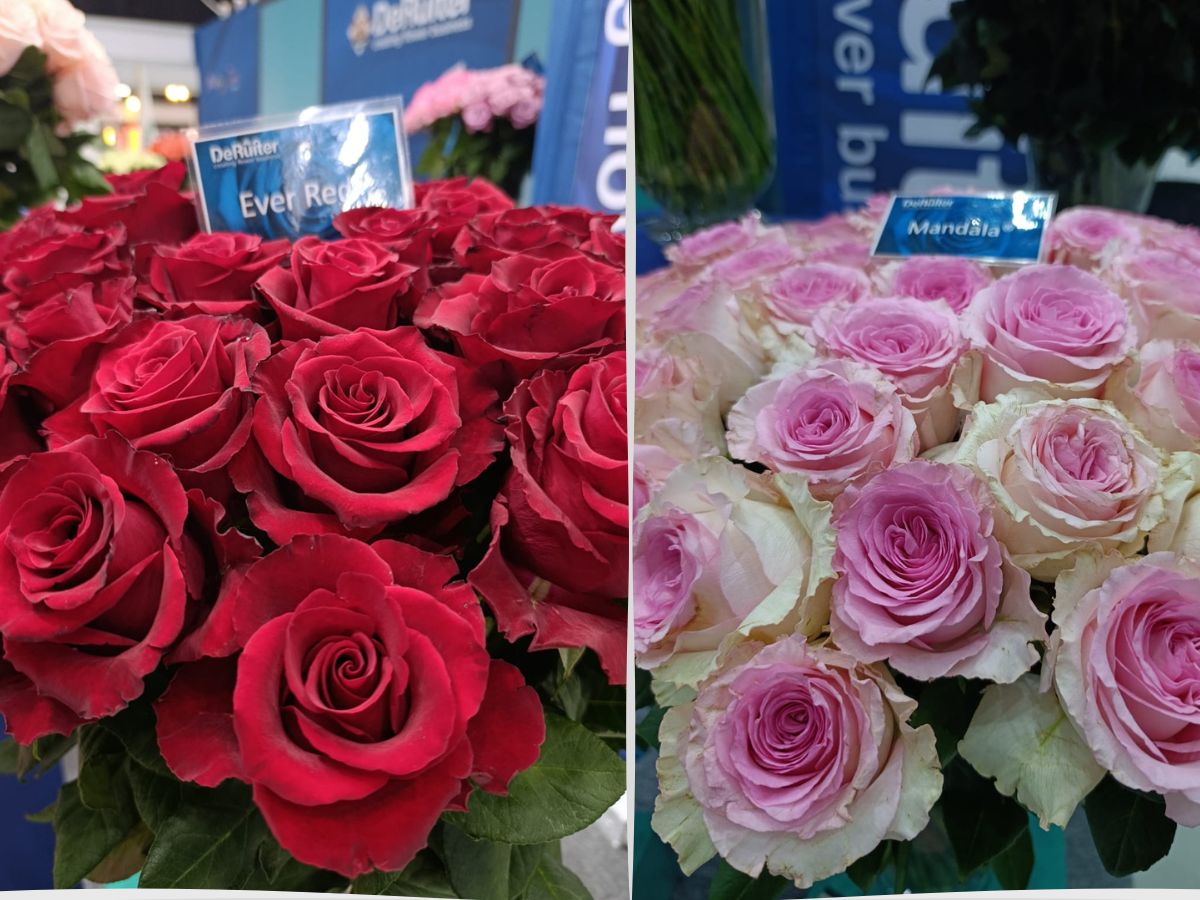
This transition is driven by market demand, and De Ruiter’s portfolio is positioned to support it. The focus on larger head sizes and consistent quality allows growers to meet evolving expectations from buyers while strengthening their market position.
“Our varieties are developed with both the grower and the market in mind,” Aster shared. “We are seeing strong alignment between what we offer and what the industry now requires in terms of quality and size.”
A Growing Industry Backed by Collaboration
Beyond individual varieties, the broader outlook for Ethiopian floriculture remains positive. According to insights shared during the event, the sector continues to experience steady year-on-year growth. This progress signals resilience and creates confidence for continued investment and collaboration across the value chain.
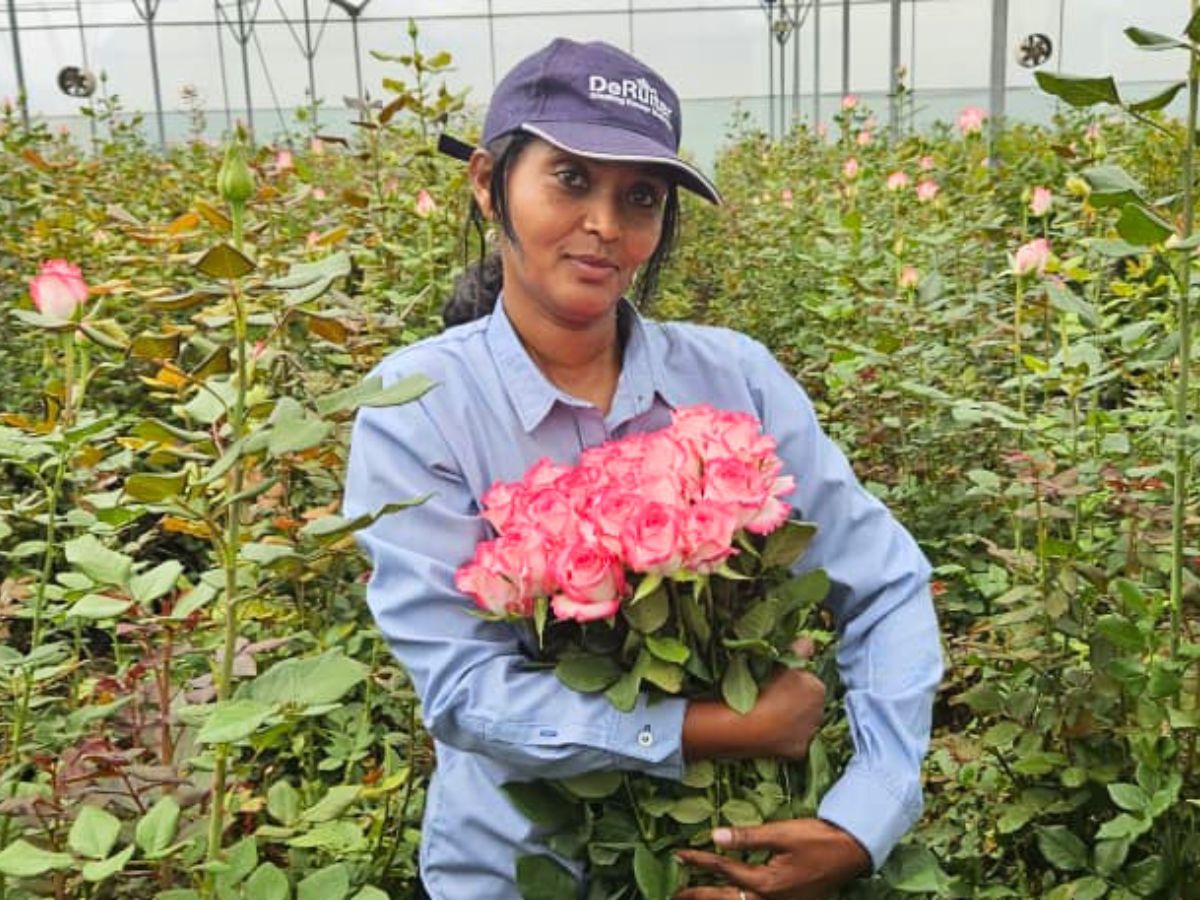
“There is clear momentum in Ethiopia,” Aster added. “The growth we are seeing each year encourages all of us to keep investing, keep improving, and keep building the future of this industry together.”
As the show concluded, De Ruiter Ethiopia extended its appreciation to the many stakeholders who visited their stand. From growers and buyers to florists and industry partners, each interaction contributed to meaningful dialogue and stronger connections.
“We are truly grateful to everyone who took the time to engage with us,” Aster said. “These conversations motivate us to keep innovating, to keep introducing new varieties, and to continue building the flower business together.”
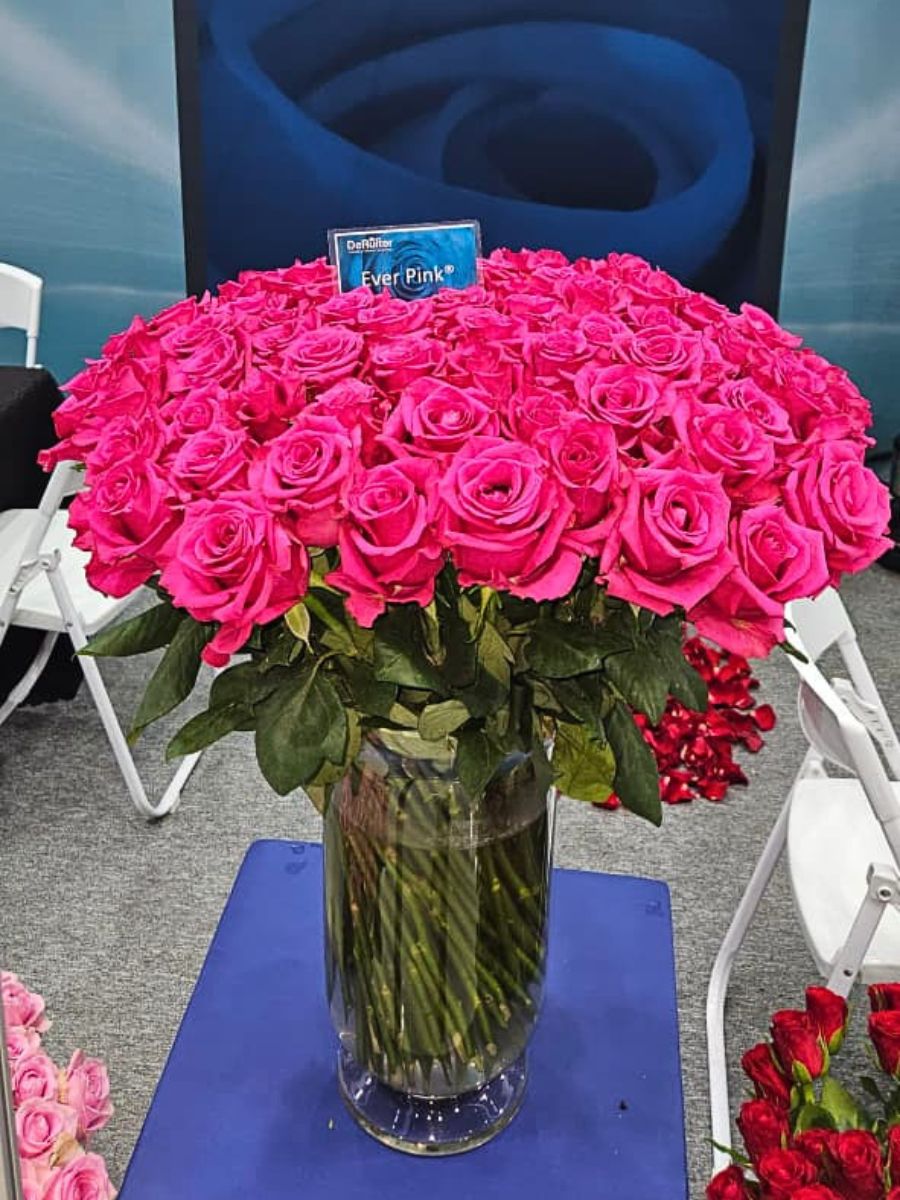
De Ruiter’s participation at HortiFlora was not just about visibility. It was about reinforcing trust, deepening relationships, and staying closely aligned with the needs of a growing industry.