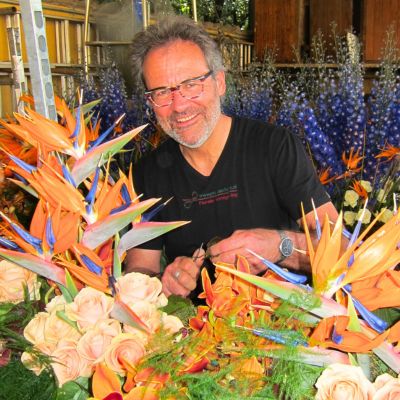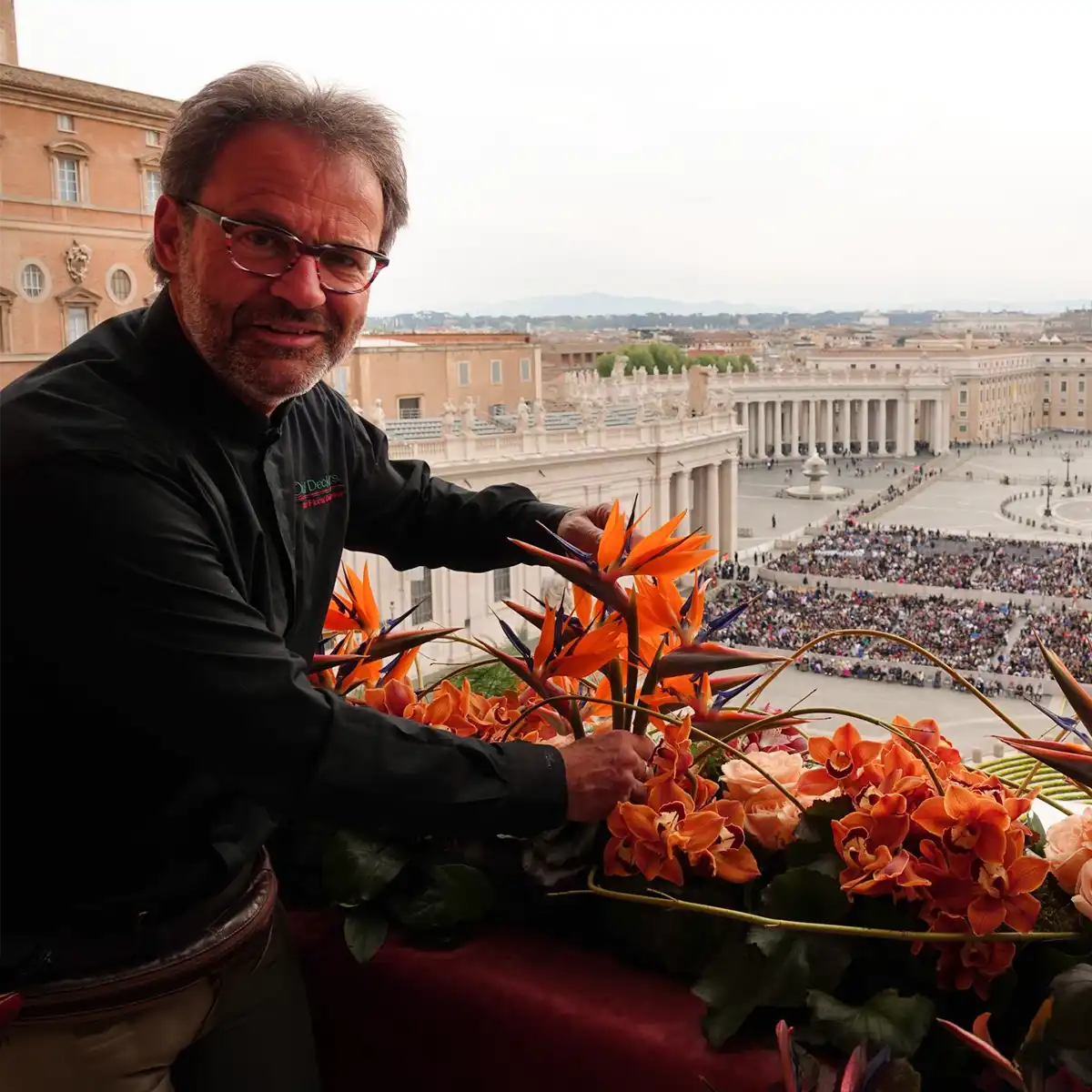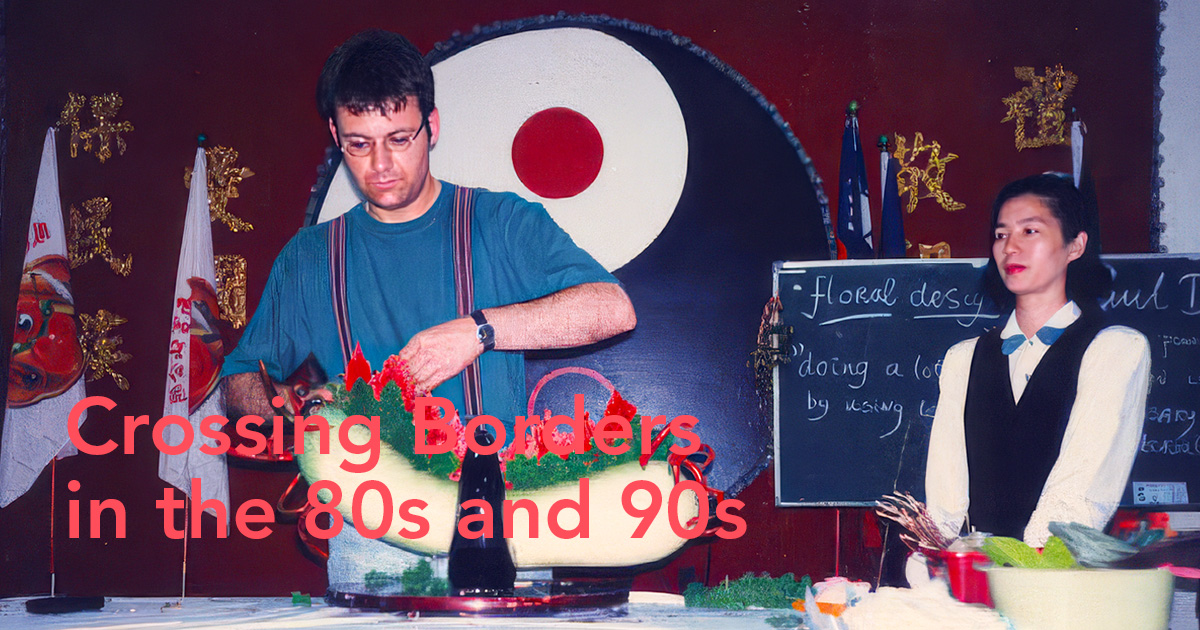
In 2026, I celebrate 40 years as a Master Floral Designer. In the first part of this anniversary series, I looked back at how it all started in 1986, with projects in Lausanne, Rome, Paris, and Amsterdam. This time, I'd like to take you to the late 1980s and the 1990s. In those years, my work increasingly crossed borders, while my roots stayed firmly planted in a small town in the Dutch province of Limburg.
A Family Flower Shop in Posterholt
Throughout those years, our flower shop in Posterholt was the heart of everything. I ran it together with my parents, Tjeu and Toos Deckers, and our team. Every day brought new creations for our customers, and in between, a growing number of special commissions came in, first from across the Netherlands and soon from abroad as well.
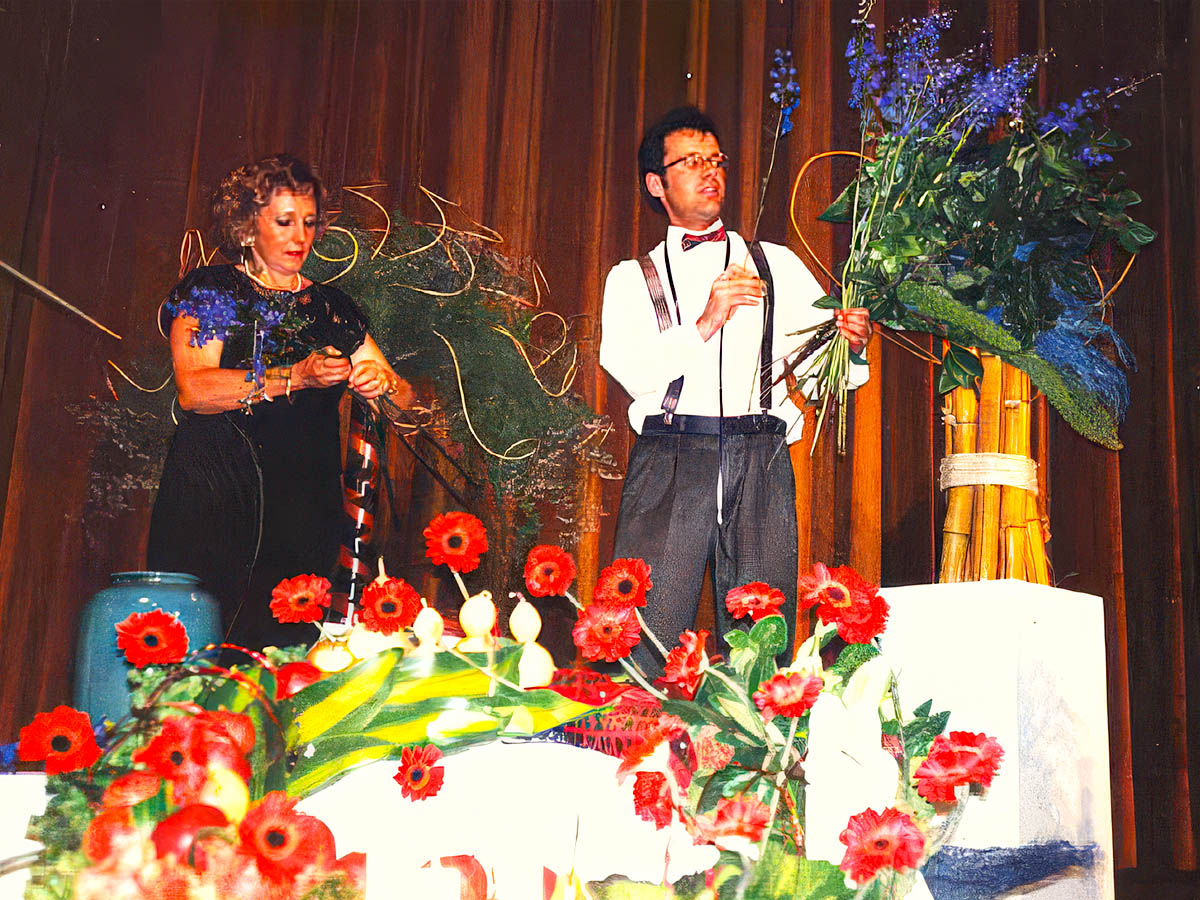
That family setup turned out to be the key to everything that followed. Because my parents and our team kept the shop running, I could accept assignments far from home with peace of mind. I knew our customers were in good hands while I was away. Looking back, I realize how much that trust meant to me. Without it, most of the projects in this story would never have happened.
It also kept me grounded. However exciting a stage abroad might be, the daily work in the shop remained the foundation of my craft: listening to customers, working with the seasons, and making sure every arrangement that left the door was just right.
Floriade 1992: A Stage for the Anthurium
One of the most memorable assignments of that period came in 1992, at the Floriade in Zoetermeer. The Floriade is the World Horticultural Expo that the Netherlands hosts roughly once every ten years, and for six months it attracts visitors, growers, and professionals from all over the world.
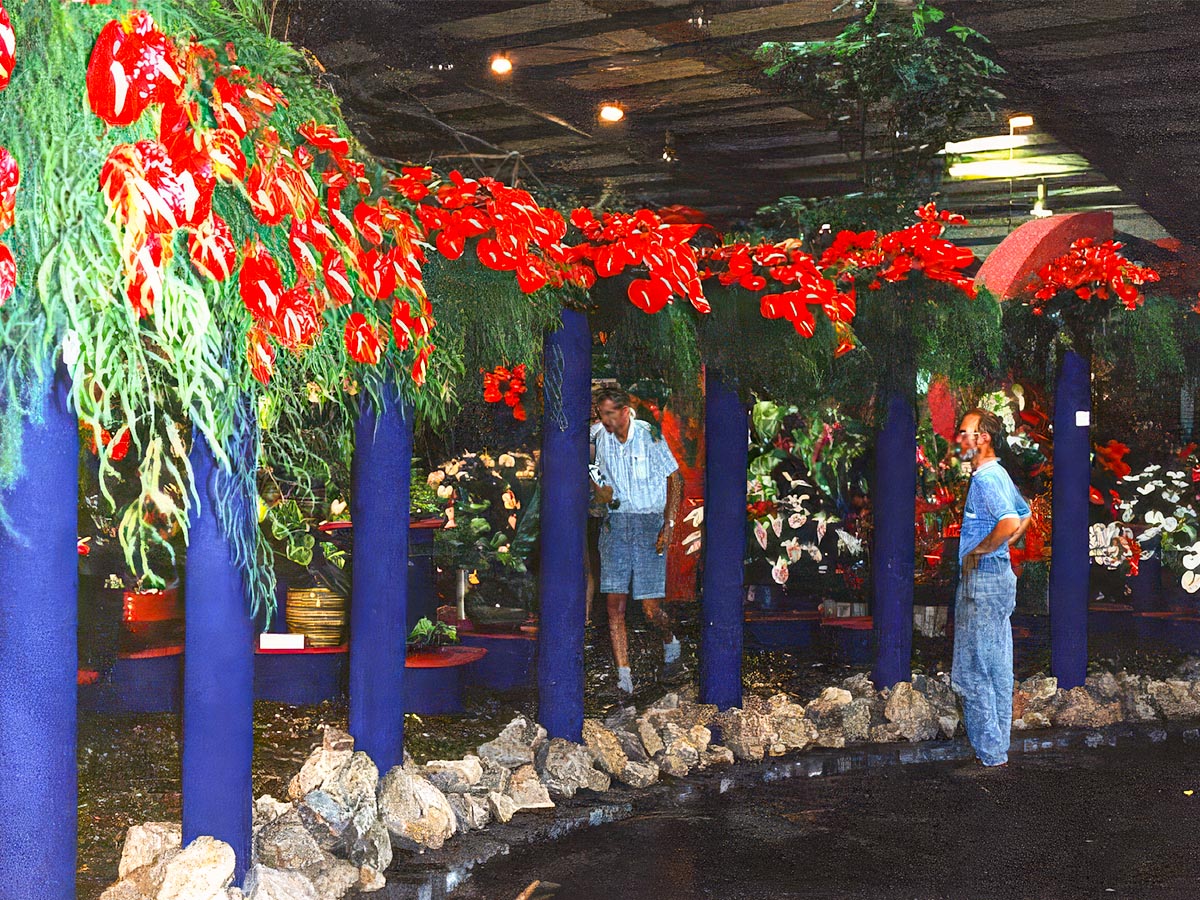
Together with Nemo Nauta, I was asked to design the stand for the NAV, the Dutch Anthurium Association (Nederlandse Anthurium Vereniging), and to take care of its complete floral decoration.
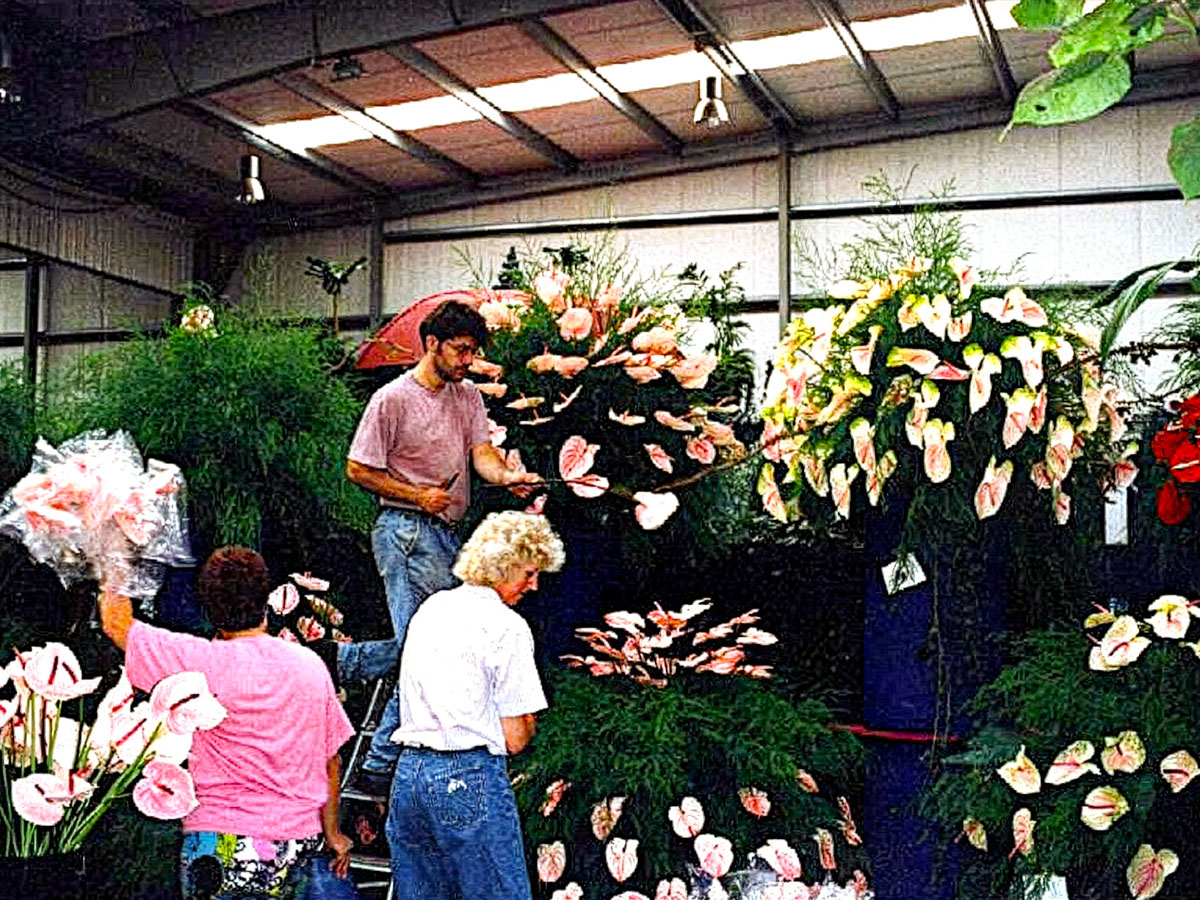
Building an entire presentation around a single flower is a special challenge. The anthurium, with its glossy, sculptural shape, has a strong character of its own, and it does not easily blend into the background. Our task was to show visitors how versatile it can be: not only as a houseplant, but as a cut flower and a design element in its own right. Because the Floriade draws such a broad audience, the design had to speak to everyone at once, from the grower who knows every variety to the family simply enjoying a day out.
Flower Parades in Rijnsburg, Aalsmeer, and Limburg
Flower parades, or bloemencorso's, are one of the most colorful traditions in the Netherlands. Floats covered in thousands of flowers travel through towns and villages, and crowds line the streets to see them pass. If you'd like to know more about this tradition, read everything you need to know about corso floral parades.
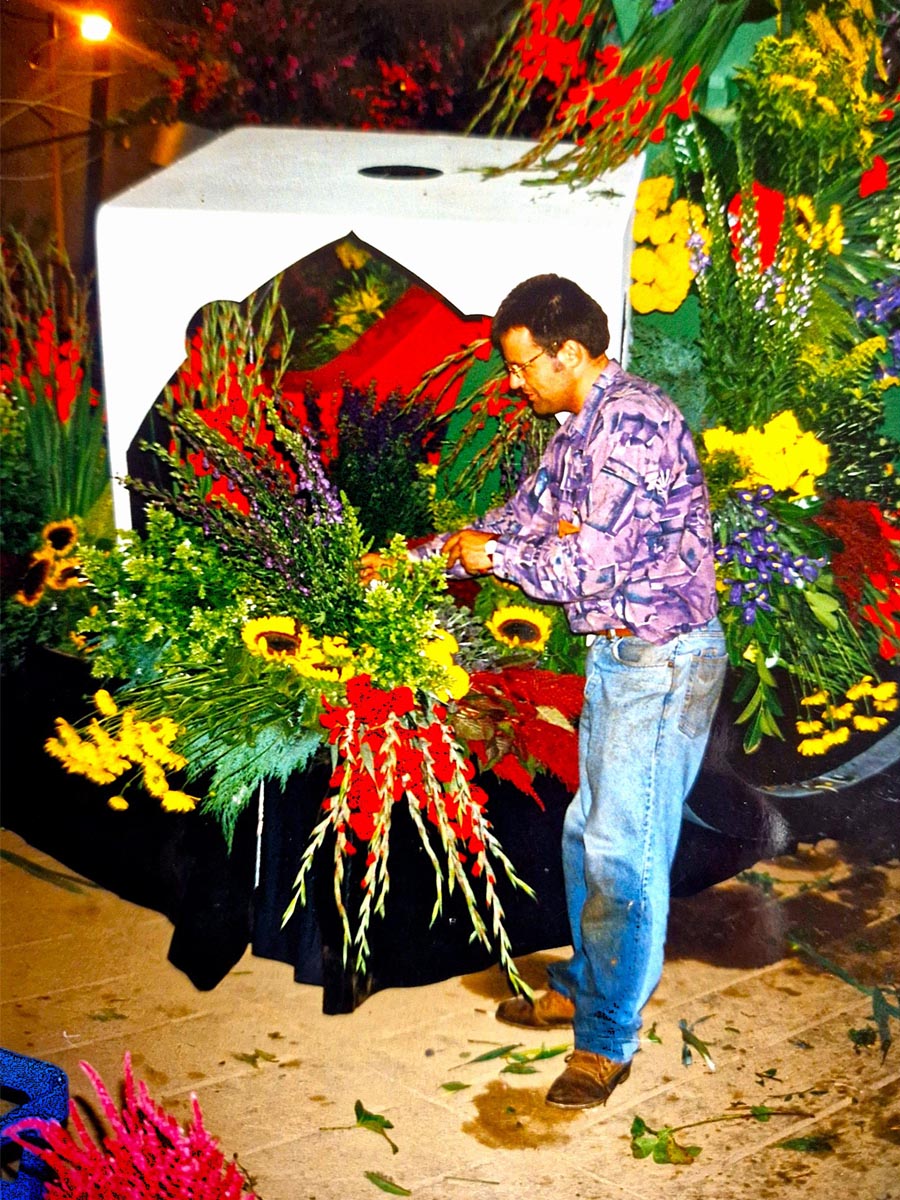
I worked on several of these parades, including those in Rijnsburg and Aalsmeer, both towns with deep roots in the Dutch flower industry. For the Bloemencorso Limburg, in my home province, I served as head arranger, a role I took on with a great deal of pride.
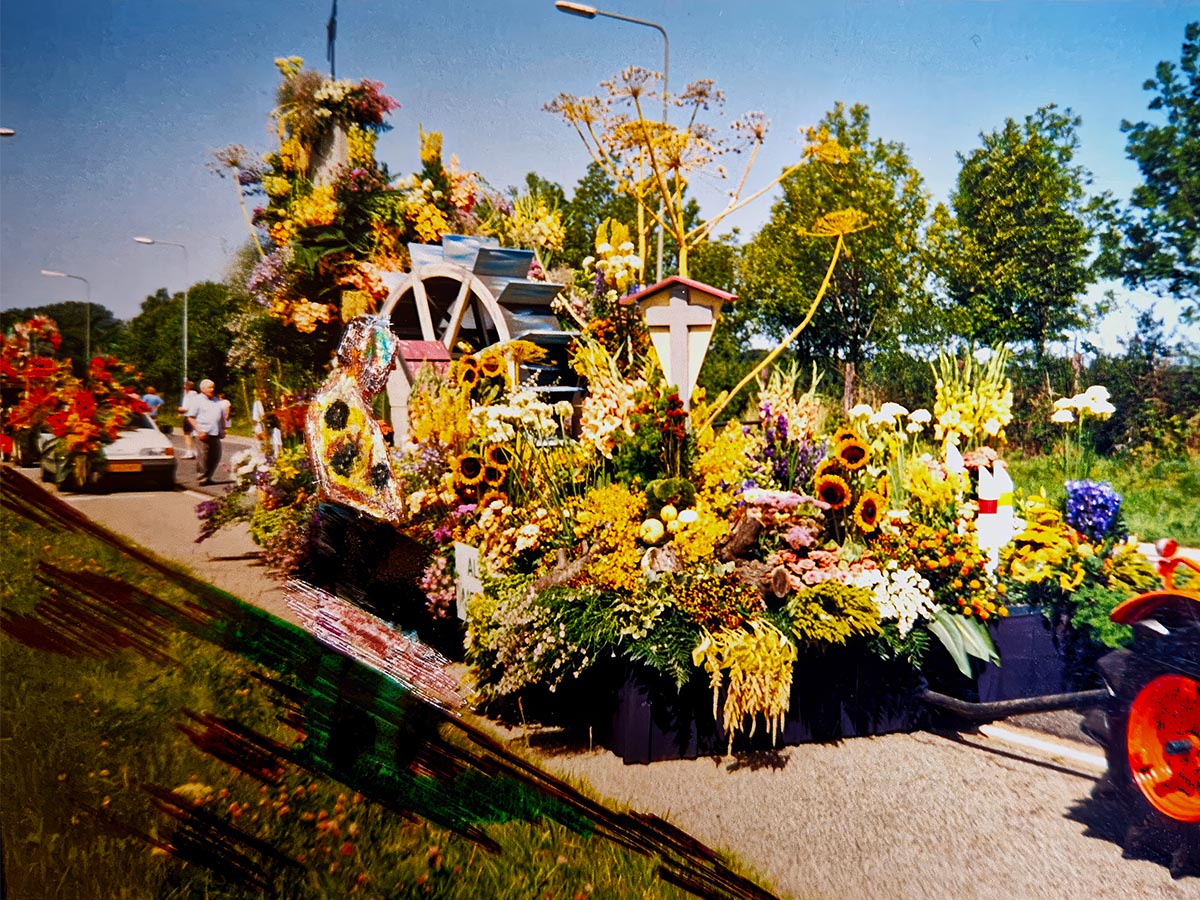
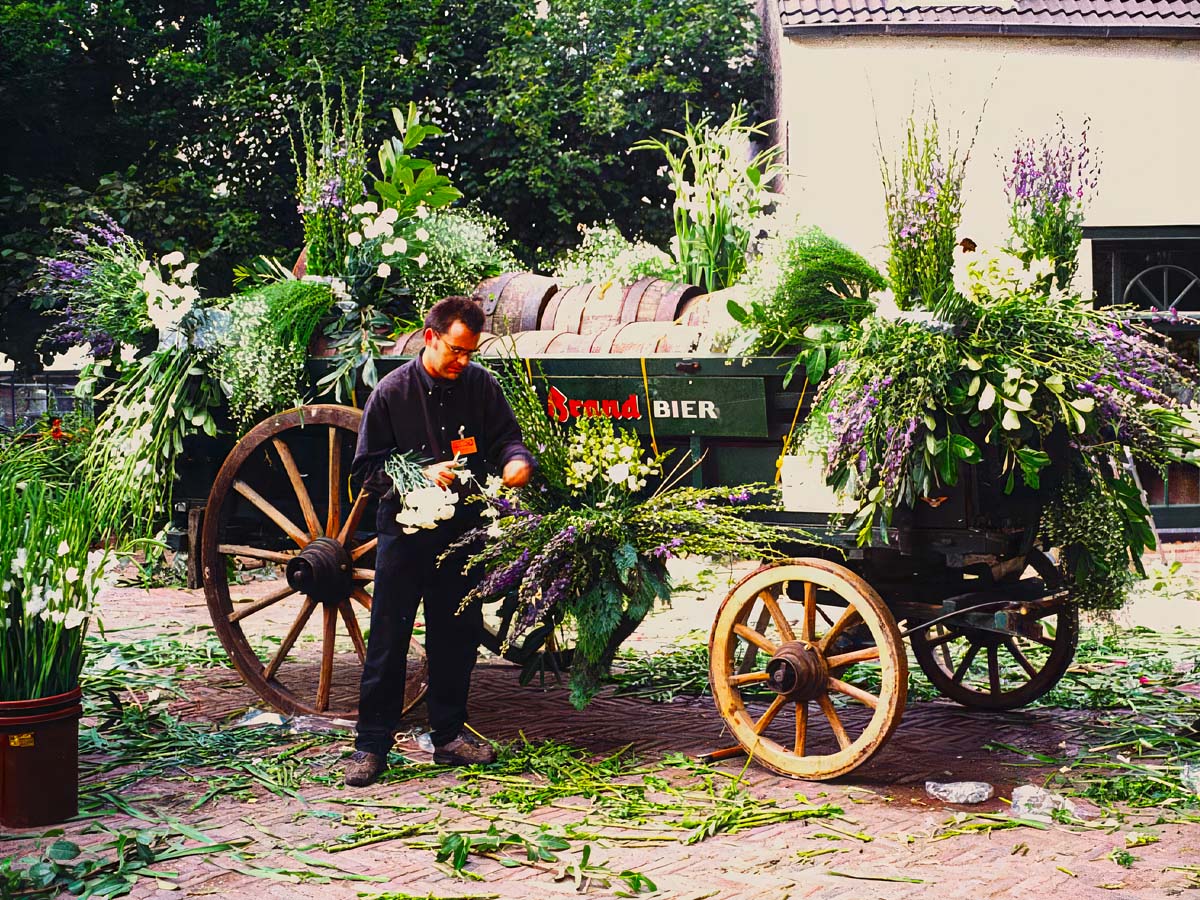
Designing for a parade is very different from designing for a shop window or a table. A float has to work from a distance and from every angle. It has to hold up for the full length of the route, and it has to make an impression in the few moments it passes by. Among the creations from those years was a floral design for the old Brand beer wagon, which many people in the Netherlands will remember from the brewery's TV commercials in the 1990s.
Floral Design Without Borders
From the late 1980s onward, more and more invitations came from abroad. I gave shows, workshops, exhibitions, and demonstrations in countries including Israel, Switzerland, Belgium, Germany, Italy, Taiwan, and South Africa.
Presenting my work on an international stage was both special and challenging. Every country has its own flowers, its own traditions, and its own sense of style. Audiences respond differently, and materials you take for granted at home are not always available. You learn to adapt quickly, to work with what the local market offers, and to let the flowers do the talking when language falls short. In that sense, floral design truly knows no borders.
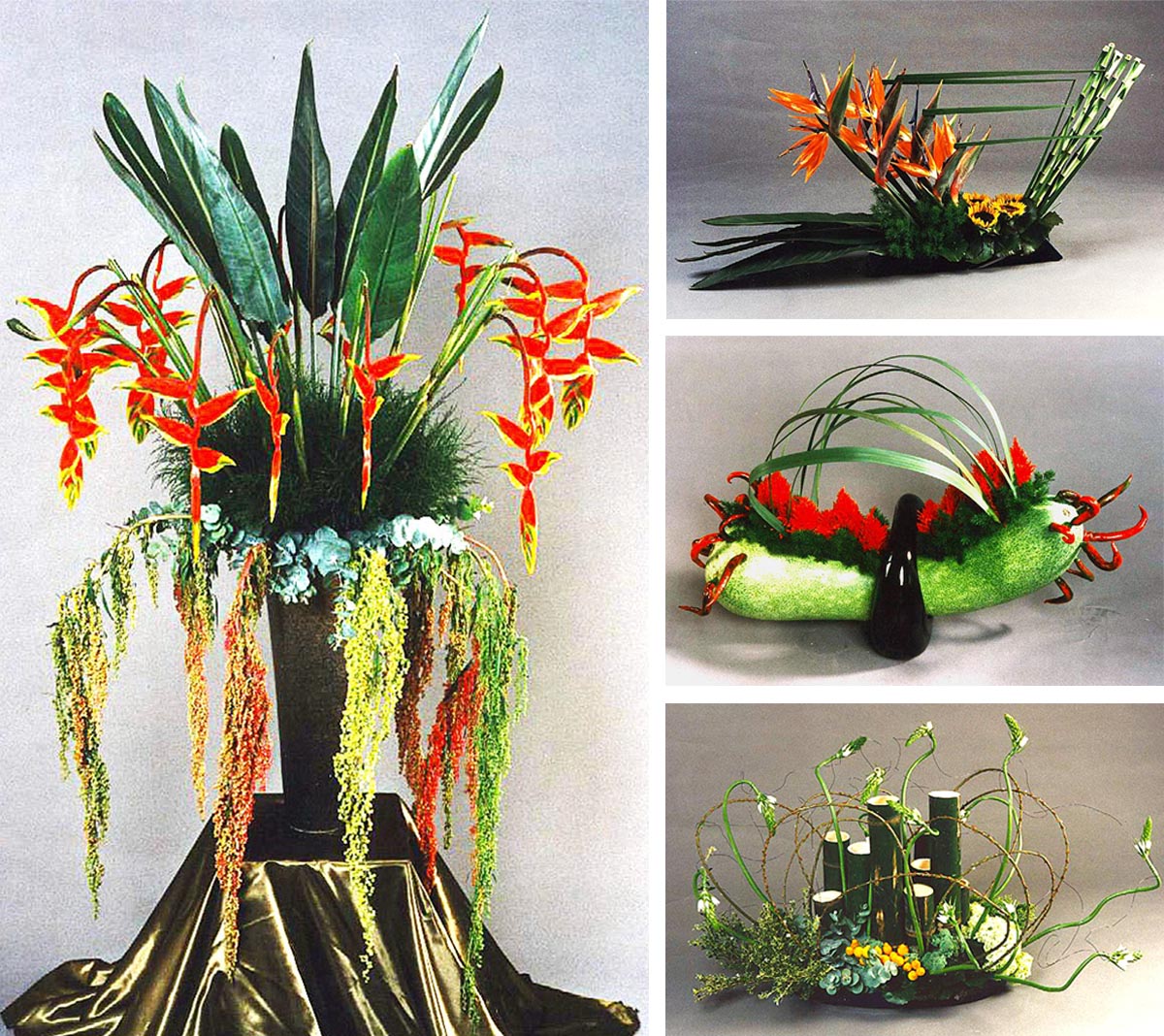
Every trip also brought something back home to Posterholt. Meeting colleagues, seeing how florists elsewhere approach their craft, and explaining my own way of working to a new audience kept me curious and sharp. Those experiences found their way into the arrangements we made in the shop, day after day.
More Stories to Come
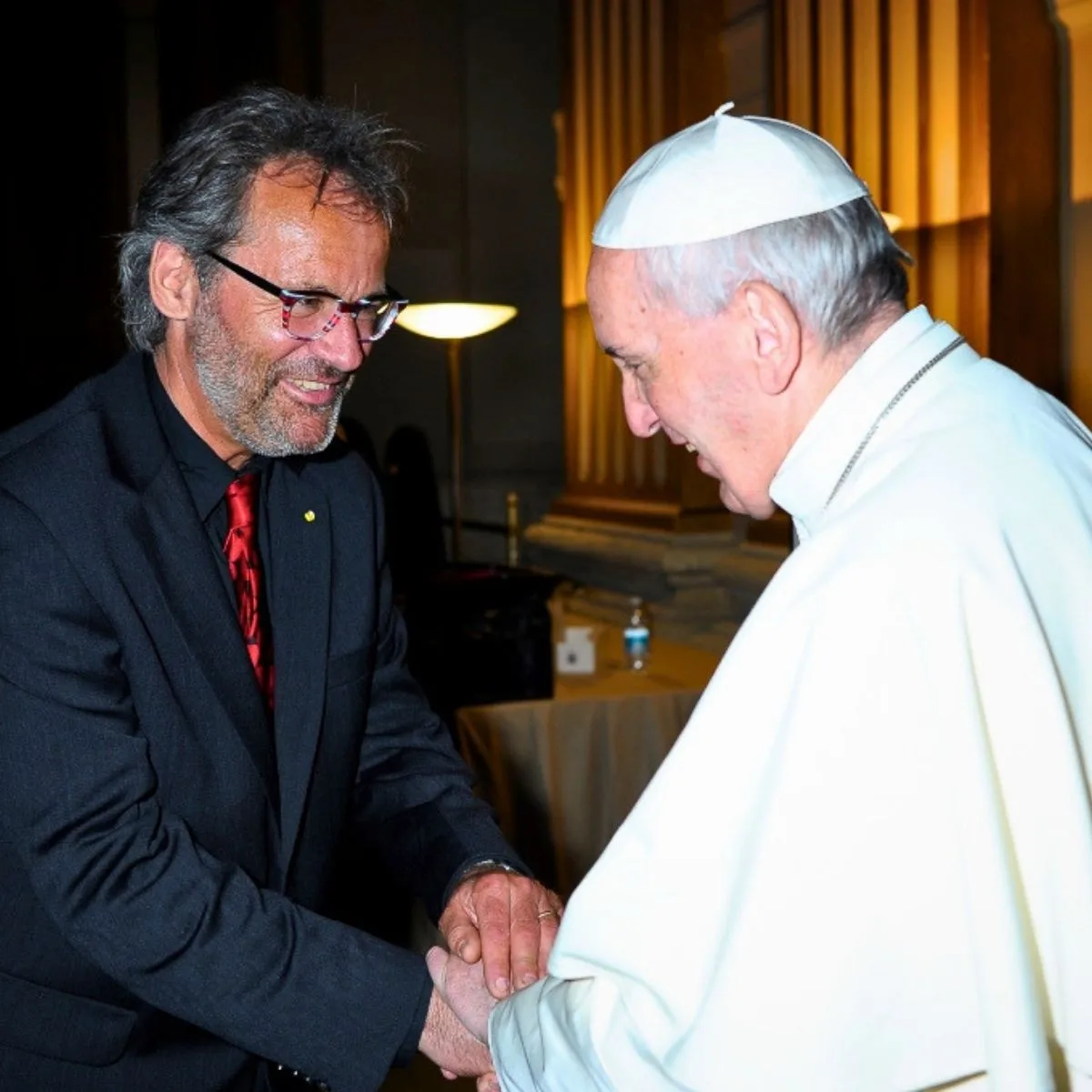
Throughout this anniversary year, I share a monthly story about special projects from my career and about the diversity of this profession, which in Dutch we call Florale Vormgeving. Some of those stories go back to my very first years as a Master Floral Designer; others, like my 35-year journey with flowers for the Vatican, span decades. You can find more of my work at pauldeckers.nl.