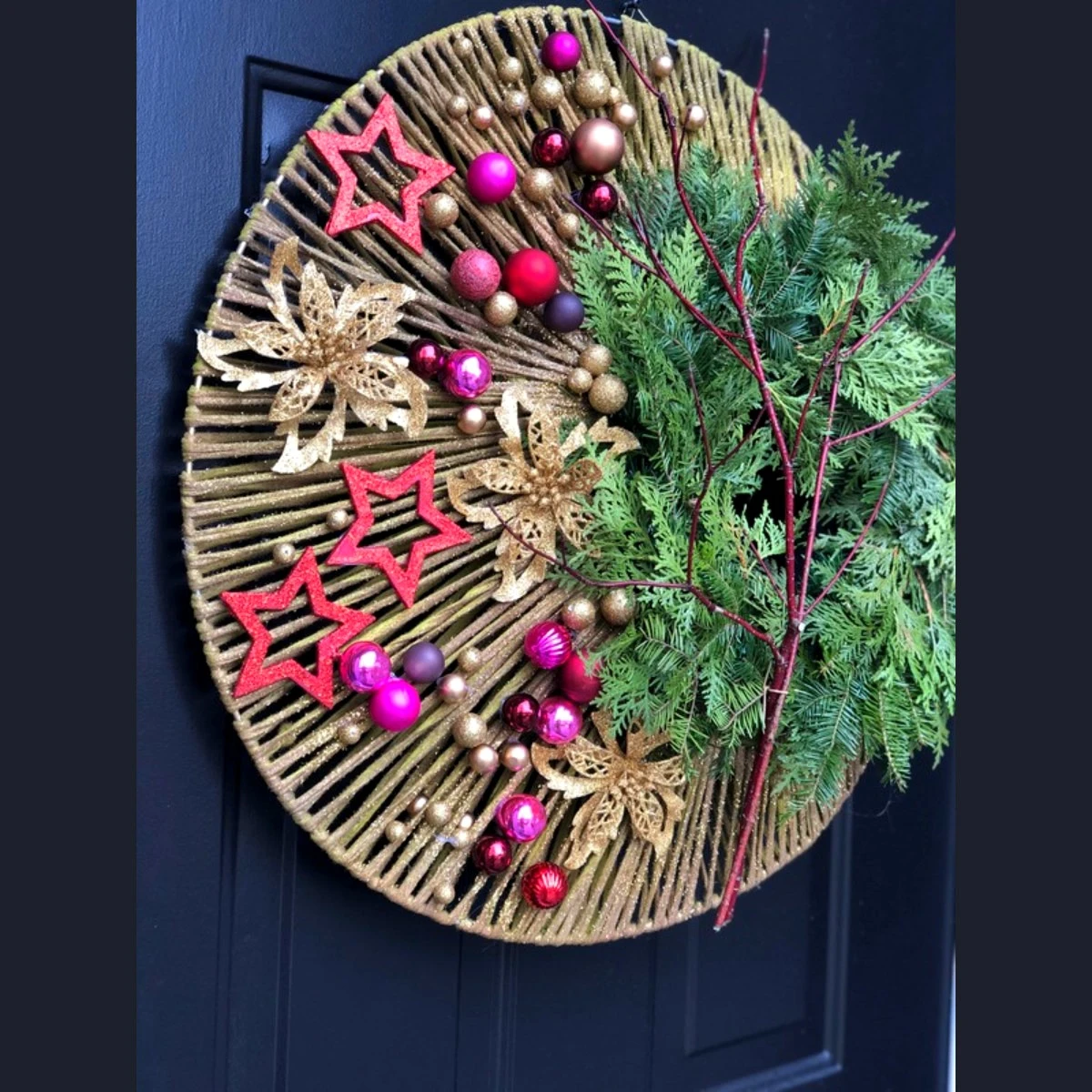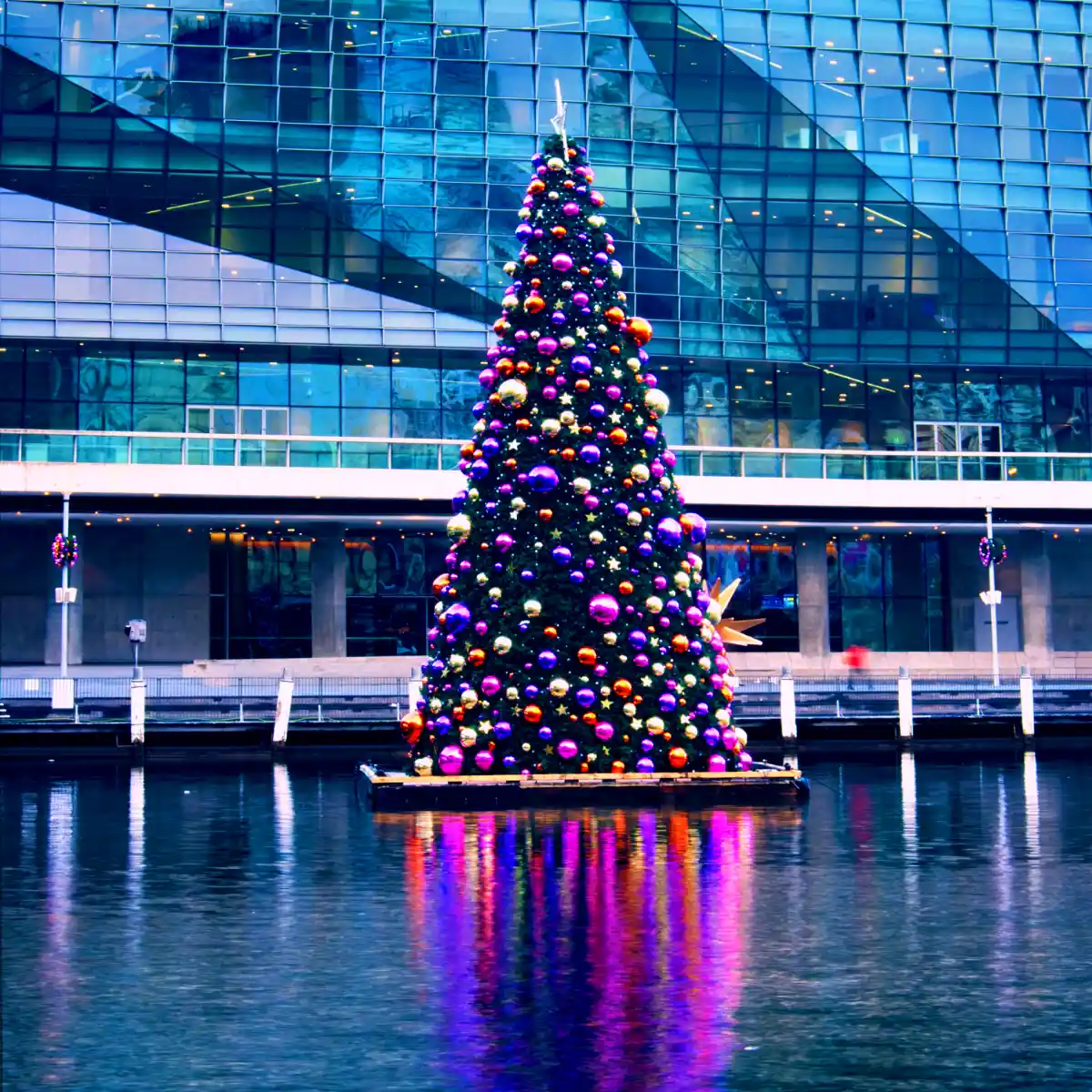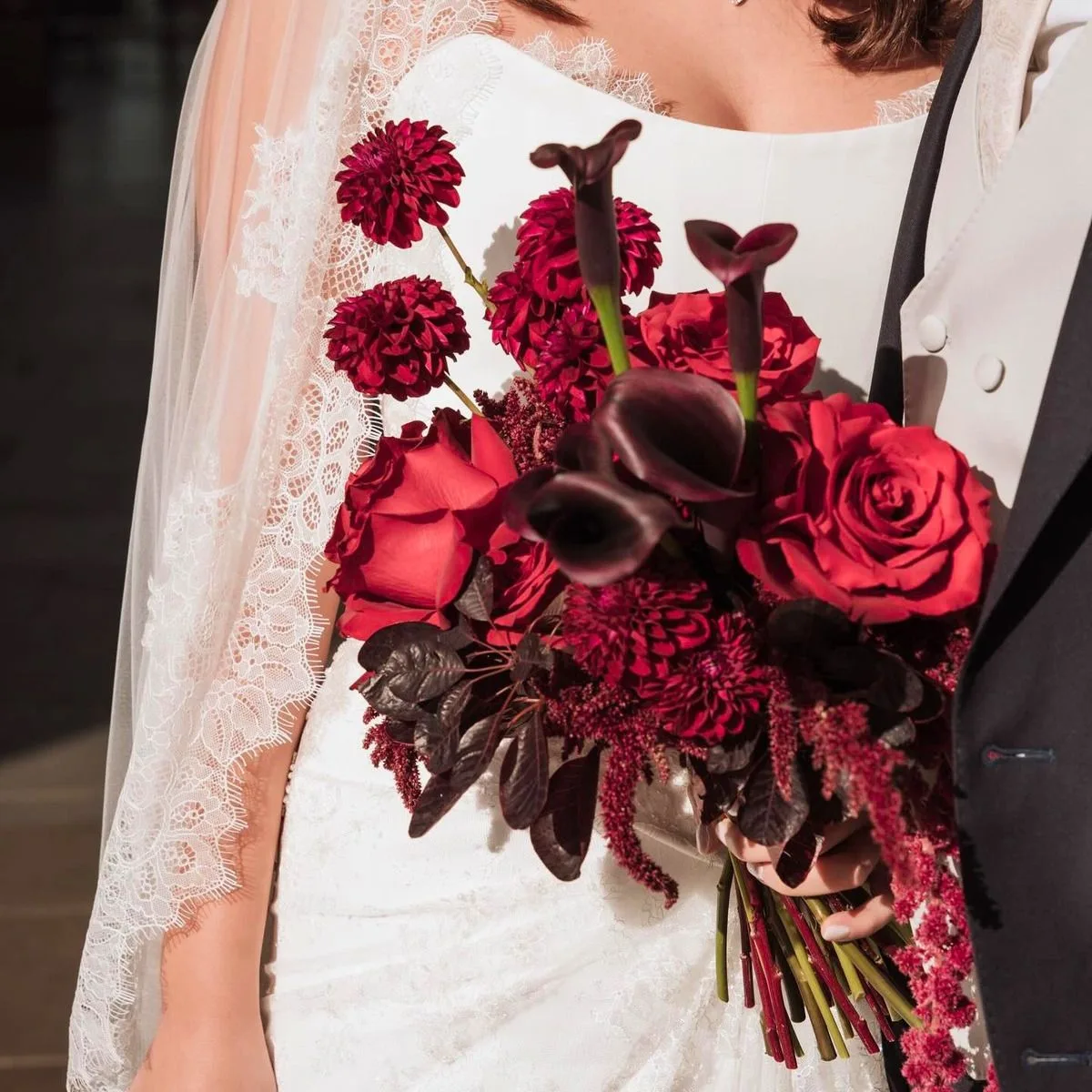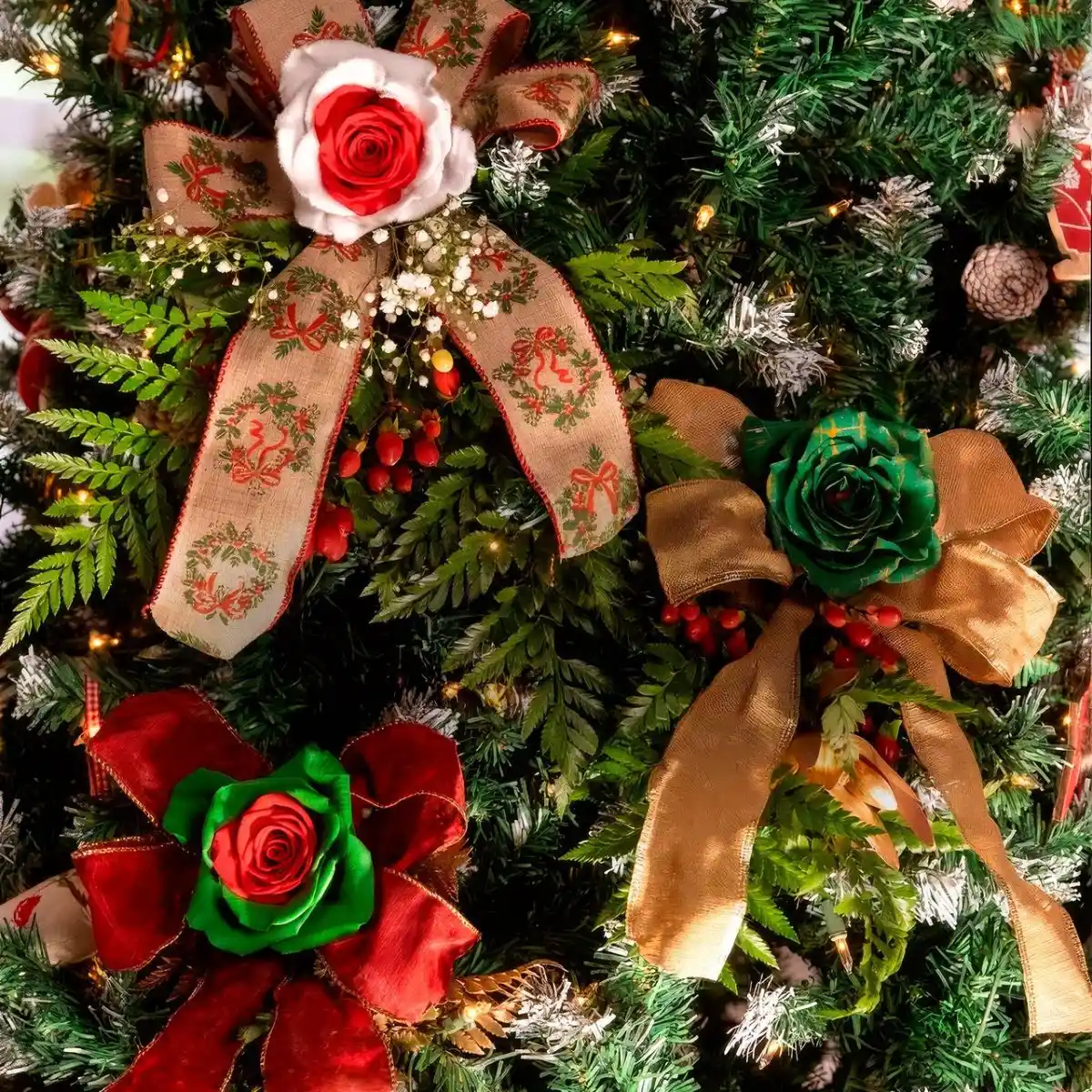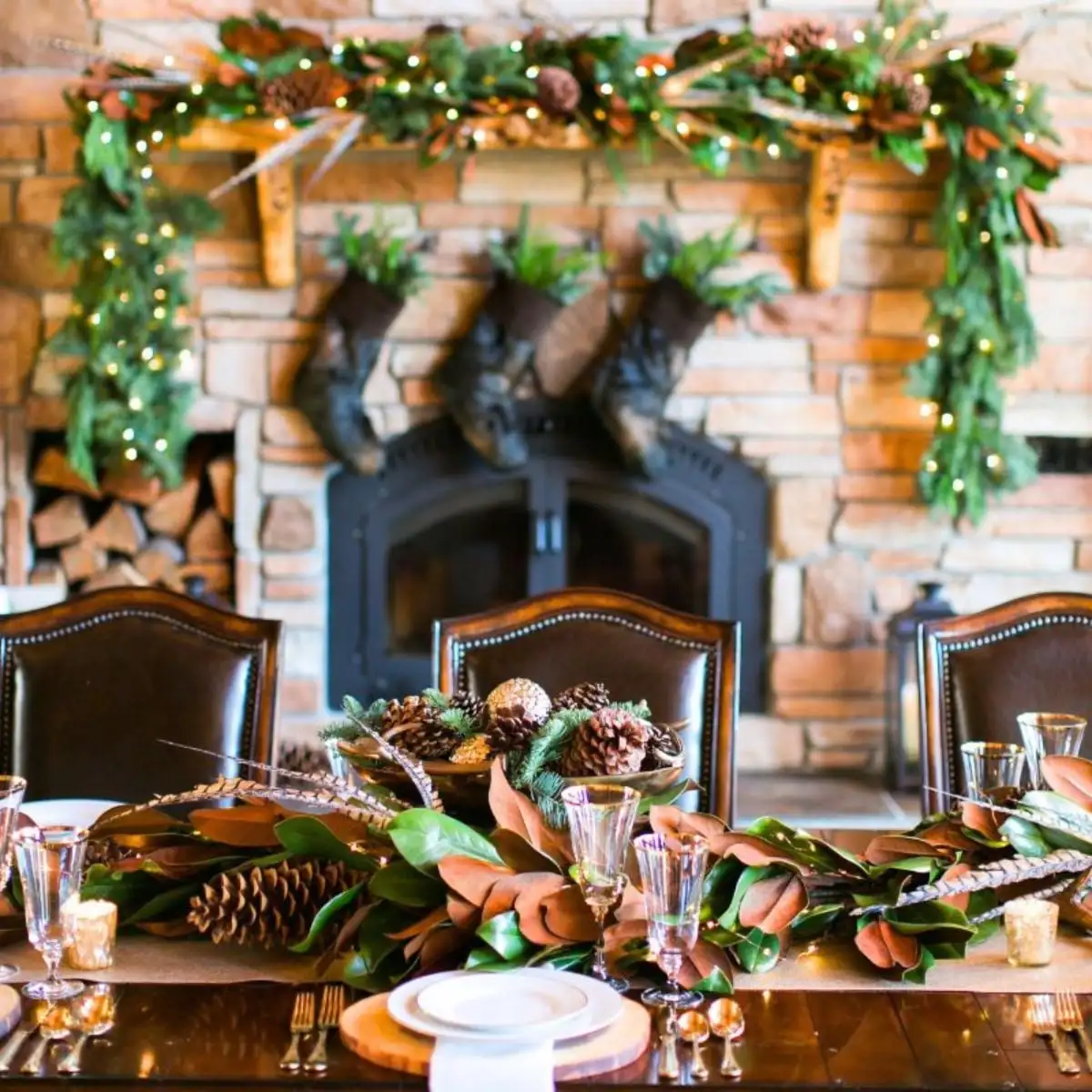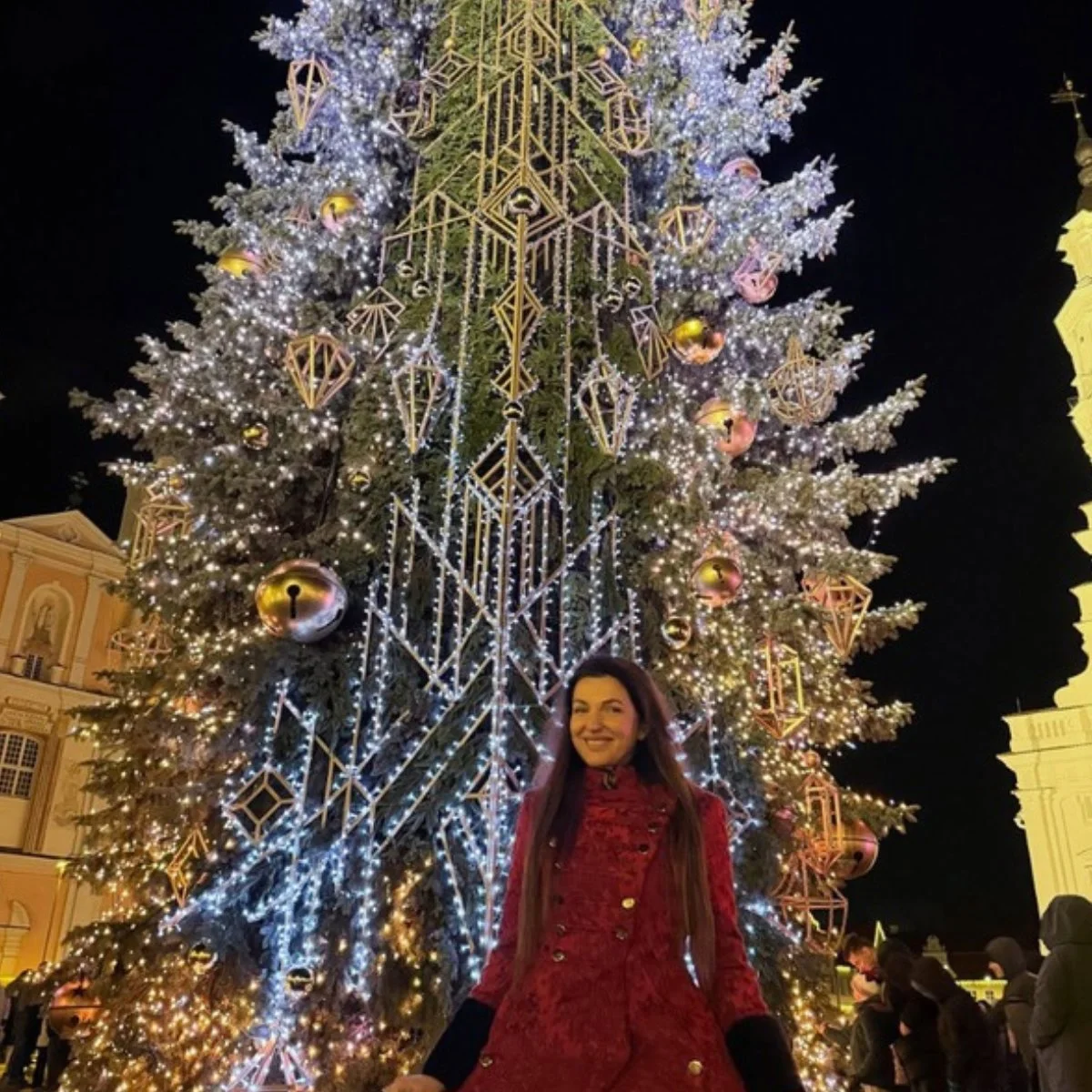
Give me moss, pinecones, wild branches, berries, paper, and cardboard. I'll take those over another box of plastic ornaments.
By September, Christmas has already moved into the shops. It arrives with glitter, artificial snow, plastic branches, and thousands of perfectly coordinated decorations. Apparently, we now need several months of preparation to achieve the Christmas look.
And yet, somewhere between buying the matching baubles and finding space for another box of decorations, I think we have forgotten something rather important: the fun of creating.
I have a confession. Give me a beautiful piece of Pinus, a strange twisted branch, a handful of pinecones, some moss, and a sheet of cardboard, and I can happily disappear into my workshop for hours. I might forget the time, my coffee, and possibly lunch. But I will definitely come out with an idea.
That's the kind of Christmas I want to talk about. Not a Christmas with fewer beautiful things, but one with more imagination. More natural materials. More experimentation. More things made by hand. And perhaps a little less shopping for decorations that look exactly like the ones everyone else has.
My Kind of Christmas Shopping Starts With a Handful of Nature
There is a particular pleasure in choosing natural materials. You never quite know what will catch your eye: a beautifully twisted branch, an unusual pinecone, a piece of moss with the perfect texture, or a cluster of bright red berries.
And suddenly, your shopping list changes.
Picea and Pinus bring structure, movement, and that unmistakable Christmas feeling. Ilex and Malus add color and little bursts of drama. Moss and lichens create texture, while pinecones, bark, and dried botanicals bring all sorts of unexpected possibilities.
I love materials that don't need to be perfect. In fact, the more character they have, the more interesting I find them. A crooked branch can be more inspiring than an entire box of identical ornaments.
You can find wonderful botanical materials through floristry suppliers and specialist webshops. So, instead of buying another ready-made decoration, why not choose a few materials and see where your imagination takes you?
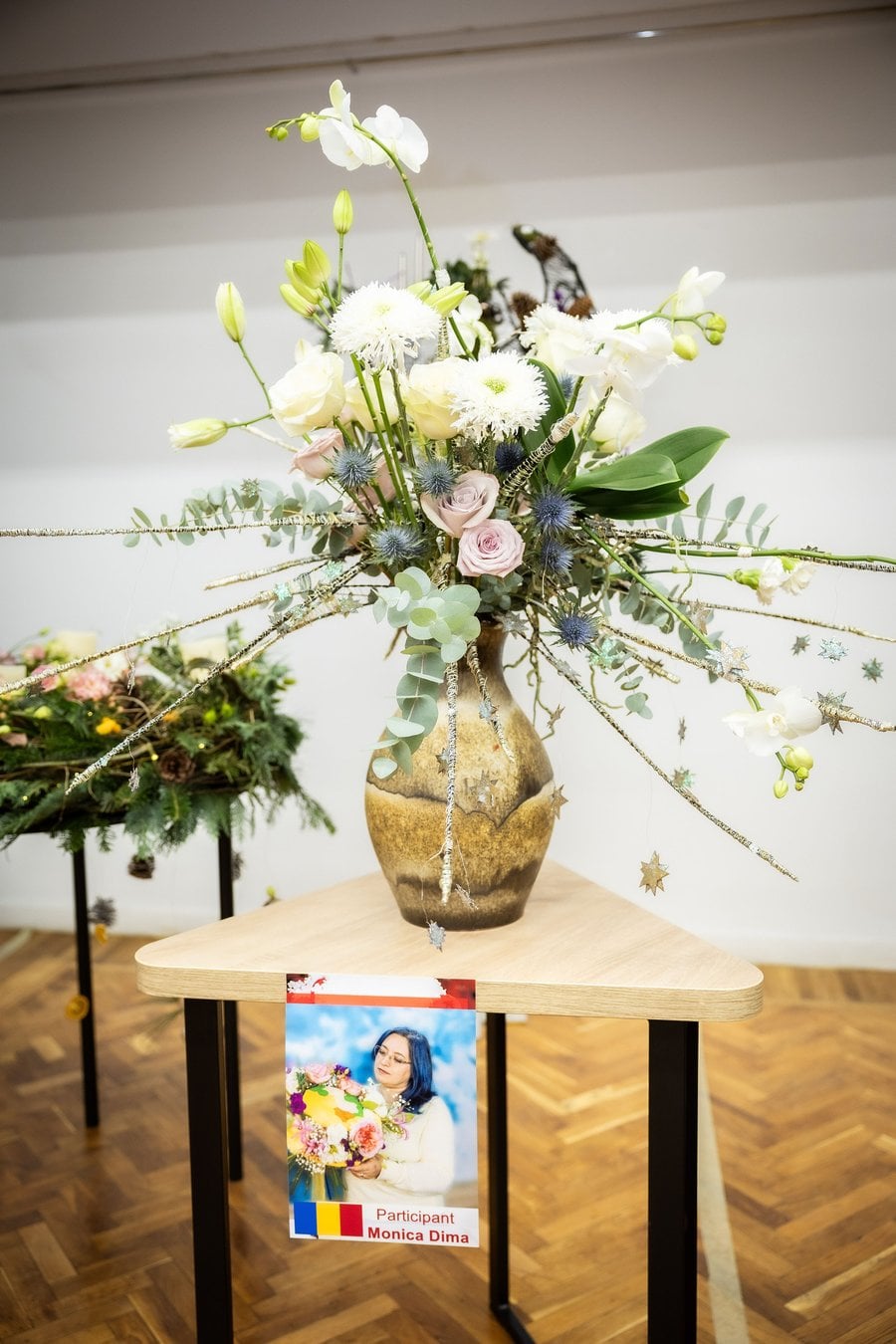
Moss, Pinecones, and a Little Creative Trouble
I think we underestimate natural materials because we often use them in predictable ways.
A pinecone goes into a basket. Moss goes around the base of a Christmas tree. A branch goes into a vase. Lovely. But what if we pushed things a little further?
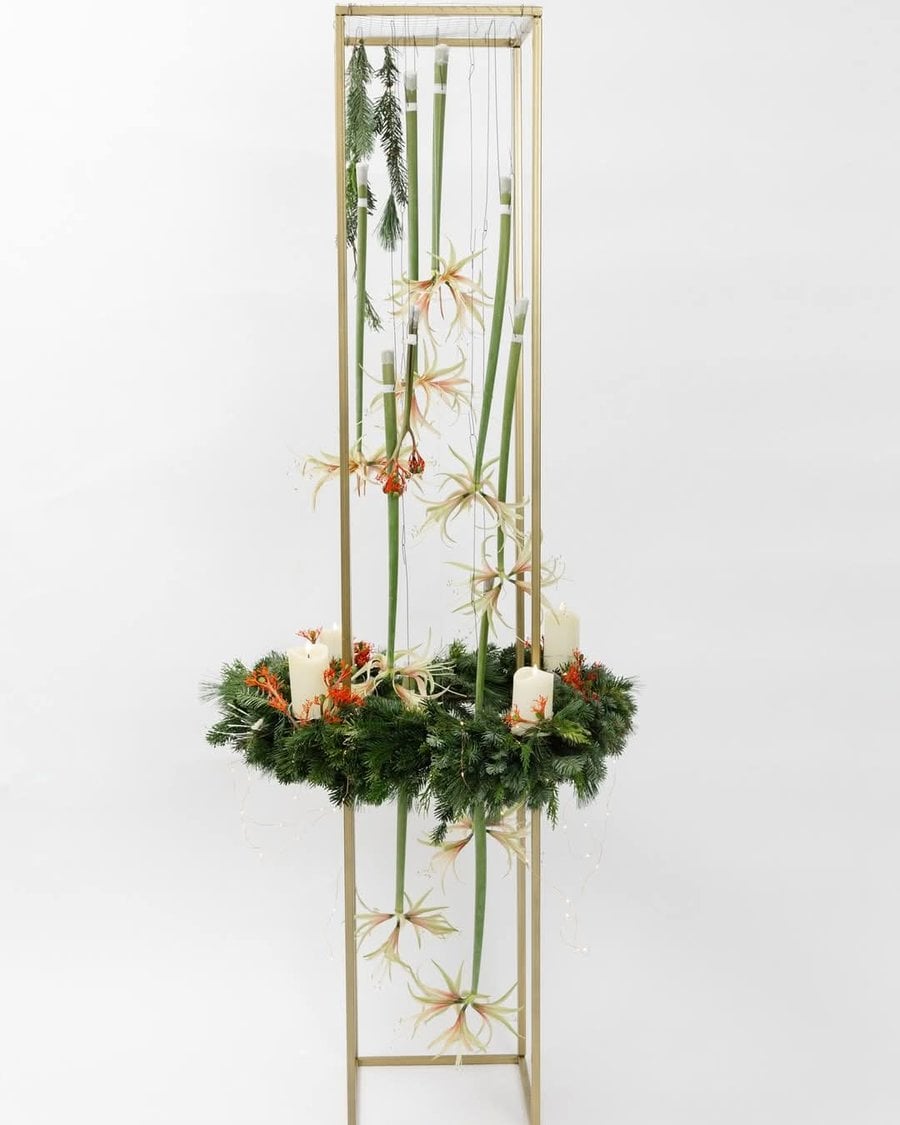
What if moss became the surface of a sculptural installation? What if pinecones were suspended at different heights, creating an unusual Christmas chandelier? What if branches were arranged into an oversized structure, with berries and dried materials creating unexpected details?
A handful of natural materials can become a miniature forest, a dramatic table centerpiece, a wall installation, or an entire Christmas scene.
And here's something I love: you don't always have to make the materials look different. Sometimes the best design decision is to let them be exactly what they are. A beautiful branch doesn't need ten ornaments attached to it. A pinecone doesn't need to be painted gold to deserve attention. Nature has already done quite a lot of the design work for us.
Our job is to notice it.
Who Said Cardboard Can't Be Fabulous?
Now, this is where things get really interesting.
I have a soft spot for unconventional materials, especially when they are inexpensive, accessible, and full of possibilities. Paper and cardboard are my best friends.
A cardboard box is not necessarily rubbish. It might be a giant star waiting to happen. A sheet of paper might become an oversized snowflake. Several simple shapes, repeated and assembled, can create a spectacular suspended installation.
Think beyond the little paper ornaments we made at school. Think BIG.
Huge snowflakes hanging above a Christmas dinner table. Sculptural stars placed in a shop window. Three-dimensional trees made from layered cardboard. Large decorative silhouettes that create an entire winter landscape.
And then, of course, bring in the botanicals.
Imagine a giant cardboard star surrounded by fresh Pinus branches. A sculptural paper snowflake suspended above a composition of moss and pinecones. A large geometric structure softened with greenery, berries, and dried materials.
I love this combination because it brings together two completely different worlds. One is organic, irregular, and shaped by nature. The other is constructed, deliberate, and shaped by our imagination.
They don't have to match. In fact, I think they are much more interesting when they don't.
And if your first cardboard star looks a little crooked, congratulations. You have made something by hand. You are not running a factory.
More Than a Decoration: An Excuse to Be Together
Christmas, after all, is not really about decorations. It's about people.
It's about having everyone around the table, about familiar voices filling the house, about children getting ridiculously excited over things that adults have long forgotten how to find magical. It's about the little traditions, the laughter, the anticipation, and those moments that somehow become the memories we carry for years.
And I think creating decorations together can be part of that magic.
Imagine an afternoon when the whole family gathers around a table covered with paper, cardboard, branches, pinecones, moss, and ribbons. Nobody is in a hurry. Nobody is trying to make everything look perfect. Children are cutting snowflakes, someone is struggling with a cardboard star, another person is arranging pinecones in a way that makes absolutely no sense, but everyone is having a wonderful time.
Let the children invent their own decorations. Let them choose the colors, combine materials, and come up with ideas that would never cross an adult's mind. Their snowflakes don't need to be symmetrical, and their little Christmas trees don't need to look like the ones in shop windows.
Actually, that's the beauty of it.
We spend so much time trying to create a magical Christmas for children that sometimes we forget to let them create some of that magic themselves.
Years from now, they probably won't remember whether the decorations matched the sofa. But they might remember the afternoon they made a giant cardboard star with their parents, the pinecones they collected, the mess on the table, and the laughter when something went completely wrong.
And isn't that a much better Christmas decoration to keep?
Of course, natural materials deserve thoughtful sourcing. Choose responsibly harvested greenery and decorative materials, use suitable fallen branches where possible, and avoid collecting protected plants or damaging living trees. We want to bring nature into our homes, not take away the very things that make it beautiful.
A Little Less Buying. A Lot More Making.
I am not suggesting that we throw away the decorations we already own. Quite the opposite. I love decorations that return year after year, carrying memories with them. Reusing them is part of the pleasure.
But perhaps we don't need to buy a completely new Christmas every December.
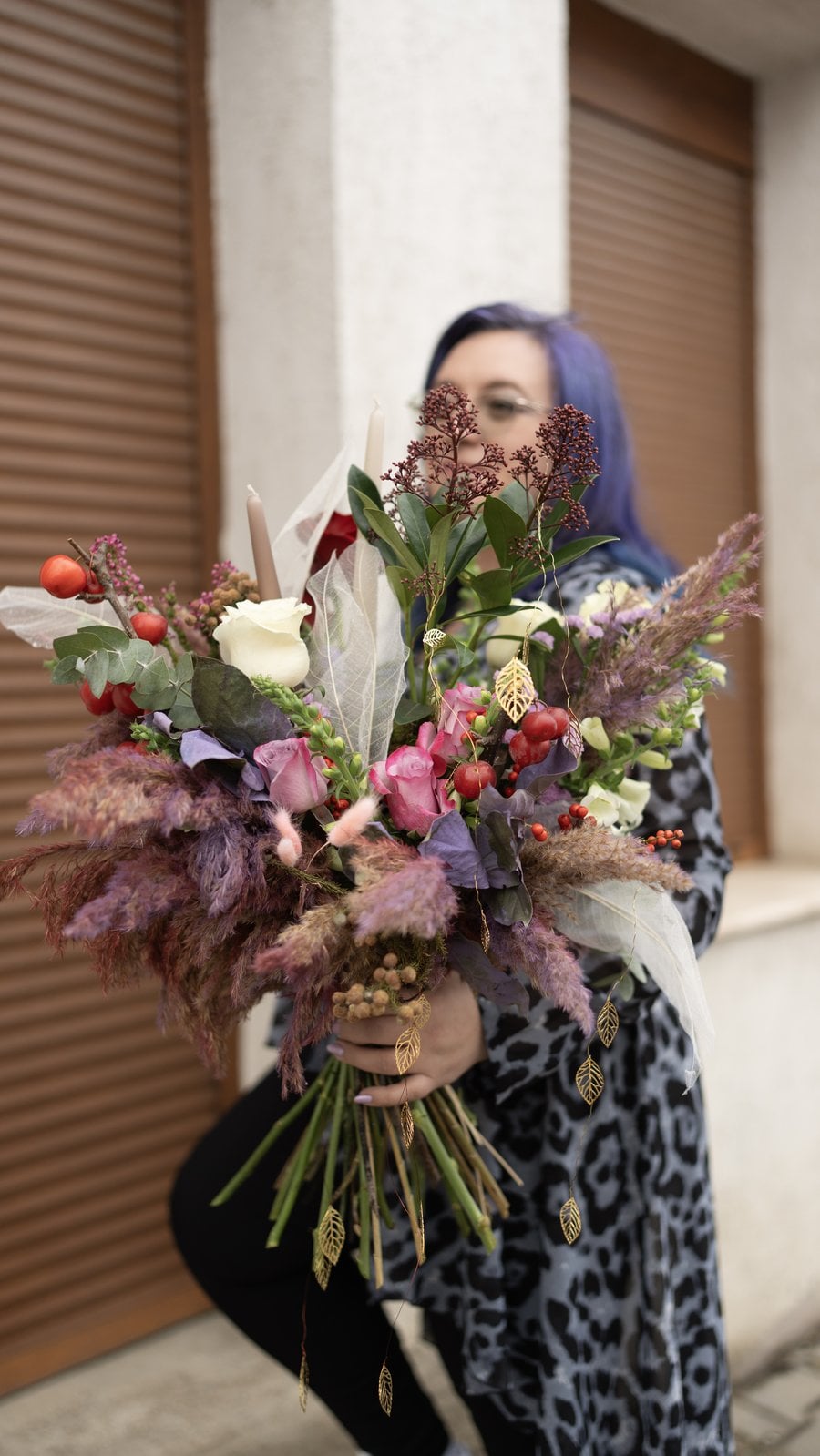
We could invest in beautiful botanical materials, reuse structures, experiment with paper and cardboard, and create decorations that can be adapted, taken apart, or reinvented next year.
And we can still have lights. We can still have color. We can still have sparkle. I'm a floral designer, not the Grinch!
I simply believe that the most interesting Christmas decorations are not always the ones we find ready-made. Sometimes they are the ones we create when we allow ourselves to think differently.
Let Christmas Grow a Little Wild
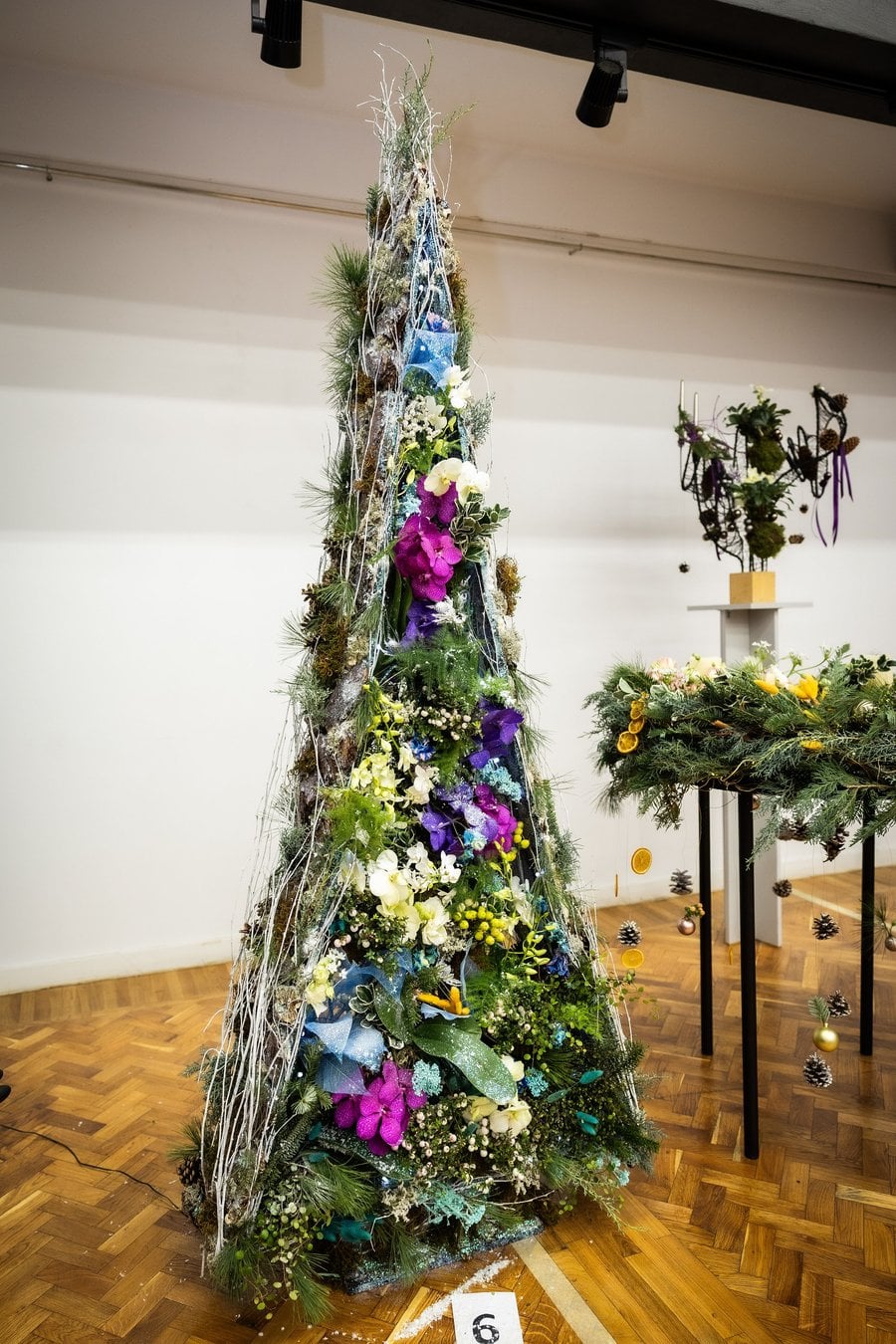
I want a Christmas that smells of fresh conifer branches, that has the texture of moss, the shapes of pinecones, and the unexpected beauty of natural materials. A Christmas with handmade stars, oversized paper snowflakes, unusual structures, and decorations that make people ask: How did you make that?
I want less pressure to reproduce perfect interiors and more freedom to experiment. Less matching, more mixing. Less scrolling for inspiration and more getting our hands dirty.
Because a branch can be more than a branch. A pinecone can be more than a pinecone. A cardboard box can become something spectacular.
And the best part? You don't need to wait for inspiration to arrive in a beautifully wrapped package.
Sometimes, all you need is a handful of moss, a few branches, a pair of scissors, and the courage to make a little mess.
Christmas doesn't need more decorations. It needs more imagination!
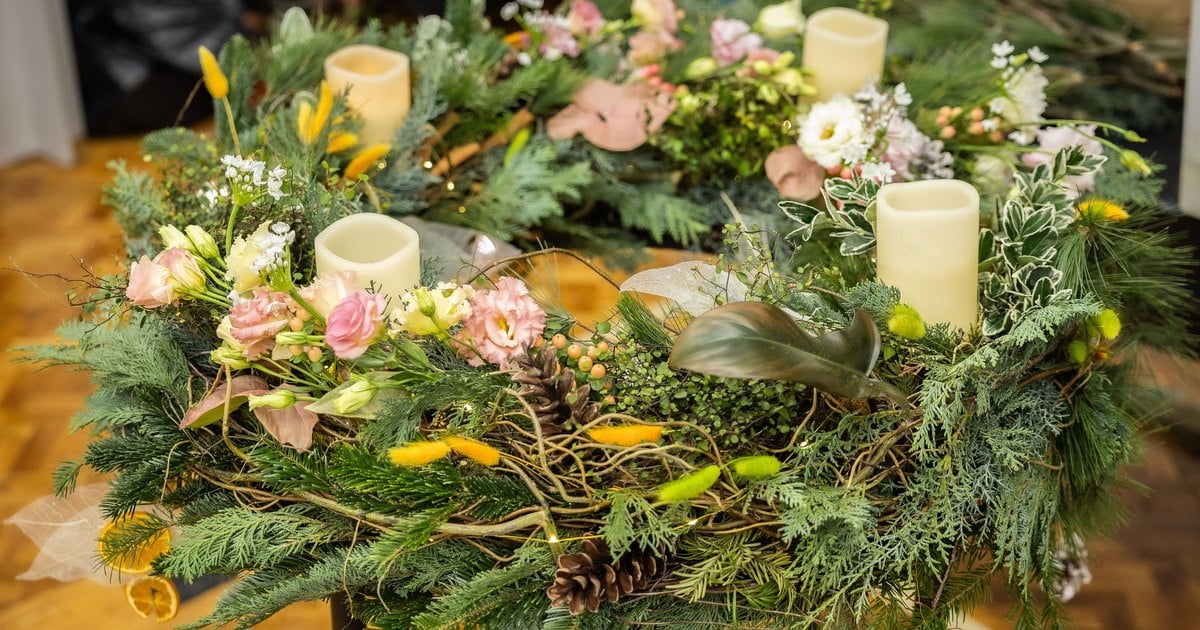
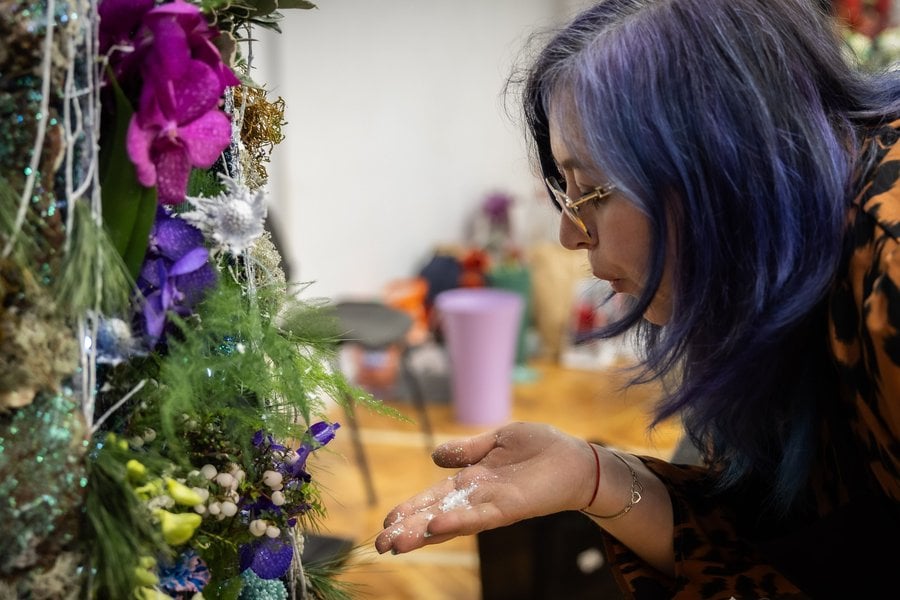
Featured image: me at work on a Christmas tree. Header image: an Advent wreath of fir, pine, and roses. All photos by AC Concepts Productions.