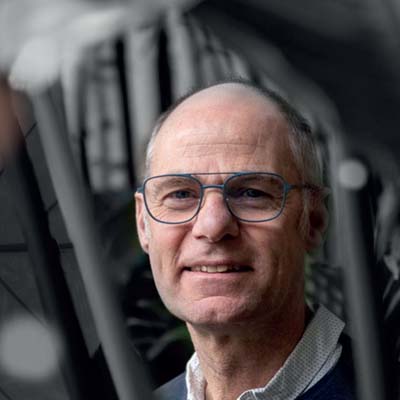
My name is Geert Maas (1960), a floral artist based in Schijndel, Netherlands. I am a trained master florist and also a graphic and industrial designer. Over the years, my work has ranged from creative design for growers, flower organizations, retailers, and florists to gallery work throughout Europe.
Lately, one question keeps circling back in my studio and in my head: what is the future of flowers and plants in our society, in daily life, in the way we live? Is "more" really "more", and why do I firmly believe in the opposite?
From Accessible to Overloaded
Looking back at the period from roughly 1970 to 2000, flowers and plants became accessible to nearly everyone. Prices, availability, and variety changed the way people lived with green at home. Interiors carried more plants, and flowers didn’t just sit in one vase; they showed up in multiples and became part of the rhythm of a room.
In the 2020–2030 decade, we’re dealing with overproduction and over-choice. "Anything goes" quickly turns into chaos. The internet and social media have removed borders but have also created new ones, shaped by algorithms. And world leaders still draw many of the lines we end up living inside.
A New Harmony of Nature and Technique
There’s a simple truth underneath all of this: we can’t live without flowers and plants. We can pretend we can, try to replace them, or downplay their value, but it won’t last. Humans exist by the grace of the green world around us.
That’s why I keep coming back to a new harmony: nature and technology living together without one swallowing the other. For me, it starts with respect for flowers on two levels at once: their simplicity, and their insanely complex form and function on this planet.
Being happy around flowers and plants is not a luxury. A few loose stems can shift a day. A strong piece of floral work can wake people up. Color combinations can feel like harmony or contrast, and that keeps us mentally lively.
I sometimes call it a kind of free medicine. Maybe that’s exactly why we overlook it. Flowers and plants feed the body through fruit and harvest, and they feed the mind emotionally. And giving flowers remains one of the purest ways to connect people with nature.
Three Ways to Look at Our Trade
When we look at our profession from different perspectives, new possibilities emerge:
1) Pure
Seasonal flowers grown close to home that make you slow down a bit. Flowers from far destinations that bring a wider world into a bunch. And flowers that trigger emotion in the receiver, where the moment of receiving matters more than vase life.
2) Not-Pure
Real flowers combined with a made world that can feel emotionless: silk flowers, LEGO flowers, and 3D-printed nature.
3) Pure With Virtual Techniques
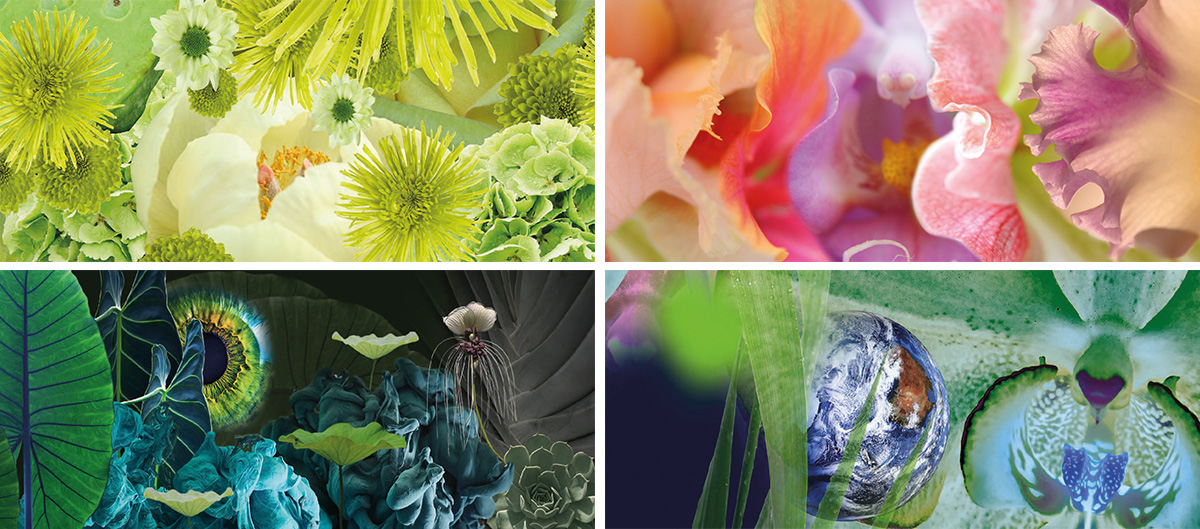
This is the space that intrigues me: real flowers combined with technical innovations such as AI, projection, and holography. Not as a trick, but as a way to build new experiences.
Where Flowers Can Lead Again
I’m convinced marketing and communication in our industry can get stronger when we add angles that aren’t directly commercial. Pure, not-pure, pure with virtual. Real or unreal. Possible or impossible. Humans are creative survivors by nature, shaped by nature as our original source of nourishment. That means there is always room to renew and adjust.
Public Buildings Need Better Green Thinking
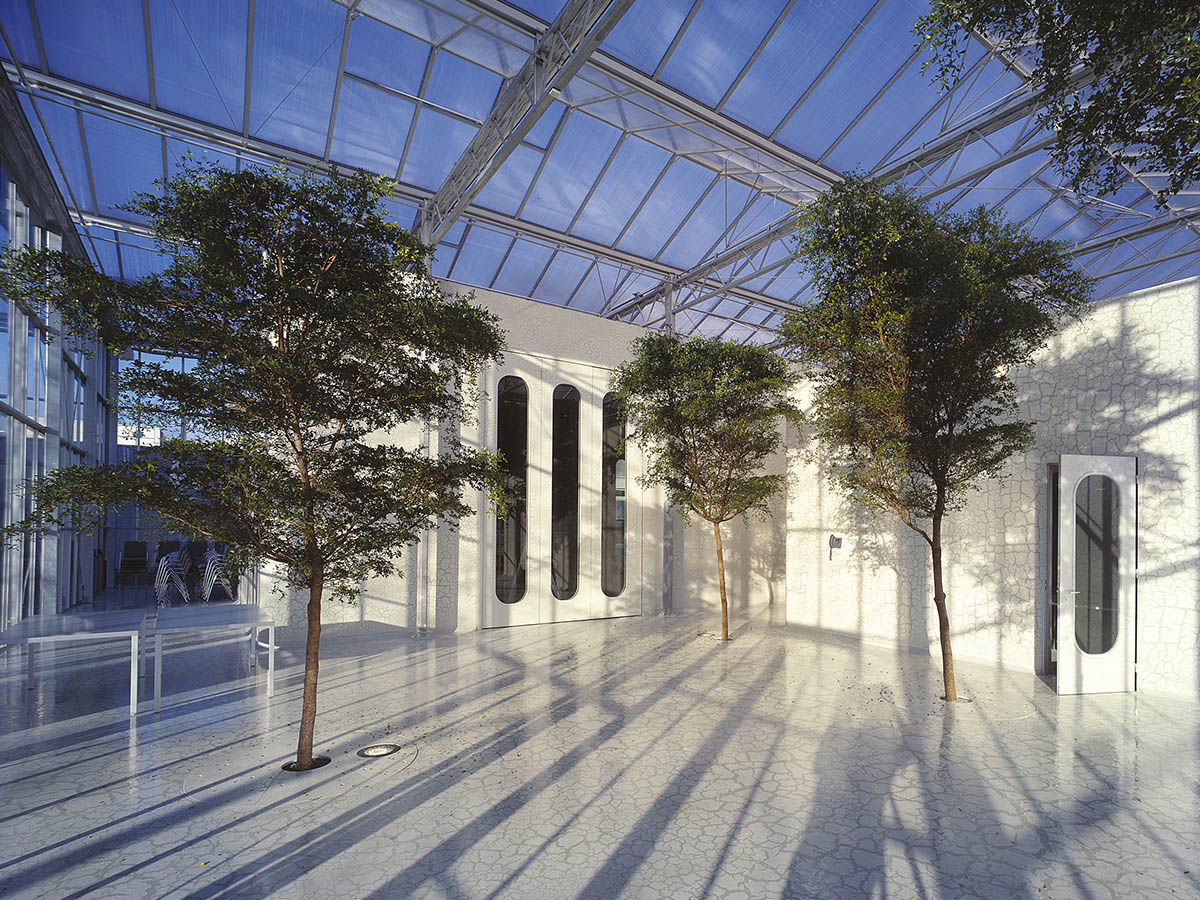
One place with huge potential is public buildings. Flowers and plants can work like ‘medicine’ there too: making spaces where people actually want to be. I’ve been exploring this line of thinking together with my brother, Winy Maas from MVRVD Architects.
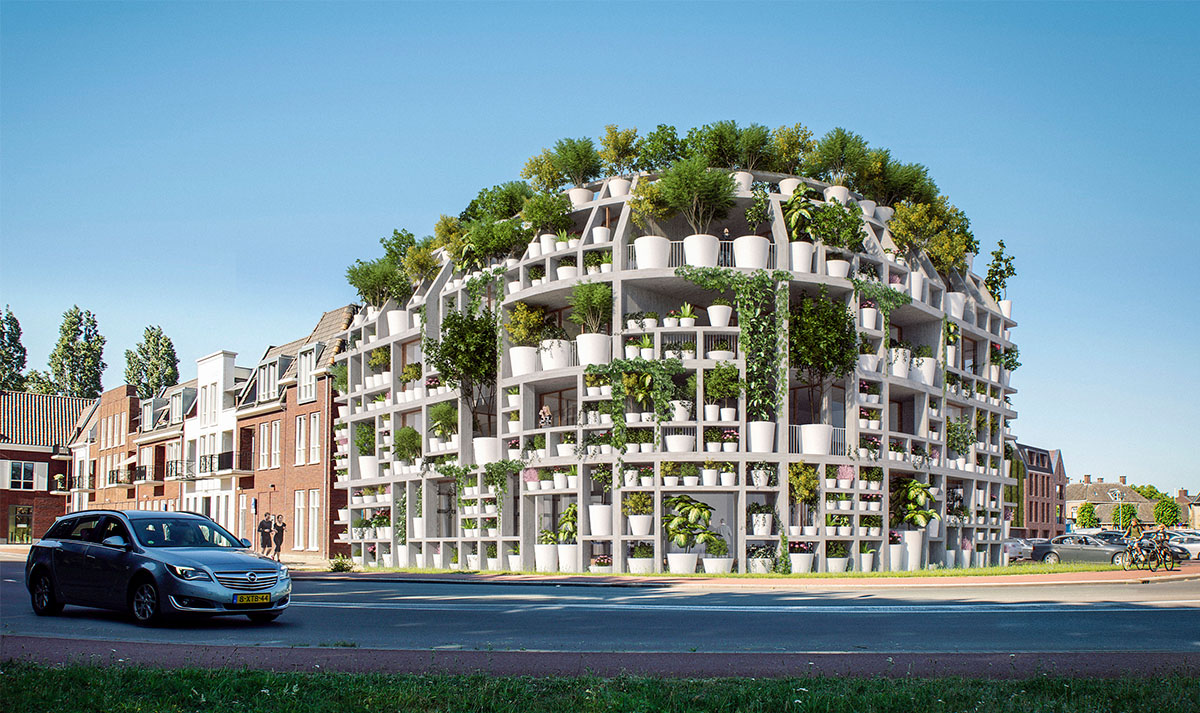
Festivals, cafés and restaurants, sauna and wellness centers, airports and stations, hospitals, and care institutions could take a leading role here. Not with a token plant in the corner, but with serious green thinking that serves people.
Art, Installations, and Simplifying
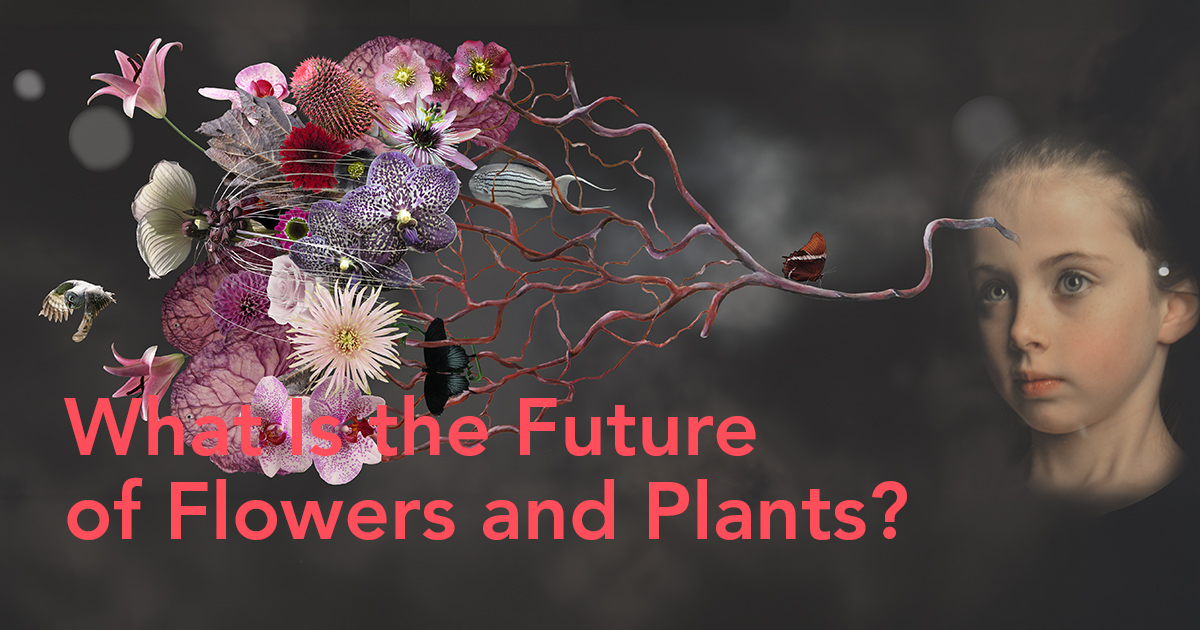
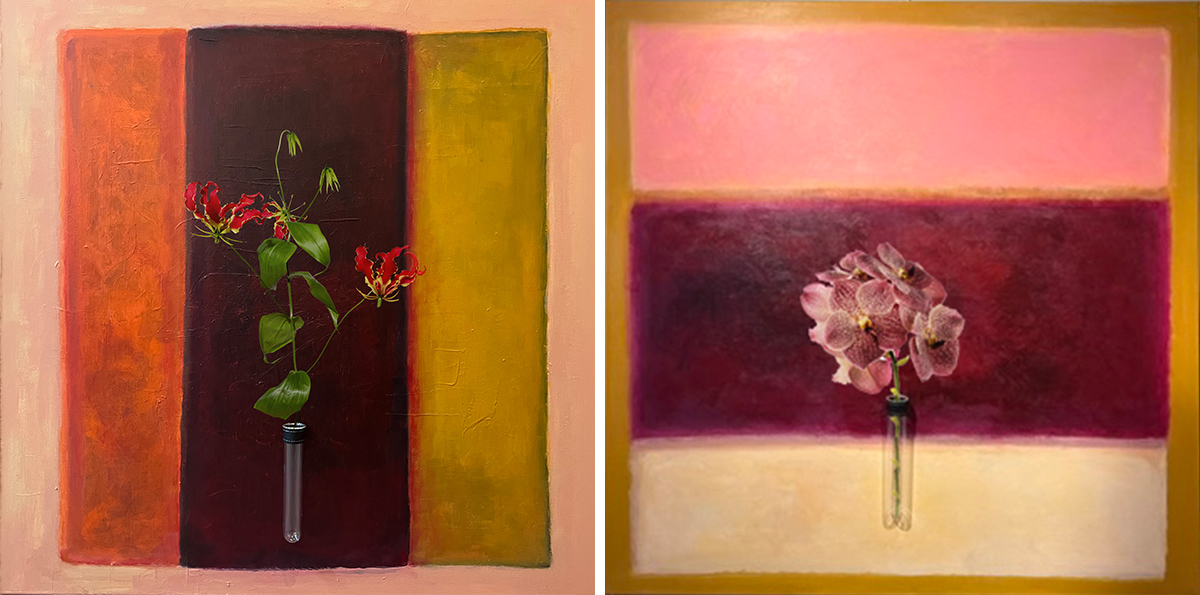
There’s also art: living flowers and plants as active players in artworks, from simple gestures to full installations, paintings, and photographic montages.
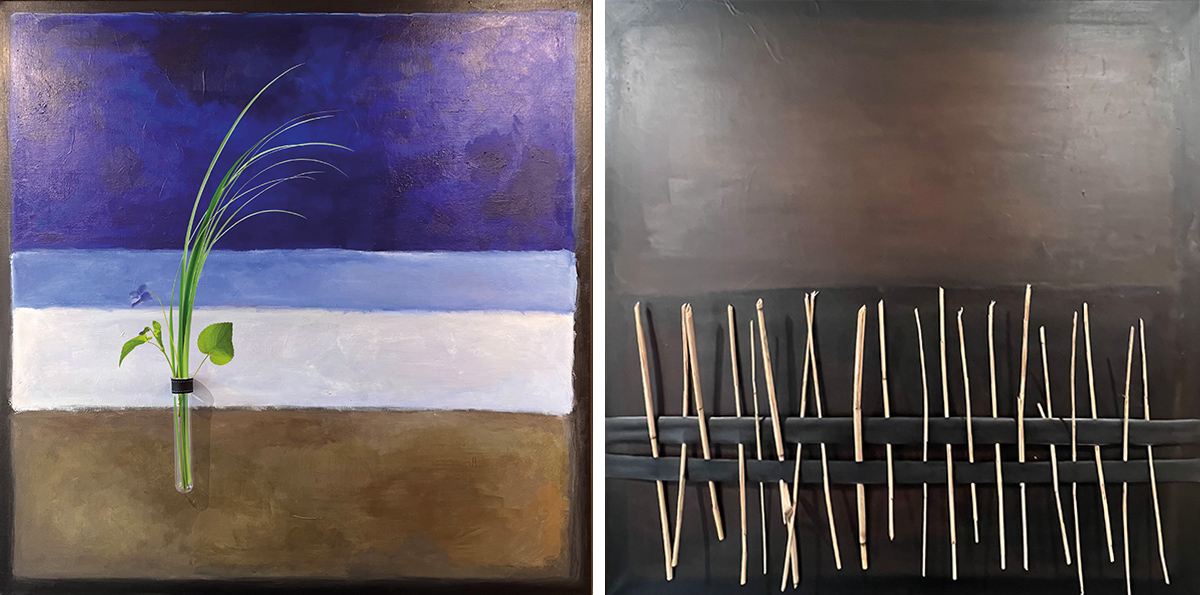
When Less Floral Says More
I keep returning to simplifying. Sometimes one honest stem is enough. Not because ‘less’ is trendy, but because a restrained floral presence can speak clearly in a noisy world.
My world and our current world share the same core message: don’t forget what flowers and plants really do for humans, and don’t be afraid to rethink how we bring them into daily life again.
Header image: 'The human connection' by Geert Maas. Feature image: Painting from the 'Simplifying' series by Geert Maas. Check the Geert Maas online gallery for more artwork.