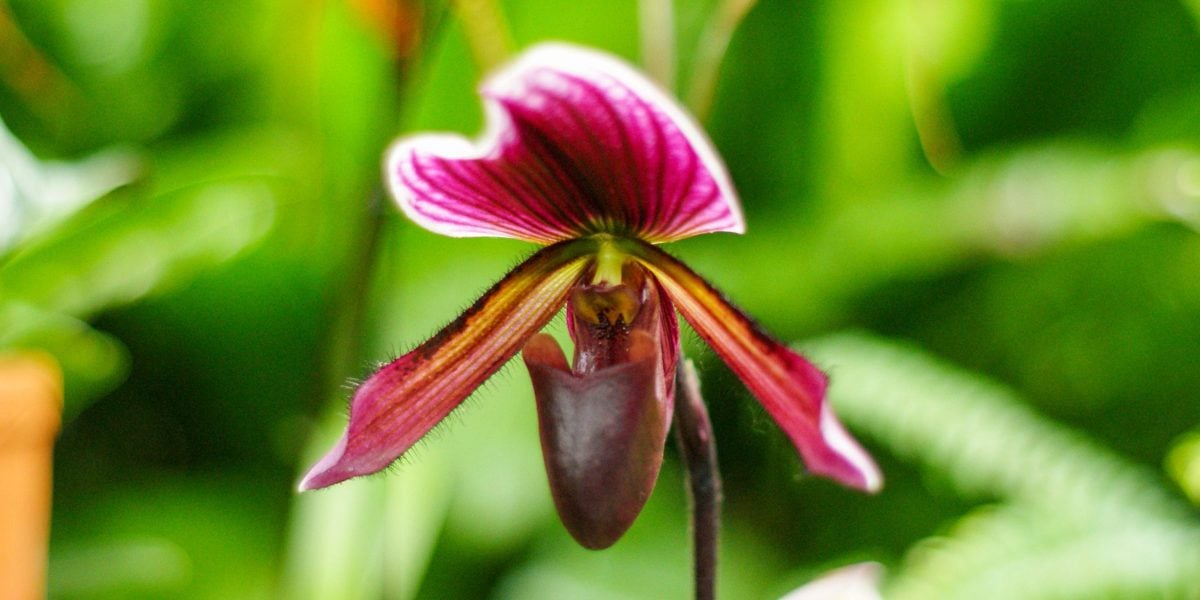
Lady slipper orchid is the name of two plants: Paphiopedilum, the tropical Asian slipper orchid grown as a houseplant, and Cypripedium, such as the protected pink lady's slipper of North American woods, which does not survive in a pot. Here is how to tell them apart, how to grow a Paphiopedilum, and where the orchid grows in Red Dead Redemption 2.
"Lady slipper orchid" is the name of two different plants. The one sold as a houseplant is Paphiopedilum, the slipper orchid from tropical Asia and New Guinea. The one in the woods of eastern North America is Cypripedium, such as the pink lady's slipper (Cypripedium acaule), which does not survive in a pot. Gamers know a third: the collectible orchid in Red Dead Redemption 2. This page is about Paphiopedilum, the lady slipper you can grow at home.
Common Names
Lady slipper orchid, slipper orchid (Paphiopedilum, the houseplant)
Pink lady's slipper, moccasin flower (Cypripedium acaule, the wild North American orchid)
Two Lady Slippers: Paphiopedilum and Cypripedium
Both belong to the slipper orchids, the group whose lip has grown into a pouch. Paphiopedilum has about 60 species, from South India to the Philippines and New Guinea. It is evergreen, has no pseudobulbs, and grows a fan of strap-shaped leaves, plain green or mottled, with the flower on a stalk from the center of the fan.
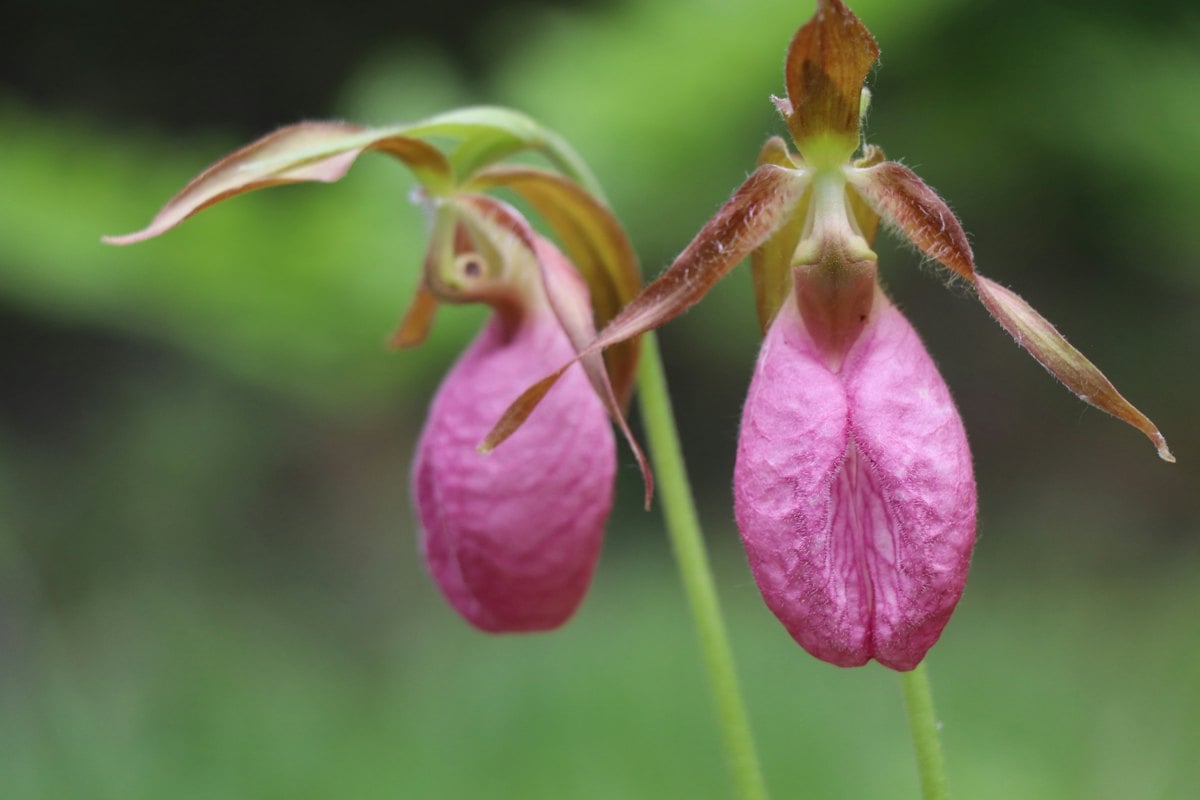
Cypripedium acaule is a temperate woodland orchid. In spring it pushes up two veined leaves at ground level and one leafless, hairy stalk with a single pink pouch of about 5 cm (2 in), split by a groove down the front. It flowers from April to June.
The wild pink lady's slipper (Cypripedium acaule), with the groove down the front of its pouch. Leave it where it grows. Photo by Sandi Mager on Unsplash.
The Lady Slipper Orchid in Red Dead Redemption 2
In Red Dead Redemption 2, the Lady Slipper Orchid is one of the exotic plants Algernon Wasp asks for in the "Duchesses and Other Animals" missions. You need seven. They grow on the ground at fixed spots west of Big Valley; game guides say to start above and below the "B" of Big Valley on the map. The Moccasin Flower Orchid he also wants is a separate collectible in the game, southeast of Elysian Pool. In real life, moccasin flower is simply another name for the pink lady's slipper.
How to Grow a Lady Slipper Orchid Indoors
Light: an east, north, or west window with one to four hours of direct sun. It is a low-light orchid, like Phalaenopsis.
Temperature: nights of 13 to 22 °C (55 to 72 °F) and days of 21 to 29 °C (70 to 85 °F). Plain green-leaved types take cooler conditions; mottled-leaved types want nights of at least 18 °C (65 °F).
Water: with no pseudobulbs to store water, it must never dry out. Keep the mix moist but not soggy, water as soon as it approaches dry, and never let the pot stand in water.
Humidity: 40 to 50 percent. Keep water off the leaves and out of the crown, where cold and wet cause rot. Do not mist.
Repotting: about every two years, or when the bark mix breaks down. Seedlings and small plants every year.
Flowers: a single flower lasts about six to eight weeks.
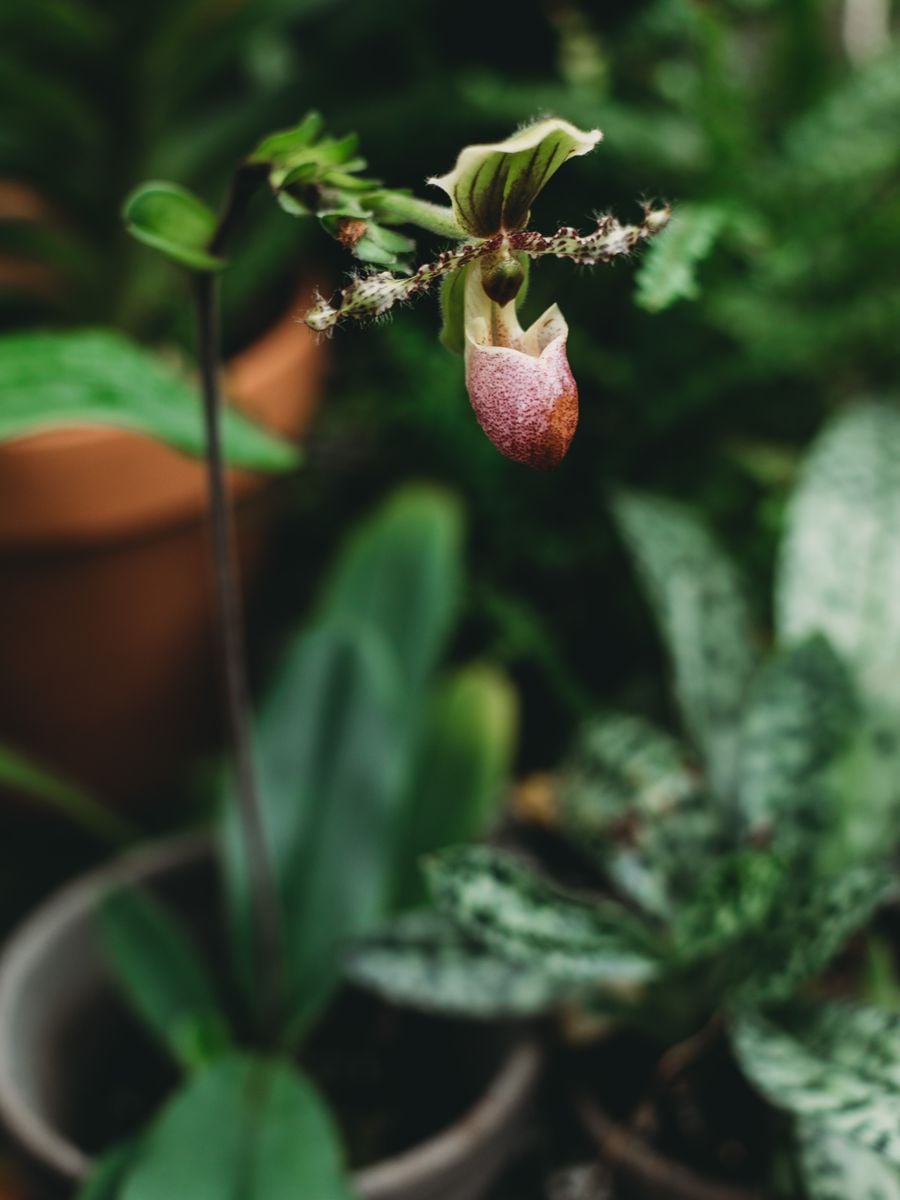
A Paphiopedilum flowering indoors among other potted plants. Photo by Steven Van Elk on Pexels.
Why the Pink Lady's Slipper Stays in the Woods
Cypripedium acaule grows in acidic forests from central and eastern Canada to the eastern United States, often under pines and oaks, sometimes in bogs. Its seeds need a specific soil fungus to germinate and grow, and a plant can take a decade or longer to flower for the first time. Dug-up plants are very unlikely to survive, and UNH Extension notes that pink lady's slippers offered for sale were almost certainly dug from the wild. It is listed as endangered in Illinois and Indiana and as exploitably vulnerable in New York. Admire it, photograph it, and leave it.
The houseplant has its own protection. Every Paphiopedilum species is listed in Appendix I of CITES, the treaty's strictest category, so buy nursery-raised plants from a grower.
Is the Lady Slipper Orchid Toxic?
The ASPCA lists neither Paphiopedilum nor Cypripedium. Its "Lady Slipper" entry is a different plant, Impatiens, which it rates non-toxic to dogs and cats, so do not read that rating as one for the orchid.
NC State Extension notes that the leaves of Cypripedium, the pink lady's slipper included, can cause contact dermatitis.
We found no toxicity data for Paphiopedilum. Keep pets from chewing it, and if an animal does, call your vet or the ASPCA Animal Poison Control Center at (888) 426-4435.
For the full care routine of other orchids, see our orchid care guide, and for the slipper orchids among the rarest flowers in the world, this list.
Sources: American Orchid Society (Paphiopedilum culture sheet and genus page); Royal Horticultural Society (Paphiopedilum growing guide); Missouri Botanical Garden (Paphiopedilum fact sheet, top orchids for the home); CITES Species+; NC State Extension Gardener Plant Toolbox (Cypripedium acaule, Cypripedium); North American Orchid Conservation Center (Go Orchids); UNH Extension; New York 6 NYCRR 193.3; ASPCA Animal Poison Control Center; PowerPyx and GamerGuides (Red Dead Redemption 2).