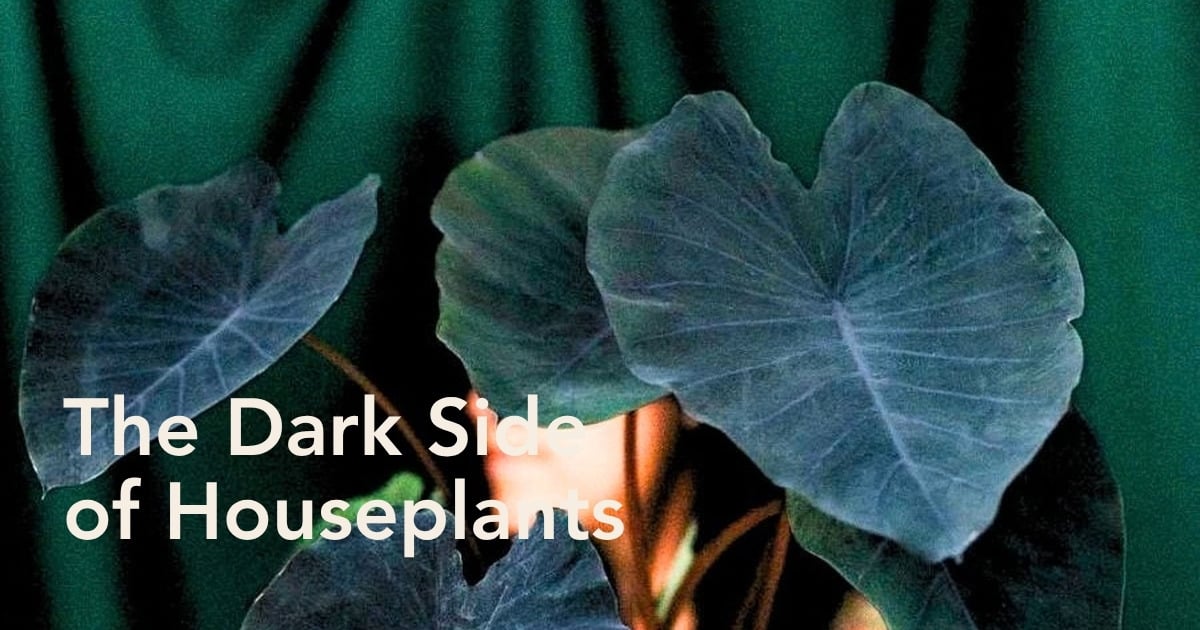
Black on black, anyone? If your plant shelf is one long wall of green and you are secretly craving a little drama, black plants are the answer. These black houseplants grow foliage so dark it reads as black from across the room, and most of them are far easier to keep happy than they look. Below are ten of the best black indoor plants, from the Raven ZZ plant to the bat flower, with the care each one needs to stay dark. Ready for the dark side? Here goes!
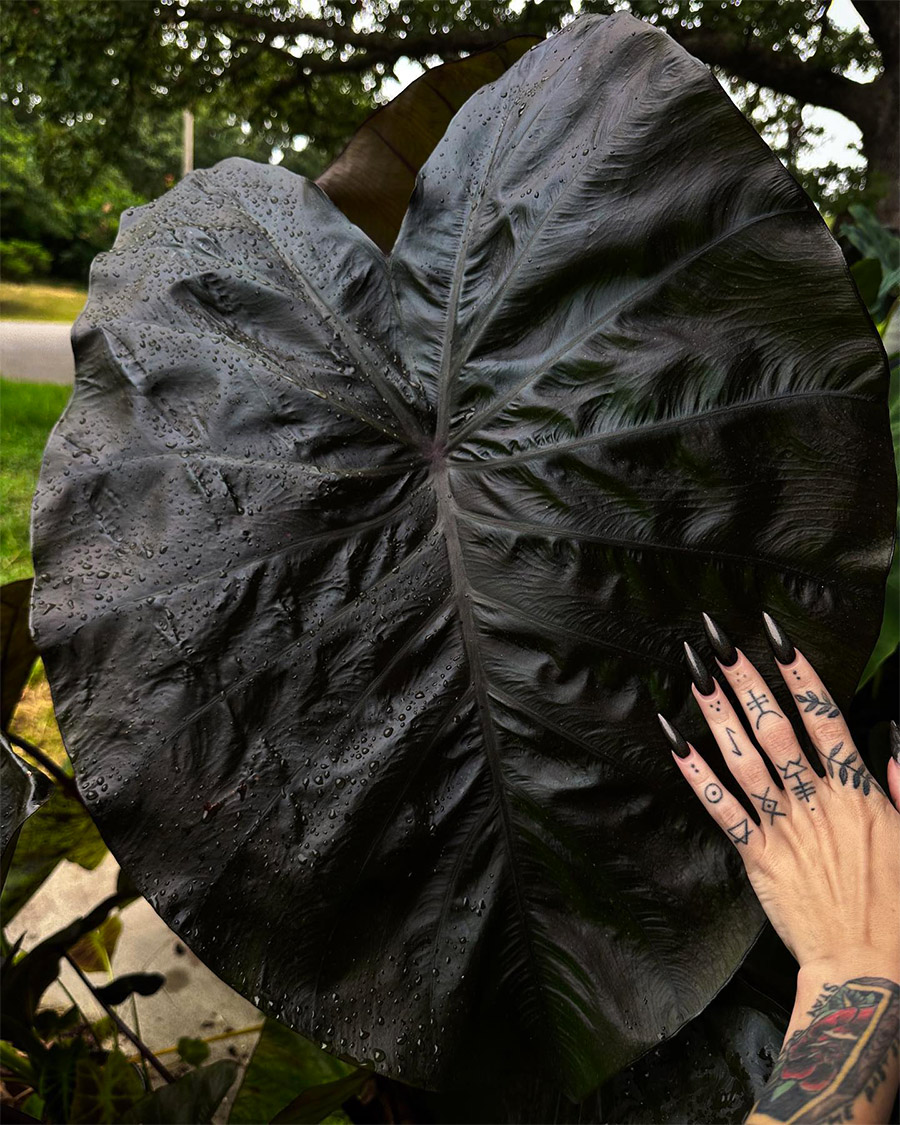
Are Black Plants Really Black?
Here's a little secret: there is no true black plant. What your eye reads as black foliage is a leaf packed with pigment. When researchers in New Zealand studied black mondo grass, they found its leaves hold very high amounts of both anthocyanins, the red and purple pigments, and green chlorophyll, with the anthocyanins working like a sunscreen for the leaf.
That is also why dark foliage can change color. A houseplant adjusts to its surroundings, so its leaves shift with the amount of light, the frequency of watering, the temperature, or even the time of year. On many plants below, new leaves come out green, orange, or copper and darken as they mature. So, if yours looks greener than the photos, give her time (and check the light) before you panic.
Thursd managing editor Marcel de Romph chased the same mystery in flowers in his blog No Such Thing as a Black Flower. Marcel:
"We come very close, though. Very dark purple or brown almost looks black. But that is as far as it gets until we truly find the holy grail."
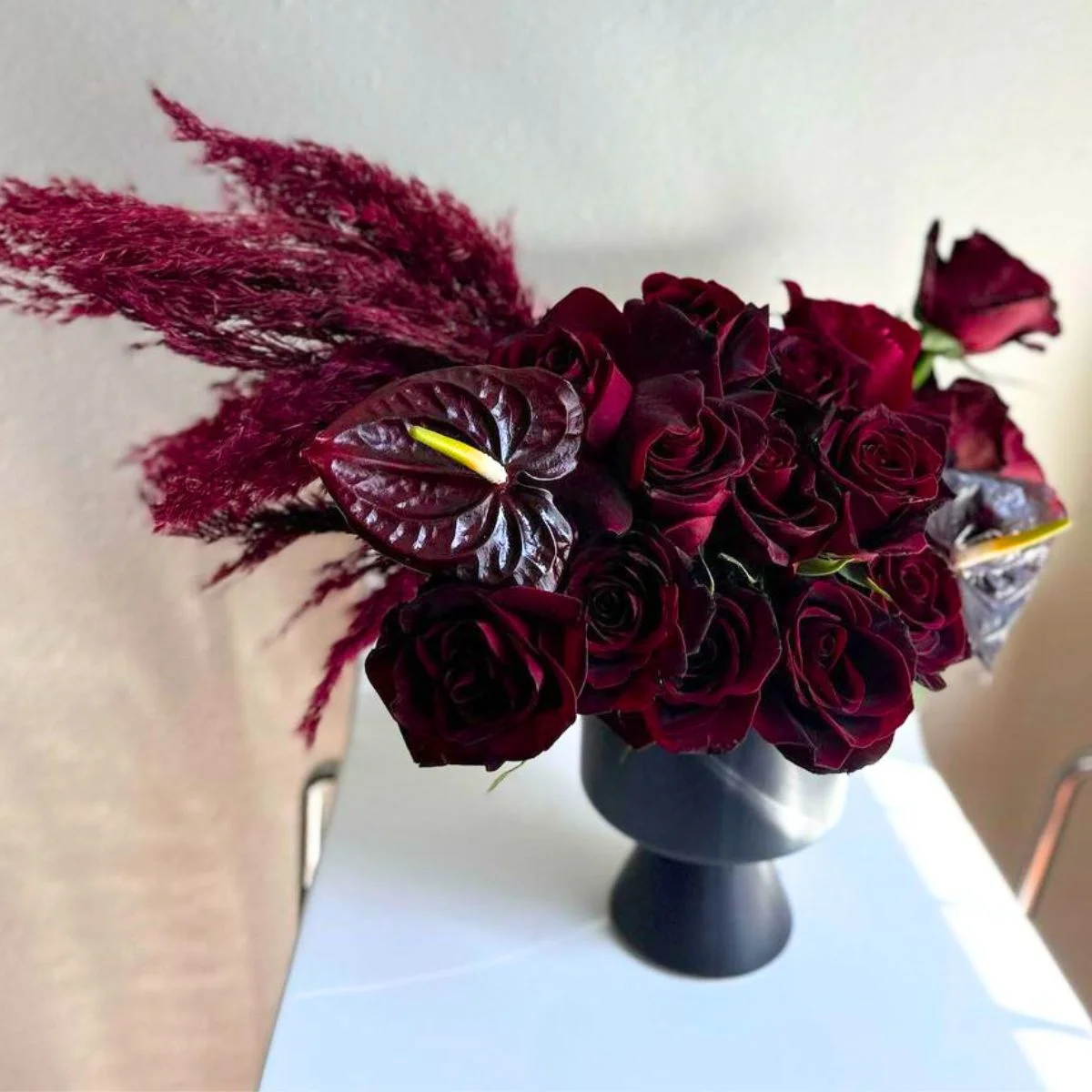
When it comes to the color black, leaves play by the same rules. True jet-black flowers are just as rare, and most varieties that read as black are really dark purple, maroon, burgundy, or brown. Honestly, that's half the fun. The same hunt runs through black roses, black tulips, and the black dahlia.
These are the ten black plants on the list: nine black foliage plants and one very dark flower:
- Black Raven ZZ plant (Zamioculcas zamiifolia Raven)
- Alocasia Black Velvet (Alocasia reginula)
- Aeonium Zwartkop, the black rose succulent
- Black hedgehog succulent (Sinocrassula yunnanensis)
- Black Coral snake plant (Dracaena trifasciata)
- Echeveria Black Prince
- Colocasia esculenta Black Magic
- Begonia Black Fancy
- Black bat flower (Tacca chantrieri)
- Philodendron Dark Lord
10 Black Houseplants and How to Care for Them
Every one of these black leaf plants comes with its own care notes because a black plant in the wrong light fades to green or bronze fast. That said, none of them is a real diva. Well, maybe one. You will know her when you get there.
1. Black Raven ZZ Plant (Zamioculcas Zamiifolia Raven)
Raven is the ZZ plant's gothic twin: a natural mutation of Zamioculcas zamiifolia found in Asia and sold under the Raven name by the American grower Costa Farms (the cultivar itself is called Dowon). Every new stem arrives in lime green and slowly turns into glossy, purple-black leaves. Once her foliage has darkened, she makes a dramatic contrast with anything around her, and contrast, as one Thursd blogger argues, is the most effective principle for an appealing design.

Photo: @northernfoliage
Her species comes from eastern Africa, from Kenya and Tanzania down to KwaZulu-Natal, and unlike most plants, she stores water in thick leaf stalks and a tuber-like rhizome. That is why she forgives a forgotten watering like a true friend. The plant has been a greenhouse favorite for a long time: Martin van Duyn of Duynplant in De Lier, the Netherlands, started growing Zamioculcas back in 1995. For the green original, read the ZZ plant care guide.
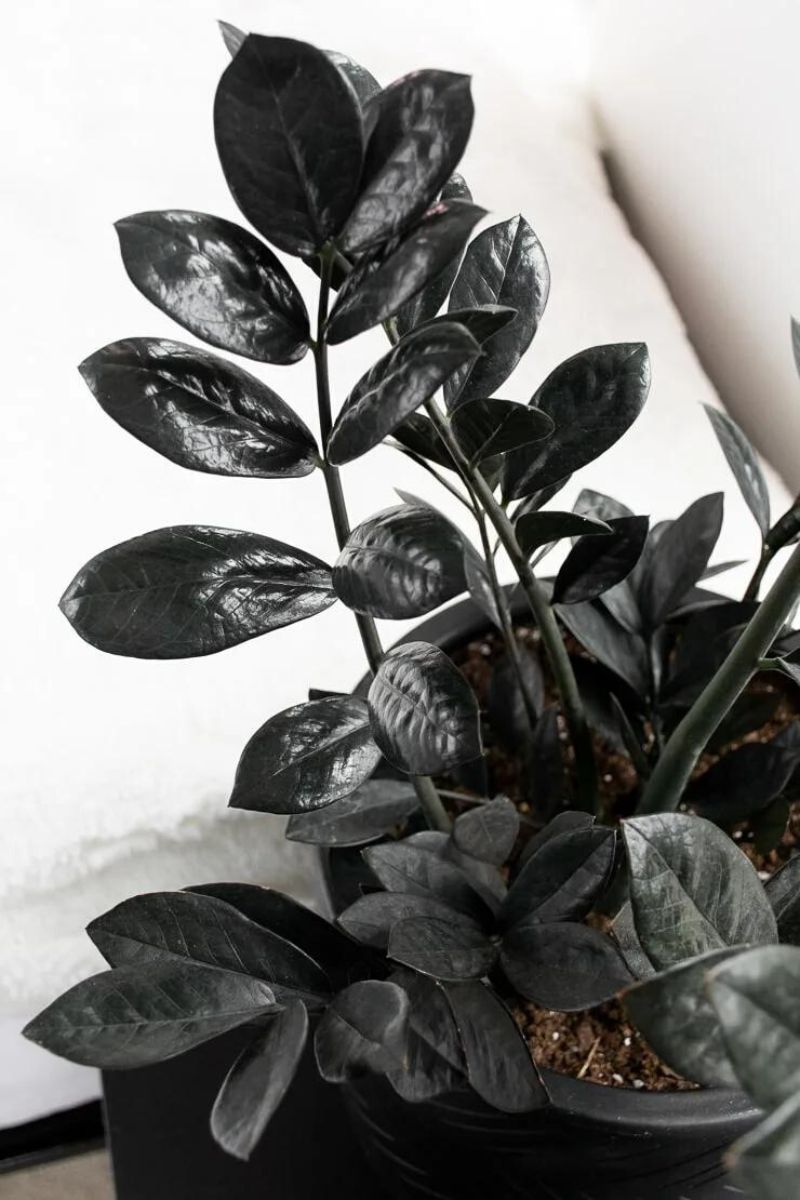
Photo: Brittany Goldwin
How to Care for a Raven ZZ Plant
- Spot: anywhere from a dim corner to a bright room. She grows slower in low light, and harsh direct sun can scald the leaves.
- Water: let the mix dry out between waterings, roughly twice a month in summer and once a month in winter. Soggy roots lead to rot.
- Soil: a well-drained potting mix. She does not need extra humidity.
- Temperature: if she spends the summer outside, bring her in when nights drop below about 16°C (60°F).
2. Alocasia Black Velvet (Alocasia Reginula)
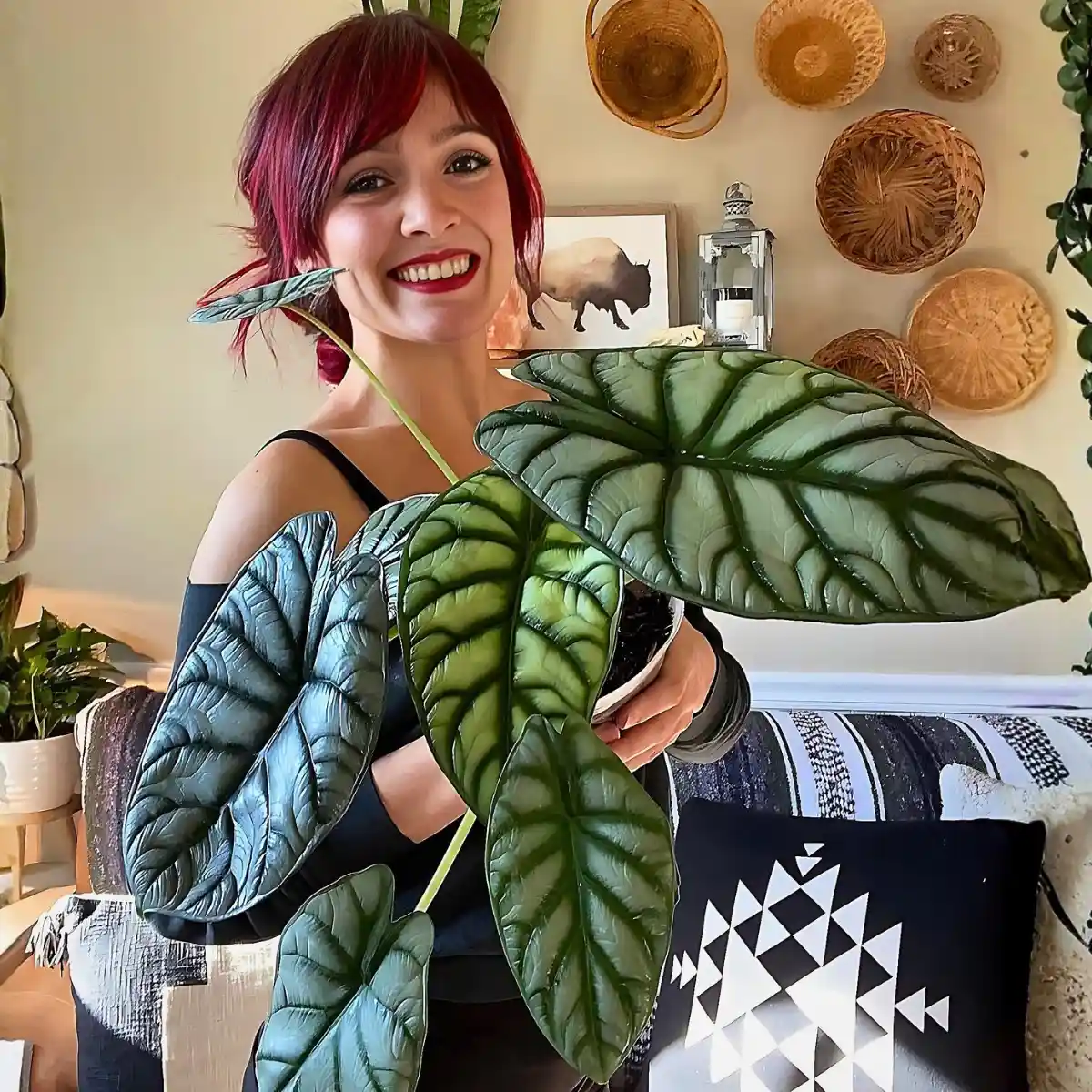
Meet the velvet queen of the list. Black Velvet is a compact Alocasia from Borneo with thick, textured foliage in a green so deep it reads as black, drawn through with silver veins that almost glow. A striking plant, she grows slowly and rarely passes 50 cm (20 inches), the perfect combo of big personality and small footprint. Looking for more Alocasia? The Alocasia guide has the whole family.
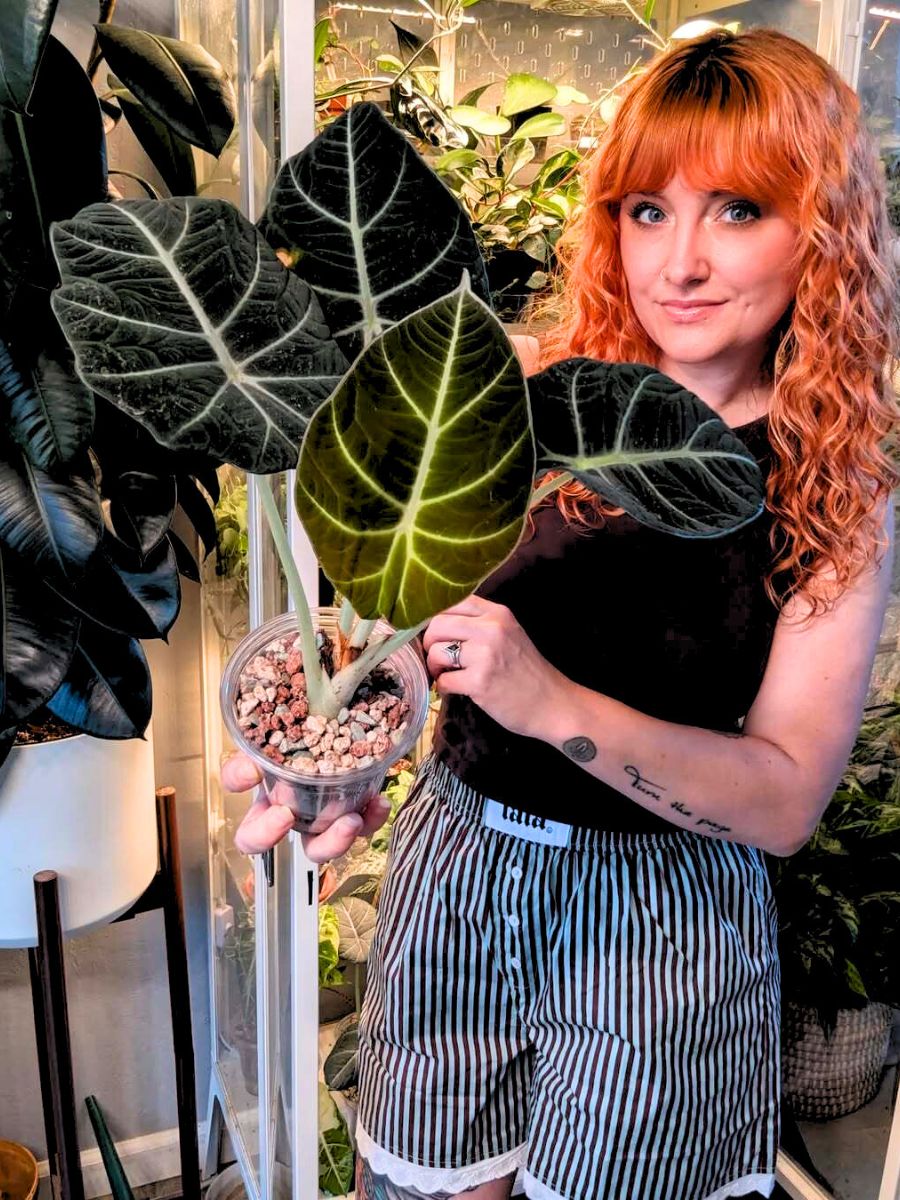
Photo: @I_want_to_beleaf
She prefers a bit of humidity and indirect light, which makes her a perfect choice for bathrooms or cozy, dim corners. Your house will be ready for a 'boo'!

Photo: @aprettylittlegarden
How to Care for Black Velvet
- Spot: bright, indirect light or partial shade, never direct sunlight.
- Water: keep the mix moist but well-drained from spring to fall, and water sparingly in winter.
- Soil: a peat-free houseplant mix with extra perlite.
- Humidity and temperature: high humidity (a tray of moist gravel helps) and never below 15°C (59°F).
3. Aeonium Black Rose Succulent (Aeonium Zwartkop)
Here's where succulent love and a blackish-burgundy color meet. Her real name is Aeonium Zwartkop, Dutch for 'black head', but garden centers often sell her as the black rose succulent, and one look at her rosettes tells you why. Each one sits on a bare stem like a dark rose on a stick, a shape that is hard to beat, and over the years she can branch out and reach 1 to 1.5 m (3 to 5 ft) tall. She even carries the Royal Horticultural Society's Award of Garden Merit.

The one thing she won't forgive is shade. In full sun, her foliage turns black, while in a dim room she drifts back toward green. She is at her darkest in summer and early fall, when she rests. Keeping these rose succulents indoors? Give her your sunniest window, and meet her green-leaved parent species on the Aeonium arboreum page.
How to Care for Aeonium Zwartkop
- Spot: full sun or your brightest window. This is what keeps the rosettes black.
- Water: water moderately while she grows in the cooler months, and keep her almost dry in summer.
- Soil: a gritty, loam-based mix that drains fast.
- Temperature: she is frost-tender, so bring pots inside before nights drop to 4°C (40°F).
- Good to know: a rosette dies after it flowers, so enjoy the bright yellow flowers in early spring and let the side shoots take over.
4. Black Hedgehog Succulent (Sinocrassula Yunnanensis)
This tiny, pointy succulent is one of the best black houseplants for small spaces. Botanists know her as Sinocrassula yunnanensis, or Chinese jade, a plant that grows wild only in the west of China's Yunnan province, on rocky slopes at 2,500 to 2,800 m. Her rosettes stay just 2.5 to 3.5 cm (1 to 1.4 in) across, packed with short, dark leaves covered in fine hairs. That gives her the shape of a curled-up hedgehog, and a daunting one at that, which is exactly why she is a Halloween favorite.

How to Care for a Black Hedgehog Succulent
- Spot: full sun or a bright windowsill.
- Water: water only once the mix is completely dry.
- Soil: a gritty mix that drains fast, like the rocky slopes she comes from.
- Good to know: each rosette dies after flowering, and she is not frost-hardy, so keep her indoors in winter.
5. Black Coral Snake Plant (Dracaena Trifasciata)
The Black Coral snake plant brings tall, sword-like leaves in dark green crossed with silvery bands that make a sharp contrast, a sleek, modern look with a dark twist. She grows to about 90 cm (3 ft) and stands guard in a corner like a silent sentinel. Botanists have moved the snake plants from Sansevieria into the genus Dracaena, so you will find her under both names. She copes with low light and very little water, and she is a regular on lists of air-purifying plants. Collecting? The guide to snake plant varieties has plenty more.

How to Care for a Black Coral Snake Plant
- Spot: anything from a dim corner to a warm, bright spot, out of hot afternoon sun.
- Water: let the soil dry out between waterings from spring to fall, and water only every one to two months in winter. She rots at the roots long before she dries out.
- Soil: a well-draining mix.
- Temperature: she copes with dry air and temperatures down to about 10°C (50°F).
6. Echeveria Black Prince
This is the succulent for the ultimate goth-looking windowsill. Black Prince was bred in California by Frank Reinelt, who crossed Echeveria shaviana with Echeveria affinis and first offered her in 1970. Her rosettes of wide, pointed leaves come out greenish and darken to a purple so deep it almost reads as black. The amount of sunlight this succulent gets decides how dark she goes, so give her the brightest spot you have. In early summer, she can send up orange and pink flowers on tall stems.

How to Care for Echeveria Black Prince
- Spot: full sun or bright, filtered sun for the darkest color.
- Water: water moderately while she grows, and keep her almost dry in winter.
- Soil: a cactus and succulent mix.
- Temperature: keep her frost-free, on a sunny windowsill indoors in winter.
7. Colocasia Esculenta Black Magic
This incredible dark plant ranks among the most dramatic black plants you can grow. Colocasia Black Magic, aka elephant ear, grows huge, heart-shaped leaves up to 60 cm (2 ft) long on purple-black stems. Her foliage opens green and darkens with age into deep purple-black leaves, a dark purple so deep it looks black, and like other elephant ears, she can grow big: 0.9 to 1.8 m (3 to 6 ft). The elephant ear care guide puts Colocasia and Alocasia side by side.

How to Care for Colocasia Black Magic
- Spot: a bright place. Full sun brings out the darkest color, but give her partial shade in a hot summer spot.
- Water: keep the soil wet. She is a bog plant at heart and will even grow in shallow standing water.
- Soil: a fertile, rich mix that holds moisture.
- Temperature: warmth and high humidity. Below about 21°C (70°F), she may go dormant; keep the tubers dry and above 7°C (45°F) until spring.
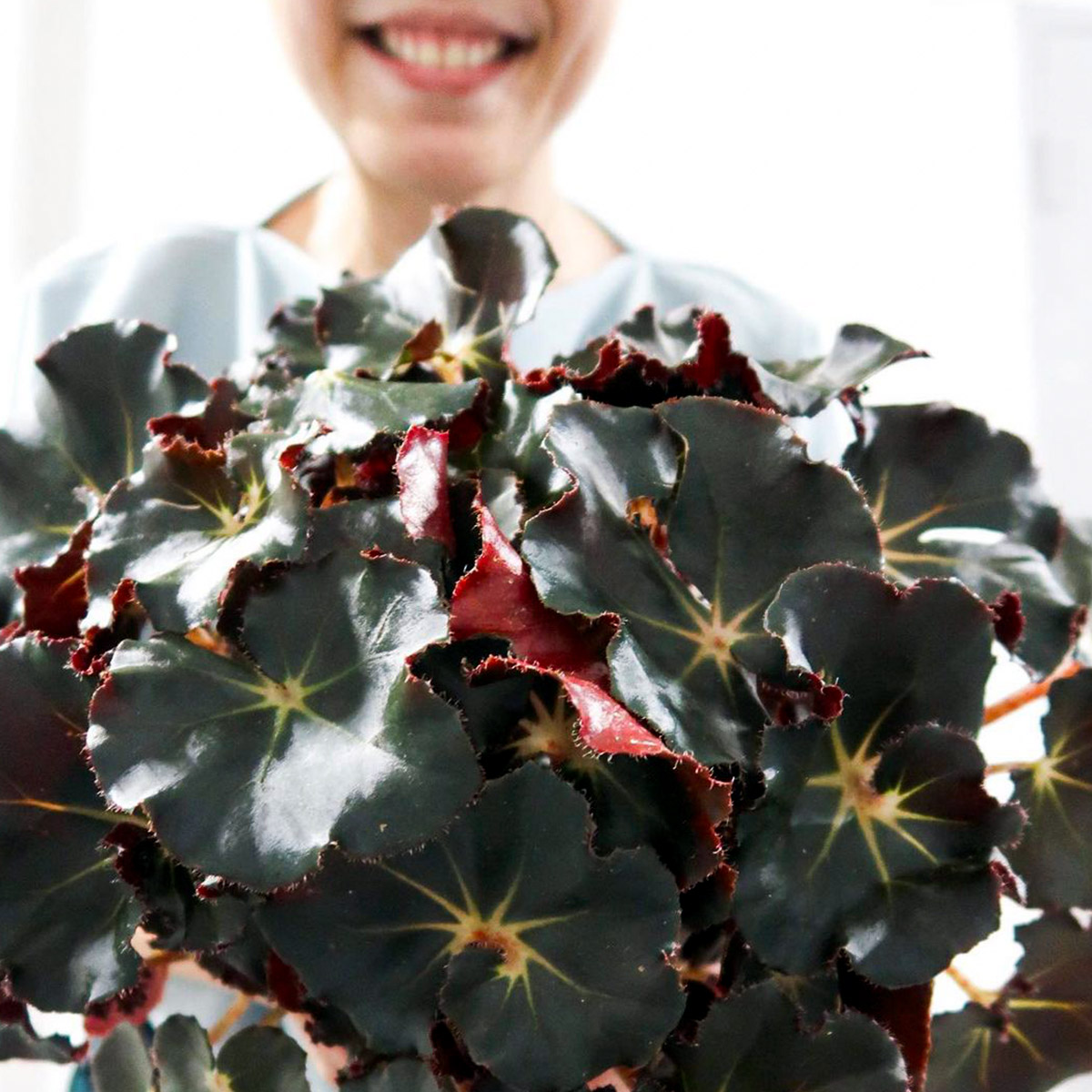
8. Begonia Black Fancy
Black Fancy is a Halloween must-have for sure! Why? Just zoom in on that eerie foliage: dark on top, red underneath, and light green only where the stalk attaches. This rhizomatous Begonia thrives indoors in a warm, humid room with bright, indirect light, and in late winter and early spring she surprises you with light pink flowers. Pinch off the spent flowers, and she stays compact and bushy.

Want a black Begonia you can order through the trade? Dutch breeder Koppe Begonia has Begonia Beleaf Jungle Black in its Beleaf series of leaf Begonias, very dark green, almost black, with hairy, leathery leaves that flip to dark red underneath. Her sister Beleaf Inca Night pairs dark red leaves with broad black edges.
How to Care for a Black Begonia
- Spot: bright, indirect light or dappled, partial shade, never direct sun. Too much sun bleaches the leaves, and too little makes the stems lanky.
- Water: water when the top 5 cm (2 in) of the mix is dry.
- Humidity and temperature: at least 50% humidity, 19 to 23°C (66 to 73°F) during the day, and not below 13°C (55°F) at night. Skip the misting.
9. Black Bat Flower (Tacca chantrieri)
One of the most unique and eerie plants you can add to your collection, the bat flower opens bat-shaped black flowers, really a very deep purple, with thread-like whiskers up to 25 cm (10 in) long. And here she is, the diva I warned you about. She grows wild from northeast India through Southeast Asia to southern China, and she wants warmth, humidity, and moist soil all year round. Worth the effort? Absolutely.

The bat flower blooms from late summer into fall, perfectly timed for your Halloween decor, and in Florida gardens she can flower up to eight times in one season. Want more like her? The Halloween plants for the garden and the strangest plants in the world are full of them.

How to Care for a Black Bat Flower
- Spot: bright, filtered light indoors and shade outdoors.
- Water: keep the soil moist all year and mist her regularly.
- Soil: an airy mix of leaf mold and coarse bark.
- Temperature: never below 13°C (55°F).
10. Philodendron Dark Lord
The Dark Lord earns his name. His new leaves unfurl a deep orange, turn red, and then mature to a deep green that often looks nearly black, with maroon undersides and red stems, so one plant shows every stage at once, and the contrast between orange new growth and near-black old leaves is half his charm. On a mature plant, the leaves reach 51 to 56 cm (20 to 22 in), and in a pot he climbs to 1.2 to 1.5 m (4 to 5 ft) with a moss pole to hold on to. He is a hybrid of Philodendron erubescens, a climber from Colombia, just like his redder cousin Philodendron Imperial Red.

How to Care for Philodendron Dark Lord
- Spot: bright, indirect light, out of direct sun. Oddly enough, his foliage stays darker away from strong sun.
- Water: keep the soil moist but well-drained.
- Soil: an organic, well-draining mix.
- Temperature and humidity: 18 to 29°C (65 to 85°F), high humidity, and no cold drafts.
How Do You Keep Black Houseplants Dark?
Dark foliage plants need a little strategy. These habits keep black foliage deep on almost every plant above:
- Match the spot to the plant. Succulents like Aeonium, Echeveria, and Sinocrassula need full sun or your brightest window to stay black. Leafy plants like Alocasia, Begonia, and Philodendron want bright, indirect light. None of them likes deep shade.
- Give new leaves time. Raven, Colocasia, and Echeveria push out green new growth that darkens into black foliage as it matures.
- Water the plant, not the calendar. The ZZ plant, the snake plant, and the succulents rot long before they dry out, while Colocasia, like other elephant ears, and the bat flower want moist soil all the time.
- Keep them warm. Most of these plants come from the tropics or subtropics, so keep them away from cold windows and drafts.
- Dust the leaves. Dust dulls dark foliage fast, so wipe the big ones with a damp cloth now and then.
- Mind your pets. The ASPCA lists Alocasia, Colocasia, Begonia, Philodendron, and snake plants as toxic to cats and dogs, and the ZZ plant contains calcium oxalate crystals too.
What About Black Plants for the Garden?
Once the black bug bites, it rarely stops at the windowsill, and the garden has even darker plants to offer. The classic is black mondo grass (Ophiopogon planiscapus Nigrescens), an evergreen, grass-like ground cover, usually 15 to 20 cm (6 to 8 in) tall and sometimes up to 30 cm (12 in), with narrow, leathery black leaves that can show a purple tint. It grows in full sun or partial shade in moist, well-drained soil; it is drought tolerant, it resists deer and rabbits, and it makes a striking contrast along garden paths. In midsummer, it sends up small white bells tinged with pink. It is also the very plant those New Zealand researchers studied.
Colocasia Black Magic loves a sunny, wet spot in the garden in summer, even the soggy edge of a pond, and Aeonium Zwartkop and Echeveria Black Prince turn their blackest on a sunny patio before they come back in ahead of frost. For a dark shrub in the landscape, look at Black Lace elderberry (Sambucus nigra Black Lace), with deeply divided, dark foliage. For black flowers in a mixed border, try the chocolate cosmos, Cosmos Chocolate, whose dark brown flowers really do smell like chocolate (plant it out in late spring), or the almost black Viola cornuta Molly Sanderson, which loves sunny rock gardens and flowers from late spring into fall.
In the landscape and at home, black foliage plants work like a frame: they add texture and ground a colorful room. Next to colorful foliage in chartreuse, yellow, silver, or blue, they give high contrast, and other plants with bright red flowers or blue flowers look even brighter. Kat Von D shows how far you can take a goth garden, and the list of the 15 best black flowers has plenty more for the border.
Black Plants for Halloween, Because Why Not?
October is when black plants get their big moment, and the timing could not be better: the bat flower is in bloom in fall, and the spooky season is exactly when everyone wants a darker house. A few ideas to get you started:
- Group a Raven ZZ plant, an Echeveria Black Prince, and a few hedgehog succulents on a tray with mini pumpkins, take the theme out into the garden, or borrow some of the flower-filled pumpkin ideas.
- Make the bat flower a striking centerpiece on the dinner table.
- Pair black leaves with orange and red flowers, or burgundy ones, for a Halloween contrast in one of these spooky flower arrangements, or add black flowers like dark calla lilies for Halloween.
All in all, black plants don't have to wait for October, and most of these black foliage plants look just as good in spring as on Halloween night. So, which one is moving in with you first? My tip: start with the Raven, and treat yourself to a bat flower once you have the hang of it!
Sources: Royal Horticultural Society, Missouri Botanical Garden, NC State Extension, UF/IFAS, Clemson Extension, Costa Farms, Logee's, San Marcos Growers, and the ASPCA; pigment research: Hatier, Clearwater, and Gould, PLOS ONE (2013).
About the author: Melissa Maingot has been a Senior Content Editor at Thursd since 2022, writing flower and plant stories worldwide, including on-the-ground reporting from flower farms. Connect with Melissa on LinkedIn.
Featured image by @soundofstars and header image by @doni.plantas.