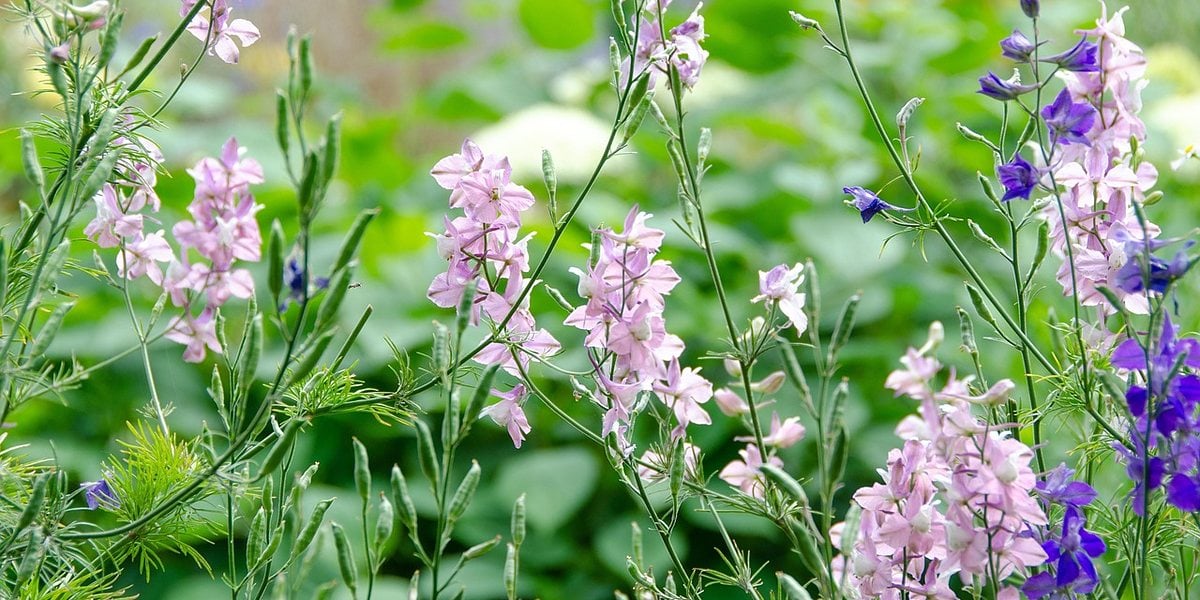
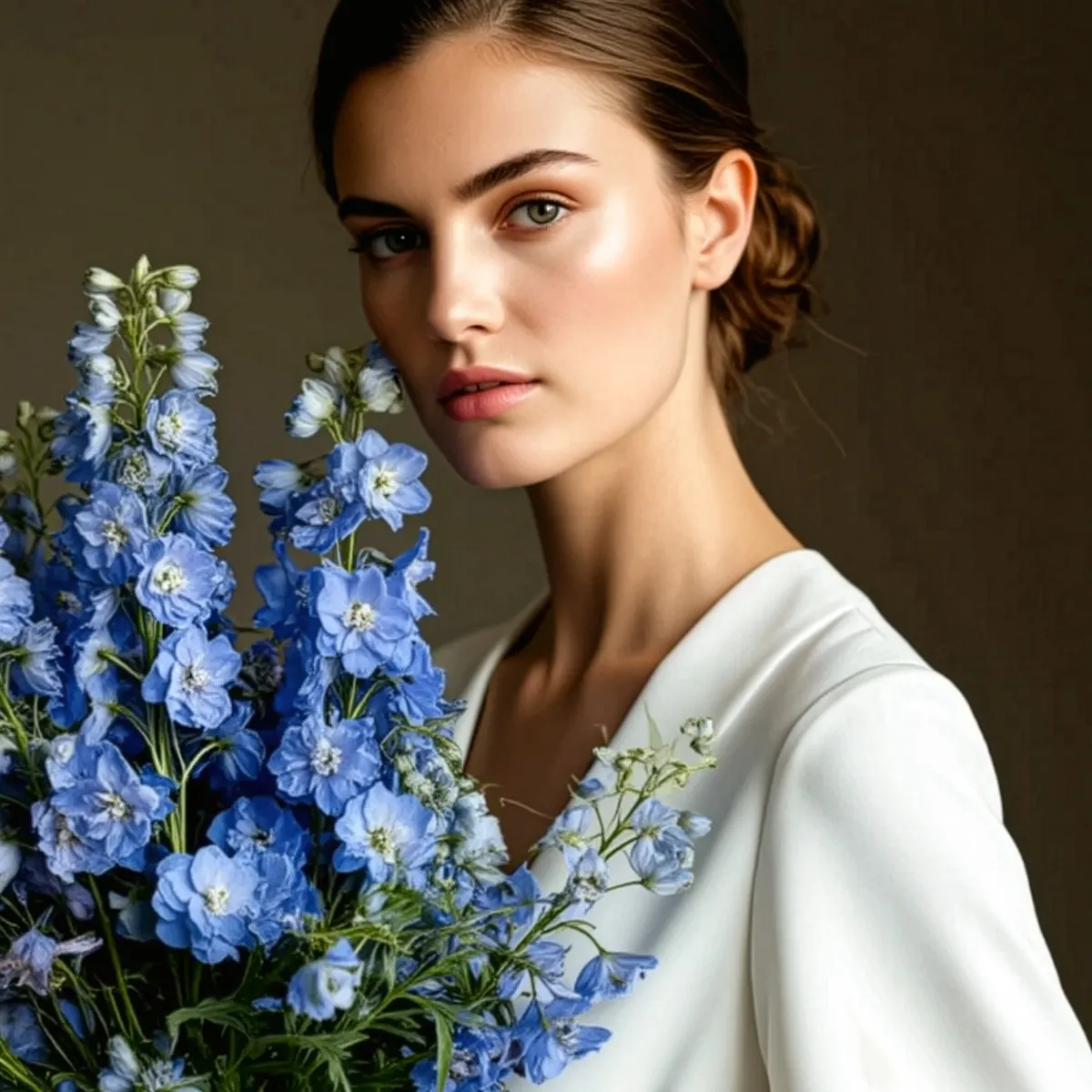
Larkspur is the July birth flower: a tall spike of spurred blue, purple, pink, or white flowers that stands for positivity and loving bonds. It is also poisonous: its leaves, stems, flowers, and seeds contain alkaloids that are toxic to people, pets, and livestock.
Most people look up larkspur for its meaning, so that comes first. It is one of the tallest spikes in a summer border or a florist's bucket, and the classic flower for a July birthday. The larkspur flower is also poisonous, to people as well as to pets and grazing animals, and that belongs on the same page.
Common Names
Larkspur
Annual larkspur
Rocket larkspur
Giant larkspur
Lark's claw
Larkspur Flower Meaning
In the language of flowers, larkspur stands for positivity, loving bonds, dedication, and sincerity, with a lighthearted, youthful side as well, according to The Old Farmer's Almanac. Each color adds its own shade of meaning:
Blue larkspur: dignity and grace. Blue is the color most people picture.
Purple larkspur: first love.
White larkspur: happiness and joy.
Pink larkspur: fickleness, worth knowing before you build a bouquet around it.
Larkspur shares July with the water lily; Thursd's July birth flower guide covers both. The name comes from the flower itself: each one has a long spur at the back that reminded people of the hind claw of a lark.
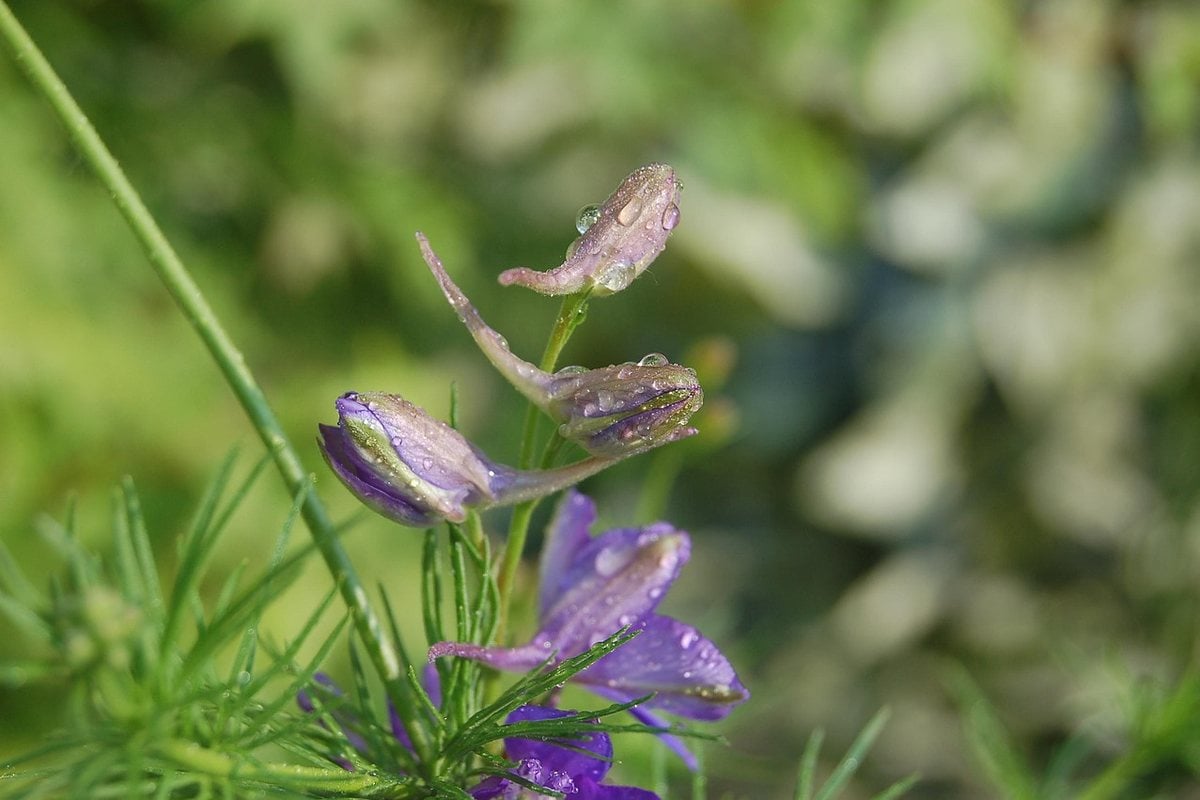
Annual larkspur: thread-like leaves and flowers with a spur at the back. Photo by BARBARA808 on Pixabay.
Larkspur or Delphinium?
Both are called larkspur, and both belong to the buttercup family (Ranunculaceae). The annual larkspur of cottage gardens and dried bouquets is Delphinium ajacis, still widely sold under its older name Consolida ajacis. Kew's Plants of the World Online now treats it as a Delphinium again. It grows 60 to 120 cm (2 to 4 ft) tall, with deeply cut, almost feathery leaves and a loose spike of blue, pink, or white flowers.
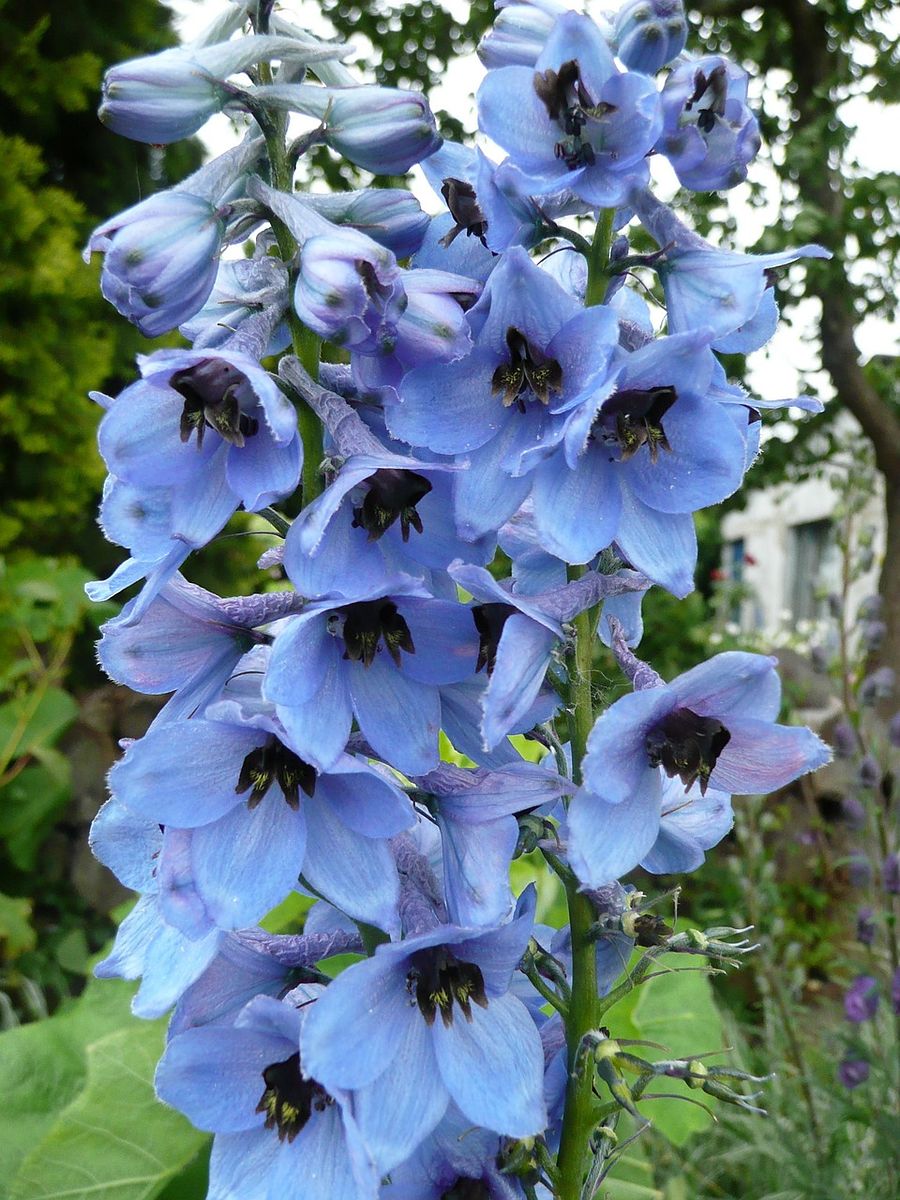
A perennial Delphinium: a denser, heavier spike than annual larkspur, and sold as larkspur too. Photo by WiesenFee_28 on Pixabay.
Is Larkspur Poisonous?
Yes, and seriously. Larkspurs and delphiniums contain alkaloids, among them delphinine and ajacine. In people, eating the plant can cause burning of the lips and mouth, intense vomiting and diarrhea, muscle weakness and spasms, a weak pulse, and paralysis of breathing, and it can be fatal. On annual larkspur, the leaves, flowers, and seeds are all toxic.
The ASPCA lists larkspur as toxic to dogs, cats, and horses; its diterpene alkaloids cause neuromuscular paralysis. On western US rangelands, the USDA Agricultural Research Service counts larkspurs among the leading causes of cattle poisoning.
How to Handle Larkspur Safely
Wear gloves when you strip or cut a lot of stems, and wash your hands afterwards.
Keep plants and cut flowers out of reach of small children, and away from cats and dogs.
Never use larkspur on a cake or in an edible arrangement, and keep cut stems and garden waste away from horses and grazing animals.
If someone may have eaten part of the plant, call a poison center; in the US, the Poison Help line is 1-800-222-1222. For a pet, call your vet or the ASPCA Animal Poison Control Center at (888) 426-4435.
How to Grow Annual Larkspur
Larkspur is a cool-weather annual grown from seed, not a tropical plant. In mild-winter regions, sow it outdoors in fall; where winters are cold, sow outdoors in early spring. Give it full sun and loose, moderately rich soil that stays moist but drains well, and avoid wet ground. In cool climates it flowers from late spring through summer; where summers are hot, the plants tend to die out by midsummer.
Deadhead the spent flowers to keep it going, and expect it to self-seed. Larkspur also makes an excellent cut flower, fresh or dried.
Sources: The Old Farmer's Almanac; Etymonline; Missouri Botanical Garden Plant Finder; Plants of the World Online, Royal Botanic Gardens, Kew; NC State Extension Gardener Plant Toolbox; ASPCA Animal Poison Control Center; USDA Agricultural Research Service; HRSA Poison Help.
Header image by Kathas_Fotos, featured image by s-ms_1989, and profile picture by Hans, all on Pixabay.