\Modern farming is brutal on margins. Input costs keep climbing, weather patterns grow less predictable, and retailers are stacking on sustainability requirements that didn't exist five years ago. Against that backdrop, every capital decision needs to do serious work.
Agricultural buildings are one of the biggest infrastructure decisions a grower makes. And increasingly, steel is winning that conversation, not just because it looks good on paper, but because the numbers hold up over decades of real use.
Here's why smart growers are choosing steel, and what the data actually says about long-term value.
1. The Lifecycle Cost Argument Is Compelling
Timber often wins on day one. Steel wins over twenty years, and that's the comparison that matters for permanent farm infrastructure.
A detailed cost comparison of a 10,000 sq ft pre-engineered steel building versus a comparable traditionally built facility put total lifecycle costs at roughly $350,000 for steel against $670,000–$1.1 million for traditional construction over a twenty-year window. That's not a rounding error. That's a structural cost advantage driven by lower maintenance bills, better energy performance, and fewer unplanned repairs.
Energy savings alone can run 10–20% annually for well-insulated steel buildings, worth $2,000–$5,000 per year for a modest commercial setup. Over a loan term, that's meaningful cash flow back into the operation.
Steel buildings also sit well with financing strategies. Pre-engineered structures often qualify as plant or equipment for depreciation purposes and have strong resale potential. Some providers cite 20–30% value appreciation over twenty years, which gives lenders confidence in the asset. You can read more about: Agricultural Shed Can Serve Both Functions for Gardeners
2. Fifty Years Is a Conservative Lifespan
The Metal Building Manufacturers Association puts the useful life of a properly built steel frame at 50–100 years. Timber-frame buildings typically need major structural attention after twenty to thirty years, sometimes sooner in damp or coastal British climates where moisture accelerates decay.
Steel doesn't warp, crack, rot, or split. It's impervious to termites and other pests, a real consideration around stored grain, livestock feed, and chemicals, where timber treatment becomes a contamination risk. Modern galvanised steel, factory coatings, and specialist agricultural paints provide durable protection against the corrosive conditions that farming environments regularly produce.
Routine maintenance is genuinely light-touch: periodic inspections, gutter cleaning, touching up scratches in the coating, and keeping drainage clear. One 2024 industry survey found that this kind of basic care can extend a metal building's lifespan by 5–15 years beyond baseline expectations. That's not a complicated maintenance programme, it's common sense stewardship of a long-term asset.
3. Steel Builds Around Your Operation, Not the Other Way Around
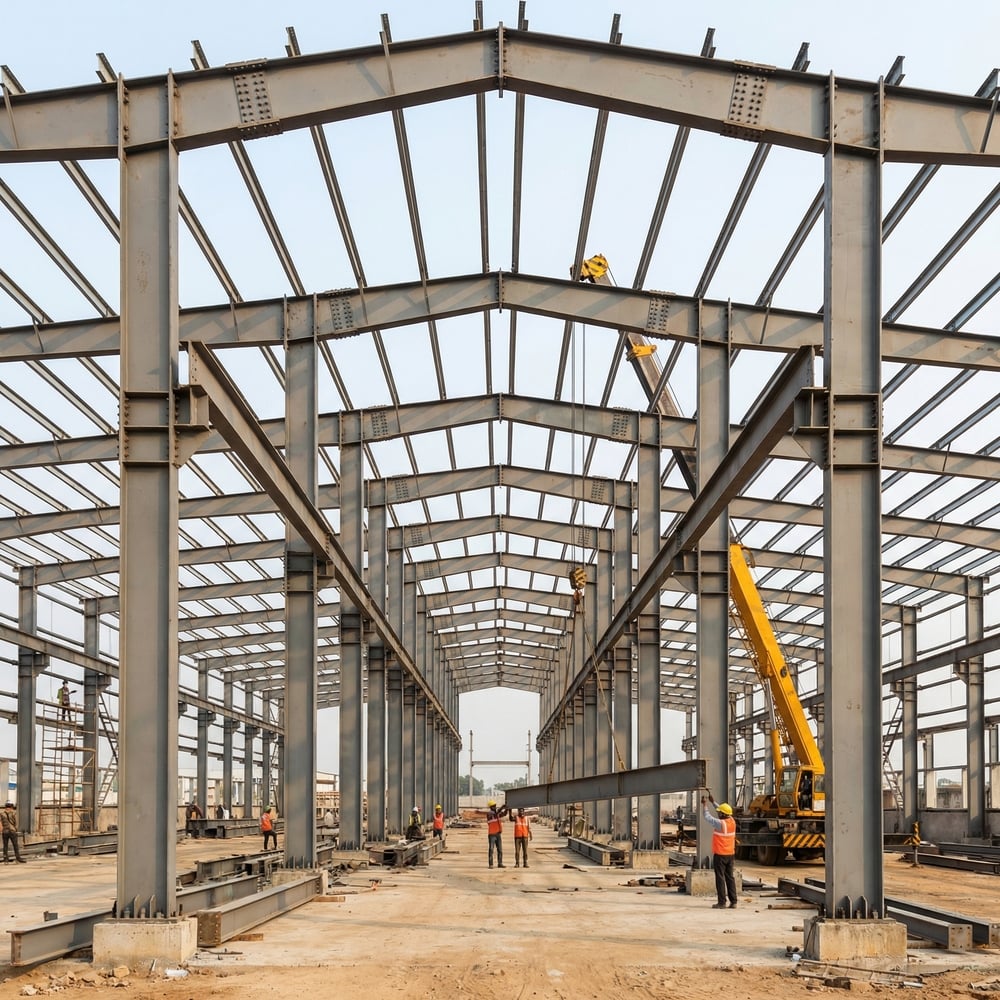
Prefabricated steel components are manufactured off-site to exact specifications and assembled on the farm, which opens up design flexibility that site-built timber construction struggles to match.
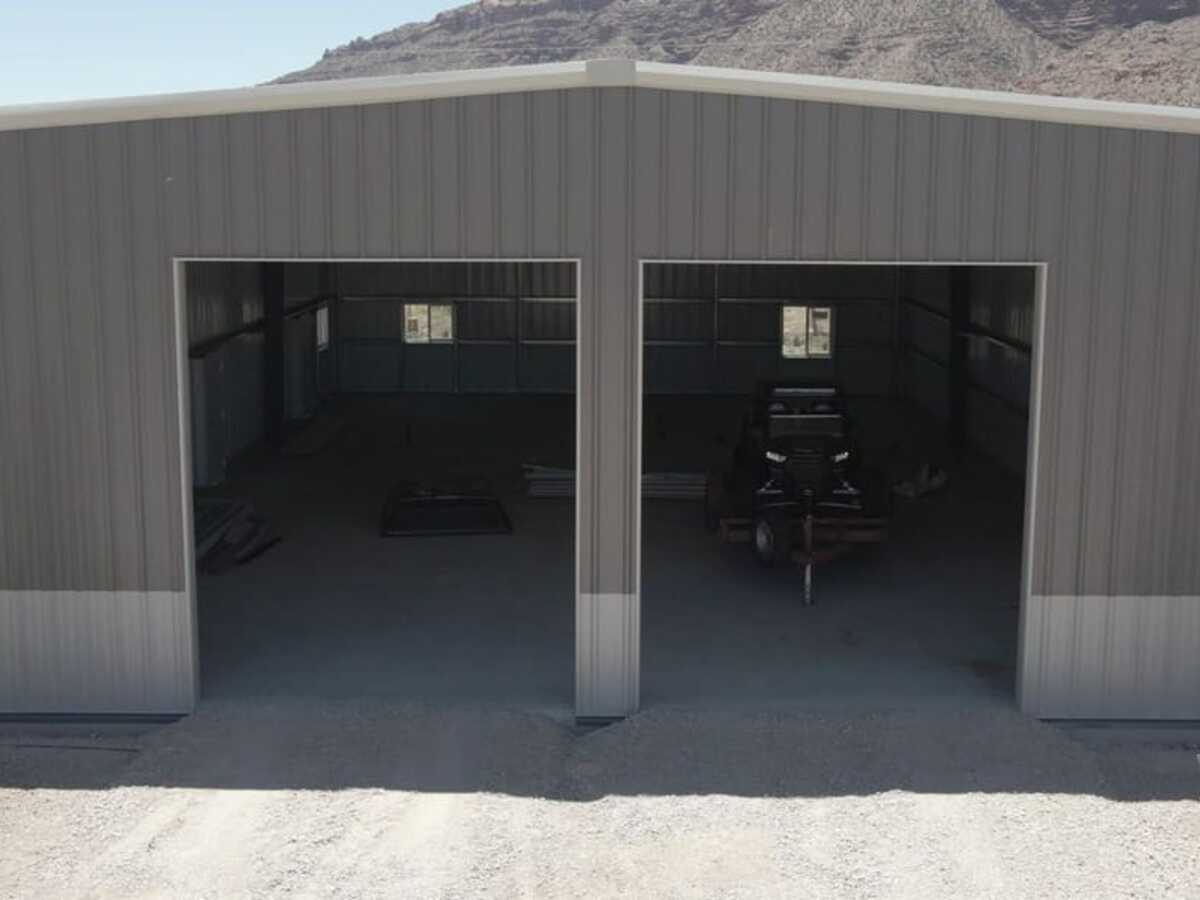
Clear-span steel frames eliminate internal columns across large footprints, creating unobstructed working space for wide machinery, bulk grain handling, or livestock housing where column-free movement matters. High-bay doors, integrated gantry beams, ventilation louvers, skylights, and insulated panels can all be incorporated at the design stage rather than retrofitted later.
The modular nature of steel also means expansion is genuinely practical. Adding a new bay, a lean-to, or an integrated office doesn't require demolishing the original structure. Because interior walls are non-load-bearing in most pre-engineered systems, internal layouts can be reconfigured as cropping patterns, livestock systems, or technology change over time.
For growers who want bespoke design rather than a basic kit, steel agricultural buildings from Murray Steel Buildings are engineered using specialist software that accounts for workflow and day-to-day movement, so the building actually supports the operation rather than constraining it.
4. Sustainability Credentials Are Genuine, Not Greenwash
Steel is one of the most recycled materials on the planet, with recycling rates exceeding 90% in many regions. It can be reused indefinitely without losing structural strength, which matters increasingly as supply chains and procurement decisions face ESG scrutiny from retailers and investors alike.
Prefabrication also reduces construction waste significantly. Components are cut to length off-site, and any scrap steel goes directly back into the steelmaking process rather than to landfill.
From an operational standpoint, well-insulated steel agricultural buildings can maintain stable internal climates, directly affecting animal welfare and crop quality in temperature-sensitive applications. Metal roofs and frames also provide an ideal base for solar panel installations, rainwater harvesting systems, and automated ventilation, helping farms meet retailer sustainability protocols without major structural retrofitting.
It's worth being honest about one caveat: on a pure embodied-carbon basis, mass timber can carry a lower global warming potential than steel. But steel outperforms concrete and delivers significant long-term environmental benefits through durability, reuse, and full recyclability at the end of life.
5. Fire Safety and Structural Performance That Holds Under Pressure
Steel is classified as non-combustible under the International Building Code. It doesn't ignite and doesn't contribute fuel to a fire, with a melting point above 2,500°F, well above temperatures in most building fires. For farm environments where chemicals, fuels, and dry forage are stored in close proximity, that's a material safety advantage over timber framing, which requires careful fire protection and sometimes chemical treatments that are less desirable near food or livestock.
Properly engineered steel frames are also designed to perform under the wind, snow, and equipment loads specific to local conditions. For UK agriculture, where storms are increasingly severe and machinery is increasingly heavy, that means reliable protection for high-value assets, grain, machinery, fertiliser, with reduced risk of structural failure disrupting operations at critical moments in the season.
Compliance is simplified with pre-engineered systems too. Buildings are typically certified to relevant national codes and agricultural building standards, which streamlines planning applications and makes insurance conversations more straightforward than with ad-hoc self-built structures.
6. The Market Is Moving Fast, and Prices Won't Stay Still
The pre-engineered metal building market was estimated at $44.1 billion in 2025 and is projected to reach roughly $87 billion by 2033. The broader prefabricated building and structural steel market sits at around $257 billion and is forecast to hit $381 billion by 2034.
That growth reflects real demand, faster construction, more predictable costs, and standardised systems that lenders and planners are increasingly comfortable with. Pre-engineered buildings are currently growing at around 8.4% annually.
Steel pricing has seen volatility, with hot-rolled coil prices rising from around $650 per ton toward $900 in 2025 and forecasts of 18–20% price increases for key products. That context makes the case for acting sooner rather than later. The asset you lock in today operates for fifty-plus years; the premium paid now is amortised across decades of productive use.
Murray Steel Buildings has marked seven consecutive years as one of the UK's leading suppliers of bespoke steel buildings, a signal of sustained market adoption and the kind of supply chain relationships that help maintain competitive pricing even in a tight materials environment.
7. Real Farms, Real Reasons to Choose Steel
Agricultural building specialists consistently flag the same themes when growers describe why they chose steel over traditional alternatives: faster construction, lower ongoing maintenance, and the practical ability to expand without rebuilding from scratch.
Faster construction matters at the farm scale. Pre-engineered components arrive on site ready to assemble, which compresses build programmes and reduces disruption during critical operational windows.
Lower maintenance matters across the full ownership period. Unlike timber, steel doesn't need regular retreatment, doesn't harbour moisture in the frame, and doesn't require the kind of periodic structural intervention that forces operational shutdowns.
And the ability to expand matters because farming operations rarely stay static. Cropping systems change, equipment gets bigger, storage requirements grow. A building that can grow with the farm without requiring demolition is a fundamentally different proposition from one that constrains future options.
Murray Steel Buildings supplies and erects steel barns, farm buildings, and farm stores across the UK, using engineer-designed software, high-quality steel from reputable sources, and a quote-to-completion process that keeps the team beside the customer from first enquiry through to handover. No location-based surcharges, UK-wide coverage, and a manufacturer's warranty on external coatings for up to 25 years.
For growers weighing up long-term infrastructure decisions, the combination of lifecycle cost advantage, structural longevity, design flexibility, and a market increasingly fluent in pre-engineered solutions makes a strong case, and it's a case the numbers back up across every major metric that matters to a farming business.