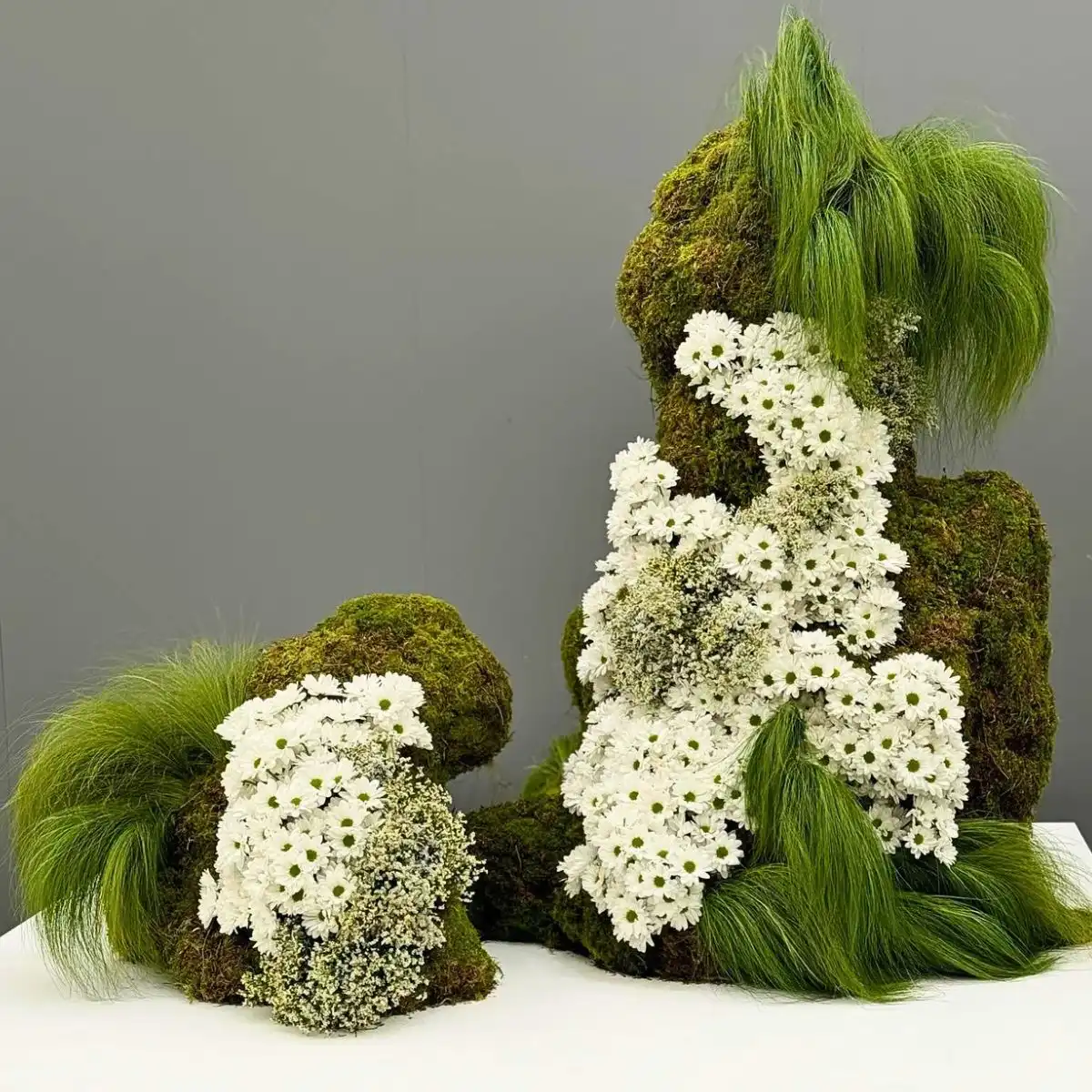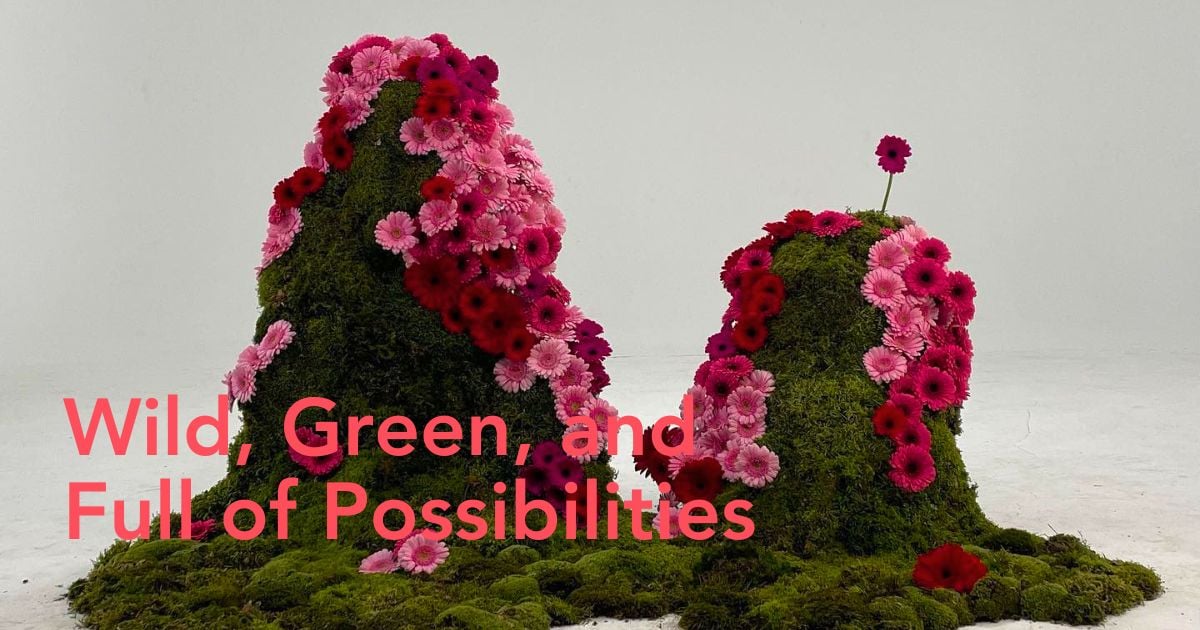
Flat moss and cushion moss are often associated with Christmas designs. And understandably so. Few natural materials create that rich, woodland feeling quite as effortlessly. But waiting until December to work with moss means overlooking months of creative possibilities. Especially in fall, moss can become the detail that transforms an arrangement into something you want to reach out and touch. Let’s learn all about it and see some inspiring designs!
Look Down for Inspiration
Floristry often draws the eye upward: toward flowers, foliage, stems, and branches. But moss invites you to look in another direction.
Think of the ground beneath an autumn forest. Layers of leaves, pieces of bark, mushrooms, seed heads, berries, and those intensely green patches of moss appearing between them. Nothing is perfectly arranged, yet everything belongs together. That natural layering is an interesting starting point for floral design.
Imagine a low autumn centerpiece in which flowers seem to emerge directly from a moss-covered surface. Add rose hips, small apples, chestnuts, seed pods, grasses, or twisting branches, and suddenly the arrangement feels less like a traditional centerpiece and more like a small piece of the outdoors brought inside. That is the strength of moss: it creates atmosphere before a single flower has been added.
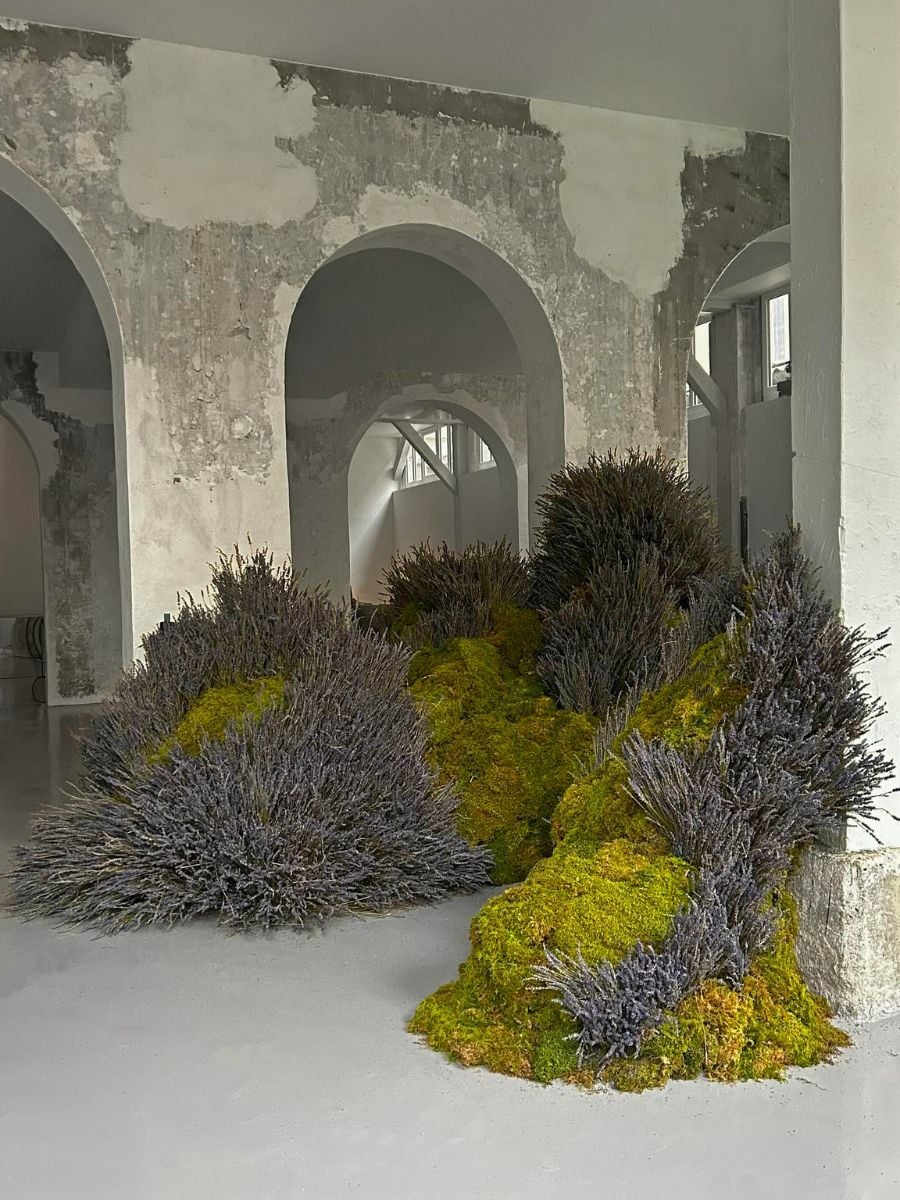
Two Completely Different Effects
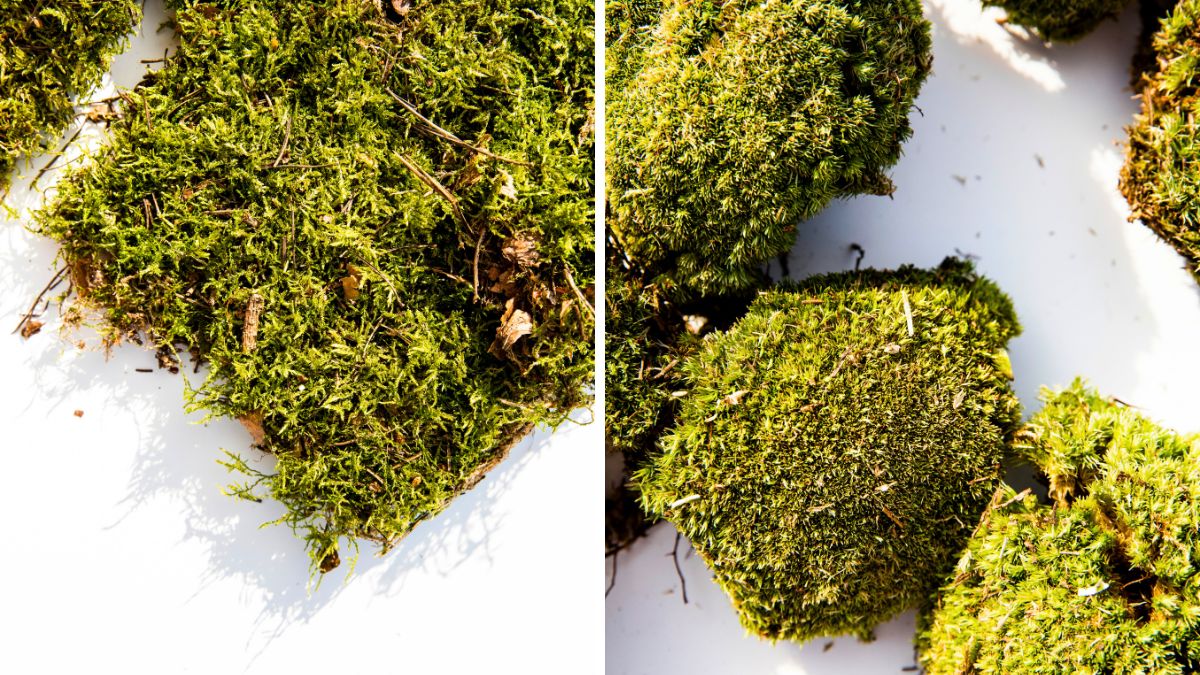
Although flat moss and cushion moss belong naturally together, they play very different roles in design.
Flat moss is ideal when you want to create a natural foundation. Its relatively even structure makes it useful for covering the base, floral mechanics, frames, and larger surfaces. It can visually connect individual elements and give an arrangement the feeling that everything grew together rather than being placed separately.
Cushion moss, with its rounded, three-dimensional character, does something else. It adds volume and rhythm. A few pieces placed at different heights immediately make a design more interesting. Instead of creating one continuous green layer, you can build small hills, pockets, and organic transitions.
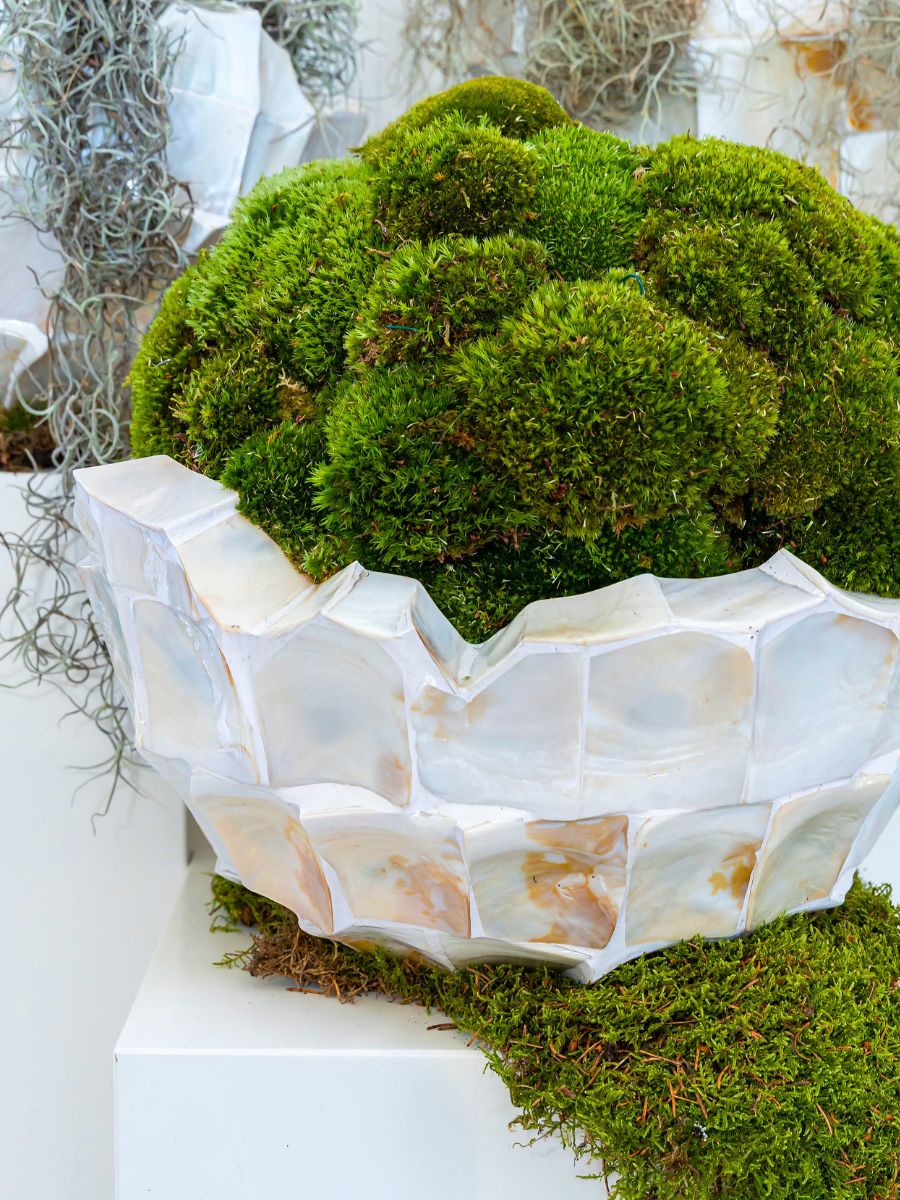
And that difference is precisely where the fun begins. Combine the two, and a flat surface becomes a landscape. Let cushion moss climb partially over the edge of a bowl. Leave small areas of the mechanics intentionally hidden beneath the moss. Place one compact cushion between branches or around the base of a floral object. Moss does not have to be the background. It can become part of the composition itself.
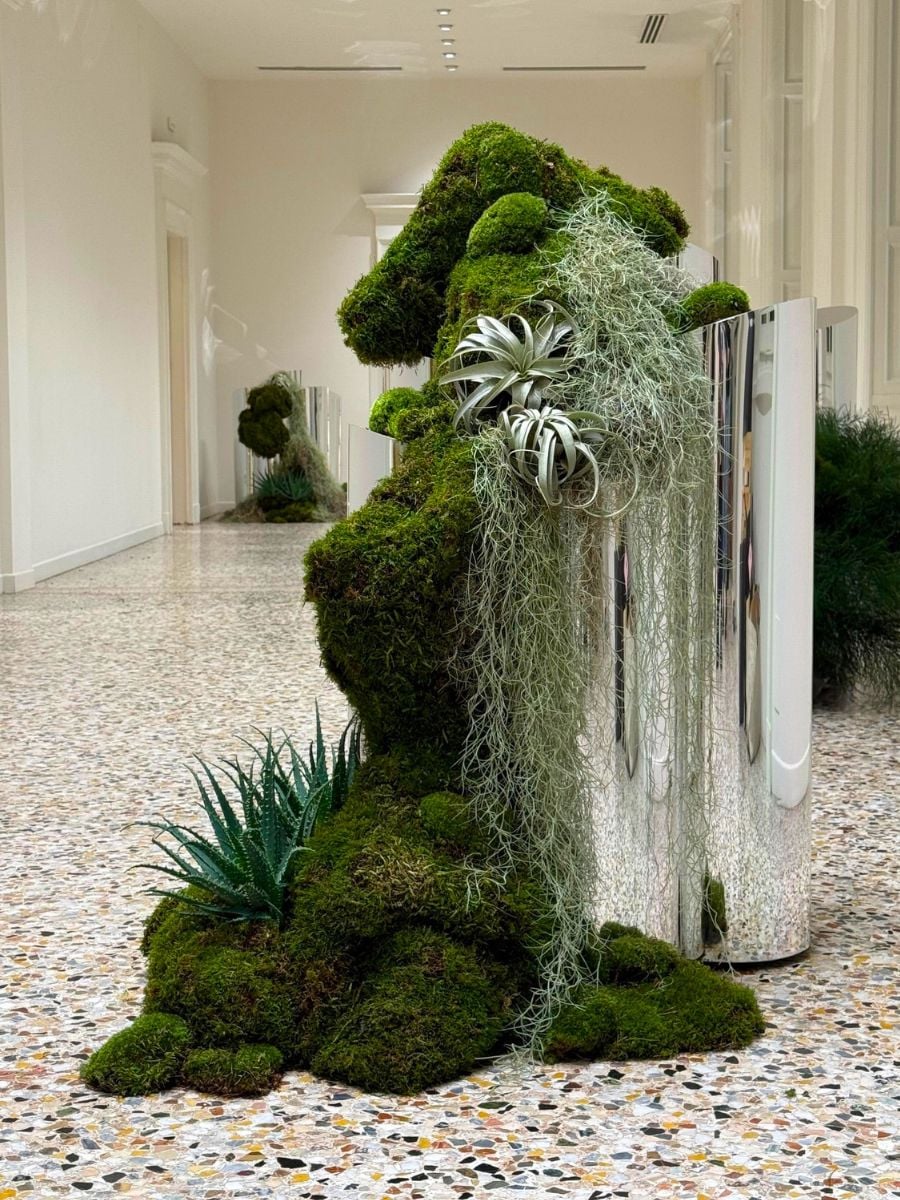
Sometimes Flowers Need Something Quiet Beside Them
One of the challenges in floristry is knowing when to add something and when to stop. Moss is useful precisely because it can do both. It adds texture without necessarily adding visual noise. A bed of green around expressive flowers gives the eye somewhere to rest. It can soften the transition between a container and its flowers, disguise construction techniques, or turn a space into an intentional part of the design.
In a minimal perspective, moss can even replace traditional filler materials. A single branch, a few sculptural blooms, and a strong cushion of moss may be all that is needed.
It reminds us that floral design is not only about flowers. Space, surface, texture, and contrast are equally important.
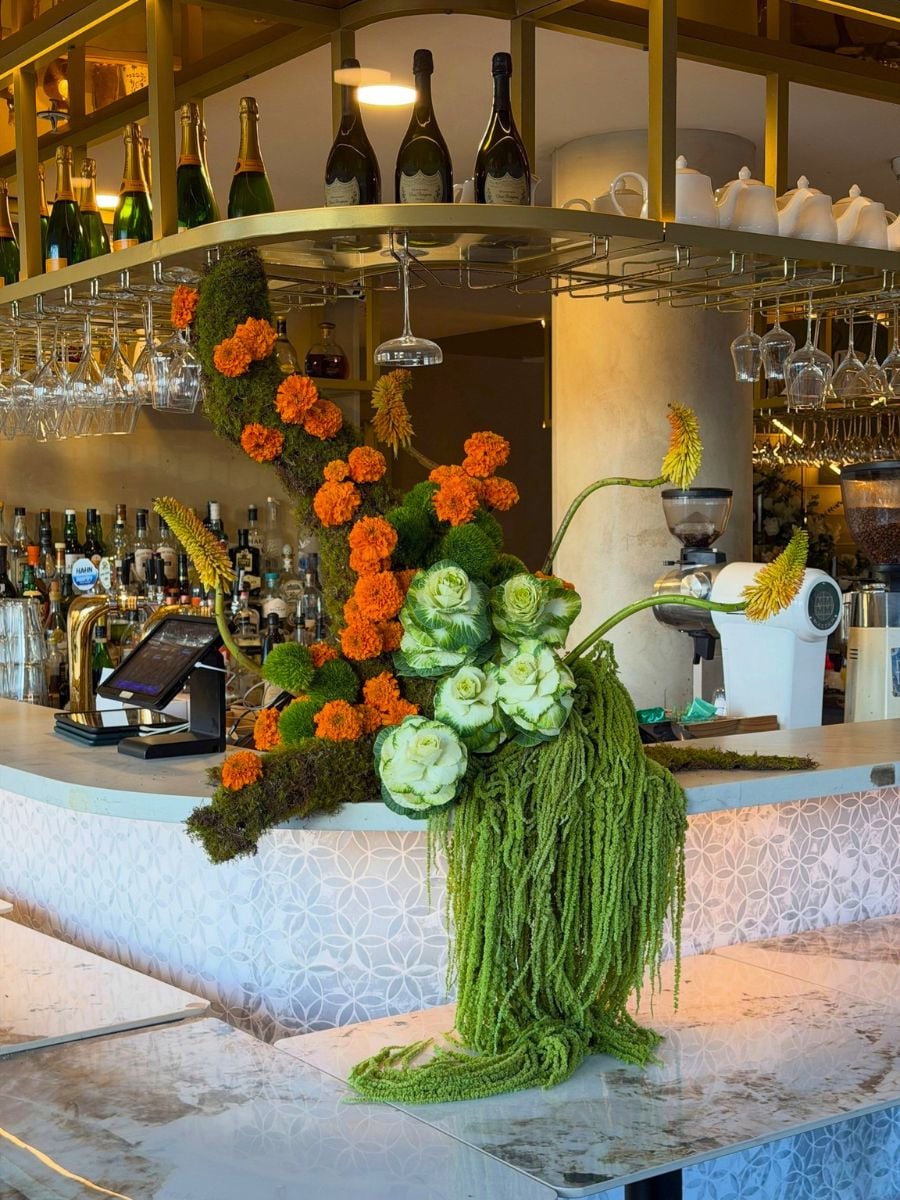
From the Worktable to the Shop Window
Moss also allows florists to create pieces that sit somewhere between floral design and interior decoration.
Consider creating small seasonal objects that customers can easily take home: moss-covered bowls with bulbs, miniature woodland scenes, natural wreaths, table decorations, or simple candle arrangements surrounded by moss and branches.
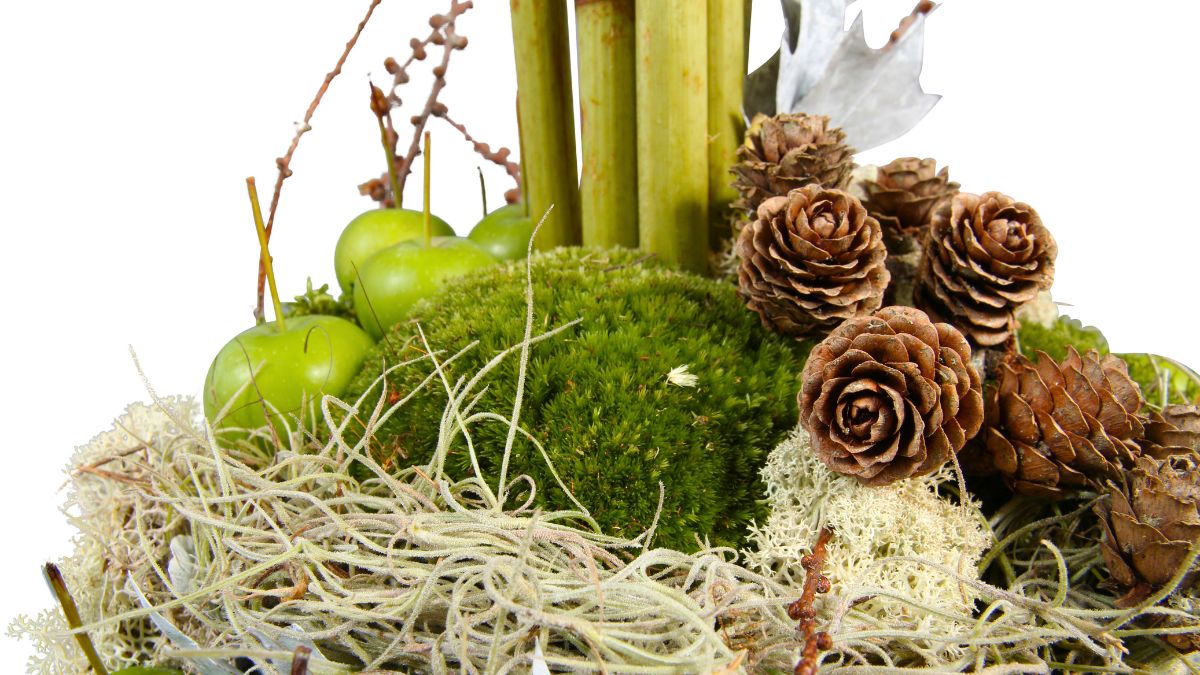
Larger moss-based pieces can become attention-grabbers in the store itself. Instead of decorating a window exclusively with bouquets, build a landscape. Let moss travel across tables, crates, pedestals, or vertical surfaces and place floral work within it.
The result can feel immersive without requiring an enormous number of flowers.
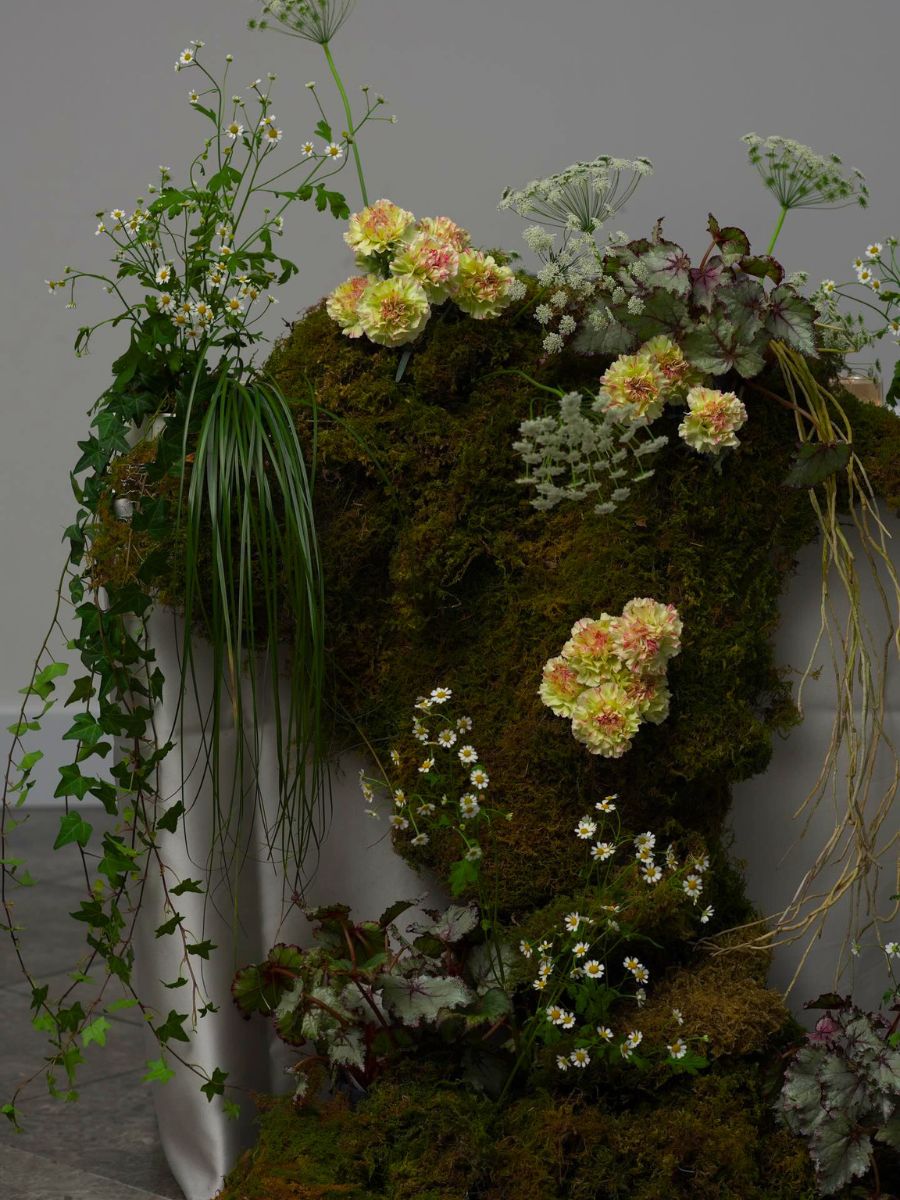
Green Is Where Adomex Begins
For Adomex International, green has always been much more than an addition to flowers.
The Dutch company has specialized in cut and decorative greens since 1977 and was the first company in the Netherlands to focus specifically on this part of the floral trade. Today, Adomex supplies popular cut greens as well as more exclusive decorative greens, working closely with growers and suppliers worldwide.
Its assortment has expanded far beyond traditional cut foliage and now also includes dried flowers, preserved and dyed products, natural decorative materials, and an extensive selection of mosses. These are suitable for a wide variety of decorative purposes, which is exactly what makes them so interesting on a florist’s worktable.
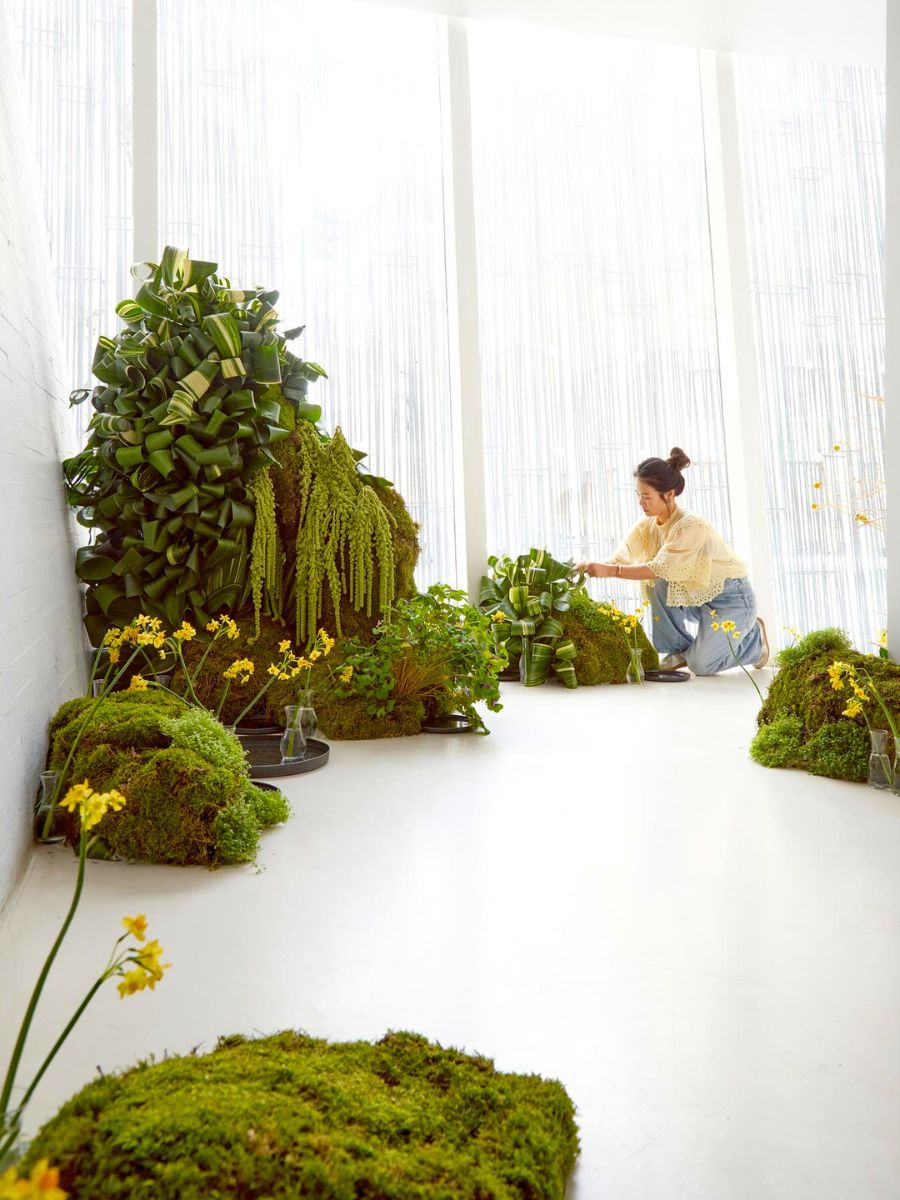
Let the Moss Lead the Way
Perhaps the most interesting way to work with moss is to stop treating it as something that covers what should not be seen. Give it space.
Build around its irregularities. Follow its curves. Combine smooth areas of flat moss with the rounded forms of cushion moss. Place flowers where they feel as though they might actually have grown. Allow branches to cross the surface instead of standing neatly above it. The result does not have to imitate nature perfectly. It simply needs to carry some of its spontaneity.
Sometimes inspiration for the next arrangement isn’t waiting in the flower field. Sometimes, it is growing quietly underneath it.
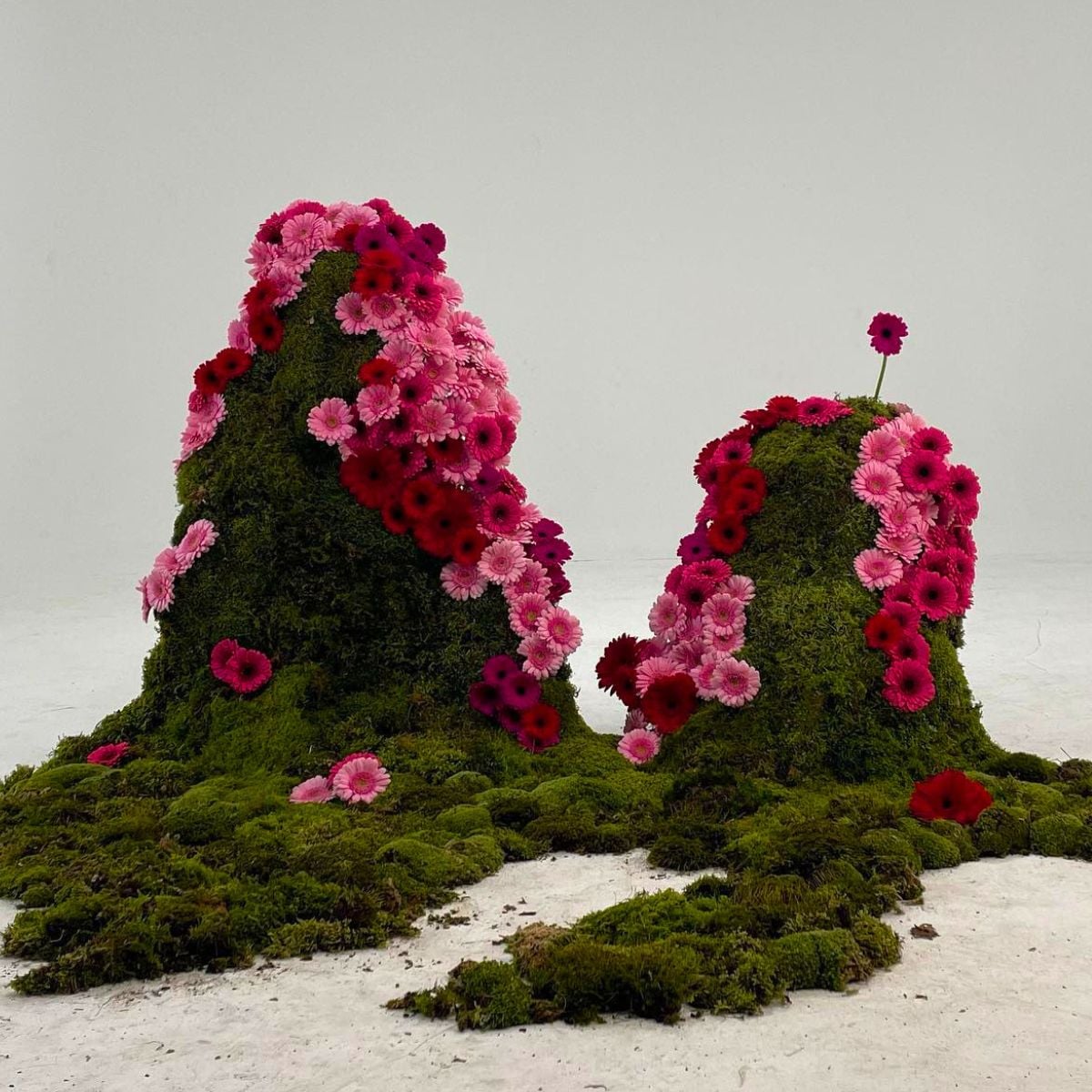
Header image by @bloomsuncut.