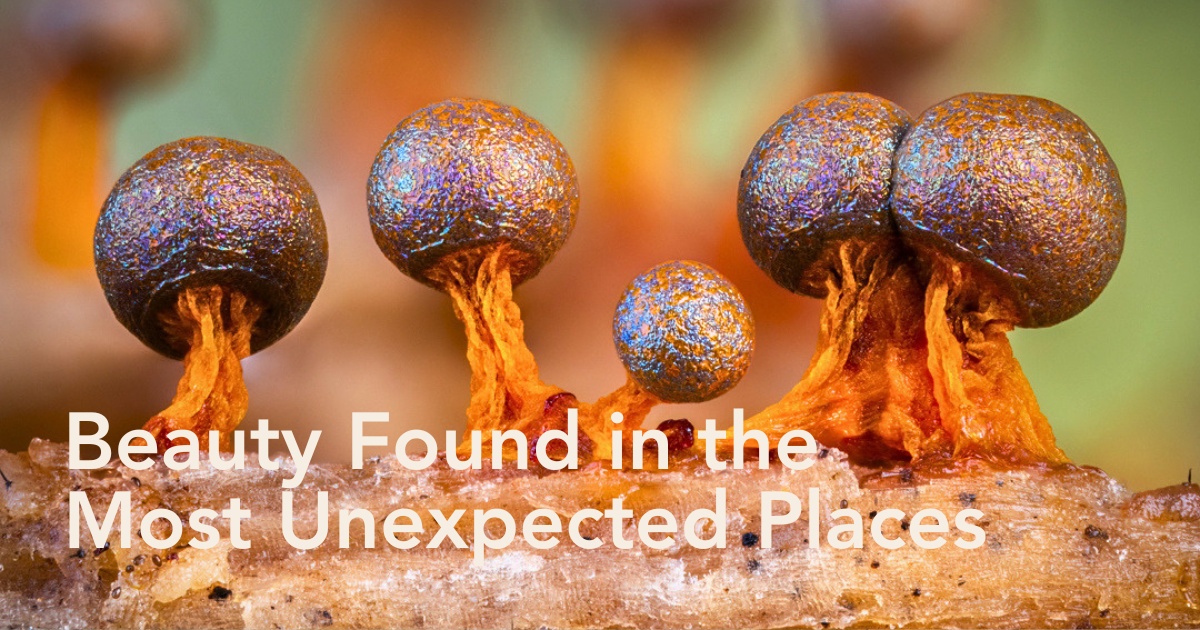
If you've ever walked through a forest and noticed strange, jewel-like growths on a rotting log, you may have brushed past one of the natural world’s most underrated spectacles: slime molds. Barry Webb, a photographer based in South Buckinghamshire, U.K., has made it his task to document these sublime slime molds in breathtaking detail.
The incredible diversity of form and color of these tiny organisms, he says, keeps him obsessively searching for new species to photograph. And indeed, that diversity is truly something to behold when looked at.
A Passion for Macro and Flower Photography
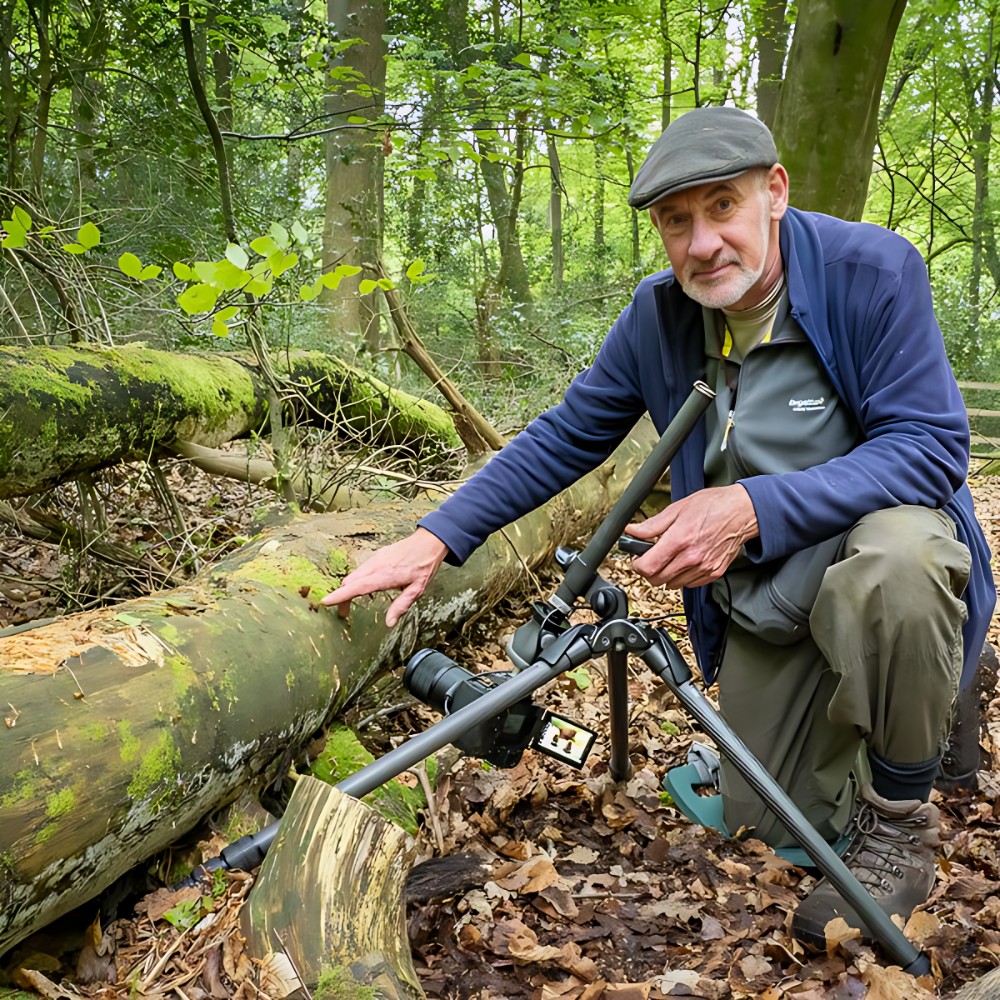
Barry first stumbled upon slime molds in November 2019 while out photographing fungi. His wife pointed out a curious white patch on a beech tree, and when he raised his camera lens to it, he found a display that quite fascinated him and would inspire the course of his photographic work. Since then, he has been hooked, spending many hours searching woodland floors and decaying logs for new species to document.
Barry, on his interest in photography:
"I became interested in photography in my early 20s. My first camera was a Zenit E, which was totally manual, with no metering system. It soon made me learn the all-important relationship between shutter speed and aperture. I didn't get serious until I joined the local camera club in the mid 90s. My film of choice became Fuji Velvia, which suited my passion for macro and flower photography."
But over the years, he has also become more and more interested in landscapes, seascapes, and street photography. The use of focus stacking, he says, has opened up another dimension to his macro photography.
Tiny Organisms Averaging Just 1 to 4 Millimeters in Height
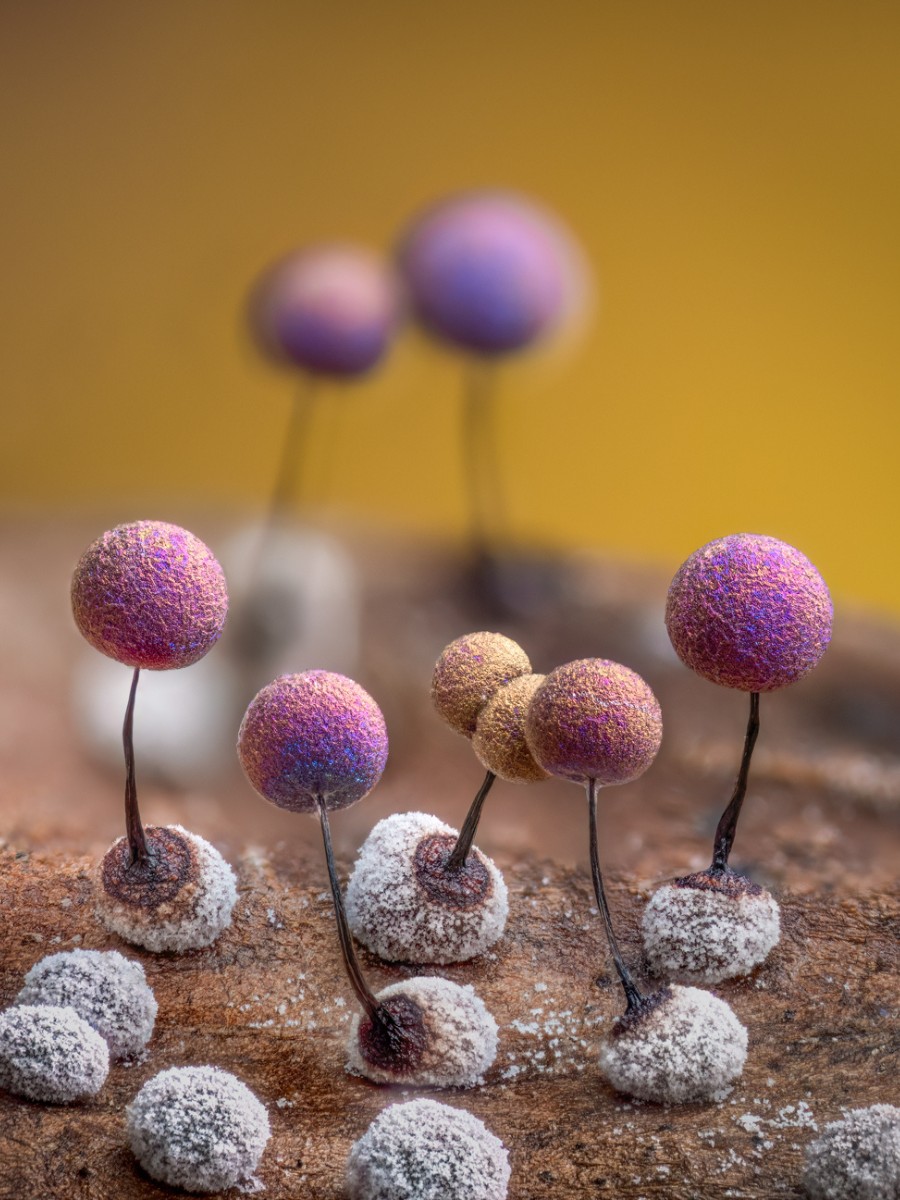
Slime molds, known scientifically as Myxomycetes, are easy to mistake for fungi, but they belong to an entirely different kingdom of life. Technically classified as protists, they live as free-moving single cells, feeding on bacteria and decaying organic matter. When conditions are right, and right before they die, they produce extraordinarily beautiful fruiting bodies, which is the stage Barry captures them in, in his photography.
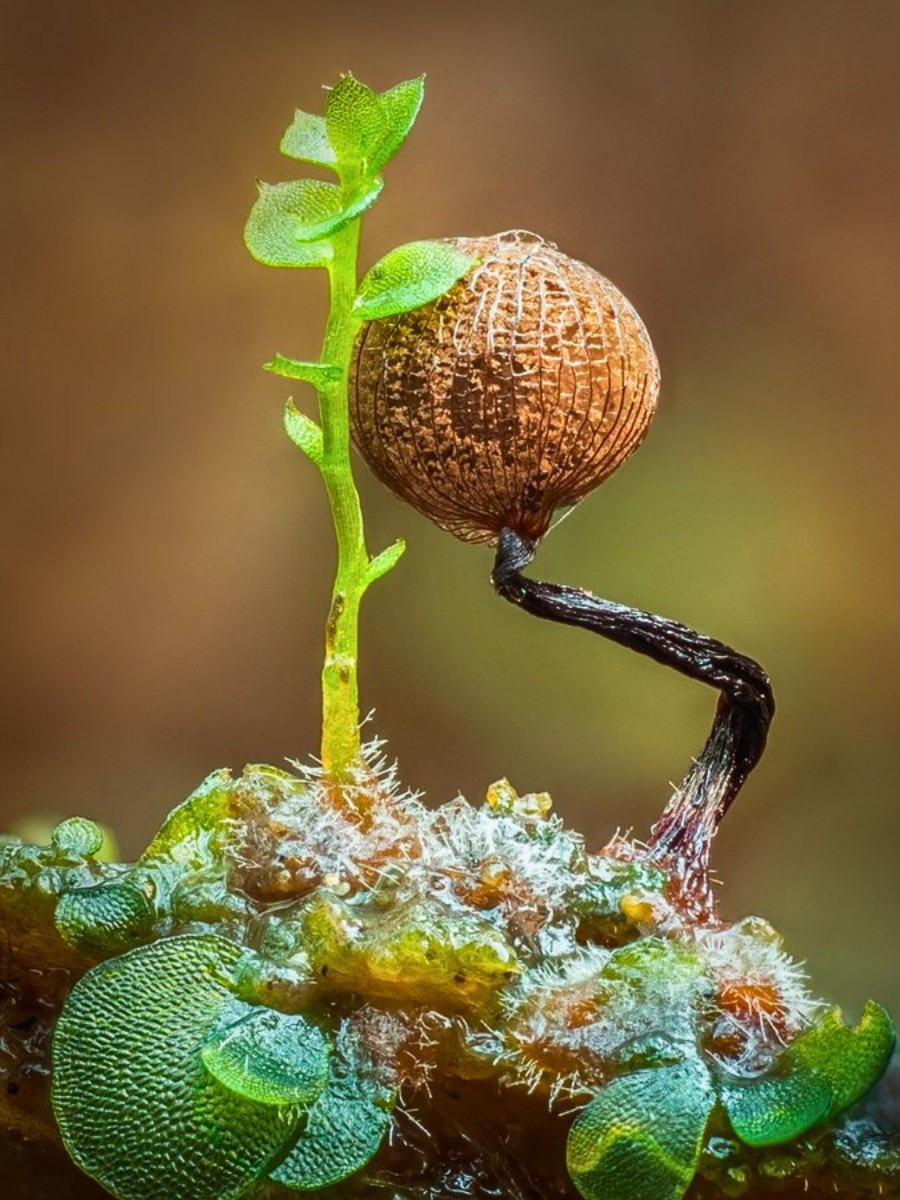
These organisms are tiny, averaging just 1 to 4 millimeters in height. That's likely the reason most of us walk past them without ever noticing them. But under Barry's macro lens, they are something else completely: alien-like sculptures in miniature, full of color and unique forms.
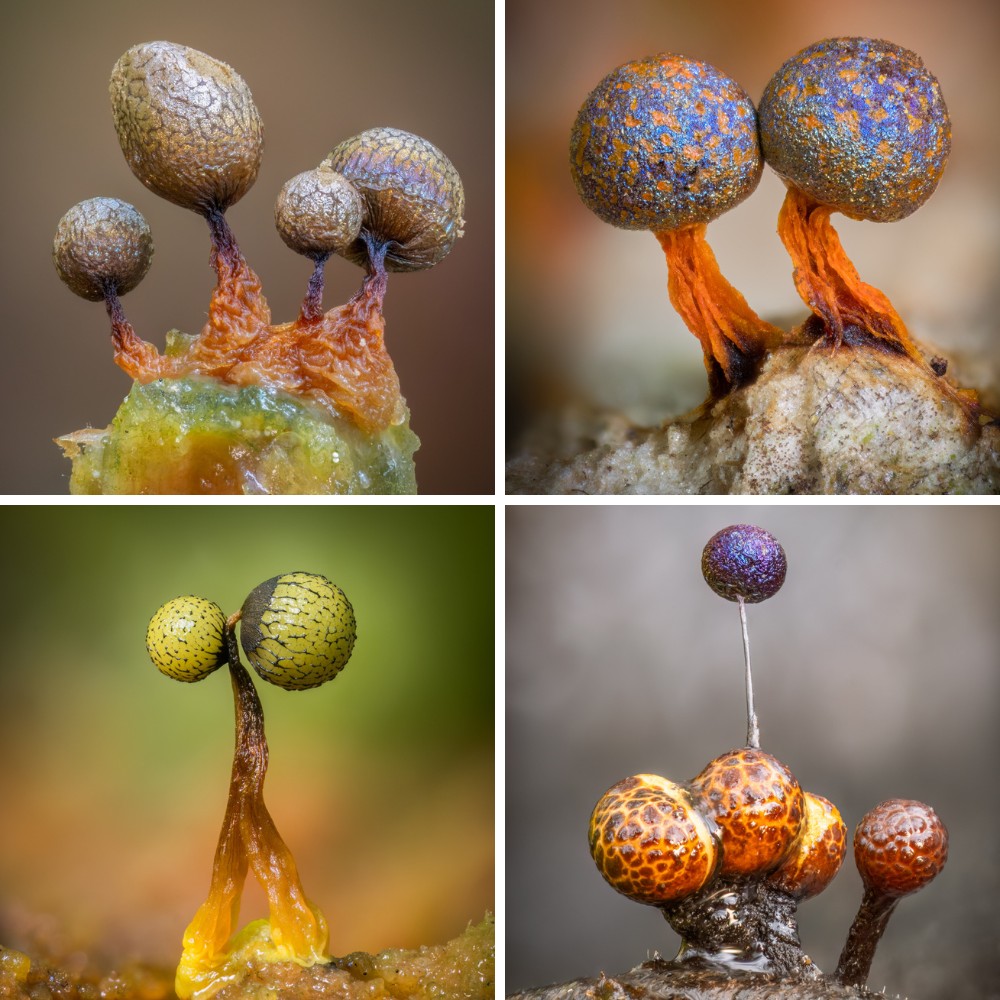
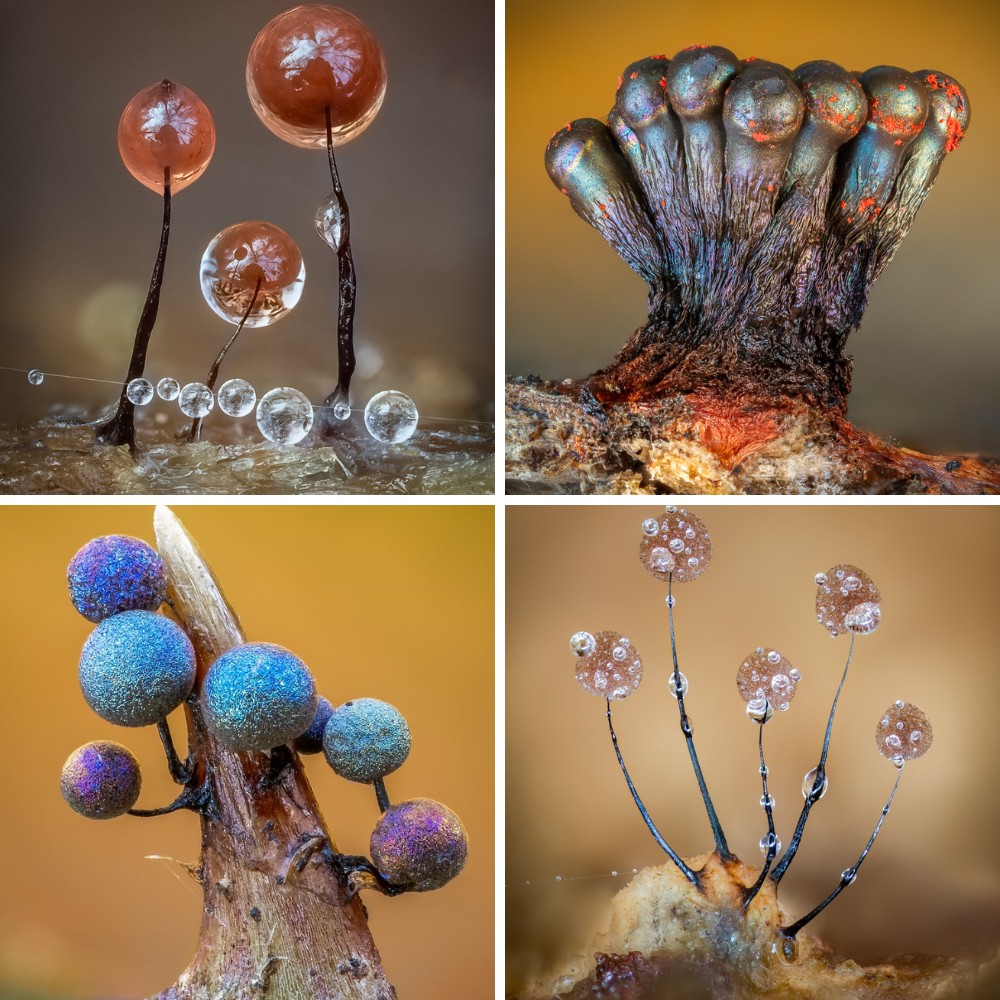
With over 900 known species of slime mold in the world, there is no shortage of variety. Yet Barry’s archive shows that richly. From the dark, globular heads of Comatricha nigra growing on fallen beech logs, to the spongy, coral-like forms of Arcyria denudata, to the delicate filaments of Stemonitis balanced on impossibly thin black stalks, each species has its own visual personality.
The Technical Craft (And Artistry) Behind the Images
Getting these shots is no simple task. Barry uses a 90mm macro lens and relies on a technique called focus stacking, where he captures anywhere from 30 to 100 individual shots at slightly different focal points, then combines them into a single, razor-sharp composite image, and the result is a level of detail that can never be easily produced by a single exposure.
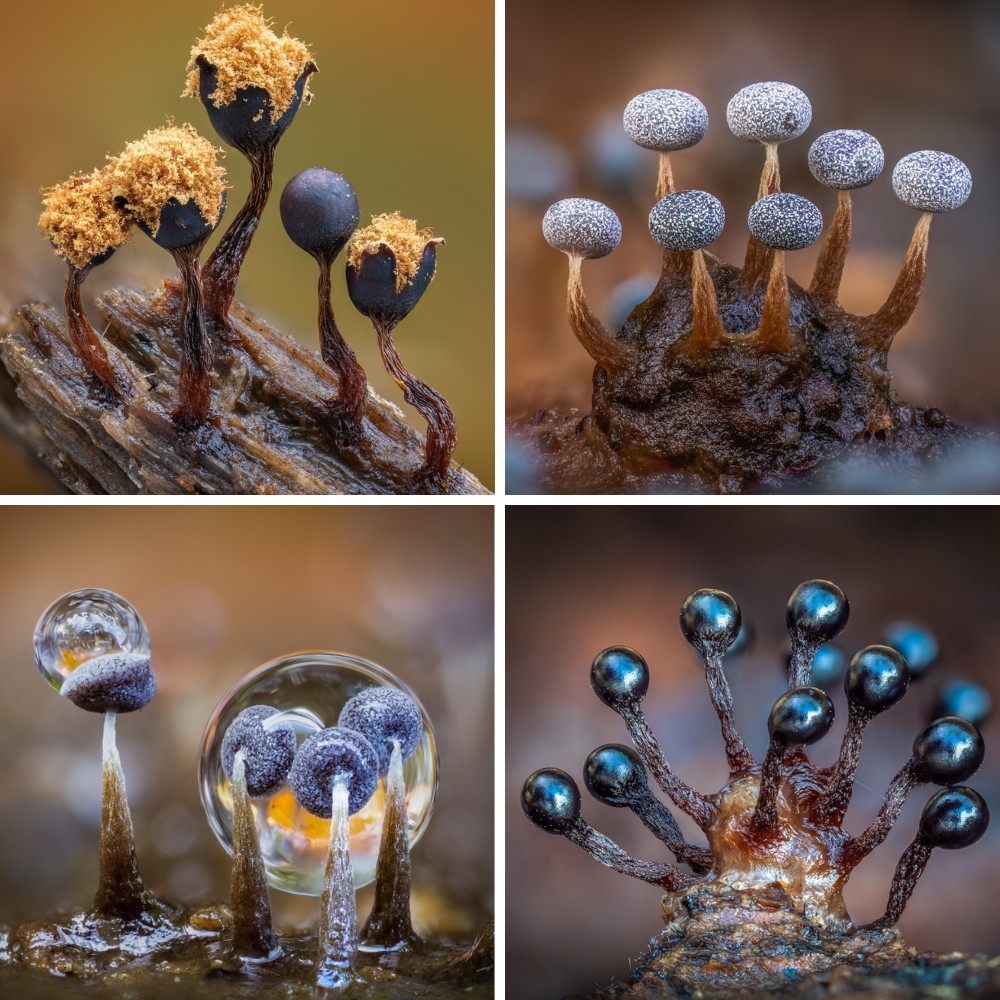
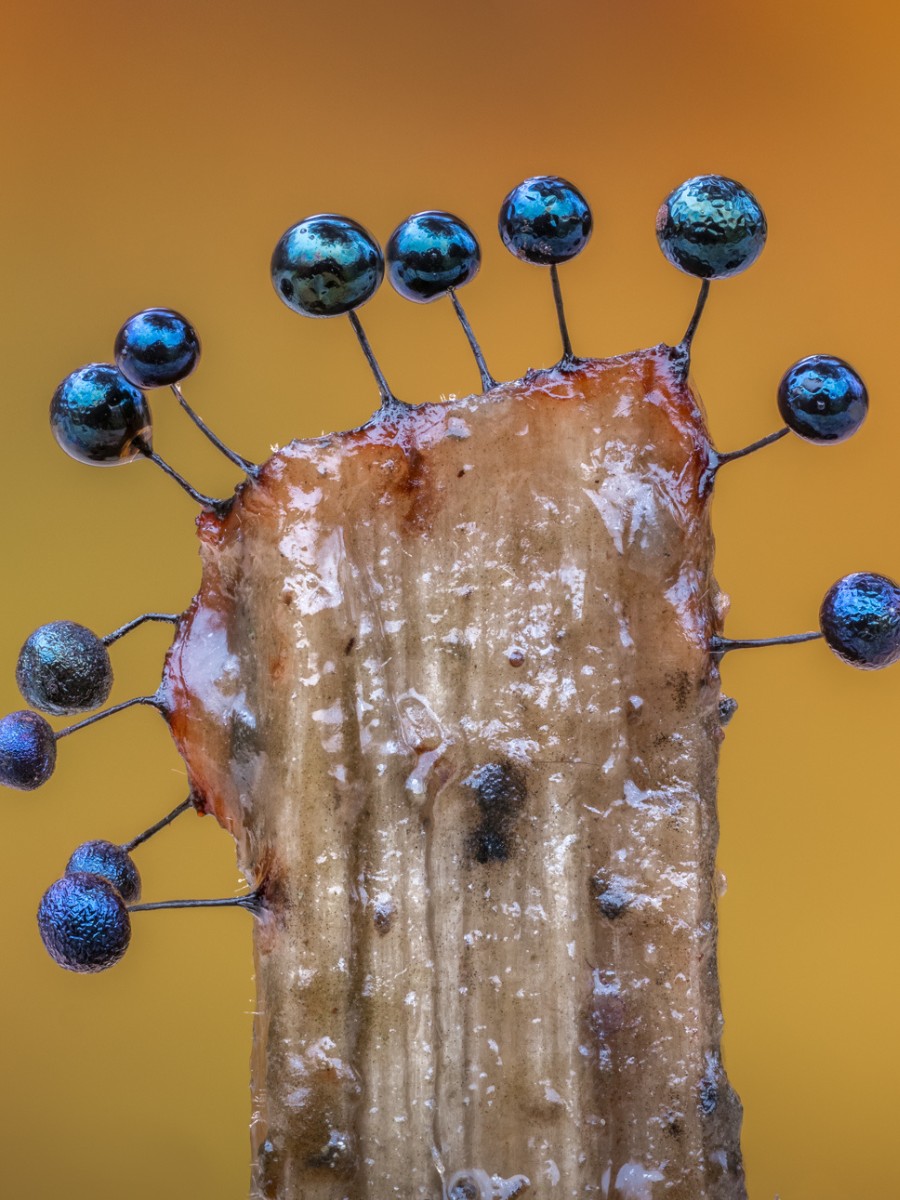
His most celebrated image to date, 'Slime Moulds and a Water Droplet', won the Botanical Britain category at the 2026 British Wildlife Photography Awards, selected from over 12,000 entries. The photograph shows a cluster of Lamproderma scintillans, each just 1mm tall, on a tiny fragment of wood from a wet woodchip pile.
A water droplet sits suspended over the cluster. As it evaporated during the shoot, two of the fruiting bodies dried out and changed back to their original blue color in an instant of natural conversion that Barry was perfectly positioned to capture. That single image was assembled from 87 individual focus-stacked frames.
Attracting the Attention of Audiences Well Beyond the Photography Community
Barry's work has attracted the attention of audiences well beyond the photography community. Several of his large-format images are currently on display at the exhibition Mythos Wald at Gasometer Oberhausen in Germany, running through the end of the year.
In the U.K., his award-winning images can be seen at the 2026 International Garden Photographer of the Year exhibition at Cambridge University Botanic Garden. He has also received recognition from the Royal Photographic Society and the Close-Up Photographer of the Year competition.
About Beauty in the Most Unexpected of Places
Perhaps what one could, in essence, say about Barry’s macro photography work is that it speaks to the peculiar yet spectacular natural beauty that hardly ever stridently reveals itself. These tiny microorganisms may not bloom in bright colors at eye level or fill a vase with color, yet still remain remarkable.
Their is the kind of natural beauty that unassumingly grows in the most unexpected places, like a decomposing log, and barely makes it to a millimeter tall. But once you see them (and their beauty) on that forest floor or decaying log, you will, likely, never quite look at (or feel) those ignored places the same again.
For those who want to explore Barry’s wider archive, which spans hundreds of species and years of enthusiastic field photography work, his full portfolio and print shop are available at his website, barrywebbimages.co.uk. He is also active on Instagram, where he regularly posts his new finds.
Photos by Barry Webb (@barrywebbimages).