
Campanula cut flowers have been around for a long time, but for many florists, it still feels like it's a flower waiting for a wider moment. That is where the Campanulove campaign comes in, a collaboration between growers, breeders, exporters, and creatives to give the Campanula a clearer identity in the market and to help more people in the floral chain understand what makes it worth working with.
Wanna know why Campanula deserves a spot in every florist's lineup? Then first, understand that Campanulove does not try to turn the Campanula cut flower into something it is not. It simply puts a spotlight on what florists already need: a cut flower with character, movement, a soft bell shape, a good color range, and reliable vase performance. So, read this story and make your mind up. What can Campanula do for you?
The Story Behind Campanulove
Campanulove is not just a flower name. It is a joint effort set up to promote the Campanula cut flower in a more focused and recognizable way. Behind it are growers, breeders, exporters, and creative partners working together to raise visibility and make the flower easier to position in retail, export, and floral design. The campaign’s next phase includes stronger digital visibility, more collaborations with florists and wholesalers, and continued investment in quality and vase-life research.
That matters because plenty of flowers enter the chain with decent quality but without a strong market story. Campanulove is trying to close that gap. It gives florists a clearer visual language, more inspiration, and more reasons to confidently offer Campanula to consumers who may know the flower by shape, but not yet by name.
Campanulove is supported by Royal FloraHolland, breeders and propagators including Sakata Ornamentals EMEA, Florensis Cut Flowers, Evanthia, PanAmerican Seed, Florique (formerly known as Kwekerij Stadsland), and creative agencies StudioBlauw and Puck Solange.
Why Florists Need to Know the Product
For florists, Campanula works in that useful middle space between delicate and dependable. The stems bring a light rhythm into arrangements, but the product is not fragile in the way some airy flowers can be. The flower is versatile, year-round available, and suitable for every floral style, from mono bunches to mixed bouquets. That kind of flexibility makes it easier to slot into daily shop work, event work, and more styled design pieces.
There is also a customer story here. Campanula carries a gentle, romantic look, but it is not overly sweet. It can read modern, garden-like, airy, or even a bit graphic, depending on the variety and color used. For florists, that opens the door to a broader range of design directions without needing to over-explain the flower.
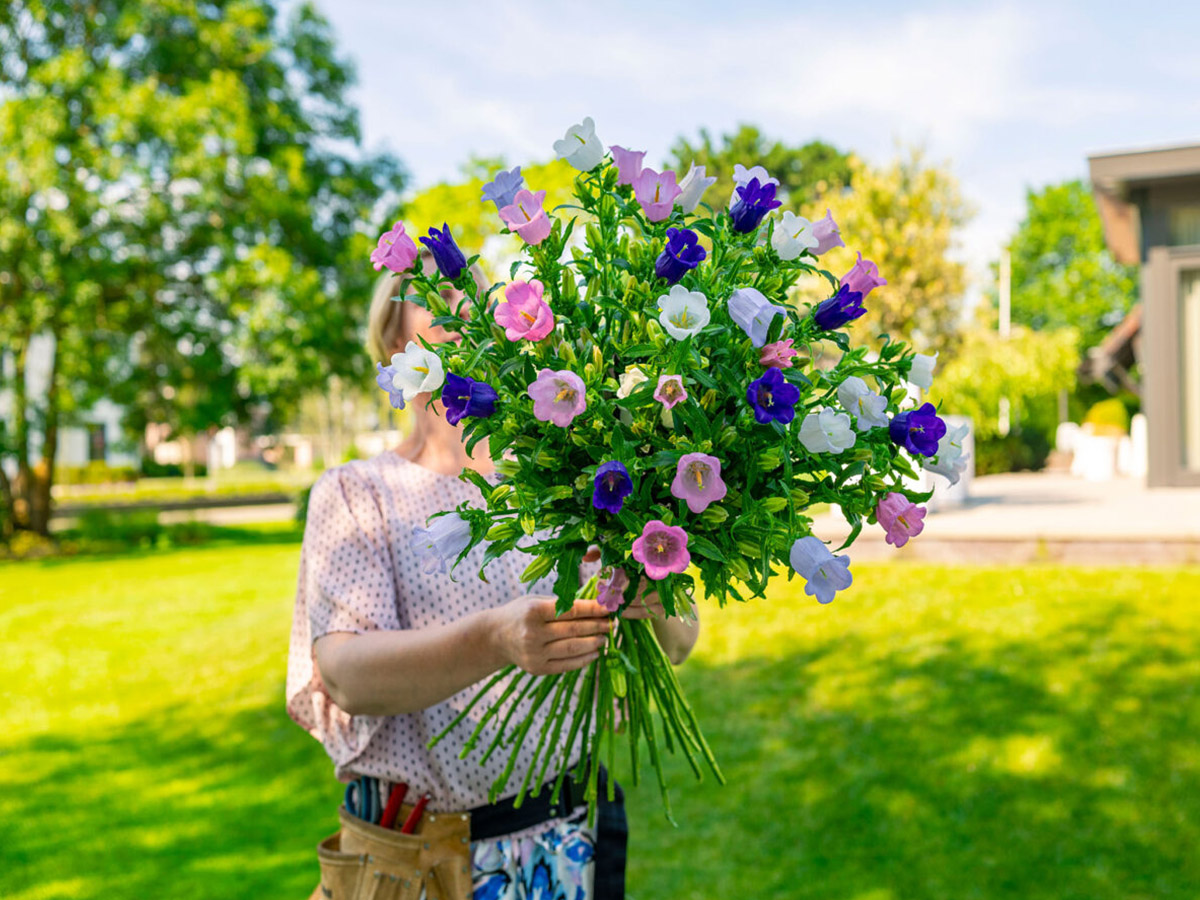
The 21-Day Vase Life Claim Matters
One of the strongest selling points of this cut flower is its vase life. In a February 2025 quality test by the independent Post Harvest Knowledge Center 'FlorEsearch' of Royal FloraHolland, all four Campanulove colors performed above standard during winter conditions. The flowers underwent a 5-day transport simulation at 6°C and a 2-day retail simulation at 20°C. In the final vase-life test, Campanulove lasted an average of 19 days in water and up to 21 days with flower food. For reference, 7 days is considered standard in the cut flower industry.
For florists, that is not just a nice technical detail. It changes how comfortably you can recommend the flower, how confidently you can use it in mixed work, and how much value customers feel they are getting from a bouquet. A flower that keeps opening well and stays fresh for close to three weeks makes conversations at the counter much easier, don't you think?
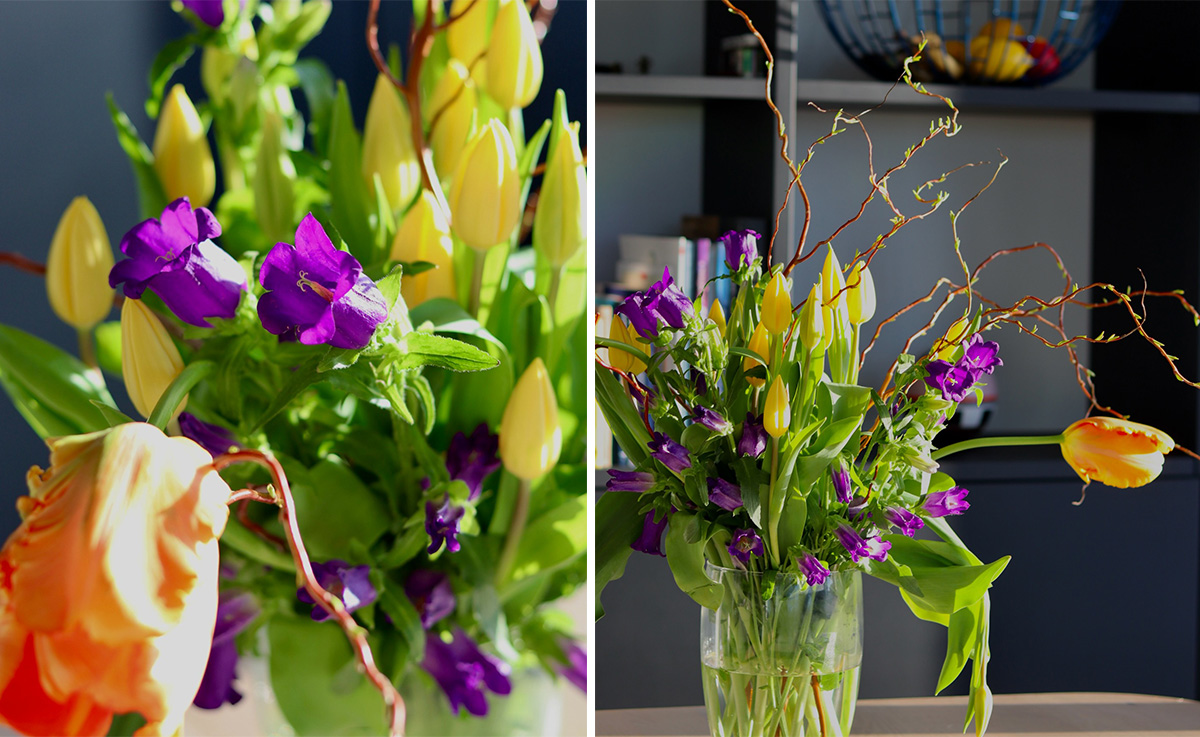
As Karel Peterse, Product Manager at breeder Sakata, put it:
"In the nearly two years I’ve worked with Campanulove, I’ve seen the flower in every season – and from the start, its vase life stood out. With clean water, it stays beautiful for nearly three weeks, as this test once again confirmed. What’s also impressive is that every bud opens. That makes Campanulove one of the most appreciated products in our portfolio."
That point about flowers opening is maybe just as important as the day count itself. Customers do not only buy the bouquet they see on day one. They buy the experience of it continuing to develop at home.
Mono Bunch or Mixed Bouquet? Both Work
One reason Campanulove has room to grow is that it does not need to be locked into one design use. In mono bunches, the flower has enough personality to carry a simple statement on its own. The bell shape, the spacing between blooms, and the line of the stem create movement without much extra effort. That makes it a good option for florists looking for something fresh for front-of-shop bunches or retail concepts that need a clean, recognizable flower with softness.
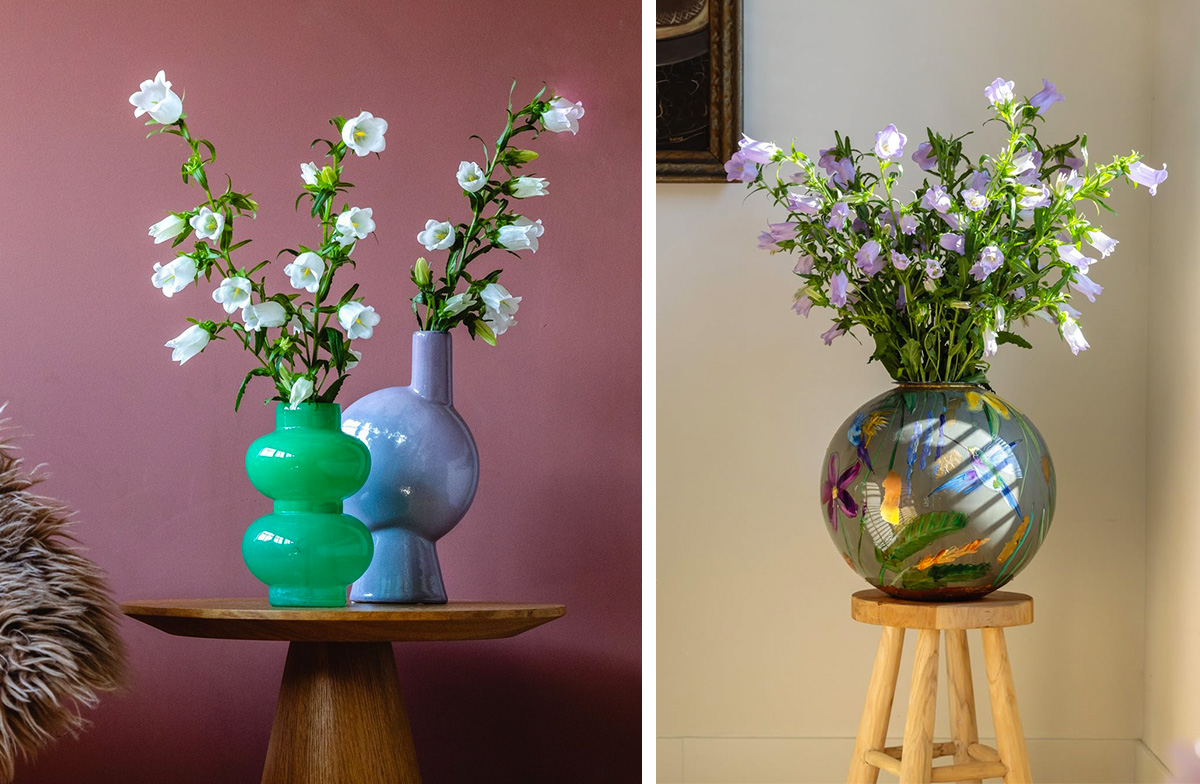
In bouquets, Campanula plays a different role. It can soften stronger focal flowers, add a vertical or slightly trailing rhythm, and bring a more natural field-grown feel into mixed recipes. Campanulove itself positions the product as suitable for every floral style, from mono to bouquet, which is part of what makes it useful in real shop work.
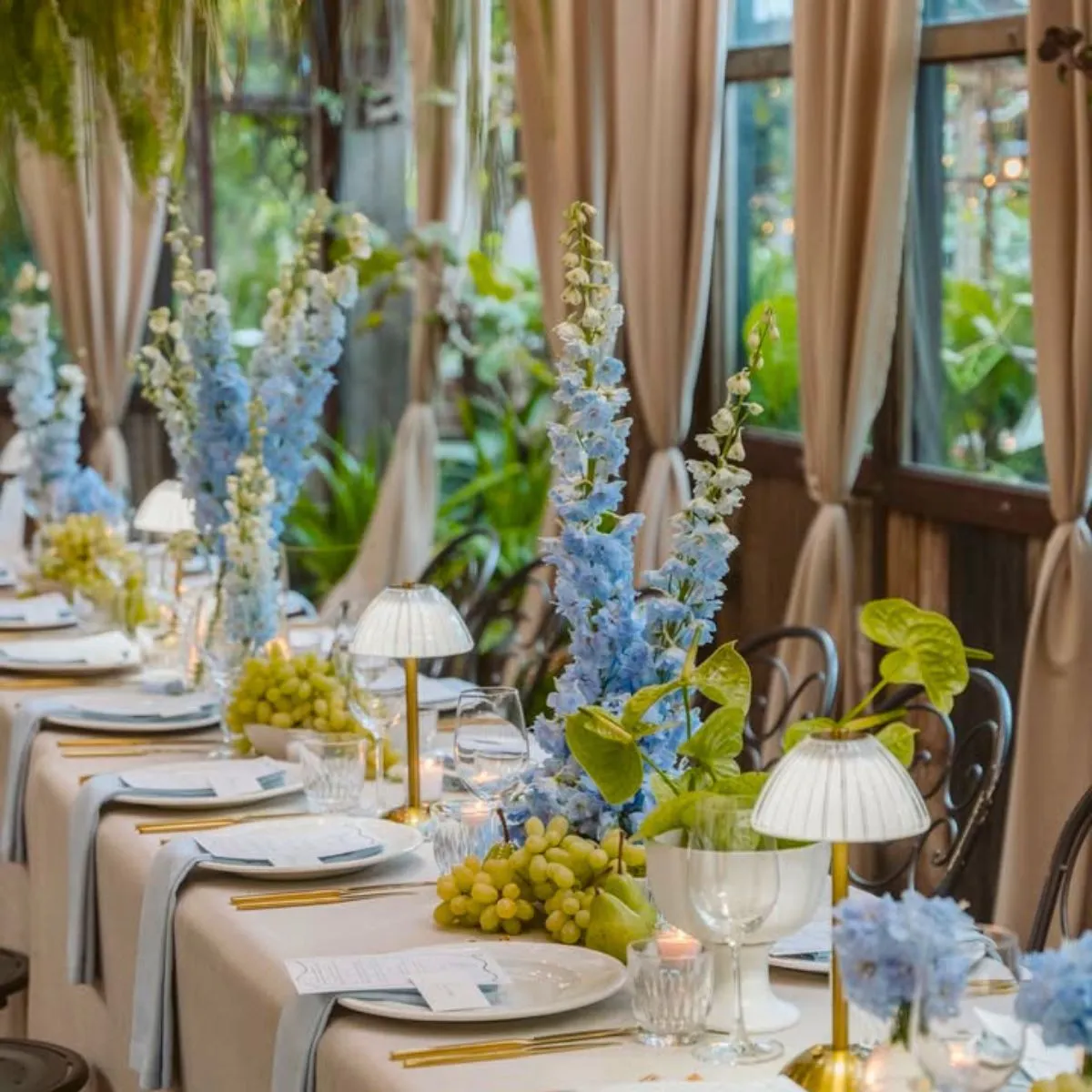
For florists, that is where the flower gets interesting. It can sit in a pastel spring mix, a cottage-style hand-tied bouquet, a wedding design with a light, airy build, or even a simpler everyday retail recipe where one stem type needs to loosen the whole composition. It is a useful flower, not only a pretty one.
Color Variations Give It Range
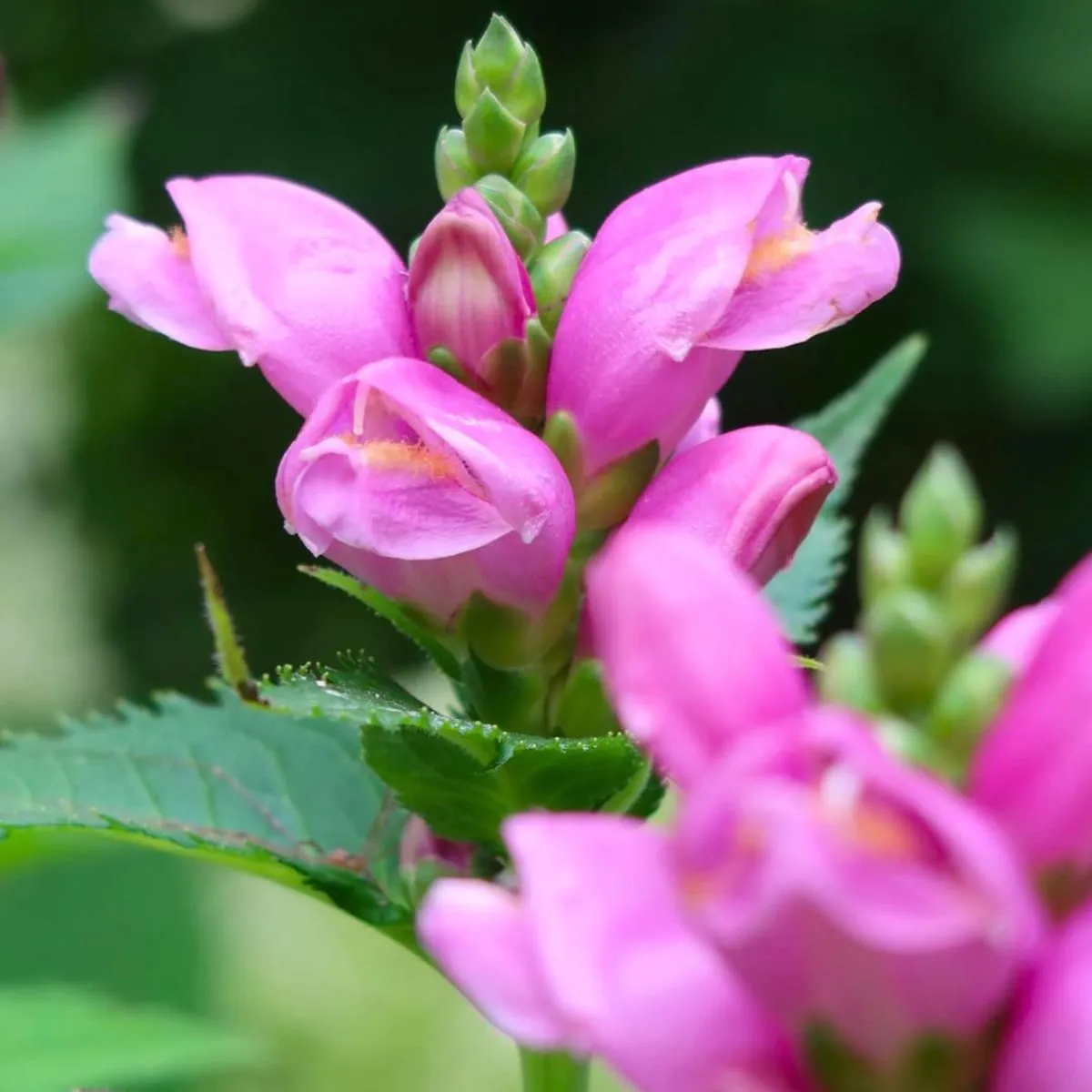
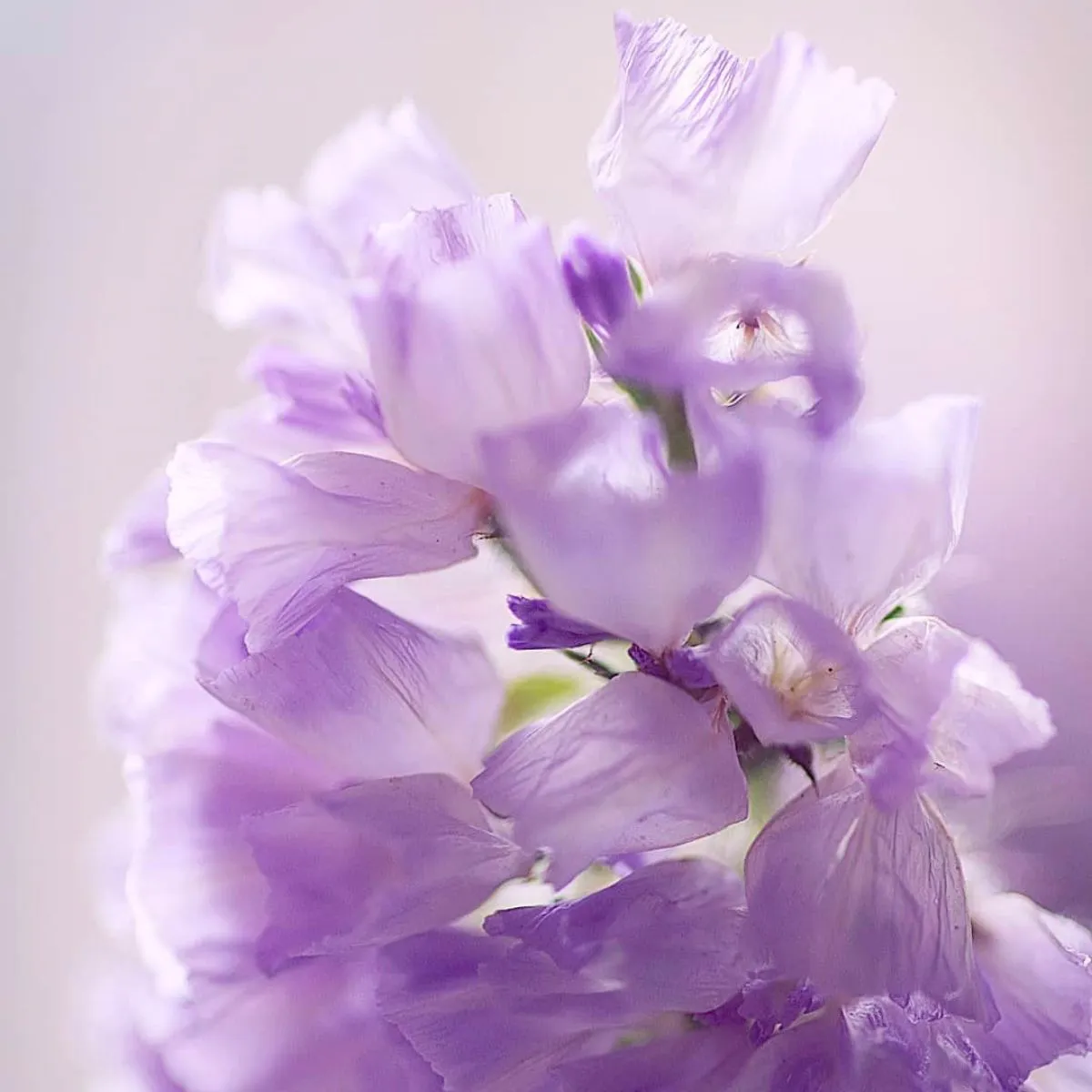
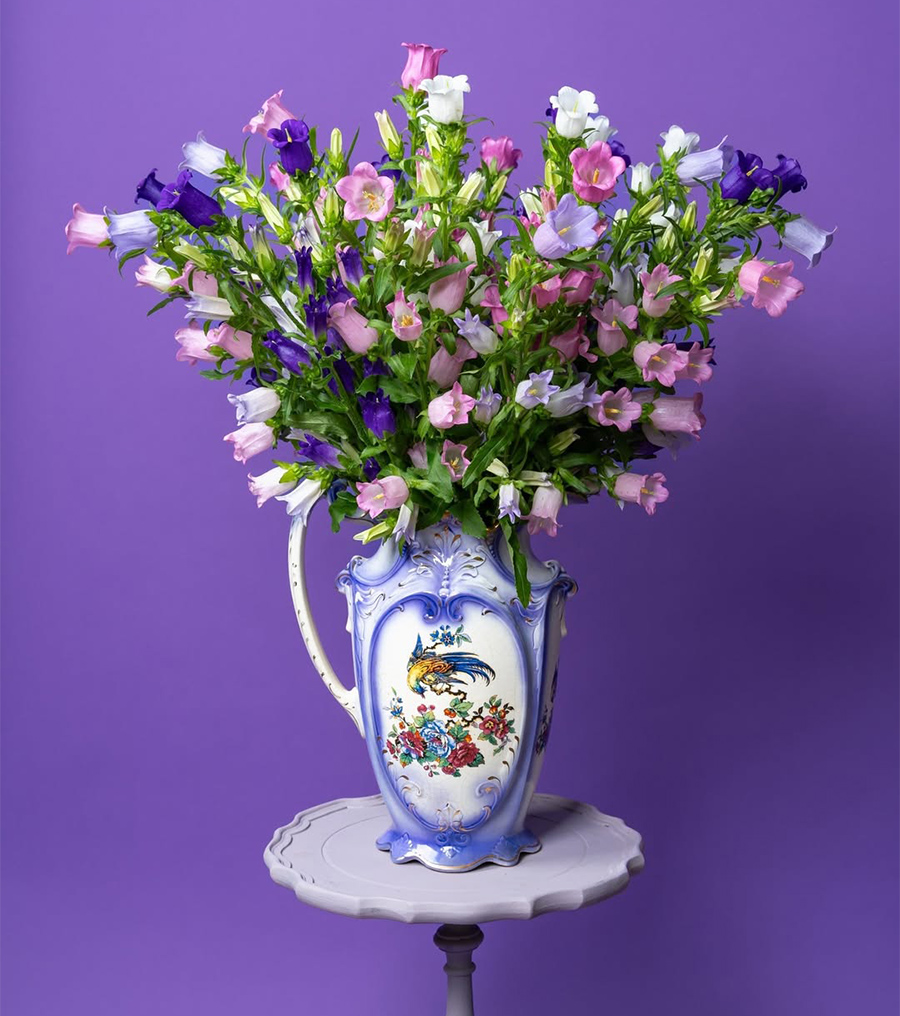
Campanulove presents the product as a family of varieties with different moods, shapes, and a surprising color palette. Campanula references purple, white, and pink as core shades in the cut flower offer. That range matters in shop work because it lets florists move from soft, romantic to fresher, more contrast-based recipes without leaving the product category.
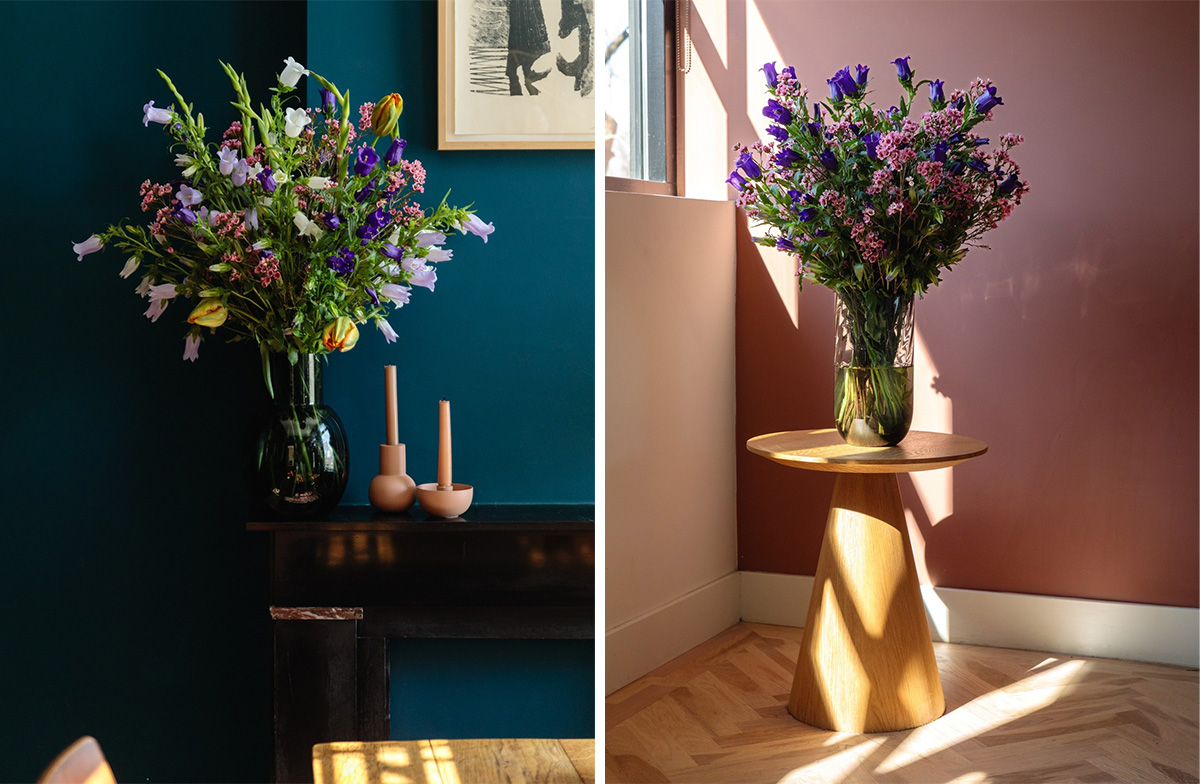
Purple tones tend to underline the flower’s classic bellflower identity. White makes the form feel cleaner and more architectural. Pink shifts it toward a softer and more emotional direction, especially in gift work and wedding-related bouquets. If the campaign continues building recognition around those color cues, it becomes easier for florists to remember where Campanula can sit in their buying and design decisions.

How Florists Use Campanula in Bouquets
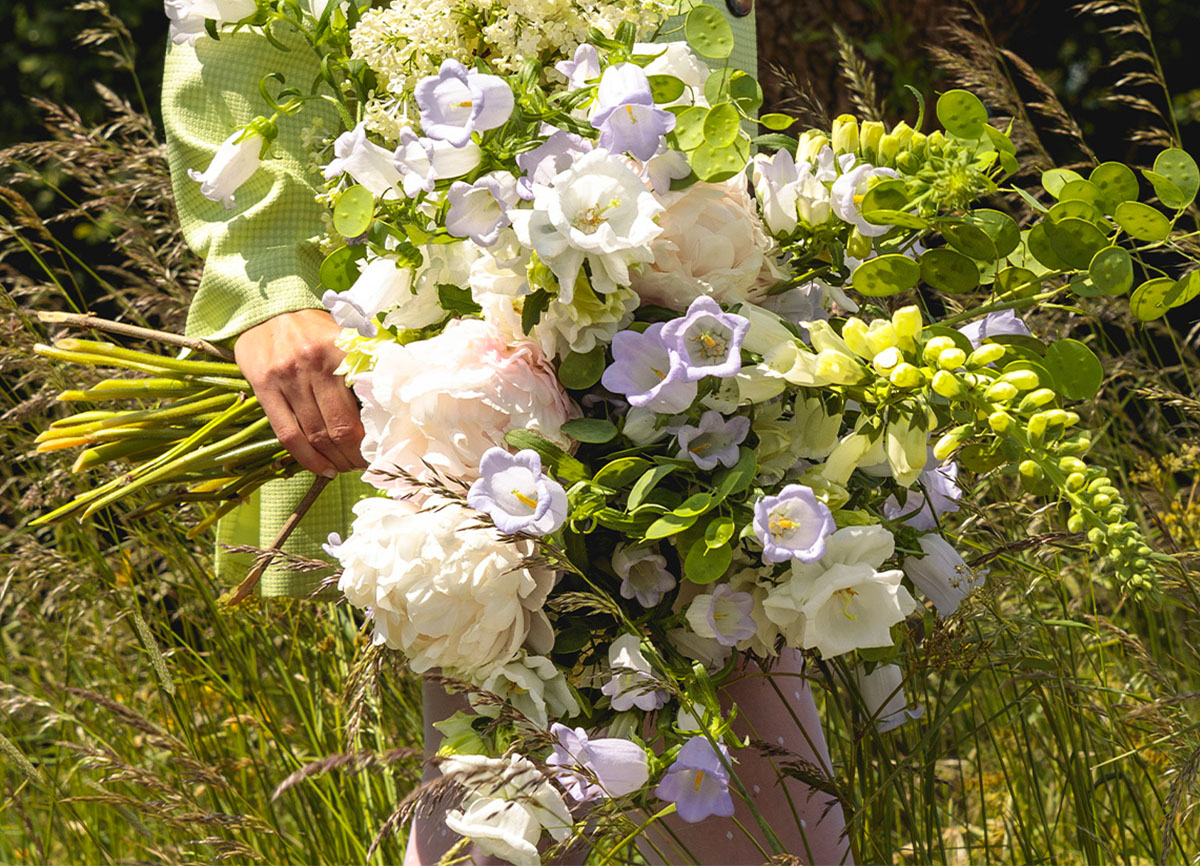
Campanula is one of those flowers that can either blend in or shape the whole bouquet, depending on how it is used. In mixed bouquets, it works well as a soft line flower, a movement-maker, or a bridging stem between larger focal blooms and lighter filler material. Its bell-shaped flowers help break up denser recipes and give the bouquet a looser silhouette. This flower is well-suited to both mono and bouquet use, which is part of what makes it commercially appealing to shops.
For florists who like variety in a recipe without adding visual noise, Campanula can be the stem that changes the feel of a bouquet without taking it over. That makes it useful in hand-tied work, event arrangements, retail bunches, and wedding flowers.
Quotes From Florists
Florists tend to respond to Campanula in a very direct way. In public social captions, German florist and coach Anna Kochanow from Marburg described it as:
"Campanula is so much more than delicate and dainty. She can shine, take a step back, blend into any color scheme – and that’s exactly what makes her so special to me."
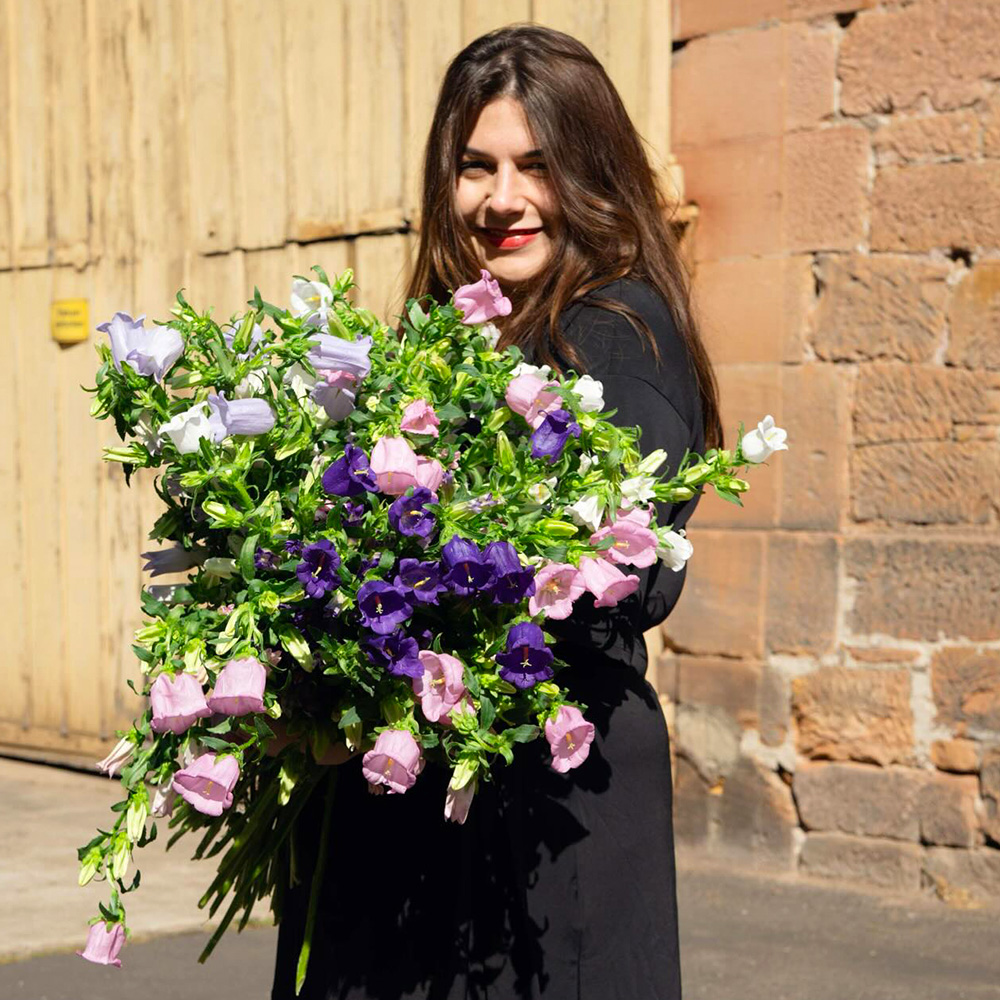
Tanja at Dutch florist Bloembinderij Geschikt from Rotterdam wrote:
"These flowers bloom for a nice long time and instantly make any bouquet much cheerier. An extra nice touch: the buds at the bottom don't open until later, so there's something going on in your vase too."
Flowers by Callie names her Campanula bouquet:
"My little wonderland in a vase."
These reactions show how naturally the flower lands with floral designers who like movement, softness, and a shape that feels a little different from the standard lineup. That kind of florist's response fits well with what Campanulove is trying to do. The campaign is not selling a difficult concept. It is helping the trade notice a flower that already has shelf appeal, design flexibility, and strong consumer value once it gets into a vase.
Campanula Care Tips for Florists
The care story around Campanulove is refreshingly practical. Clean water matters. Flower food helps push vase life toward that 21-day mark. And because transport and retail simulations were part of the earlier-mentioned Royal FloraHolland test, the product has already been assessed with real chain conditions in mind. The simplest message is also the most useful one: with clean water and proper care, Campanulas go the distance.
For shop handling, that means keeping buckets clean, refreshing water on time, using flower food where possible, and presenting the flower as a long-lasting choice rather than only a seasonal visual pick. When the care message is simple, it is easier for retail staff to pass it on and easier for customers to remember it at home.
Giving the Campanula a Clear Identity
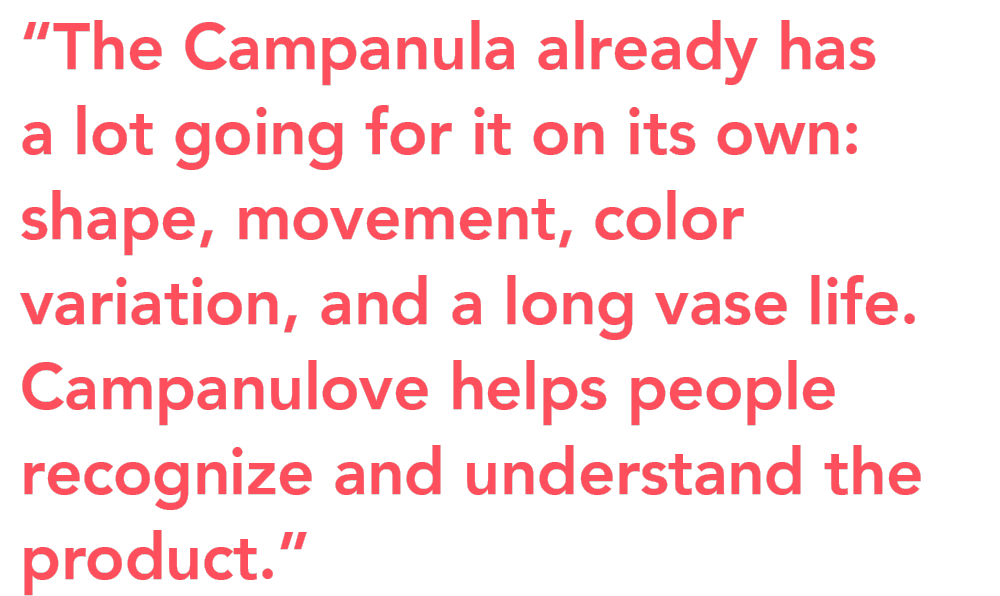
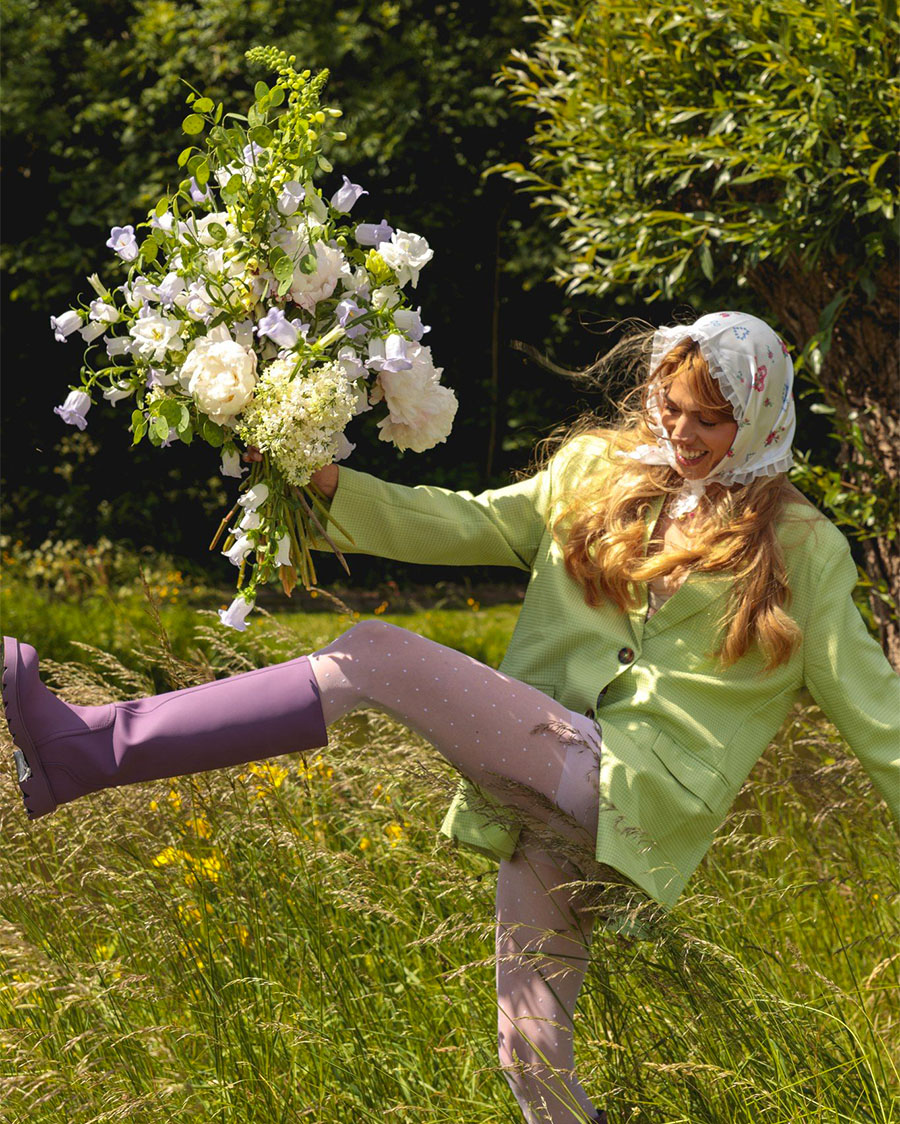
Campanulove gives cut Campanula a clearer identity in the market. For florists, that matters. The flower already has a lot going for it on its own: shape, movement, color variation, and a long vase life. But when those qualities are supported by a campaign that helps people recognize and understand the product, it becomes easier to use, easier to talk about, and easier to sell. That is where Campanulove makes the difference.
Follow Campanulove on social media: @campanuloveflowers and #Campanulove, or visit Campanulove.com for more.
Header and feature image by @campanuloveflowers.