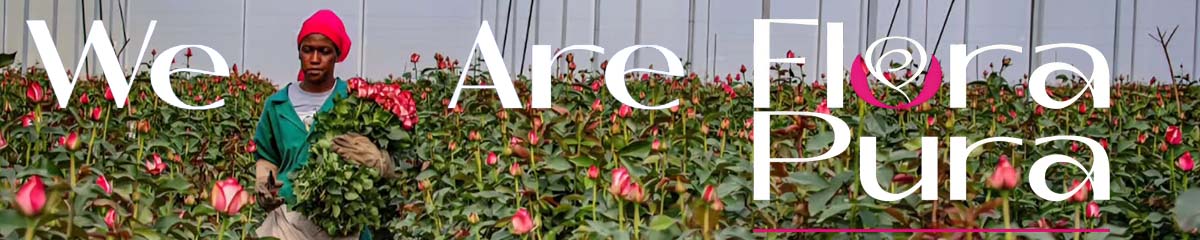
In April this year, Florapura will mark an important milestone. The rose farm is approaching its third anniversary, a moment that reflects how quickly the company has taken shape. What began as a young operation has steadily grown, with production now heading toward eighteen hectares.
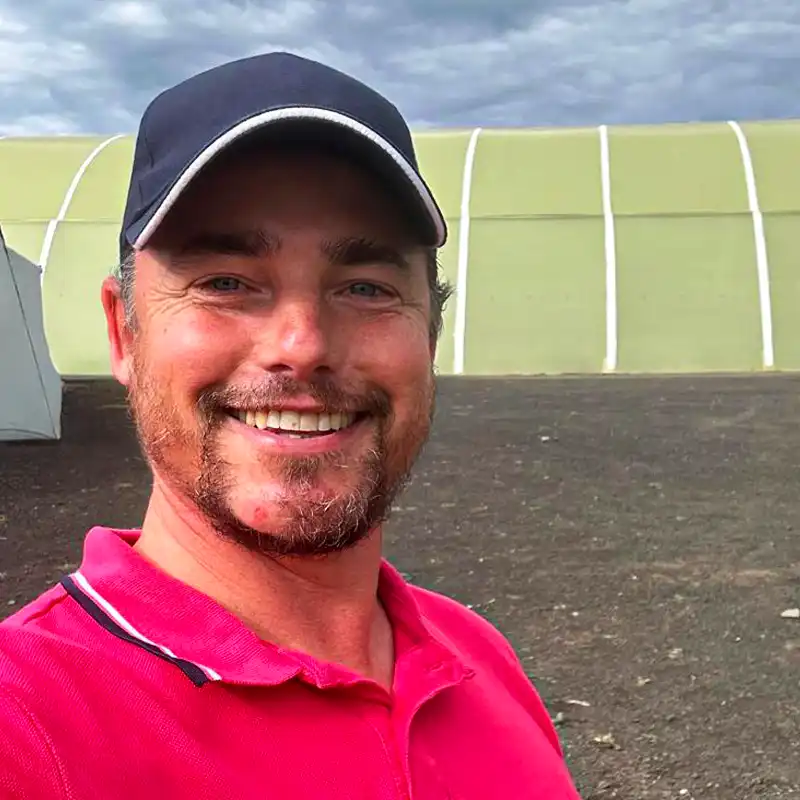
Behind this progress is Simon van der Burg, whose experience in the breeding world has shaped the way the farm approaches variety selection. Before starting Florapura, Simon worked closely with breeders such as Rosen Tantau and NIRP International, gaining firsthand exposure to the full journey of a rose. From the early breeding phase to selection, testing, and commercial introduction, he learned how new genetics are developed and brought into the market.
That background gave him a different perspective when he established his own farm. Instead of simply planting established varieties, Florapura was built with a strategy centered around variety discovery, close breeder collaboration, and introducing roses that offer something distinct in the market.
Why Breeder Collaboration Matters from the Start
For Simon, relationships with breeders are not just a business connection. They are the foundation of how the farm operates. Working closely with breeders allows Florapura to access coded varieties at an early stage. These roses often arrive without a commercial name and are still being evaluated. The grower plays an important role in testing how the variety performs under production conditions and how it responds once it reaches the market.
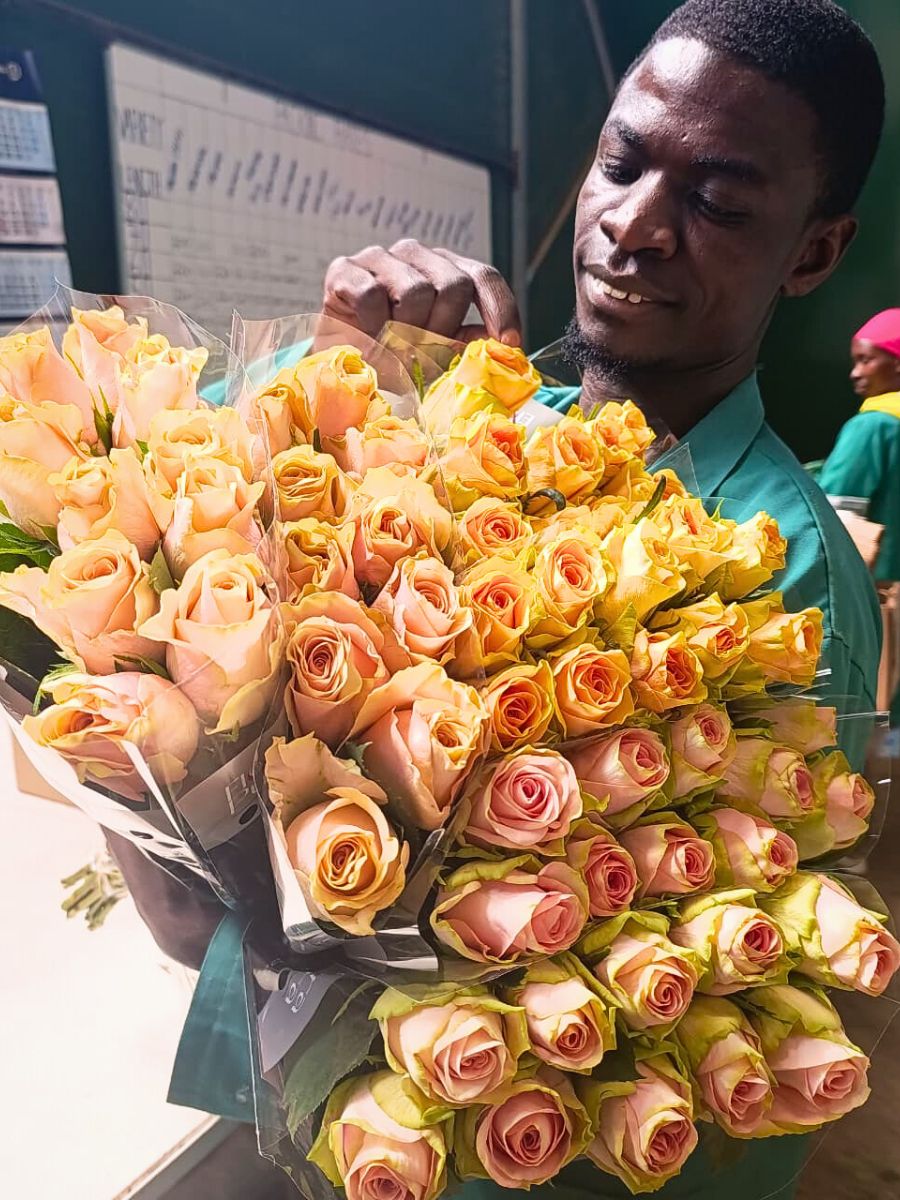
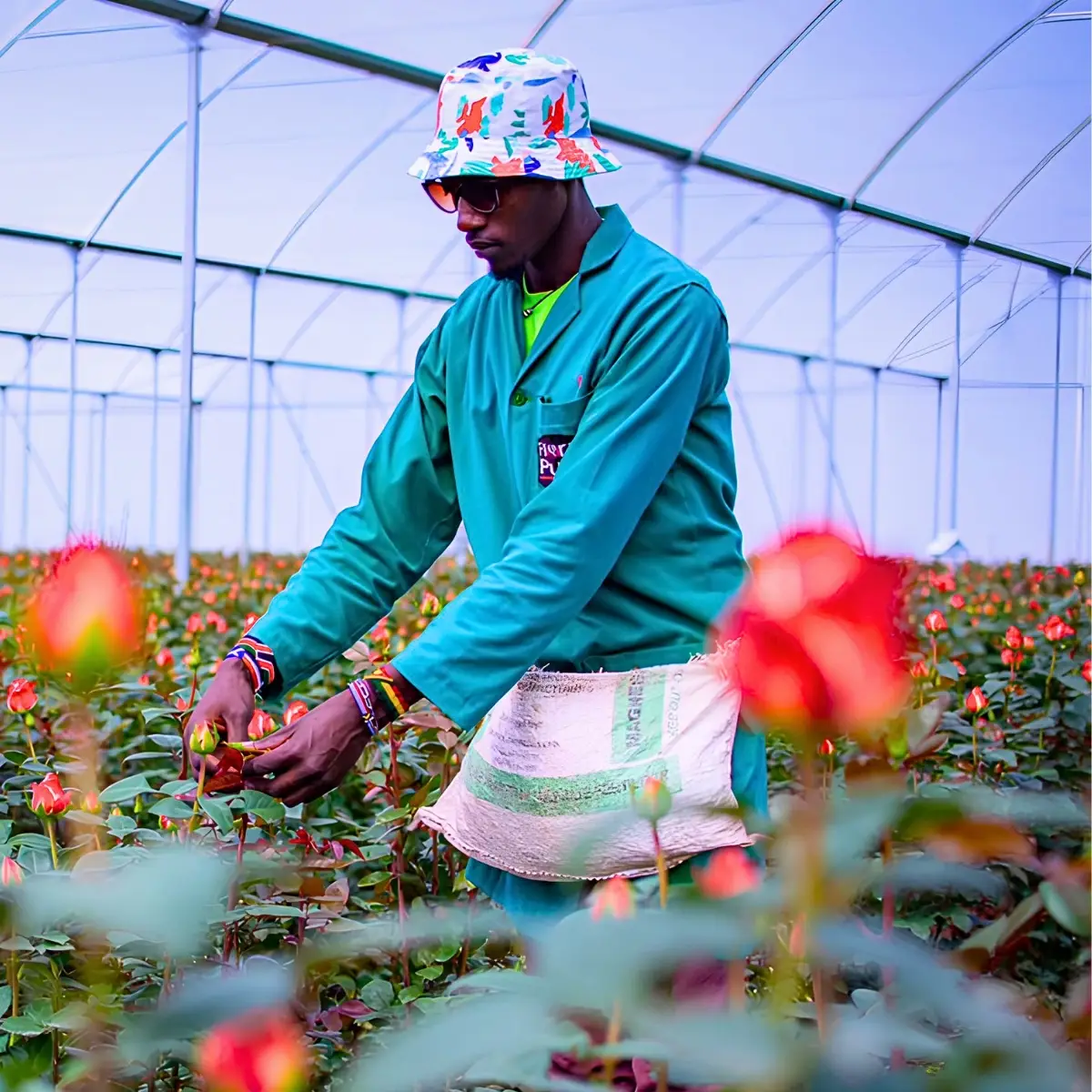
At Florapura, this evaluation process is thorough. New varieties are tested technically in the greenhouse to observe productivity, stem length, and plant health. The team also evaluates how the roses behave after harvest, including packaging, transport, and unpacking in the destination market. Only after these stages are completed are samples sent to buyers to gather feedback.
Market response becomes the final piece of the puzzle. If buyers respond positively and the technical performance remains strong, the variety may then be promoted to commercial production. This approach reflects Simon’s belief that breeders are his lifeline. Having worked closely with them before launching his farm, he understands the value of maintaining those partnerships and continuing to evaluate new genetics as they emerge.
When Naming Roses Became a Challenge
Introducing new varieties to the market comes with a practical challenge. Coded roses cannot be marketed under their technical codes. They need names that buyers and florists can recognize. However, naming a rose is not always straightforward. Many names already exist or are protected by trademarks. A name that sounds perfect at first may already belong to another variety somewhere in the world.
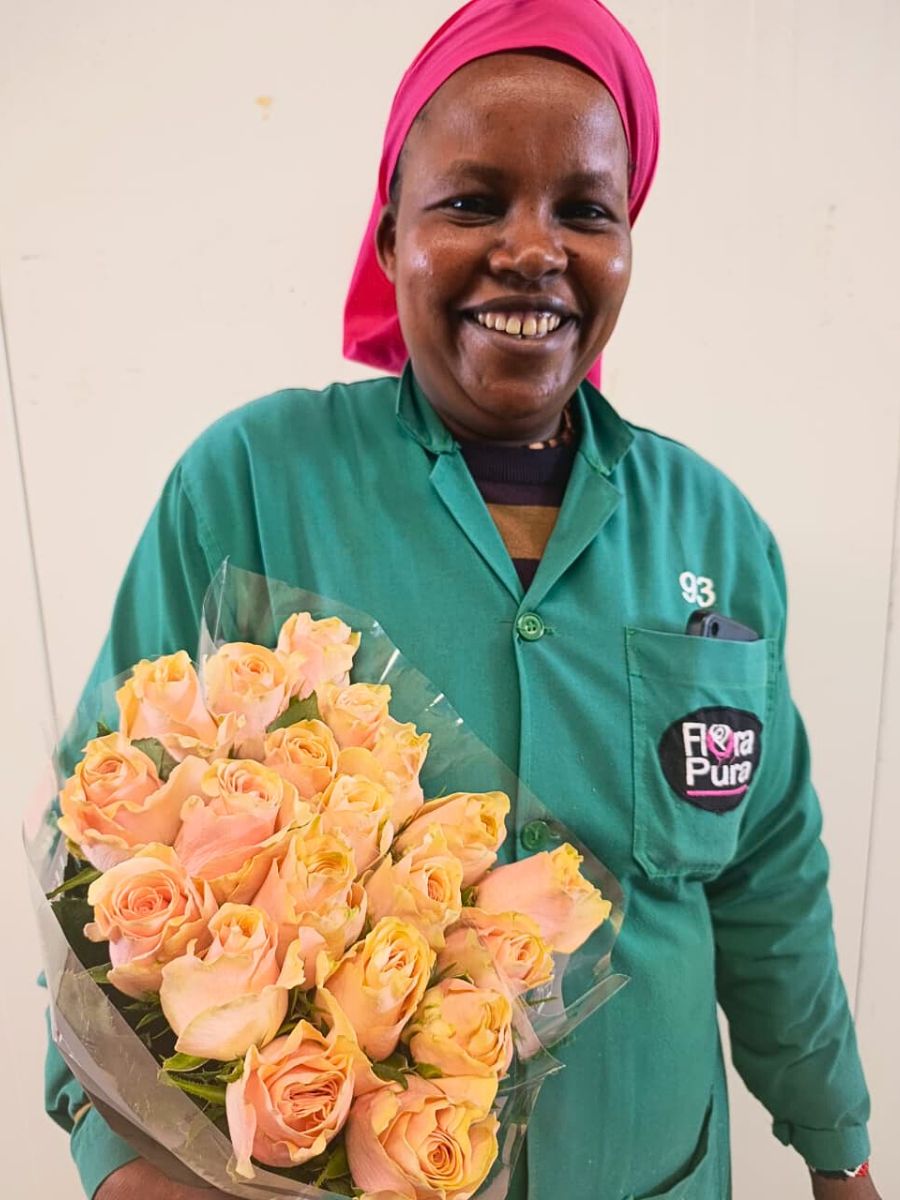
During discussions with breeders about naming several varieties that Florapura had been testing, Simon faced this challenge. Finding original names that were both available and meaningful was proving difficult. That was when a simple idea emerged. Instead of searching endlessly for new names, why not check whether the names of his own family members were available? The names were clear, personal, and meaningful. Once confirmed that they were not already registered, the breeders agreed to adopt them. This moment became the starting point for four roses that now carry a direct connection to Simon’s family.
Rose Olivia: A Discovery Within the Greenhouse
The variety Olivia traces its origin back to a mutation discovered at Florapura within the pink rose Renaissance from the breeder Rosen Tantau. Mutations occur naturally when a plant shows a stable change in color or growth compared to the original variety. When Simon noticed this difference in the greenhouse, the plant was carefully observed and evaluated to confirm that the trait remained consistent.
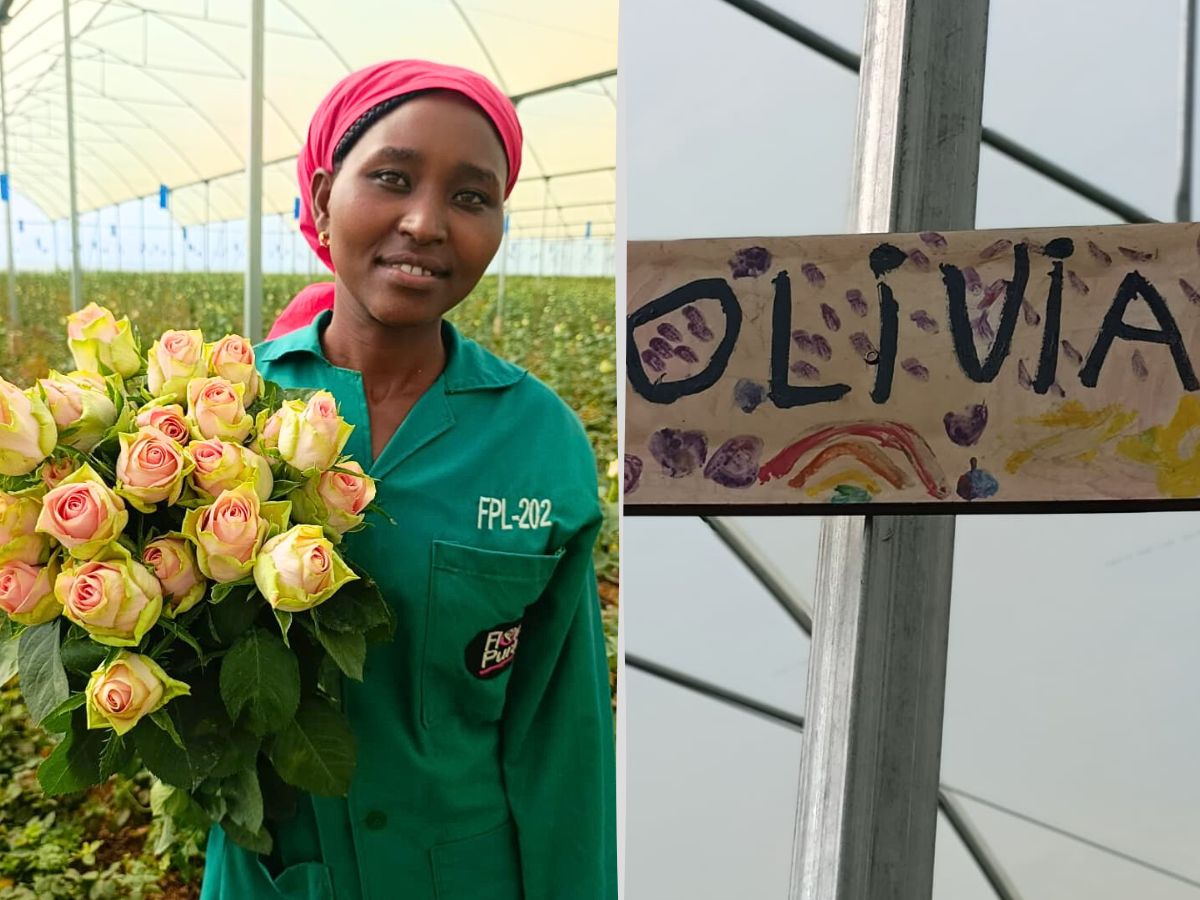
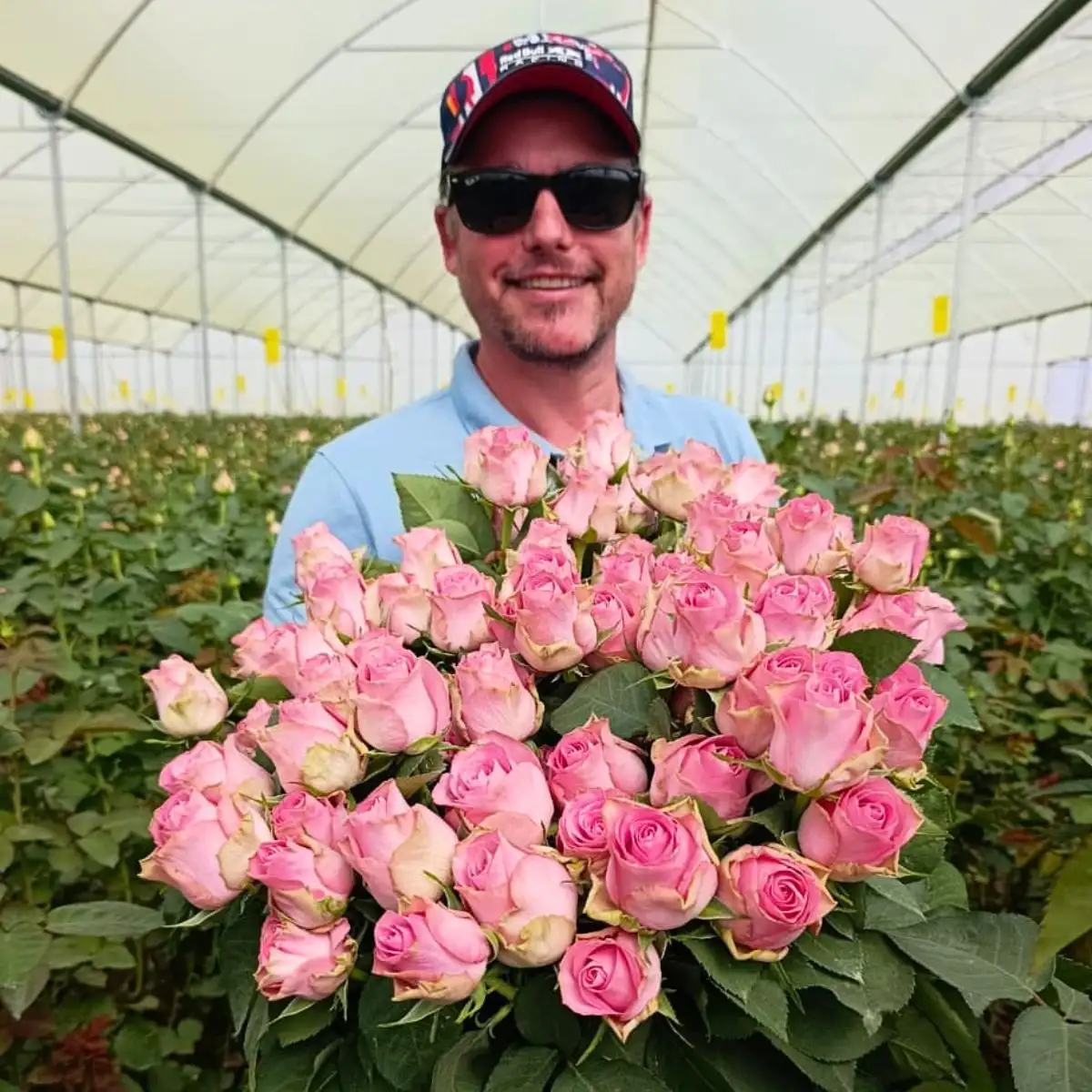
The result was a new rose with a soft light pink color that produces stems between 70 and 80 cm in length. In the vase, Olivia opens well and can last for 14 days or more. Because the mutation was discovered at Florapura, the farm is currently the only commercial grower producing the variety. Naming the rose Olivia felt natural, not only because of its feminine color but also as a tribute to Simon’s daughter.
Rose Milan
The rose Milan followed a different path into Florapura’s assortment. Simon first encountered it as a coded variety during selection rounds at Rosen Tantau. The rose showed promise early on, but the decision to move forward required several stages of testing. The team evaluated its performance in production, monitored how it behaved during post-harvest handling, and sent samples to the market to gather feedback from buyers.
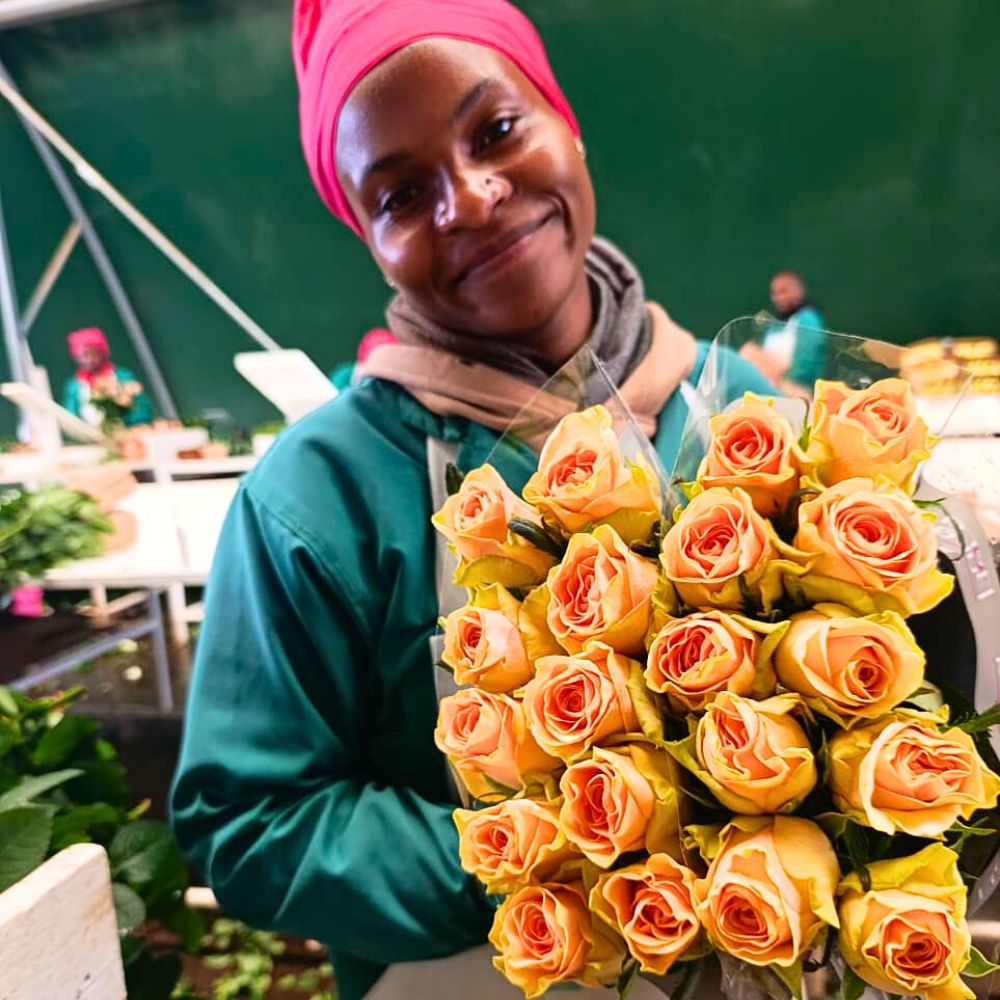
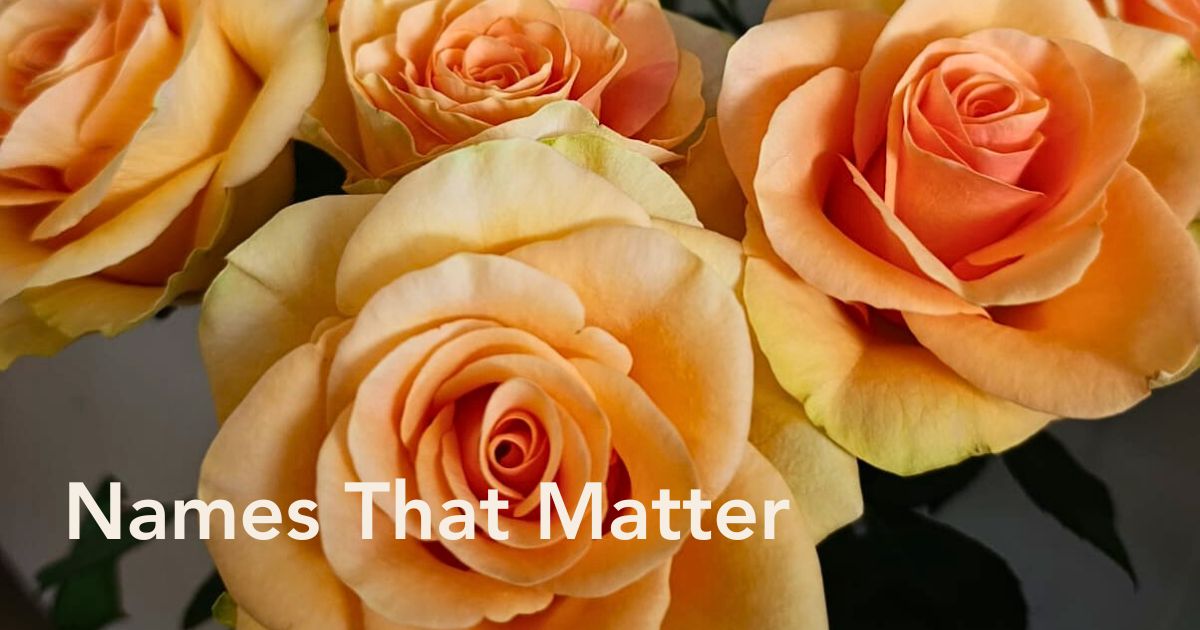
The response was encouraging. Combined with strong technical performance in the greenhouse, the results confirmed that the rose had commercial potential. Milan produces stems between sixty and eighty centimeters and develops a head size of around five centimeters. Its yellow-orange color carries a lively character that Simon describes as slightly funky. The personality of the rose reminded him of his son Milan, making the name an easy choice once the variety was ready for the market.
Rose Lady Lala
The rose Lady Lala, developed by the breeder Kordes Rosen, carries one of the most personal stories among the four varieties. Simon originally intended to name the rose after his wife, Laura. On the farm, however, many of the Kikuyu-speaking employees found the pronunciation of Laura difficult and naturally began calling her Lala instead.
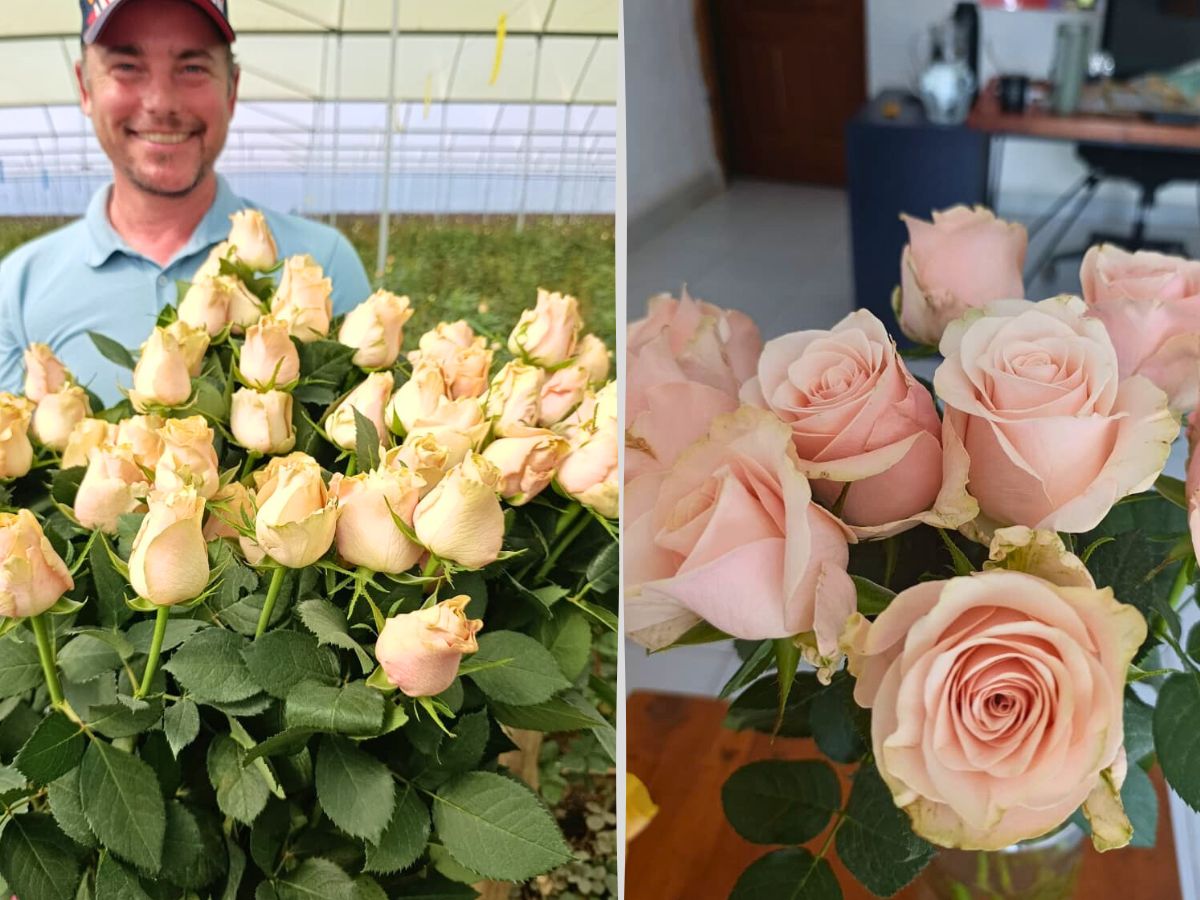
Over time, the nickname became widely used among the team. When the moment came to propose a name for the rose, Simon suggested Lady Lala to the breeder. The name reflected the way his wife was already known on the farm and captured a small piece of the farm’s culture. The breeder agreed, and the name was officially adopted.
Rose Victoria Park
The fourth variety connected to Simon’s family is Victoria Park, an orange rose developed by Interplant Roses. Unlike Rose Lady Lala, who carries the nickname of Simon’s wife, Victoria Park was named after his youngest daughter, Victoria. The name completes the family connection behind the four varieties grown at Florapura, with each rose representing someone close to the grower.
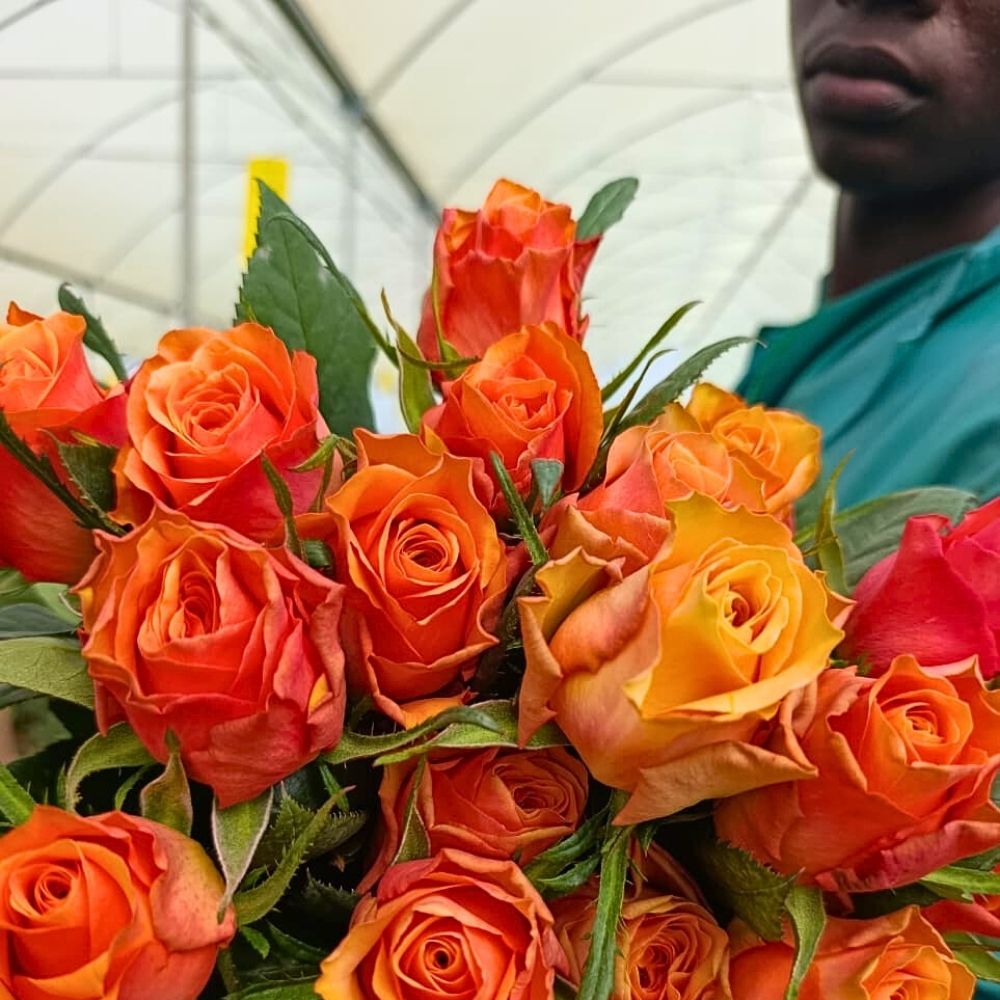
Beyond the personal meaning, Victoria Park adds a strong orange tone to the Florapura assortment. With a decent head size of 5 cm+, 60-80 cm stem length, and an impressive opening on the vase, Rose Victoria Park is a whole mood on a vase and in mixed bouquets.
A Strategy Built Around Unique Roses
The four family-named roses also reflect the broader strategy guiding Florapura’s development. Rather than focusing only on established varieties, the farm is actively looking for new genetics that bring something different to the market. Simon believes the diversity of breeding programs today offers exciting opportunities to introduce roses with new colors, structures, and characteristics.
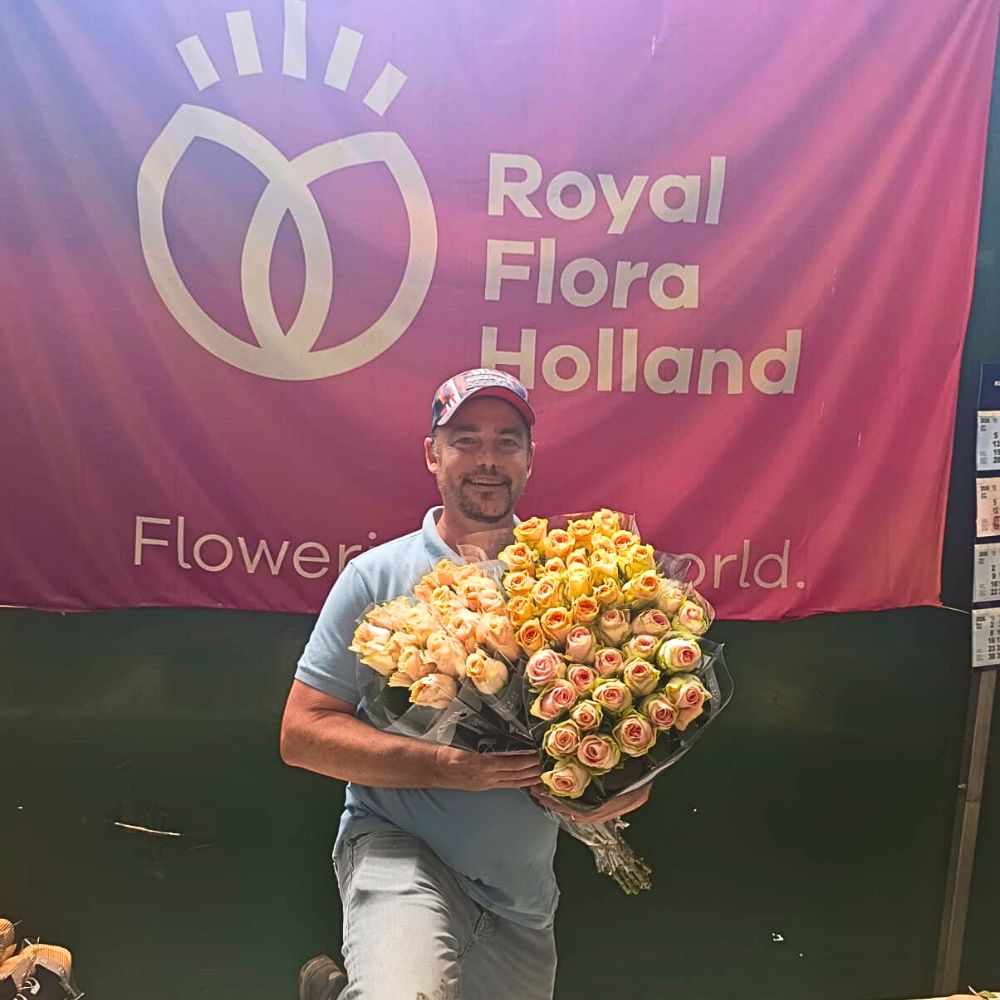
This is why the farm invests time in trials, evaluation, and market feedback before committing to commercial production. Every rose planted at Florapura has been selected with a clear purpose and with the market in mind. The approach is already showing results. The four varieties have been on the market for about a year, receiving positive feedback from buyers. Expansion plans are now underway as Florapura continues to increase production.
A Milestone Worth Celebrating
As Florapura approaches its third anniversary, the farm stands as an example of how thoughtful variety selection and strong breeder relationships can shape a young company’s identity. The roses Olivia, Milan, Lady Lala, and Victoria Park mark an important chapter in that journey. They represent discoveries in the greenhouse, collaborations with breeders, and the process of bringing new varieties to market.
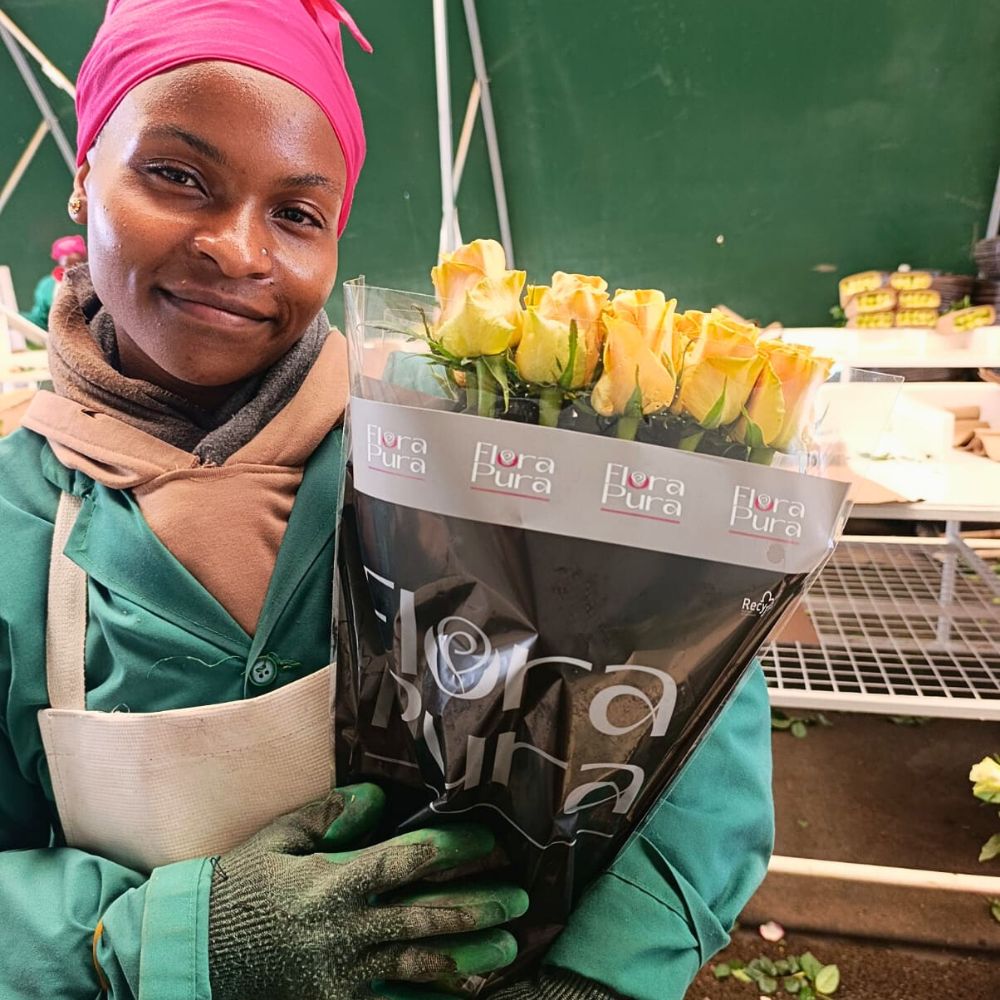
Most importantly, they tell a story about the people behind the farm. As Florapura continues to grow, these four roses remain a reminder that every variety begins with a relationship, an idea, and the belief that something new can find its place in the floral world.