
Molo River Roses sits within the wider Mzurrie Flowers group, but its story began with a very specific question. Could spray roses perform consistently in a lower altitude environment compared to the other farms in the group? That question led to the establishment of the farm in 2012, not as a full-scale commercial operation, but as a deliberate trial ground for spray roses.
From the beginning, the intent was clear. This was about learning, adaptation, and understanding how spray roses respond to different climates, soil profiles, and water regimes. What started as an experiment has since grown into a core pillar of the group's spray rose production.
Testing Spray Roses at a Lower Altitude
Compared to Maji Mazuri and Winchester Bahati, Molo River Roses operates at a lower altitude. According to farm manager Paula Koros, the early phase required patience and close observation. Spray roses are sensitive, and consistency is not something that can be forced.
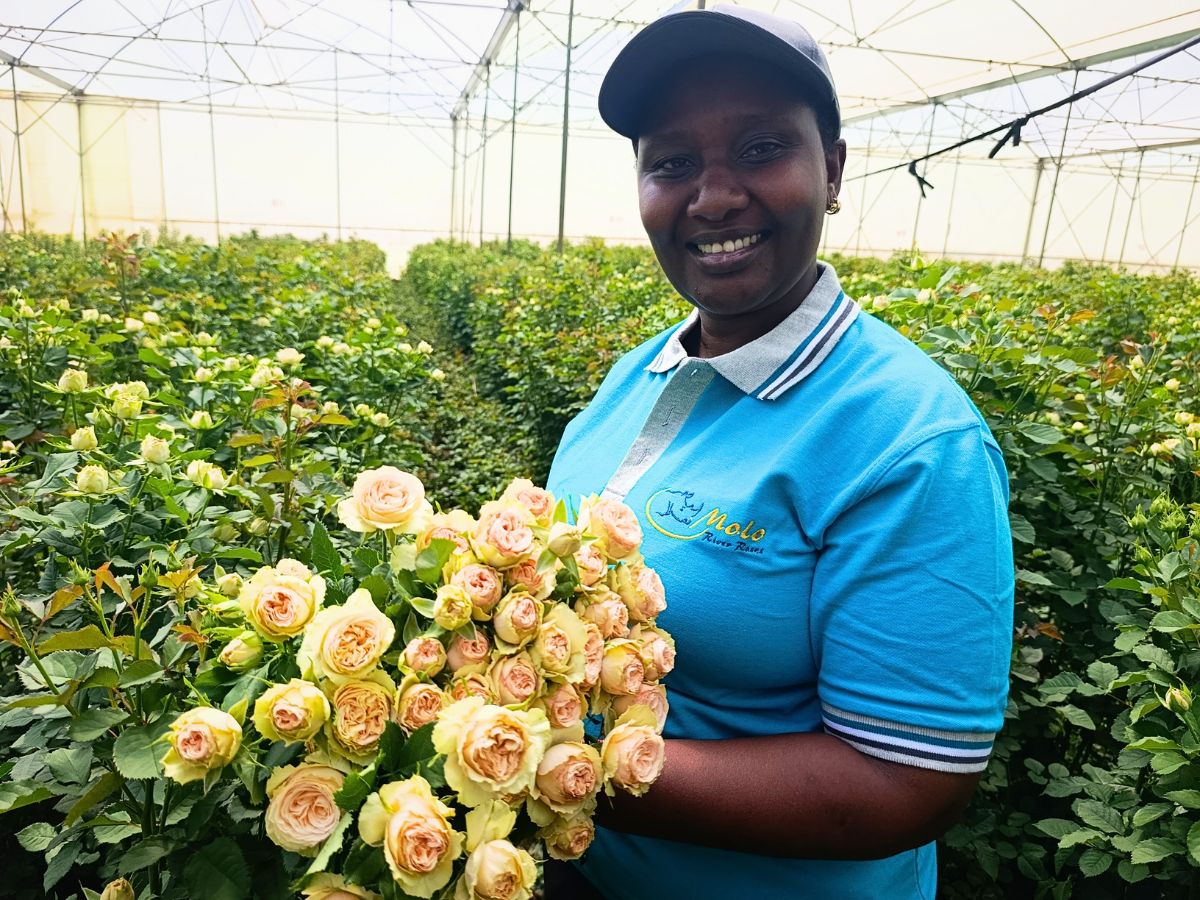
The farm began with limited trial areas, focusing on how the plants reacted to temperature patterns, light intensity, and water availability. Those early learnings shaped decisions that would later define the farm's production strategy and investment priorities. Today, the farm covers thirty hectares, with spray roses accounting for roughly seventy percent of total production. This shift reflects confidence built through years of testing and refinement rather than a sudden pivot.
Building With Interplant Roses From the Start
From the trial phase onward, the partnership with Interplant Roses played a central role. Paula explains that the breeder was involved not only in supplying varieties but also in providing technical guidance during the learning curve. That support helped the team understand how to adjust pruning cycles, nutrition programs, and crop management to suit the location.

Today, about sixty percent of the varieties grown at Molo River Roses come from Interplant Roses. The Bombastic series of spray roses stands out as the farm's strongest commercial performer, with steady demand across multiple markets.
The farm is now preparing to introduce new and interesting Interplant Roses' varieties to be launched soon. These introductions are approached cautiously, with close attention to market response and production before scaling.
Markets Shaped by Reliability and Color Demand
Molo River Roses supplies a broad mix of markets, including the Netherlands auction, the Middle East, across Europe, Scandinavia, and Russia. This diversity has helped the farm balance volume and price sensitivity across regions.
"Color range and reliability have become increasingly important in buyer decisions. Spray roses are no longer seen as occasional accents. They are being used more frequently in everyday floral work, which places higher expectations on consistency and availability." Paula Koros, Farm Manager at Molo River Roses, noted.

That shift in usage has influenced how the farm plans production and variety selection, especially as demand continues to grow faster than current capacity.
Water Challenges That Forced Long-Term Thinking
One of the earliest and most serious challenges at Molo River Roses was water. Located in a semi-arid area, the farm initially relied on borehole water, which proved both saline and warm, making it unsuitable for rose production without treatment.
Rather than limiting production, the farm chose to invest in long-term solutions. Water dams were constructed to harvest and store rainwater. The treatment of borehole water and bringing it to a usable quality. These investments transformed water from a constraint into a stable foundation for growth. Since then, consistent production has been possible even during dry periods, allowing the farm to meet quality standards year-round.
Reclaiming Land and Stabilizing the Environment
Sustainability at Molo River Roses extends beyond certifications. The farm invested in extensive tree planting to reclaim what was once bare land and to reduce strong winds that could damage greenhouses.

Over time, this approach reshaped the landscape entirely. The trees now serve both environmental and practical purposes, creating a more stable microclimate and improving working conditions across the farm. Energy use has also been addressed through solar installations, which power a significant share of energy-dependent operations and reduce reliance on external electricity sources.
People at the Center of the Operation
Molo River Roses is Fairtrade certified, covering environmental, social, and economic standards. For employees, this translates into daily meals, access to an on-site clinic, and support that extends to family health needs when required. Paula emphasizes that staff development is treated as a long-term investment. Training, career progression, and capacity building are part of the farm's culture. As a result, employee turnover is remarkably low, with many team members having worked at the farm for over ten years.
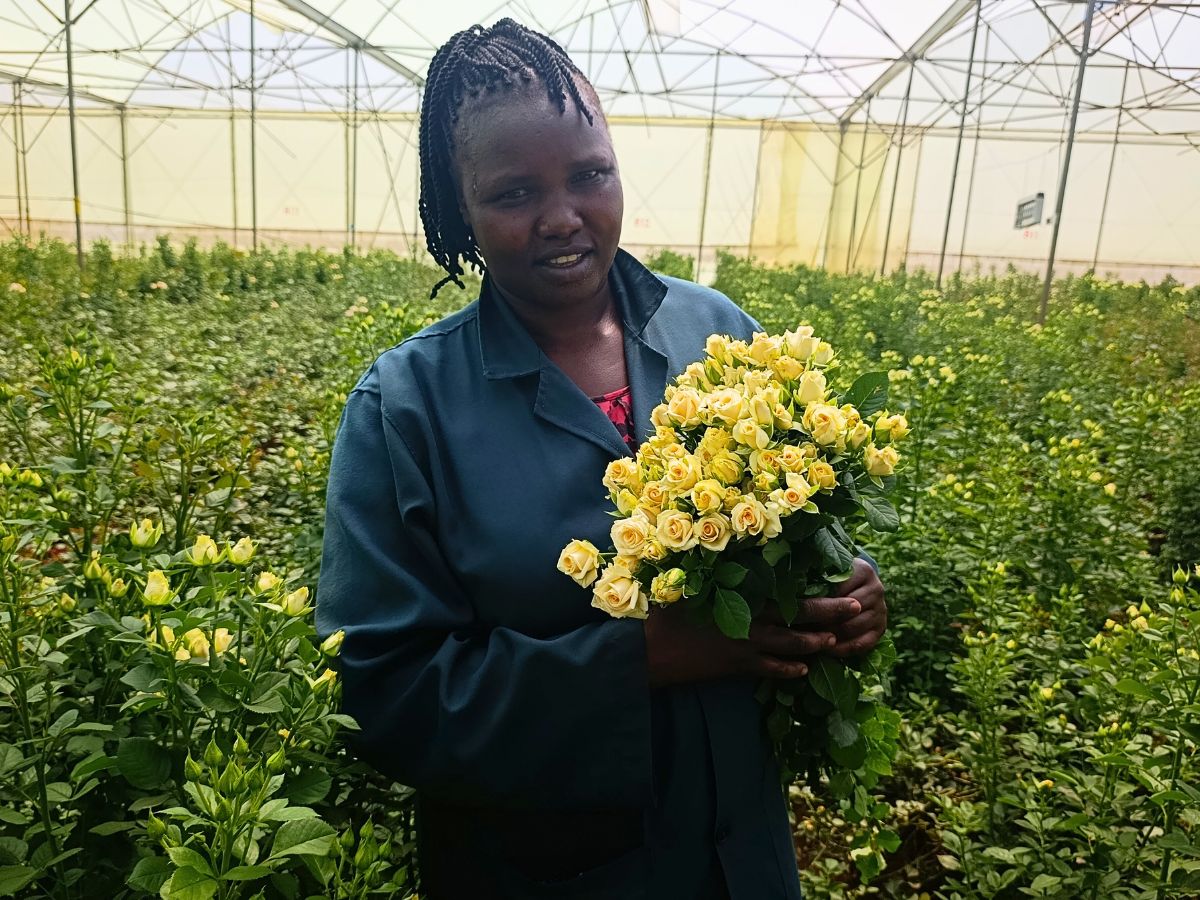
Safety is also treated seriously. Personal protective equipment is issued twice a year, and replacements are provided immediately when needed to ensure a safe working environment at all times.
The Role of World of Spray Roses
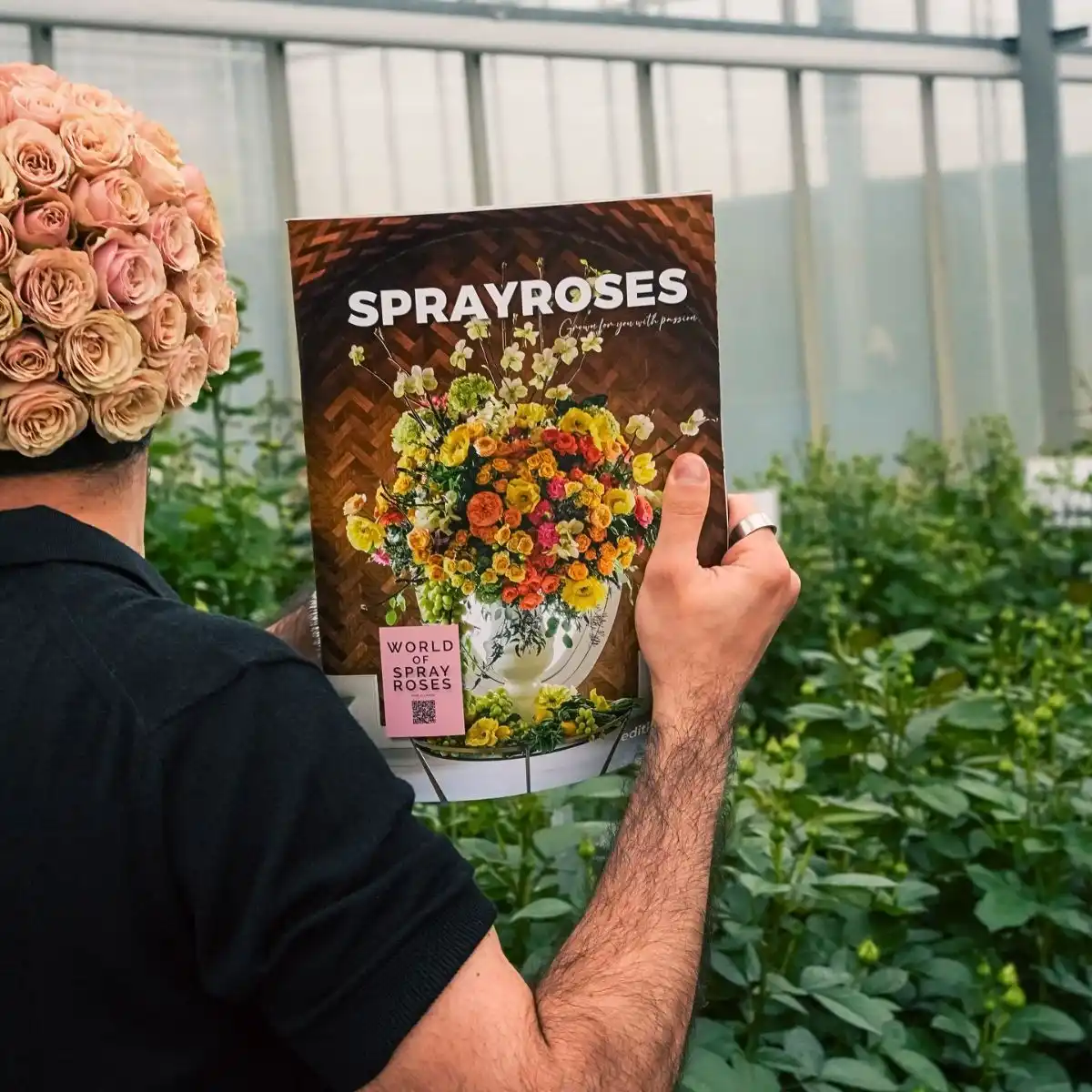
The impact of World of Spray Roses is evident in how Molo River Roses now reaches its customers. They are currently selling to both direct and auction clientele. As targeted marketing increased awareness around everyday use and color diversity, demand began to improve for both market segments.

Beyond visibility, the initiative also provides commercial and technical insights, helping growers align variety choices with specific market preferences. For Molo River Roses, this support has reinforced confidence in spray roses as a long-term category rather than a niche product.
Demand That Keeps Pushing Forward
Demand for spray roses continues to grow, sometimes faster than production can comfortably support. Paula acknowledges that meeting requests and expanding volumes remain a challenge, especially as more clients seek reliable supply.
Still, the outlook remains positive. With stable systems in place, trusted breeder relationships, and strong market alignment, Molo River Roses continues to refine its position within the global spray rose market.

This journey from trial to a mature spray rose operation reflects what is possible when experimentation, partnership, and long-term thinking come together. Keep reading to see how other growers are shaping the future of spray roses through the World of Spray Roses initiative.