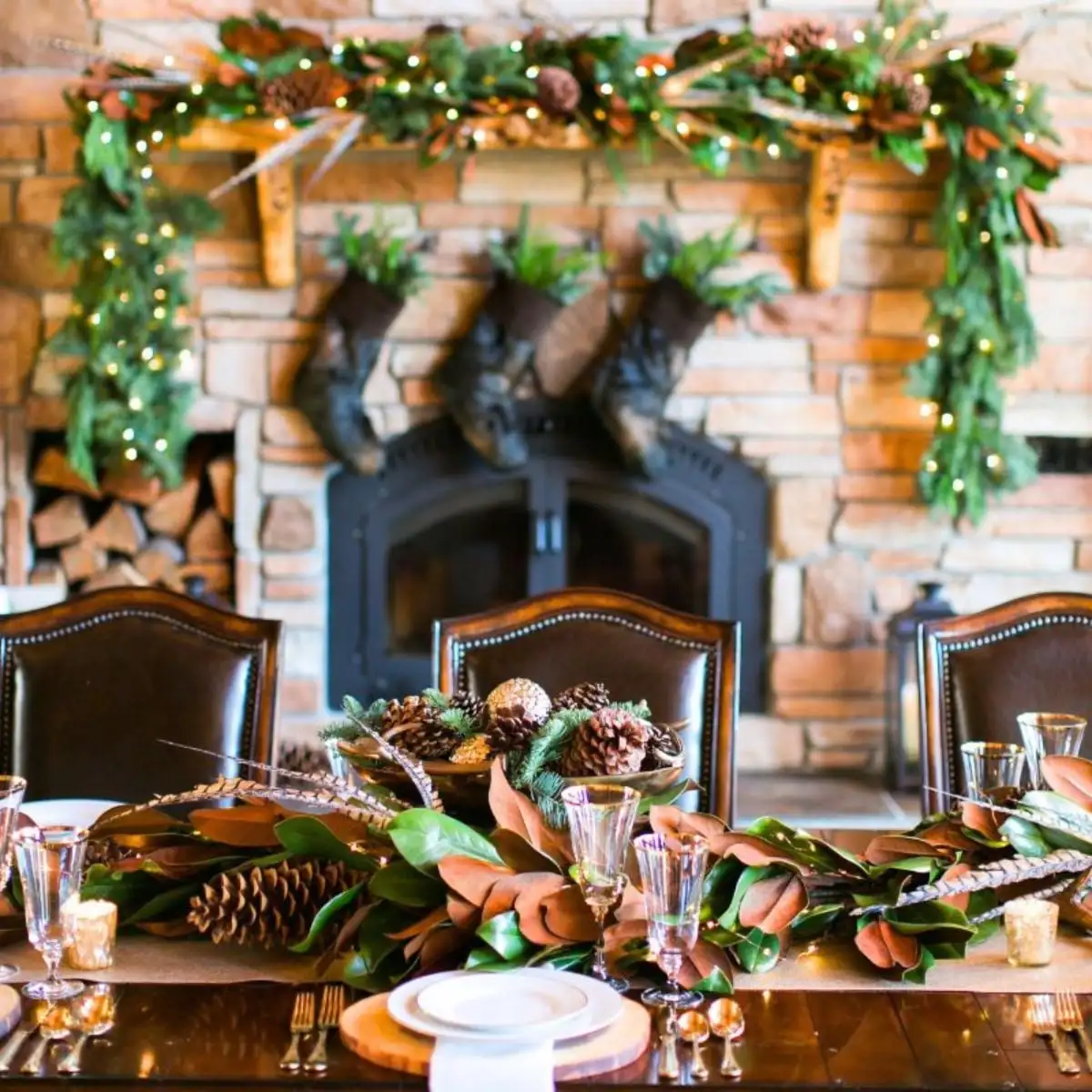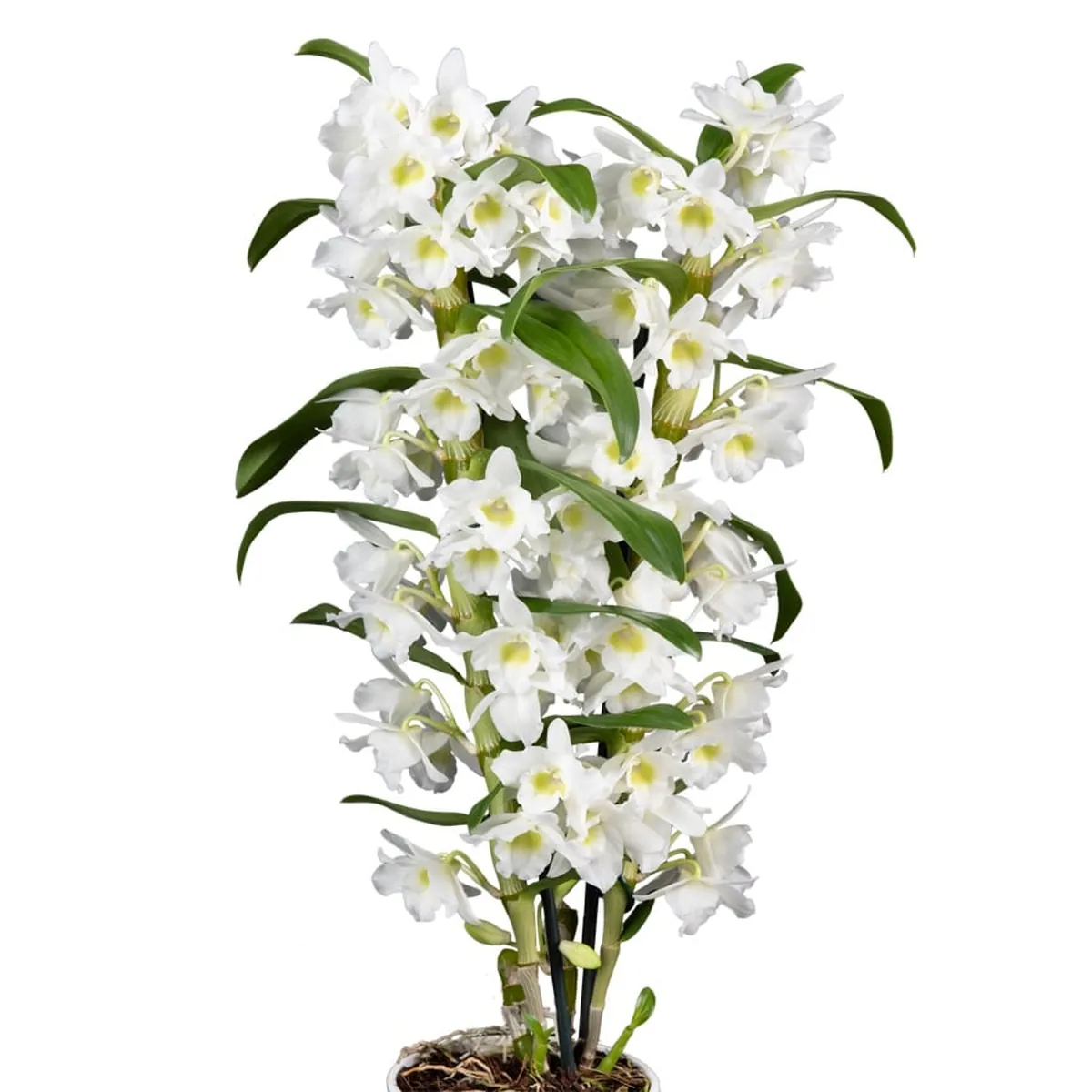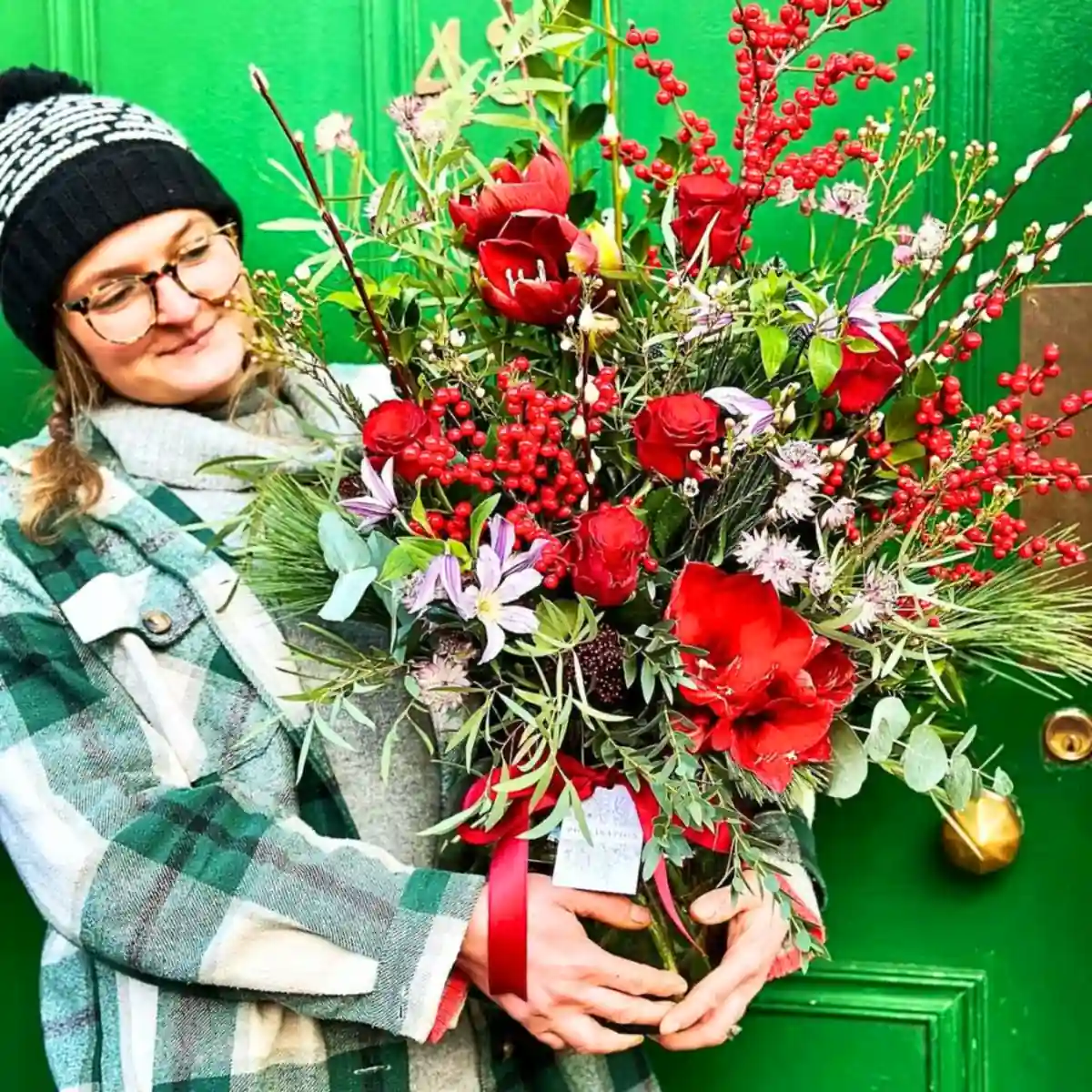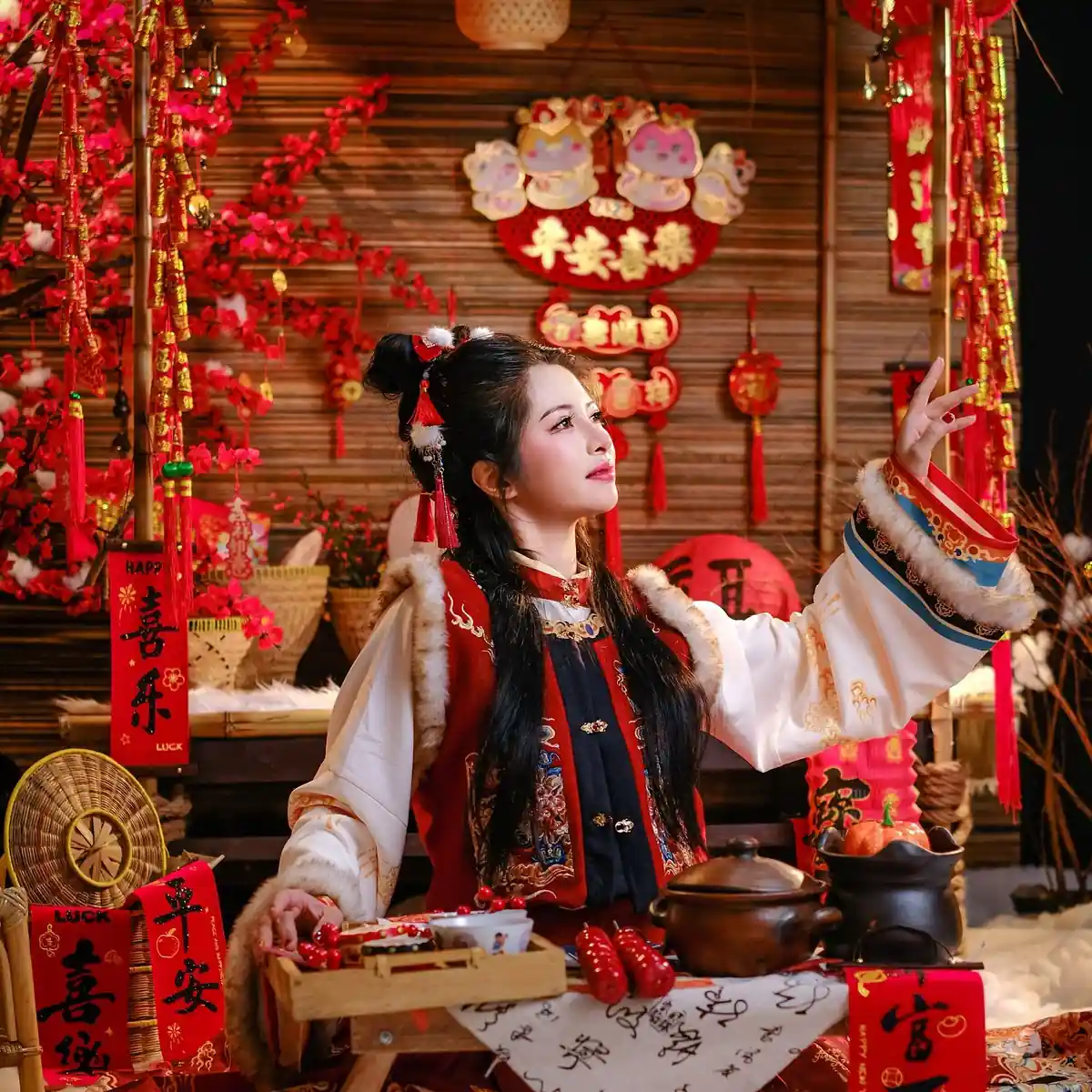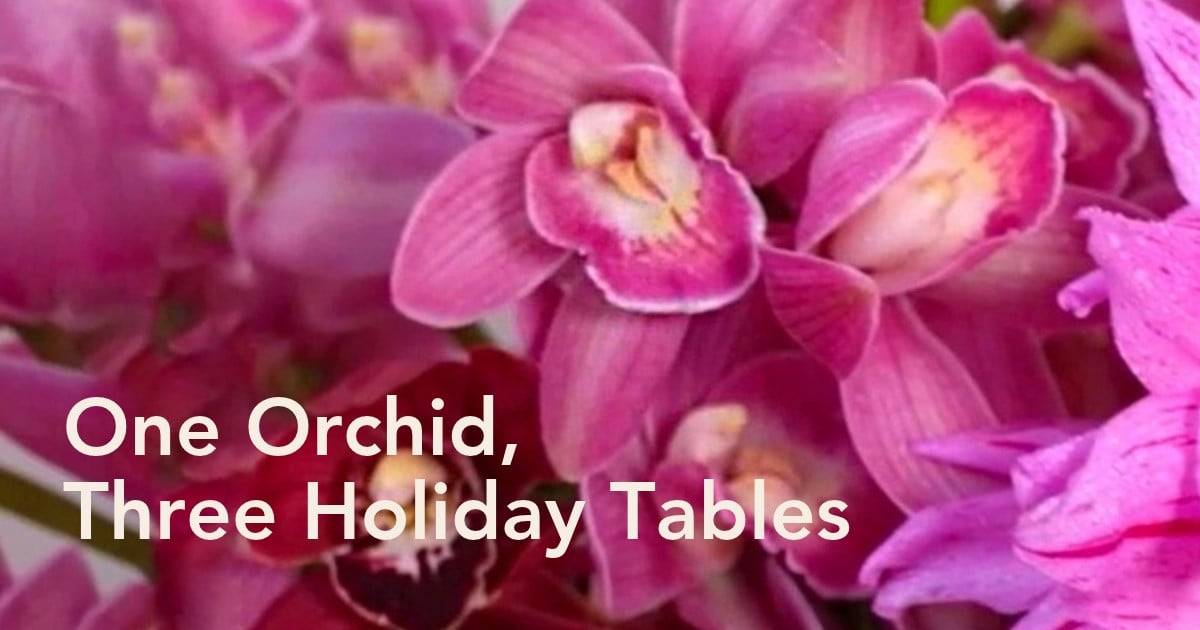
A cymbidium centerpiece is about the safest bet on a holiday table: Cymbidium orchids are in season from autumn through winter, and a cut stem easily lasts from the first Advent dinner to New Year's Eve. In 2022 the British floral designer Joseph Massie made three cymbidium centerpieces for the holidays, from a few bottles you can fill in ten minutes to a pampas cascade that runs off the table. Here are all three, easiest first. You'll find his tips and the videos with each one.
- The simplest centerpiece: one stem split over a cluster of bottles, golden and copper for Thanksgiving or an early Christmas dinner.
- The stylish centerpiece: blush pink in footed bowls on a pin holder, for a Christmas table where guests still need to see each other.
- The spectacular centerpiece: a chicken wire and pampas cascade for a party, New Year's Eve included.
- Buying and caring for cut cymbidiums in winter, so the flowers make it into January.
In this free tutorial series, top floral designer Joseph Massie shares three stunning creations, designed to transform an exclusive dinner party, or all-out show-stopping celebration using his favorite cymbidium blooms.
Three Distinct Cymbidium Designs
First, a brief explanation of what to expect in the three chapters of this cymbidium tutorial.
The three distinct designs, ranging from very accessible pieces for everyone to try, to more advanced creations, are summarized below. Be sure to watch the full video for more hints and tips from Joseph himself as he reveals how to get more bang for your buck and explores the versatility of this glorious bloom.


Joseph Massie
Established atop Europe's floral scene, Joseph Massie is a celebrated designer, artist, author, and tutor. He holds a clutch of prestigious awards including five RHS Chelsea Gold Medals and a floral business portfolio comprising luxury weddings and events, botanical art, and a flower school featuring sought-after courses in all things from wiring to bouquets to statement installations.
Cymbidium's Long Strong Stems
Known for its long, strong stems and numerous exotic heads singing luxury and elegance, the cymbidium is surprisingly versatile and suitable for more commercial uses than you'd think. Available in two sizes, large and mini, it offers fantastic bang for the buck thanks to its strength, size, and most of all, vase life, lasting two to three weeks without the need for flower food.
Chapter 1: The Simplest Cymbidium Centerpiece
Joseph demonstrates how you can quickly achieve stunning results using a few choice cymbidium stems (in this example a beautiful golden, copper, and true yellow), embellished with some incredible autumnal ingredients, and a selection of pretty mix-and-match bottles in a variety of sizes.
Having selected vases that work visually together, Joseph recommends positioning the larger of the vases in the center of your display, with smaller ones placed on the outside and filled with water ready to use.

There is no doubt about it, Cymbidium offers florists superior value for money, and Joseph demonstrates this beautifully by dividing one stem into smaller stems, filling several vases, and creating an instant carpet of texture, mood, and color across the display.
Joseph then adds depth to the composition with the careful addition of taller blooms in the same golden color palette to add height, volume, and visual tension, while excess cymbidium flower heads are clustered at the base of the vases to add a final layer of interest to this glorious contemporary design. Check this YouTube video:
Joseph's Tip: The strength of this simple design is its adaptability. The collection of vessels can be easily styled up or down, suiting both intimate and larger occasions as well as the amount of floral product you wish to use.
To find out more about the wealth of ways to work with cymbidium, as well as free promotional tools and advice, visit www.cymbidium.info.


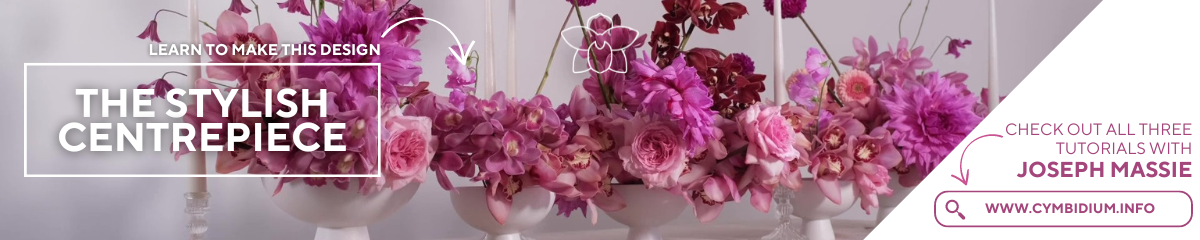
Chapter 2: The Stylish Cymbidium Centerpiece
Joseph demonstrates how to create a luxurious blush pink centerpiece using contemporary footed bowls with minimal mechanics and maximum floral detail.
The pin holder, or kenzan, is an elegant mechanical solution chosen for this display. Its discrete placement within the bowls allows the blooms to shine from all angles, without the need for excess foliage or materials.
The cymbidium stems are initially separated into multiple stems, grouped, and then placed onto the kenzan to secure them into position. Joseph then adds more densely packed miniature cymbidium varieties to add contrast in like-for-like groupings, creating three distinct clusters within the bowl, a reflection of Joseph's signature lux style.

Joseph is deliberate in his additional floral material choices, ensuring each element is graphic and bold and able to hold up against the powerful cymbidium base, while playing with height and volume.
The centerpiece is pulled together using simple color-blocking across multiple bowls and of course the use of a favorite focal flower, cymbidium. Check this trailer:
Joseph's Tip: It is important to work on your design from all angles, ensuring the taller elements of your arrangement allow guests to still see across the table.

Chapter 3: The Spectacular Cymbidium Centerpiece
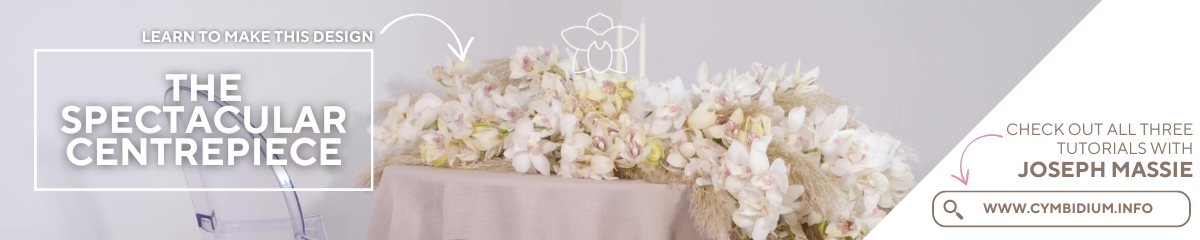
In this step-by-step guide, Joseph shows that you can make your own show-stopping pampas and cymbidium table cascade, starting from the fundamental mechanics, through to the final finessing.
On this occasion, Joseph opts to use silver chicken wire against the neutral color palette for the main structure. Weights are used to secure the wire in position. And then the wire is carefully twisted across the length of the table to form a cylindrical tube, finishing with a dramatic sweep of wire down to the floor completing the cascade shape.

A layer of gorgeous pampas grass gives the piece instant form and drama, upon which the statement cymbidium stems (in two varieties) can then be placed to complete this "oh so" decadent cascade.
The superior shelf life of cymbidium means it can be used with or without water, or if preferred, test tubes can be discreetly hidden within the display to add longevity. Check this trailer:
Joseph's Tip: While cymbidium has extremely strong stems, it is also heavy. So it is crucial to ensure the weights on both the table and cascade are well secured. In this example, Joseph wraps the chicken wire around each weight and secures it with cable ties to create a solid mechanical foundation.
Buying and Caring for Cut Cymbidiums in Winter
Cymbidiums flower in autumn and winter. It's their time. Cape Town florist Coral Shortt calls it her season for cymbidium and counts on about six months of supply every year, in white, cream, yellow, orange, rust, brown, pinks, red, near black, and green. December sits right in the middle of that season, so large and mini stems in the right color for a holiday table are easy to find. Brown Cymbidium Benthe sits well with copper and gold, and pink Cymbidium Kensi works for a blush table like Joseph's second design.
What to Look for When You Buy
Look for firm petals with a shine on them. Every floret should be open. Skip stems with brown or see-through spots on the lip. They usually come in a water tube. Ask your florist which stems came in this week, and don't be shy about it.
How to Keep Cut Cymbidiums Fresh Through the Holidays
Dutch grower Alain Poot gets four to five weeks out of a cut cymbidium. His trick? Cut about 2 centimeters off the stem every week. The stem silts up, and a fresh cut lets the water back in. The full set of tips from the grower and the flower food side is in Cymbidiums Are Forever. Three that matter most at Christmas:
- Take the stem out of its tube, cut it with a clean, sharp knife, and put it in a clean vase with fresh water and flower food.
- Keep the arrangement away from the fruit bowl. Ripening fruit gives off ethylene, and orchids are very sensitive to it.
- Don't touch the center of the flowers. Touching it shortens the life of the flower.
Out of water, cymbidiums hold up for days. That's why Joseph's cascade gets away with it, and Coral's headpieces too. Does your table have to last from Christmas Eve to New Year? Then hide water tubes in the design, as Joseph suggests in his third chapter. Or move single florets to bud vases once the party's over. For more ideas for the season, see the holiday table flowers from Thanksgiving to New Year's Eve, the Christmas floral arrangements, and the winter white flowers that pair with a white cymbidium.
To find out more about the wealth of ways to work with cymbidium, as well as free promotional tools and advice, visit www.cymbidium.info.
Photos and videos by Joseph Massie for cymbidium.info.