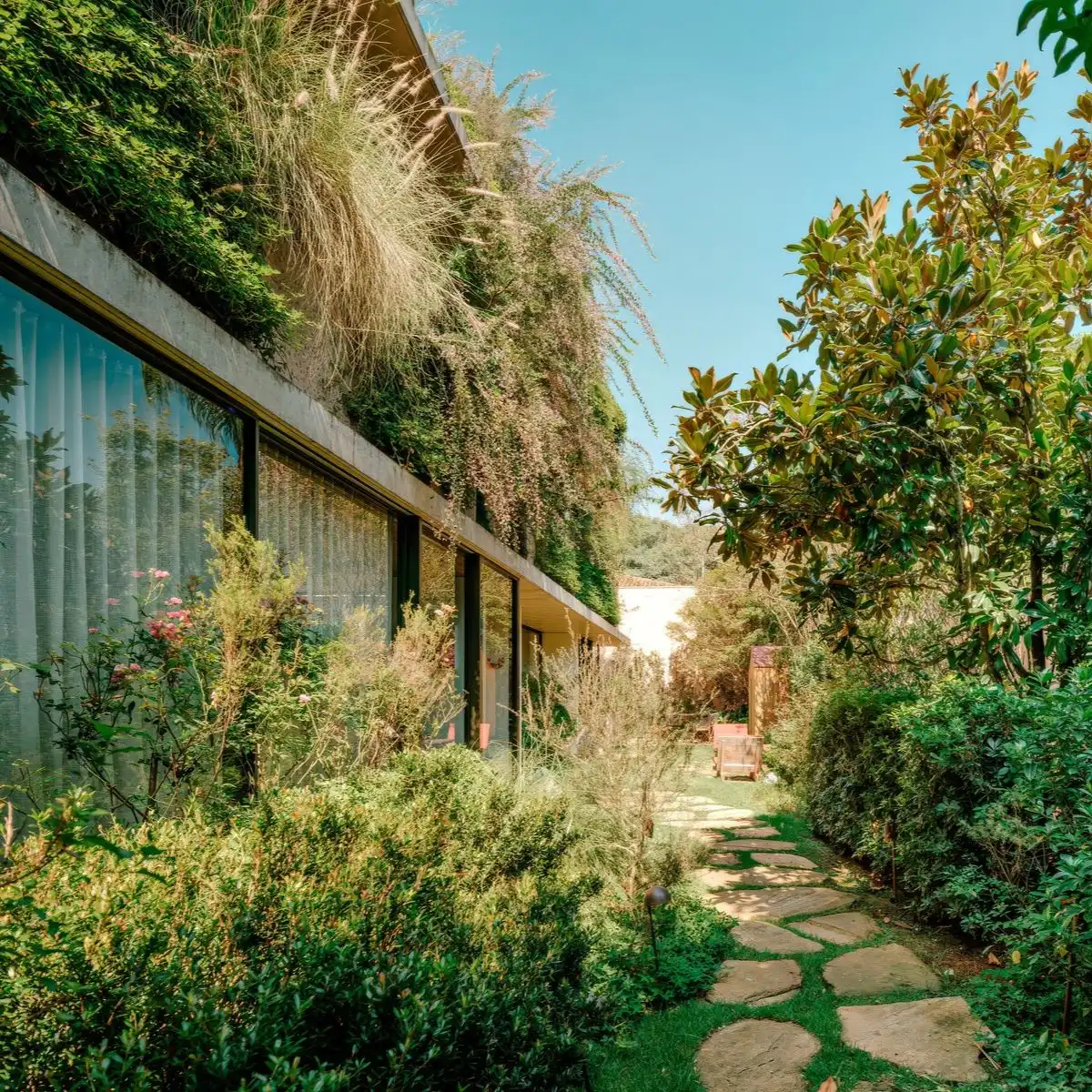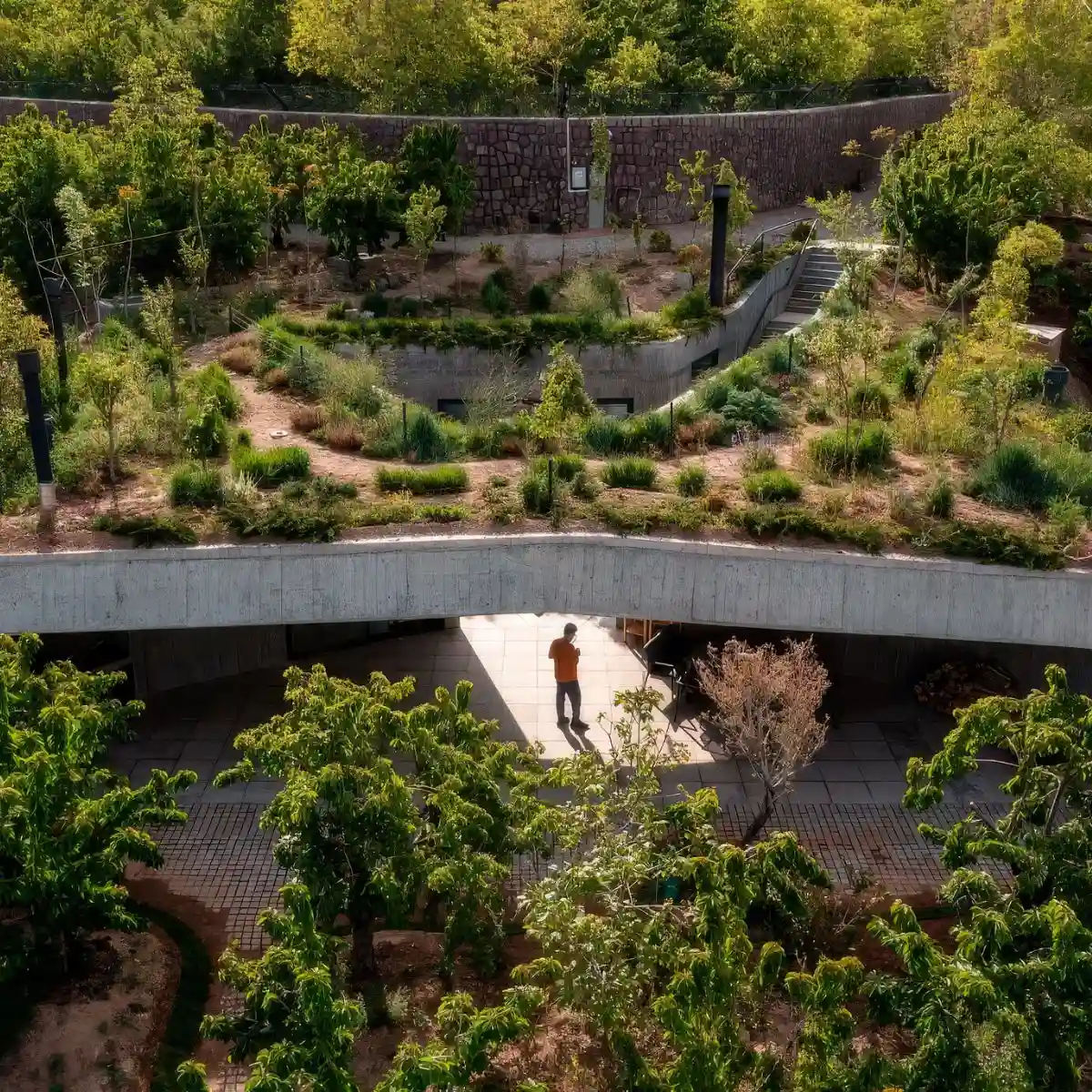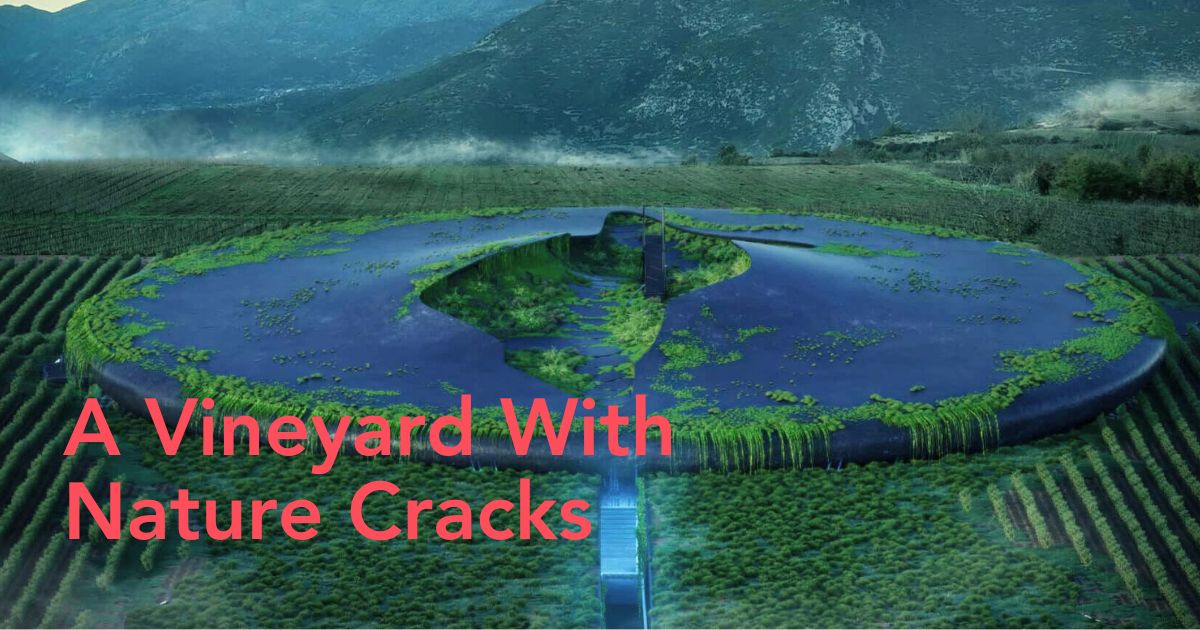
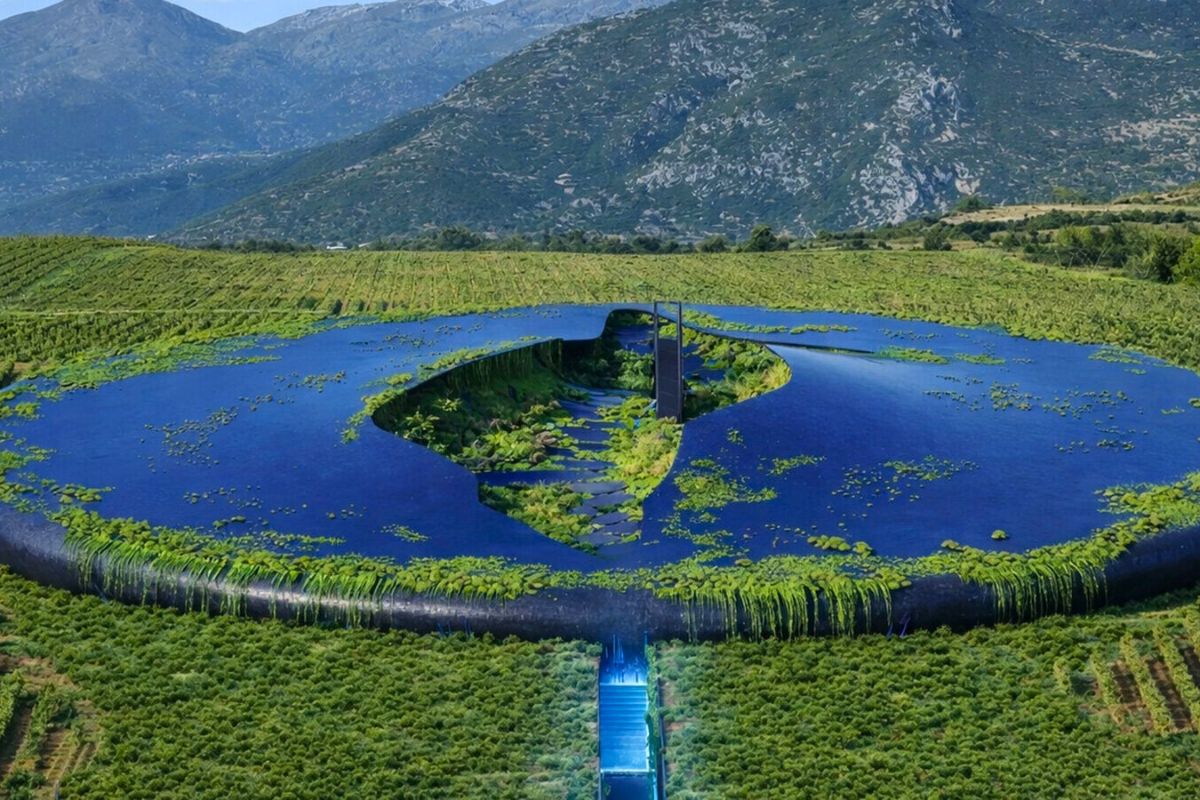
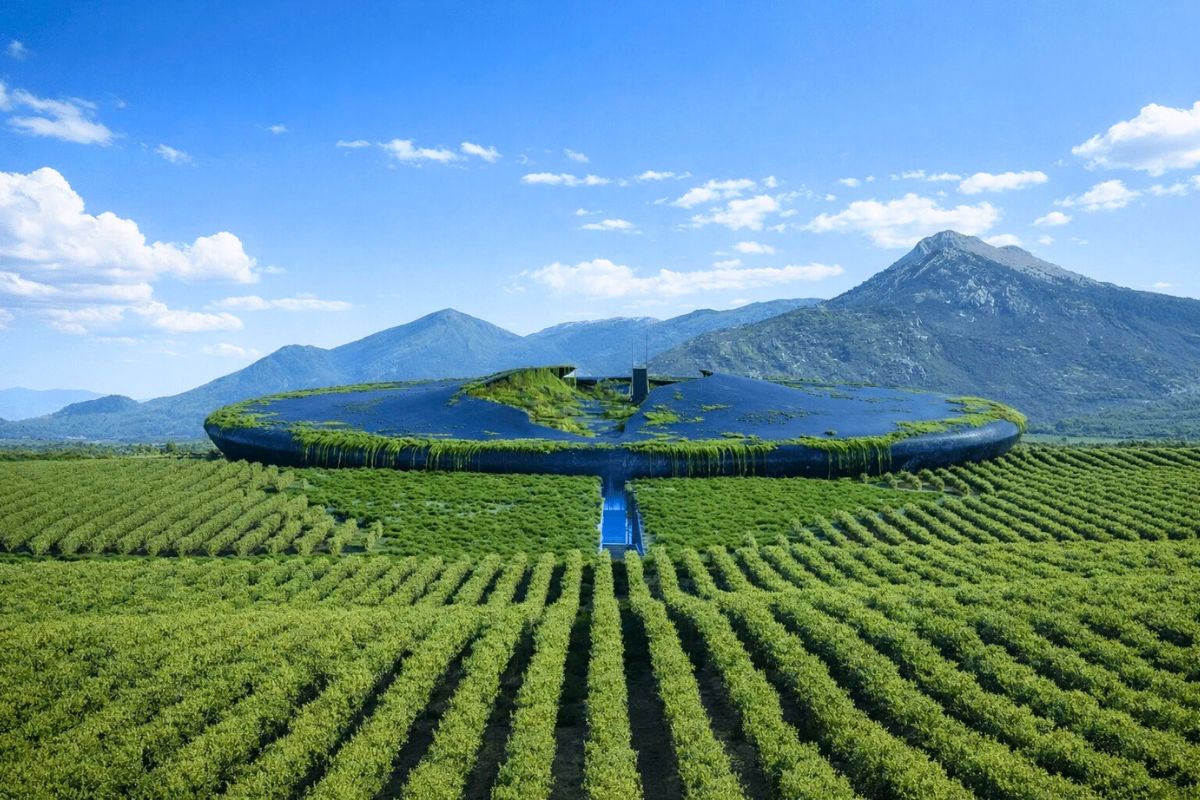
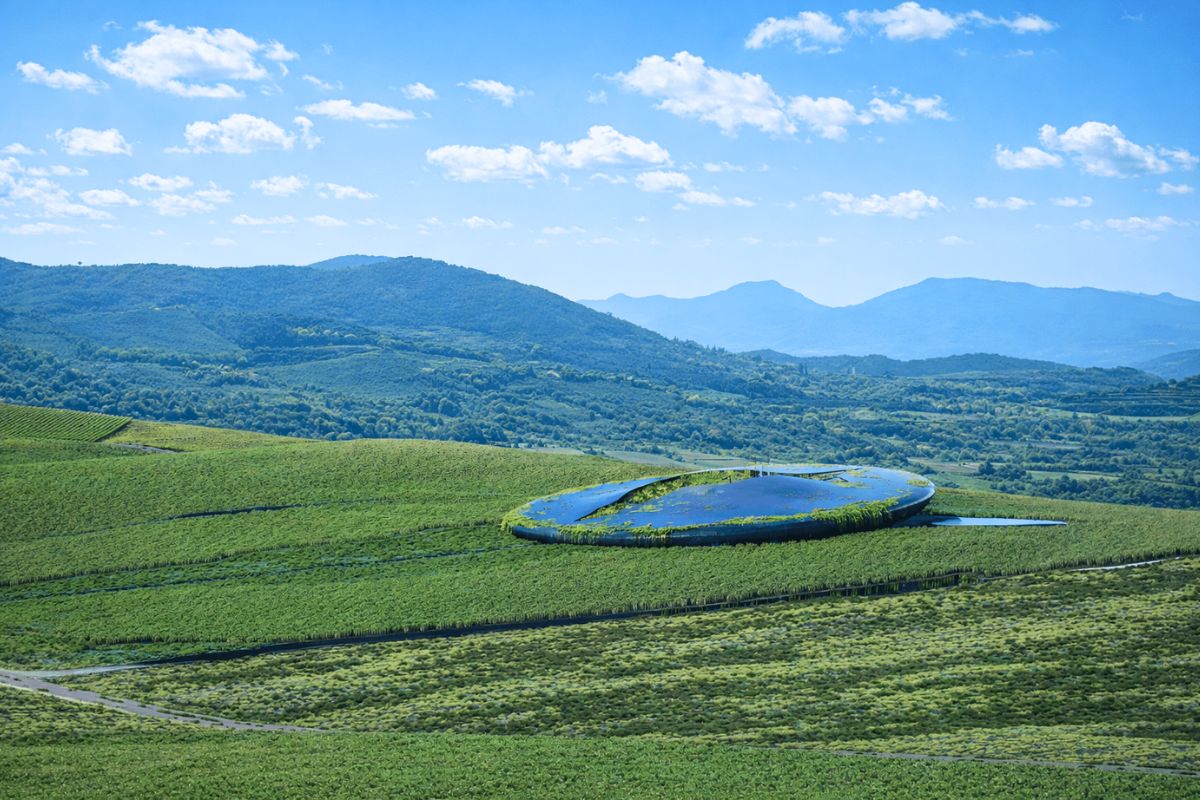
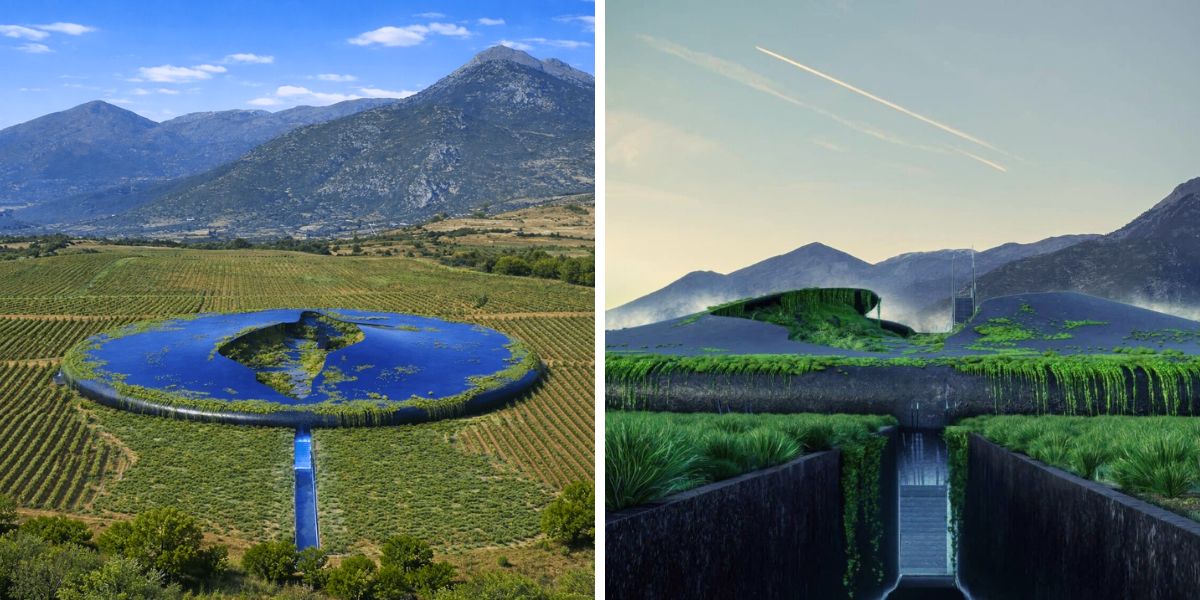
Picture a spaceship that touched down in a Greek vineyard a few thousand years ago and never took off again. Grass crept over it, the soil piled up against its sides, and the vines grew right up to its edge. That's the story behind Metamorphosis, a UFO-like winery that 314 Architecture Studio designed for Nemea, one of the oldest wine regions of the Peloponnese in Greece. From a distance you'd hardly see a building at all, just a round, green hill in the rows of grapes.
A Flying Saucer the Vineyard Swallowed
The Athens-based architects wrote the concept like a short piece of science fiction. A round, smooth object lands among the vines. Nature doesn't push it away. It moves in. Plants cover the roof, earth folds around the rim, and over the centuries the strange visitor becomes part of the hill. So the building looks two ways at once: sleek enough to pass for a machine from the future, overgrown enough to pass for a ruin.
The name is a nod to Franz Kafka's Metamorphosis, the story of a man who wakes up changed into something else. Here the change runs backward in time. A thing that could have come from tomorrow ends up feeling like something dug up from the past.
Walking Into the Hill, Like an Ancient Tomb
There's no grand front door. You reach the winery through a narrow cut in the vineyard, a straight slit in the ground that slowly turns into a ramp going down, under the green roof. It's a deliberate echo of the tholos tombs, the beehive-shaped Mycenaean burial chambers you still find around the Peloponnese. You leave the bright fields, step into shade, and end up in a cool, closed space inside the earth. For a place that stores wine, that's not a bad way to arrive.
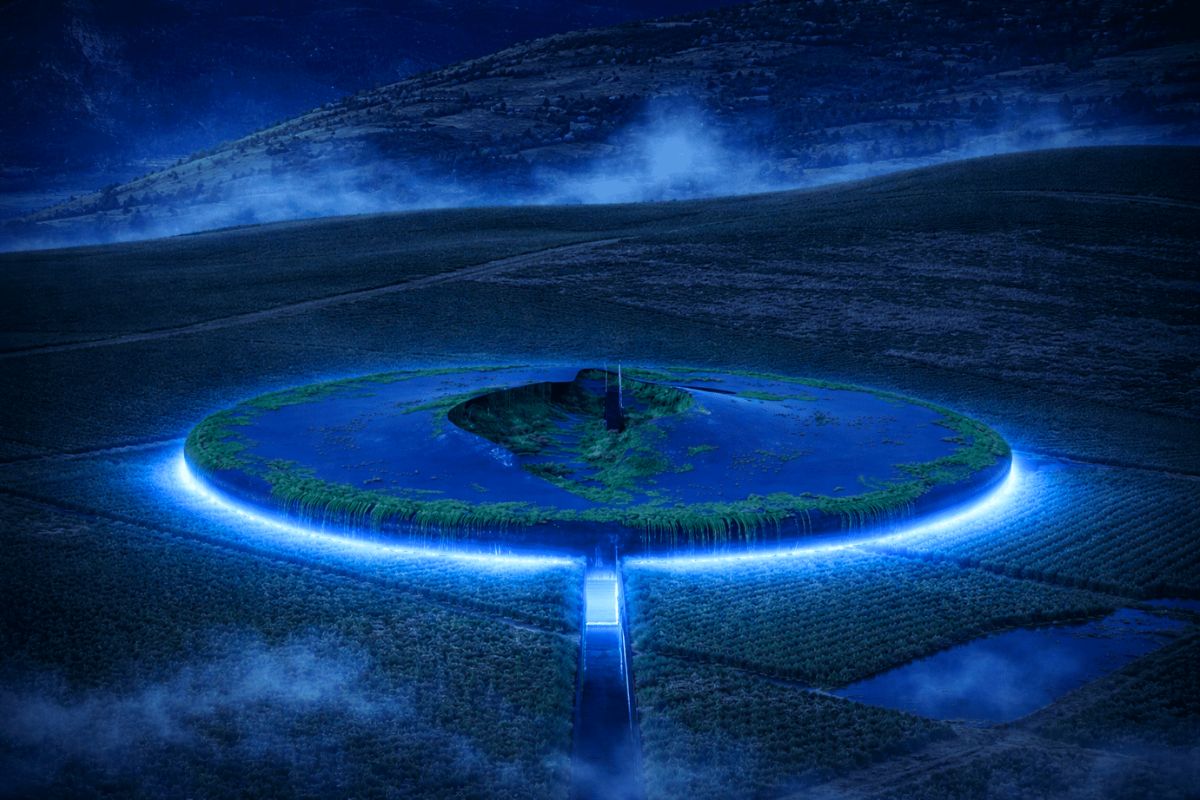
Light does a lot of the work in the design. Daylight fades as you go down, and at night the building glows from inside its ring, which is when the spaceship idea is easiest to see.
Why a Winery Should Grow Out of the Ground
For 314 Architecture Studio, the building and the wine go through the same thing. Grapes turn into wine slowly, with time, air, and a cellar's darkness. The architects want the building to be shaped by the same ingredients: soil, plants, light, and air. Hence the green roof that runs straight into the vineyard, and walls you mostly can't see because the earth covers them.
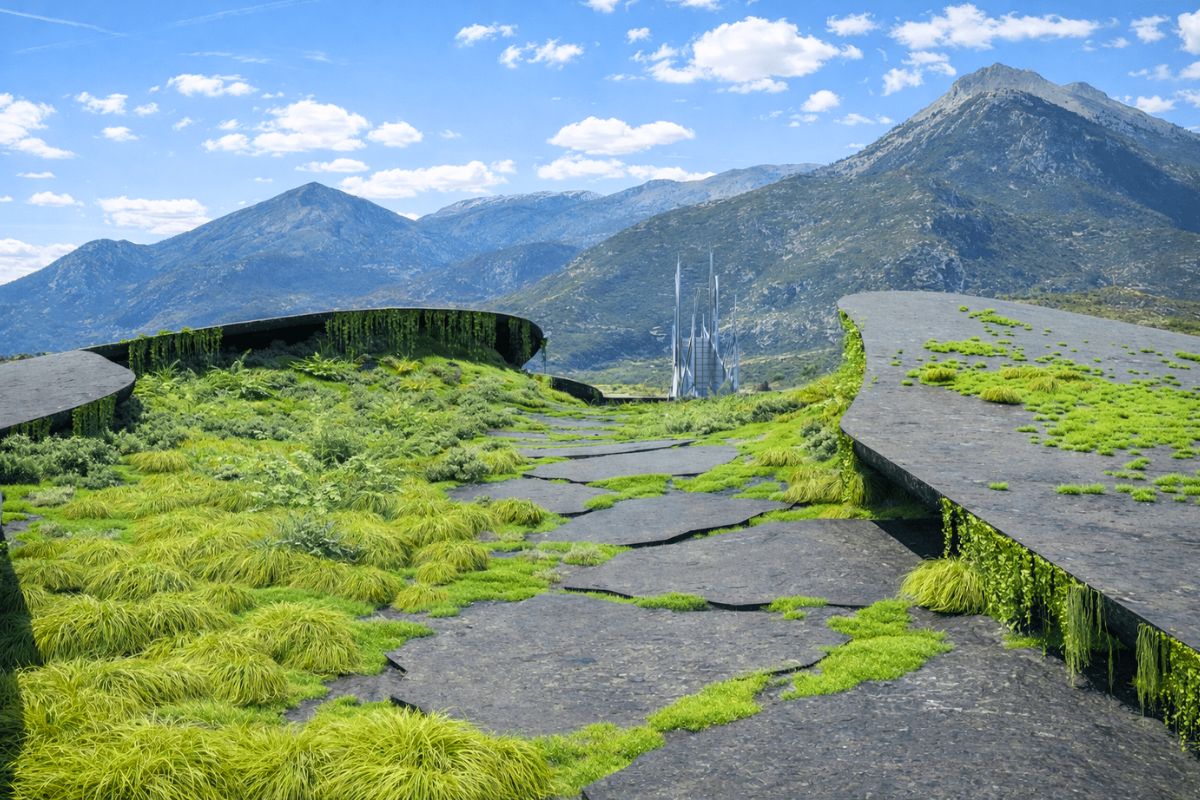
There's a bigger idea under the camouflage too. In an age when people have changed almost every landscape on earth, the line between what's built and what's grown keeps getting blurrier, and this winery leans into that. It doesn't stand on the site. It looks like it came out of it. Anyone who has seen a roof meadow in full flower knows how fast a building can disappear under green. Here, that's the whole point.
Photos: @314architecturestudio.