Trees are often the first things to disappear when construction begins. A site is cleared, the ground is leveled, and a new building takes its place. Any vegetation that returns later is usually part of the landscaping, added once the architecture is already decided.
But there is another way to approach a site. Instead of removing the trees to make space for a building, architects can begin by asking how the building can exist alongside them. The position of a trunk can determine where a wall goes. A canopy can provide shade. Roots can influence where foundations are placed, while the changing light beneath the branches can affect how rooms are used.
Building Around Trees – When Architecture Works With the Site
Working this way, with nature integrated, means accepting that a site already has a structure before the architect arrives. Trees bring shade, movement, sound, and seasonal change, and these qualities can become part of the architecture rather than problems to be solved.
Some projects are organized around a single tree, making it the starting point for the plan. In House Around the Tree by Otro Estudio, an existing tree sits at the center of the home. The layout is organized around it, making the tree part of everyday movement through the house rather than something viewed from a window.
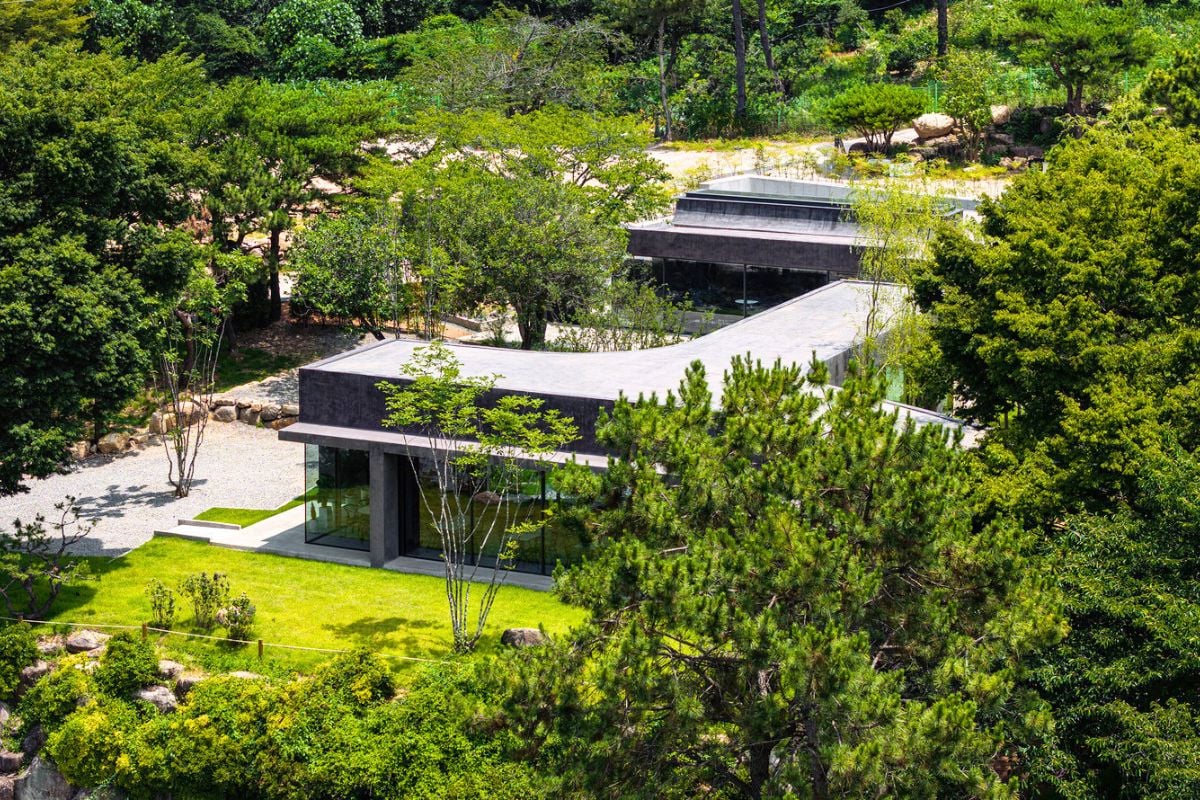
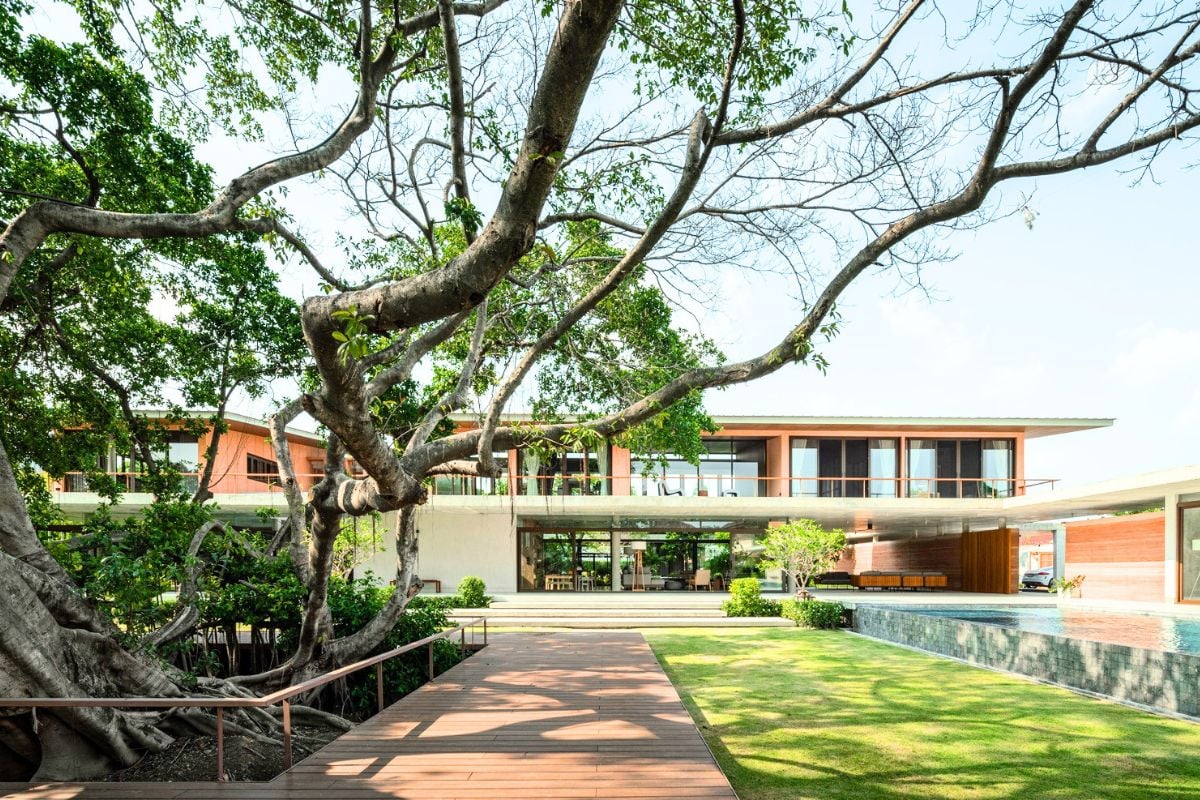
Banyan Tree House by Anonymous Architects takes a similar approach on a much larger scale. The size of an established banyan tree, together with its canopy and root system, influences how the building is distributed across the site. Instead of forcing the tree into a leftover area, the spaces open around it.
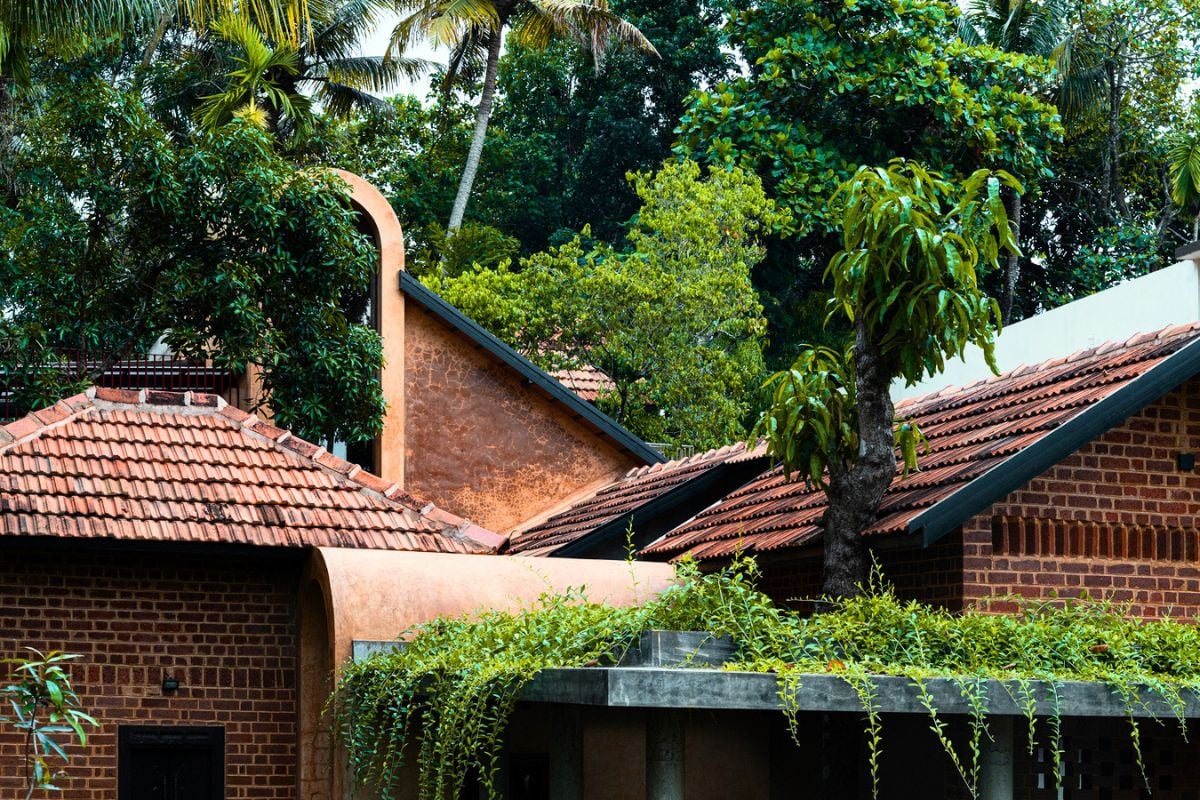
Of Trees, Gods and Mud House by Urava Architecture takes the idea further by giving the existing trees cultural and spiritual importance. The architecture sits within the landscape, allowing those existing conditions to remain visible. Here, keeping the trees is not simply a decision about preservation. They are part of what gives the place its meaning.
Designing With an Existing Landscape
Not every project revolves around one particular tree. Some work with groups of trees that already define the character of a site.
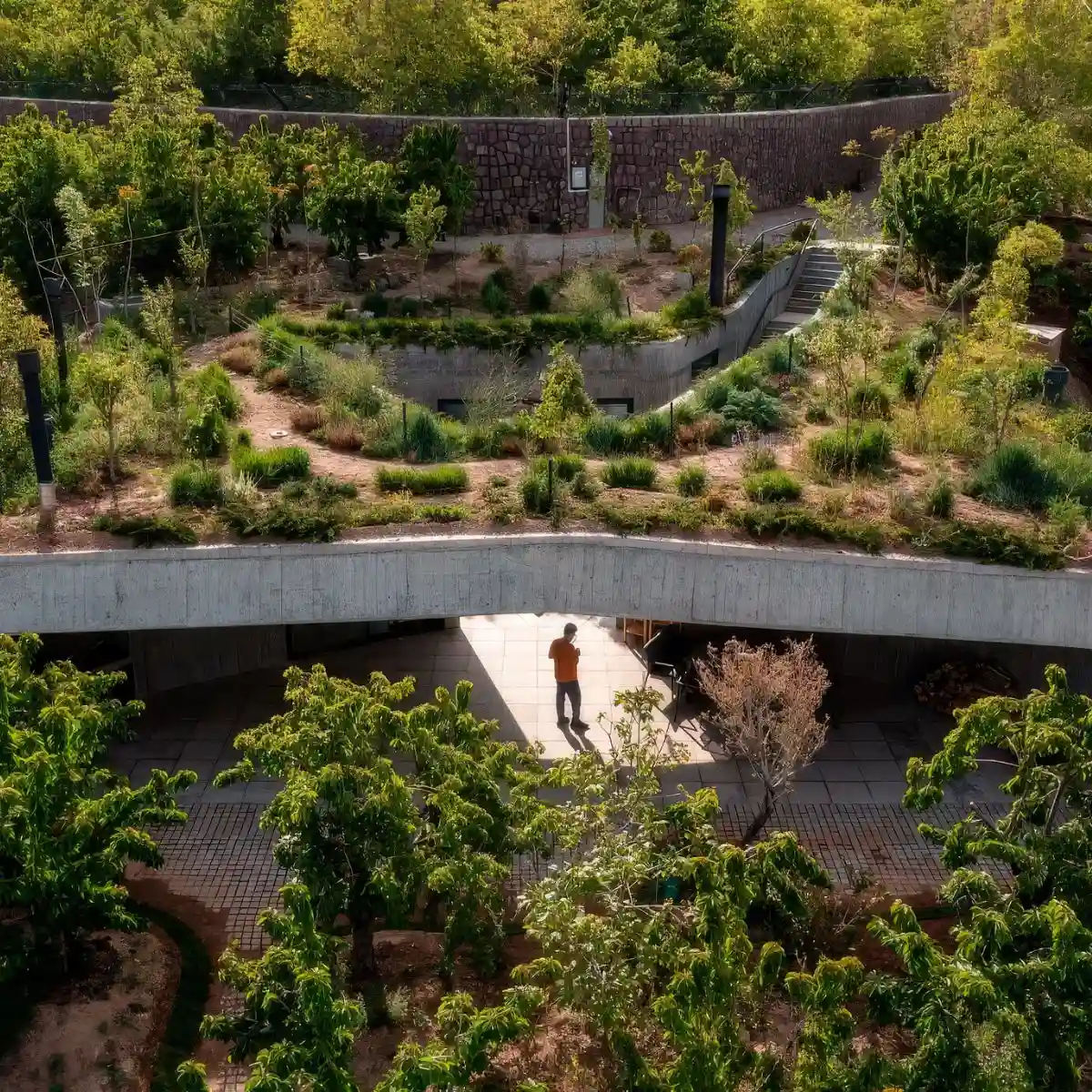
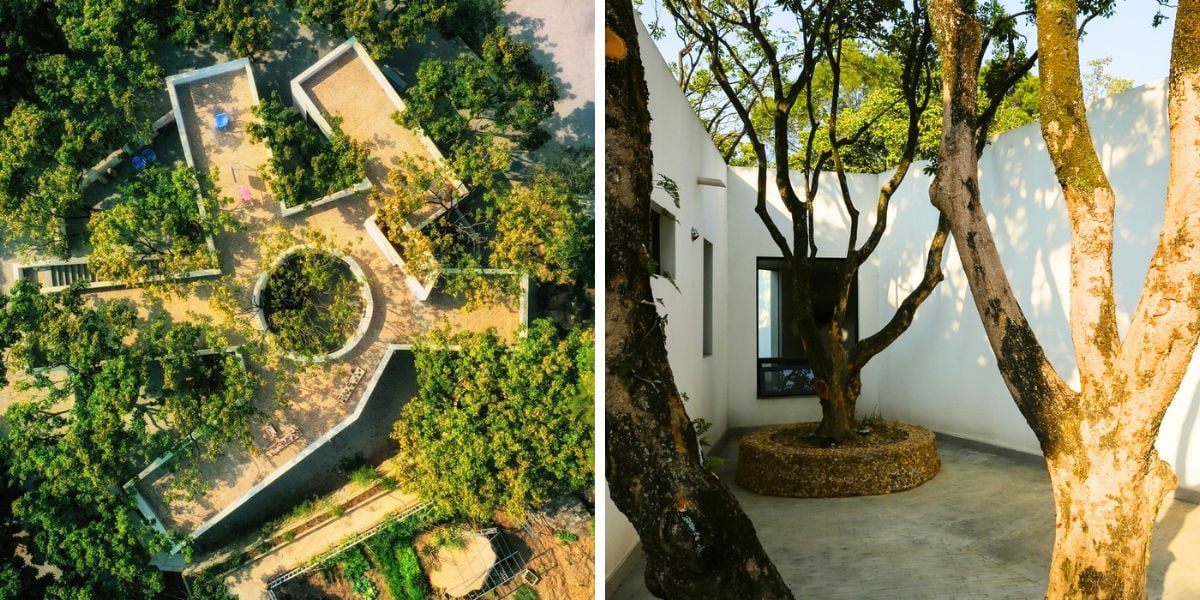
At Courtyard Under Longan Trees by Spacework Architects, a house is placed within an existing orchard. The trees form the courtyard and affect how sunlight reaches the spaces throughout the day. Their position and density provide conditions that would be difficult to recreate through landscaping after construction.
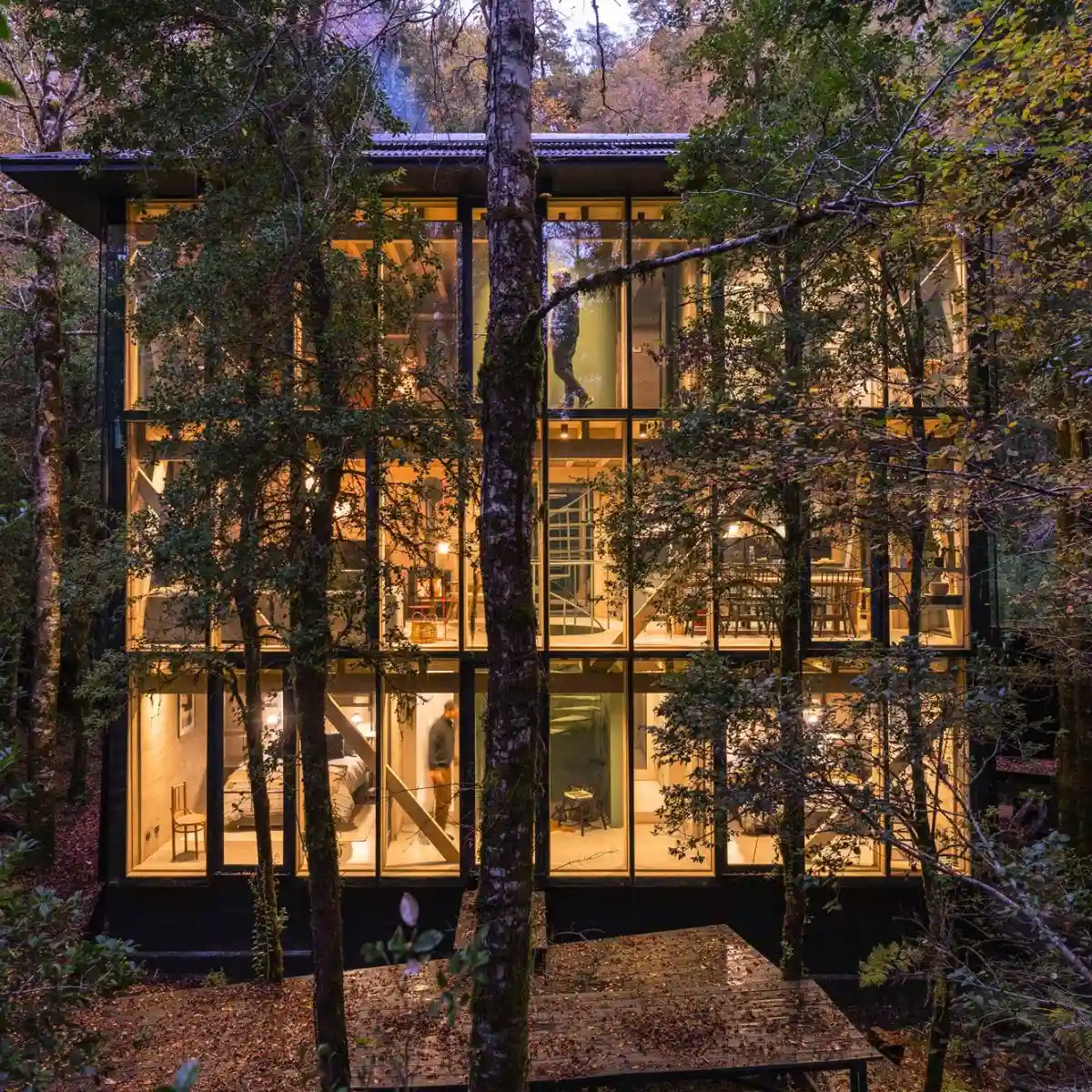
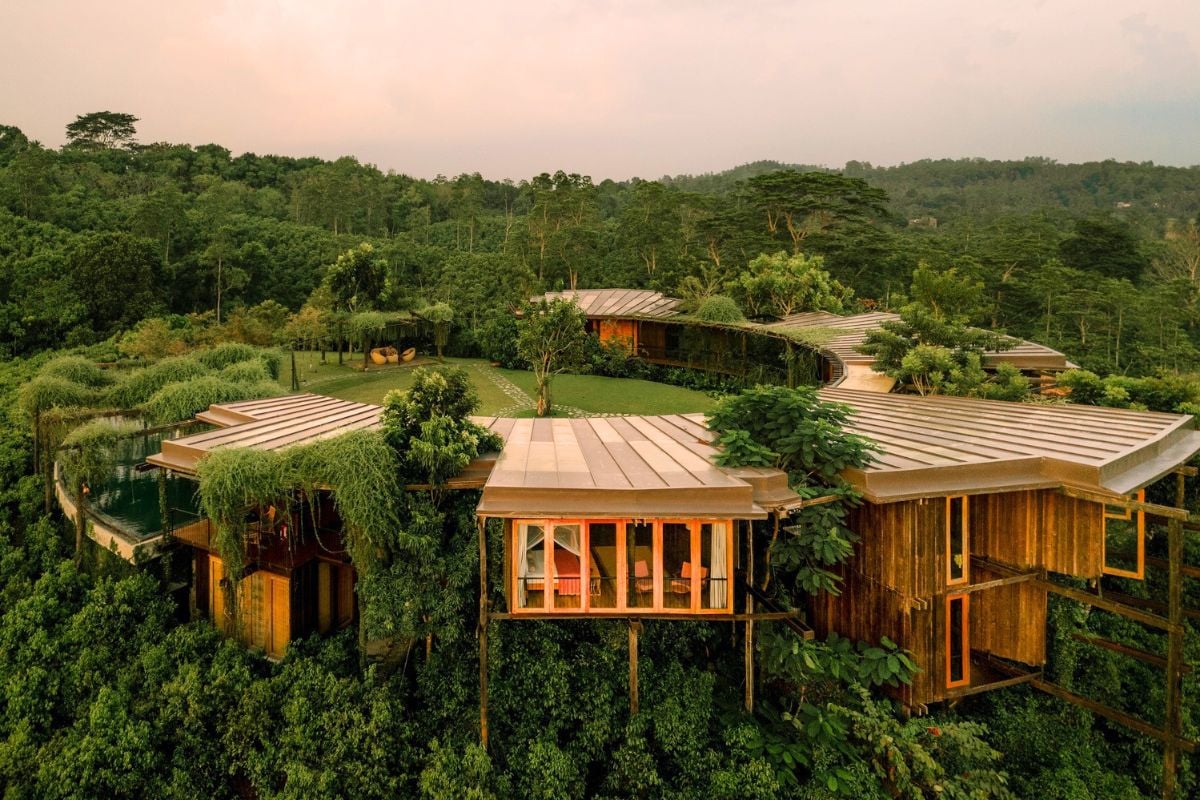
Round House Estate Bungalow at Ahangama by Narein Perera takes a similar approach, with its circular layout responding to the vegetation around the building. Trees remain within the site and around the built structure, allowing the house to feel connected to the landscape rather than separated from it. At Charcoal Haus by M.O.C Architects, existing trees help determine the relationship between the house and its surroundings. They affect privacy, views, and the amount of light entering the spaces.
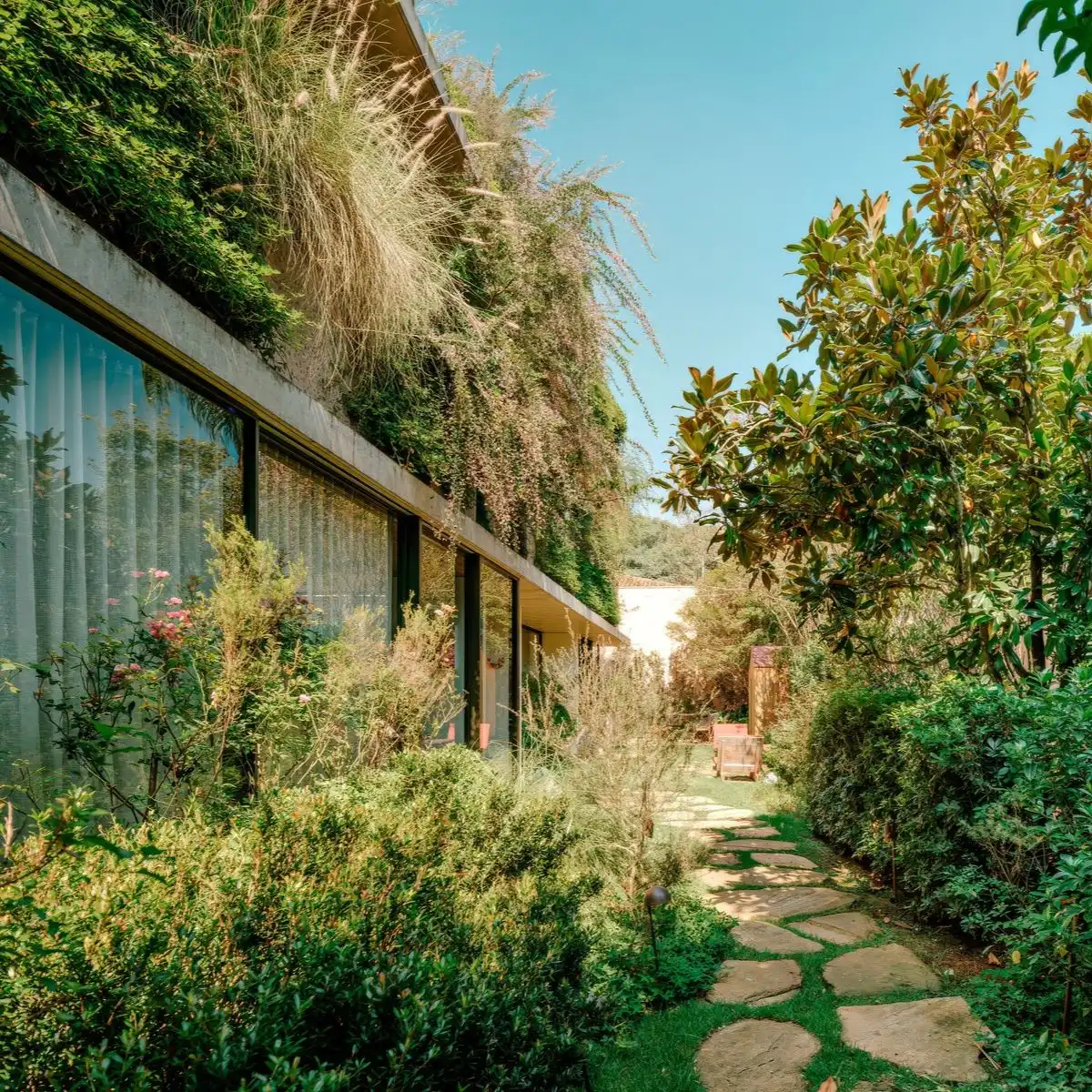
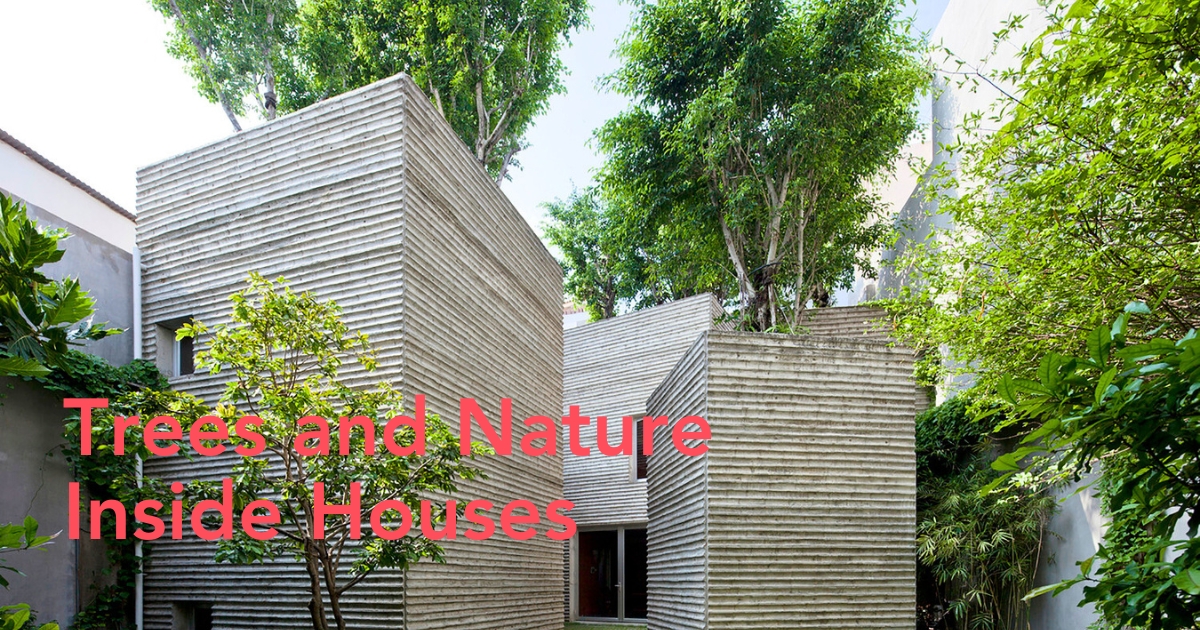
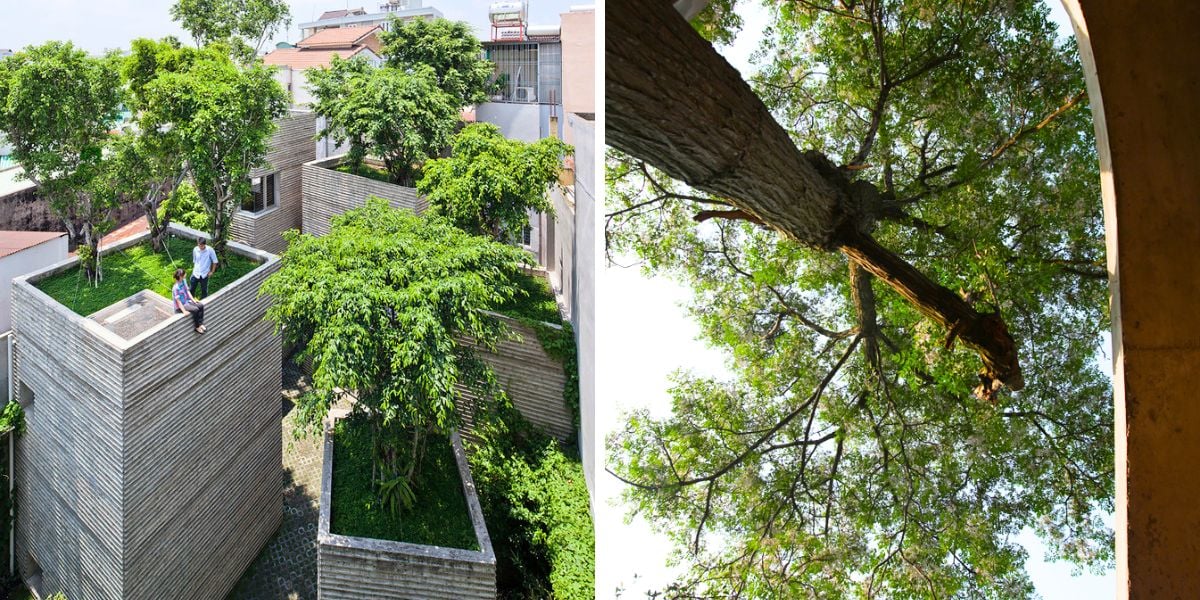
House for Trees by Vo Trong Nghia Architects approaches the relationship between buildings and vegetation in an urban context. The project incorporates planting directly into the architecture, bringing trees into a setting where dense construction has traditionally left little room for them.
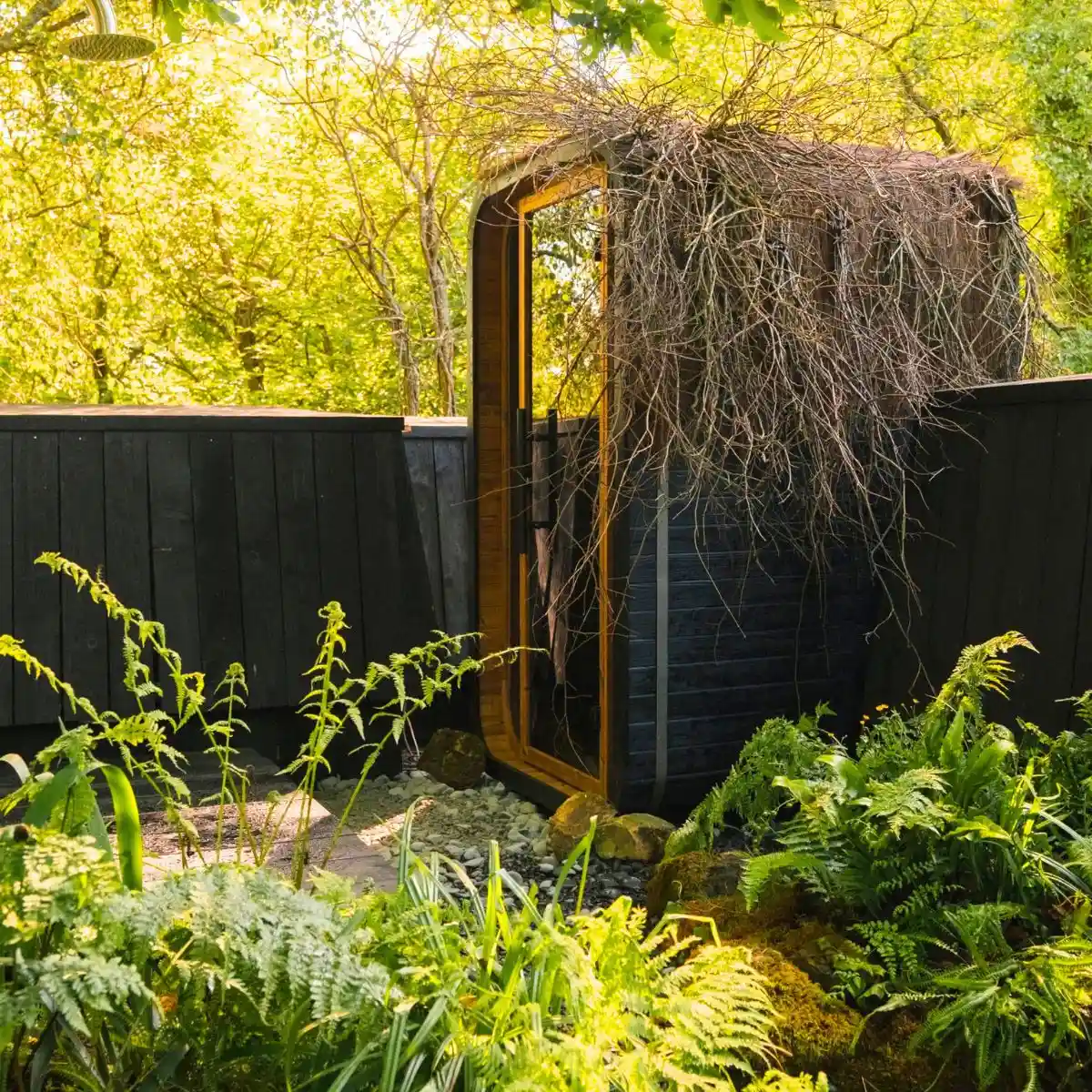
Twin Trees Pavilion by Atelier Archmixing also leaves space for the trees to exist alongside the structure. The open pavilion allows air, light, and vegetation to move through the project, making the boundary between architecture and landscape less fixed.
Making Trees Part of the Experience
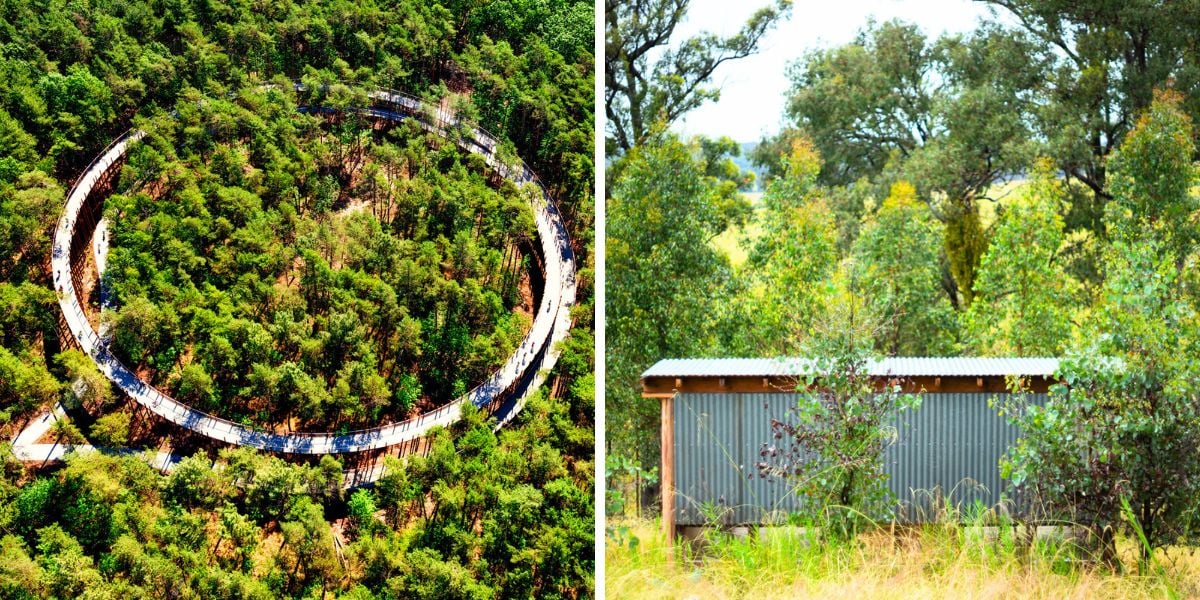
There is another reason to build around trees that goes beyond keeping them alive. They can change how people experience a building. Cycling through the Trees by BuroLandschap creates a circular route that rises to the level of the canopy, allowing visitors to move through the forest. The project changes the usual distance between people and trees by placing the journey directly among them.
A Place to Watch the Trees Grow by Green Studio takes a slower approach. The architecture gives people a place from which to observe changes that happen gradually, including the growth of trees, shifts in light, and seasonal variation. In both projects, the trees become part of what people come to experience.
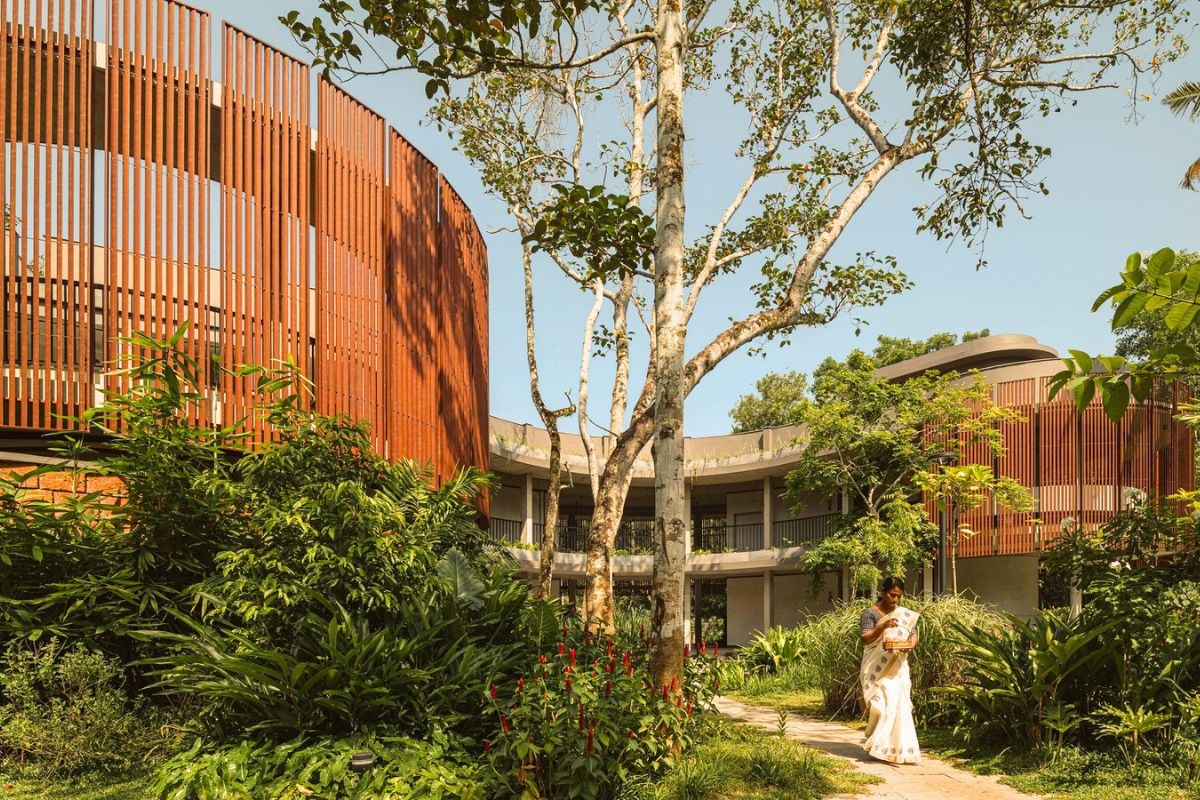
Nirava Ayurveda Holistic Center by Stapati brings the relationship between architecture and vegetation into a setting focused on rest and wellbeing. The project connects interior and exterior spaces through vegetation, natural light, and airflow, allowing the surrounding landscape to influence how the spaces are experienced. This approach points to something important about building with trees. A tree is never completely static. It grows, loses leaves, changes shape, and alters the amount of shade it provides throughout the year. Designing around one means accepting that the architecture will exist alongside something that continues to change.
What Changes When Trees Stay?
Keeping existing trees can make the design process more complicated. Walls may need to move. Circulation may need to follow an unusual route. Foundations and construction methods may require more care. The easiest solution is often to remove the obstacle and start again. But the projects above show what can happen when that decision is reversed. The existing landscape becomes part of the plan, and the architecture gains conditions that could not simply be added later.
A mature tree can provide shade that takes decades to develop. Its branches can frame a view, filter sunlight, and create a sense of enclosure. Its presence can also give a new building an immediate connection to its location.
The question nowadays is how much the existing landscape can influence the building from the beginning. House Around the Tree, Banyan Tree House, Courtyard Under Longan Trees, and other projects show different ways of doing this, from placing a single tree at the center of a home to creating paths through a forest or allowing vegetation to become part of an urban building.
Building around trees requires architects to give up some control over the site. That can be a limitation, but it can also produce something that a cleared site cannot offer: architecture that belongs to a place because it responds to what was there before it.
What other architectural sites have you seen with integrated trees?