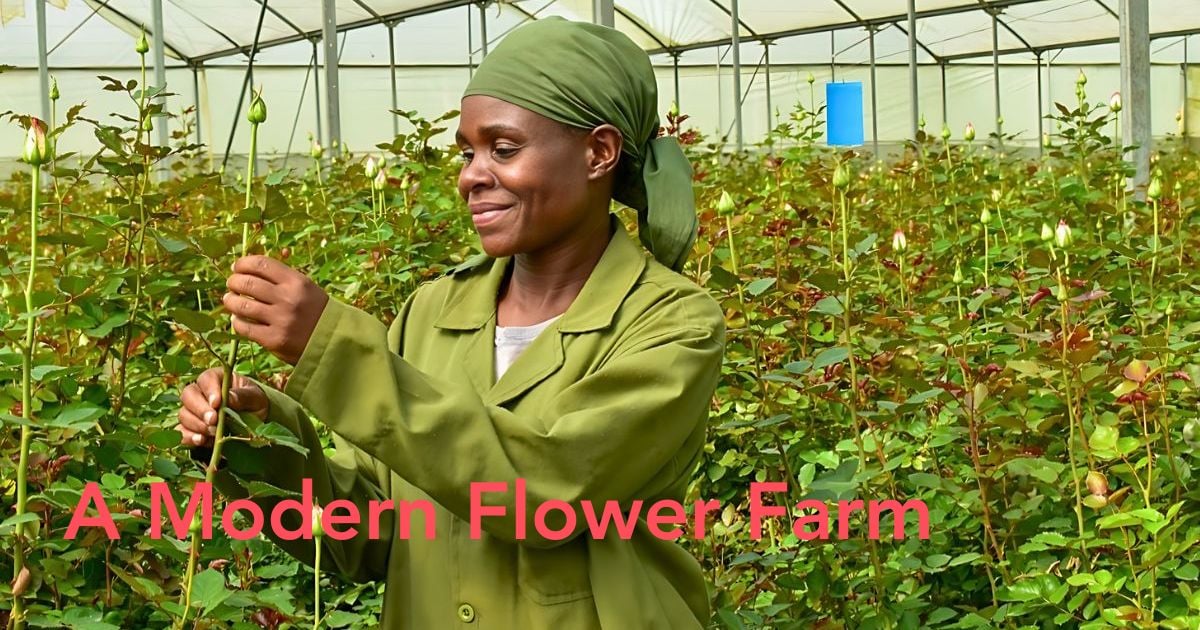
A modern flower farm runs on more than soil, water, and skilled hands. It runs on data. Behind every consistent stem of roses or reliable batch of gypsophila sits a growing layer of sensors, software, and analytics that growers now use to protect quality, plan labour, and catch problems before they spread.
This is not the distant future. Across the major production regions, from the highlands of Kenya and Ecuador to greenhouses in the Netherlands and Colombia, technology has moved from a curiosity to a working part of the operation. The farms that adopt it are seeing steadier quality and fewer nasty surprises at harvest.
Here is a practical look at what that technology actually is, what the sensors measure, how the data gets used, and where it makes the biggest difference for growers.
The Sensors Are Doing the Watching
The foundation of farm technology is measurement. Before software can recommend anything, something has to observe the crop and its environment, continuously and accurately. That job falls to a spread of sensors, each tracking a specific variable that affects how flowers grow.
These sensors connect through Internet of Things networks, which link the devices in the field and greenhouse to a central platform where the readings are collected, stored, and turned into something a grower can act on. Without that connective layer, a sensor is just a gauge nobody is reading.
The common sensor types on a flower farm include:
- Temperature sensors. Track air and soil temperature, the single biggest driver of growth rate and bloom timing. A few degrees off can pull a harvest forward or push it back by days.
- Humidity sensors. Monitor relative humidity in the greenhouse. High humidity invites fungal disease; low humidity stresses the plant and hurts vase life.
- Soil moisture sensors. Measure water content at the root zone so irrigation matches what the plant actually needs, rather than a fixed schedule.
- CO2 sensors. Track carbon dioxide levels, which directly affect photosynthesis and growth speed in enclosed greenhouses.
- Light sensors (PAR sensors). Measure photosynthetically active radiation, the light wavelengths plants use, so supplemental lighting is added only when daylight falls short.
- Leaf wetness sensors. Detect moisture on foliage, an early warning sign for disease conditions.
- EC and pH sensors. Monitor nutrient concentration and acidity in the water and substrate, keeping feeding precise.
Each sensor on its own is a single reading. The value appears when they work together and feed a platform that sees the whole picture.
How the Data Turns Into Decisions
A reading is not a decision. The step that matters is what happens to all that sensor data once it arrives.
Modern farm management software for growers collects the streams, filters out noise and faulty readings, and presents the grower with a clear view of conditions across the farm. More advanced platforms go further, comparing live data against the ideal range for each crop and flagging when something drifts out of bounds.
The typical flow looks like this:
|
Stage |
What happens |
Outcome for the grower |
|
Collection |
Sensors report readings continuously |
Live conditions across every zone |
|
Filtering |
Software discards faulty or implausible values |
Trustworthy data, not noise |
|
Analysis |
Readings compared against crop-specific targets |
Drift and anomalies surfaced early |
|
Alert |
Out-of-range conditions trigger a notification |
Action before damage occurs |
|
Automation |
Software adjusts climate, irrigation, or lighting |
Conditions corrected without manual work |
At the most automated end, the software does not just alert a person. It acts. If humidity climbs toward a risky level, the system can open vents or adjust the climate control on its own, keeping conditions stable around the clock without waiting for someone to notice.
Planning Labour Around the Bloom Peak
Technology on a flower farm is not only about climate. One of its most valuable uses is something far more human: scheduling the people who do the work.
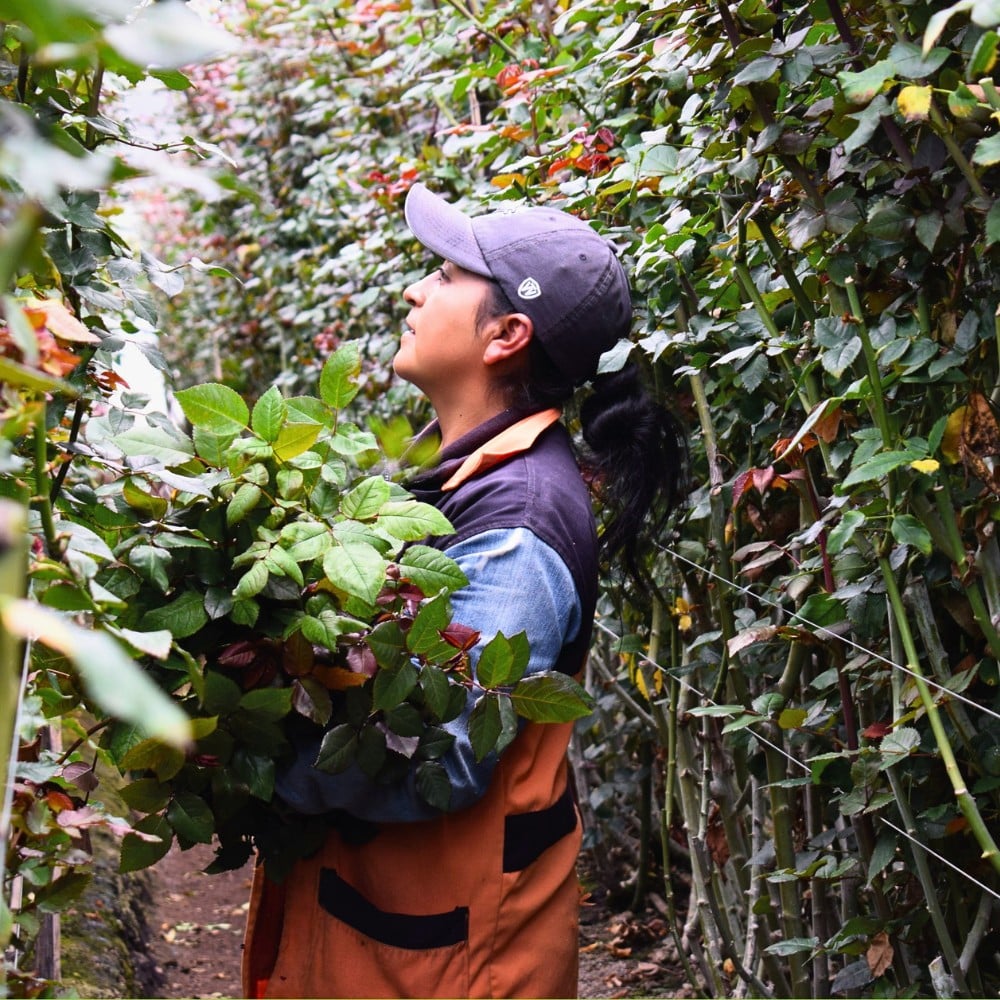
Cut flowers do not wait. When a block of roses reaches the right stage, it has to be harvested within a narrow window, or quality drops and the value falls with it. Miss the peak by a day and stems open too far; harvest too early and they never perform in the vase. The challenge for any farm manager is having the right number of hands ready at exactly the right moment, across dozens of blocks that all peak on their own schedule.
This is where growth data earns its keep. By tracking temperature accumulation and growth stage, the software can forecast when each block will be ready to cut, often days in advance. That forecast turns labour planning from guesswork into a schedule.
The practical benefits for harvest planning include:
- Accurate timing. Growth models predict peak harvest dates per block, so managers know what is coming and when.
- Right-sized crews. Labour is scheduled to match the forecast volume, avoiding both idle workers and frantic shortages.
- Smoother peaks. The big commercial spikes around Valentine's Day and Mother's Day can be planned weeks ahead, with crop timing nudged to hit the date.
- Lower waste. Flowers cut at the correct stage hold their quality longer, so less of the harvest is lost to poor timing.
- Better cost control. Knowing labour needs in advance keeps overtime and last-minute hiring under control.
For a large export farm sending stems to auctions and retailers thousands of kilometres away, this kind of forecasting is the difference between a clean, profitable harvest and a chaotic one.
Catching Disease Before It Spreads
The most damaging events on a flower farm often start small. A patch of mildew, a few aphids, the first signs of botrytis on a handful of stems. Left unseen for even a few days, a localised problem can move through a greenhouse and ruin a significant share of the crop.
Spotting these issues early used to depend entirely on the trained eye of an experienced scout walking the rows. That still matters, but it has limits: a person cannot inspect every plant every day, and the earliest signs are easy to miss.
Image recognition is changing that. Cameras mounted in greenhouses or carried on handheld devices, sometimes on drones above the crop, capture images of the plants. Software trained on thousands of examples then analyses those images and identifies signs of disease, pests, or nutrient deficiency, often before they are obvious to the human eye.
How image-based monitoring works in practice:
- Capture. Cameras photograph the crop regularly, covering far more plants than a scout could check by hand.
- Analysis. Trained recognition models scan each image for visual signs of stress, disease, or pests.
- Detection. The software flags suspect plants and pinpoints their location in the greenhouse.
- Response. The grower targets treatment to the affected area instead of spraying everything, which saves chemicals and money.
The payoff is twofold. Problems get caught while they are still small and contained, and treatment becomes precise rather than blanket. A grower who can treat one infected corner instead of an entire greenhouse spends less, uses fewer chemicals, and keeps more of the crop sellable. For farms chasing sustainability certifications, that reduction in chemical use is a direct benefit.
What It Takes to Make This Work
Adopting farm technology is not simply a matter of buying sensors. A few things separate the farms that get real value from the ones that end up with expensive gadgets and unread dashboards.
- Integration. The sensors, the software, and any automation have to work as one system. Disconnected tools that do not talk to each other create more work, not less.
- Clean data. Faulty sensors and gaps in readings undermine every decision built on top of them. Maintenance and calibration matter.
- Usable interfaces. The people running the farm need information presented clearly, answering the question "is everything fine, and if not, what do I do?" rather than burying them in raw numbers.
- The right expertise. Building a platform that ties together field sensors, climate control, growth models, and image recognition takes serious engineering. This kind of agriculture software development is why many growers partner with specialists rather than trying to build it alone.
The technology rewards farms that treat it as a connected system rather than a collection of separate gadgets.
Where This Is Heading
The direction is clear. Sensors are getting cheaper and more capable. Software is getting better at turning raw readings into specific recommendations. And image recognition is moving from a promising idea to a practical tool that catches disease earlier than any human scout.
None of this replaces the grower's judgement. A skilled grower still reads the crop in ways no sensor can. What the technology does is extend that judgement across more plants, more hours, and more variables than any single person could track, while handing back time that used to go into manual checking and reactive firefighting.
For a flower farm in 2026, the question is no longer whether technology has a place in the greenhouse. It is how quickly a grower can put it to work, and how well the pieces are connected once they do. The farms that get both right are the ones shipping consistent quality, planning their labour with confidence, and catching the small problems before they become big ones.