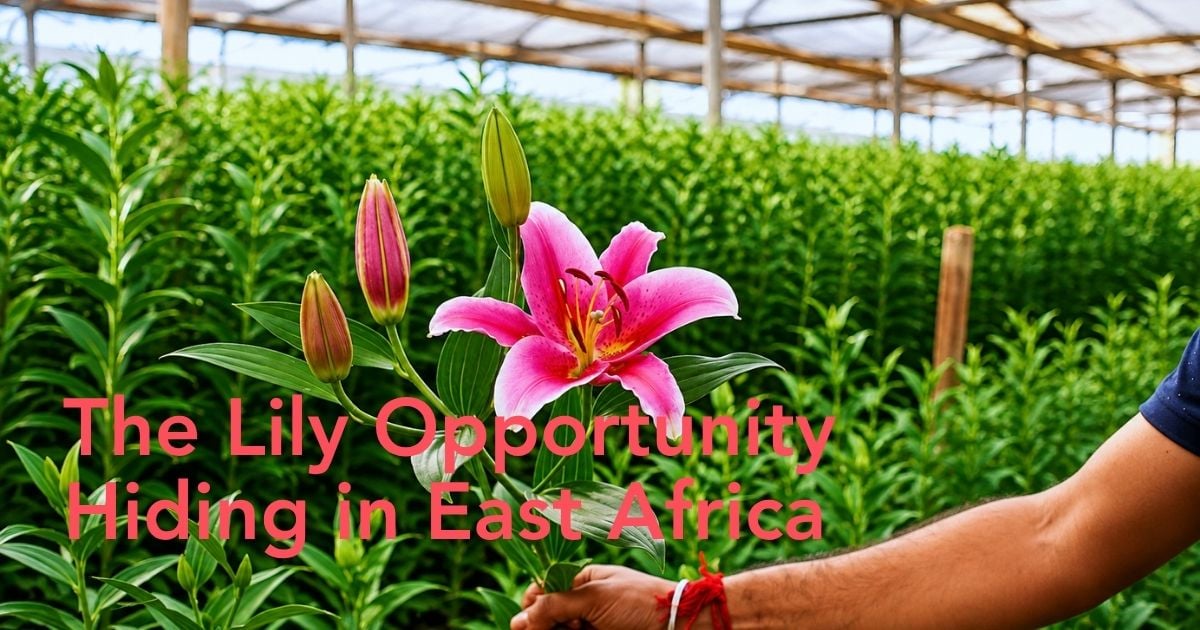
East Africa has many of the ingredients that have made it one of the world's most important flower-growing regions: high-altitude production areas, abundant sunlight, an established export infrastructure, and decades of experience supplying demanding international markets.
Yet when it comes to lilies, the region has never achieved the scale associated with roses. That raises an interesting question. If East Africa can produce roses for markets around the world, why have lilies remained a relatively specialized crop? The answer is not that lilies cannot grow in East Africa. They can. Kenya, in particular, has a history of commercial lily production. The bigger issue is that the region has not developed the same commercial ecosystem around lilies as exists in the world's leading lily-producing markets.
A Lily Industry, Just Not a Dominant One
Kenya is one of the important lily-producing countries identified in international floriculture statistics. AIPH's latest available production data lists Kenya at 1,073 hectares of fresh-cut lily production, although the figure dates back to 2012 and should not be read as a current estimate. By comparison, China was listed at 5,960 hectares in 2020.
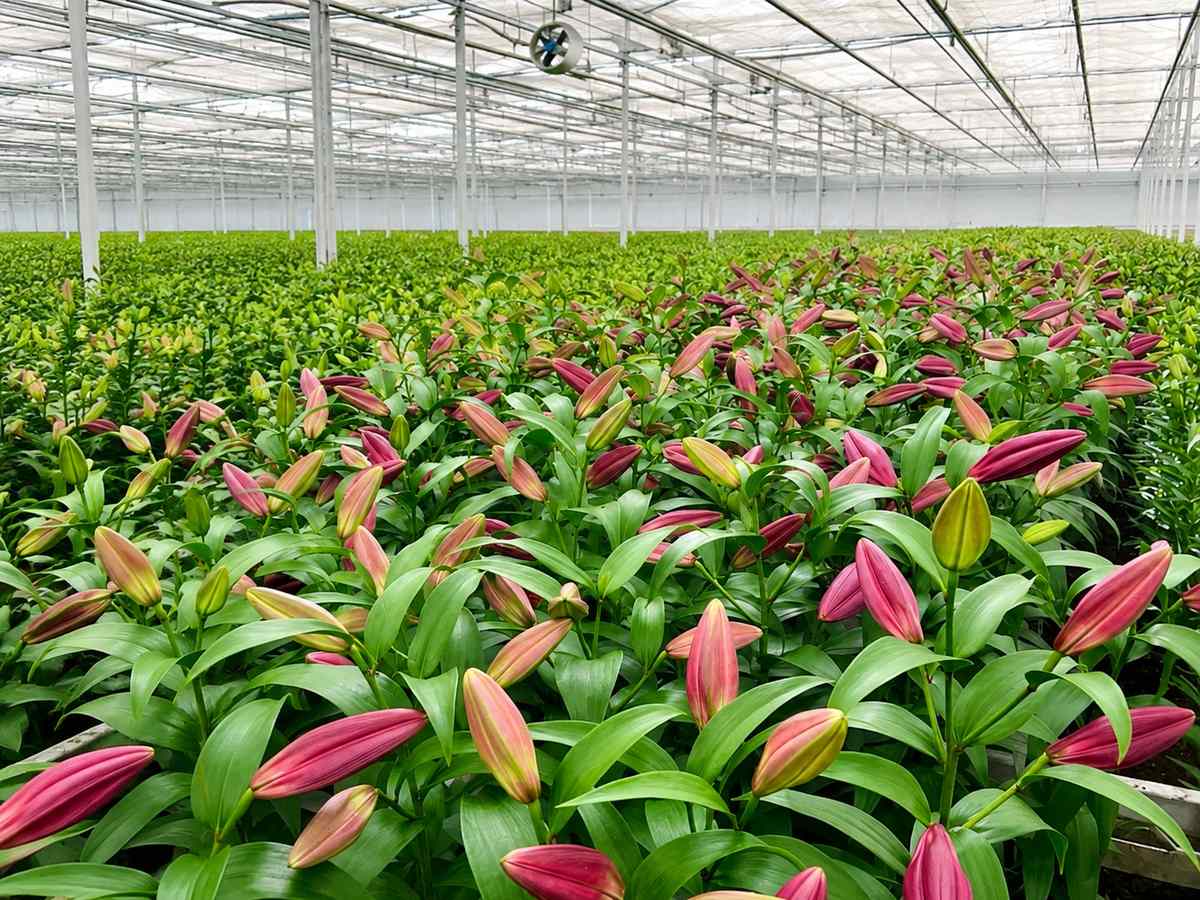
The numbers tell an important story. Kenya is not absent from the lily industry. It has been a substantial producer. But lilies have never occupied the same position in the country's flower industry as roses, and that difference is largely structural. Kenya's floriculture sector has been built around crops with strong, established international demand, and roses sit firmly at the center of that system. Lilies, by contrast, require growers to navigate a more specialized production and marketing chain. One of the biggest differences between lilies and roses is the importance of the planting material. Commercial lily production depends on quality bulbs, and the international lily industry has developed an exceptionally sophisticated bulb and breeding business around them.
The Netherlands is the clearest example. It is not simply a major producer of lily flowers. It has built an entire ecosystem spanning breeding, bulb production, cut flower production, technology, and international trade. AIPH reports that Dutch companies shipped approximately 1.2 billion lily bulbs outside Europe in 2022, with China, Colombia, and Vietnam among the largest destinations. Dutch production remains substantial today. Statistics Netherlands reported 5,870 hectares of lily cultivation in 2024, making lilies the country's second-largest flower bulb crop by area after tulips.
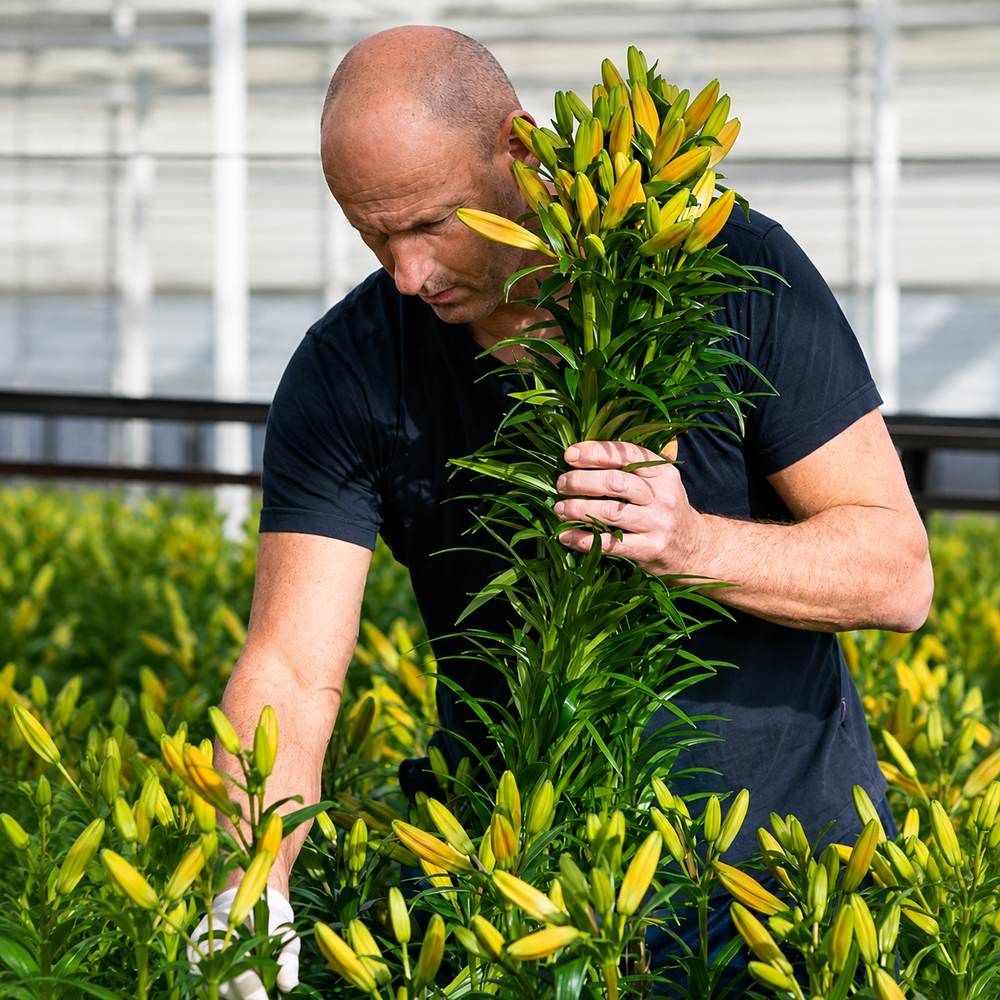
This is more than a matter of having good growers. It is an entire industry built around the crop, and East Africa does not have a comparable lily bulb ecosystem. Growers are therefore operating within a global supply chain in which some of the most important breeding, bulb production, and technical knowledge sit elsewhere.
The Economics Behind the Gap
Another reason lilies have remained more specialized is production economics. According to a Kenyan flower industry source quoted by Business Daily in 2026, lily production in Kenya is concentrated among relatively few farms partly because the crop is expensive to grow and maintain. The same report noted that international demand can take priority over the domestic market, with some production committed to overseas buyers in advance.

That matters because a grower deciding what to plant is not asking only whether a flower will grow. The real questions are how much it will cost to establish, who will buy it, what price it will achieve, how predictable the demand is, and how reliably the crop can be produced and shipped. Roses have decades of commercial infrastructure behind those questions in Kenya. Lilies have a much smaller ecosystem. The Netherlands demonstrates just how powerful a specialized market can become when production, breeding, and distribution develop together.
AIPH data shows that Dutch exporters accounted for 95 percent of fresh-cut lily exports to EU countries in 2023. That dominance did not happen because Dutch growers had a better climate for lilies. It developed through decades of breeding, bulb production, research, cultivation technology, logistics, and access to established European flower markets. Kenya already has the logistics and export relationships required to move flowers internationally. What is missing is the same depth of specialization around lilies.

Perhaps the most interesting part of the story is that lilies are not an unknown or unwanted flower in Kenya. In fact, the opposite can be true. In February 2026, Kenyan florists reported lily shortages ahead of Valentine's Day. Business Daily reported that local buyers were struggling to find the flower because much of the available production was being directed toward export markets. That creates an intriguing contradiction. A flower can be difficult to find locally; not because nobody wants it, but because there isn't enough production to satisfy every market. For growers, that could be an opportunity. For the wider industry, it raises a bigger question: could lilies occupy a larger position in East African floriculture?
Building an Ecosystem, Not Just a Crop
Scaling a crop requires more than consumer interest. A larger lily industry would need reliable access to planting material, strong variety selection, technical expertise, predictable export demand, post-harvest systems, and buyers willing to commit to sufficient volumes. It would also need growers to believe that lilies can compete economically with the crops already occupying their greenhouses and fields. This is where roses have a significant advantage. The East African flower industry has spent decades developing expertise around roses.
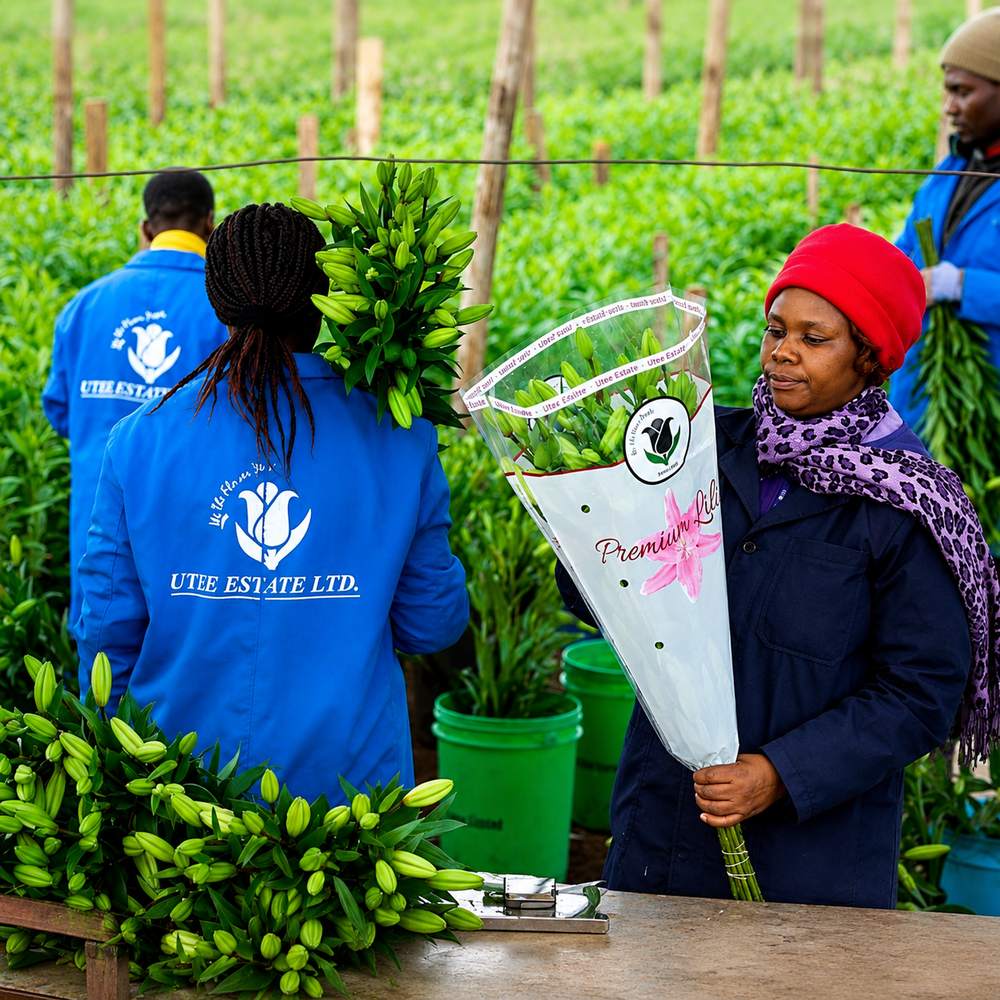
Growers know how to produce them, exporters know how to handle them, breeders and propagators have established commercial relationships, and international buyers already understand the product. Replacing part of that system with lilies means taking on another set of production and market risks. The region's story with lilies may be less about unsuitability and more about specialization. East Africa has already demonstrated that it can produce high-value cut flowers for international markets. Kenya's experience with lilies shows that the crop can be commercially viable.

And the recent difficulty of sourcing lilies locally suggests that demand exists. But becoming a lily powerhouse would require the industry to build more than production capacity. It would require a stronger ecosystem around the crop: more experimentation with varieties, stronger relationships with bulb suppliers and breeders, greater technical knowledge among growers, and more deliberate market development in Europe, the Middle East, and beyond. East Africa does not necessarily need to challenge the Netherlands or China head-on. The more interesting opportunity could be to develop lilies as part of a broader diversification strategy. For growers already producing roses, lilies can offer another crop and another market window.
For exporters, they can add variety to a portfolio increasingly shaped by changing consumer preferences. And for florists, more local availability could create opportunities for bouquets, weddings, events, and everyday floral consumption. The question, then, is no longer whether East Africa can grow lilies. It clearly can. The more important question is whether the region can build enough of the commercial ecosystem around lilies to make them more than a niche crop. East Africa already has the growers, the climate, the flower export experience, and the international connections. What it has not yet built is a lily industry on the scale of its rose industry. And perhaps that is exactly where the next opportunity lies.