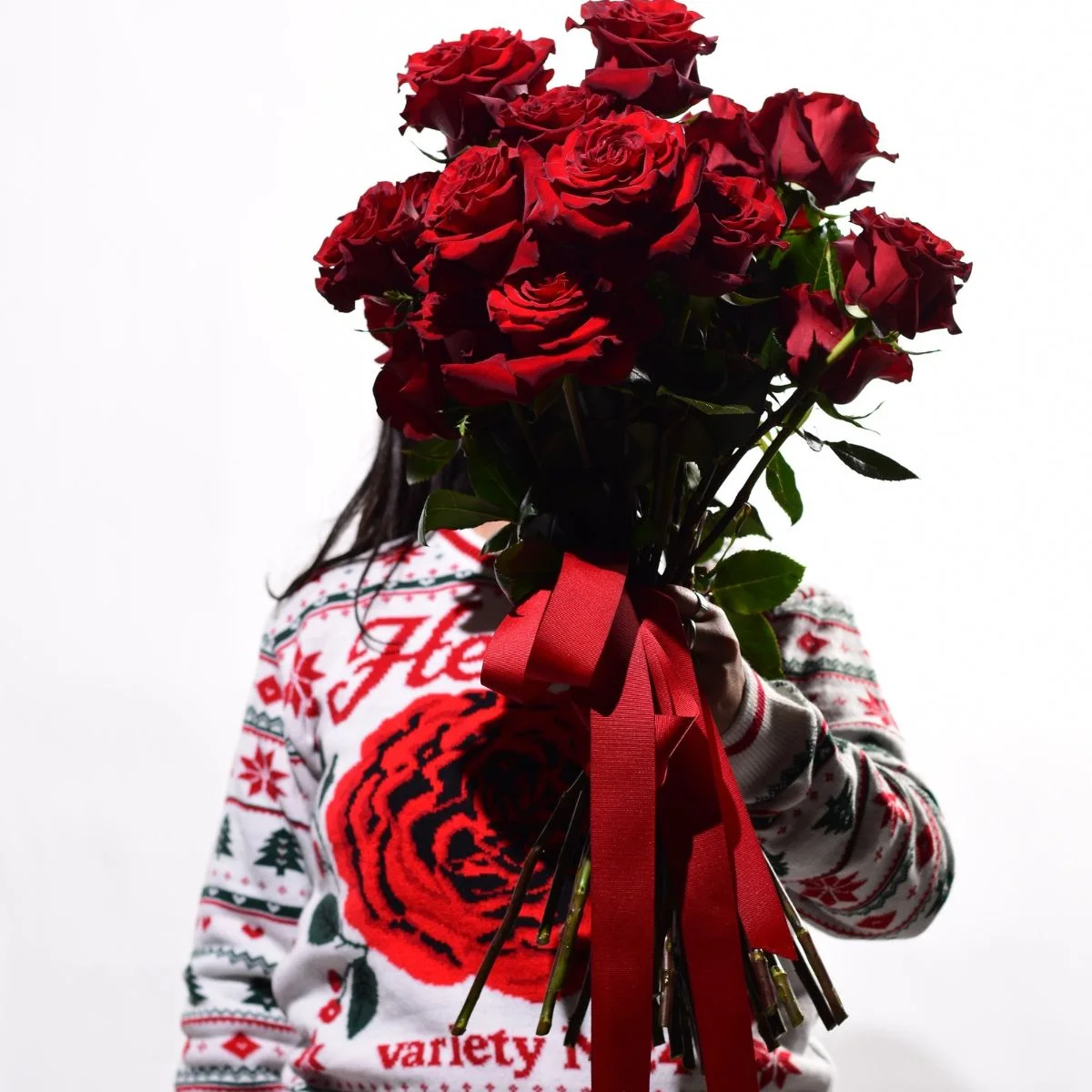
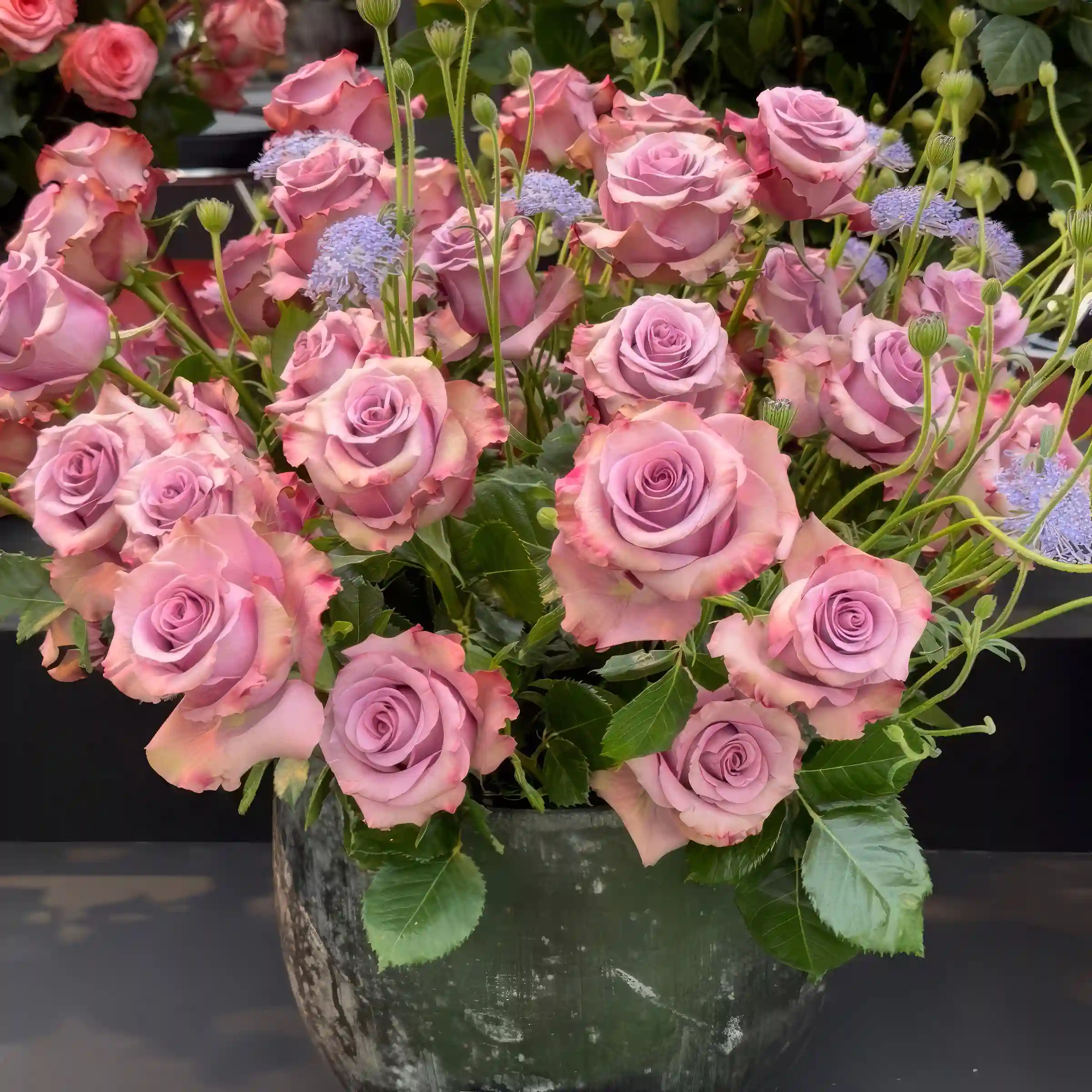
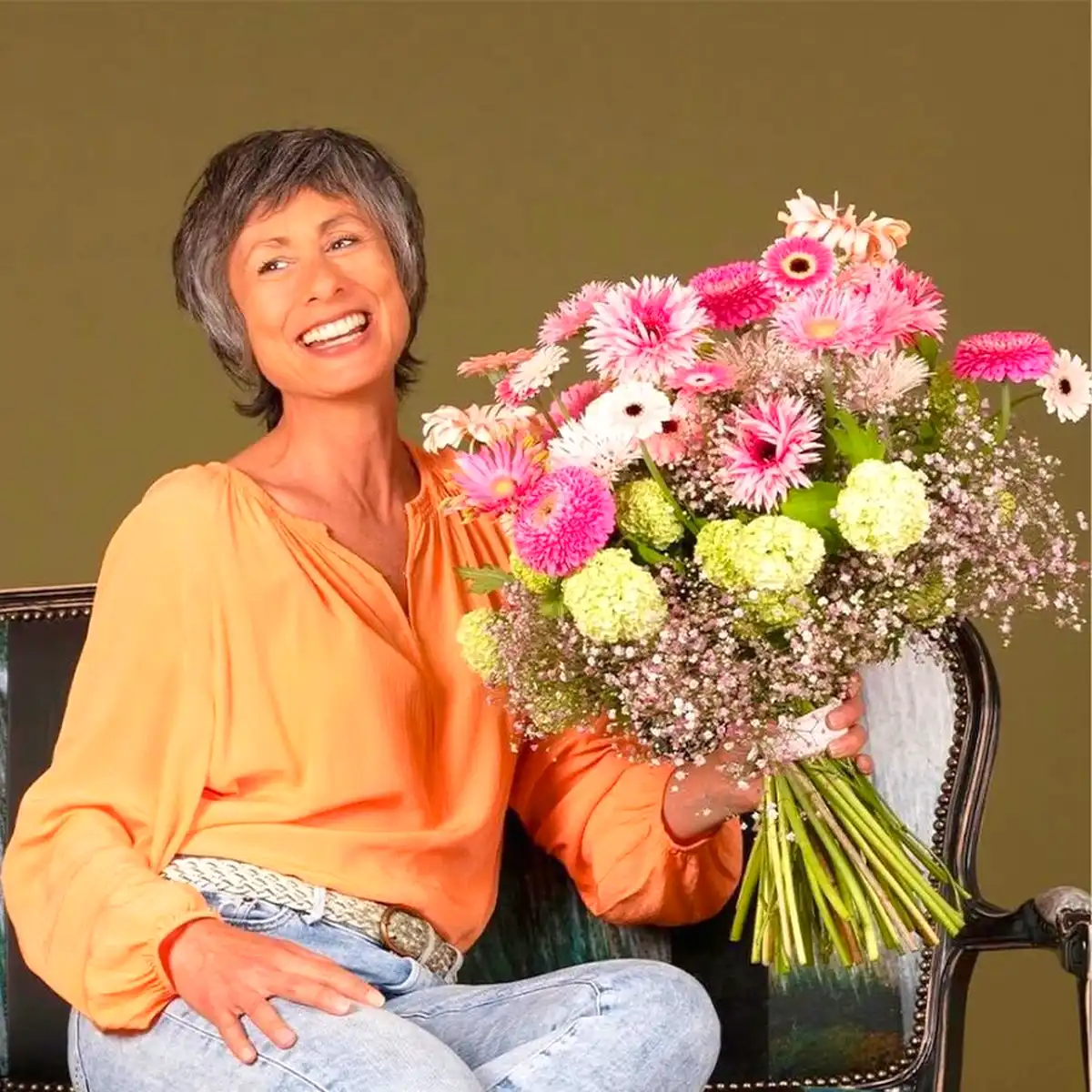
Some people buy flowers for their kitchen table. Others press them between the pages of a book, photograph them on a morning walk, or save a picture of an unusual petal color for later. And then there are the people who look at a flower and see the beginning of a new collection.
Flowers have a way of staying on our minds. A playful color combination, the shape of a single petal, or the slightly unpredictable arrangement of a garden can become the starting point for an idea. In fashion, that inspiration can travel from a flowerbed to a sketchbook, then onto a printed fabric like the ones from Pattern Textiles, and eventually into someone's wardrobe.
When a Flower Becomes the First Sketch
This connection between the natural world and personal style is a fascinating place to explore the work of Pattern Textiles, a London-based print design studio creating surface prints for fashion brands, retailers, and fabric manufacturers around the world. Since 2005, the company has developed artwork for upcoming seasons, drawing inspiration from visual culture, trends, travel, exhibitions, and vintage textiles. Flowers offer another particularly rich visual language within this world of print and fashion.
Think about how many different ways a flower can look. A cosmos has an open, delicate shape, while a Dahlia can be packed with layers of petals. A poppy has a loose, almost paper-like quality. Roses and Zinnias come in a remarkable range of colors and forms. A lily opens up marvelously, leaving viewers in awe. Even within one variety, no two flowers are quite identical.

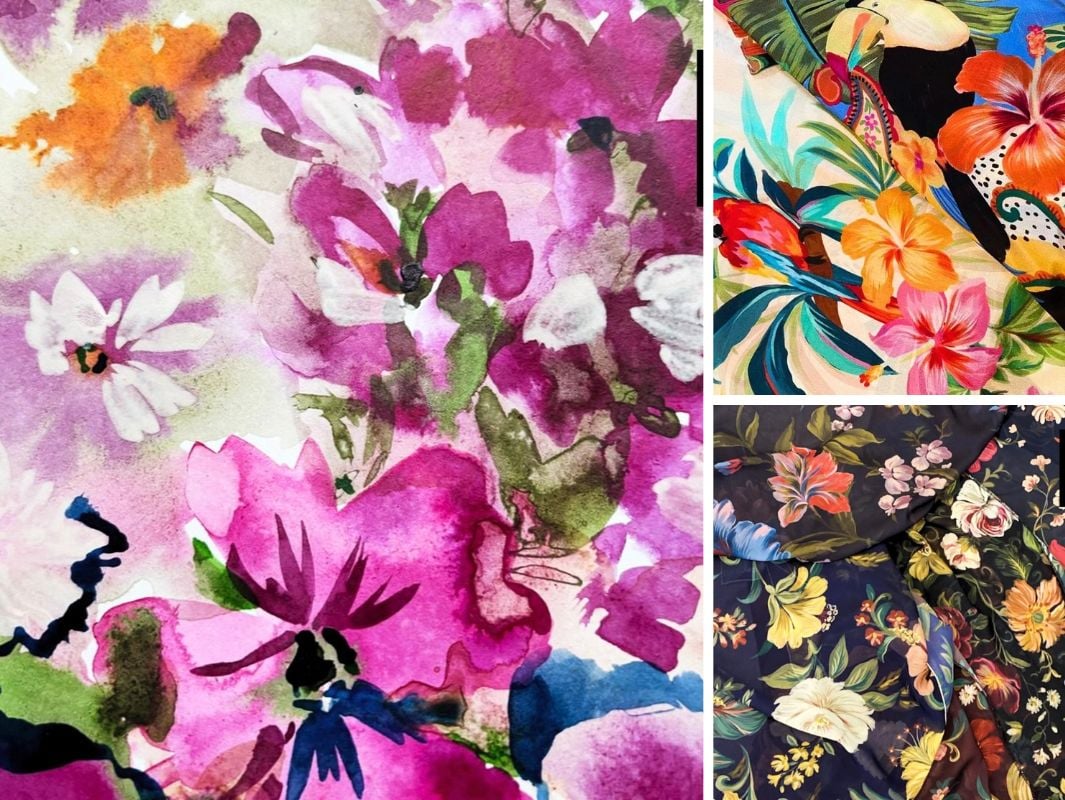
For a textile designer, this is an endless supply of visual material. A flower can inspire the outline of a print, the placement of a motif, or an unexpected color combination. Its petals might become a repeating pattern, its center might suggest a graphic detail, and its natural imperfections can give a design a more relaxed character.
There is also room to move beyond a literal floral print. A designer might take the orange and pink of a summer garden and use those colors in an abstract composition. The shape of a leaf could become a geometric element. A close-up photograph of a flower might inspire a pattern that barely resembles the original plant. The reference is there, even when the flower itself is no longer obvious.
Why Fashion Keeps Coming Back to Flowers
Flowers have a long relationship with clothing, but their appeal is not limited to one season or aesthetic. They can feel romantic, playful, graphic, vintage, or wonderfully eccentric. A small daisy print can bring a youthful feel to a dress, while oversized botanical shapes can make a statement on a coat or matching set.
Part of their appeal is the sheer variety found in nature. Flowers offer designers an enormous palette of colors, from blush and butter yellow to burgundy, electric pink, and burnt orange. They also provide different scales and structures, making them easy to interpret for everything from tiny repeats to large, expressive compositions.
For fashion lovers, floral prints can be personal, too. Some people gravitate towards tiny, scattered flowers; others prefer oversized petals and full garden-inspired patterns. A floral dress can feel like a familiar favorite, while a new interpretation can make an outfit feel completely different. Flowers give people a way to wear color and personality without having to follow a particular trend.

Pattern Textiles and the Art of Finding Inspiration
Pattern Textiles describes its creative process as a search for the best visual inspiration. The team looks at catwalks, exhibitions, travel, and vintage textiles before developing artwork with a clear direction for upcoming seasons. Its designers sketch, paint, dye fabric, and combine traditional and digital techniques to create prints for clients worldwide.
That mix of research and hands-on experimentation leaves plenty of room for natural references. Flowers can be studied as individual forms, grouped into arrangements, or taken apart visually to explore their colors, lines, and textures. A flower does not have to appear in a design exactly as it grows. It can be enlarged, simplified, repeated, layered, or transformed into something entirely new.
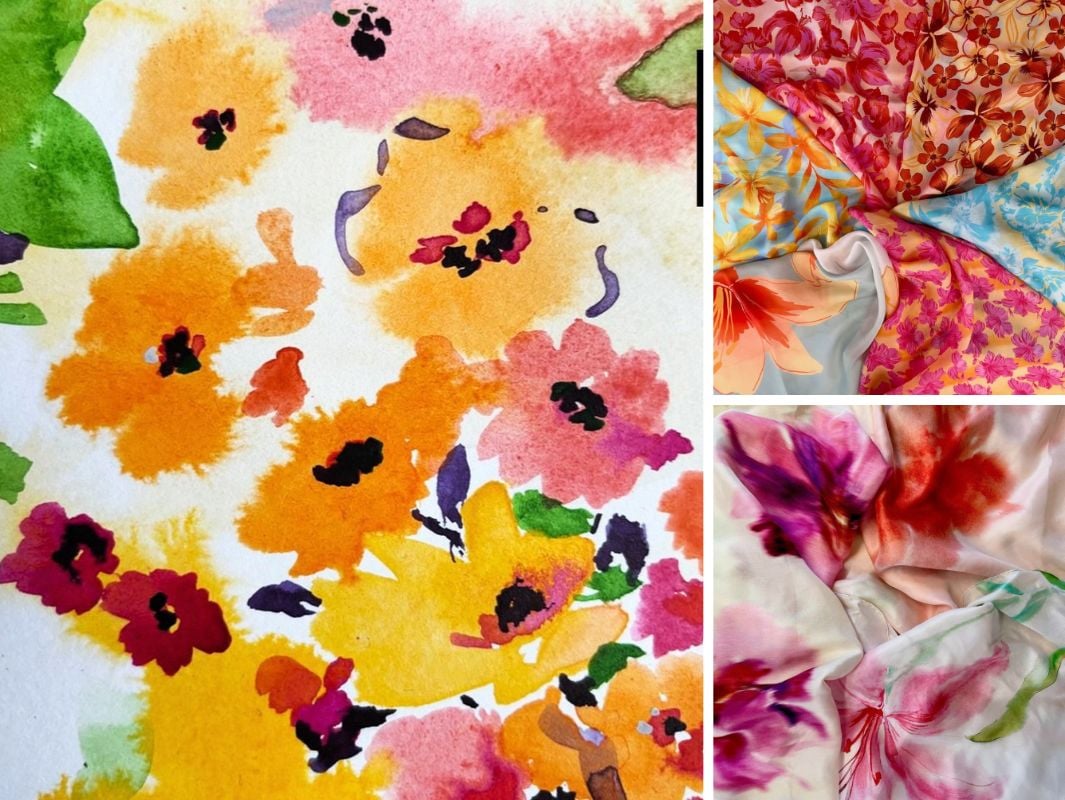
This is where the relationship between flowers and textile design becomes especially interesting. The designer is not simply copying nature. A loose arrangement might become a scattered print; a tightly packed garden could inspire a dense composition; a single unusual flower might lead to a distinctive motif. The possibilities change with the person looking at it.
From the Garden to the Wardrobe
One of the reasons floral inspiration works so well in fashion is that it connects something familiar with something creative. Most people recognize the flowers they see in gardens, parks, markets, and flower shops. Yet the way those flowers are translated into clothing can be completely unexpected.
Consider a bunch of seasonal flowers on a table. There might be several shades of pink, a bright yellow center, fine stems crossing one another, and a few petals that sit at unusual angles. That arrangement already has a color palette, a sense of movement, and a mix of shapes. A designer can take those elements and build a print around them.
The same goes for a single flower. Looking closely at its structure reveals details that are easy to miss at first glance: the way its petals overlap, the contrast between the center and the outer edges, or the subtle changes in color across its surface. And flowers are not limited to only pretty designs. Their shapes can be strong and graphic; their colors can be unexpected; their natural growth patterns can feel wonderfully free. That makes them just as relevant to a bold, modern collection as they are to a softer, more romantic one.

There Is Always Another Flower to Discover
Perhaps the best thing about using flowers as creative references is that the inspiration never stays still. Different seasons bring different varieties, colors, and combinations. A spring garden offers a different visual experience from a late-summer field or an autumn arrangement. Even a familiar flower can look new when seen from another angle or placed beside an unexpected color.
For a studio developing prints season after season, that constant variation is valuable. It means there is always something to observe, collect, sketch, and reinterpret. A flower might inspire an entire composition, or it might contribute one small detail that makes a design work.
At Pattern Textiles, the process begins with looking beyond the obvious and gathering visual ideas from the world around us. Flowers are a natural fit for that kind of curiosity. They bring together color, shape, texture, and movement in a way that translates beautifully into print.
And for anyone who loves both fashion and flowers, the connection is easy to understand. Sometimes the next piece you want to wear begins with a dress you spot in a shop. Other times, it begins with a flower you cannot stop looking at.
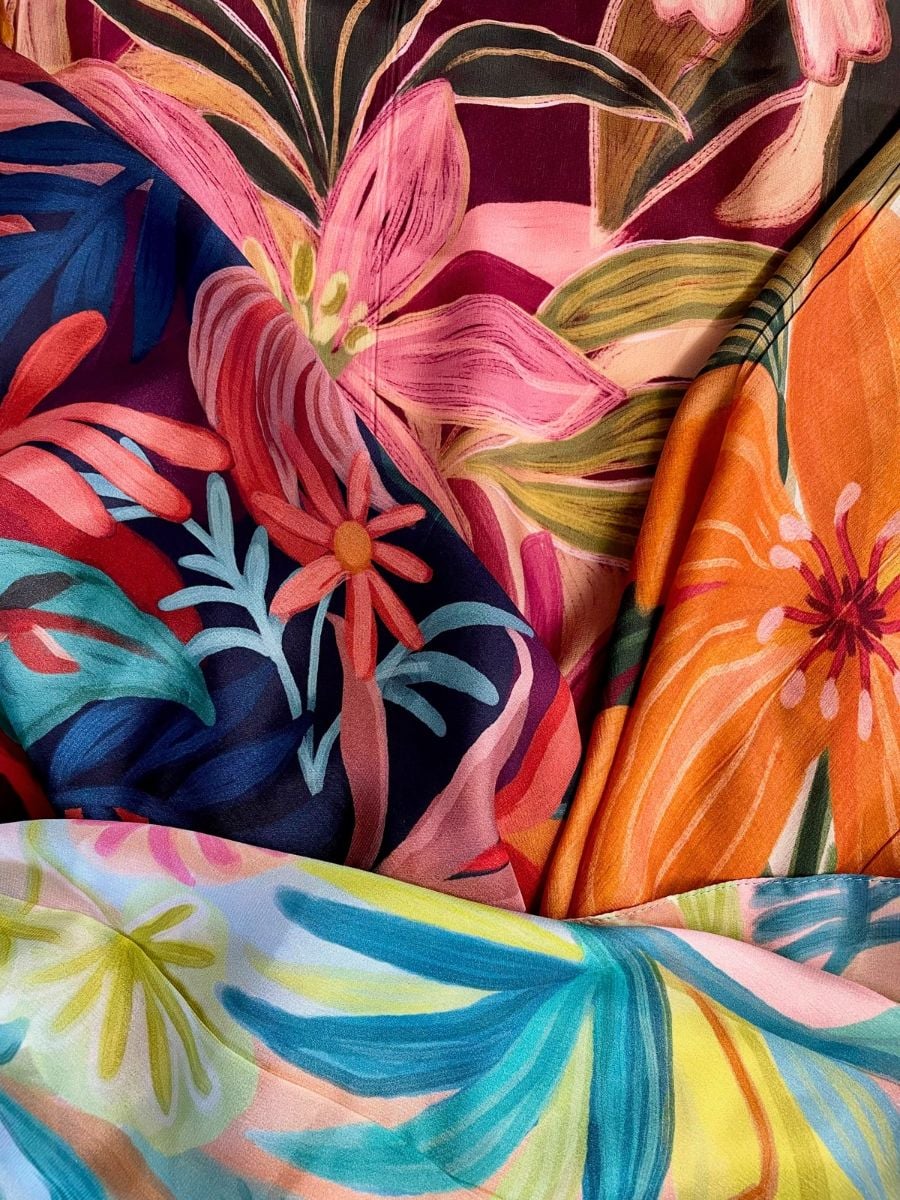
Photos by @patterntextilesstudio. Featured image by @patterntextilesstudio.