
I had received the mysterious envelope with rose seeds, put these with my daughter’s dolls, expecting her to plant them, when I realized the characteristic messy handwriting resembled Seedy’s (not his mirror handwriting) and I remembered Rosalie’s card. I retrieved the envelope and decided to put one seed in the fridge for some weeks, then sow it, and put the rest in the freezer.
When it came up, it was stunning, more so than Maurice’s “They’re coming out!” when the first tiny plants would show their heads at Witte de Wit in spring. In the next few months, I grew the little seedling into a plant, breaking off the head to get side shoots, then bend the plant to stimulate ground-shoots, so there would be multiple flowers.
This was the result:
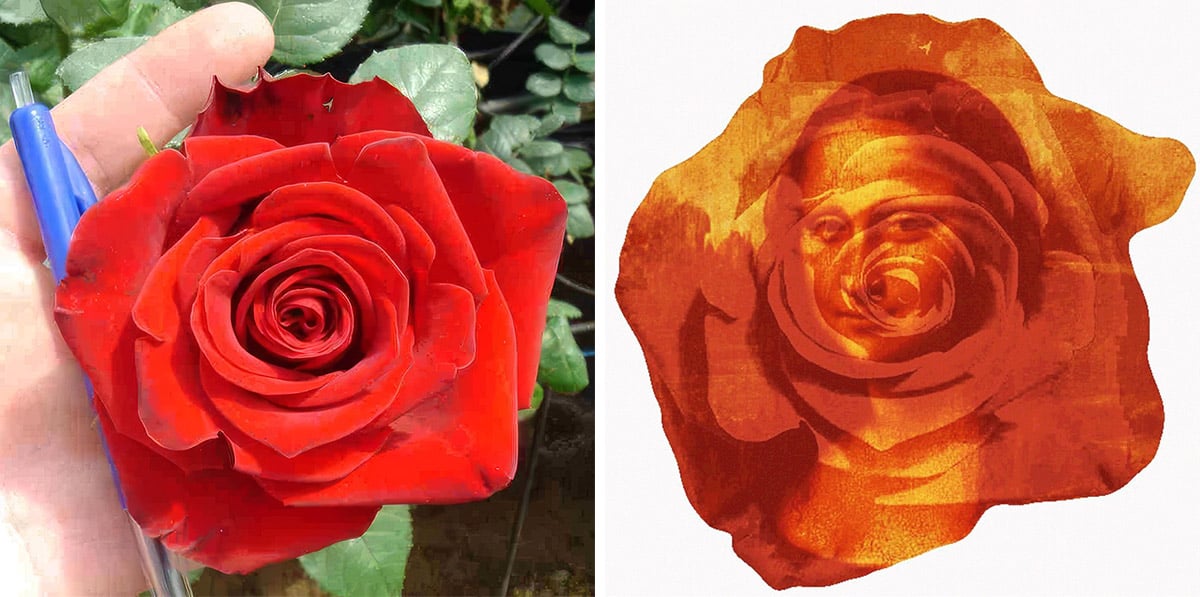
I had learned to put a pen in the picture to have an idea of the size of the flower. This was incredible, when normally 99,9% of all seedlings would be thrown away. Was this the 0,01% that, on top, was fully disease resistant? This had been a miracle seed. What about the rest? I decided to leave them and first work with this one, a Da Vinci Rose by DVR Marketing, hence the name. I played with a possible logo.
My dream had been a consumer brand in New York, the Walhalla of brands.
If you can make it there …
I forced myself to descend from cloud 9. Are the spoiled New Yorkers prepared to pay extra? Are NY florists prepared to pay extra? Can it be produced on a Latin rose farm? Would they be interested? What does it take to launch a brand?
Research First
(1) Consumption
From the 2006 DVR business plan:
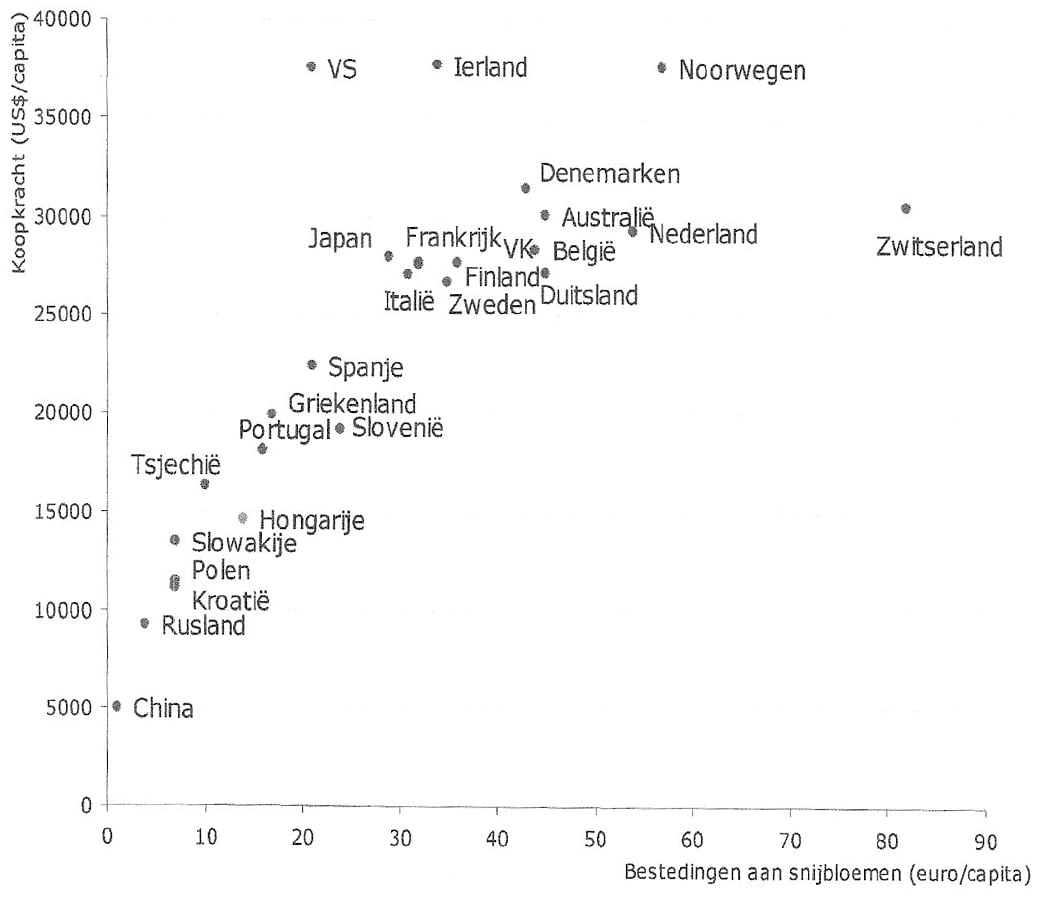
In the chart below, the X-axis presents the per capita flower consumption in Euros, and the Y-axis the buying power per capita in U.S. Dollars. It is evident where the opportunities can be found.
In its study of the future of the floricultural industry in the Netherlands, 'The Color of Cooperation’ (De Kleur van Samenwerking, 2002), Rabobank foresaw added value to products, international subsidiaries, and fixed partners in the near future and, in ten years, international alliances, commitment, and emotional value to products as key factors of the industry. This last aspect may be very important for the industry, as it taps into the hidden resources in the consumer’s debit or credit card. What Rabobank overlooks, however, is that the consumer will only pay for the emotional value if the product quality is good.’
‘In his ‘Trends in Flower Marketing and Postharvest Handling in the United States’ (Acta Hort. (ISHS) 669:29-34, 2005), M.S. Reid sums up:
"In the past four decades, the handling and marketing of cut flowers in the United States has undergone dramatic changes. The local production and specialized retailing of the 1950’s has been replaced by a system where flowers produced almost anywhere in the world are largely sold by mass-market retailers. Despite a substantial increase in total sales of flowers during this period, and a considerable reduction in real dollar retail prices, per capita consumption of cut flowers is low compared to that in other major markets. This may partly be explained by differences in lifestyle and culture, but a major component of the low sales of cut flowers in the U.S. is customer dissatisfaction with the quality, particularly vase life, of the flowers that they purchase, whatever the price. Poor vase life is the result of long transportation times, excessive storage durations, and poor temperature management in the supply chain."
‘With the disrespect for the consumer, the product quality today is inferior in most cases. On Valentine’s Day, the amorous pay premium prices for roses that are some three weeks old and are only good for a one-night stand, figuratively and literally. Not only are the consumer’s needs overlooked in the variety selection, but also flowers fail to perform in those markets where supply chains are historically long and unprofessional in terms of flower handling and climate control.'
Yet, (a) the above graph shows the untapped American market potential. Moreover, (b) Americans are brand sensitive and (c) are prepared to pay high consumption prices for quality products.
In other words, there is a future for a product that is selected for its beauty, flower opening, and vase life, and which is of outstanding quality because it is handled by professionals in the shortest possible supply chain. If, then, in marketing, an emotional value is added, this future is a bright future for those involved, struggling to survive in the business today.’
‘Some consumption figures (various sources):
- The total sales of flowers at retail in the U.S.A. are about $ 8,880 million per year. Per capita $25.00. Total sales of roses at retail are some $ 3,200 million per year.
- With a 52 percent share, florists (some 25,000 in number) are still the main retail outlet for cut flowers. Supermarkets account for 26% of all cut flower sales.
- Internet flower sales (e.g. Proflowers.com) are increasing (today some 4%). Wire services (telephone sales) are provided by FTD (Florists Transworld Delivery) and Teleflora/AFS. FTD has 20,000 associated florists. 1-800-flowers.com has 100 own stores, additional franchisers and a turnover of $ 671 million (also including other gift items) in 2005.
- The average American who buys cut flowers spends some $15.00 per transaction. Top florists have an average of some $ 80 per order.
- With just 28%, the number of households which regularly purchases flowers is low (Germany 76%, Great Britain 63%).
- The American flower market is primarily an impulse market. Most flowers are sold for use as gifts (74%). Because of that, it comes as no surprise that Valentine's Day and Mother's Day are the main flower days. Together, these two flower giving occasions account for 18 percent of all cut flower purchases.
Flowers are also popular as birthday gifts, with one out of ten bouquets bought for this purpose. - Rose is number 1, red color number 1. Per week, 15 to 20 million stems of red roses are sold, sold per stem. Including bouquets this number increases to some 35 to 40 million per week.
- Top florists sell some 800 to 1,200 roses per week, one-third being red.’
‘Some qualitative observations:
- The country of origin of the flowers is not important, although the best quality often is indicated by ‘Dutch quality’.
- Americans are prepared to spend considerable amounts on flowers. Some florists indicate that it is not uncommon to deliver $ 3,000 to $ 15,000 flowers orders for weddings.
- Americans are ‘brand sensitive’. Given a choice, they will buy the branded product with the higher price. All international upmarket brands have their flagship stores in Manhattan.’
(2) Spaghetti Distribution
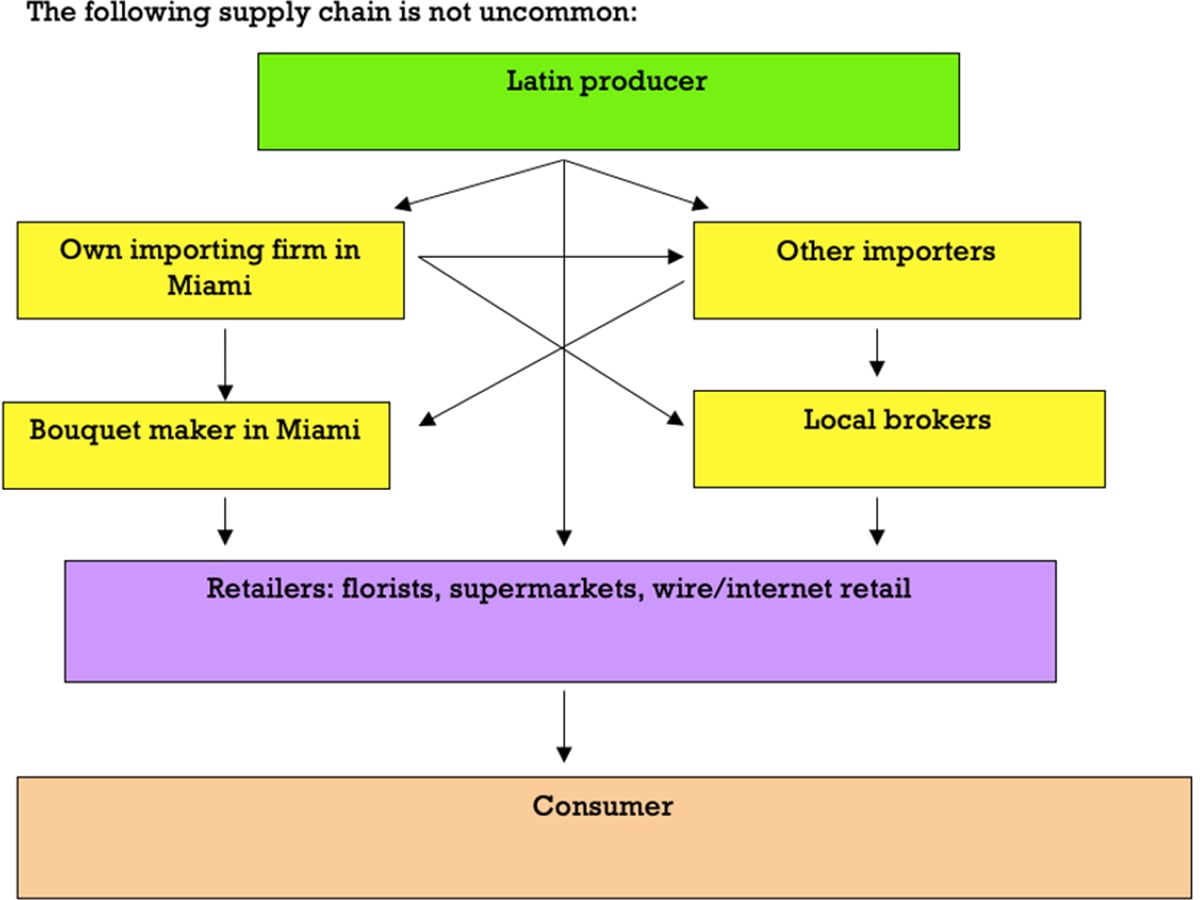
‘Consequently, as M.S. Reid indicated in his trends, product quality is unreliable. Slowly, retailers are beginning to realize this and search for reliable production partners. Presently, 1-800-flowers.com and other big retailers are contracting producers for their bulk products. Even here, with the same varieties being offered by various suppliers, the price temptation often proves bigger than quality certainty. Moreover, such retailers operate at the middle end of the market, the lower end being supplied at dump prices by the ‘Korean at the corner’ and the higher end by exclusive florists too much concerned with keeping qualified staff an increasing service level to their clients.’
(3) New York, Here We Come
Time to do physical market research. I spent two weeks in New York and visited every florist that I could find in the Yellow Pages and that locals suggested. Jan (‘Spiderjan’ for regularly climbing to the upper parts of his high store) of Jan’s Blooms in Manhattan was instantly enthusiastic and allowed me to use his little office overlooking the shop on Lexington Ave at 52nd St. For hours I watched the layout of the shop, customers coming in, picking flowers, bouquets being arranged and packed, all the American way. I learned a lot.
The above observations were confirmed in my interviews. My focus should be on the, mainly Manhattan-based, florists that were not primarily concerned about the buying price of the product. They would spend a worker’s salary on a parking spot and a small fortune on annual rent.
‘Recent interviews with this last group show that these artists desire products not supplied by 1-800 and the Koreans and products of high quality (“Does it really last for 10 days? Wow!”) but lack the size to organize this.’
My findings led me to the following:
‘In conclusion, there definitely is an opportunity for a premium priced branded flower in the American market, provided
- the product quality is superb;
- the product has controlled limited availability;
- the product has additional emotional value; and
- the supply chain is short and controlled.’
(4) Create an Up-Market Brand
What is a consumer brand? What does it take? Can I do that?
‘In his recent article The Eternal Principles for Creating Luxury Brands Dan Herman discerns 'ten eternal principles for developing and managing a luxury brand':
- A luxury brand is first and foremost a product and/or service of superior quality (a quality gap from competitors is recommended but not mandatory). DVR rose stands out from the competition in color, shape, opening and vase life.
- The products and services are not designed and planned according to consumer tastes and expectations, even though they appeal and cater to sometimes-hidden deep-routed desires. A luxury brand sets its own standards and does not adhere to fashions. There is an air of leadership to it; it is exceptional, unique, original, artistic-creative, surprising, and novel (but never peculiar in a ridiculous or potentially repelling manner). It challenges its consumers (not too harshly) for their discerning taste, sophistication, refinement and dare. The DVR rose brand creates a sphere of true beauty in which art and science are combined.
- A luxury brand's most important value lies beyond the core product function or practicality. The DVR rose brand is a mythic experience.
- Luxury brands have something extravagant / excessive / redundant and overly generous about them. Something that is clearly not necessary: the use of unjustifiably expensive materials, performance that is far beyond all needs and requirements, an exaggerated level of service, … The DVR rose brand must come with Dutch design packaging (vase, gift box, etc.) and accessories.
- A luxury brand always expresses zealousness for quality, highly held values or even an ideology, a distinctive culture, together with sense of hedonism, passion for life, and a free spirit. It does that in all the facets of its being including products / services, management practices, marketing communications, ... Absolutely.
- A luxury brand will always be linked with the circle of those who "run the world" at that certain period of time - and with the success symbols of the time. The DVR rose brand must find its way to the elite: Oscars awards, big conventions, Versace, Ferrari and other flagship stores on 5th Avenue, celebrities’ weddings, etc.
- Behind a luxury brand there are often legends of eccentric genius creators, mysterious production processes, secret formulas, exceptional preparations etc'. Stories like these create mystery. A luxury brand treats itself very seriously. The DVR rose brand derives from the breeding lines of Leonardo Da Vinci, completed by an eccentric Dutch rose breeder. Myth of authenticity.
- A luxury brand is never managed in a democratic way, but rather with authority or even with dictatorship, by a genius creator or by an inspired leader who demonstrates, inside and out, a strong passion for the product and pedantry for every small detail. John Pouw controls every aspect of the DVR rose brand.
- A luxury brand must be rare or difficult to reach in some way. The awareness to the brand and the desire for it sometimes wide-ranged (while the number of buyers has to be limited) and other times restricted to a few that are in-the-know. Even the buyers themselves, must not be inclined / capable to purchase the luxury brand too often. It is important to remember that the dream feeds the desire. We can never dream about the accessible. At least in the first two years, there will be a limited availability of the DVR rose. At a later stage, it can be decided to restrict or expand production.
- Luxury brand consumers expect to be distinguished from all others, and to be protected from them (the No-Mix principle). At the same time, they expect a special intimacy between them and the company and its managers, as well as flexibility regarding rules that are afflicted on others. The DVR brand’s website should strive for this. Buzz marketing. Other approaches to be worked out.’
Do I have all the essential expertise for this myself? No.
The experts and rebels of KoenKramer would help me out at a special rate.
(5) Last, but Foremost, Can the Rose Be Grown?
If grown under moderate day and low night temperatures, especially at high altitudes, the flowers of most rose varieties are considerably bigger in size, as the growing speed is very low. In some warm African countries, the production cycle can be 7 weeks, in Holland (with the lamps and heating in fully controlled glasshouses) also 7 weeks and the Bogotá savanna and Ecuador 12 weeks. But then, these Latin flowers can be twice as big.
The optimum for the consumer is strived for. As such, trials were set up with Qualiprima (Cayambe, Ecuador) and Moises S.A. (Bogotá, Colombia):
- Around the equator at an altitude of 2,400-2,600 meters there are no seasonal influences, so quality is stable year-round.
- At this altitude DVR-rose shows a bud increase to 5 cm and, if cut at the right stage, will still open.
- Both farms have a solid reputation of reliable high-quality flowers and systemized production.
- By having two producers in two countries the production risks are limited: if something happens in the cultivation or politics, this then could be a serious setback for the brand.
- Existing logistic routes can be used but need to be shortened where possible.
- A joint quality management program will be put in place.
- Production will follow demand, flowers are pre-sold, so at no place in the supply chain flowers will be stored unnecessarily or offered for sale.
It took the best rose producer of Ecuador more than a year to develop the optimal cultivation recipe for the variety. The responsible ingeniero, César, calls the method ‘Da Vinci klux klan’.
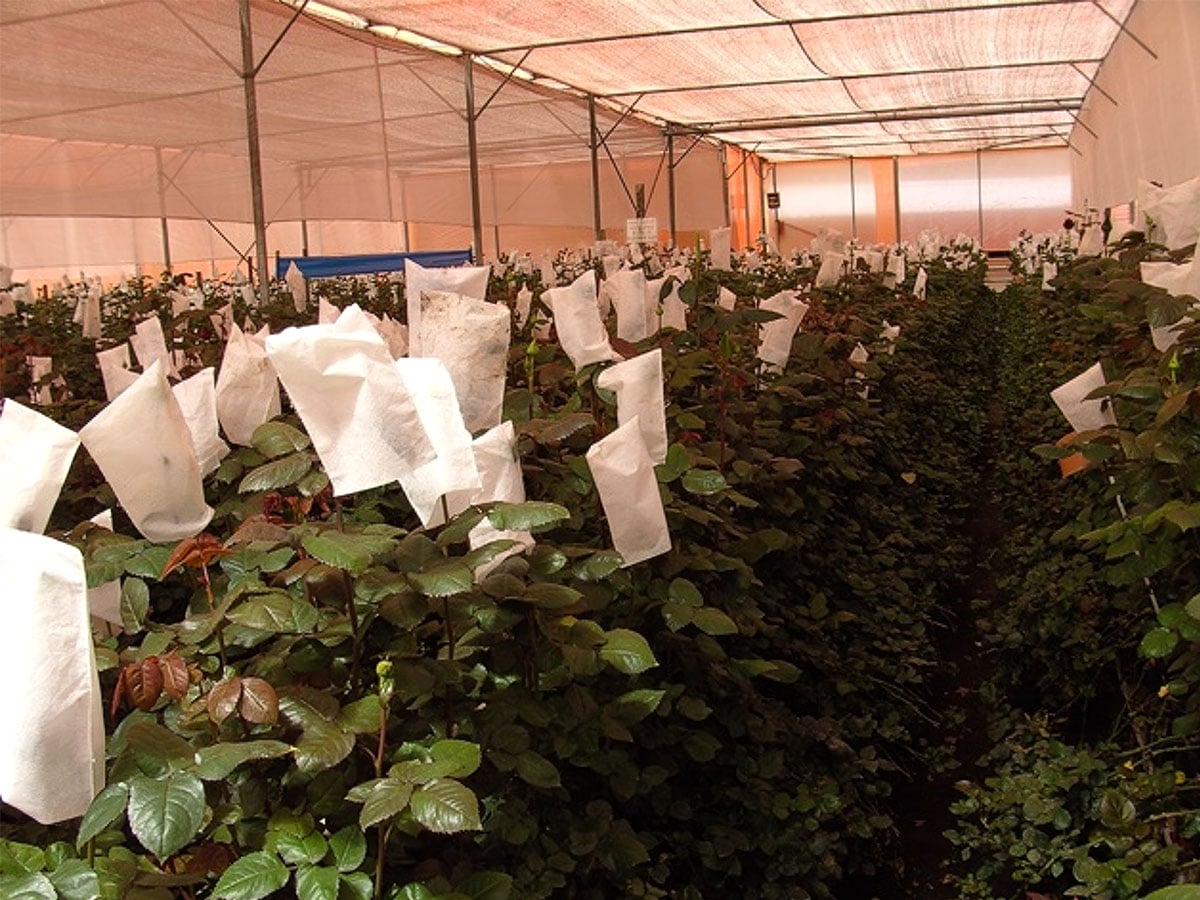
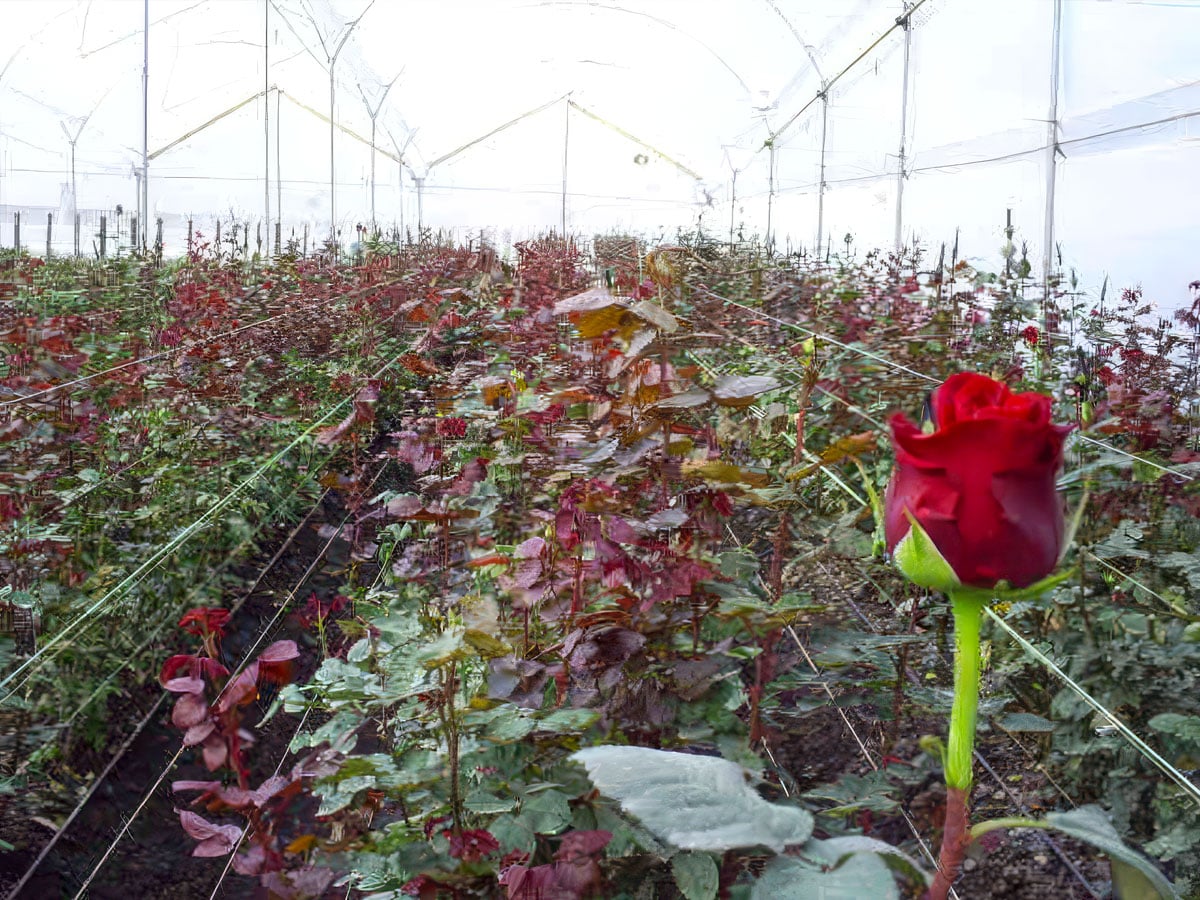
In the process, I visited all Dutch growers of Anton Speelman’s selection ‘Formula One’, notorious for blackening, but somehow the Dutch figured out an effective approach: shading. This didn’t work well enough in South America. I spent two weeks at Superb Roses, near Bogotá. Don Pablo and his ingeniero Luis had introduced various red roses and were considered the best for reds. I wanted to learn to grow a red rose at the equator and could spend as long at Superb as I wanted, without any secrets. The DVR rose was resistant anyway and I learned that the fully natural conditions, with the shading of the eucalyptus trees, would do the job.
In the meantime, César at Qualiprima had thought of paper hats, made of diaper material also to soak up the morning dew. This worked, but after some time, both Qualiprima’s owner Peter de Beijl and Moises S.A. decided they were unable to produce the quality needed. The paper hats proved to be a damaging handicap for the workers checking when to harvest the flowers.
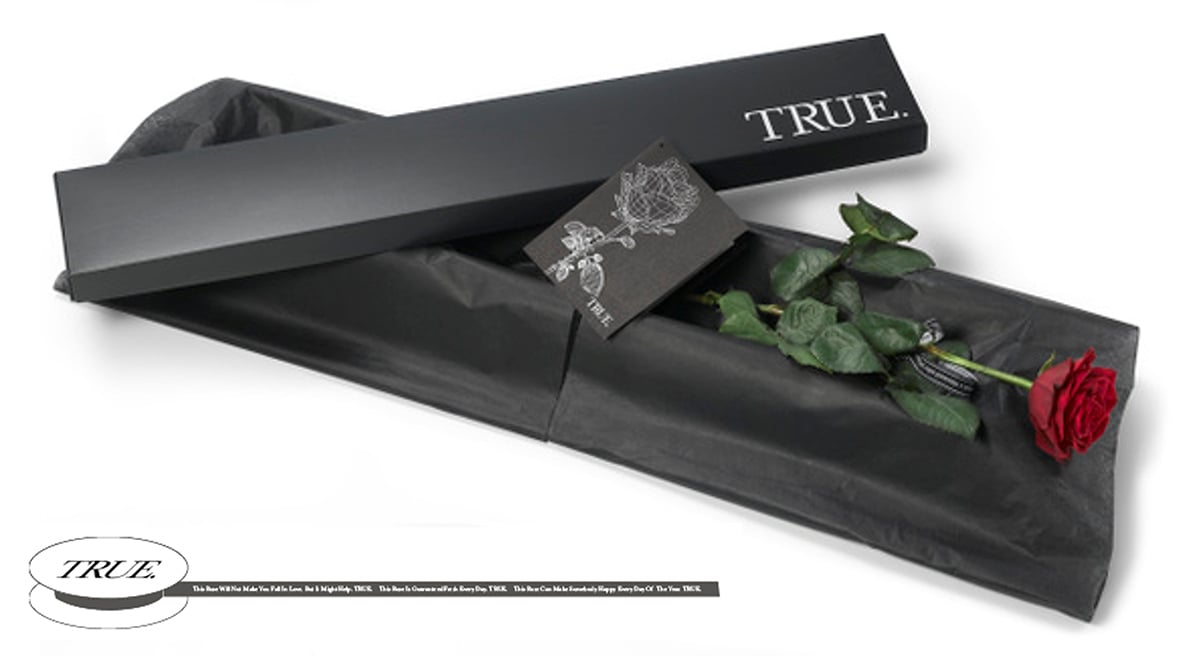
Superb had already received budwood earlier on, eager to show their expertise in launching another red, and, after some time, could ship the first flowers to Holland. I collected them, delivered part to Koen Kramer and took another part to their associated photographer for a photo shoot. In the meantime, the young industrial designer working under the name of Tjakka. had worked on different displays and KoenKramer on packaging and promotion materials. Results were stunning, creating a frenzy for all involved.
KoenKramer worked out of an old chapel in the Amsterdam Jordaan district. No need to visit in the morning. Late afternoons and evenings the place came alive. Find a parking spot along one of the canals, get a handful of coins for the parking meter from the drag queen at the reception, flanked by a big bronze bust of Karl Marx. The ‘creatives’ had their offices on an extra floor that was constructed in the church area. Other offices used the altar and former communion wafer bakery. The office of the creative responsible for Absolut Vodka was empty most of the time, except for dozens of empty bottles, all over the place. The creative for Nike in the next office had his feet on the desk and was hidden behind a newspaper. Waiting for inspiration, surrounded for sportswear. Their notorious ‘worst hotel in the world’ campaign for Hans Brinker Budget Hotel made the news because MTV refused to broadcast an episode with a heavily hungover girl stepping out of her filthy hotel bed, slipping on a used condom.
In one of the meeting rooms a group was discussing a next Bavaria beer commercial. No respect for budgets, I would have my own team in the next room, different nationalities with their own expertise and presenting their ideas in all kinds of ways. At some point, the GM would leave the beer and join the roses. Unique experiences.
It took a 15-minute meeting with the designated team to decide on a name:
‘A rose is a statement; something honest, from the heart. It’s a symbol of purity and truth. Therefore the name: True. Simple, and a great starting point for PR and communication. Everything we say with this brand is straightforward, honest and true. TRUE.®’
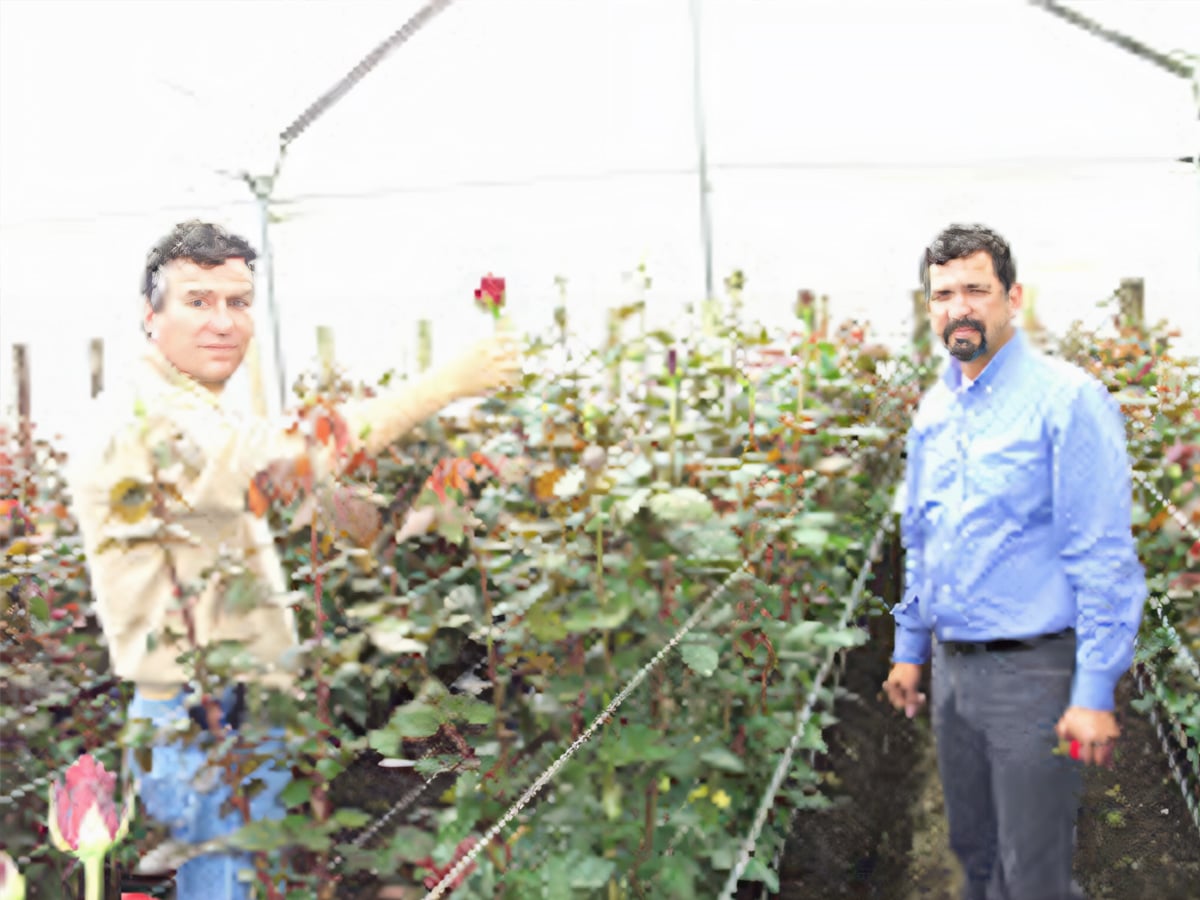
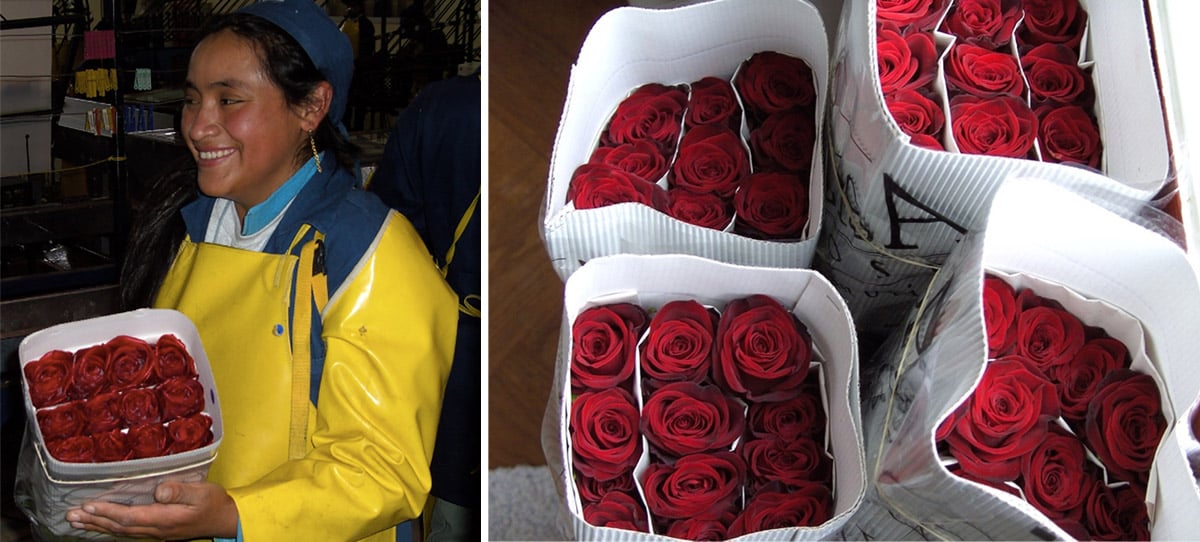
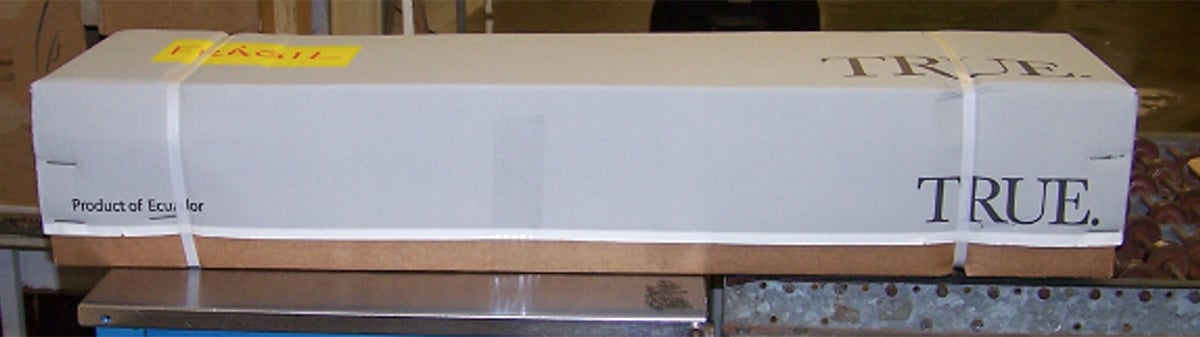
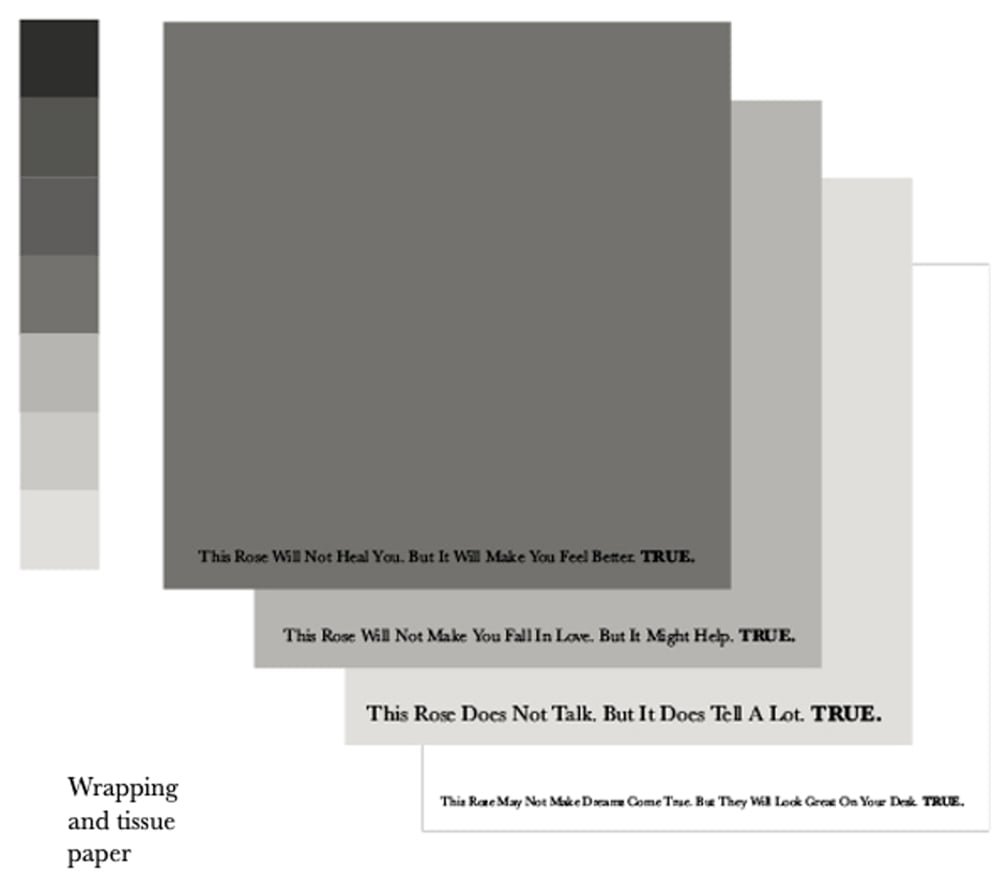
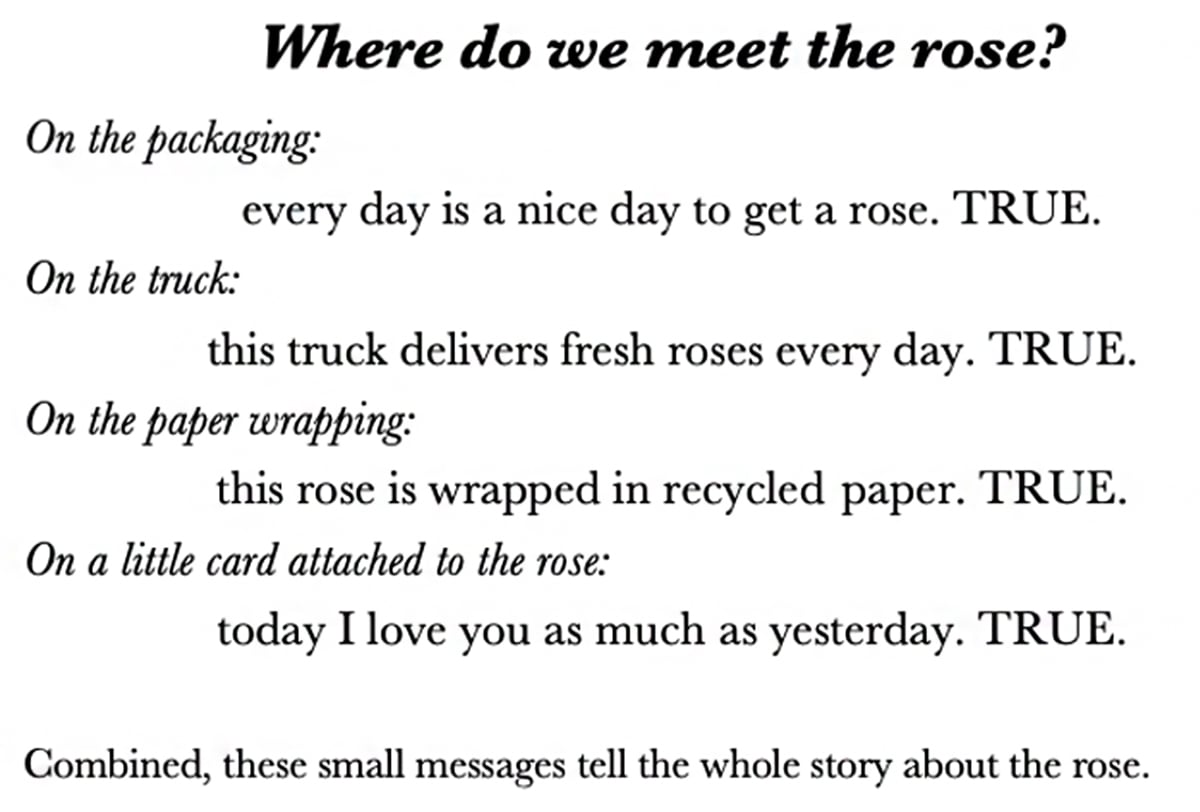
All following photos are true, all taken before the times of photoshopping and AI.

More TRUE. lines:
- (For a wedding ad) Walk the path of truth. TRUE.
- Like me, this rose will open its heart for you. TRUE.
- This rose will not prevent war, but it fits in a barrel. TRUE.
- This rose will not take away the cold, but it will transfer my warmth. TRUE.
- This rose will climax. A dream come. TRUE.
- This rose bleeds my heart. For you. True.
- This rose can never compensate, but it will say THANK YOU. TRUE.
- Blooming and everlasting love. TRUE.
- Endless, like my love. TRUE.
- Everlasting. TRUE.
- Words fail, sincerity stands. TRUE.
- Your absence bleeds. TRUE.
- When words no longer speak. TRUE.
- This rose will not heal you, but it will make you feel better. TRUE.
- This rose is guaranteed fresh every day. TRUE.
- This rose is CO2 neutral. TRUE.
- This rose will not make you fall in love. But it might help. TRUE.
- This rose will not mend mistakes, but it will say sorry. TRUE.
- This rose was created through Renaissance intervention. TRUE.
- This rose helps to fight narco production. TRUE.
- Even the advertising agency truly liked this rose. TRUE.
- Experience revelation of beauty. TRUE.
- This rose was pampered by Latin craftsmen. TRUE.
- Rose is a rose is a rose is a rose. (Gertrude Stein) But not this one. TRUE.
- This rose is more than a one-night stand. TRUE.
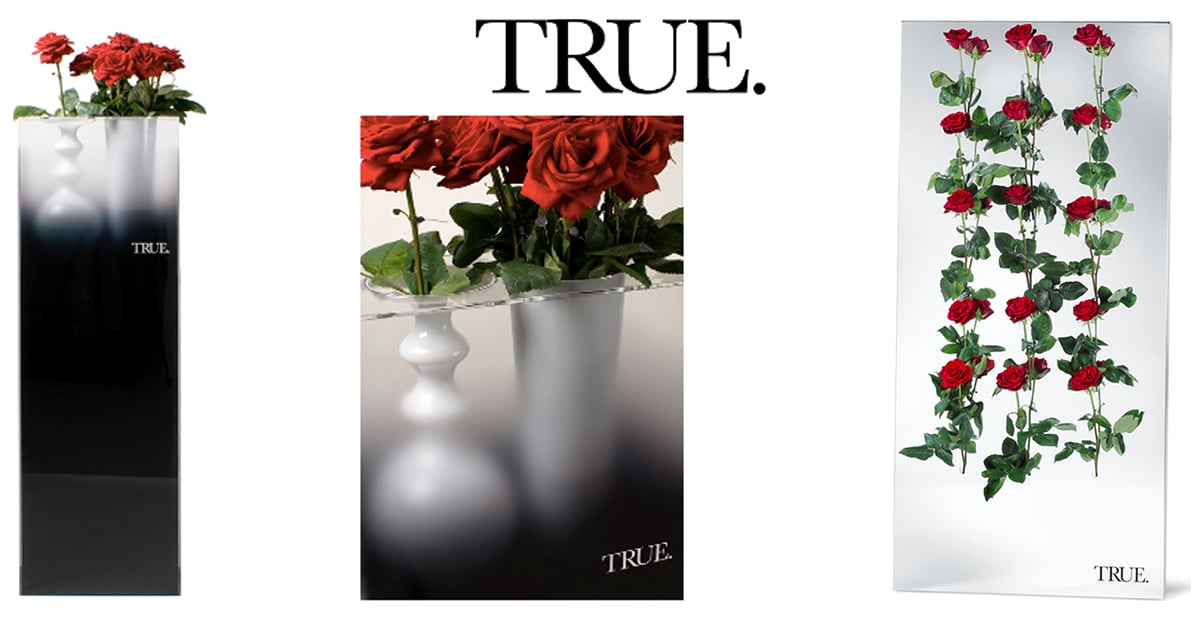
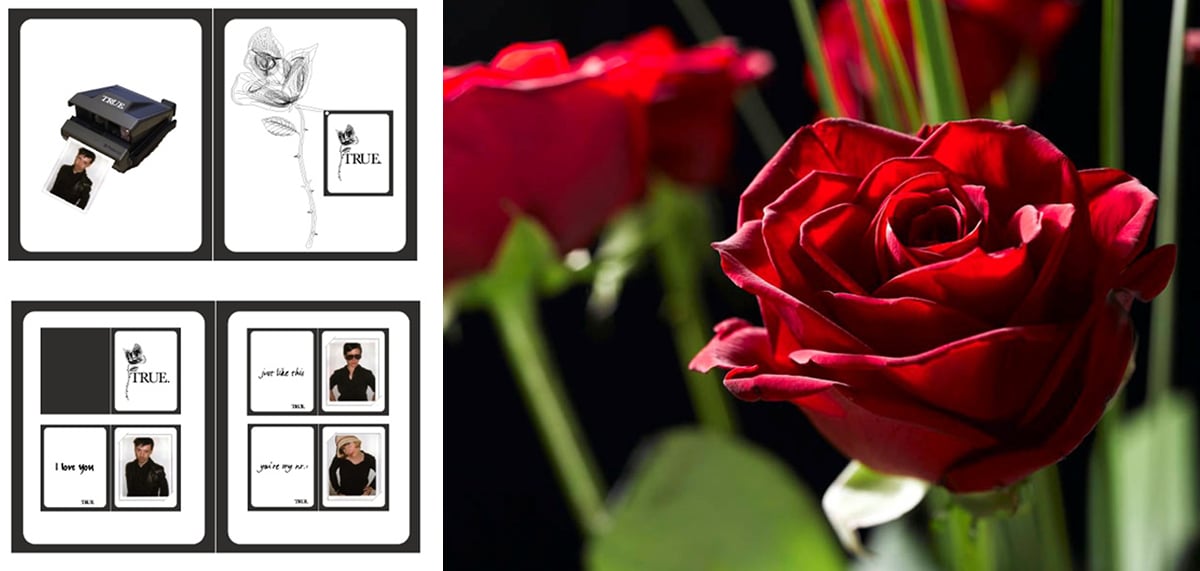
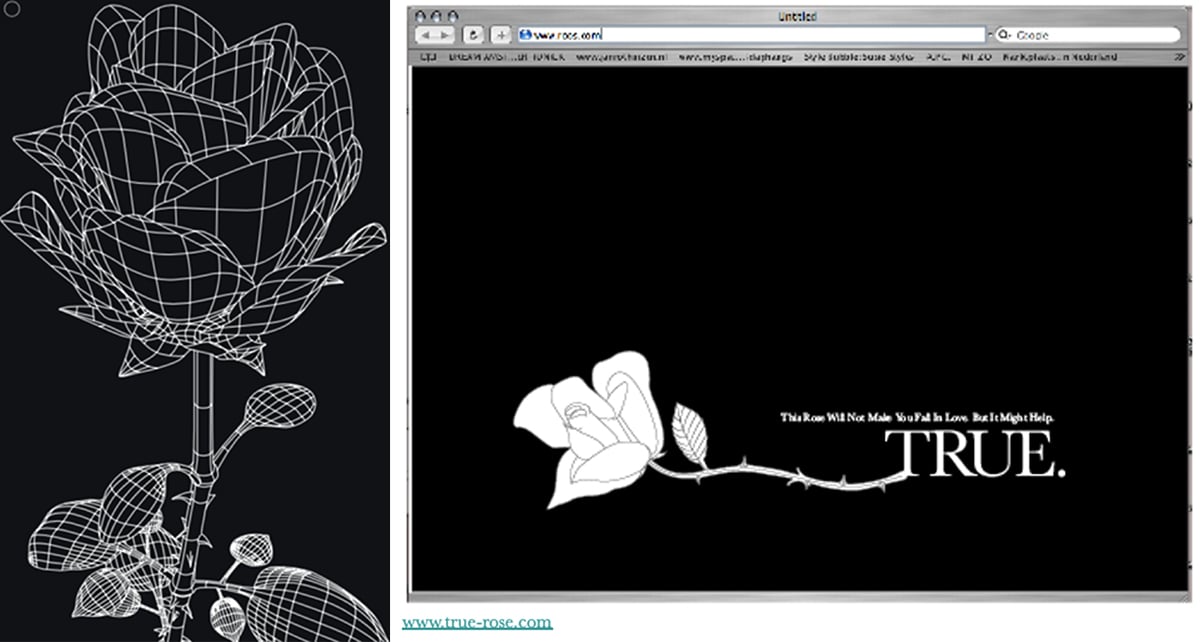
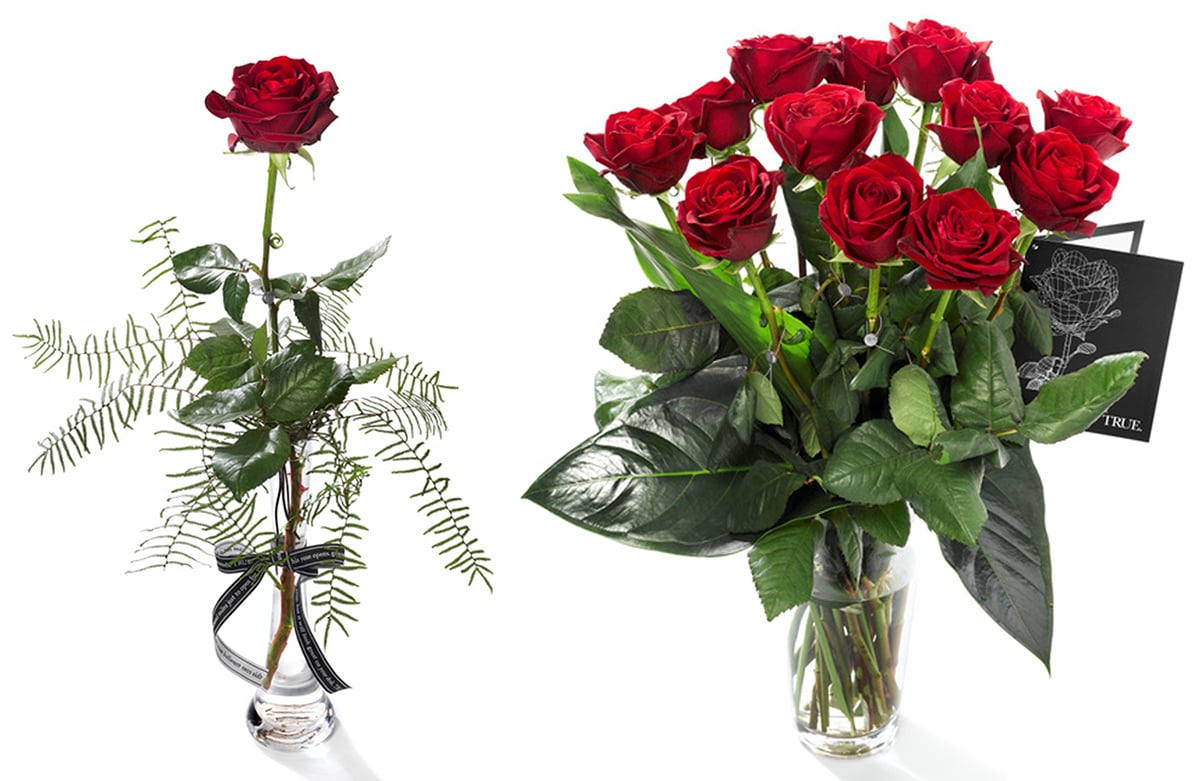
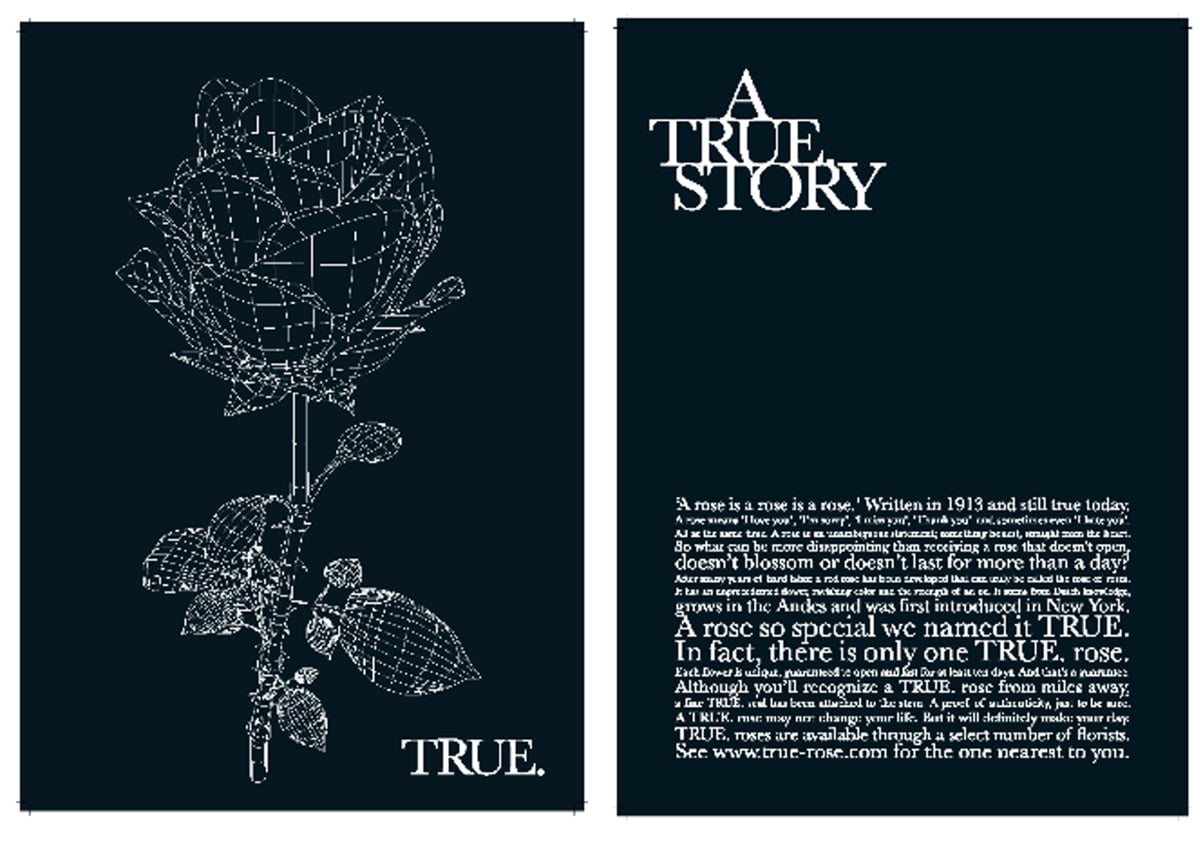
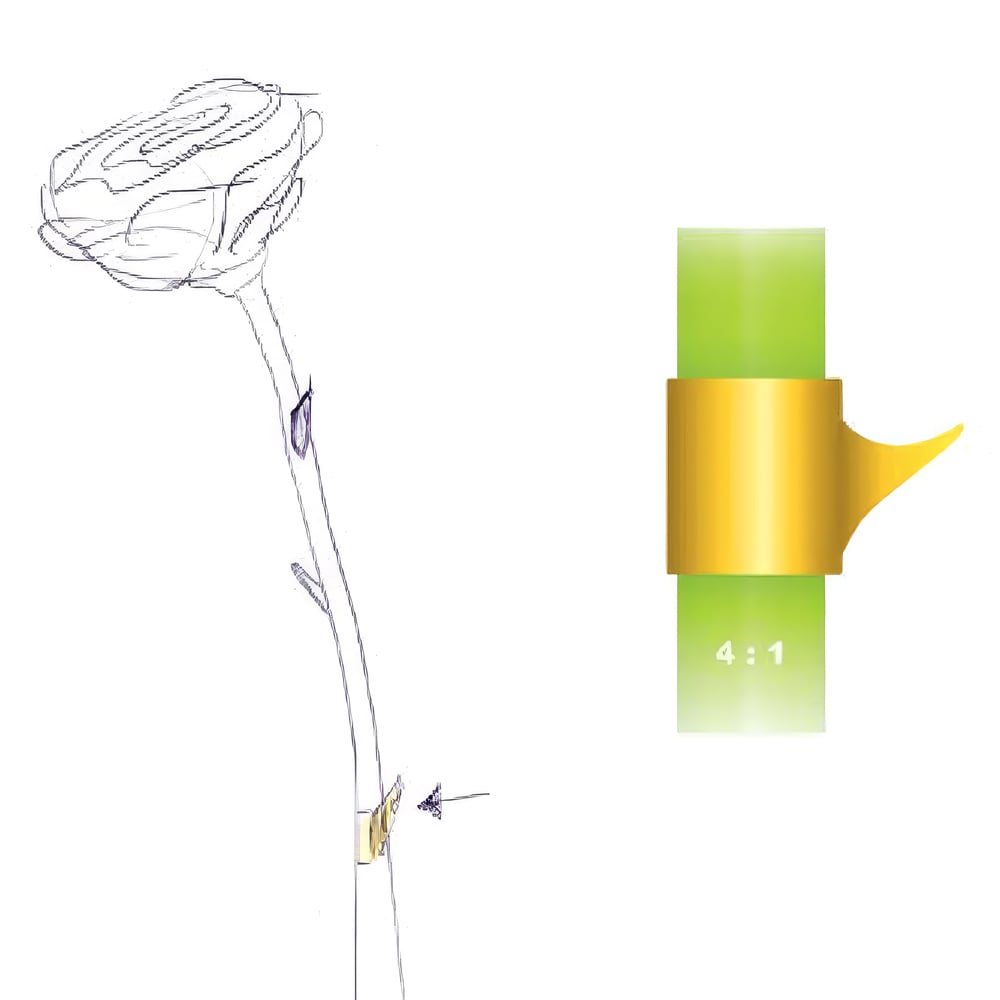
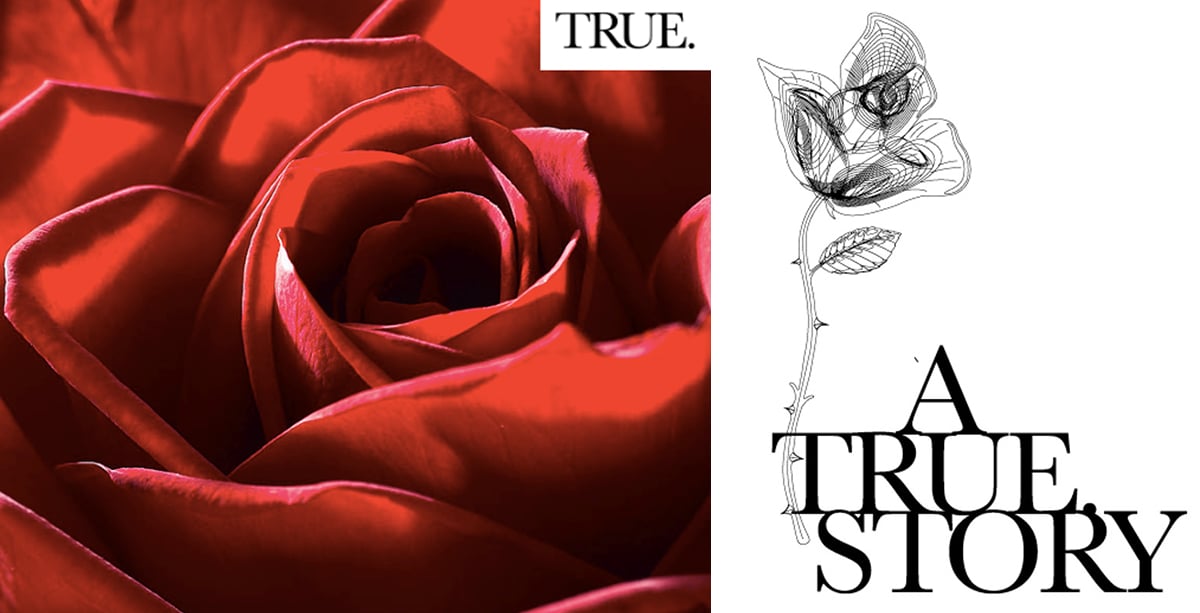
In the meantime, the plants of Da Vinci Rose (variety name, only perfect flowers were TRUE.) were growing well and after all branches had been cut off to make new plants, the plants started to flower again. Pablo had flowers in his house, lasting 3 weeks. Wow!
After having shipped from Bogotá through Miami to New York for a few months, we came to the conclusion that, although TRUE. roses can easily stand the length of the journey, the damage inflicted by the handling is not fit for such an exclusive product. Therefore, we started to fly the boxes in directly to New York. Maximum freshness, minimum handling (but extra cost). Floral Import Services (New Jersey), run by Spiderjan’s wife Janny, took care of this. The previous logistic provider understood, found the handling and distribution of the relatively small boxes and consignments complicated anyway, and returned their TRUE. packing materials.
Of course, besides production and logistic adventures, there were the regular business mishaps: flowers crushed by Customs inspectors, flowers stolen, flowers that should have been destroyed still appearing on the market, bills not paid. My previous experiences, especially at Witte de Wit, helped me to shrug these off. Been there…
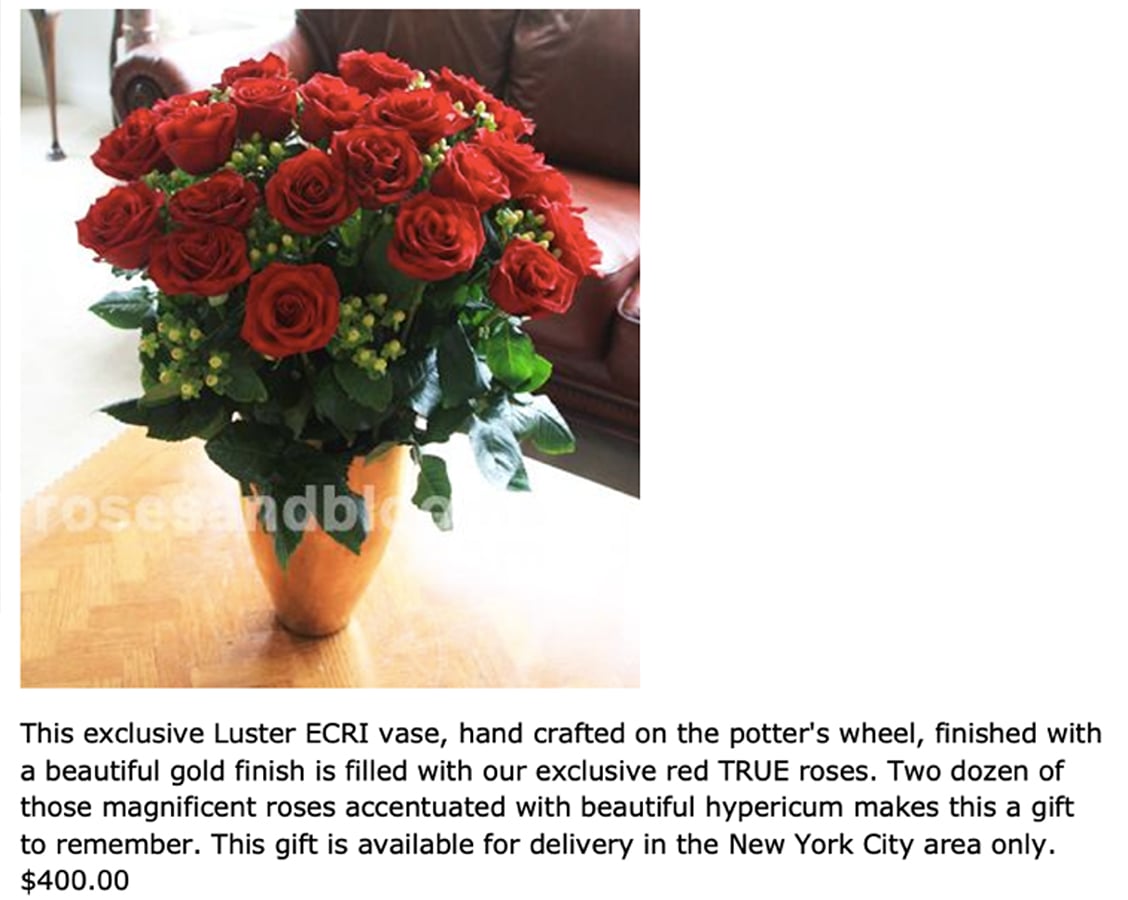
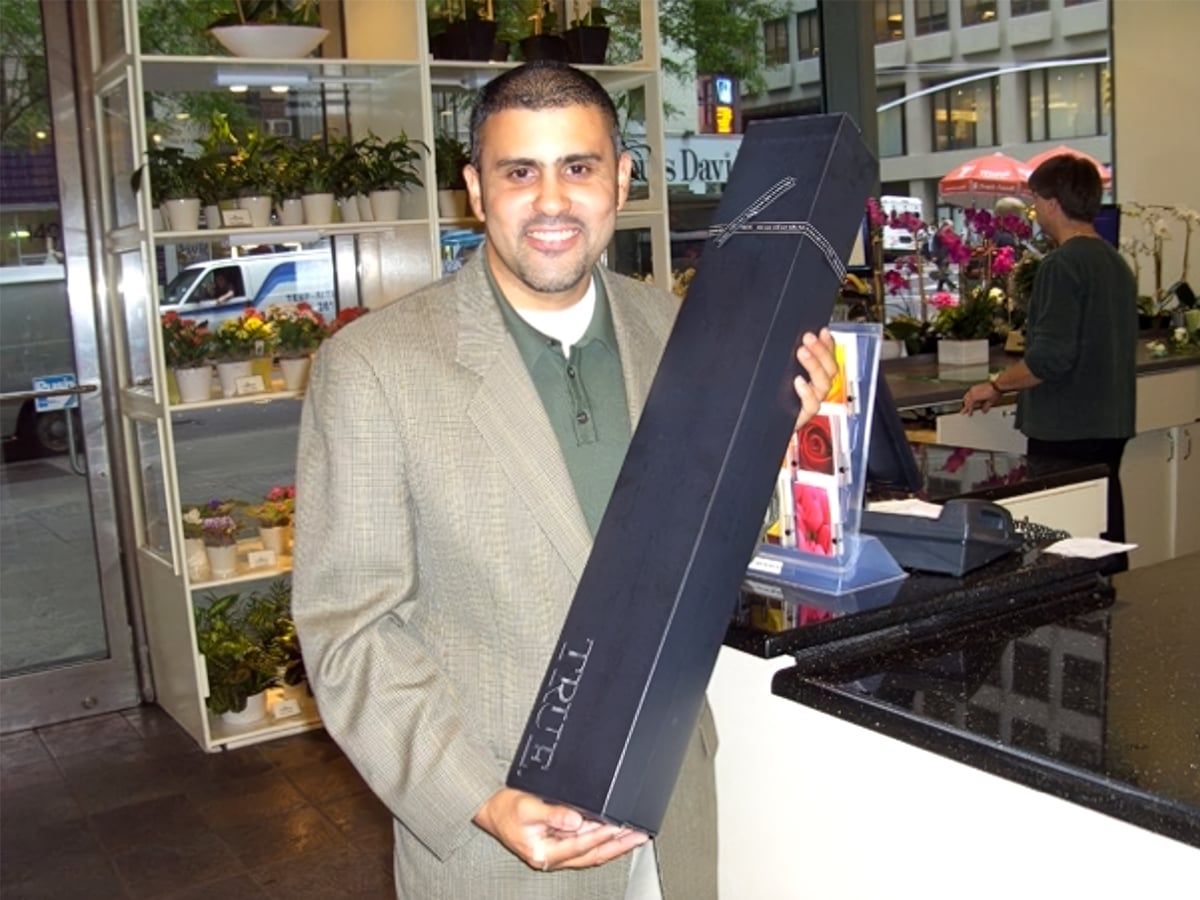
At some point, Jan’s Blooms was the decor of a movie with a scene shot in the store, with celebrities such as Kim Raven, Lindsay Price and Brooke Shields present. Luckily, some boxes of TRUE. roses came in, were sent out to the actors and each recipient called back later, TRUE.ly impressed.
When the financial crisis broke out, many regular flower buying bankers and lawyers stayed away and several of the TRUE. florists went out of business.
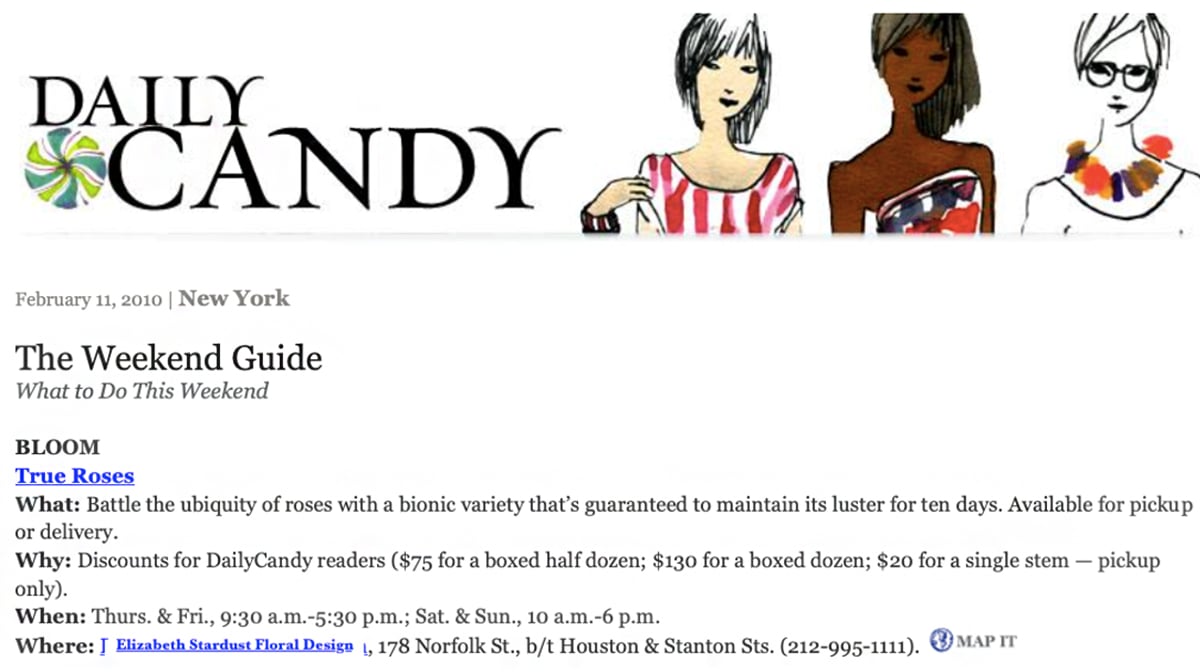
Then, a special tip on the then famous Daily Candy site created new demand for the ‘bionic’ rose:
In a TRUE. Valentine mood, the singer Seal ordered four dozen for his then wife and model Heidi Klum. Klum’s management later sent a thank-you message to florist Elizabeth Stardust, referring to the stunning beauty of the roses.
KISS FROM A ROSE
"Now that your rose is in bloom, a light hits the gloom on the grey."
We needed more roses, but Superb’s Pablo didn’t react to email or phone call. Typical Latino. Get on the plane and discuss in person.
Pablo collected me from El Dorado, stopped for his regular ‘Red Bull breakfast’ on the way to the farm. I was reporting excitedly about the revival in sales in New York. Pablo didn’t say much. Luis was waiting in the office, paperwork on the table. It turned out, that the DVR rose was only producing one third of what we had conservatively estimated at the start. I paid them US $1.00 per stem, more than three times their regular price, but with the productivity this was not going to work. They had learned a lot about quality, primarily that premium roses were sold per stem and that of each stem both flower and foliage should be perfect, but were going to discontinue production.
I returned home miserable on the one hand but had to think of Leonardo Da Vinci’s quote on the other: ‘The noblest pleasure is the joy of understanding.’ Four years earlier everybody in the industry was convinced it was impossible to create a consumer brand for a rose. It had been a costly but rewarding quest. First get my finances back in order.
Then sow the next miracle seed of Rosa’s Secret.